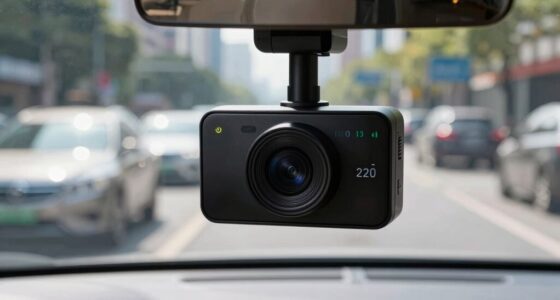
When you drive at night with tinted windows, your camera and night vision systems struggle because the tint blocks or filters out much of the light needed for clear images. This reduces visibility, increases noise, and makes it harder to detect obstacles or read license plates. Darker tints lower spectral transmission, which hampers infrared and low-light performance. If you want to know how to improve your visibility despite tints, keep going to learn more.
Key Takeaways
- Tinted windows significantly reduce light transmittance, leading to lower scene luminance for cameras.
- Darkness and spectral shifts from tints decrease infrared sensitivity, impairing night vision performance.
- Reduced interior illumination and increased noise make capturing clear images more difficult.
- Limited sensor capacity and auto-exposure algorithms struggle to compensate for low light behind tinted glass.
- Tints reflect or block IR illumination, decreasing contrast and details in night-time camera footage.
How Tinted Windows Impact Nighttime Visibility
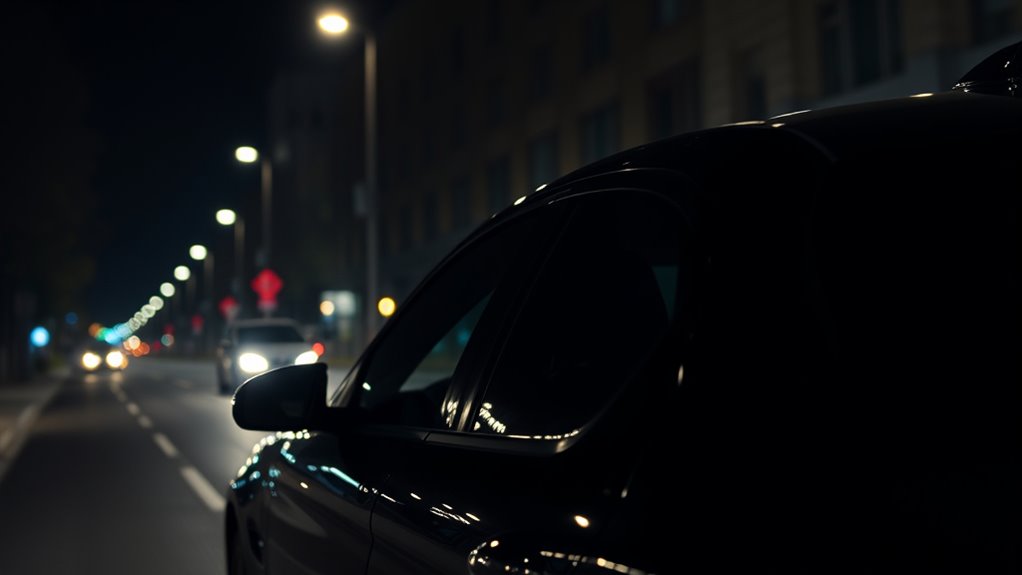
Tinted windows can considerably impair your ability to see clearly at night, especially when detecting low-luminance targets like pedestrians, cyclists, or small hazards. Reduced light transmittance lowers your detection distance, making it harder to spot these hazards early. Laboratory tests show that with tinting, detection distance drops by up to 23% compared to clear glass. When lighting is dim, like twilight or nighttime, a 30% reduction in transmittance can seriously hinder your vision, affecting especially older drivers or those with glasses. Tinting also changes spectral content, diminishing contrast sensitivity and making low-contrast objects harder to see. Overall, darker tint levels markedly decrease how far you can see pedestrians, signs, or obstacles, increasing the risk of accidents during low-light driving conditions. Additionally, vision impairment caused by tinted windows can lead to slower reaction times, further elevating accident risks. Light transmittance plays a crucial role in visibility, and its reduction can significantly compromise safety during nighttime driving. Moreover, spectral content modifications can affect the perception of colors and contrasts, further reducing visibility in critical situations. Understanding the impact of visual perception alterations caused by tinting can help drivers make informed decisions about window tinting choices.

Micro SDXC 128GB Memory Card, MindStor 90MB/s Read Speed TF Card with Adapter, U1, A1, HD 1080P Video Loop Recording Support, for Security Camera, Dash Cam, 1 Pack
- Designed for Dashcams & Security Cameras: Suitable for 24/7 loop recording in extreme temperatures
- Supports Full HD 1080P Recording: Ensures smooth footage without gaps or frame drops
- Fast Read Speed Up to 90MB/s: Quick access and transfer of video clips
As an affiliate, we earn on qualifying purchases.
The Limitations of Standard Security and Traffic Cameras
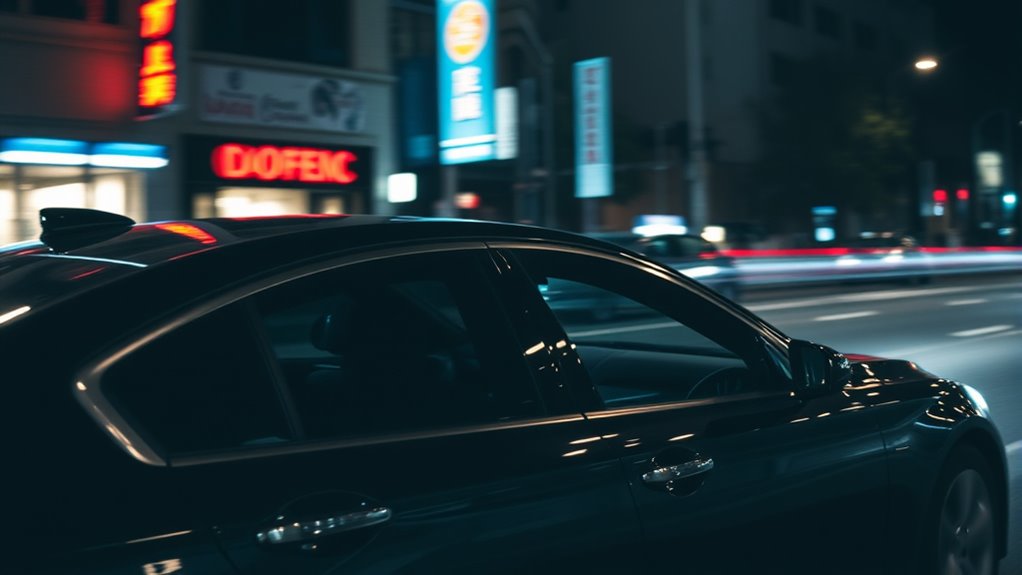
Standard security and traffic cameras face significant limitations when capturing images through tinted glass, especially in low-light conditions. As tint darkness increases, less light reaches the sensor, reducing the signal-to-noise ratio and making images grainy or underexposed. Small sensors and limited apertures in consumer cameras can’t compensate for the dramatic light loss, leading to poor detail. Auto-exposure algorithms often prioritize exterior brightness, causing interior views behind tinted glass to appear dark and lacking detail. Additionally, motion-blur worsens because cameras extend exposure times to gather enough light, degrading sharpness of moving objects. Spectral filtering from tinted films can also alter color balance and reduce sensitivity to infrared light, hampering contrast, recognition, and surveillance accuracy. Moreover, the effectiveness of a camera is heavily influenced by its quality and sensor technology, and all these factors combine to make standard cameras unreliable for capturing clear images through tinted windows at night. Advanced imaging sensors can sometimes partially mitigate these issues but are generally more costly and specialized. Proper camera placement and supplementary lighting can sometimes improve night visibility, but they are not always practical or sufficient. Additionally, sensor sensitivity plays a crucial role in low-light performance and is often a limiting factor. The use of specialized low-light sensors can improve performance, but they are typically more expensive and less common in standard equipment. Improving low-light performance often requires investing in higher-end hardware or additional lighting solutions, which may not be feasible for all applications.

SANDISK 256GB Ultra microSDXC UHS-I Memory Card with Adapter - Up to 150MB/s, C10, U1, Full HD, A1, MicroSD Card - SDSQUAC-256G-GN6MA
- Compatibility: Compatible with Nintendo Switch (not 2)
- Storage Expansion: Ideal for Android, Chromebooks, Windows
- High Capacity: Up to 1.5TB for media storage
As an affiliate, we earn on qualifying purchases.
Infrared Night Vision and Its Challenges With Tints
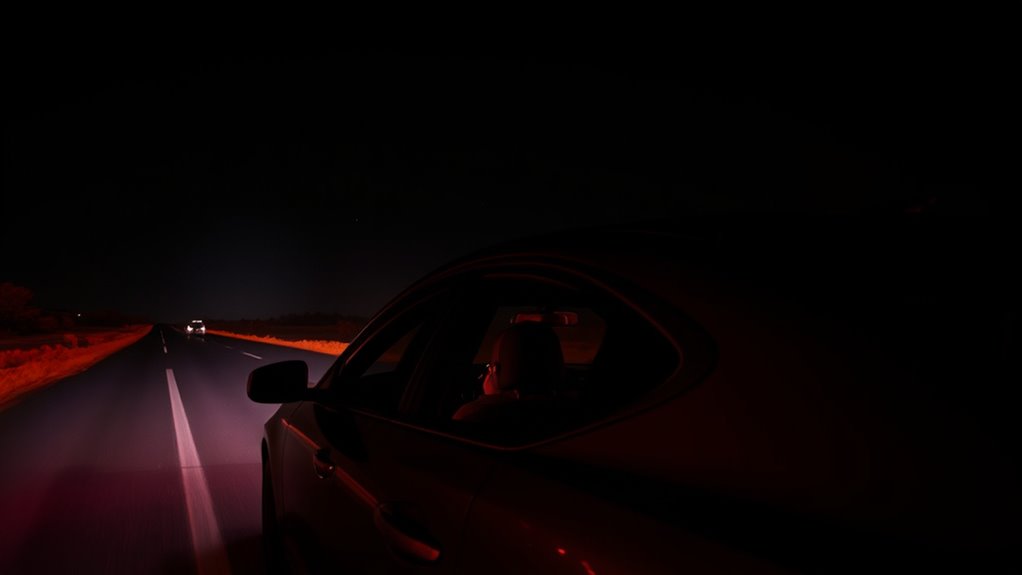
Infrared night vision systems face significant hurdles when dealing with tinted vehicle windows. Tints alter how near-IR light transmits through glass, often blocking or reflecting much of the IR illumination used by night vision cameras. Darker or metallized films absorb or reflect over half of the IR energy, reducing interior illumination and image contrast. Variations in tint types—dyed, metallized, ceramic—affect spectral transmittance differently, leading to inconsistent IR penetration. Microstructures and surface roughness in films cause scattering, further diminishing image clarity. Additionally, the angle of viewing impacts IR transmission, as polarization layers and coatings can change effective IR throughput. These factors make it difficult for IR night vision systems to reliably see through tinted windows, especially when combined with manufacturing tolerances or tint degradation over time. Proper maintenance and selection of compatible films can sometimes improve IR transmission, but generally, heavy tints still pose a significant challenge to infrared imaging. Spectral transmittance characteristics of window tints vary widely, complicating consistent IR penetration.
Micro SDXC 64GB Memory Card, MindStor 90MB/s Read Speed TF Card with Adapter, U1, A1 Rated, HD Video Support, Waterproof, for Security Camera, Dash cam, 1 Pack
- High-Speed Read: Up to 90MB/s read speed for quick access
- A1 App Performance: Optimized for smoother app installs and launches
- Full HD Recording: Supports stable 1080P video recording
As an affiliate, we earn on qualifying purchases.
External Lighting and Technological Workarounds
External lighting plays a essential role in enhancing camera visibility through tinted windows at night. Proper placement and type of lights can markedly improve interior detail capture. For example, high-intensity headlights with broad spectra help penetrate tint, but may cause flare or washout. Strategic positioning—like above the vehicle—reduces reflections, while multiple light sources create uniform illumination. Oncoming flashes, such as brake lights, offer intermittent high-contrast boosts that can temporarily clarify interior views. Weather conditions like fog or rain scatter light, decreasing effectiveness, so supplemental lighting becomes indispensable. Consider these workarounds:
External lighting enhances nighttime camera visibility through tinted windows, especially with strategic placement and high-intensity, broad-spectrum lights.
- Installing auxiliary floodlights with broad spectral output
- Using high-CRI LEDs for balanced, camera-friendly spectra
- Implementing pulsed illumination synchronized with camera exposure
- Shielding lights to prevent glare and reflections
- Positioning lights to minimize obstructions and maximize interior transmission
The Role of Tint Darkness Levels in Security and Privacy
Choosing the right tint darkness balances your need for privacy with safety. Darker windows hide valuables and deter opportunistic theft but can also reduce your visibility and law enforcement assessment. Understanding how VLT levels impact security and privacy helps you make informed decisions for night driving. Moreover, selecting the appropriate tint can also influence how well your camera systems perform, as darker tints may interfere with night vision and image clarity, making it harder to capture clear footage during low-light conditions. Additionally, window tint properties such as reflectivity and material quality can affect the performance of your camera’s sensors in various lighting environments, especially since spectral light transmission characteristics help optimize camera effectiveness in different tinted window scenarios. Recognizing ventilation considerations is also important, as improper airflow can lead to fogging and reduce visibility, further impacting both driving safety and camera performance. Proper UV protection in tint films can also preserve the longevity of your vehicle’s interior and camera equipment exposed to sunlight.
Impact on Visibility
The level of tint darkness considerably impacts your visibility during night driving, especially when it comes to security and privacy. As VLT decreases, less light reaches your eyes and cameras, making it harder to detect targets and interpret scenes. Darker films profoundly reduce contrast and scene luminance, leading to poorer target identification. You’ll notice:
- Reduced light transmission diminishes camera and human detection
- Lower scene luminance increases exposure times, raising noise and motion blur
- Spectral shifts from tint color bias alter contrast and glare
- Dimming short-wavelength light lessens scatter but hampers sign and object visibility
- Increased tint darkness worsens performance for older drivers and spectacle wearers
- 70% tint still allows a significant amount of light, helping maintain better night vision and camera clarity compared to darker tints.
- The spectral shift caused by tint color can also impact how well camera sensors interpret scenes, further complicating night vision.
- Additionally, lens properties influence how effectively light passes through tinted windows, affecting overall visibility during night driving.
All these factors combine to make night driving with heavily tinted windows more challenging, affecting both safety and situational awareness.
Privacy vs. Security
Darker window tints markedly enhance your privacy by concealing occupants and in-vehicle activities from casual observers. This added concealment helps protect sensitive conversations and materials, especially in executive, medical, or law enforcement contexts. For example, these films can improve thermal regulation inside the vehicle, making it more comfortable in hot weather. Additionally, the choice of tint darkness can influence how well the vehicle conforms to local regulatory limits on tinting, which vary by region and are designed to balance privacy with visibility. For instance, compliance with vetted wave and wind regulations is crucial to avoid legal issues related to illegal tint darkness levels. However, regulatory limits on tint darkness in many areas create a tradeoff: more privacy versus legal compliance and visibility for safety. On the security front, tinted windows can deter opportunistic theft by hiding valuables and delaying forced entry through shatter retention and mechanical resistance. While tinting reduces the likelihood of impulsive crimes, determined intruders with time and tools can still breach windows. Therefore, tint darkness influences privacy and security but isn’t a holistic safeguard. Properly applied, high-quality films can also provide additional security benefits by resisting scratches and impacts, making forced entry more difficult. Incorporating advanced film technologies can further enhance these security features and protect your vehicle over time. Moreover, ongoing innovations in security film technology continue to improve the durability and effectiveness of tinted window solutions.
Legal Restrictions and Their Effect on Surveillance
Legal restrictions on window tinting directly impact how effectively law enforcement and surveillance cameras can monitor vehicles. These laws set limits on VLT percentages, especially for front side windows, to balance privacy and safety. For example, Utah requires over 30% VLT on front windows, while California mandates 70% or more. These regulations influence surveillance by: – Making license plates harder to read at night. – Obstructing clear views of occupants inside. – Forcing officers to use spotlights or infrared equipment. – Limiting additional tint applications due to factory VLT counts. – Reducing light reaching camera sensors, impairing image clarity. Additionally, tinted windows can interfere with the accuracy of automated license plate readers, which rely on clear visibility to function correctly. The physical properties of tinted film, such as its reflectivity and absorption, can further diminish camera effectiveness in low-light conditions, complicating identification efforts. Moreover, tinting regulations often restrict the degree of tinting permitted, which can influence the choice of materials used and their optical qualities. These restrictions are often based on safety concerns, but they can also affect surveillance accuracy by limiting visibility. The optical qualities of tinted films play a significant role in how much light passes through, impacting camera performance. Additionally, manufacturing standards for tinted films ensure certain optical properties that can influence surveillance effectiveness. Ultimately, legal restrictions aim to protect privacy but often hinder surveillance effectiveness, especially in low-light conditions, reducing the ability to monitor vehicles accurately.
Improving Vehicle Camera Performance in Tinted Windows
To enhance vehicle camera performance through tinted windows, leveraging advanced camera technologies is essential. High-quality sensors, infrared capabilities, and higher resolutions like 1080p or 4K help cameras see better through tints. For example, infrared cameras detect objects in low-light or glare conditions more effectively than standard ones. Proper mounting solutions also matter: removable films, electrostatic mounts, or multi-channel systems like Rexing R4 enable clearer footage behind dark tints. Positioning cameras near tint edges or choosing adhesive mounts can improve visibility. Consider the lighting conditions: daylight improves performance, while nighttime and glare challenge cameras further. Sensor sensitivity plays a crucial role in filming through tinted glass, especially in low-light situations. Using appropriate camera settings such as adjusting exposure and gain can further optimize image quality in challenging conditions. Use this imagery to visualize your setup:
| Tint Type | Camera Technology | Mounting Solution |
|---|---|---|
| Light tint (upper) | Infrared sensors | Electrostatic or adhesive |
| Full tint | High-res 1080p or 4K | Multi-channel, fixed mounts |
| Dark rear tint | Enhanced sensitivity | Removable films |
| Side window tint | Standard or advanced cameras | Position near edges |
Additionally, proper camera placement can help mitigate the effects of tint darkness, ensuring clearer footage in various conditions.
Frequently Asked Questions
Can Specialized Cameras See Through Heavily Tinted Windows at Night?
Specialized cameras can sometimes see through heavily tinted windows at night, but it depends on the technology used. Infrared and thermal imaging cameras may detect heat signatures or infrared reflections, but dark tints block much of this light, limiting effectiveness. Near-infrared illumination can help reveal interior details covertly, yet heavy tints often still hinder clear visibility. So, while some advanced cameras might get glimpses, perfect clarity remains challenging through dense tinting.
Do Vehicle Tint Laws Vary by Region or Country?
Yes, vehicle tint laws vary widely by region or country. You’ll find strict rules in some places like Belarus or Tajikistan, where tinting is heavily restricted or banned, while other countries like India or the UAE set minimum VLT levels for windows. In federations like the US or Canada, regulations differ by state or province. Always check local laws before tinting your windows to avoid fines or vehicle issues.
Are There Privacy Risks Associated With High-Quality Night Vision Tech?
High-quality night vision tech acts like a piercing eye in the dark, but it comes with privacy risks. It can see through walls, revealing private spaces without consent, turning your personal moments into open books. Hackers could hijack this powerful tool, exposing sensitive data or spying on you. As you rely on advanced tech, remember that privacy isn’t a given—it’s a fragile shield that needs guarding against unwanted eyes.
How Does the Type of Glass Affect Infrared Light Penetration?
The type of glass directly impacts infrared light penetration. Ordinary soda-lime glass blocks or reflects infrared radiation, limiting its transmission. Pyrex glass exhibits low transmittance, reducing IR passage, especially at thicker sizes. In contrast, specialized IR-transmissive glasses like germanium, zinc sulfide, and sapphire allow IR light to pass through efficiently, enabling better thermal imaging. Your choice of glass determines how much IR reaches the sensor, affecting image clarity and detection capabilities.
Can External Lighting Solutions Be Legally Installed on Vehicles?
Yes, you can install external lighting, but don’t expect a free pass. Federal and state laws tightly control what you can add, especially if they’re colorful, flashing, or overly bright. Stick to approved white or amber headlights and red taillights. Remember, more isn’t better — it’s illegal. So, if you want to avoid fines and police attention, follow the rules and keep those flashy lights inside your imagination.
Conclusion
Did you know that over 70% of drivers choose tinted windows for privacy? While they offer benefits, they can substantially hinder your camera’s ability to see clearly at night, affecting safety and security. Whether for security cameras or vehicle systems, understanding the limitations of tints is essential. By staying informed and exploring technological workarounds, you can better protect yourself and your property, even in low-light conditions.