Clearing codes before a mechanic visit can help if you’re certain you’ve fixed the issue, as it resets the diagnostic system for a fresh start. However, doing so too early risks erasing valuable data like freeze frames and fault history that help pinpoint the real problem. This can lead to misdiagnosis, additional costs, or legal issues. If you want to understand when it’s beneficial or harmful, keep exploring for more insights.
Key Takeaways
- Clearing codes before a mechanic visit can erase valuable diagnostic data, hindering accurate identification of underlying issues.
- It may help by resetting temporary or false codes, reducing drive cycle errors before repairs.
- Prematurely clearing codes risks losing freeze frame and history data crucial for complex diagnostics.
- Clearing codes after repairs and verification ensures issues are resolved without masking ongoing problems.
- Proper timing—after repairs and drive cycles—optimizes diagnostic accuracy and maintains repair records.
The Risks of Clearing Codes Too Early
Clearing codes before a mechanic visit can seem like a quick fix, but it often creates more problems than it solves. When you erase codes, you also delete freeze frame data that shows engine conditions at the fault’s moment, removing valuable diagnostic clues. You lose Mode 6 and sub-code details used to identify intermittent issues, making it harder for technicians to pinpoint the real problem. Without historical timestamps and occurrence counts, it’s tougher to track down root causes. This loss often means diagnostic times increase, requiring multiple visits and more invasive tests. Additionally, clearing codes resets emissions readiness monitors, risking failed inspections. Rushing to erase faults can mask ongoing problems, leading to misdiagnosis, unnecessary repairs, and potential safety or legal risks. Diagnostic trouble codes are crucial for accurate fault identification, and their removal can significantly hinder effective repairs. Understanding how vehicle diagnostic systems work can help you make more informed decisions about when to clear codes and when to leave them for professionals. Furthermore, proper diagnostic procedures are essential to avoid unnecessary expenses and ensure underlying issues are properly addressed. Failing to follow these procedures may also cause misdiagnosis and overlooked problems that could worsen over time.
Benefits of Keeping Diagnostic Data Intact

Keeping diagnostic data intact allows you to make accurate diagnoses by analyzing detailed sensor and onboard system information. This data reveals the exact cause of issues, helping you avoid guesswork and unnecessary repairs. It provides thorough health reports on critical components like the engine, transmission, exhaust, and battery, giving you a clear picture of your vehicle’s condition. Additionally, diagnostic data can detect electronic damage that isn’t visible during visual inspections, ensuring no problem goes unnoticed. Retrieving manufacturer-specific information enables technicians to address complex systems effectively. Utilizing onboard computer systems By preserving this data, you ensure that repairs are precise and targeted, reducing the risk of missed issues. Overall, maintaining intact diagnostic information streamlines troubleshooting and supports effective, informed maintenance decisions. Many automotive systems also rely on diagnostic data to optimize performance and ensure safety features function correctly. Ensuring the integrity of this data can also help prevent potential system malfunctions caused by corrupted or incomplete information. Properly maintained data may also assist in future repairs by providing a reliable history of system performance. Furthermore, standardized data formats facilitate easier data interpretation across different diagnostic tools and service centers.
When Clearing Codes Can Help During Repair
After maintaining diagnostic data, knowing when to clear codes during a repair can considerably improve your workflow. Clearing codes after confirming a repair provides immediate feedback that the fault no longer exists, helping you verify success during the same visit. Manual clearing accelerates confirming intermittent faults that might otherwise require multiple drive cycles to self-extinguish, saving you time. It also creates a fresh baseline, so any reoccurrence of the same DTC indicates a new or unresolved issue rather than old data. Additionally, clearing transient or false-positive warnings—like a loose gas cap or temporary sensor glitch—helps prevent unnecessary parts replacement and ensures accurate diagnostics. Proper error code reading and clearing can prevent incomplete repairs and reduce troubleshooting time. Understanding the diagnostic trouble codes and their significance ensures you interpret data correctly and avoid unnecessary repairs. Overall, strategic clearing streamlines troubleshooting, confirms repairs efficiently, and keeps your diagnostic process focused on relevant, current issues.
The Impact of Clearing on Emissions Testing
When preparing a vehicle for emissions testing, understanding how clearing codes affects the process is essential. Clearing trouble codes wipes the OBD-II system’s memory, causing immediate rejection during testing. It also resets readiness monitors, which track whether emissions systems function correctly, requiring several days of driving to reset. In states like Nevada and California, cleared codes lead to failure because testers detect the absence of prior faults. Additionally, clearing codes can hide underlying problems, making diagnosis harder for mechanics. An illuminated check engine light automatically results in a failed test, regardless of actual emissions. Vehicles with reset monitors or recent code clearance often cannot pass until they complete specific drive cycles, and fault indicators are resolved. This process can also interfere with the vehicle’s diagnostic history, making it more difficult for technicians to identify ongoing issues. Resetting the system can also erase diagnostic data that technicians need to accurately identify issues, complicating repairs. Clearing codes prematurely can delay your vehicle’s emission compliance and registration renewal.
Common Mistakes to Avoid When Clearing Codes

Clearing codes without addressing the underlying issues can cause problems to reappear quickly, wasting time and potentially damaging your vehicle further. One common mistake is trying to reset codes to hide ongoing faults, like a malfunctioning oxygen sensor, without fixing the root cause. This only temporarily clears the warning, and the problem will likely come back, possibly causing long-term damage and reduced fuel efficiency. Additionally, error codes related to emissions or catalytic converters often require specific repairs, and trying to erase these permanent codes with standard scan tools can be ineffective. These codes, such as those related to emissions or catalytic converters, won’t clear until repairs are made and verified through a drive cycle. Furthermore, skipping proper preparation steps, like fully charging the battery or documenting issues, can lead to communication problems or missed diagnostics. Unsafe methods, like disconnecting the battery or pulling fuses, can cause more harm than good. Understanding the importance of proper diagnostics ensures that issues are resolved permanently rather than temporarily masked. Using the correct diagnostic tools and techniques is essential to avoid improper repairs and additional complications. Moreover, neglecting to use reliable diagnostic tools can result in incomplete or inaccurate readings, leading to improper repairs. Using the correct tools and techniques aligns with a holistic SEO approach, emphasizing comprehensive and effective solutions. Being aware of common code types and their specific handling requirements helps prevent unnecessary setbacks and ensures a thorough repair process.
Best Practices for Technicians and Car Owners
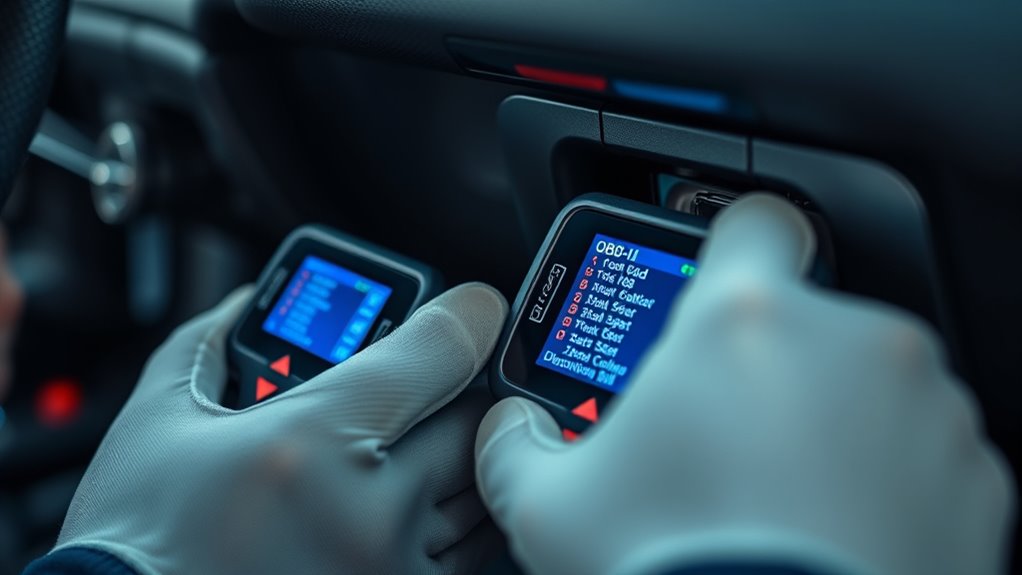
To guarantee a successful and safe clearing process, both technicians and car owners should follow best practices that prioritize accurate diagnostics and proper repair verification. Start by thoroughly diagnosing the root cause using code lookups in repair manuals or online databases. Perform necessary repairs, such as replacing faulty sensors or tightening gas caps, and verify these fixes before erasing codes. Always record all codes electronically or in writing for future reference. When using an OBD-II scanner, ensure it’s firmly plugged in and navigate to the Clear Codes function only after confirming repairs. After clearing, complete a proper drive cycle, including city and highway driving, and then rescan to confirm no codes reappear. Properly following these steps prevents unnecessary resets and ensures the vehicle’s systems are functioning correctly, which helps avoid masking ongoing issues that could lead to more costly repairs. Additionally, understanding the diagnostic process can help identify underlying problems more accurately before resetting any codes.
How Clearing Codes Affects Vehicle History and Resale

Clearing codes can hide a vehicle’s true repair history, which may hurt your resale value. Buyers and inspectors often see erased codes as a red flag, especially if recurring issues are later discovered. Keeping proper documentation and being transparent about repairs can help safeguard your vehicle’s worth and ensure compliance with disclosure rules. Additionally, clearing codes without addressing the underlying problem can lead to further complications down the line, especially if the vehicle has a history of diagnostic trouble codes. Understanding the importance of vehicle maintenance records can help you avoid potential issues with transparency and resale.
Impact on Resale Value
Have you ever wondered how resetting check engine codes before a sale can impact your vehicle’s value? Clearing codes doesn’t erase your vehicle’s history; it can still influence how buyers and appraisers perceive it. While standard reports may not show recent resets, related service records, emissions tests, or subsequent CEL activations can reveal the truth. Buyers often see suspicious resets as hiding problems, leading to lower offers.
- Your vehicle’s history might suggest unresolved issues, raising doubt.
- Potential buyers may discount your vehicle, fearing hidden repairs.
- Market value drops if recent resets hint at underlying faults.
- Repeated CELs after a reset can trigger lower appraisal scores.
- A clean title doesn’t guarantee a higher resale price if suspicious resets exist.
- Resetting codes immediately after repairs without proper fixes can be detected through diagnostic tools, further lowering perceived reliability.
- Additionally, vehicle history reports often include information about recent diagnostic resets, which can influence buyer confidence and market value.
- Proper reset procedures are crucial to avoid raising suspicion during inspections and appraisals.
Documentation of Repair History
Removing stored diagnostic codes can considerably impact your vehicle’s repair history by erasing detailed records that technicians rely on to diagnose and verify issues. When you clear codes, freeze-frame data—the snapshot of vehicle conditions at fault occurrence—is lost, making it harder to reproduce intermittent problems. Clearing history also deletes event timelines that help technicians identify recurring symptoms across trips, increasing diagnostic time and risking unnecessary parts replacements. Although some cloud platforms retain code history, onboard records, including OEM codes, are often erased, creating fragmented documentation. Permanent codes or manufacturer “history” entries may persist but might not be visible without advanced tools. This loss of detailed repair history can weaken your vehicle’s resale value, as future buyers or inspectors won’t see a complete diagnostic record, potentially raising questions about past issues. Additionally, clearing codes without proper documentation can hinder ongoing warranty claims or service histories, and understanding vehicle diagnostic records can help prevent such setbacks. Moreover, some diagnostic trouble codes are stored in the vehicle’s memory banks and clearing them without recording the original issues can complicate future troubleshooting efforts.
Disclosure Regulations Compliance
When you clear diagnostic codes without fixing the underlying issues, you risk violating federal emissions regulations, which can lead to serious legal consequences. The EPA enforces standards under the Clean Air Act, and bypassing repairs to hide problems can result in hefty fines, criminal charges, and liability. Clearing codes also affects your vehicle’s history, as stored data persists and can be uncovered during inspections or resale. This can:
- Lower your vehicle’s market value
- Raise suspicions during buyer inspections
- Lead to warranty disputes
- Result in insurance coverage denial
- Imply dishonest intent, risking legal trouble
Tampering with code data not only jeopardizes compliance but also damages trustworthiness, making your vehicle less appealing and potentially costly to operate legally. Furthermore, clearing codes without proper repair can cause recurring issues and complicate future diagnostics, increasing the risk of costly repairs down the line. Additionally, vehicle history reports can reveal previous code clearances, which may negatively impact your vehicle’s reputation and resale prospects. It is important to understand that diagnostic data is often stored securely to ensure transparency and accountability. Moreover, the regulatory framework requires accurate reporting of vehicle conditions to maintain emission standards and consumer trust. Understanding the storage of diagnostic codes can help you appreciate how persistent data impacts your vehicle’s compliance record. Being aware of data retention policies helps you recognize how long such information remains in your vehicle’s records.
Distinguishing Between Necessary and Premature Clearing

You need to understand when clearing codes is necessary, like after repairs to reset the system, versus doing it prematurely, which can erase valuable diagnostic information. Recognizing which codes are critical for safety or emissions and which are minor helps you avoid unnecessary resets. Making the right call guarantees accurate diagnosis and prevents missing underlying issues. Knowing how to interpret and manage diagnostic codes properly ensures you don’t overlook important details that could affect your vehicle’s performance or compliance.
Timing of Code Clearing
Timing your code clearing is essential because doing it too early can erase valuable diagnostic information that might be needed for accurate repairs. If you clear codes prematurely, you risk losing freeze frame data, error history, and subcodes that help identify intermittent faults. This can lead to misdiagnosis, repeated visits, and delayed repairs. Waiting until repairs are confirmed and the vehicle has completed necessary drive cycles ensures that all fault data is preserved for analysis. Proper timing allows you to verify the vehicle’s health and prevent False alerts from lingering codes. Additionally, understanding diagnostic data helps technicians make informed decisions during repairs.
Diagnostic Purpose vs. Hasty Reset
Clearing codes prematurely may seem like a quick fix, but it often undermines the diagnostic process. When you erase codes before a mechanic’s inspection, you lose critical evidence like freeze frame data, which captures engine conditions at the time of failure. This data helps identify intermittent issues and prevents misdiagnosis. A hasty reset can cause recurring codes to reappear quickly, masking ongoing problems and delaying repairs. It also resets emissions monitors, forcing lengthy drive cycles before tests pass, risking failure if done too soon. Without verifying repairs through proper drive cycles, codes may clear temporarily, but the underlying issue remains. Modern diagnostic systems store historical data that can be accessed even after codes are cleared, which can provide valuable insights into past problems. This approach can lead to missed diagnoses, repeated repairs, higher long-term costs, and potential legal risks if safety or emissions codes are concealed.
Recognizing Critical vs. Non-Critical Codes
Understanding the difference between critical and non-critical codes is essential before deciding to clear any trouble codes. Critical codes signal immediate risks like engine overheating, low oil pressure, or hydraulic failures that could cause severe damage or safety hazards. Non-critical codes, meanwhile, involve minor issues such as sensor drifts, emissions faults, or cabin air filter alerts that don’t threaten your vehicle’s operation right now. Recognizing these distinctions helps you avoid unnecessary delays or repairs. Properly identifying these types of codes can save you time and money by prioritizing repairs based on urgency.
- Feel the urgency when your check engine light blinks for critical issues.
- Know that non-critical codes often light up the lamp but won’t stop your drive.
- Understand that critical codes demand swift action to prevent damage.
- Recognize non-critical codes as scheduled maintenance reminders.
- Avoid clearing critical codes prematurely, risking further harm.
Legal Considerations and Regulatory Compliance

Guiding the legal landscape around clearing engine codes requires careful attention to regulations designed to protect consumers and guarantee environmental compliance. As a seller or buyer, you must disclose vehicle history, including any issues hidden by erased codes, to avoid legal disputes. Erasing codes before emissions testing can cause unreadiness, resulting in failed inspections and potential legal violations in regulated areas. Interfering with emissions diagnostics or selling vehicles with obscured problems may lead to fines or penalties. Using advanced scanners like GEARWRENCH helps detect erased codes, but laws often require full disclosure. Buyers have rights to proof of repairs, and sellers must comply with disclosure laws to prevent accusations of tampering. Understanding legal requirements is essential for compliance. Additionally, understanding the regulations related to emissions testing and vehicle repairs can help you avoid inadvertent violations. Proper documentation and adherence to emissions standards are crucial for lawful vehicle transactions and maintaining consumer trust. Staying informed ensures you avoid legal trouble and uphold regulatory standards.
Strategies for Effective Vehicle Diagnostics

To diagnose your vehicle effectively, you need to document codes carefully and understand their context. Using proper drive cycles guarantees the system runs through all necessary tests, giving accurate results. Avoid clearing codes prematurely, as doing so can erase valuable data that helps pinpoint the root cause of issues. Regularly updating your diagnostic tools and software ensures you interpret codes correctly and stay current with new vehicle technologies.
Code Documentation Importance
Accurate code documentation is essential for effective vehicle diagnostics because it guarantees you have a clear record of initial findings, repairs, and tests performed. This documentation guides troubleshooting, avoids redundant work, and guarantees accountability. When you record DTCs, component tests, and calibration details, you create a reliable history that can prevent misdiagnosis. Proper documentation helps identify recurring issues, track repair progress, and verify repairs’ effectiveness. It also ensures transparency with customers and supports warranty claims. Utilizing diagnostic tools effectively allows technicians to access raw data and interpret electronic information accurately, further improving diagnostic precision.
- Feel confident knowing your diagnostics are thorough and organized
- Quickly identify patterns or repeated faults
- Avoid costly repeat diagnoses
- Provide a solid repair history for future reference
- Ensure customer trust through detailed, accurate records
Proper Drive Cycles
Effective vehicle diagnostics rely heavily on properly executed drive cycles, which guarantee that the vehicle’s computer system accurately updates and verifies the status of emission-related monitors. Using the correct cycle prevents false “not ready” signals that could lead to unnecessary repairs or repeated testing. Manufacturer-specific drive cycles are ideal when available, as they target particular monitors and complete faster and more reliably than generic cycles. These cycles typically involve initial soak, warm-up, steady cruise, specific acceleration/deceleration events, and cool-down periods. Running the full sequence multiple times enhances monitor readiness. Interruptions, unsuitable conditions, or incomplete cycles can produce misleading results. To verify repairs effectively, ensure you follow the appropriate drive cycle for your make and model, exercising the critical systems thoroughly without shortcuts. Properly executing drive cycles is essential because it ensures that all emission system tests are completed and the vehicle’s diagnostic system reports a “ready” status, which is crucial for passing inspections.
Avoiding Premature Clearing
Avoiding premature clearing of diagnostic trouble codes (DTCs) is essential for accurate vehicle diagnosis. Clearing too early can wipe out valuable data—like freeze-frame info and historical fault records—that help pinpoint issues. It also removes pending or intermittent codes, increasing the risk of misdiagnosis and repeat repairs. Additionally, it destroys onboard diagnostics used for emissions and EVAP troubleshooting, which delays accurate repairs. Masking pre-existing faults can hide complex system interactions, leading to incomplete fixes. Plus, unnecessary clearing often results in wasted labor and parts if repairs are based on incomplete data.
- Preserve freeze-frame and historical data to identify exact fault conditions.
- Avoid clearing codes until repairs are verified.
- Document conditions when clearing transient codes.
- Use targeted clearing to retain diagnostic history.
- Only clear after confirming repairs and readiness status.
Frequently Asked Questions
Can Clearing Codes Void My Vehicle Warranty?
Clearing codes doesn’t automatically void your warranty, but it can if the manufacturer proves it was done to hide issues or tamper with the vehicle. Generally, if you clear codes without fixing the underlying problem, it might complicate warranty claims. To stay safe, document everything before and after clearing codes, and check your warranty’s specific policies—most don’t consider code clearing alone as grounds for voiding coverage.
How Long Should I Wait After Clearing Codes Before Testing?
You should wait at least one full drive cycle, roughly overnight, before testing after clearing codes. This allows the vehicle’s systems to self-check and complete readiness monitors. For more thorough results, drive 100–200 miles of varied terrain over several days. Rushing into testing too soon can lead to inconclusive results or missed issues, so patience ensures accurate diagnostics and proper vehicle health assessment.
What Tools Are Best for Reading and Saving Diagnostic Data?
You should choose tools like the Autel MaxiCOM MK808BT or Launch X431 V+ Pro for reading and saving diagnostic data. These advanced scanners offer full-system diagnostics, Bluetooth connectivity, and data logging features. They allow you to store essential information for future reference, helping you track vehicle issues over time. These tools are user-friendly and suitable for both professional mechanics and dedicated DIY enthusiasts, ensuring you get accurate, detailed diagnostic reports.
Is It Legal to Clear Codes Before Selling a Used Car?
It’s generally legal to clear codes before selling a used car, but it’s risky. Clearing codes to hide problems can be considered fraudulent if it misleads buyers about the vehicle’s condition. If the issues reappear and cause emissions violations or safety concerns, you could face penalties or legal trouble. Always repair underlying issues before sale or fully disclose any problems, to avoid potential legal or regulatory consequences.
How Do I Know if I Need to Clear Codes During Repairs?
Clearing codes is like resetting a game level—you should only do it if you’ve fixed the problem. If you still see active codes or unresolved issues, don’t clear them, as they help diagnose faults. Wait until repairs are complete, then clear codes to guarantee accurate system readings. Always verify that the fault won’t reoccur, and consider using an advanced scanner to review code history before clearing.
Conclusion
Knowing when to clear codes is like tending a garden—sometimes you prune to help growth, other times you risk losing valuable insights. Clear codes wisely, and you’ll avoid muddying your vehicle’s history or running afoul of regulations. Think of diagnostic data as your vehicle’s hidden diary, revealing secrets only a skilled mechanic can interpret. With careful timing, your repairs will be as smooth as a well-oiled machine, steering you clear of pitfalls and toward a reliable ride.