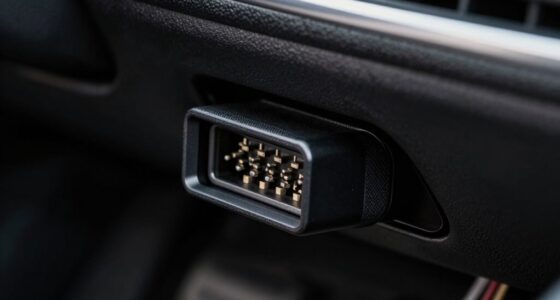

Clearing codes without fixing the underlying problems is a mistake that can make diagnosing your vehicle much harder. When you erase error messages, you hide real issues, losing critical clues needed for accurate repairs. This can lead to repeating the same mistakes, replacing parts unnecessarily, and missing root causes. To properly diagnose and fix your vehicle, you need to understand why the codes appeared in the first place. Keep going to discover how proper troubleshooting tools and methods can save you time and money.
Key Takeaways
- Clearing codes masks underlying issues, delaying accurate diagnosis and potentially leading to more complex repairs.
- Erasing trouble codes without fixing root causes can cause loss of diagnostic data and mislead troubleshooting efforts.
- Premature code clearing erases valuable diagnostic history, complicating future fault analysis and prolonging repair times.
- Relying solely on code clearing ignores necessary sensor calibration and software updates, risking false alarms and unresolved problems.
- Proper diagnosis and repairs require systematic analysis; simply clearing codes hampers effective troubleshooting and safe vehicle operation.
Understanding the Role of Diagnostic Trouble Codes
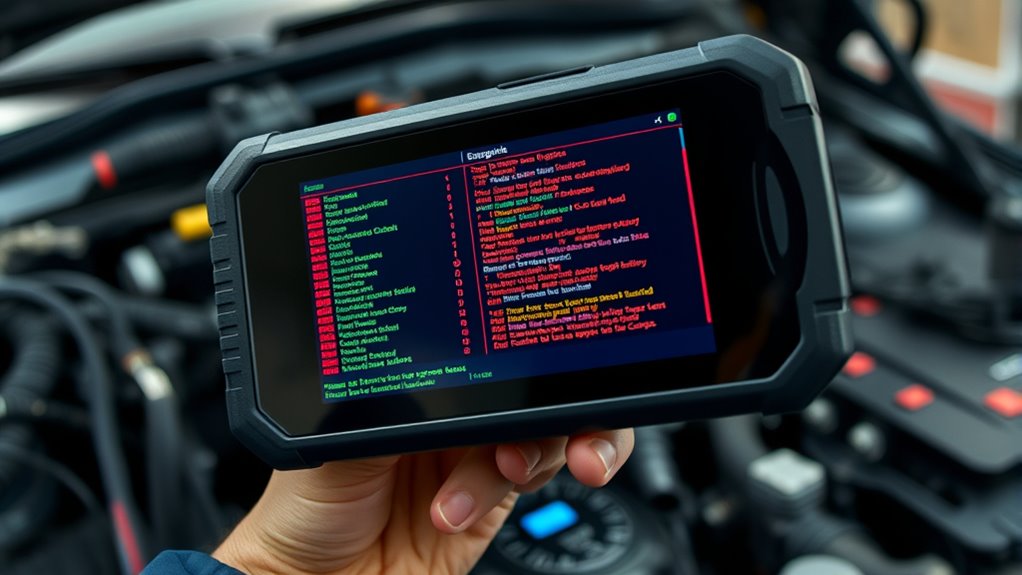
Diagnostic trouble codes (DTCs) act as your vehicle’s way of signaling when something isn’t right. They help identify specific issues, guiding you toward necessary repairs. DTCs are generated when sensors detect abnormal readings, which may require sensor calibration to verify accuracy. Sometimes, outdated software can cause false codes or prevent correct diagnosis, making software updates essential. These updates improve the vehicle’s ability to interpret sensor data correctly, reducing false alarms and ensuring proper system communication. Properly managing DTCs involves calibration and keeping your vehicle’s software current, not simply resetting codes. Smart sensors integrated into modern vehicles can enhance diagnostic accuracy and help prevent false DTCs by providing more reliable data. Additionally, understanding the contrast ratio of your vehicle’s onboard systems can aid in diagnosing display-related issues that might affect visual indicators. Regularly performing diagnostic scans can help catch issues early before they develop into more serious problems. A thorough understanding of vehicle electronics can further improve troubleshooting efficiency and accuracy. Moreover, staying informed about the role of sensor calibration can prevent misdiagnosis caused by inaccurate sensor readings.
Why Clearing Codes Isn’t a Fix
When you clear codes without fixing the problem, you’re just masking the real issue. This delays an accurate diagnosis and prevents you from understanding what’s truly wrong. As a result, proper repairs become harder, and the underlying problem remains unresolved. Incorporating diagnostic tools can help in diagnosing and resolving these issues more efficiently. For example, understanding net worth and other key details about vehicle systems can improve troubleshooting accuracy. Additionally, paying attention to piercing aftercare and potential signs of infection can ensure a healthier healing process and prevent complications. Implementing holistic SEO strategies in diagnostic procedures can also enhance troubleshooting efficiency by promoting comprehensive analysis.
Masks Underlying Issues
Clearing codes might remove a warning light or error message from your vehicle’s dashboard, but it doesn’t address the root cause of the problem. When you only clear codes, the underlying issue remains hidden, often masked by temporary fixes. For example, a faulty sensor may trigger an error, but simply clearing the code doesn’t fix the sensor itself. Sometimes, the vehicle needs sensor calibration or software updates to properly diagnose and resolve the problem. Without these steps, the problem can return or worsen, making future repairs more complicated. Masking issues with code clearing delays proper diagnosis, risking further damage and more costly repairs down the line. To truly resolve problems, you need to go beyond just clearing codes and focus on identifying and fixing the root cause. Additionally, understanding the importance of diagnostic tools can help ensure that underlying issues are properly identified rather than just temporarily masked. Utilizing advanced diagnostic equipment can provide more accurate diagnostics, preventing unnecessary repairs and ensuring long-term vehicle health. Recognizing the limitations of code clearing is essential for effective vehicle maintenance.
Delays Accurate Diagnosis
Simply clearing codes might make the warning disappear from your dashboard, but it doesn’t provide an accurate picture of what’s really wrong. When you erase codes without addressing the underlying issue, you delay proper diagnosis. Misinterpreting codes can lead you to overlook critical problems that need sensor calibration or repairs. Without accurate code interpretation, you might assume the problem is fixed, but the root cause remains. This delay hampers your ability to identify the true issue promptly, risking further damage or costly repairs later. Relying on clearing codes as a quick fix prevents you from understanding what’s truly wrong. Instead, it’s better to investigate the codes thoroughly, ensuring an accurate diagnosis that saves time and money in the long run.
Hinders Proper Repairs
Clearing codes without fixing the actual problem often leads to improper repairs because it removes the warning signals that alert you to underlying issues. When you erase the codes, you might miss the need for sensor calibration or necessary software updates, which are essential for proper repairs. Ignoring these steps can cause the problem to reappear or worsen, as the root cause remains unaddressed. For example, a faulty sensor might trigger a warning, but simply clearing the code doesn’t fix the sensor or update the vehicle’s software to interpret signals correctly. Without addressing these underlying issues, you risk further damage or costly repairs down the line. Proper diagnosis involves not just clearing codes but ensuring sensors are calibrated and software is current, enabling effective and lasting fixes. Additionally, understanding the diagnostic process is vital for correctly identifying issues before attempting repairs. Recognizing the importance of system calibration ensures that the vehicle’s components communicate properly and prevents recurring problems. Regularly verifying system functionality can help catch issues early and avoid unnecessary repair cycles.
The Risks of Ignoring Warning Lights
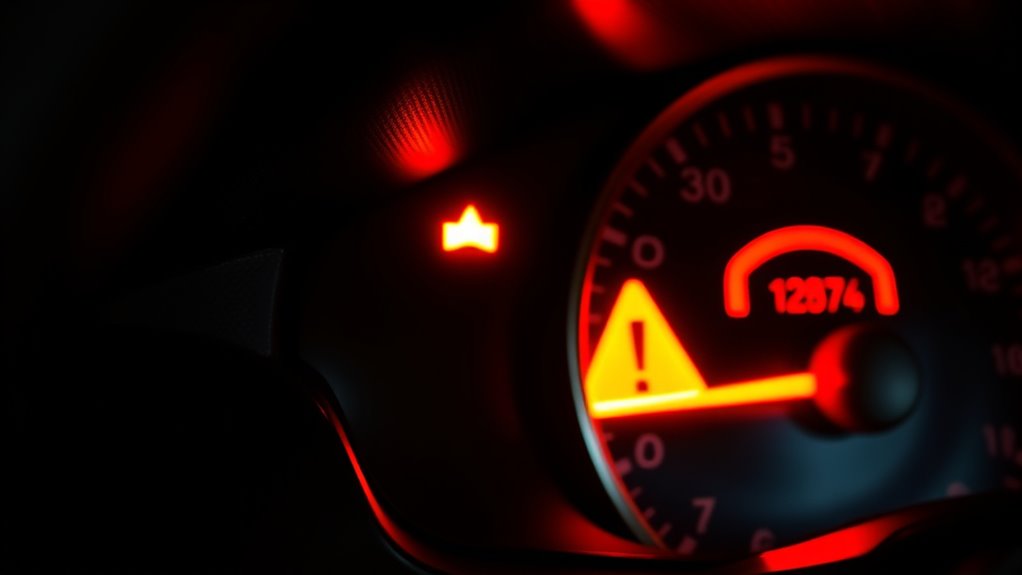
Ignoring warning lights on your dashboard might seem like a quick fix, but it can lead to serious problems down the line. Warning lights alert you to issues that trigger diagnostic codes, which help identify specific problems in your vehicle. When you dismiss these lights without investigation, you risk letting minor issues turn into costly repairs or dangerous failures. For example, ignoring a check engine light might hide a failing sensor or engine problem that worsens over time. Not addressing warning lights promptly can also cause damage to other components, increasing repair costs. Additionally, understanding diagnostic codes can help you interpret what the warning lights mean and take appropriate action. Recognizing vehicle maintenance indicators is crucial for maintaining safety and preventing further damage. Being aware of fault detection systems can also help you better understand how your vehicle alerts you to issues. A comprehensive diagnostic approach can facilitate quicker repairs and reduce the risk of overlooked problems. By paying attention to these signals, you guarantee your vehicle stays safe and reliable. Support Breakfast options like a healthy meal can keep your energy levels up while you troubleshoot vehicle issues. Never assume warning lights are just a nuisance—treat them as a crucial communication from your car.
How Clearing Codes Can Obscure the Root Problem
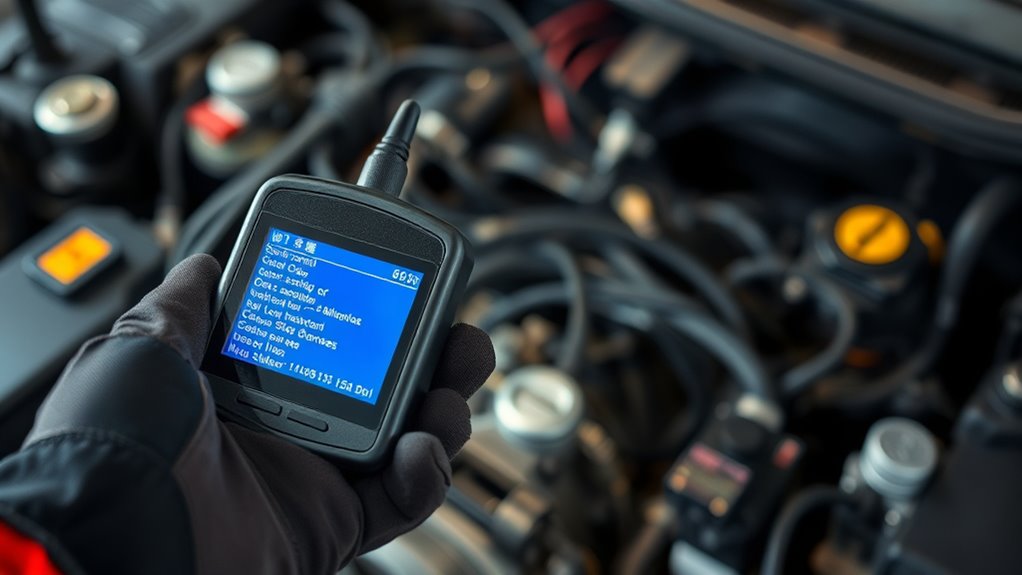
When you clear diagnostic trouble codes without fixing the underlying issue, you risk masking the true problem behind a temporary fix. This can lead to missed clues that point to the real cause. For example:
- You might think a sensor calibration is fine after clearing codes, but the sensor could still be faulty.
- Replacing a part without addressing the root cause might temporarily resolve symptoms, hiding ongoing issues.
- Clearing codes can erase important data that helps identify patterns or recurring problems, making future diagnostics more challenging.
- Misleading codes might suggest a different issue, causing you to replace parts unnecessarily instead of fixing the actual problem.
- Relying solely on cleared codes can hinder accurate diagnosis, as essential diagnostic data may be lost, complicating troubleshooting. Additionally, a thorough understanding of testing methodologies can help prevent overlooking critical signs during diagnosis. For example, understanding the sensor’s function and calibration process can be crucial in identifying subtle faults early. Recognizing the importance of diagnostic procedures ensures a comprehensive approach to troubleshooting rather than just clearing codes. Moreover, awareness of vehicle-specific systems and their behaviors can prevent misinterpretation of codes and improve diagnostic accuracy.
The Impact on Future Troubleshooting Efforts

By resetting diagnostic trouble codes without addressing the underlying issues, you can create confusion during future troubleshooting. When codes are cleared prematurely, you lose critical information about the original problem, making it harder to identify the root cause later. This can lead to unnecessary sensor calibration, as you might replace or adjust components without understanding their actual fault. Additionally, ignoring the importance of proper software updates leaves your vehicle vulnerable to unresolved bugs that could cause false codes or obscure genuine issues. Future diagnostics become more complex because you won’t have a complete history to guide your efforts. As a result, troubleshooting becomes more time-consuming, costly, and less effective, increasing the risk of overlooking or misdiagnosing the real problem. Proper appliance maintenance plans can help prevent such issues by ensuring regular inspections and timely updates.
The Importance of Proper Diagnostics

Getting accurate code readings is essential to understanding what’s really wrong. Following proper diagnostic procedures helps you identify the true root cause instead of just treating symptoms. When you focus on these points, your repairs become more effective and long-lasting.
Accurate Code Readings
Have you ever wondered why accurate code readings are essential for proper vehicle diagnostics? Precise readings prevent misdiagnoses and unnecessary repairs. To guarantee accuracy, focus on:
- Proper sensor calibration to eliminate false signals.
- Correctly interpreting codes to identify root causes.
- Using quality tools to avoid measurement errors.
- Double-checking sensor connections for reliability.
When sensors are calibrated correctly, code interpretation becomes straightforward, helping you pinpoint issues faster. Misreading codes due to poor calibration or faulty tools can lead you astray, wasting time and money. Accurate code readings set a solid foundation for diagnosing problems effectively, ensuring you don’t overlook critical issues. Remember, precise diagnostics depend on your ability to interpret data accurately, making calibration and reading techniques essential. Proper readings aren’t just a step—they’re the key to solving vehicle problems efficiently.
Proper Diagnostic Procedures
Accurate code readings lay the groundwork for effective vehicle diagnostics, but even the most precise data won’t lead to correct repairs without proper diagnostic procedures. You need to verify sensor calibration to ensure the sensors are providing accurate signals. Proper procedures involve systematically interpreting codes rather than jumping to conclusions, which helps avoid misdiagnosis. Always start with a visual inspection and confirm sensor connections before testing. Use the vehicle’s service information to understand code meanings and expected sensor behavior. Avoid assumptions; instead, rely on step-by-step diagnostics to identify whether the code points to a true malfunction or a calibration issue. Following thorough diagnostic procedures guarantees you interpret codes correctly, preventing unnecessary repairs and saving time in the long run.
Recognize Root Causes
Recognizing the root cause of a vehicle’s issue is crucial, and proper diagnostics are fundamental to pinpointing it accurately. Without thorough fault isolation, you risk misdiagnosing problems or chasing symptoms. To effectively diagnose, focus on:
- Checking sensor calibration to make certain sensor readings are accurate.
- Using diagnostic tools to isolate faults precisely.
- Analyzing error codes to identify patterns or recurring issues.
- Verifying wiring and connections that could affect sensor performance.
When to Clear Codes and When to Leave Them Be
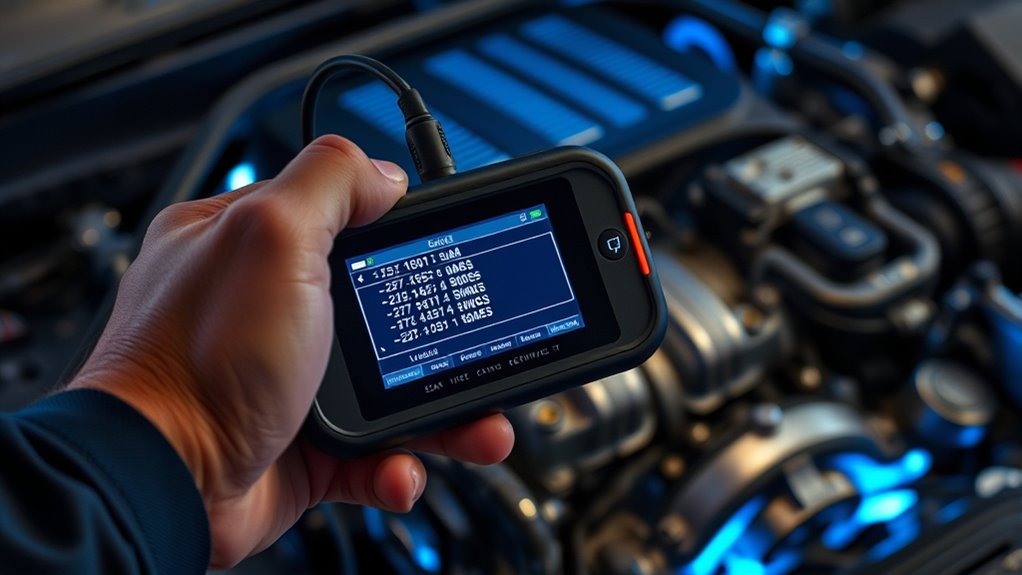
Knowing when to clear or leave a code alone can prevent unnecessary headaches and guarantee your vehicle runs smoothly. If a code appears after a repair, wait until you’ve confirmed the sensor calibration is correct and the issue is resolved. Clearing codes prematurely can erase valuable information needed for accurate code interpretation later. Sometimes, a code may reset itself after fixing the root cause, indicating the problem is resolved. However, if the check engine light is flickering or the vehicle exhibits symptoms like poor performance, don’t clear the code immediately. Instead, record the code and monitor whether it reappears. Clearing codes without addressing underlying issues can lead to misdiagnosis and prolonged problems, so use your judgment carefully.
The Consequences of Resetting Without Repairs

Resetting a code without fixing the underlying problem can lead to serious consequences. First, it may hide critical issues, making future diagnostics more difficult. Second, ignoring sensor calibration needs can result in inaccurate readings, causing poor vehicle performance. Third, resetting the ECU without performing necessary software updates can leave outdated parameters that misinform the system. Fourth, unresolved problems might cause damage to components, increasing repair costs. By simply resetting, you risk masking problems that require attention, which could worsen over time. This approach delays proper repairs and may lead to drivability issues or safety hazards. Always address the root cause before clearing codes to ensure your vehicle operates safely and efficiently.
Best Practices for Vehicle Troubleshooting
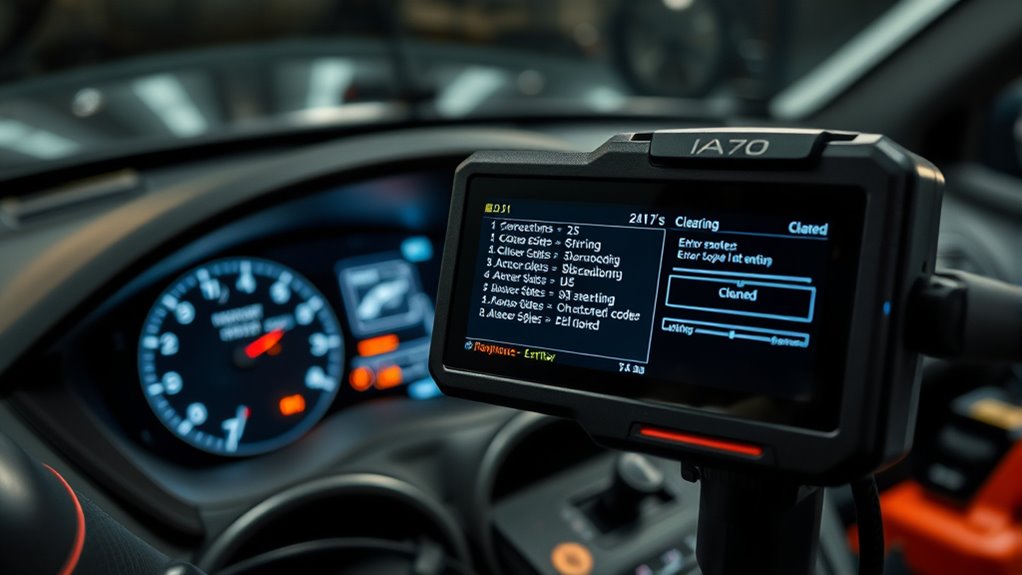
Effective vehicle troubleshooting begins with a systematic approach that isolates the problem efficiently. Start by carefully reading and interpreting the diagnostic codes, ensuring you understand what each code indicates. Proper code interpretation is vital; don’t jump to conclusions or clear codes prematurely. Next, verify sensor calibration; inaccurate sensor readings can mislead diagnoses. Use reliable tools to check sensor outputs and confirm they meet manufacturer specifications. Always document your findings and avoid resetting codes before repairs are complete, as this can obscure the root cause. Follow a logical process—inspect related components, test sensors, and review calibration procedures. Staying methodical reduces guesswork, saves time, and increases your chances of identifying the real issue without creating additional problems.
How Professional Diagnostic Tools Improve Accuracy

Professional diagnostic tools help you read codes precisely, reducing the chance of misinterpretation. They eliminate guesswork, so you can confidently identify issues without second-guessing. This accuracy speeds up repairs, getting your vehicle back on the road faster.
Precise Code Reading
When diagnosing vehicle issues, relying solely on generic code readers can lead to missed or incorrect information. Professional diagnostic tools offer precise code reading by enhancing accuracy through advanced features. They interpret codes more reliably, reducing misdiagnosis risks. These tools also assist with sensor calibration, ensuring readings are accurate and consistent. Here’s how they improve the process:
- Accurate code interpretation minimizes false positives.
- Better sensor calibration prevents misleading data.
- Faster identification of root causes saves time.
- Detailed data logging supports thorough analysis.
With these capabilities, you can confidently diagnose issues, avoid unnecessary repairs, and ensure that the right fixes are applied the first time. Precision in code reading makes troubleshooting more straightforward and reliable.
Eliminates Guesswork
Since generic code readers often provide incomplete or inaccurate data, relying on them can lead you down the wrong troubleshooting path. Professional diagnostic tools eliminate guesswork by delivering precise, detailed information. They perform accurate sensor calibration checks, ensuring sensors are functioning correctly and readings are reliable. This accuracy improves code interpretation, helping you understand exactly what’s wrong without jumping to conclusions. Advanced tools can identify subtle issues that simple readers might miss, reducing the risk of misdiagnosis. By providing clear, trustworthy data, these tools help you focus on the real problem instead of chasing false leads. Eliminating guesswork means you spend less time troubleshooting and more time fixing the issue right the first time.
Accelerates Repairs
Accurate data from advanced diagnostic tools speeds up repairs by allowing you to pinpoint issues quickly and confidently. With precise code interpretation, you can identify the root cause faster, reducing guesswork. Professional tools also assist with sensor calibration, ensuring sensors provide correct readings. This accuracy minimizes unnecessary part replacements and trial-and-error fixes.
Here’s how these tools improve repair speed:
- Rapidly interpret diagnostic trouble codes to understand the problem.
- Calibrate sensors accurately, preventing misdiagnoses caused by faulty readings.
- Trace wiring issues efficiently with detailed schematics.
- Confirm repairs instantly by re-scanning, ensuring issues are fully resolved.
Frequently Asked Questions
Can Clearing Codes Damage Vehicle Components?
Clearing codes with diagnostic tools generally won’t damage your vehicle sensors or components if done correctly. However, if you use improper techniques or tools, you might inadvertently reset important data or mask underlying issues, making diagnosis harder later. Always make sure you’re using the right diagnostic tools and follow proper procedures. This way, you avoid causing unintended problems and keep your vehicle in good shape while clearing codes.
How Often Should I Clear Diagnostic Trouble Codes?
You should clear diagnostic trouble codes only when necessary, such as after fixing an issue, to avoid disrupting diagnostic timing. Typically, resetting too often isn’t recommended because it prevents accurate monitoring of ongoing problems. Instead, clear codes after repairs are complete and you’re confident the issue is resolved. Regular reset frequency isn’t essential; focus on proper diagnostics first, then clear codes to ensure accurate future readings and avoid masking potential problems.
Are There Legal Issues With Clearing Codes Before Repairs?
You’re playing with fire if you clear codes before repairs without understanding legal implications. Legally, it can be considered tampering, especially if it affects warranty coverage or violates emissions laws. Warranty considerations come into play because clearing codes to hide issues might void your coverage. Always consult your vehicle’s warranty policy and local regulations before clearing codes, as it’s better to be safe than risking legal trouble down the road.
How Long Do Codes Typically Stay Stored After Being Cleared?
Codes typically stay stored in your vehicle’s computer for about 50 to 100 key cycles or up to a month, depending on the make and model. This is known as code retention, which impacts the diagnostic duration. If you clear codes prematurely, the vehicle might not have enough time to detect ongoing issues, making it harder to identify root problems later. Always consider how long codes remain stored during diagnostics.
Do All Vehicles Respond the Same Way to Code Clearing?
Think of vehicle response variability like a snowflake—no two are exactly alike. When you clear codes, sensor reset effects differ across vehicles, so some may quickly recalibrate while others take longer. Not all vehicles respond the same way; some might clear codes effortlessly, while others need additional steps. Always consider that each vehicle’s unique system influences how it reacts to code clearing, making diagnosis a bit like solving a mystery.
Conclusion
Remember, clearing codes is like wiping fog off your windshield—you might see clearer temporarily, but the underlying problem remains hidden. Before you hit reset, think of it as closing a chapter without understanding the story. Using professional tools helps you read that story accurately, so you can fix the real issue instead of chasing shadows. Keep your vehicle’s health in focus, and don’t let a quick reset turn into a long-term problem.