
TL;DR

Get business pricing on garage and car supplies
- Business-only prices and quantity discounts
- Tax-exempt purchasing
- Multiple users, one account, clear invoices
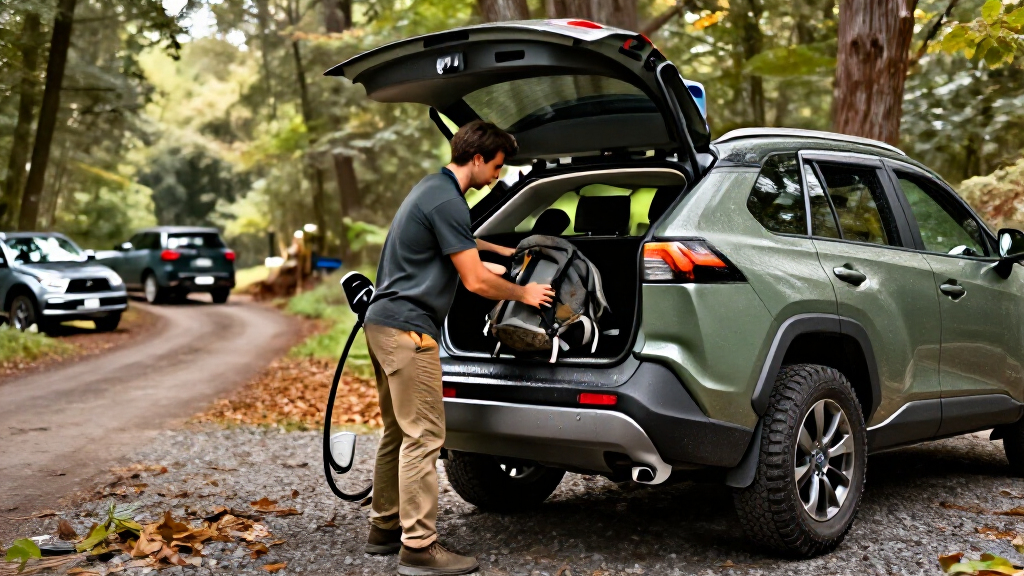
The 2026 Toyota RAV4 Woodland PHEV combines a 324-horsepower plug-in hybrid system with an estimated 49 miles of electric range and light-duty off-road equipment. The Drive’s review says it is smooth and useful for everyday electric driving, but the Woodland’s modest trail upgrades come with slightly less range and efficiency than other RAV4 PHEV trims.
The 2026 Toyota RAV4 Woodland PHEV pairs a plug-in hybrid system rated at 324 horsepower with nearly 50 miles of electric driving range, but a review by The Drive finds its trail equipment better suited to dirt roads and light terrain than demanding off-road routes. The Woodland is one of four RAV4 plug-in hybrid grades and is priced at about $48,000, making its trade-off between rugged styling, modest capability gains and electric efficiency a key consideration for buyers.
The Drive reviewer Cy Soliman tested the Woodland in California’s Apple Valley desert. Toyota lists the trim at 49 miles of electric-only range and 94 MPGe combined. The SE and XSE plug-in hybrid grades are rated at 52 miles and 96 MPGe. Woodland adds 8.5 inches of ground clearance and approach and departure angles of 20 and 24 degrees, compared with 8.1 inches and 19 and 23 degrees for the SE and XSE. Soliman notes that the extra clearance comes from the all-terrain tires, not a higher suspension.
The powertrain combines a 2.5-liter four-cylinder engine with front and rear electric motors. Toyota’s stated combined output is 324 horsepower, and the rear motor provides electronic on-demand all-wheel drive. Soliman describes the crossover’s acceleration as immediate and its switch between electric and gas power as smooth. The vehicle weighs about 4,500 pounds, but the review reports that its steering remained light and its ride comfortable during the test.
On loose dirt, uneven ground and light brush, the all-terrain tires and added clearance handled the route without complaint, according to the review. The tester did not encounter terrain that required substantial wheel articulation or low-range gearing. The Woodland also has roof rails, fender cladding, a distinct front fascia, patterned cabin trim and heated SofTex-trimmed seats. It shares the RAV4 PHEV’s 10.5-inch touchscreen and 12.3-inch digital gauge cluster.
Electric Range Versus Trail Gear
The Woodland presents buyers with a practical choice within Toyota’s RAV4 plug-in hybrid lineup: prioritize styling and a small increase in ground clearance, or choose another grade for a little more electric range and better stated efficiency. The differences are modest on paper, but they matter for drivers hoping to use electric power for everyday trips. The Drive’s reviewer says real-world range came within about two miles of Toyota’s 49-mile figure, though individual results will vary.
Charging access is also part of the value calculation. Soliman estimated that a household Level 1 outlet would need about 15 hours for a full charge and reported getting roughly 60% overnight. A Level 2 home charger was estimated to reduce the time to about 2.5 to 3 hours. The review says the Woodland supports DC fast charging, with a claimed or observed 10-to-80% top-up taking around 35 minutes; the source does not specify the testing conditions. For shoppers without regular charging access, the plug-in system’s electric-driving benefits may be harder to realize.
Toyota RAV4 Woodland PHEV accessories
As an affiliate, we earn on qualifying purchases.
As an affiliate, we earn on qualifying purchases.
How Woodland Differs From Other Grades
Toyota offers four RAV4 PHEV grades in the source material: SE, XSE, Woodland and GR Sport. The Woodland’s identity is built around a more rugged appearance and equipment, including all-terrain tires and a trail drive mode. Its gains over the SE and XSE include 0.4 inch of stated ground clearance and one degree each in approach and departure angles, while its rated electric range is three miles lower.
The review frames those changes as useful for buyers who regularly travel on unpaved access roads, but not as evidence that the Woodland is a dedicated off-road vehicle. Soliman’s desert test involved light terrain and did not establish how the vehicle performs on more difficult trails. The source also cites a separate assessment by The Drive senior editor Caleb Jacobs, who described the Woodland’s off-road features as limited to all-terrain tires, a traction-focused trail mode and downhill assist.
“The transition between electric and gas power is remarkably seamless.”
— Cy Soliman, The Drive reviewer
As an affiliate, we earn on qualifying purchases.
Limits of the Test Drive
The review covers one vehicle and a limited desert route, so it does not establish how the Woodland would perform on harder trails or across a broad range of driving and weather conditions. The supplied report does not give a detailed charging test protocol, exact purchase price breakdown, or information about incentives and regional availability. Its range and charging observations should be treated as the reviewer’s results, not a guarantee for every owner.
The source also does not provide comparative long-term reliability, maintenance costs, or a complete ownership-cost analysis for the Woodland versus the other RAV4 PHEV grades. Buyers should check current specifications and pricing with Toyota dealers before making a purchase decision.
As an affiliate, we earn on qualifying purchases.
Compare Prices and Charging Options
Prospective buyers can compare the Woodland with the SE and XSE using current dealer quotes and Toyota’s latest specifications, paying particular attention to the difference in electric range, equipment and final price. Owners considering a plug-in hybrid should also check whether a Level 2 charger can be installed at home and review local charging access. The review supplies no further test or publication milestone, so availability, pricing and any later updates remain dependent on Toyota and dealer information.
As an affiliate, we earn on qualifying purchases.
Key Questions
How far can the 2026 RAV4 Woodland PHEV travel on electric power?
Toyota rates the Woodland at 49 miles of electric-only range. The Drive reviewer reported a real-world result within about two miles of the stated figure; actual range can vary.
Is the Woodland a serious off-road vehicle?
The review found it capable on loose dirt, uneven ground and light brush, but did not test demanding trails. Its all-terrain tires and added clearance do not make it a dedicated rock crawler.
How does its range compare with other RAV4 PHEV trims?
The Woodland is rated at 49 miles and 94 MPGe combined. The SE and XSE are rated at 52 miles and 96 MPGe, while the source does not give comparable figures for the GR Sport.
How long does charging take?
Soliman estimated about 15 hours on Level 1 and 2.5 to 3 hours on a Level 2 charger. The review also reports a 10-to-80% DC fast-charge time of around 35 minutes, without specifying test conditions.
What does the RAV4 Woodland PHEV cost?
The review frames the vehicle as a roughly $48,000 RAV4. The supplied material does not give an exact manufacturer’s suggested retail price or explain whether taxes, options or fees are included.
Source: rss
Evergreen bestsellers Picks
bestsellers
As an affiliate, we earn on qualifying purchases.