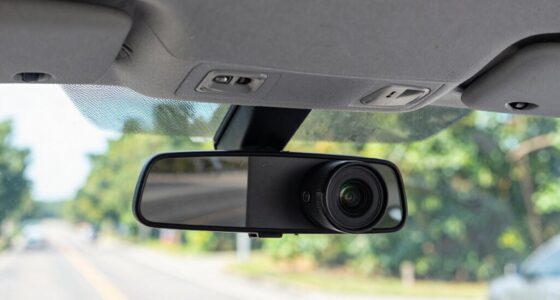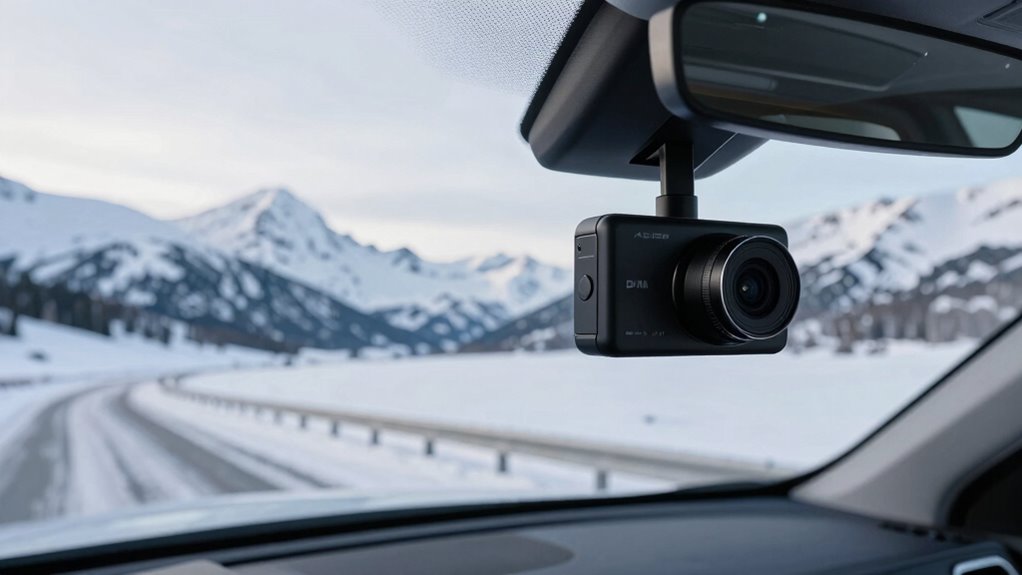

In Alaska, you can use dash cams by following mounting rules that keep your device within about 5 square inches, placed behind or near the rearview mirror, and avoiding obstruction of your view. You can record audio if at least one person consents, but always inform passengers and respect privacy. Make sure your device doesn’t block airbags or controls. To find out more about how to stay compliant and protect your rights, keep exploring these guidelines.
Key Takeaways
- Dash cams must be mounted within 5 inches of the windshield and not obstruct the driver’s view, following Alaska size and placement restrictions.
- Audio recording is legal with at least one-party consent; informing passengers is recommended to ensure transparency.
- Mount dash cams behind or near the rearview mirror to minimize obstruction and comply with visibility laws.
- Recorded footage can be used as legal evidence if obtained lawfully; manage data responsibly and respect privacy rights.
- For fleet use, develop clear policies on mounting, recording, data handling, and driver notification in accordance with Alaska laws.
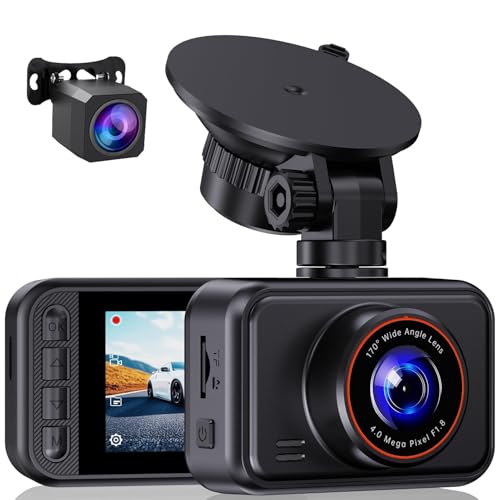
E-YEEGER Dash Cam Front and Rear, 2.5K Dual Dash Camera for Cars, 2560P Mini Car Camera, 2 inch IPS Screen, WDR Night Vision, 24 Hours Parking Monitor, G-Sensor, Support 256 GB Max
【2.5K Dashcam Front and Rear Cameras】The S60 dash cam delivers unparalleled clarity with a 2560*1440P front camera and…
As an affiliate, we earn on qualifying purchases.
As an affiliate, we earn on qualifying purchases.
Legal Requirements for Dash Cam Mounting in Alaska
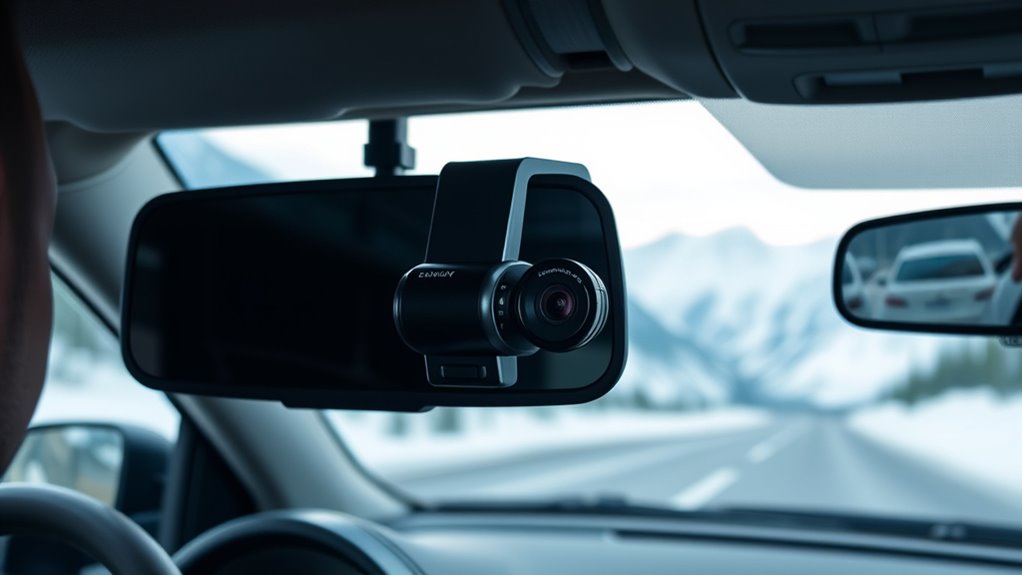
In Alaska, you must guarantee your dash cam doesn’t obstruct your view while driving, as outlined by Alaska Statute 13.04.225. This means your device must be mounted in a way that doesn’t block or impair your ability to see the road clearly. Enforcement depends on traffic officers determining whether your dash cam materially interferes with safe operation. The law applies to all vehicles on public highways, including passenger cars and commercial vehicles. To stay compliant, keep your dash cam’s size under about 5 square inches—most commonly a 2”×2” mount. Mount it on the dashboard, behind or near the rearview mirror, or in other low-visibility spots. Secure your device properly, avoid airbags, and ensure it doesn’t interfere with controls or your primary sightlines. Proper mounting position is essential to avoid violations and ensure safety. Additionally, being aware of dash cam regulations can help you avoid potential legal issues related to privacy and proper device placement. Considering the device’s removability can also impact compliance, as easily removable units are often viewed more favorably by enforcement. Also, understanding local privacy laws can help prevent unintended privacy violations related to audio recording or footage sharing. Regularly reviewing privacy policies related to dash cam footage can further assist in maintaining legal compliance and respecting others’ rights.
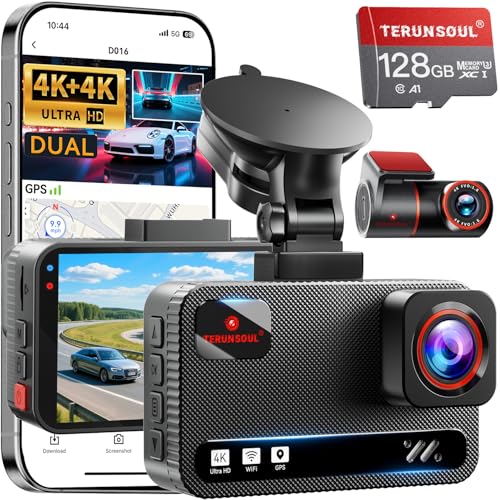
TERUNSOUl 4K+4K Dash Cam Front and Rear, Free 128GB Card Included, 5.8GHz WiFi Dash Camera for Cars, Built-in GPS, G-Sensor, 170°Wide Angle, 3" IPS Screen, 24H Parking Mode, Support 512GB Max
Ultra HD 4K Front + 4K Rear Recording: The Terunsoul dash cam supports dual-channel simultaneous recording, capturing both…
As an affiliate, we earn on qualifying purchases.
As an affiliate, we earn on qualifying purchases.
Windshield Placement Rules and Restrictions

When installing your dash cam in Alaska, understanding windshield placement rules helps you stay compliant with state laws. You must make certain your device does not obstruct your view or violate size restrictions. Keep the dash cam smaller than 5 square inches on the driver’s side, with a 2×2 inch limit. The passenger side can sometimes allow larger devices, up to 7 inches, depending on interpretation. Nontransparent materials must not impair your vision or block your view. Position your dash cam on the dashboard or behind the rearview mirror to avoid interference with wipers or sightlines. Proper placement is essential; mounting on the dashboard is the safest choice. Violations happen if your dash cam obstructs your vision, risking citations and safety issues. Following these guidelines helps ensure your dash cam use remains within legal limits and keeps you safe on the road. Additionally, ensuring your device is properly mounted can help prevent accidental dislodging or obstructing your view. It’s also important to consider regulatory compliance, which varies based on local laws and often requires staying informed about updates to legislation. Being aware of vehicle safety laws can further help you avoid inadvertent violations. Staying informed about wave and wind restrictions can also aid in maintaining legal and safe dash cam installations. Understanding how security zone info impacts vehicle equipment placement can further enhance your compliance and safety.
TERUNSOUl 4K+4K Dash Cam Front and Rear, Free 128GB Card Included, 5.8GHz WiFi Dash Camera for Cars, Built-in GPS, G-Sensor, 170°Wide Angle, 3" IPS Screen, 24H Parking Mode, Support 512GB Max
Ultra HD 4K Front + 4K Rear Recording: The Terunsoul dash cam supports dual-channel simultaneous recording, capturing both…
As an affiliate, we earn on qualifying purchases.
As an affiliate, we earn on qualifying purchases.
Audio Recording Laws and Consent Considerations
Alaska’s one-party consent law allows you to record private conversations as long as at least one person involved agrees. This means if you’re in the vehicle and recording a conversation you’re part of, it’s generally legal. However, recording conversations between passengers without their consent can pose legal risks unless the driver or one of the passengers agrees. To minimize disputes, it’s best to give clear notice—like a sticker or verbal warning—that audio is being recorded. Default device settings should also be adjusted to disable audio recording if you can’t get consent. Remember, recording private conversations without consent can lead to civil liability and penalties. When in doubt, ensure at least one party involved is aware of and agrees to the recording to stay compliant with Alaska law. Recording private conversations without consent can also be subject to additional restrictions under other privacy laws. It’s important to understand that privacy laws vary by jurisdiction and can affect recordings beyond just Alaska. Additionally, being aware of audio recording laws and consent helps prevent potential legal issues related to at-home or in-vehicle recordings. For instance, understanding surveillance and privacy regulations can provide further guidance on lawful recording practices. Moreover, familiarizing yourself with state-specific laws ensures you stay within legal boundaries when using dash cams and recording devices. Being aware of personal privacy rights can also help you avoid inadvertent legal violations.

Rear Camera Holder Dash Cam Car Rear Camera Rear Window Bracket Backup Camera Mount 【Strong Adhesive】 180° Adjustment Rearview Camera Bracket Rear Windshield for SUV, Truck, RV, Auto
【Quick Installation & No Drilling Required】This dash cam rear bracket is very easy to install, just use two…
As an affiliate, we earn on qualifying purchases.
As an affiliate, we earn on qualifying purchases.
Size Limitations and Obstruction Laws for Mounting Devices
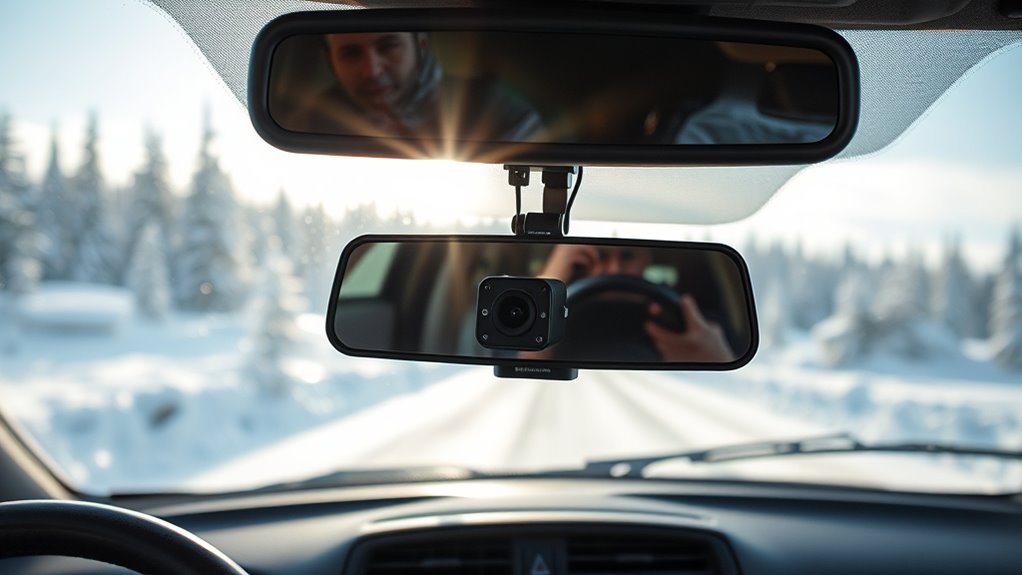
Mounting a dash cam in your vehicle requires careful attention to size limitations and obstruction laws to stay compliant with Alaska statutes. You must verify your device doesn’t block your clear view through the windshield or windows. The law restricts driver’s side dash cams to less than 5 square inches, with some allowances for slightly larger sizes on the passenger side. Devices exceeding 5 square inches on the driver’s side violate regulations. Low-profile designs are recommended to meet size limits. Alaska permits dash cams if they don’t obscure the driver’s view; always check local regulations before installation to avoid fines. Proper placement enhances safety and compliance with vehicle safety regulations, preventing potential legal issues. Ensuring your dash cam has the latest European cloud server updates can improve security and performance. Additionally, understanding relevant Rhythm Failure guidelines can help you stay informed about best practices for device placement and usage. Keep the device under 5 square inches on the driver’s side – Limit mounting to the lower corners or behind the rearview mirror – Avoid obstructing the windshield with nontransparent materials – Use dashboard mounts to prevent windshield obstruction – Ensure cables don’t interfere with airbags or controls, and consider the body positioning of the device to prevent accidental dislodging or interference. Incorporating proper installation techniques can also help maintain legality and safety standards.
Ensuring Visibility and Avoiding Obstructions
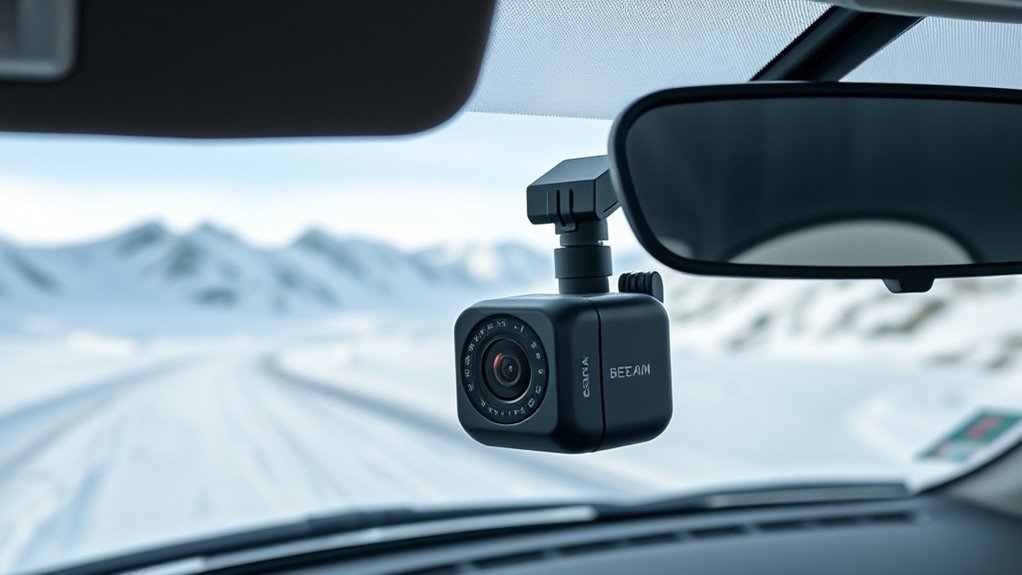
To guarantee your dash cam doesn’t obstruct your view while maintaining compliance, focus on strategic placement within recommended windshield zones. Position the device in the upper-center area behind the rearview mirror to minimize obstruction and capture the road ahead. If mounting on the passenger side, keep the footprint within 7 square inches, and limit the driver side to around 5 square inches to avoid legal issues. Mounting on the dash just below the windshield helps prevent obstruction and avoids nontransparent material rules. Use low-profile mounts or adhesive pads to reduce protrusion, and consider mounts near the rearview mirror for stability. Avoid placing the camera where wipers or HVAC vents can interfere, and ensure it aligns with your line of sight without blocking traffic signals or critical roadway views. Additionally, selecting a properly designed mount can help maintain visibility and compliance. Incorporating security zone info principles can further assist in choosing a safe and legal placement. Ensuring your dash cam is securely mounted with adhesive pads or low-profile mounts can also prevent accidental dislodging and improve overall safety. Furthermore, understanding vehicle safety regulations can help you stay compliant while optimizing your camera’s placement. Keeping in mind the angle of view can help you position the camera effectively without risking obstruction or distraction.
Privacy Implications and Use of Recorded Footage
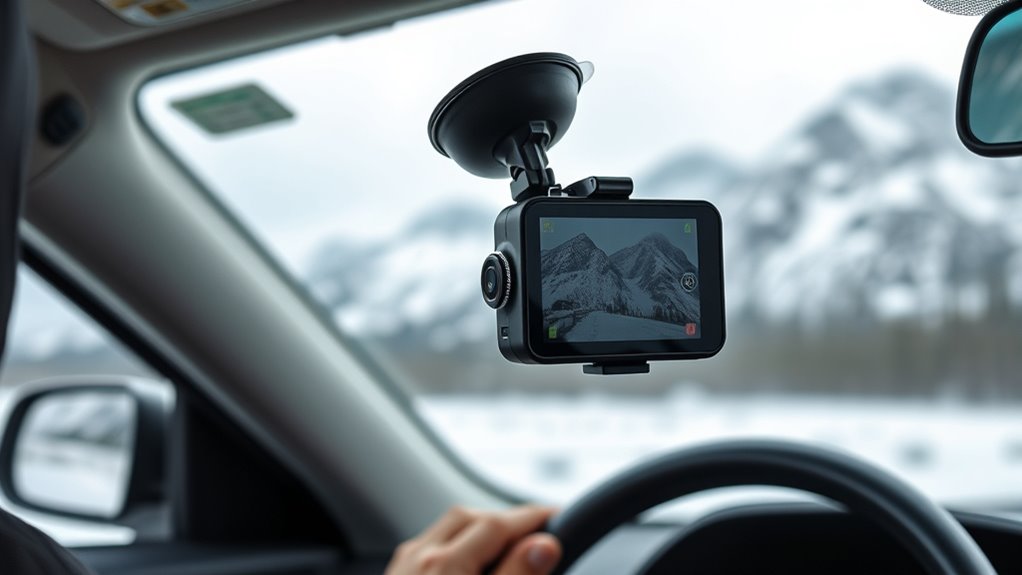
When recording with your dash cam, you need to consider privacy laws and consent requirements to avoid legal issues. Alaska’s one-party consent rule means you can record if you’re part of the conversation, but you should still notify passengers for transparency. Handling the footage responsibly, especially when it involves private property or sensitive conversations, is essential to protect everyone’s privacy. Understanding local privacy laws helps ensure that your use of recorded footage remains lawful and respectful of others’ rights. Additionally, being aware of cookie categories and how they impact your online privacy can help you manage your digital footprint responsibly. Developing a clear understanding of data protection practices can further safeguard personal information in your recordings.
Recording Consent Requirements
In Alaska, recording audio in your vehicle is legal if at least one person involved, typically the driver, consents to the recording. This one-party consent rule means you can record conversations without informing passengers, as long as you’re the participant or have their permission. Here are key points to keep in mind:
- Alaska’s law aligns with federal standards under 18 U.S.C. § 2511(2)(d).
- Recording in public spaces generally doesn’t require consent, but audio privacy expectations still matter.
- Passengers aren’t legally obligated to be notified to be recorded, but informing them can prevent disputes.
- Discreet recording of private conversations without consent risks legal issues.
- Disabling audio or posting notices helps ensure compliance and transparency.
- State laws may specify circumstances or locations where audio recording is restricted or prohibited.
- Being aware of audio privacy expectations helps you avoid potential legal complications and respect individual rights.
- Understanding privacy implications ensures you adhere to legal standards and maintain trust with those recorded.
- It’s also advisable to familiarize yourself with recording best practices to ensure ethical and legal compliance.
Privacy and Data Handling
Recorded footage from your dash cam can be powerful evidence in court, but managing this data responsibly is essential to protect privacy and ensure legal compliance. In Alaska, footage is generally admissible if captured legally and relevant, but violations of privacy laws can challenge its use. Maintaining a clear chain of custody and preserving metadata like timestamps and GPS info enhances credibility. Be cautious about editing footage, as it may trigger disclosure rules or reduce reliability.
| Location Type | Privacy Considerations |
|---|---|
| Public streets and highways | Low privacy expectation; recording is lawful |
| Private property | Higher privacy; may need permission |
| Restrooms and locker rooms | Off-limits for recording |
| Inside private vehicles | May involve property or rental rules |
| Recording minors on private property | Additional legal and reputational concerns |
Legal Use and Monitoring of Dash Cams in Commercial Fleets
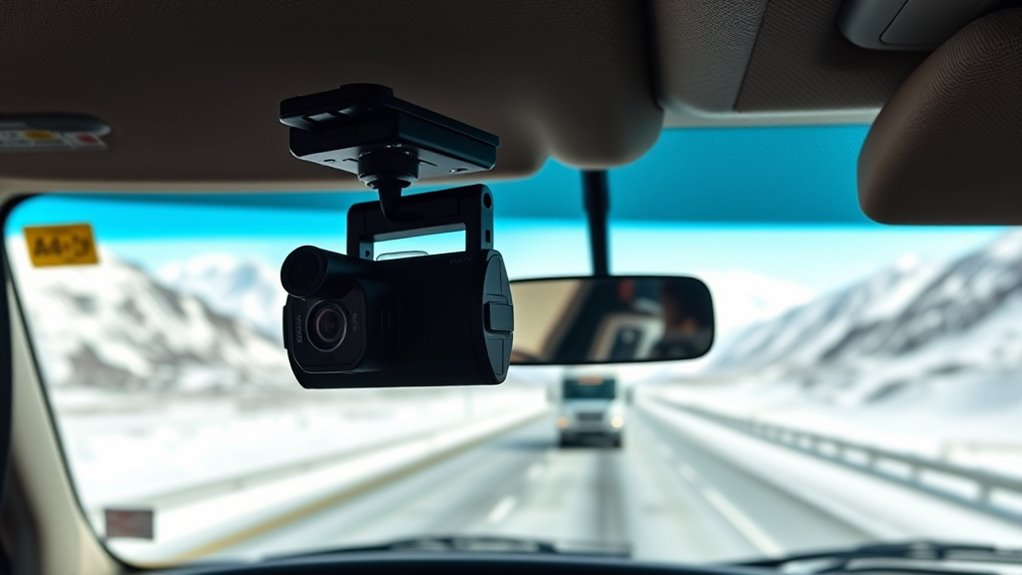
When using dash cams in your commercial fleet, you need to follow Alaska’s monitoring and consent rules to stay compliant. Make sure camera placement meets legal standards and that employees are aware of recording practices, especially for audio. Clear policies and consistent procedures help protect your business from privacy issues and legal risks.
Fleet Monitoring Regulations
To guarantee legal compliance with fleet monitoring, you must follow Alaska’s specific regulations on dash cam placement and usage. Alaska law emphasizes unobstructed views, so ensure dash cams are mounted without blocking the driver’s vision. Use approved mounts behind the rearview mirror or dashboard, avoiding nontransparent materials. As Alaska is a one-party consent state, recordings of in-cab conversations are legal if you or the fleet manager consent. It’s best practice to post signage and inform drivers and passengers about recording practices. Develop clear policies on data storage, tampering consequences, and compliance with DOT standards. Keep records of consent forms and conduct onboarding to explain monitoring policies. Regularly review local laws before installing or updating fleet cameras to stay compliant.
- Mount cameras without obstructing visibility
- Use approved, tamper-proof brackets
- Post signage indicating recording
- Obtain driver consent and keep records
- Develop policies aligned with regulations
Consent and Privacy Rules
In Alaska, using dash cams in commercial fleets is legal as long as you adhere to single-party consent rules for audio recording, meaning only one person involved needs to agree to the recording. You can record interior audio without violating privacy laws, as long as at least one party consents. This includes drivers and passengers, with no requirement for all-party consent. There’s no explicit ban on dash cam videos, and privacy notices aren’t mandated. You can mount cameras inside the vehicle without obstructing the view, and monitoring is generally permitted. However, audio recordings must follow the single-party consent rule, so capturing conversations without consent could lead to legal issues. Overall, Alaska’s rules focus on audio consent, not video, making fleet dash cam use straightforward when following these guidelines.
Frequently Asked Questions
Are There Specific Restrictions for Dash Cam Placement in Commercial Vehicles?
In commercial vehicles, you’re generally guided by the same mounting rules as personal vehicles, but you should place the dash cam within the wiper sweep area without obstructing your view. It’s best to mount it low on the dashboard or behind the rearview mirror to avoid blocking visibility. Always guarantee the camera doesn’t interfere with your line of sight, controls, or airbags, and secure it firmly to prevent distractions.
Can Dash Cam Footage Be Used as Legal Evidence in Alaska Courts?
Yes, dash cam footage can definitely be used as legal evidence in Alaska courts. You actively produce admissible, authentic footage that’s relevant and complies with legal requirements, like proper mounting and clear recordings. Courts trust dash cam evidence to establish facts, demonstrate fault, or support claims. Just guarantee your footage is properly authenticated, preserved, and accessible, so it holds weight in court proceedings, whether for civil suits or criminal cases.
Are There Any Restrictions on Recording Audio in Rural Areas?
There are no specific restrictions on recording audio in rural areas in Alaska beyond general statewide laws. You can record audio as long as at least one party consents, which is typically you as the driver. Just guarantee you’re aware of privacy expectations, especially with private conversations, and consider posting notices or informing passengers to stay compliant. Disabling audio in sensitive situations helps avoid privacy issues, and always follow DPS guidelines for recording retention.
How Long Can Recordings Be Legally Stored Before Deletion?
You can store recordings for up to 30–90 days as a general rule before automatic deletion, unless footage is flagged for incident review or legal reasons. If recordings are related to civil or criminal cases, they must be retained longer—up to 26 months or as long as the case requires. Always follow your written retention policy, encrypt storage, and retain footage for as long as legal or incident-related needs demand.
Is There a Difference in Laws for Personal Versus Fleet Dash Cam Use?
You’ll find that Alaska’s laws don’t change much between personal and fleet dash cams—both must avoid obstructing your view and follow size limits. Ironically, whether you’re recording for fun or business, the rules for mounting, audio consent, and privacy remain pretty similar. The main difference? Fleets often have additional policies on data retention and driver privacy, but legally, the core rules stay consistent regardless of ownership.
Conclusion
Traversing Alaska’s dash cam laws is like walking a tightrope—balance privacy, safety, and legality. By following the rules, you guarantee your footage becomes a trusty sidekick, much like an ancient mariner’s compass guiding through fog. Respect mounting restrictions, consent, and privacy laws, so your recordings serve as a clear-eyed witness rather than a breach of trust. With mindful use, your dash cam becomes a loyal guardian, standing watch over your journeys through Alaska’s rugged beauty.