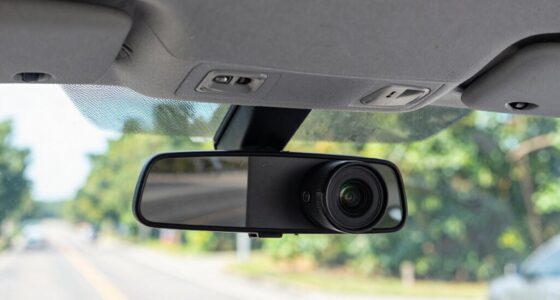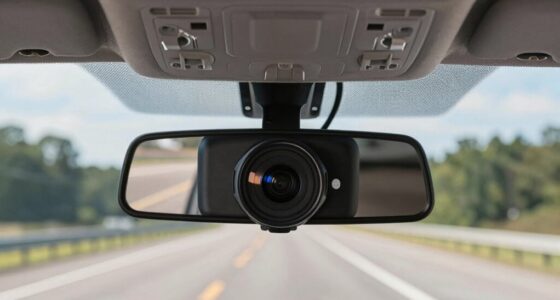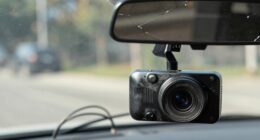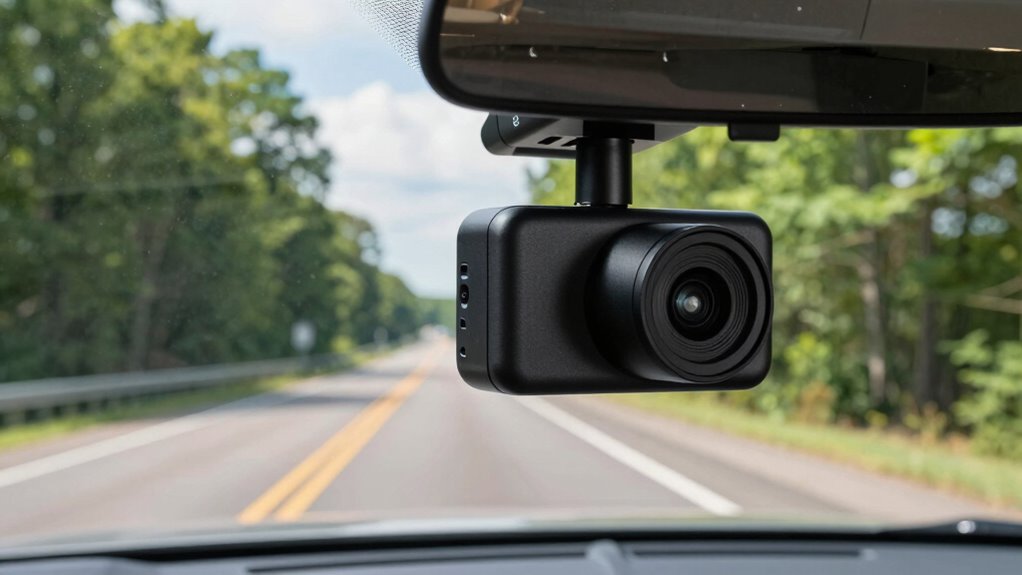

In Arkansas, you can legally mount your dash cam behind or near the rearview mirror without obstructing your view, avoiding airbags or controls. Consent laws allow you to record audio if one person involved agrees, but recording private conversations without permission is illegal. When recording in public, privacy concerns are minimal, but avoid private spaces or areas with privacy expectations. Staying compliant with these rules helps protect your recordings and ensure they hold up in court—learn more to stay fully informed.
Key Takeaways
- Dash cams must not obstruct the driver’s view; recommended placement is behind or near the rearview mirror.
- Arkansas’s one-party consent law allows recording conversations if at least one participant agrees.
- Recording private or private property without permission is illegal; inform passengers about audio recording.
- Properly mount dash cams to avoid airbags, controls, or vision obstruction, following safety standards.
- Secure recordings with encryption, maintain chain-of-custody, and store footage securely to ensure legal admissibility.

Madoec Portable Apple Carplay Screen for Car, 9" Wireless Apple Carplay & Android Auto,4K Dash Cam,1080p Backup Camera DVR,Car Audio Receivers GPS Navigation Mirror Link, Bluetooth,FM, Siri
✅【Wireless Apple Carplay & Android Auto 】 :Even if your car is very old, using Madoec wireless carplay...
As an affiliate, we earn on qualifying purchases.
Legal Standards for Dash Cam Placement in Arkansas
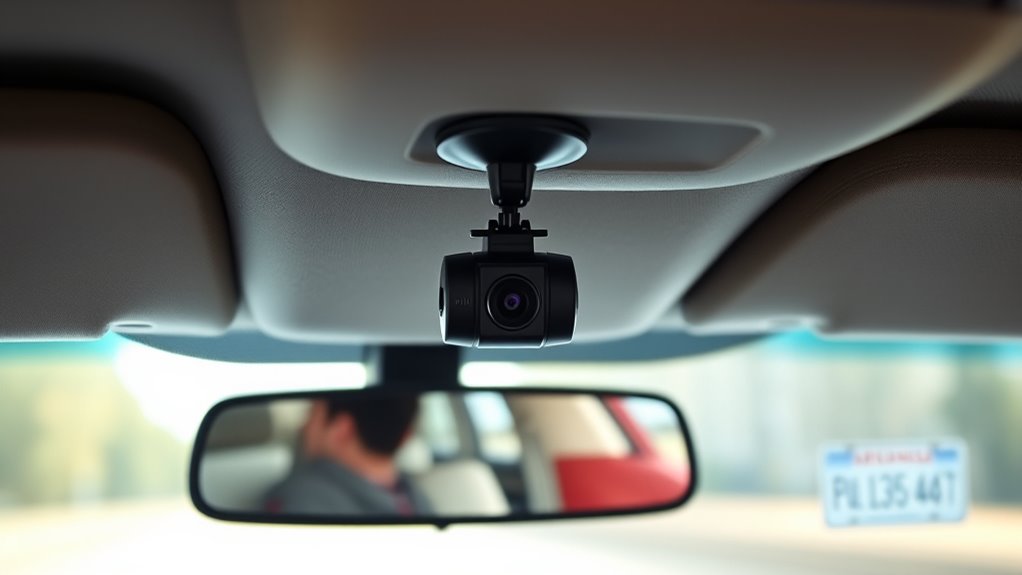
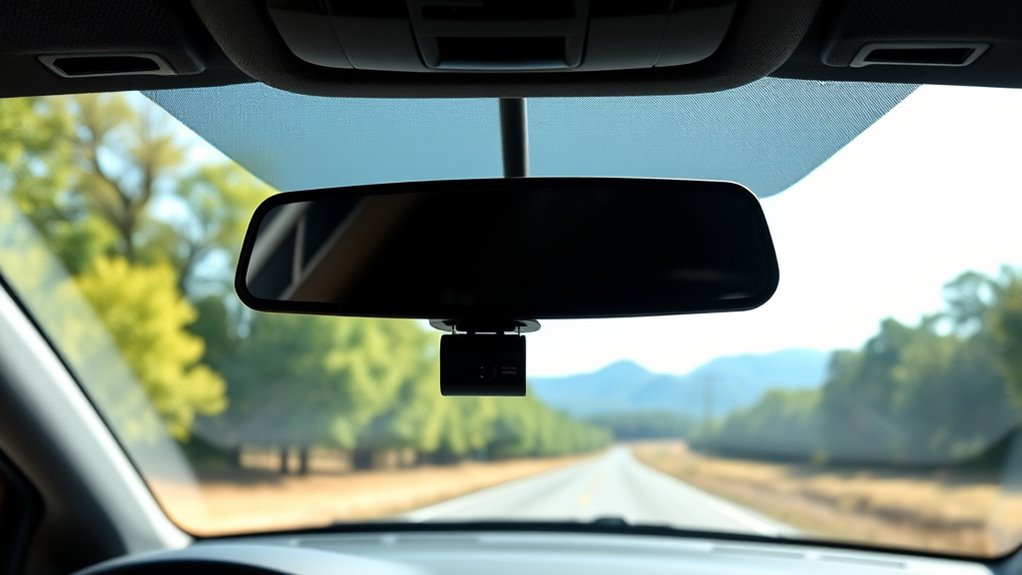
In Arkansas, your dash cam’s placement must not materially obstruct your view while driving. This means you should avoid mounting devices that block your sightlines or interfere with mirrors. The most common and recommended position is behind or immediately adjacent to the rearview mirror, keeping the camera out of your direct line of sight. Windshield-mounted cameras that project into the primary forward view risk citations if they interfere with traffic signals, pedestrians, or lane lines. Law enforcement evaluates obstruction based on whether the device *substantively* impairs your visibility, not just its presence. Proper placement is key to avoiding violations and ensuring safety. For commercial vehicles, ensure the dash cam doesn’t impede required sightlines or safety equipment. Secure mounts and routing cables properly to avoid interference with controls or airbags, maintaining compliance and safety. Additionally, understanding privacy laws related to audio recording can help ensure you’re compliant when capturing video and sound inside your vehicle. It is also important to consider audio recording restrictions, which vary by jurisdiction and can impact how you use your dash cam’s sound features. Newer dash cam technology can include features such as automatic incident detection, which can aid in compliance and safety. Research suggests that sound waves can influence brainwave patterns, which is useful to consider when using audio recording features. Moreover, being aware of state-specific regulations can prevent unintentional violations related to dash cam use.
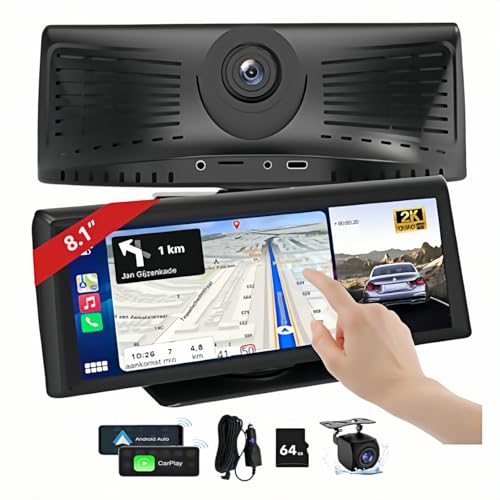
8.1" Wireless Carplay Screen for Car with 2K Dash Cam & 1080P Backup Camera, Portable Touch Screen Car Stereo with Apple Carplay & Android Auto, BT/FM/AUX/GPS Nav/Mirror Link/Voice Control
【Wireless Connectivity and Voice Control】: Supports wireless Apple CarPlay and Android Auto, perfectly compatible with mainstream smartphone systems....
As an affiliate, we earn on qualifying purchases.
Best Practices for Avoiding Windshield Obstruction
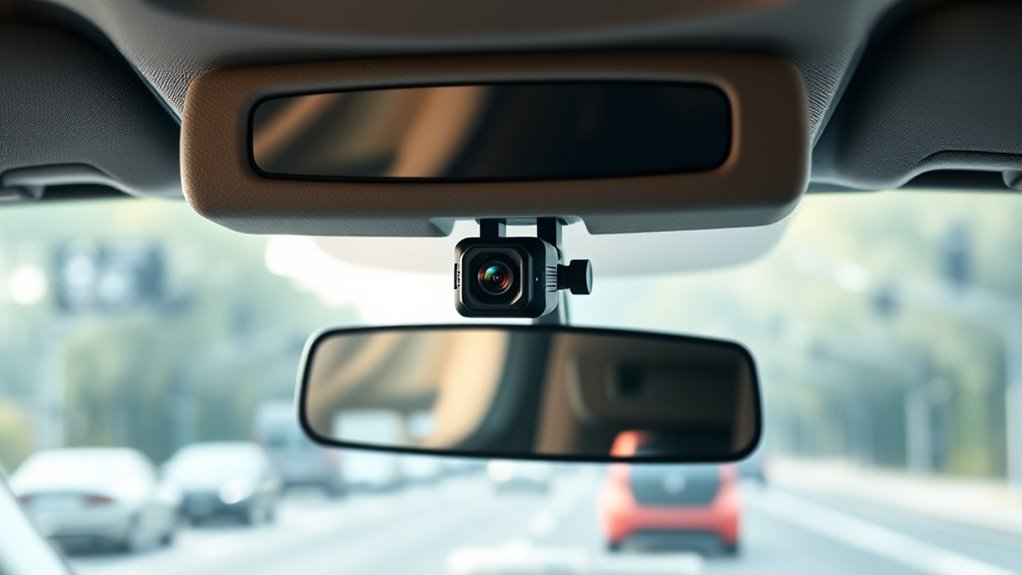
To prevent your dash cam from obstructing your view, carefully consider its placement and mounting techniques. Position the device behind the rearview mirror to avoid blocking your windshield and maintain a clear forward view. Concealed mounting options help keep the dash cam out of sight and comply with Arkansas law. Limit attachments to no more than 4.5 inches above the windshield bottom and avoid materials that could block your vision. Test visibility in all driving conditions, including night and rain, to ensure no interference. Refrain from attaching cameras to front door windows or in spots that could obstruct airbags. Using low-profile mounts or rearview mirror clips helps minimize visibility impact, keeping your view clear and legal. Arkansas law emphasizes that dashcams should not obstruct the driver’s line of sight, and proper placement is essential for safety and compliance. Ensuring your dash cam is mounted correctly reduces distractions and helps you stay within legal guidelines, especially considering driver safety standards. Additionally, understanding the importance of field-of-view in dash camera placement can help optimize recording angles without sacrificing safety. Properly calibrated mounts also contribute to accurate footage capture, which is vital for accident evidence, and legal clarity. Paying attention to the angle of the camera can further improve footage quality and usability in case of disputes. Choosing the right mounting height can also significantly impact the effectiveness of your dash cam.

Pioneer DMH-1600NEX 6.8" Double-Din Digital Multimedia Receiver - Built in Bluetooth, Wired Apple CarPlay and Android Auto, Touchscreen, Rear Camera Input
Hands-Free Calling: This Pioneer in-dash receiver features built-in Bluetooth, enabling easy hands-free calling through compatible smartphones, with crystal-clear...
As an affiliate, we earn on qualifying purchases.
Size and Positioning Guidelines for Dash Cameras

Proper size and positioning of your dash camera are essential for legal compliance and safe driving. You should mount your dash cam behind the rearview mirror, ensuring it doesn’t obstruct your view. If you place it on the dashboard, make sure it doesn’t block your sightline or interfere with your ability to see through the windshield. Keep the device centered and high near the mirror to reduce glare and avoid interference with airbags. Low corner placements are allowed only if measurements are within limits and your view remains clear. Avoid mounting in wiper sweep zones or areas that could obstruct your vision. While Arkansas doesn’t specify exact size limits, choosing a compact, low-profile camera helps stay within legal boundaries. Proper placement ensures safe driving and admissibility of footage in claims. Additionally, ensure your dash cam does not exceed the size restrictions of your vehicle’s windshield area to avoid legal issues. To further ensure compliance, select a secure mounting method that keeps the camera stable during driving. Using a professional installation can also help verify proper positioning and adherence to regulations. Being aware of the camera technology and how it impacts your setup can also improve both safety and legal compliance. For optimal results, consider the body of law regarding dash cam usage and privacy considerations in Arkansas. Familiarizing yourself with privacy laws related to recording can help prevent potential legal complications.

Pioneer DMH-W3000NEX 6.8" Double Din Multimedia Digital Media Receiver, Wireless Apple CarPlay and Android Auto, Bluetooth, Backup Camera Compatible, Touchscreen, One Touch Navigation
Smartphone Integration - Supports wired or wireless Apple CarPlay and Android Auto, enabling seamless integration with your smartphone....
As an affiliate, we earn on qualifying purchases.
Audio Recording Laws and Consent Requirements

Arkansas’s one-party consent law allows you to record audio as long as at least one participant in the conversation agrees. If you’re involved in a conversation, you can record it without others’ knowledge, including in your vehicle. This applies to in-person chats and phone calls under Ark. Code Ann. § 5-60-120. However, recording non-participants without their consent is illegal. Proper understanding of common legal terms can help ensure you stay within the law while recording. Always ensure consent to avoid penalties like fines or jail time. Familiarity with privacy laws can further clarify your rights and responsibilities when recording audio, especially since cookie categories emphasize the importance of informed consent in online activities. Knowing how state-specific regulations impact recording practices can help you navigate complex legal scenarios more effectively, especially when considering audio recording laws across different jurisdictions.
Privacy Considerations When Recording Public and Private Spaces
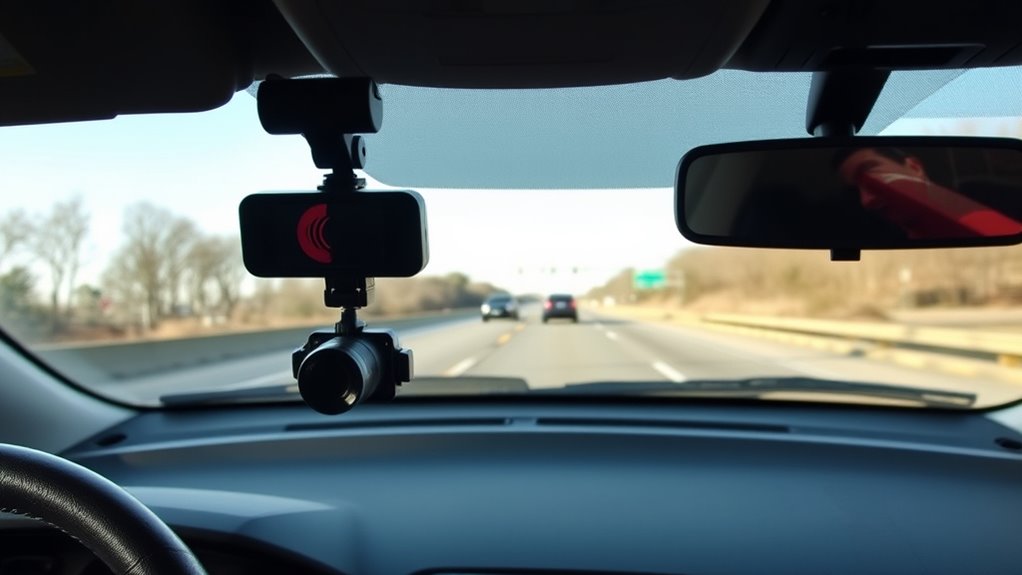
When recording video in public spaces, you generally don’t need permission because there’s no reasonable expectation of privacy. Public areas like roads or supermarkets allow video recording without consent, and dash cams are legal in Arkansas as long as they don’t obstruct your view. Using visible cameras can help deter crime and improve security, aligning with federal laws that permit video recording in public. However, private spaces have strict privacy rules. Recording private property without permission or capturing private conversations can be illegal. Cameras shouldn’t be aimed at areas with a reasonable expectation of privacy, like restrooms or private offices. To protect privacy, inform passengers about recording, avoid covert recording, and always respect personal boundaries, especially on private property. State-specific laws also regulate where and how dash cams can be mounted and used, emphasizing the importance of following local regulations to avoid legal issues. Additionally, understanding privacy laws helps ensure your recording practices stay compliant with legal standards. Being aware of public versus private spaces is crucial to ensure your dash cam usage remains lawful and respectful of others’ rights.
Handling and Preserving Dash Cam Footage for Legal Purposes
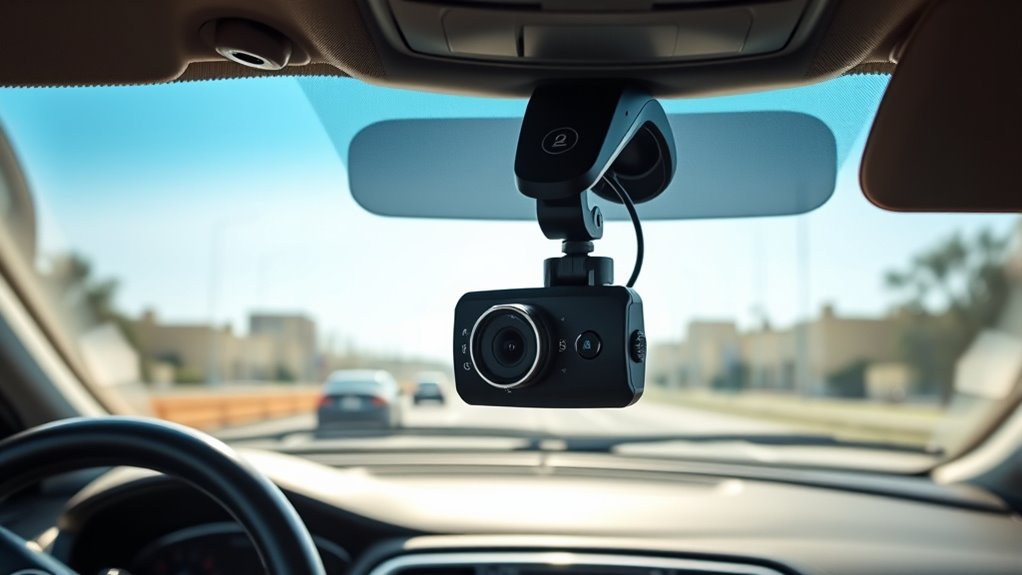
To guarantee your dash cam footage holds up in court, you need to follow secure storage practices that prevent tampering or loss. You also must establish a clear chain-of-custody by documenting every access, transfer, and modification of the files. Maintaining original, unaltered evidence and verifying its authenticity are vital steps for legal admissibility. Additionally, properly cataloging and labeling the footage helps ensure it remains easily identifiable and traceable throughout legal proceedings. Implementing file integrity verification methods can further protect the authenticity of your footage and provide additional assurance of its reliability during legal review. Understanding net worth and career background details of involved individuals can also be useful for context during legal review. Considering electric bike horsepower can also be relevant if the incident involves vehicle performance factors. Moreover, adopting best practices for natural pool maintenance can benefit property owners seeking eco-friendly backyard enhancements. Regularly updating your knowledge of dash cam laws and privacy helps ensure ongoing compliance and proper handling of footage.
Secure Storage Practices
Secure storage of dash cam footage is essential to maintain its integrity and guarantee it remains admissible in legal proceedings. You should keep at least three copies: the original on the device, an encrypted local backup, and an encrypted cloud backup. Use write-blocking methods when copying files to prevent accidental modification. Store physical backups in separate secure locations to reduce theft or damage risks. Label media with incident ID, date, device info, and notes for quick retrieval. Following storage standards outlined in security regulations, ensure that access to these backups is restricted to authorized personnel only. Employing vetted security measures such as encryption and access controls helps protect sensitive footage from unauthorized access. Additionally, regularly verifying the integrity of stored footage ensures its ongoing admissibility in court. Implementing proper backup procedures can further safeguard against data loss due to hardware failure or cyber threats.
Authenticity and Chain-of-Custody
Ever wondered how to guarantee dash cam footage remains trustworthy in court? Ensuring authenticity and a proper chain-of-custody is vital. To do this, you need to: 1. Keep the original footage unaltered, with timestamps and GPS data intact, and have the owner or a knowledgeable person testify to the recording process. 2. Document every access and transfer of footage, maintaining a clear record to prove it hasn’t been tampered with from recording to court. 3. Use encrypted, tamper-proof hardware and avoid editing footage to preserve its integrity, with authentication testimony supporting its reliability. Proper storage practices are essential to prevent unauthorized access. Following these steps helps demonstrate the footage’s authenticity and integrity, making it more likely to be accepted as evidence in legal proceedings.
Admissibility of Video Evidence in Arkansas Courts
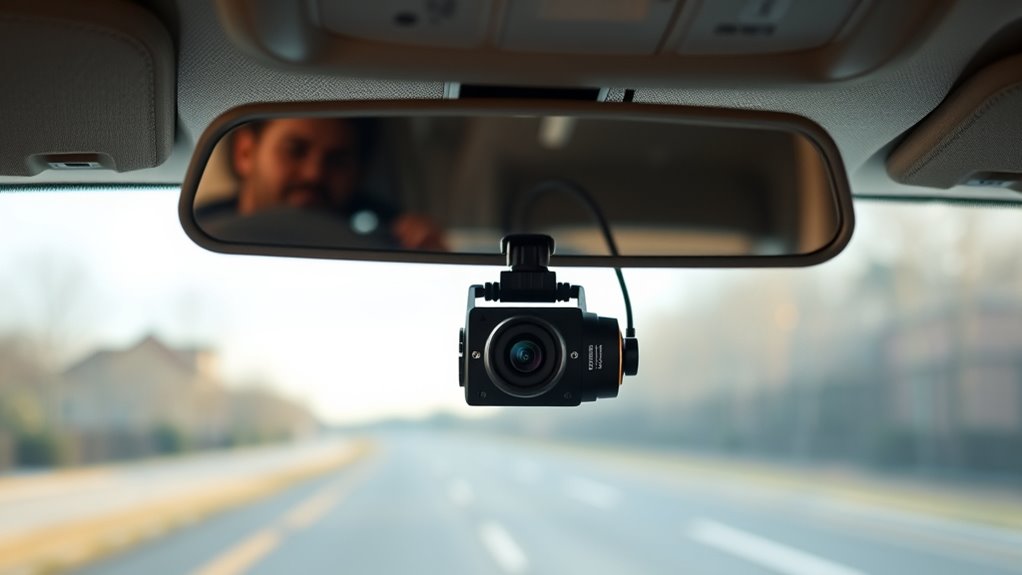
To guarantee your dash cam footage is accepted in Arkansas courts, it must meet authenticity and chain-of-custody standards. You need to document how the footage was obtained, accessed, and preserved to maintain its integrity. Following proper procedures helps prove your evidence is reliable and admissible during legal proceedings. Proper verification processes are essential to ensure that the digital evidence has not been tampered with and remains trustworthy.
Authenticity Requirements
In Arkansas courts, proving that dash cam footage is authentic is a crucial step before it can be admitted as evidence. You need to demonstrate the footage is what you claim it to be, ensuring its reliability and accuracy. To do this, consider these key points:
- Provide testimony from a witness with direct knowledge who can identify the scene, persons, or events on the video.
- Produce the original recording whenever possible, and document any editing, enhancement, or compression to confirm the content remains unaltered.
- Use expert testimony if necessary, especially when format conversions or enhancements have occurred, to verify the integrity and authenticity of the footage.
These steps help establish the video’s credibility and admissibility in court.
Chain-of-Custody Standards
Establishing a solid chain of custody is essential for ensuring that digital video evidence remains admissible in Arkansas courts. You need to retain timestamped original files, showing continuous control from capture to court presentation. Secure storage with access logs helps prevent unauthorized modifications and proves custodial integrity. Using write-once media or verified cloud backups reduces risks of alteration, supporting admissibility. When litigation is reasonably anticipated, immediate preservation requests, like hold notices, prevent routine overwriting in loop-recording systems. Document every transfer—who handled the footage, when, and how—creating an unbroken custody record. Law enforcement seizure procedures should be documented with inventory receipts, and third-party providers must produce logs and access records. Preserving original metadata and employing cryptographic hashes further establish authenticity, making your evidence more likely to be accepted in Arkansas courts. Implementing these measures is crucial for maintaining the integrity of dash cam video evidence throughout the legal process.
Regulations for Commercial and Fleet Vehicle Dash Cams
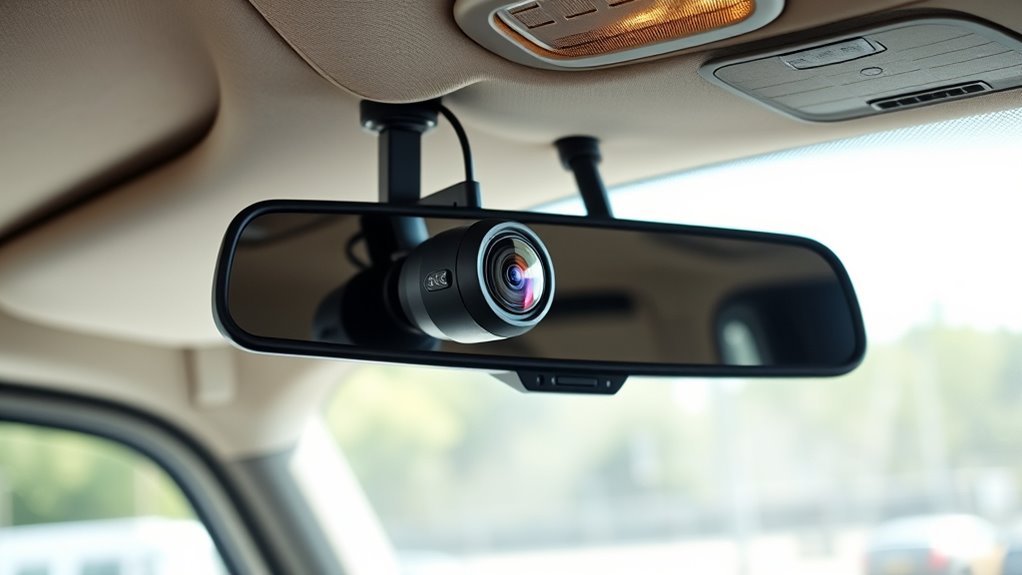
Arkansas permits the use of dash cams in commercial and fleet vehicles as long as the devices do not obstruct the driver’s view through the windshield. To stay compliant, you should consider these key regulations:
- Mount the dash cam behind the rearview mirror or in a position that doesn’t block visibility or airbags, avoiding citations.
- Ensure adhesive or suction mounts are secure and resistant to vibration to prevent hazards.
- Follow state rules on audio recording, obtaining consent from at least one participant, and clearly define recording practices in fleet policies.
Additionally, documenting mounting locations, providing driver training, and establishing clear data retention and access control protocols help align with Arkansas laws and protect your fleet’s interests.
Implications of Surveillance and Data Privacy Laws
In Arkansas, your dash cam recordings are generally accepted as evidence, but it’s important to comprehend the privacy expectations in public spaces. You need to handle and store your footage carefully to maintain its legal integrity and protect against misuse. Being aware of data security laws helps ensure your recordings stay private and compliant with state regulations.
Privacy Expectations in Public
Public spaces in Arkansas generally allow you to record without violating privacy expectations, but legal limits still apply. You can record in open, accessible areas like streets, parks, and parking lots, where there’s typically no reasonable expectation of privacy. However, recording that intrudes on private affairs or seclusion—such as homes, restrooms, or dressing rooms—is illegal if it’s highly offensive or violates privacy laws. Be cautious with audio recording, as Arkansas follows one-party consent rules, but intercepting private conversations without consent can lead to criminal charges. Additionally, secret recordings in private areas or for voyeuristic purposes are felony offenses. Always respect private property rules and avoid capturing private conversations or sensitive activities to stay within legal boundaries.
Key Points:
- Recording in public spaces is generally permitted.
- Privacy laws restrict recordings intruding on private affairs.
- Audio recording requires careful attention to consent laws.
Data Handling and Security
Handling dash cam data responsibly is essential to guarantee your recordings remain admissible and protect your privacy. To do this, use encrypted, tamper-proof hardware and maintain a strict chain-of-custody. Ensure timestamps and GPS data stay intact, as these are vital for court use. Unauthorized access or alterations can jeopardize your footage’s legal value. Keep supervised control over all recordings and follow Arkansas laws on data privacy.
| Data Security Practice | Purpose |
|---|---|
| Encryption & Tamper-proof hardware | Protect footage from unauthorized access |
| Chain-of-custody | Preserve integrity for legal proceedings |
| Maintain time-stamp & GPS data | Ensure admissibility in court |
| Supervised access | Prevent data breaches or mishandling |
Tips for Ensuring Compliance and Reducing Legal Risks
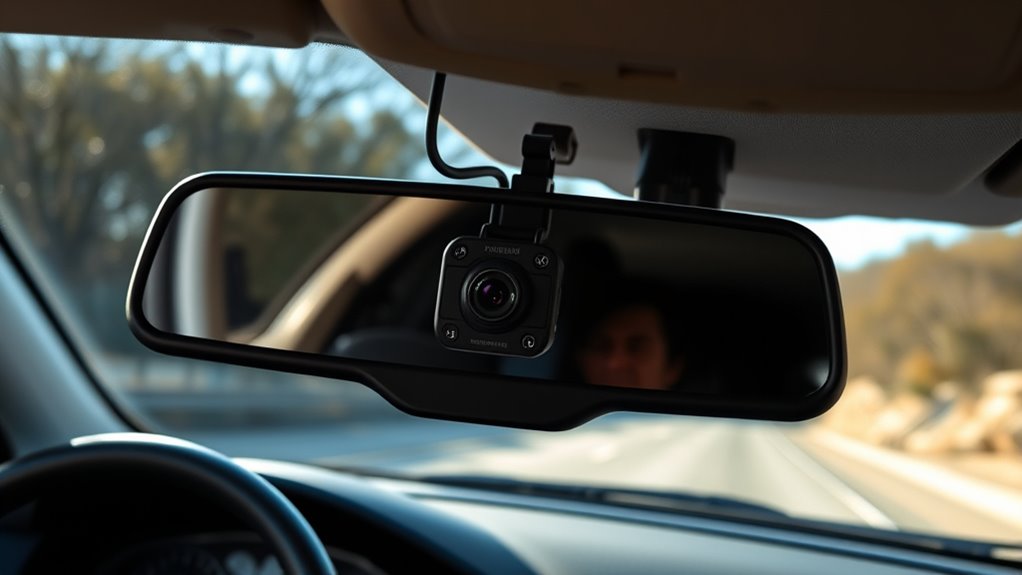
To guarantee you stay compliant with Arkansas’s dash cam laws and minimize legal risks, focus on proper mounting, clear signage, and careful audio recording practices. Properly mount your dash cam behind the rearview mirror or low on the dashboard, avoiding obstructions, airbags, and controls. Use low-profile mounts and route wiring neatly to prevent distractions. For audio, remember Arkansas is a one-party consent state, so ensure at least one person consents to recording. Post in-vehicle notices or verbally inform passengers about audio recording to reduce privacy concerns. To further reduce risks, disable audio when necessary, preserve original footage with metadata, and limit data retention. Proper documentation of footage access and clear passenger communication are essential for legal compliance and risk mitigation.
Ensure proper dash cam mounting, clear signage, and informed audio recording to stay compliant and reduce legal risks in Arkansas.
1. Mount the device correctly, avoiding visibility obstructions.
2. Inform passengers about audio recording practices.
3. Maintain secure, unedited footage with proper documentation.
Frequently Asked Questions
Can I Record Audio From Passengers Without Their Consent in Arkansas?
Yes, in Arkansas, you can record audio from passengers without their consent if you’re a party to the conversation, thanks to the one-party consent law. However, you should be cautious about private discussions or sensitive situations, as recording without consent in those cases could lead to legal issues or civil claims. Always consider privacy expectations and document your recordings properly to avoid complications in court or civil disputes.
Are There Specific Size Limits for Dashboard-Mounted Dash Cams in Arkansas?
Arkansas doesn’t have specific size limits for dashboard-mounted dash cams in its laws. Instead, the key is to avoid blocking your view, which enforcement officers interpret rather than measure with strict dimensions. To stay compliant, you should mount your device behind the rearview mirror or on the dashboard in a low-profile way. Focus on placement rather than exact size, ensuring your view remains clear to prevent potential citations.
Is Recording Police Officers During a Traffic Stop Legal in Arkansas?
Yes, recording police officers during a traffic stop is legal in Arkansas as long as you’re a participant in the conversation or have consent from someone involved, thanks to the one-party consent law. Public recordings of police performing their duties are generally allowed, especially if you don’t interfere with their work or create safety hazards. Just make sure your device is mounted properly and doesn’t obstruct your view or distract you during the stop.
Do Private Property Recordings Require Special Privacy Notices or Consent?
When recording on private property in Arkansas, you should provide clear privacy notices or obtain consent, especially if capturing audio or individuals’ faces. While visual recordings are generally lawful in public view, private areas with an expectation of privacy require explicit permission or notices. To protect yourself legally, consider posting signage or informing visitors about recording practices, particularly when audio is involved, to reduce potential privacy disputes or liability.
How Long Can I Legally Retain Dash Cam Footage in Arkansas?
You can retain dash cam footage in Arkansas as long as it’s relevant to an investigation, claim, or legal matter. Generally, there’s no fixed limit, but it’s wise to keep important clips until you’re sure they’re no longer needed. Unlike law enforcement with specific retention rules, private owners should securely store and back up footage, especially if it might be used in disputes or litigation. Remember, deleting or overwriting important footage too soon could limit your legal options.
Conclusion
To stay compliant with Arkansas dash cam laws, always make certain your camera is properly mounted and doesn’t obstruct your view. For example, if you’re recording a minor accident, clear footage can protect you legally. Remember to obtain consent if recording audio and respect privacy boundaries. By following these guidelines, you reduce legal risks and protect your rights—so stay informed, stay legal, and keep your recordings safe and lawful.