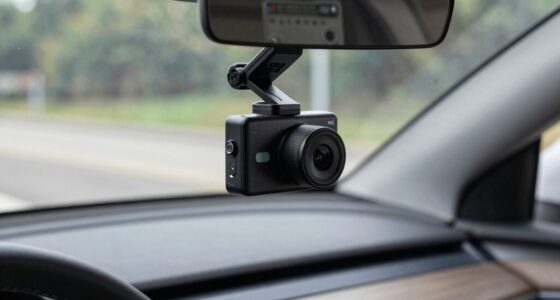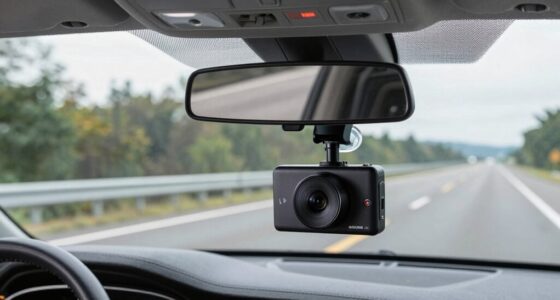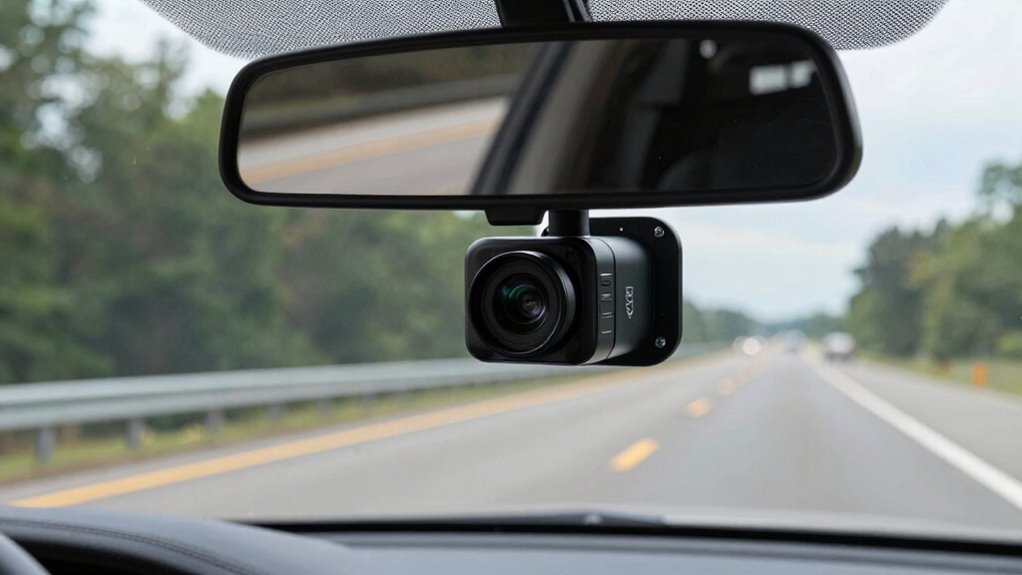

In Connecticut, you can legally use a dash cam as long as it doesn’t obstruct your view or violate privacy laws. Mount it behind or near the rearview mirror to stay compliant, and avoid blocking your windshield or wipers. When it comes to audio, all-party consent is required, so disable the microphone or get everyone’s permission before recording conversations. Staying informed on rules guarantees you’re protected—if you keep exploring, you’ll find more essential tips.
Key Takeaways
- Dash cams are legal in Connecticut; ensure mounts do not obstruct driver visibility or violate windshield material restrictions.
- Mount the dash cam behind or near the rearview mirror to prevent glare and stay compliant.
- Connecticut law requires all-party consent for audio recording inside vehicles; disable microphones unless all passengers agree.
- Recording private conversations without consent may lead to criminal charges; inform passengers about audio recording practices.
- Stay updated on local regulations and federal guidelines to ensure dash cam use remains lawful and privacy-compliant.
Overview of Dash Cam Legality in Connecticut
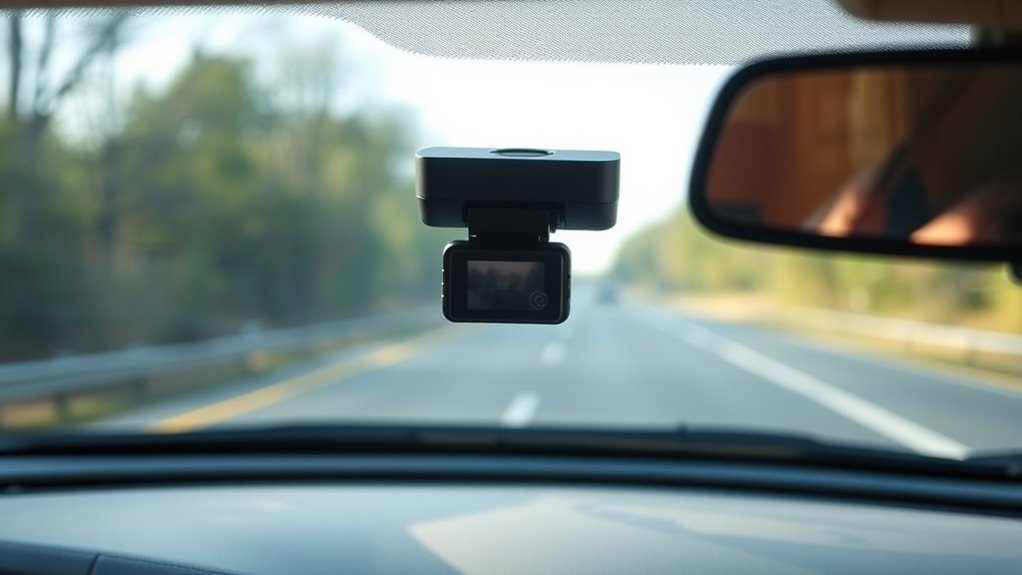
In Connecticut, using dash cams in private vehicles is legal, and there’s no statewide ban on owning or operating them. Although no law explicitly mentions dash cameras, their legality is inferred from general vehicle equipment and obstruction laws. Courts typically accept dash-cam footage as evidence in civil and criminal cases when lawfully obtained and relevant. However, federal or facility-specific rules—such as at federal buildings or border crossings—may restrict filming. For commercial or fleet use, the same state rules apply, but employer policies and federal regulations might also influence usage. Overall, you can legally install and use a dash cam, provided it doesn’t obstruct your view or violate other traffic laws. Just remember, legal mounting is essential to ensure compliance and avoid potential violations. Additionally, understanding privacy considerations can help prevent legal issues related to recording conversations or images without consent. Being aware of recording laws can further help you navigate the boundaries of lawful recording practices. Moreover, staying informed about wiretapping statutes can help you avoid unintentionally violating laws related to audio recording. It’s also advisable to familiarize yourself with state-specific regulations that may impact dash cam use.
Appropriate Mounting Practices and Placement Tips
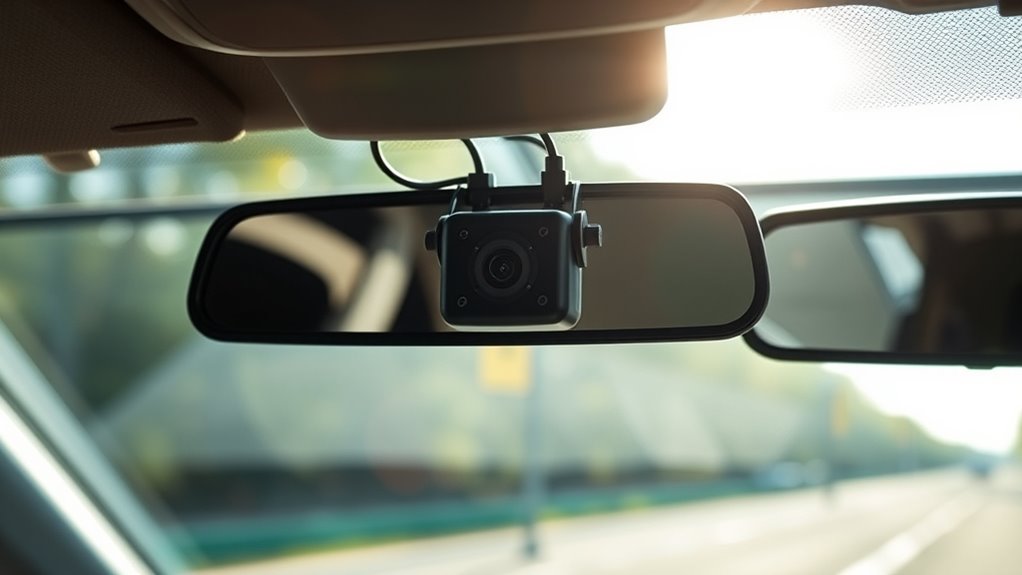
To guarantee your dash cam complies with Connecticut laws and remains effective, proper mounting and placement are essential. Avoid obstructing your windshield or blocking your view, as opaque objects are prohibited. A dash cam mounted on the dashboard is recommended, especially in the lower corner zones, to stay out of your primary sightline and ensure compliance. Position it behind or near the rearview mirror to prevent glare and keep the view unobstructed. Refrain from mounting directly on the windshield, as nontransparent materials are banned and can restrict visibility. Secure the camera firmly on a low-profile mount, and route cables carefully to avoid interference with controls or airbags. Prioritize non-reflective, non-obstructive devices for clear, legal recordings. Dash cams are legal to install and use in Connecticut, but they must be mounted in compliance with state laws and regulations. To ensure your setup is both legal and effective, consider consulting vehicle safety standards for additional guidance. Additionally, verifying that your dash cam’s placement does not interfere with safety features can help maintain your vehicle’s safety integrity. Being aware of the proper mounting practices and the importance of secure installation can also help prevent accidental violations or damage to your device.
Regulations Regarding Audio Recording and Consent
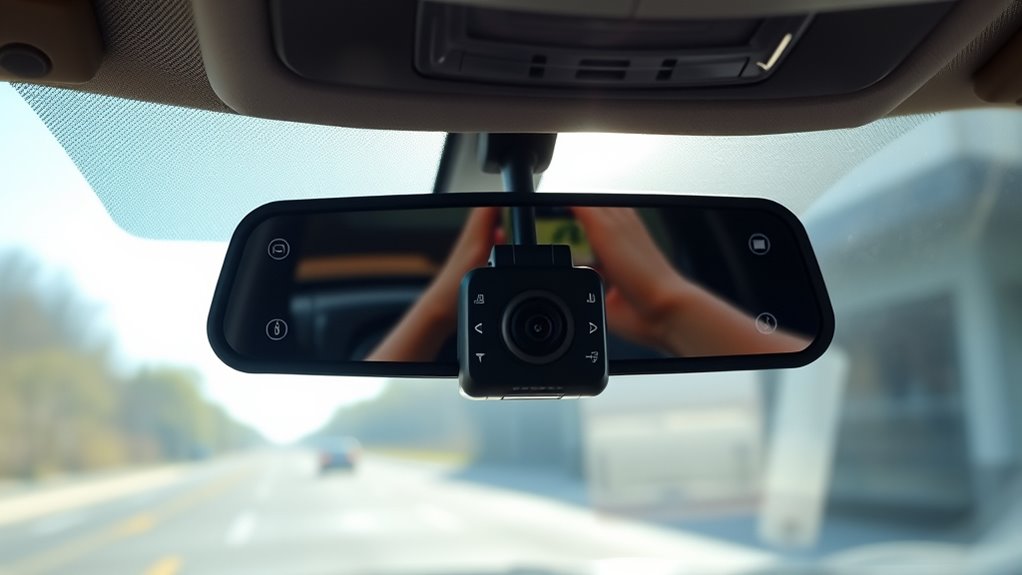
Proper mounting and placement guarantee your dash cam captures clear footage without obstructing your view. When it comes to audio recording, Connecticut law requires all-party consent for private conversations, including those inside your vehicle. If you record conversations without everyone’s permission, you risk criminal charges and civil liability for invasion of privacy. Best practices include disabling the microphone unless you obtain explicit verbal consent from all passengers beforehand. Posting a visible notice inside the vehicle indicating audio recording is active can help demonstrate compliance. Remember, recording public street sounds generally carries fewer privacy concerns, but private conversations inside the vehicle are sensitive. To reduce legal risks, configure your dash cam to easily mute audio and keep logs of when recording is enabled or disabled. Understanding state-specific laws helps ensure you remain compliant while using your dash cam. Additionally, being aware of privacy laws related to audio recording can help you avoid inadvertent violations. Being familiar with wave and wind conditions can also impact the quality of your footage and the circumstances under which recordings are admissible. Monitoring audio environment factors can further improve the clarity and legal defensibility of your recordings. Awareness of ambient noise levels can also assist in maintaining clear audio recordings for legal and personal purposes.
Windshield Restrictions and Material Laws
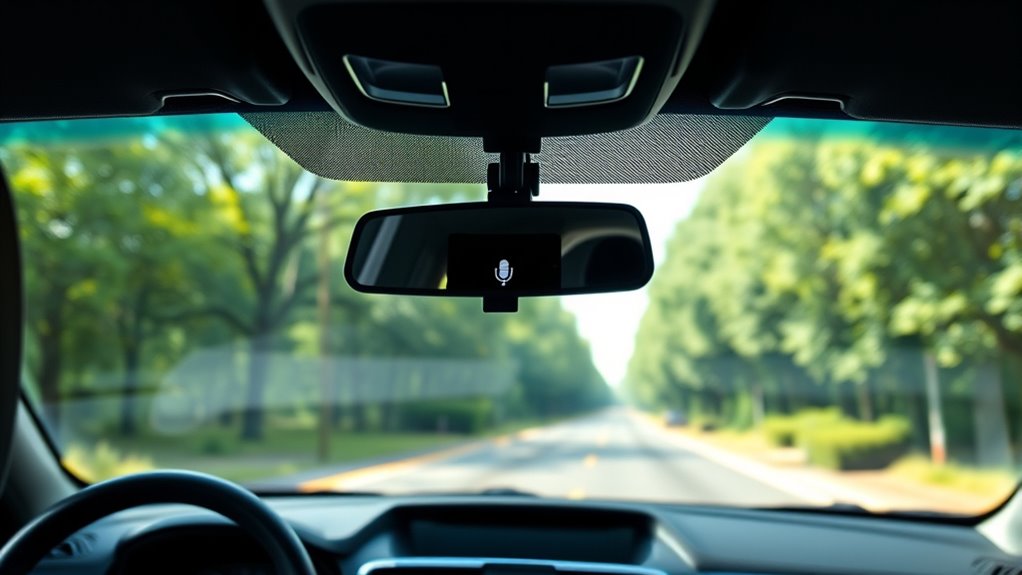
Connecticut law strictly prohibits placing nontransparent materials on your windshield that could obstruct your view of the road. This means any mount, device, or attachment that blocks your vision or causes glare may lead to a violation. Enforcement focuses on “obstruction of view,” so even small or low-profile mounts can be problematic if they interfere with sightlines. To stay compliant, consider mounting your dash cam on the dashboard or just behind the rearview mirror, ensuring it doesn’t block your view or mirror function. Be cautious about:
- Using large, opaque mounts or suction cups
- Placing devices in windshield corners or wiping zones
- Routing cables across the glass or attaching bulky power modules
- Installing mounts that produce glare or reflections into your eyes
Choosing transparent, flush mounts helps avoid citations and ensures safer compliance. Additionally, selecting mounts that are compliant with automotive safety standards can help you stay within legal boundaries and maintain clear visibility. Proper positioning and discreet mounting also prevent distraction hazards, promoting safer driving practices. It’s also advisable to verify that your mounted device does not obstruct driver visibility in any critical areas.
Recommended Dash Cam Positions for Compliance
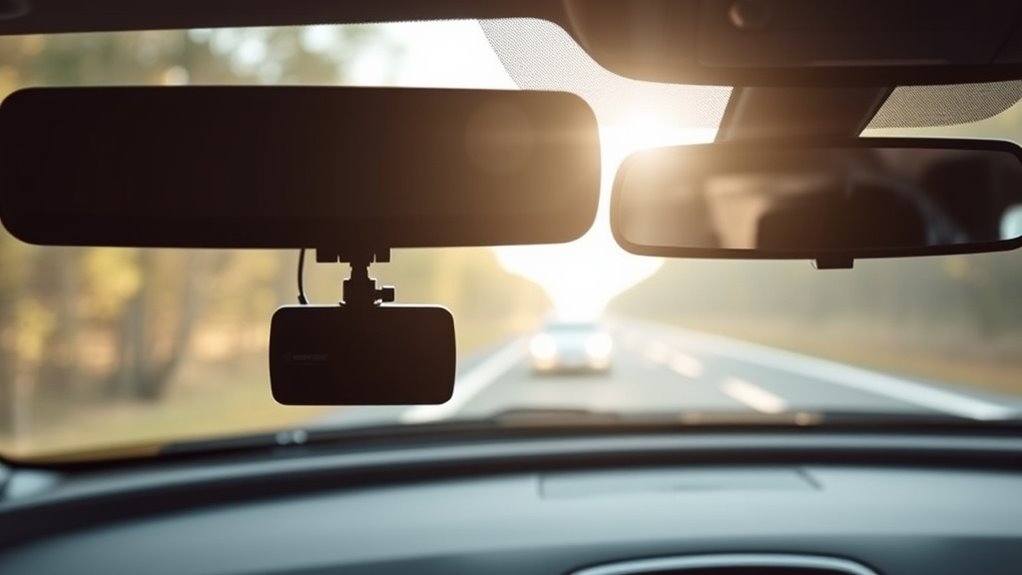
To stay compliant, you should carefully choose your dash cam’s position, focusing on mounting it securely on the dashboard without obstructing your view. Placing it behind the rearview mirror is a popular option that minimizes glare and keeps it out of your primary sightline. Avoid mounting directly on the windshield or lower corners where it could block your visibility or interfere with driving controls. Proper installation ensures that your dash cam operates effectively while adhering to Connecticut’s legal requirements. Additionally, selecting a mounting location that does not interfere with driver visibility helps maintain safety and compliance. Considering the best gelato in Laguna Beach, choosing a discreet yet effective placement can also enhance your driving experience by preventing distractions. Being aware of the pinball machine weight can help you choose a suitable spot that supports your dash cam without risking damage or instability, especially when considering the recommended mount types for different vehicle interiors. Properly securing your device with the right mounting accessories can further improve stability and safety during your drives.
Dashboard Mounting Tips
When mounting your dash cam, choosing the right position is essential for legal compliance and ideal footage. You should avoid obstructing your view or adding opaque objects to the windshield. The best placement is typically on the dashboard rather than the windshield to ensure clear visibility through the glass and prevent interference with your line of sight. Consider these tips:
- Mount low on the dashboard to reduce glare and reflections
- Place centrally for broad road coverage without side interference
- Shift to the passenger side for less view blockage and wider lane capture
- Use adhesives or suction mounts on flat surfaces to secure the camera firmly and avoid windshield contact
These positions help you stay compliant with laws and optimize your dash cam’s performance during recordings.
Behind Rearview Mirror
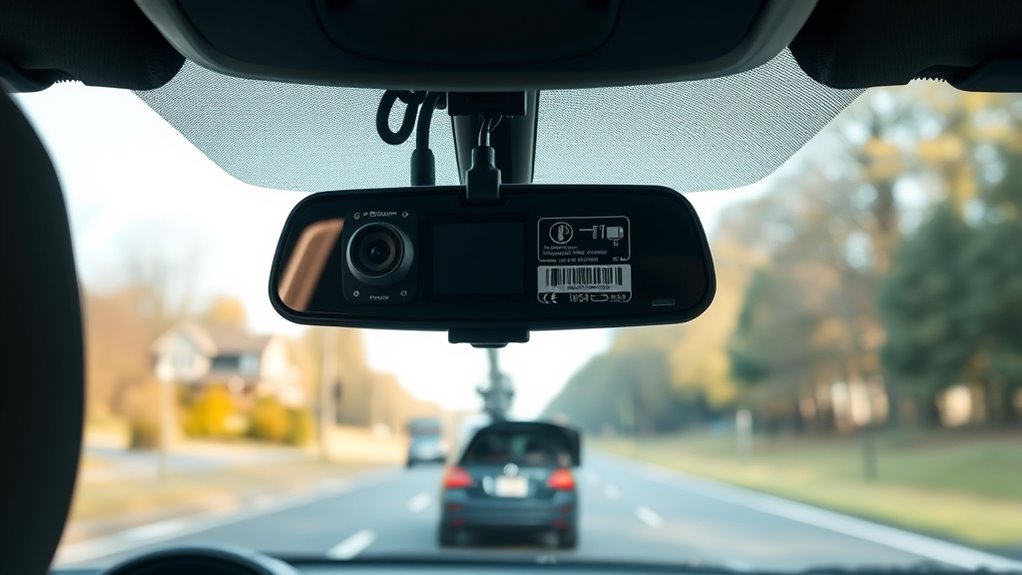
Positioning your dash cam behind the rearview mirror aligns with legal guidelines and helps guarantee clear footage without obstructing your view. Connecticut law prohibits nontransparent objects that block the windshield, so mounting immediately behind or directly in front of the mirror keeps the device outside the primary sightlines. A low-profile mount or small camera head close to the mirror minimizes obstruction risks and ensures compliance. Route cables carefully to avoid draping across the windshield or causing glare, and choose mounts with non-reflective finishes to prevent dazzle. This placement balances capturing quality footage while respecting the driver’s field of vision. Industry guidance and legal analyses consistently endorse behind-mirror mounting as the safest, most compliant option for Connecticut drivers. Proper placement ensures the dash cam does not interfere with your ability to operate the vehicle safely. Additionally, considering supportive accessories can further enhance both safety and compliance, especially camera positioning that adheres to state regulations. Proper mounting techniques also help prevent legal violations, ensuring you remain within the bounds of Connecticut law. Using professional installation services can assist in achieving optimal positioning and adherence to legal standards.
Avoid Windshield Obstructions
Avoiding windshield obstructions requires careful placement of your dash cam to guarantee compliance with Connecticut law. To do this, consider mounting your device in key areas that minimize visibility interference. For example:
- Dashboard-mounted near the center console, below the AS-1 line, keeps the camera out of primary sightlines and reduces glare.
- Passenger-side lower windshield corner placement avoids obstructing the driver’s view and rearview mirror operation.
- Under-dash or behind-center-console mounts hide the device entirely, preventing any windshield obstruction.
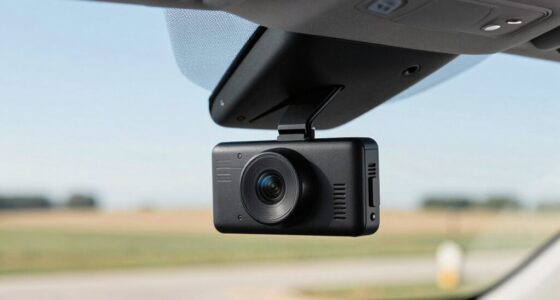
- Roof-line or header-mounted positions near the vehicle roof lining, recessed from the windshield, avoid interference with wipers and the driver’s field of view.
- Using a controller, such as a dash cam mounting system designed for optimal positioning, can help ensure proper placement and compliance. Proper placement also considers visibility, which is crucial for legal and safety reasons.
- These options help assure your dash cam stays compliant while maintaining ideal recording angles. Proper placement also reduces distractions and enhances safety, especially when considering driver attention and overall road safety.
- Additionally, choosing a secure mounting method minimizes the risk of the device shifting or falling, maintaining consistent recording quality and compliance.
Privacy Considerations When Recording Inside and Outside Vehicles
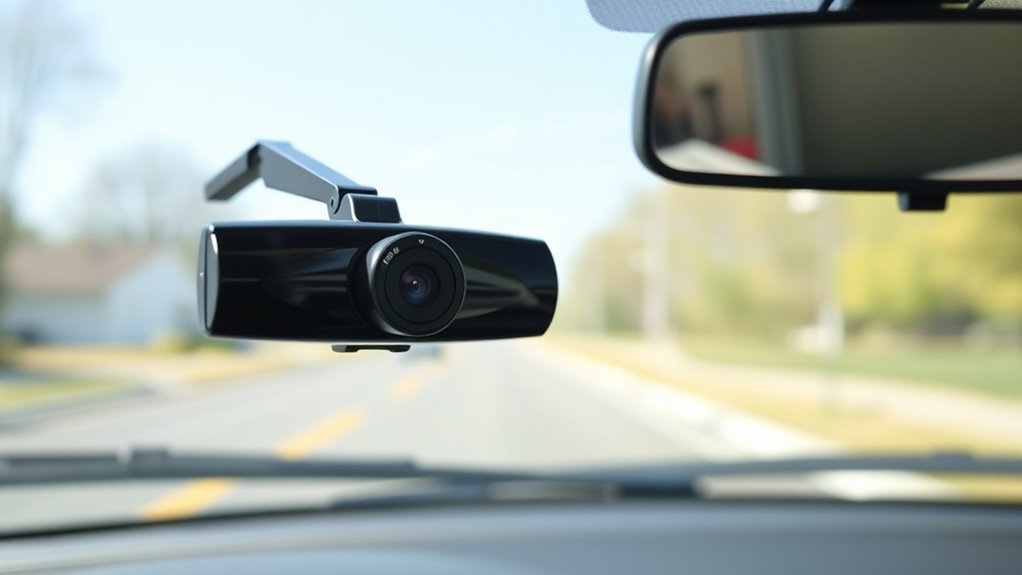
Privacy considerations are crucial when recording inside and outside your vehicle, especially in Connecticut where state laws are strict. When recording audio, all-party consent is required, meaning you must notify everyone that their conversations are being recorded. If you can’t get consent from all occupants, disable the audio feature to avoid violating wiretapping laws. Video recording in public spaces is generally permitted without consent, and footage can be used in court if obtained legally. Inside vehicles, it’s important to inform passengers about recordings and respect their reasonable privacy expectations, especially on private property. Mount your dash cam so it doesn’t obstruct your view, and avoid placing opaque materials on the windshield. Following these privacy rules helps you stay compliant and protects everyone’s rights.
Staying Updated on Connecticut Dash Cam Laws
Staying updated on Connecticut dash cam laws is vital to guarantee you’re compliant with current regulations. Since there are no specific statutes for dash cams, you should monitor official sources regularly. You can:
- Subscribe to Connecticut General Assembly bill tracking for vehicle equipment updates
- Check the Connecticut DMV website quarterly for new regulations
- Follow NHTSA alerts on electronic device mounting standards
- Review annual law summaries from sources like DDPAI for recent changes
Recent updates confirm no major changes to mounting restrictions through 2025, but ambiguity around interpretation persists. Enforcement trends show citations mainly for obstructed windshields, not dash cams themselves. Staying informed helps you avoid violations and ensures your dash cam setup remains within legal bounds.
Frequently Asked Questions
Are There Specific Fines for Improper Dash Cam Placement in Connecticut?
There are no specific fines for improper dash cam placement in Connecticut. Instead, penalties stem from broader laws against obstructing the driver’s view or creating unsafe conditions. If your dash cam blocks your windshield view, you might get a citation, leading to fines or points on your license. To avoid issues, mount your device where it doesn’t impair visibility, typically behind or near the rearview mirror.
Can I Record Audio Without All-Party Consent in Connecticut?
You can’t record audio without all-party consent in Connecticut. The law requires everyone involved in private conversations inside your vehicle to agree before recording. If you record without consent, you risk criminal charges or civil lawsuits. To stay compliant, turn off the microphone unless you get clear verbal approval from all passengers. Posting notices and obtaining explicit consent helps protect you from legal issues and guarantees you’re respecting privacy laws.
Are There Restrictions on Dash Cam Use in Commercial Vehicles?
You can use dash cams in commercial vehicles, but you must follow specific restrictions. Make sure the camera is mounted in a way that doesn’t obstruct your view or interfere with safety features like airbags. Also, remember Connecticut requires all-party consent for audio recording, so inform passengers and get their approval. Maintain proper data controls, and train your drivers on these rules to stay compliant and avoid legal issues.
How Often Are Connecticut Dash Cam Laws Updated or Revised?
Connecticut dash cam laws are updated irregularly, typically during legislative sessions that occur every few years. When lawmakers pass new laws, agencies like POST and DESPP revise their guidelines accordingly, but these updates aren’t on a fixed schedule. Municipal police also revise policies based on state laws, funding, or guidance. Overall, expect updates to happen in response to legislative changes, agency directives, or funding opportunities rather than on a regular, set timetable.
Do Insurance Companies Require Dash Cam Footage for Claims?
You might think insurance companies demand dash cam footage for every claim, but that’s not always the case. While they highly value unbiased evidence to support your case, it’s not strictly required. Having clear footage can strengthen your claim, especially in disputes or liability questions. So, if you have dash cam recordings, sharing them can boost your chances of a smoother, faster resolution and possibly better compensation.
Conclusion
Staying compliant with Connecticut’s dash cam laws is essential to avoid legal issues and protect privacy. Did you know that over 60% of drivers use dash cams for safety and evidence? By understanding proper mounting, audio consent, and privacy rules, you can confidently record your drives without infringing on others’ rights. Keep yourself updated on local regulations so your dash cam serves as a helpful tool rather than a legal obstacle.