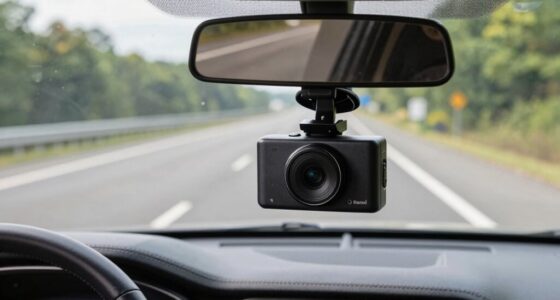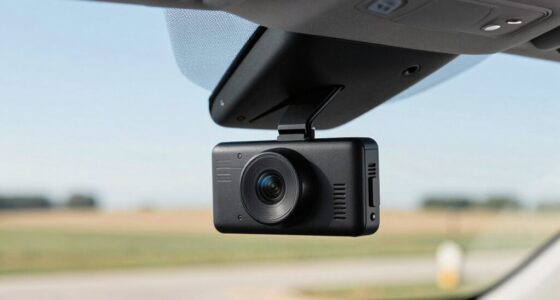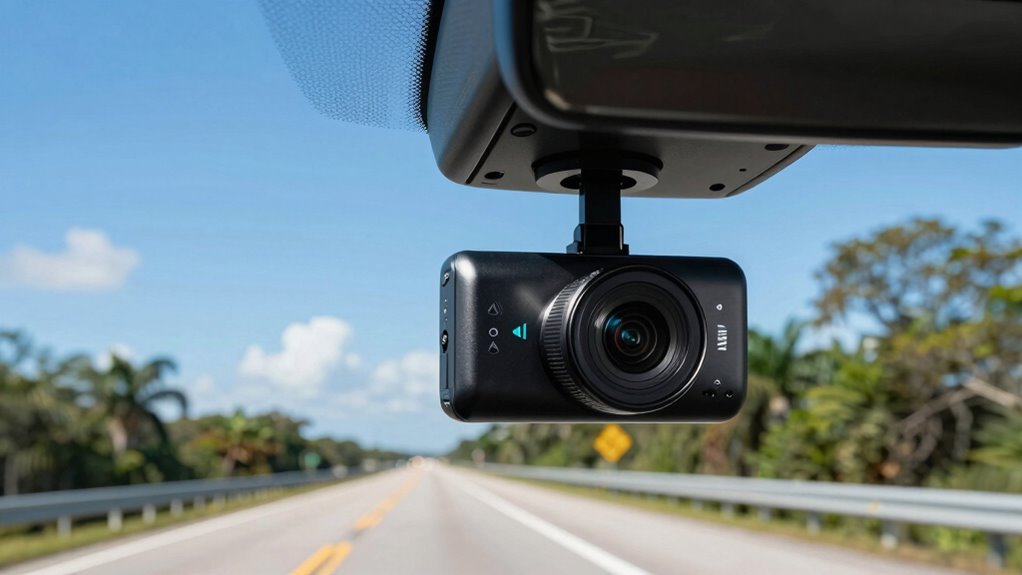
In Florida, using a dash cam is legal if you follow the rules. Mount your camera behind the rearview mirror or on the lower dashboard to avoid obstructing your view, and guarantee wiring is neat. Recording audio inside the vehicle requires everyone’s consent, so disable audio if you’re unsure. Keep footage private and use proper evidence handling to stay compliant. Knowing these basics helps you stay legal—learn more to protect your rights and stay safe.
Key Takeaways
- Dash cams must be mounted so they do not obstruct the driver’s view or violate obstruction laws, typically behind the rearview mirror.
- Recording audio inside the vehicle requires all passengers’ consent under Florida’s two-party consent law; video-only mode is recommended for compliance.
- Video footage from public roads is generally legal, but recording private conversations or areas without consent can violate privacy laws.
- Proper evidence handling involves preserving original footage, maintaining a clear chain of custody, and avoiding editing or alterations.
- Clear notice and documented consent from passengers help ensure privacy rights are respected and recordings are court-admissible.
Legal Status of Dash Cams in Florida
In Florida, using dash cams in private vehicles is legal, but you must follow specific regulations. You’re allowed to record videos of your driving, accidents, and road conditions, whether using front or rear cameras, as long as they comply with state rules. There’s no requirement to have a dash cam installed, but footage can serve as valuable evidence in insurance claims or legal cases. You can record in public spaces like roads without needing permission, but private areas are off-limits to avoid privacy violations. Audio recording in your vehicle requires consent from all passengers, thanks to Florida’s two-party consent law. If you follow these guidelines, your dash cam use remains lawful, and your recordings can be legally admissible in court. You should also be aware of video recording regulations to ensure compliance with state laws. Properly adhering to these laws helps ensure your dash cam footage remains protected and admissible. Additionally, understanding privacy considerations related to in-vehicle recordings is crucial to avoid legal complications. Monitoring relevant laws about audio and video recordings can help protect you from potential legal issues. Being aware of the homeowner privacy rules can also aid in understanding limitations around private property recordings.
Proper Mounting and Obstruction Rules
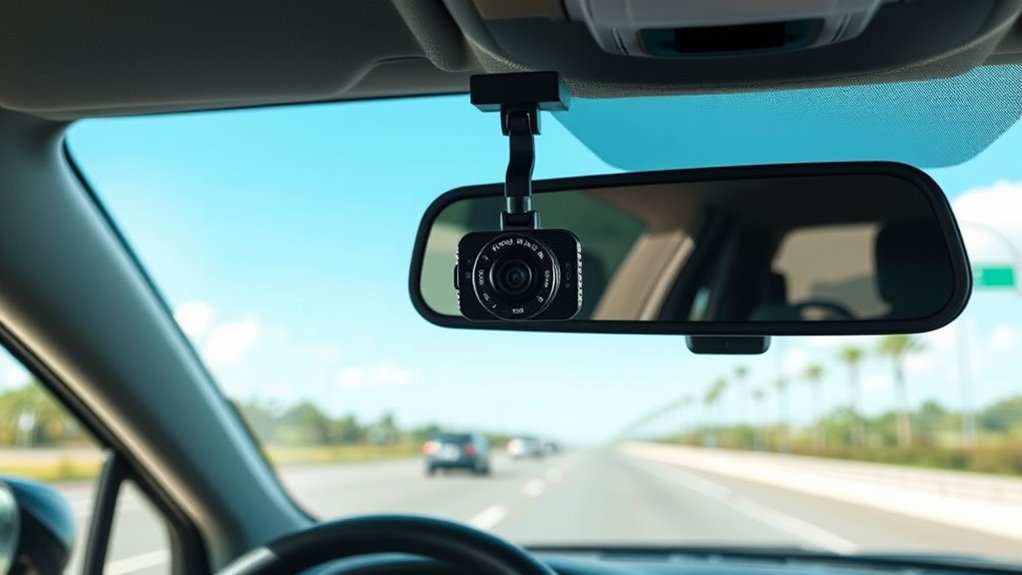
To avoid legal issues, you need to mount your dash cam where it won’t block your view or violate Florida’s obstruction rules. Placing it behind the rearview mirror or on the lower passenger side keeps it out of your sightline and reduces the risk of citations. Make sure wiring is tidy and your camera’s placement doesn’t interfere with your view or airbags. Additionally, ensuring your dash cam does not obstruct your windshield is crucial, as Florida law prohibits any objects that impair driver visibility from obstructing your view. Properly installed dash cams can also help ensure compliance with legal requirements and provide clear evidence in case of incidents. It’s important to understand field‑of‑view considerations to prevent blind spots and maintain safe driving conditions. Regularly checking your camera’s placement can help maintain proper visibility and avoid unintentional violations. Being aware of cable management best practices ensures your setup remains safe and unobstructed.
Windshield Obstruction Limits
Properly mounting your dash cam is essential to avoid violating Florida’s windshield obstruction laws. The law, under Florida Statute §316.2004, bans non‑transparent materials or objects that block your view of the road. Since the statute is vague, law enforcement officers have discretion to judge obstructions case by case. To reduce citation risk, place your device behind the rearview mirror or on the dashboard, avoiding areas swept by windshield wipers or near mirrors and sensors. Use low-profile mounts to minimize visual impact. Additionally, understanding legal mounting practices can help ensure compliance and safety.
Dashboard Mounting Tips
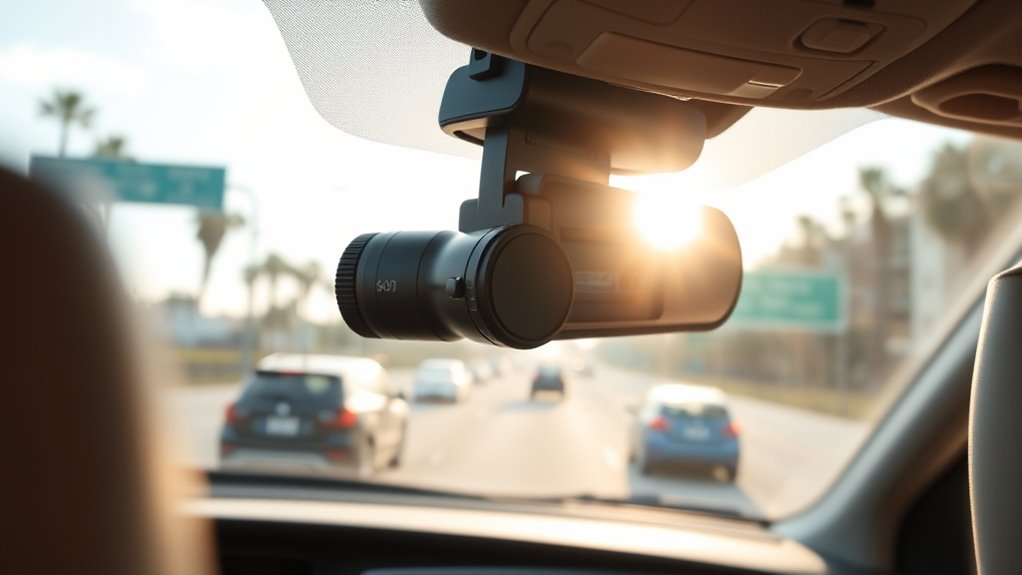
Mounting your dash cam on the dashboard offers a practical way to stay within Florida’s windshield obstruction laws. Place it behind the instrument panel if it doesn’t hinder your view of the road. A common and effective spot is behind the rearview mirror, centered and high on the windshield, to keep it out of your sightline while capturing forward footage. You can also mount rear-facing cameras on the rear window if they don’t obstruct rearview mirrors or windows. Using adhesive or hardwired mounts on the dashboard surface helps avoid windshield obstruction concerns. Keep the camera small and within a minimal footprint to prevent covering critical areas. Ensure the camera doesn’t block your view of traffic signals or other vehicles, and route cables away from controls to maintain safety and visibility. Proper camera placement ensures optimal footage quality and compliance with local laws. Additionally, choosing approved mounting methods can further ensure adherence to Florida’s regulations.
Placement for Visibility
Ensuring your dash cam doesn’t obstruct your view while maintaining visibility requires careful placement within Florida’s legal framework. Florida Statute 316.2004 bans objects that block the driver’s line of sight, but courts generally consider small, non-occluding devices as compliant. To stay legal, mount your dash cam behind the rearview mirror or in the lower passenger corner of the windshield. Dashboard mounts are also acceptable, as they avoid windshield obstruction. Avoid placing the device where it could interfere with airbags or sensors, and make certain it doesn’t block rearview or side mirrors. Tuck wiring neatly along the A-pillars or use adhesive channels to prevent distractions. After installation, check your mirrors and head position to confirm the dash cam doesn’t create blind spots or interfere with vehicle safety features. Proper mounting reduces the risk of legal issues and ensures clear visibility. Additionally, understanding vehicle safety features can help you avoid placement that might interfere with sensors or airbags, since sensor placement is critical for proper vehicle operation. Being aware of digital safety measures can also help in managing the placement of electronic devices inside your vehicle. Furthermore, considering road safety laws can ensure your device complies with all relevant regulations and does not compromise overall vehicle safety. Recognizing regulatory compliance guidelines ensures your dash cam setup remains within legal parameters and supports safe driving practices.
Audio Recording Laws and Consent Requirements

In Florida, recording audio inside your vehicle requires the consent of all parties involved, meaning everyone must agree before you start. You should be aware of limits on capturing external sounds, especially in public spaces, to avoid legal issues. To stay compliant, it’s best to disable audio recording unless you have explicit consent and inform passengers beforehand. Additionally, understanding the state’s wiretapping laws can help prevent unintentional violations, especially regarding audio recording laws and privacy regulations. Recognizing the importance of curiosity about legal boundaries can further assist in navigating these regulations responsibly. Being aware of goal tracking pitfalls can also help you stay focused on compliant and ethical recording practices. Moreover, ensuring your recording practices align with creative storytelling principles can support ethical use of footage and foster trust. Being informed about Glycolic Acid benefits can also help you make better skincare choices that respect your privacy and safety.
All-Party Consent Needed
Florida requires all parties involved in a private conversation to give their consent before any audio recording can take place. As a two-party consent state, you must obtain permission from everyone in the conversation, especially inside your vehicle when using a dash cam. Florida Statute 934.03 prohibits recording audio without universal consent, making non-compliance a serious offense. If you record audio secretly, you risk criminal charges, including a third-degree felony with up to five years in prison or a misdemeanor with up to one year. Any illegally recorded audio is inadmissible in court, and you could face civil liabilities for privacy violations. To stay compliant, disable audio functions, inform passengers beforehand, and secure their explicit consent before recording. Legal standards for audio recording also require clear notification to all parties to ensure admissibility and avoid legal penalties. Additionally, understanding privacy laws helps prevent unintended legal violations and protects everyone’s rights. Being aware of Deaf Vibes strategies can help you navigate audio recording laws more effectively, especially considering the importance of well‑sourced name coverage in understanding legal requirements. Moreover, keeping abreast of state-specific laws ensures you remain compliant with evolving regulations. It is also advisable to stay informed about local ordinances that may impose additional restrictions on audio recording.
External Sound Recording Limits
Recording external sounds with your dash cam generally falls outside Florida’s strict privacy laws, especially when capturing audio from public roads or open areas. Florida law, under Statute 934.03, mainly targets private conversations without consent, making in-car audio recordings more sensitive. If your dash cam records audio inside the vehicle, you must get consent from all passengers, as Florida requires two-party consent for private conversations. This two-party consent requirement is crucial to avoid legal complications, even if the recording is for personal use, and unauthorized recordings can lead to criminal charges or civil liabilities. External sounds on public highways are less restricted, but in-car conversations are considered private. Violating these laws can result in audio evidence being inadmissible in court and potential legal penalties. Always ensure your recordings comply with Florida’s privacy regulations. Understanding privacy laws is key to avoiding legal issues when using dash cams. Additionally, being aware of audio recording laws helps you navigate legal boundaries and protect your rights.
Best Practices for Audio
To stay compliant with Florida’s privacy laws, it’s important to follow best practices when recording audio with your dash cam. Since Florida is a two-party consent state, you must get everyone’s explicit agreement before recording interior conversations. Always disable the audio recording feature unless all passengers agree to be recorded. If you need audio for legal reasons, inform passengers beforehand and document their consent. Using video-only mode avoids consent issues altogether. Remember, recording private conversations without consent can lead to serious penalties, including criminal charges and civil liabilities. If audio is necessary, ensure it meets all-party consent requirements, as courts will evaluate compliance separately from video. Following these practices helps protect your privacy rights and keeps your recordings admissible in court.
Ensuring Evidence Is Admissible in Court
Ensuring that dash cam footage is admissible in court requires meticulous attention to how evidence is handled and documented. You must preserve the original video file on the dash cam, avoiding playback, editing, or conversion to prevent accusations of tampering. Transfer files using forensically sound methods, like bit-for-bit copies, and retain the original storage medium whenever possible. Keep detailed logs of every transfer and access, including who handled the evidence, when, and why. Preserve metadata, timestamps, and overlays, as courts rely on this information for authentication. To establish the footage’s credibility, identify the recording device, show the chain of custody, and demonstrate the unaltered nature of the original files. Present original device files and expert testimony to strengthen your case. Additionally, verifying embedded date and time stamps is crucial for precise incident timing and establishing the footage’s reliability.
Privacy Expectations for Passengers and Third Parties
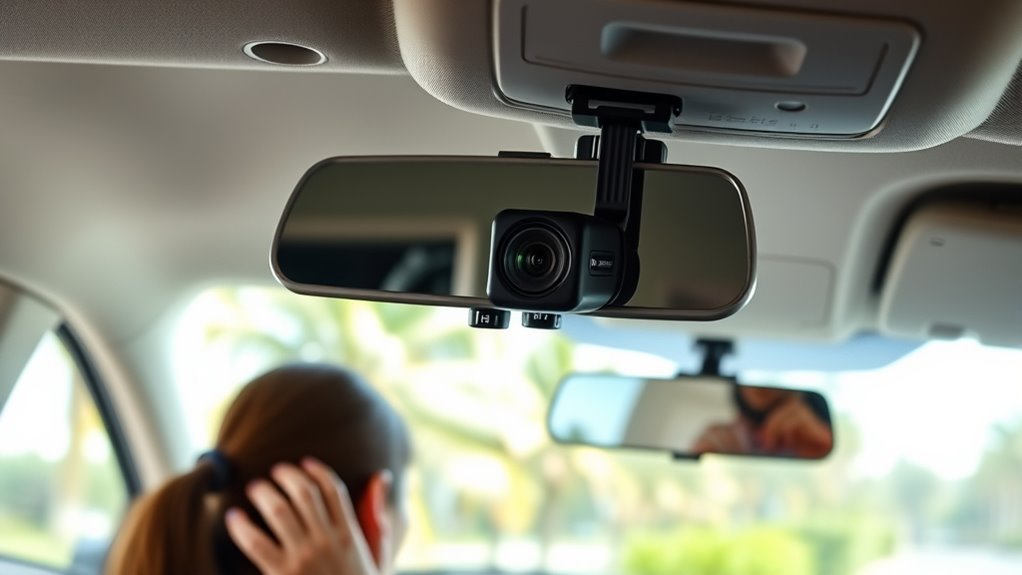
In Florida, understanding privacy expectations is essential when operating a dash cam. Video recordings of people in public spaces like streets or highways generally pose no privacy concerns, making external video capture lawful. However, recording inside private areas—such as homes or private vehicles without consent—can violate privacy rights and lead to legal challenges. Audio recordings require all-party consent under Fla. Stat. § 934.03; recording private conversations without everyone’s permission can result in criminal or civil penalties. To minimize disputes, provide clear notice to passengers through signage or verbal alerts, and obtain documented consent when possible. Logging dash cam settings, timestamps, and retention practices also support compliance. Avoid aiming the camera at private property to reduce privacy claims. It is also important to be aware that some local regulations may impose additional restrictions on dashcam use and recordings.
Best Practices for Legal and Safe Dash Cam Use

Properly installing your dash cam is essential for staying within Florida law and ensuring safety. Mount it on the dashboard or rear window to avoid obstructing your windshield, as Florida Statute 316.2004 prohibits objects that block your view. Choose models designed to minimize coverage or opt for rear-facing cameras that don’t cover large areas. For legal compliance, consider professional installation to ensure proper placement. When recording audio, inform all passengers to meet Florida’s two-party consent law (Statute 934.03). Avoid recording private conversations without permission, as violations can lead to criminal penalties. Use footage responsibly by keeping it authentic, unaltered, and relevant. Follow these practices to maximize your dash cam’s benefits while staying within legal boundaries and ensuring safety on the road. Additionally, be aware that Dashcams are permitted in Florida but must comply with Statute 316.2004, which underscores the importance of proper installation and usage.
Frequently Asked Questions
Can I Use a Dash Cam to Record Private Conversations Without All-Party Consent?
You can’t use a dash cam to record private conversations without all-party consent in Florida. If the conversations are private and participants expect privacy, recording without everyone’s permission can break the law and lead to criminal or civil penalties. To stay compliant, disable the microphone or use video-only recording. Always remember, capturing private talks without consent risks legal trouble, so it’s safest to get explicit permission beforehand.
Are There Specific Restrictions on the Size or Type of Dash Cam for Legal Use?
Did you know Florida doesn’t set size limits for dash cams? You can use any size camera, but it mustn’t obstruct your view through the windshield. To stay legal, mount your dash cam on the dashboard or rear window, avoiding placement that blocks your line of sight. Keep it small and off to the side. This way, you capture footage without risking a ticket for obstructing your view.
How Long Can I Legally Retain and Store Dash Cam Footage in Florida?
In Florida, you can retain dash cam footage as long as needed, since there’s no fixed legal period. To keep it court-admissible, preserve the original files with metadata intact and avoid deleting or editing them. Save important clips immediately and back them up securely. Just guarantee you follow privacy laws, especially regarding audio recording, and provide copies to authorities if requested.
Is It Legal to Record Dash Cam Footage and Share It on Social Media?
Yes, you can share dash cam footage on social media if you follow Florida’s laws. Keep videos free from private audio, disable sound, or get everyone’s consent before posting. Public road recordings typically lack privacy expectations, making sharing safe. However, avoid sharing private conversations or non-compliant clips to prevent legal liabilities. By ensuring authenticity and adherence to consent laws, you confidently showcase your dash cam captures while respecting privacy protections.
What Are the Penalties for Violating Dash Cam Mounting or Audio Recording Laws?
If you violate Florida dash cam mounting laws, you’ll face a non-moving violation citation, which can lead to fines and points on your record. For audio recording violations without consent, you could be charged with a misdemeanor, risking up to a year in jail and a $1,000 fine, or even face felony charges with harsher penalties. Proper compliance is essential to avoid legal trouble and guarantee your footage remains admissible.
Conclusion
By following these dash cam laws in Florida, you’re not just protecting your driving record—you’re practically becoming a legal superhero on the road! Proper mounting, respecting privacy, and understanding audio rules can save you from legal disasters and turn your dash cam into a fortress of evidence. Ignore these rules, and you could face chaos worse than a hurricane. So gear up, stay legal, and let your dash cam be your ultimate road warrior sidekick!