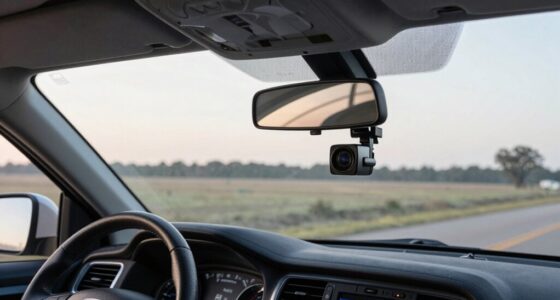
In Georgia, dash cams are legal if you install them properly behind the rearview mirror or low on the windshield, avoiding any obstruction of your view or safety features. You can record audio with one-party consent, but it’s best to notify passengers or disable audio recording to respect privacy. Proper mounting and regular maintenance keep your footage clear and compliant. Staying informed about these rules helps protect your rights—continue here to learn more about legal tips and best practices.
Key Takeaways
- Dash cams are legally permitted for continuous recording in Georgia, with proper mounting behind the rearview mirror to avoid obstructing view.
- Mounting height and position must meet safety standards, ensuring devices do not block visibility or safety features like airbags.
- Georgia follows a one-party consent law for audio recordings; recording conversations without agreement may violate privacy laws.
- To ensure admissibility, recordings should be unaltered, include metadata, and follow chain-of-custody procedures.
- Regular maintenance, proper mounting, and verifying the device’s operation are essential for legal and effective dash cam use.
Legal Status of Dash Cams in Georgia

Dash cams are legal to use in Georgia, and there are no state laws outright banning them. You can record video while driving, as continuous video recording with dash cams is explicitly permitted under Georgia law. However, the placement of your dash cam must not obstruct your view of the highway, as state statutes prohibit objects that hinder a driver’s clear line of sight. When it comes to audio recordings, Georgia follows a one-party consent rule, meaning only one person involved needs to agree to record. The admissibility of dash cam footage in court depends on relevance and proper authentication, such as maintaining a chain of custody and ensuring recordings are unaltered. Proper documentation and recording integrity are essential to ensure the evidence is accepted in legal proceedings. Additionally, understanding the legal nuances surrounding privacy rights can help ensure compliance with state and federal laws. It is also important to be aware that audio recording laws may vary depending on the specific circumstances of your recordings. For instance, understanding how bystander consent impacts recording legality can help prevent potential legal issues. Overall, using a dash cam in Georgia is lawful when you adhere to these guidelines. Additionally, the use of dash cams can be beneficial for providing evidence in legal proceedings, provided all recordings are properly obtained and maintained.
Proper Mounting and Obstruction Rules

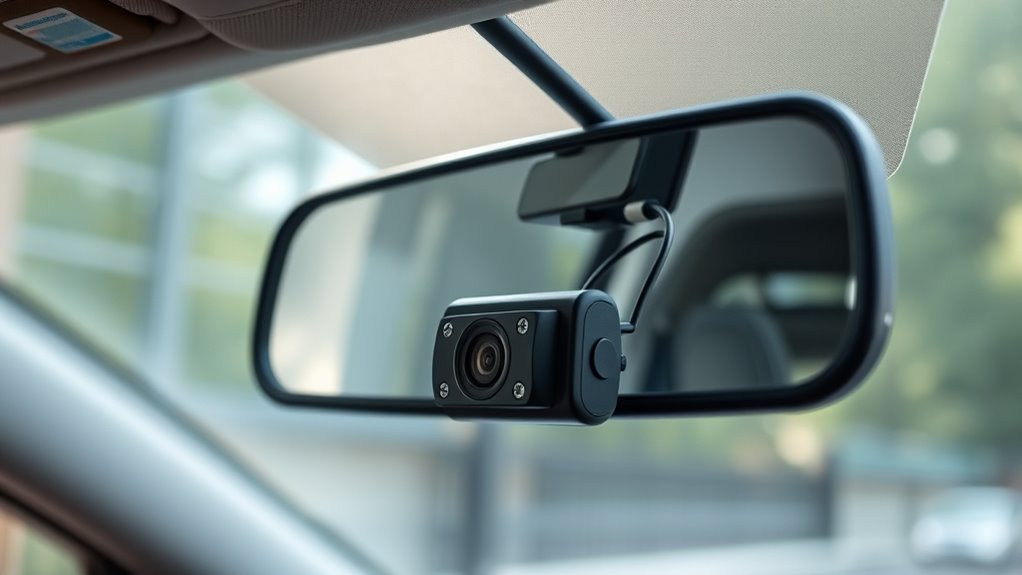
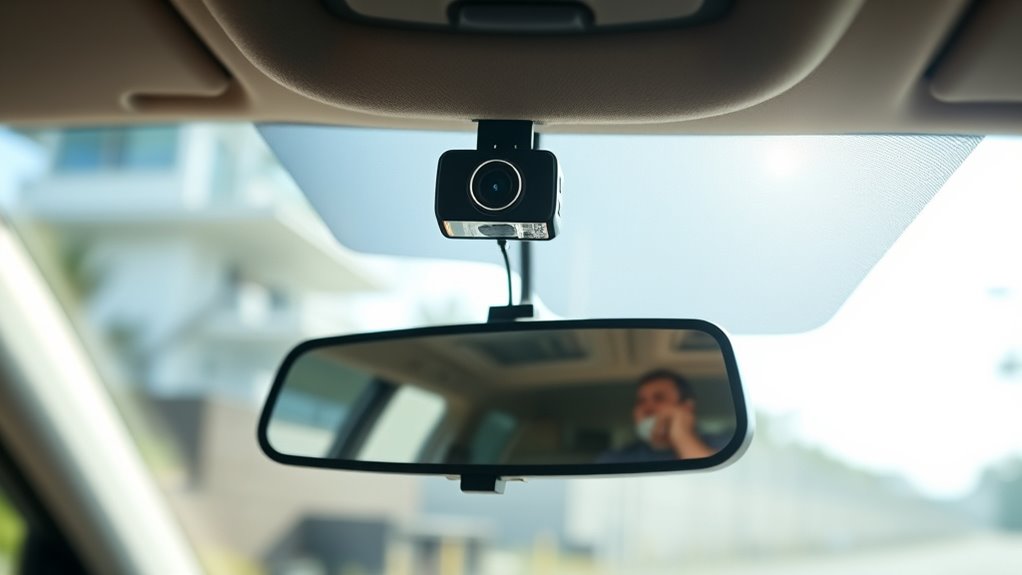
To stay within Georgia’s legal boundaries, you must make certain your dash cam is mounted correctly without obstructing your view of the road. Proper placement is essential to avoid violations and ensure safety. You should mount your dash cam on the dashboard where it won’t block your line of sight or behind the rearview mirror, which keeps visibility clear. Avoid attaching your device to the windshield if it obstructs your view of the highway or intersecting roads. Focus on locations that minimize interference, such as the lower corner of the windshield or on the dashboard. Remember, any obstruction that hinders your view or distracts you could lead to legal issues or safety hazards. Proper mounting also ensures compliance with Georgia law, which restricts obstructive signage or non-transparent materials on windshields. Proper positioning helps prevent view obstruction, a critical safety concern for drivers. Additionally, using secure mounting techniques ensures your device remains stable during driving and reduces the risk of accidental detachment. Ensuring your dash cam is mounted in accordance with vehicle safety standards further enhances your security and adherence to legal guidelines. Incorporating professional installation can help guarantee that your dash cam meets all safety and legal requirements.
Audio Recording Laws and Consent Requirements
In Georgia, you only need one person’s consent to record audio, so if you’re a participant in the conversation, you’re covered. However, recording conversations between third parties without their knowledge could violate state law. To stay compliant, it’s best practice to notify passengers or disable audio recording when privacy is a concern. Additionally, it’s important to remember that audio recordings should be used responsibly to avoid potential legal issues. Being aware of privacy policies and respecting individuals’ expectations of privacy can help prevent misunderstandings or legal complications. Furthermore, understanding the horsepower of electric dirt bikes can be useful if considering the power and capabilities of different devices, ensuring appropriate usage. Awareness of data security practices can further protect your recorded information from breaches or misuse. Recognizing the importance of self-sufficiency can also support maintaining control over your recordings and personal data.
One-Party Consent Rules
Are you aware that Georgia law generally allows you to record audio conversations if you’re a participant? This means that as long as you’re part of the conversation, you can legally record it without needing others’ consent. However, recording third-party conversations without their knowledge is illegal and could lead to criminal penalties. Keep in mind:
- Recording inside your vehicle is lawful if you’re a party to the conversation.
- Third-party conversations typically require all parties’ consent.
- Public recordings without audio usually don’t violate consent laws.
- Recording passengers depends on driver consent and privacy expectations.
- Cross-state recordings can be complicated if different laws apply.
- Legal considerations should always be kept in mind to avoid potential violations and penalties, emphasizing the importance of understanding and following consent laws.
- Being aware of recording laws helps ensure you stay compliant and avoid inadvertent legal issues.
- Familiarizing yourself with privacy regulations can help prevent unintended legal complications when recording conversations.
- Always consult local statutes for the most accurate information regarding recording laws in your jurisdiction.
- Additionally, understanding the limits of audio recording under Georgia law can prevent unintentional violations.
Best Practices for Audio Recording
Understanding the legal boundaries for audio recording helps you avoid potential disputes and guarantees your dashcam footage is admissible in court. Since Georgia law follows a one-party consent rule, you can record in your vehicle as long as you or another participant consent. Always retain original, unedited audio files with metadata and timestamps to verify authenticity. Position your dashcam to prevent obstructing your windshield and comply with Georgia’s window obstruction laws. Be cautious when recording private conversations or bystanders to avoid privacy violations or civil claims, especially if recordings capture private or confidential discussions. Avoid editing or trimming audio, as it can raise authenticity issues. Using supplementary evidence, like GPS data or video, enhances your case. Following these practices protects you legally and strengthens your evidence in disputes or investigations. Additionally, familiarizing yourself with privacy and recording laws guidelines ensures comprehensive compliance with privacy and recording laws. Understanding audio recording laws helps you stay within legal limits and avoid inadvertent violations.
Admissibility of Dash Cam Footage in Court
To get dash cam footage admitted in court, you’ll need to meet authentication standards that prove the video is genuine and unaltered. Chain-of-custody documentation and expert testimony often play a vital role in establishing this credibility. Ensuring your footage is properly preserved and can be verified helps it stand up to legal scrutiny. Video evidence can clarify disputes and strengthen your case when properly authenticated, especially when supported by digital evidence verification techniques. Additionally, understanding net worth and other personal details of key individuals involved can sometimes influence case perspectives. Properly documenting the evidence handling process is crucial to maintaining the integrity of your footage in legal proceedings. Recognizing the importance of proper storage of digital files also helps prevent tampering or loss of crucial evidence. Implementing secure storage methods is essential to safeguard the digital files from unauthorized access or accidental deletion.
Authentication Standards
In Georgia, the admissibility of dash cam footage hinges on meeting strict authentication standards that guarantee the footage accurately represents the events in question. You must prove the footage is a true and unaltered recording of what occurred. This involves demonstrating that the footage originated from the dashcam and hasn’t been been modified or tampered with. A witness’s testimony is often necessary to confirm the footage’s accuracy and fairness. To ensure acceptance, the video should be presented in its raw form, with timestamps verifying its integrity. The courts accept footage from any dashcam brand if it’s authentic and unedited, as long as relevance and authenticity are established. Proper documentation of the footage’s chain of custody can further strengthen its credibility in court.
Chain of Custody
A proper chain of custody is essential to prove that dash cam footage presented in court is the same recording captured at the scene and remains unaltered. You should immediately save the original, unedited file from the dash cam’s storage, avoiding apps that could modify metadata. Photograph the device, noting make, model, serial number, and timestamps. Remove and secure the storage medium in a tamper-evident container, labeling it with case details and documenting who handled it and when. Maintain a detailed log of every access, including transfer methods, file hashes, and conditions. Record all communications related to custody. These steps help establish the footage’s integrity, prevent tampering challenges, and support its admissibility under Georgia’s evidentiary standards. Ensuring proper documentation is crucial for maintaining the chain of custody and upholding the credibility of the evidence in court. Additionally, understanding wave and wind conditions can be useful in assessing the reliability of dash cam footage during different environmental scenarios. Implementing digital evidence management techniques ensures the preservation and security of the footage throughout legal proceedings. Proper encryption methods can also help protect the footage from unauthorized access or tampering during storage and transfer.
Expert Testimony
Ever wonder how courts determine if dash cam footage is reliable enough to be used as evidence? Experts play a pivotal role in interpreting footage when its authenticity or clarity is questioned. They verify that the video is unaltered, with timestamps and metadata confirming its legitimacy. Their testimony helps clarify ambiguous scenes and supports the footage’s authenticity in disputes. This is especially important for complex accident reconstructions or when the footage’s accuracy is challenged. Ensuring the footage is authentic is crucial for its admissibility in court. Key points include: – Experts validate the footage’s authenticity and integrity. – Their testimony supports the court’s understanding of the evidence. – They clarify ambiguous or unclear video segments. – Their input can strengthen the credibility of dash cam evidence. – They are essential when the footage’s authenticity is disputed.
Privacy Considerations and Third-Party Rights

Understanding privacy considerations and third-party rights is essential when using a dash cam in Georgia, as recording in public spaces generally poses minimal privacy concerns. You can lawfully record roads, sidewalks, and public areas since individuals in these settings have no reasonable expectation of privacy. However, recording private property visible from public ways, like inside homes through windows, can trigger privacy issues or civil claims. When recording passengers, their privacy protections are reduced, but audio recordings are governed separately by consent rules. Be cautious when recording minors, as heightened privacy sensitivities exist, especially if sharing footage publicly. Also, identifying bystanders through facial recognition or license plates may raise privacy concerns, and sharing such footage could lead to legal or civil liabilities.
Best Practices for Dash Cam Use and Maintenance
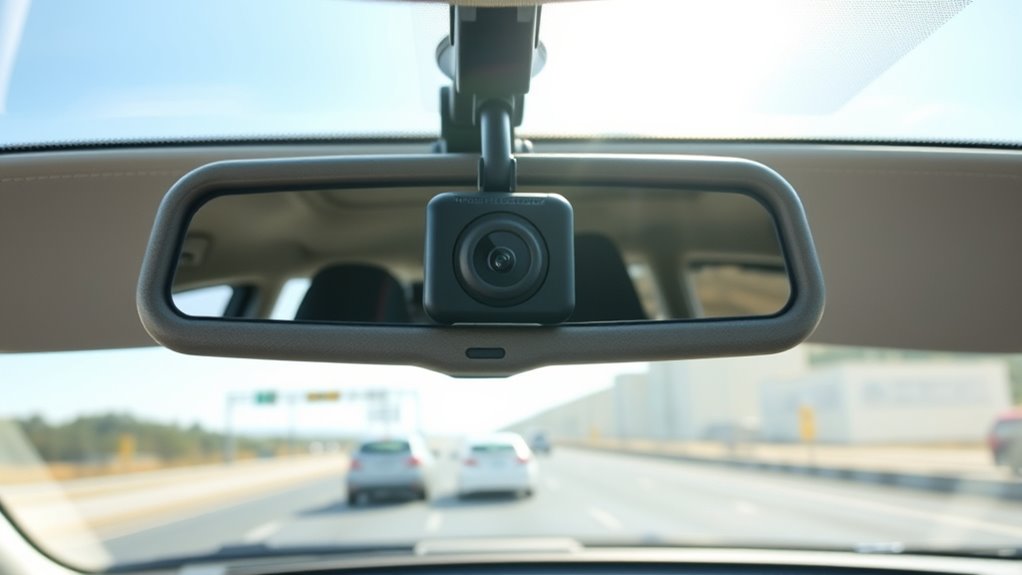
Maintaining your dash cam properly guarantees it records clear footage and operates reliably over time. Regular cleaning of the lens with a microfiber cloth prevents dust, fingerprints, and smudges that can blur recordings. Clean the screen gently with a safe solution, avoiding excess moisture. Check the mount and cables every few weeks to guarantee stability, preventing shaky footage or damage. Inspect cables for wear and replace any frayed wires. Format the SD card regularly to prevent corruption and keep storage maximized. Use high-endurance, high-speed cards and enable loop recording to avoid file loss. Protect the device from extreme temperatures by parking in shaded areas or using thermal covers. Regular firmware updates and testing ensure your dash cam functions smoothly and dependably.
- Use microfiber cloth for lens and screen cleaning
- Inspect mount stability and cable condition
- Format SD card regularly for maximum performance
- Protect the device from temperature extremes
- Update firmware and perform weekly tests
Tips for Sharing and Publishing Dash Cam Recordings

Sharing dash cam recordings can be tempting, but doing so without careful consideration can jeopardize your legal standing and privacy. In Georgia, public road footage is generally fair game, but avoid editing or tampering, as this can harm legal admissibility. Always keep raw, unaltered footage for court purposes, and provide copies—not original devices—to authorities. Document the chain of custody to maintain authenticity, and note the footage in police reports. Inform passengers about audio recordings to prevent privacy issues, especially since recordings may capture faces or license plates. Be cautious when posting videos on social media; it can weaken insurance claims and alert opposing attorneys. Before sharing, consult an attorney to ensure your recordings won’t compromise your case or privacy rights. Additionally, be aware that sharing footage without proper authorization could violate privacy laws or consent requirements.
Frequently Asked Questions
Can I Record Audio With My Dash Cam Without Violating Georgia Law?
Yes, you can record audio with your dash cam in Georgia without violating the law. The state follows a one-party consent rule, so as long as you are recording conversations you are part of, you’re legally covered. Just make certain that any audio recordings inside your vehicle include your own consent, and avoid recording conversations without informing others to stay compliant. Keep in mind, public recordings without audio don’t require consent.
Are There Any Specific Size Limits for Dash Cams in Georgia?
Did you know Georgia has no explicit size limits for dash cams? You won’t find a specific measurement like 5 inches square in the law. Instead, the focus is on not obstructing your view. You should mount your device behind the rearview mirror or on the dashboard, keeping it low-profile. As long as it doesn’t block your vision, your dash cam complies—size isn’t strictly regulated, but obstruction rules are key.
Is It Legal to Record Other Drivers’ License Plates Without Consent?
Yes, it’s legal to record other drivers’ license plates without consent in Georgia. Since license plates are publicly visible, recording them from your vehicle doesn’t violate privacy laws. Just make sure your dashcam is mounted properly so it doesn’t obstruct your view, and avoid capturing audio or personal conversations unless you have consent. Keep your footage secure and use it responsibly, especially if sharing or using it for legal purposes.
Do I Need to Inform Passengers About Audio Recording in the Vehicle?
You don’t need to inform passengers about audio recording in your vehicle, as Georgia’s one-party consent law allows you to record conversations if you’re a participant. Since the driver’s consent suffices, you’re legally covered without notifying passengers. However, to avoid privacy concerns or confusion, it’s wise to inform them verbally or display a notice. This promotes transparency and helps prevent potential legal or personal issues.
Can I Use Dash Cam Footage as Evidence Without Proper Chain of Custody?
You can’t just toss dash cam footage into court like a last-minute meme and expect it to hold up! Without a proper chain of custody, your evidence risks being thrown out faster than a bad joke. Courts need to see a clear trail of who handled the footage, when, and how it stayed intact. If you skip this, your footage could be dismissed, no matter how convincing it seems.
Conclusion
By following Georgia’s dash cam laws, you unbolt the power to protect yourself like a legal superhero—capturing every moment, safeguarding your rights, and exposing injustice. Proper mounting, respecting privacy, and responsible sharing turn your dash cam into an unstoppable force for safety and truth. Don’t leave your protection to chance—equip yourself with knowledge and make your dash cam your ultimate shield on every journey. Your peace of mind depends on it!