
Placing your phone mount properly is the top safety rule because it minimizes distraction, glare, and obstruction of your view. The best spots are near the windshield corners or dashboard, where quick glances are quick and eye movement stays minimal. This setup reduces long off-road glances and keeps your focus on the road. Following these guidelines can greatly lower crash risks—if you want to learn more about ideal placement and how to stay safe, keep exploring.

Get business pricing on garage and car supplies
- Business-only prices and quantity discounts
- Tax-exempt purchasing
- Multiple users, one account, clear invoices
Key Takeaways
- Place the phone mount within 10–14 inches of the steering wheel and slightly below the dashboard to reduce distraction and maintain control.
- Position the mount near eye level or the upper dashboard to minimize off-road glance time and improve quick, safe glances.
- Avoid low or obstructive locations like cupholders or obstructed windshield areas to prevent longer glances and visibility issues.
- Use adjustable mounts to ensure the device is within a 15° downward angle, reducing glare and visual overload.
- Prioritize legal and safety guidelines over convenience by selecting locations that do not obstruct views or interfere with vehicle controls.
As an affiliate, we earn on qualifying purchases.
Why Proper Mount Placement Matters for Safety
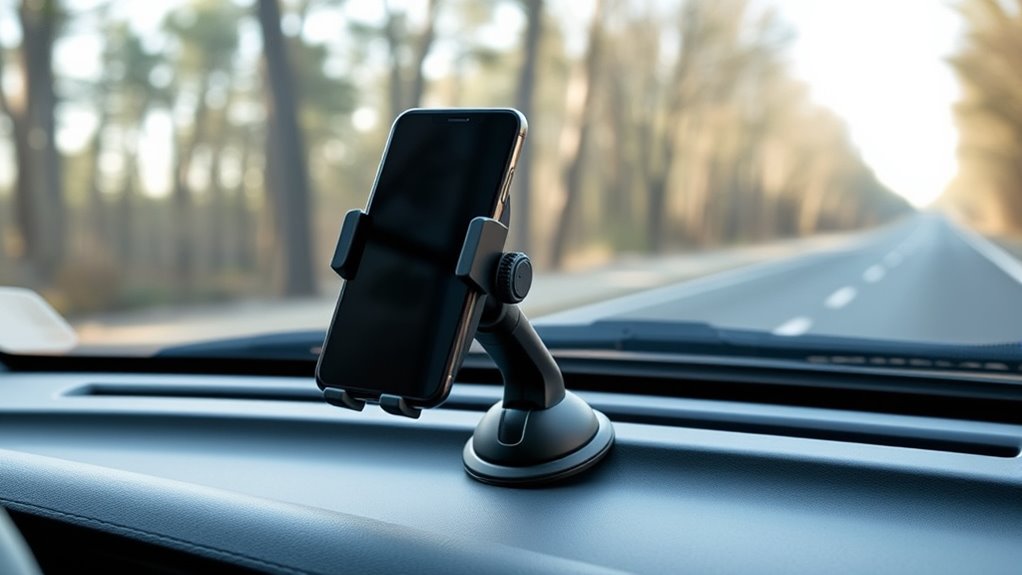
Proper mount placement is crucial because it directly affects how much your phone distracts you while driving. If your mount requires you to reach or adjust frequently, it increases manual and visual distraction, taking your eyes off the road longer. Mounts placed low on the dash or in the cupholder force downward glances, which extend off-road time and heighten crash risk. Obstructive positions that block your view of the instrument cluster or road compel you to do additional visual scanning, further diverting your attention. Additionally, poorly placed mounts that interfere with airbags or vehicle controls create secondary safety hazards. Secure, steady mounts that minimize vibrations and don’t require adjustments help reduce distraction, allowing you to keep your focus where it belongs—on driving safely. GPS is considered the most precise navigation system ever invented, which underscores the importance of using it safely without increasing distraction risks. Proper mount stability ensures your device remains secure during sudden stops or turns, further reducing the need for adjustments that can distract you. Using a well-designed, stable mount also helps maintain consistent positioning, which can improve your overall driving awareness and safety. Moreover, considering smartphone integration features can enhance safety by allowing voice commands and automated routines, reducing the need for manual interaction while driving.
As an affiliate, we earn on qualifying purchases.
Best Locations for Phone Mounts on Your Vehicle

Choosing the best spot for your phone mount depends on your driving habits and vehicle layout. Windshield corners, dashboard areas, or vents and cupholders each offer different advantages and challenges. Consider how each location impacts visibility, accessibility, and safety before making your decision. Proper placement can significantly reduce distractions and improve your overall driving experience. Additionally, ensuring the mount’s position minimizes driver distraction is crucial for safety. For classic motorcycle enthusiasts, special attention should be given to vibration dampening to prevent your phone from shaking or falling during rides. Proper mount stability is also essential to maintain safety and device security during sudden movements, especially considering the Gold IRA markets or other investments one might be managing on the go.
Windshield Corner Placement
Placing your phone mount in the lower corners of the windshield offers a practical balance between visibility and accessibility, but it’s essential to follow legal and safety considerations. Many U.S. states specify allowed zones by measured squares in the lower corners, and some ban windshield mounts altogether or restrict placement to preserve an unobstructed view. Verify local laws before mounting. Corner placement reduces obstruction of your central view, helping you see traffic signals and hazards clearly. It also keeps the mount outside your primary sight triangle to avoid blind spots. Keep the mount profile low and angled to prevent glare, and position it within reach for quick adjustments without extended arm reach. Always make certain the mount doesn’t interfere with your line of sight or cause reflections that impair visibility. Magnetic mounts with suction cup bases are the most stable type, making them a reliable choice for corner placement and ensuring your device stays secure during various driving conditions. Additionally, considering the natural landscape of your vehicle’s interior can help you find an optimal spot that minimizes distractions and glare. Proper mount placement also reduces the risk of accidental contact with vehicle controls or airbags during sudden stops.
Dashboard Positioning Strategies
Finding the best spot for your phone mount on the dashboard makes sure of easy access and clear visibility while driving. Position it thoughtfully to maximize safety and convenience. Consider these strategies:
- Dashboard Center: Place your mount front and center for ideal visibility, ensuring it doesn’t block airbags or your forward view. Test surface texture compatibility. Proper placement in the center enhances overall safety and accessibility. Additionally, ensuring the mount does not interfere with vehicle safety features is crucial for safe driving.
- Left Side: Mount on the left for right-handed drivers, reducing reach and maintaining a clear line of sight to the road.
- Low Dashboard: Position below eye level to minimize distraction, keep airbags unobstructed, and stay within legal limits.
- Seat Rail Mount: Attach to the seat rail for an unobstructed view, secure placement, and theft deterrence, especially on uneven surfaces.
Choose a location that balances safety, visibility, and legal considerations.
Vent or Cupholder Mounts
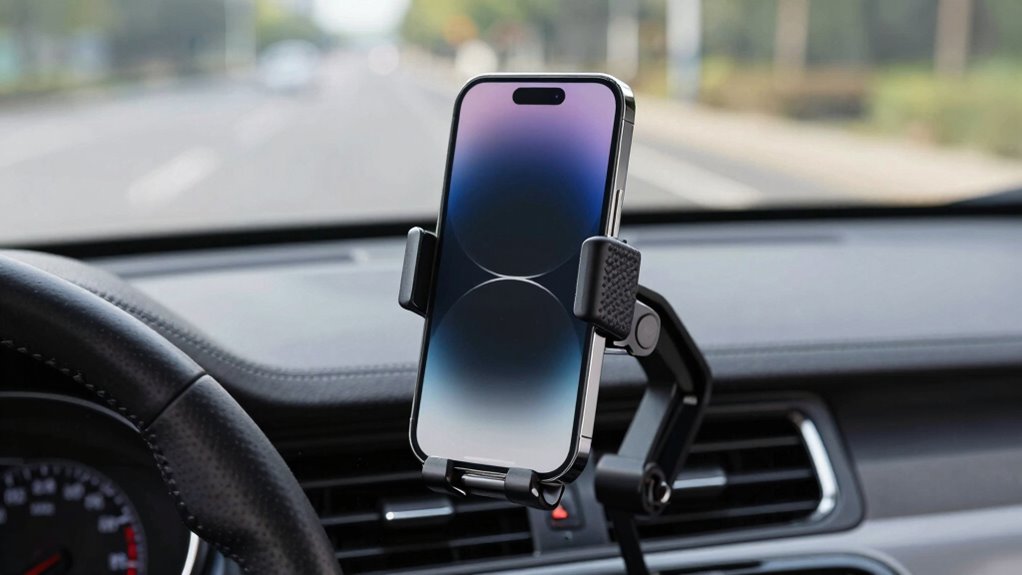
Vent or cupholder mounts are popular options for vehicle phone placement because they offer convenient access without cluttering your dashboard. Vent mounts provide quick reach but can wobble on rough roads and may block airflow, reducing HVAC efficiency. Magnetic vent mounts hold strong but depend on compatible cases, while clamp-style vents offer consistent stability. Over time, forceful installation can damage vents, and low-quality joints may wobble. Cupholder mounts sit low, causing more neck strain and distracting glances, but they keep your view clear and don’t block the windshield. Compatibility varies by cupholder size, so measure first. Durable materials can help prevent early wear and breakage. Proper installation techniques are essential to maximize stability and prevent damage. Additionally, choosing the right mount placement can significantly improve driving safety by reducing the risk of distraction and ensuring your phone remains accessible and secure during your trips. Being aware of vehicle interior design can further help you select the most suitable mounting option for your specific car setup. Considering ergonomic positioning can also enhance comfort and safety during long drives. Selecting mounts with adjustable features, such as swivels or extendable arms, can further optimize view angles for better visibility and safer driving.
dashboard phone mount with vibration dampening
As an affiliate, we earn on qualifying purchases.
As an affiliate, we earn on qualifying purchases.
How Placement Affects Glance Duration and Distraction
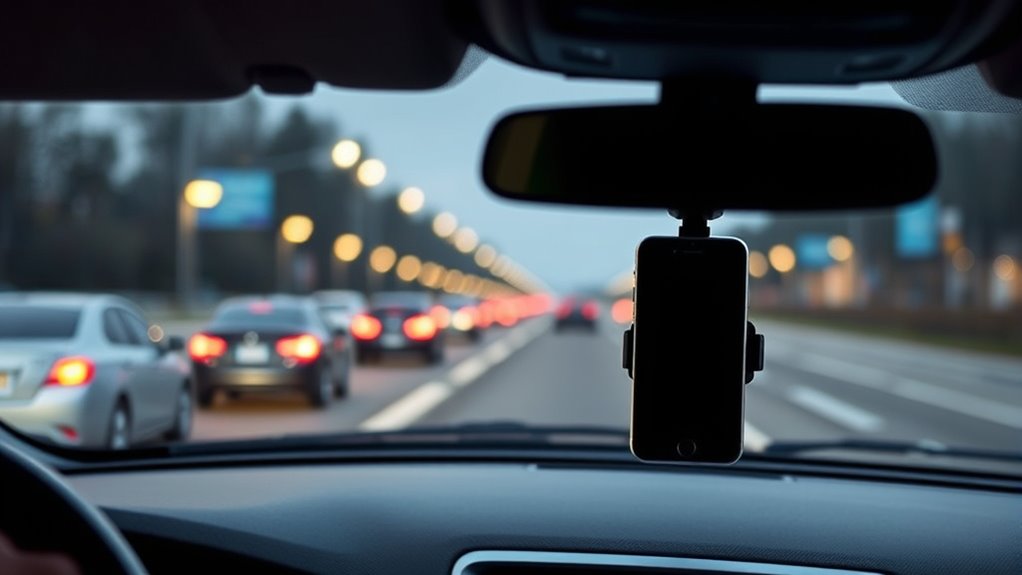
Where you place your phone considerably impacts how long you look away from the road and how distracted you become. Mounting it near your line of sight can reduce glance time and keep your peripheral awareness intact. Conversely, distant or awkward positions force longer looks, increasing your crash risk. Using a proper mounting position aligned with safety guidelines can significantly minimize distraction and enhance driving focus. Additionally, understanding field of view principles from astronomy can help in choosing optimal placement to maintain situational awareness. Recognizing psychological manipulation tactics can also aid drivers in remaining vigilant against distractions or external influences that may impair focus.
Glance Time Reduction
The placement of your phone mount considerably influences how long your eyes stay off the road during glances, affecting overall distraction levels. Poor placement increases glance duration, raising crash risk. To minimize glance time:
- Mount the device near eye level, such as the upper dash or windshield, to reduce angular displacement.
- Avoid low placements like the cupholder, which cause longer, riskier glances.
- Recognize that longer glances (over 2 seconds) markedly elevate crash risk; aim to keep glance durations under this threshold.
- Understand that quick, frequent glances are less dangerous than fewer, prolonged ones, so placement should prioritize reducing single-glance duration.
- Proper positioning also helps maintain your situational awareness, making it safer to respond to road changes without distraction.
Peripheral Viewing Benefits
Have you considered how your phone’s placement impacts your ability to glance at it quickly without losing focus on the road? Proper peripheral visibility is key to safe phone use. Mounts on vents or lower positions keep the phone out of your central line of sight but still within view, allowing quick checks without major distractions. Seat rail mounts offer flexible angles, enabling you to glance without turning your head, while cup holder placements minimize visual intrusion altogether. These positions help you maintain focus on the road while providing necessary information at a glance. By choosing spots that avoid obstructing your main view, you reduce the temptation to fixate on your phone, making your drive safer and less distracting. Proper placement enhances safety by minimizing the risk of visual overload and encouraging responsible device use.
As an affiliate, we earn on qualifying purchases.
Legal Guidelines and Enforcement Trends
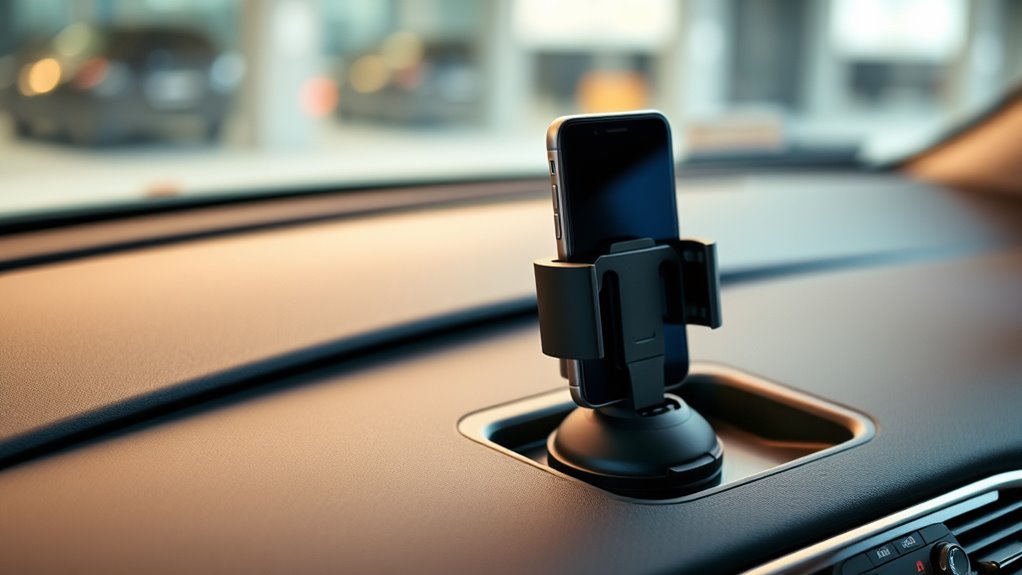
Legal guidelines for phone mount placement vary considerably across states, shaping how drivers comply with hands-free laws. You must understand your state’s rules to avoid penalties and ensure safe driving. Enforcement trends focus more on whether the mount obstructs your view than on specific types. Here are key points:
- Many states restrict windshield mounts, favoring dashboard placement to prevent view obstruction.
- California permits mounts on dashboards, lower corners of the windshield, or center consoles, provided views remain clear.
- Officers can ticket you if your mount is believed to interfere with visibility, even without explicit bans.
- Some states, like Minnesota and New Jersey, prohibit mounts that block the windshield or impair clear sightlines.
- Understanding your state’s specific regulations helps drivers avoid unintentional violations and promotes safer roadways. Compliance is often influenced by enforcement practices, which can vary widely by jurisdiction.
Staying compliant minimizes legal risks and helps maintain safe driving habits.
Comparing Different Mount Types and Their Impacts
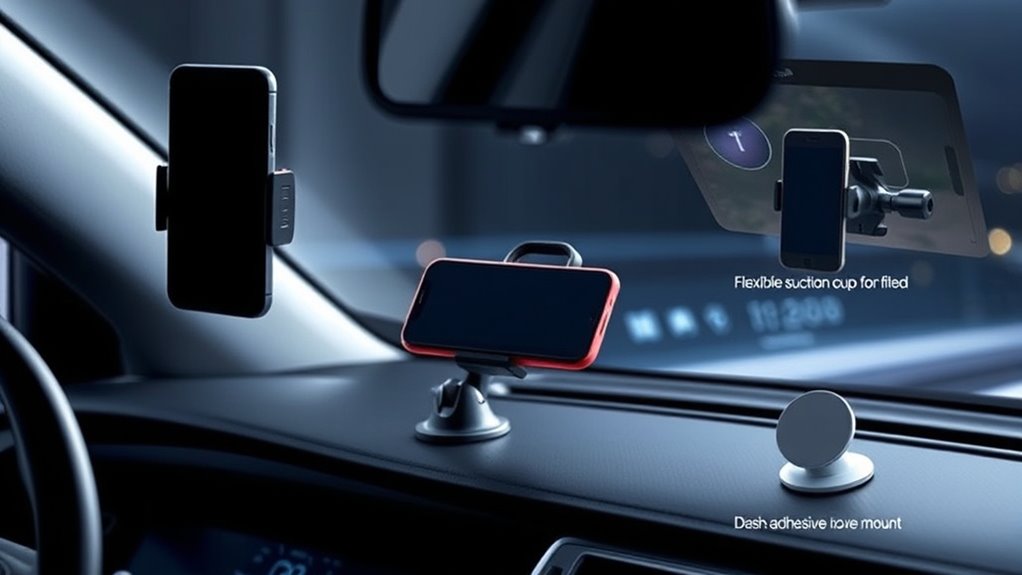
Choosing the right phone mount depends on your driving needs and vehicle setup, as each type offers different benefits and drawbacks. Suction cup mounts are popular for their stability and adjustability, but they can leave marks and vary in aesthetic appeal. Vanmass models offer good grip, though they may wobble on rough roads, while Belkin mounts work well on glass or dashboards. Vent clip mounts are easy to install and out of the way but can block airflow and have limited rotation. Magnetic mounts are quick to remove, highly stable, and allow 360-degree rotation, making them convenient. Dashboard mounts provide high stability and adjustability but risk adhesive damage, especially if not properly applied. Additionally, modern adhesive technology has improved, reducing potential damage when removing mounts. Some mounts now incorporate damage prevention features that help protect your vehicle’s surfaces during removal. Furthermore, ongoing innovations in nanotechnology-based adhesives are enhancing the strength and safety of mounting solutions. According to recent reviews, different mount types are preferred based on individual priorities like stability, convenience, and vehicle compatibility. For example, new adhesive solutions are designed to be less damaging, making it easier to switch mounts without concern. It’s also important to consider the cleaning and maintenance of both the mount and vehicle surfaces to ensure secure adhesion over time.
Ergonomic Tips for Minimal Reach and Visual Distraction

Positioning your phone mount with ergonomic principles in mind can greatly reduce driver fatigue and distraction. Proper placement minimizes reach distance, arm lift, and visual shifts, keeping your focus on the road. To optimize your setup:
- Mount within the natural forearm reach zone (10–14 inches from the steering wheel center) on the driver-side dashboard or left console.
- Position the device slightly below the steering wheel rim height to keep your elbows close and maintain control.
- Align the screen within a 15° downward gaze from your forward view, ideally near the instrument cluster or lower windshield.
- Use adjustable arms to fine-tune placement, ensuring quick, minimal-glance interactions and reducing the need for head or torso movement. Proper placement can also prevent overheating of your phone, especially when exposed to direct sunlight.
- Ensuring the mount is securely attached and stable helps prevent sudden shifts that could cause accidents or damage the device, which is related to tool stability and safety considerations. Maintaining an ergonomic setup can also support long-term comfort during extended drives. Additionally, considering interior design basics can help you select the most accessible and safe mounting locations. Incorporating ergonomic principles into your placement decisions ensures a safer, more comfortable driving experience. This strategic placement decreases distraction and enhances safety. Being aware of essential oils for safety can also help keep you alert and focused during long drives.
Additional Strategies to Enhance In-Vehicle Phone Safety
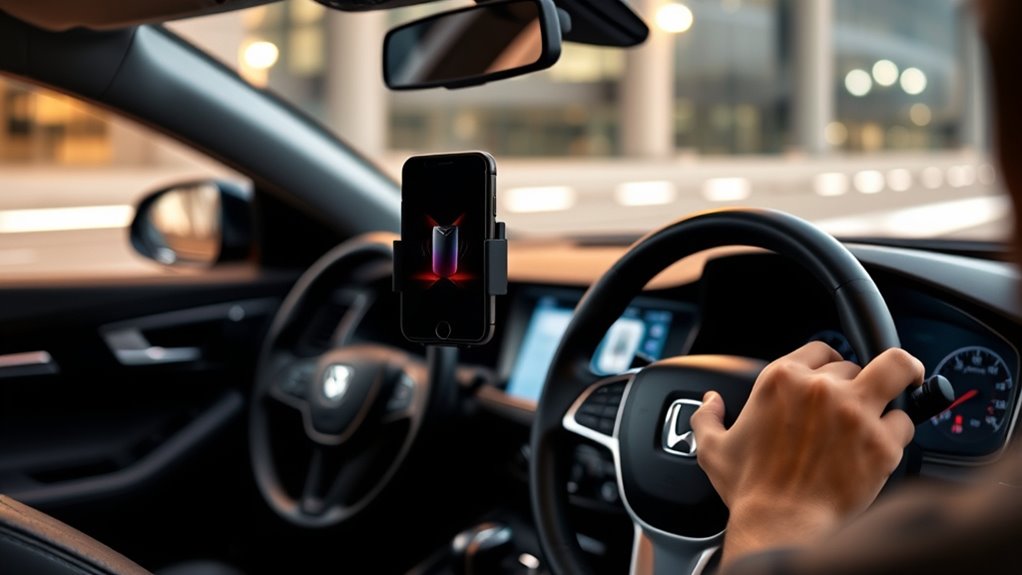
To further reduce the risks associated with in-vehicle phone use, adopting additional safety strategies can make a considerable difference. Laws banning handheld devices are expanding across states, with new regulations set for 2025. Using hands-free systems isn’t risk-free, as they create cognitive distraction that hampers your focus. Even talking on the phone increases crash risk, especially among younger drivers like Gen Z and Millennials, who make up 72% of distracted driving violations. Implementing crash avoidance technology, such as Subaru’s DriverFocus, can alert you to drowsiness or distraction, helping you stay attentive. Reinforcing physical controls over touchscreen devices and avoiding manipulation while driving further reduces danger. Staying aware of these strategies, combined with responsible phone use, can considerably improve your safety and that of others on the road.
Frequently Asked Questions
How Do Local Laws Vary Regarding Phone Mount Placement?
You need to know that local laws vary widely on phone mount placement. Some states, like Colorado and Georgia, let you mount your phone anywhere on the windshield, while others, like Illinois and Pennsylvania, prohibit mounts that obstruct your view. Many states restrict mounts to specific areas or require them to be low-profile on the dashboard. Always verify your local laws to ensure your phone mount is legal and safe.
What Are the Risks of Mounting a Phone Too High on the Windshield?
Mounting your phone too high on the windshield risks obstructing your view, which can lead to accidents. It may also interfere with airbag deployment if placed improperly, and vibrations from driving can loosen your mount or damage your phone. Additionally, high mounts can cause glare or be distracting, especially at night. To stay safe and legal, place your phone lower, near the dashboard or within easy, unobstructed reach.
Which Device Sizes Are Considered Safest for Vehicle Mounting?
You might think any device will do, but the safest for vehicle mounting are compact phones under 5.5 inches. They minimize visual obstruction, keeping your view clear and reducing crash risks. Mid-size phones, 5.5–6.5 inches, strike a good balance between readability and safety. Larger devices, especially over 6.5 inches, pose greater hazards by blocking sightlines or interfering with airbags, making them less safe choices for mounting in your vehicle.
How Often Should Mounts Be Checked for Security During Trips?
During trips, you should check your phone mount’s security at least once every hour, especially on long journeys. Make sure it’s stable and hasn’t loosened from vibrations or bumps. Stop periodically to inspect the mount, and re-secure it if you notice any movement or wobbling. Doing these quick checks helps prevent your phone from slipping or falling, keeping you safe and hands-free throughout your trip.
Can Voice Commands Fully Eliminate Visual Distraction Risks?
Voice commands can’t fully eliminate visual distraction risks. While they reduce the need to look away for manual input, many still require visual confirmation on screens, causing brief glances that can miss critical information. Complex tasks or errors increase cognitive load, slowing reactions and impairing hazard detection. To stay safe, you should limit voice interactions during driving and stay attentive to your surroundings, regardless of how advanced your voice system is.
Conclusion
Remember, your phone mount is more than just convenience—it’s your safety anchor on the road. Placing it thoughtfully keeps your eyes on the road and your mind focused, like a steady lighthouse guiding you through the storm. By choosing the right spot and staying mindful of your placement, you can navigate safely and confidently. After all, a well-placed phone mount isn’t just about convenience; it’s your shield against distraction.
Fall Picks
fall essentials
As an affiliate, we earn on qualifying purchases.