In Hawaii, you should mount your dash cam in designated areas on your windshield, like upper or lower corners, to avoid obstructing your view and stay within size limits. Audio recording is legal with at least one person’s consent, but you must be mindful of privacy laws—avoiding recording private conversations without permission. Proper placement and respecting privacy can prevent legal issues. Continue to explore these rules to ensure your dash cam use aligns with Hawaii’s regulations and best practices.
Key Takeaways
- Mount dash cams in upper/lower windshield corners within a 5-7 inch zone to avoid obstruction and comply with safety regulations.
- Hawaii requires at least one-party consent for audio recording; inform passengers or disable audio to ensure legal compliance.
- Dash cams should not block airbags, controls, or wipers; proper mounting and placement are essential for safety and legality.
- Use approved, transparent mounting materials; avoid obstructing views or violating windshield obstruction laws.
- Store and share footage securely, respecting privacy laws by blurring faces/license plates and maintaining proper data management practices.
Approved Mounting Locations and Size Limits
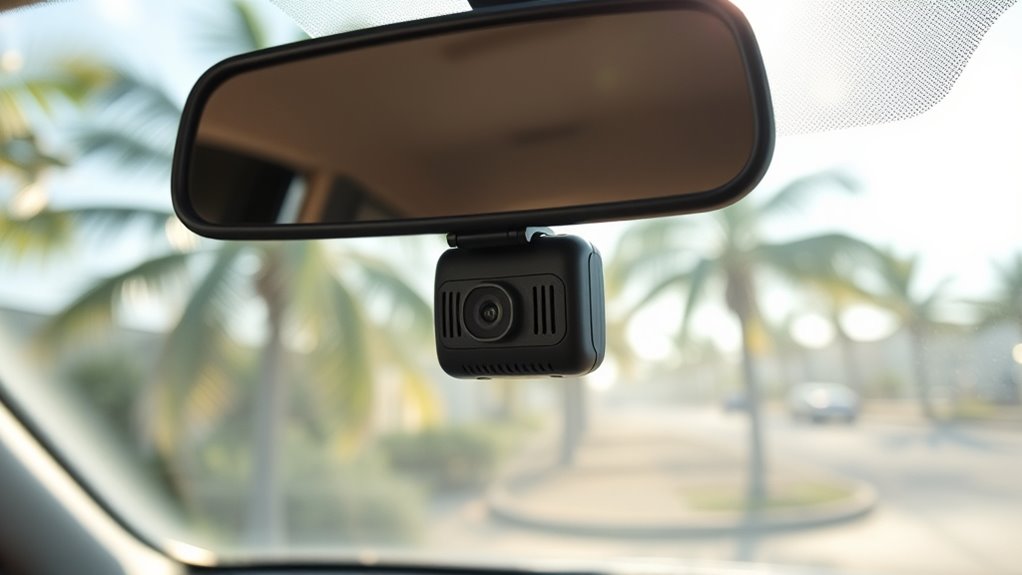
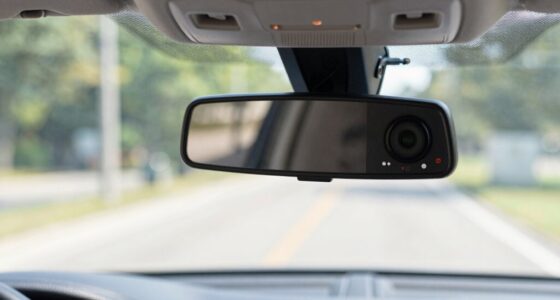
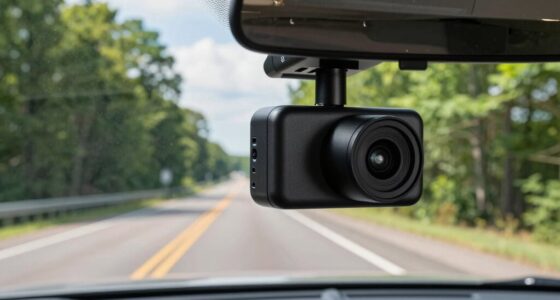
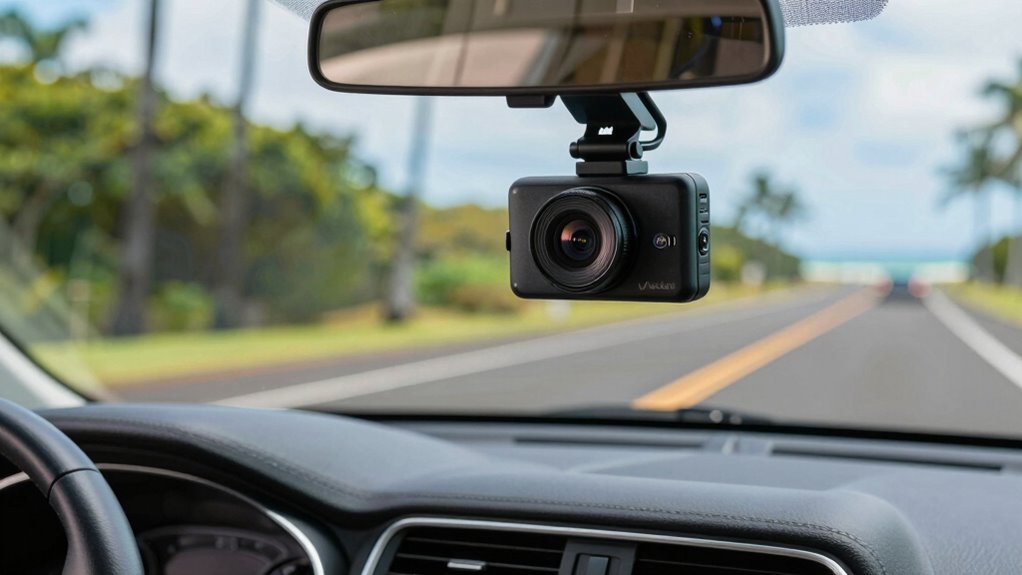
In Hawaii, you can mount your dash cam in specific areas that comply with state regulations, primarily to avoid obstructing your view while driving. Allowed spots include the upper and lower corners of the windshield for small devices, typically within a five- to seven-inch square area. You can also mount your dash cam on the dashboard if windshield placement isn’t practical. Rear-window mounting is acceptable as well. To stay compliant, position your device behind or near the rearview mirror, avoiding blocking major sightlines. Keep the device within the small corner zones, and ensure the mount doesn’t interfere with airbags, controls, or wipers. Remember, enforcement focuses on whether your device obstructs your view, so staying within these zones helps prevent violations. Proper placement is essential for legal compliance and safety. Additionally, choosing a secure mounting method helps prevent accidental dislodging or damage during drives. Ensuring your mount passes visual obstruction assessments can help you avoid potential fines or citations. Moreover, being aware of state-specific regulations ensures your dash cam setup remains compliant with Hawaii laws. For added peace of mind, select mounts that are adjustable and stable, which can adapt to different vehicle interiors and driving conditions. Being familiar with local laws can also help you stay informed about any updates or changes to the regulations.
Regulations on Windshield Obstruction and Enforcement Practices

Hawaii enforces regulations that prevent windshield obstructions to guarantee drivers maintain a clear view of the road. You must verify your dash cam and any mounting devices do not block your line of sight. Mountings are limited to specific areas and sizes, such as top or bottom corners, with size restrictions like 5 inches square or up to 7 inches in certain spots. Non-transparent materials that impair visibility are prohibited. Enforcement relies heavily on officer judgment during stops, so proper placement is essential. Vehicles with improper setups risk tickets. To stay compliant, consider mounting your dash cam on the dashboard or rear window instead of the windshield. Proper mounting positions prevent violations, size limits minimize visual impact, obstructive materials can lead to citations, officers assess obstruction case-by-case, and dashboard mounts are safer alternatives. Additionally, using approved materials can help ensure your dash cam setup complies with Hawaii’s safety standards. It is also important to be aware of privacy laws related to audio recordings to avoid potential legal issues. Moreover, understanding enforcement practices can help drivers anticipate how officers may evaluate their dash cam placement during traffic stops, especially considering visual obstructions and their impact on safety. Staying informed about wave and wind conditions can also assist in choosing optimal mounting locations that avoid interference from environmental factors.
Audio Recording Laws and Passenger Privacy Considerations

Understanding the legal framework for audio recording in Hawaii is essential if you want to stay compliant and respect passenger privacy. Hawaii follows a one-party consent law, meaning you can legally record conversations if at least one person involved consents. As a driver, you can record in-car conversations without explicit permission from passengers, unless the conversations are protected or involve sensitive topics. To stay compliant, display a visible notice indicating recording is active, or inform passengers at the trip’s start. Configuring your dash cam to quickly mute audio or disable recording when needed helps avoid privacy issues. Remember, recording private conversations without consent can lead to criminal or civil penalties. When in doubt, disabling audio or obtaining clear consent minimizes legal risks and respects passenger privacy. Being aware of state-specific consent laws is crucial to ensure you are not unintentionally violating privacy regulations. Additionally, understanding privacy considerations can help you navigate potential conflicts and maintain trust with your passengers. Furthermore, understanding the impact of cookies and how they relate to user privacy can help you better manage your own data and privacy expectations. Knowing the recording device regulations also ensures you comply with local laws and avoid legal complications. Being familiar with privacy risks associated with audio and video recordings can help you make more informed decisions about your dash cam usage. Moreover, staying updated on local legal nuances helps you adapt to any changes in legislation that could affect your recording practices.
Sharing Footage and Legal Implications for Privacy and Evidence

Sharing dash cam footage involves maneuvering complex legal and privacy considerations that can impact both your rights and those of others. You need to understand ownership rights, which typically belong to the vehicle owner or lessee, and recognize that individuals in the footage don’t hold ownership claims. When sharing, avoid public disclosures that could lead to privacy violations, especially on private property. Hawaii’s one-party consent law applies to recorded conversations, influencing what you can share legally. To protect privacy, blur faces and license plates, and steer clear of recording private areas. Remember, unedited, timestamped footage is generally admissible in court, but altering clips risks inadmissibility. Proper data handling, secure storage, and deleting irrelevant footage help you stay compliant and safeguard privacy.
Best Practices for Compliance and Risk Management
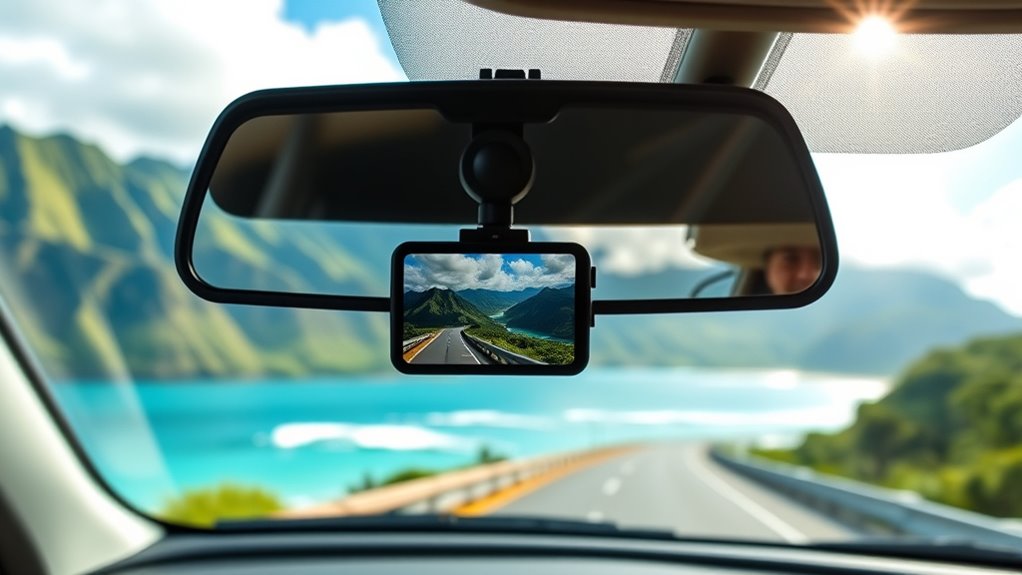
To effectively manage risks and guarantee compliance with dash cam regulations, you should carefully select devices with built-in privacy features and reliable data security. Opt for dash cams with configurable privacy modes, such as disabling audio or blurring faces and license plates, to protect personal data. Choose compact units that adhere to Hawaii’s windshield size limits and ensure they’re mounted outside the line of sight to avoid obstructing views and violating laws. Use secure storage options like encrypted microSD cards or cloud services to prevent unauthorized access. Implement clear procedures for recording audio, obtaining passenger consent, and documenting placement. Establish strict retention policies, role-based access controls, and maintain an auditable chain-of-custody to minimize liability and enhance evidence reliability. Additionally, staying informed about state-specific laws regarding dash cam operation and privacy helps prevent inadvertent violations and legal complications. Understanding privacy features and how they function can further safeguard personal data and ensure compliance. Regularly reviewing device firmware updates can help maintain security standards and adapt to changing regulations. Incorporating automatic updates can streamline ongoing compliance efforts. Furthermore, selecting devices with software security protocols ensures that footage and data remain protected from cyber threats. Incorporating consistent data management practices ensures that stored footage remains secure and compliant over time.
Frequently Asked Questions
Are There Specific Permits Required to Install a Dash Cam in Hawaii?
You don’t need a specific permit to install a dash cam in Hawaii for private vehicles. Just make certain your device fits within the small windshield zone (about 5-7 inches) or is mounted on the dashboard or rear window to avoid obstruction tickets. Federal restrictions or private property rules might require permission, but generally, no formal permit is necessary for private use. Always verify local enforcement to stay compliant.
How Long Can Dash Cam Footage Legally Be Stored in Hawaii?
Think of your dash cam footage as a story in a photo album—how long you keep it depends on the chapters. In Hawaii, there’s no fixed law for private dash cam storage, but common practice suggests you can safely hold onto recordings for 30 to 90 days, with some retaining critical clips up to three years. If an incident occurs, it’s wise to keep footage longer, especially if it’s needed for legal or insurance purposes.
Does Hawaii Law Differentiate Between Personal and Commercial Dash Cam Use?
Hawaii law doesn’t distinguish between personal and commercial dash cam use. The rules focus on device placement, visibility, and audio recording consent, applying uniformly regardless of vehicle type. Whether you’re using a dash cam for personal or business reasons, you should follow the same guidelines for mounting and audio consent. Evidence from dash cams is generally admissible, provided proper procedures are followed, without differentiation based on user classification.
Are There Penalties for Recording Audio Without Passenger Awareness in Hawaii?
Yes, recording audio without passenger awareness can lead to penalties in Hawaii. If you record without consent, you risk violating privacy statutes, which may result in misdemeanors, fines, or even imprisonment. The law emphasizes one-party consent, so if you’re participating in the conversation, it’s legal. However, recording others without their knowledge, especially in private spaces, can lead to legal consequences, civil lawsuits, and the need to destroy illegal recordings.
Can Dash Cam Footage Be Used in Court Without Proper Chain-Of-Custody Procedures?
You can’t use dash cam footage in court without proper chain-of-custody procedures. While capturing evidence seems straightforward, courts require clear documentation showing how the footage was handled from recording to presentation. If you neglect this, the footage may be deemed tampered or unreliable, leading to its exclusion. So, always keep detailed records, preserve metadata, and use tamper-proof hardware to guarantee your footage remains admissible and trustworthy in legal proceedings.
Conclusion
So, while Hawaii’s dash cam laws aim to protect privacy and keep you legal, it’s funny how they also invite you to become a roadside paparazzo. Just remember, mounting your camera properly and respecting privacy isn’t just about avoiding fines—it’s about avoiding being “that driver” everyone secretly judges. So, record your adventures responsibly, and enjoy capturing Hawaii’s beauty without turning your car into a courtroom drama. Stay legal, stay safe, and keep those footage moments fun, not felonious.