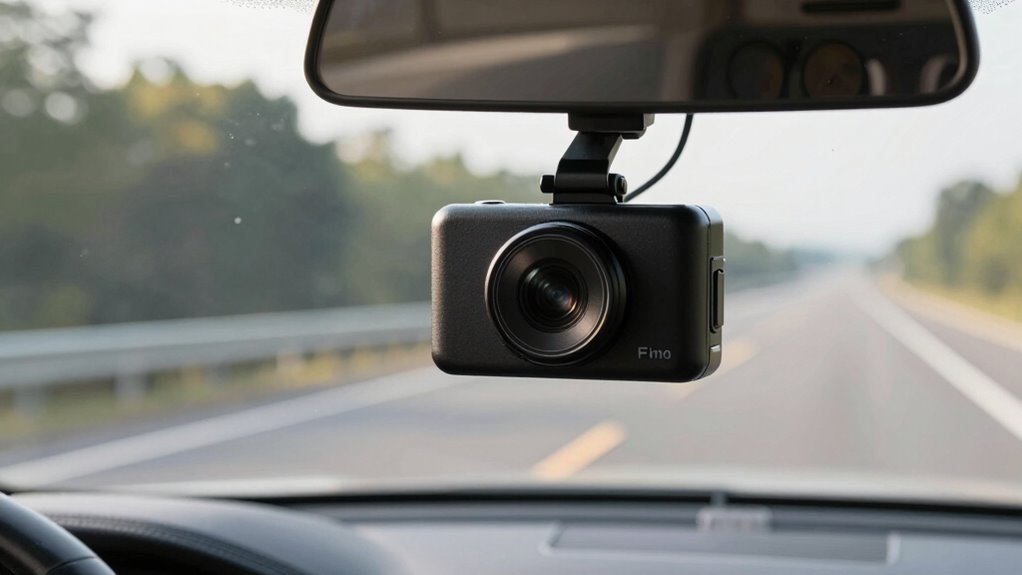
In Kentucky, dash cams are legal as long as you follow certain rules. You should mount the device behind the rearview mirror or in lower corners, ensuring it doesn’t block your view or interfere with airbags. For audio recording, Kentucky requires at least one party’s consent—you, as the driver, qualify. Respect privacy laws, avoid recording private conversations or property without permission, and handle footage responsibly. To learn about more specific guidelines, keep going with the details ahead.
Key Takeaways
- Dash cams are legal in Kentucky; placement must not obstruct the driver’s view, typically behind the rearview mirror.
- Kentucky follows one-party consent laws for audio recording; informing passengers about audio capture is recommended.
- Mount devices securely using low-profile mounts; avoid obstructing airbags, wipers, or primary sightlines.
- Recording in public spaces is generally legal; private recordings may require consent to avoid privacy violations.
- Properly handle, store, and back up footage to ensure admissibility and protect privacy rights during legal or insurance claims.
Overview of Dash Cam Legality in Kentucky
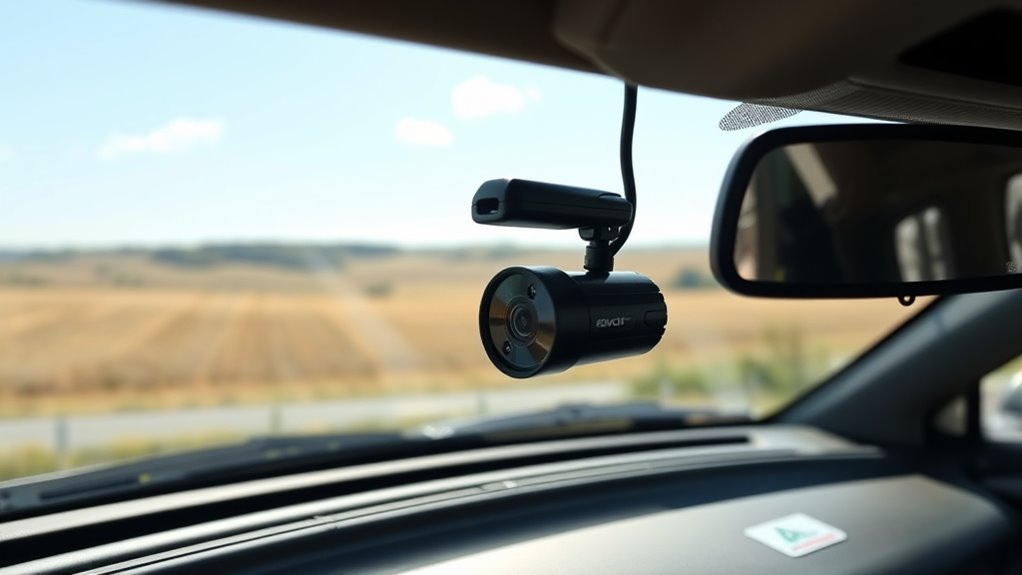
In Kentucky, using a dash cam is straightforward because there are no laws explicitly prohibiting or restricting their use in motor vehicles. Dash cams are considered legal across all 50 states, including Kentucky, under general motor vehicle laws. There are no specific bans on dashboard cameras, and regulations explicitly confirm their usage through 2025. This makes dash cams a viable option for recording your journeys without legal concerns. You should know that Kentucky is a one-party consent state for audio recordings, meaning your consent suffices if you’re operating the camera. While capturing footage, avoid infringing on individuals’ privacy and ensure your device doesn’t obstruct your view. Furthermore, Kentucky law requires only one-party consent for audio recording, making it legal for drivers to record audio within their own vehicle as long as they are aware of and agree to the recording. It’s also important to consider privacy laws related to video and audio recordings to ensure full compliance. Additionally, understanding recording regulations can help prevent potential legal issues related to surveillance and privacy rights. Being aware of data storage and sharing policies can further help you stay compliant with emerging privacy standards. Moreover, staying informed about local regulations will help ensure your recording practices remain lawful. It’s advisable to periodically review your recording practices to ensure ongoing compliance with any changes in privacy legislation.
Proper Mounting Practices and Placement Guidelines

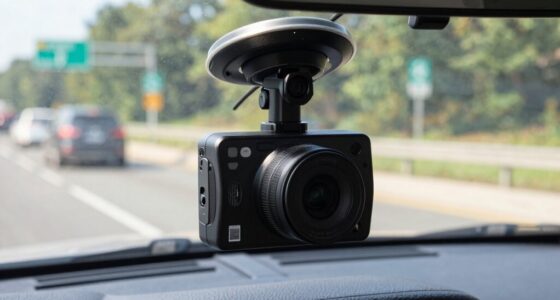
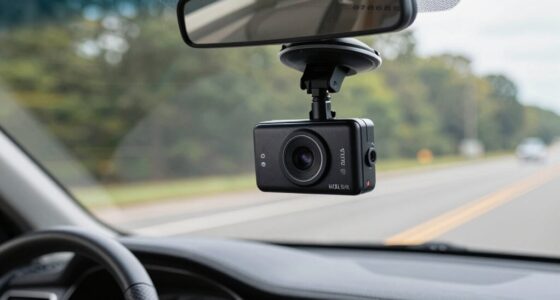
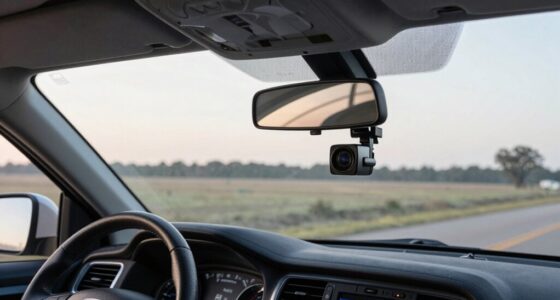
To guarantee your dash cam provides clear, reliable footage without interfering with your safety, proper mounting practices and placement are essential. Place the camera outside your primary sightline to avoid obstructing your view; mounting behind the rearview mirror on the windshield minimizes visual obstruction and aligns with common best practices. If windshield mounting risks blocking the wipers or AS-1 zones, opt for dashboard mounting, ensuring the device doesn’t block airbags or safety zones. Use manufacturer-recommended mounts rated for temperature and vibration to prevent detachment. Route cables neatly along trim or under panels to avoid distractions. Position the camera near the vehicle’s centerline, angling it to capture license plates and signs clearly. Test footage in various lighting conditions to optimize exposure and reduce glare. Additionally, consider ventilation considerations to prevent overheating of the device during long drives. Proper device placement also helps maintain the integrity and longevity of your dash cam, especially when exposed to varying weather conditions. To further protect your footage and privacy, consider data storage options that comply with local regulations. Ensuring your dash cam is legal to install and used responsibly can help you avoid potential violations and ensure compliance with local laws. Dash cams are legal to install and use in all 50 states, but users should ensure compliance with local laws and guidelines.
Audio Recording Regulations and Consent Requirements

Understanding Kentucky’s audio recording regulations is essential for dash cam users, as the state follows a one-party consent rule. This means only one person involved in a conversation needs to give consent for audio recording. As the driver, your consent is enough to legally record audio with your dash cam. Recording without this consent can be a criminal offense. Kentucky law allows dash cam audio recording when you participate, and there’s no specific prohibition against it. To stay compliant, it’s best to inform passengers about the potential audio capture, perhaps with visible notices or verbal disclosures. Additionally, using dash cam audio recordings appropriately helps ensure you remain within legal boundaries and avoid potential penalties. Being aware of audio recording laws can help you avoid penalties or legal complications, especially if recordings are used improperly or without consent. It’s also advisable to familiarize yourself with the privacy protections in place to prevent misuse of recorded audio. Ensuring proper audio consent can help you avoid fines, lawsuits, or criminal charges, especially if recordings are used improperly or without consent. Furthermore, understanding the legal implications of recording audio without proper consent can prevent unintended legal issues. Failure to follow these rules risks fines, lawsuits, or criminal charges, especially if recordings are used improperly or without consent.
Privacy Considerations and Personal Data Protection

Although Kentucky lacks specific statutes regulating private dash cams, general privacy laws and federal regulations still shape how you should handle recordings. Since Kentucky is a one-party consent state for audio, recording conversations is allowed if at least one participant agrees, which includes you as the driver. However, federal wiretapping laws may restrict covert audio recordings, especially across state lines or electronic interceptions. Recording in public spaces like streets and highways is generally legal because there’s no reasonable expectation of privacy. But recording inside private properties or private conversations could lead to civil or criminal liability. To protect personal data, limit footage retention, use encryption, restrict access, and delete recordings securely after their purpose is fulfilled. Posting notices and informing passengers helps mitigate privacy disputes. Additionally, being aware of privacy laws and how they intersect with technology ensures you remain compliant and avoid legal complications. Implementing security measures such as password protection and secure storage can further safeguard personal data from unauthorized access. Furthermore, understanding the nuances of personal data protection is essential for responsible dash cam use. Staying informed about data security best practices can help prevent unauthorized access and data breaches.
Using Dash Cam Footage for Legal and Insurance Purposes

When using dash cam footage for legal or insurance claims, it’s vital that the evidence is admissible in court. You should follow best practices like preserving original files, documenting metadata, and avoiding edits to strengthen your case. Properly managing and presenting your footage can make a significant difference in how it’s used and weighed. Ensuring legality and authenticity of the footage can help prevent challenges to its validity during proceedings. Additionally, understanding video evidence requirements can aid in ensuring your footage meets legal standards.
Legal Admissibility of Footage
To guarantee dash cam footage is accepted as legal evidence in Kentucky, it must meet specific admissibility criteria. Your footage should be obtained legally, without violating privacy laws, and must be clear, relevant, and unaltered. Courts require proper authentication, including time, date, location, and chain of custody details. Kentucky’s one-party consent law applies to audio, so recordings must comply accordingly. It’s advisable to have an attorney review the footage before submitting it as evidence. Properly preserved footage can serve as strong proof in personal injury claims by demonstrating fault, vehicle behavior, and road conditions. During investigations and court proceedings, admissibility depends on meeting these criteria, with expert testimony sometimes needed to establish authenticity and relevance. Non-compliance risks losing your evidence’s credibility and legal standing. Ensuring proper handling and storage of footage is essential to maintain its integrity and admissibility in court.
Best Practices for Evidence
Properly preserving dash cam footage is essential to guarantee it remains admissible and credible for legal and insurance purposes. Immediately save footage after an incident to prevent overwriting by loop recording. Back up raw files to a secure external drive or cloud storage without editing, and note timestamps, GPS data, and file metadata to maintain chain of custody. Free floating Avoid handling footage until legal review to prevent claims of tampering. Use dash cams with event-lock features to safeguard critical clips from auto-deletion. When submitting footage to your insurer, consult an attorney first—provide unedited videos showing pre-collision details like speeds and road conditions. Highlight objective evidence such as other drivers’ violations. Clear, unaltered footage reduces disputes, proves liability, and speeds up claims, ensuring your evidence is reliable and legally sound. Maintaining proper documentation and handling practices is crucial to uphold the integrity of your evidence in court or insurance investigations. Additionally, understanding device features and limitations can help you better preserve and present your footage effectively. Being aware of connected equipment capabilities can also assist in ensuring your dash cam’s data is comprehensive and tamper-proof. For added security, consider encryption options to prevent unauthorized access to sensitive footage. Familiarizing yourself with local laws and regulations related to dash cam use can further ensure your evidence remains compliant and admissible.
Ensuring Safe and Compliant Installation Techniques
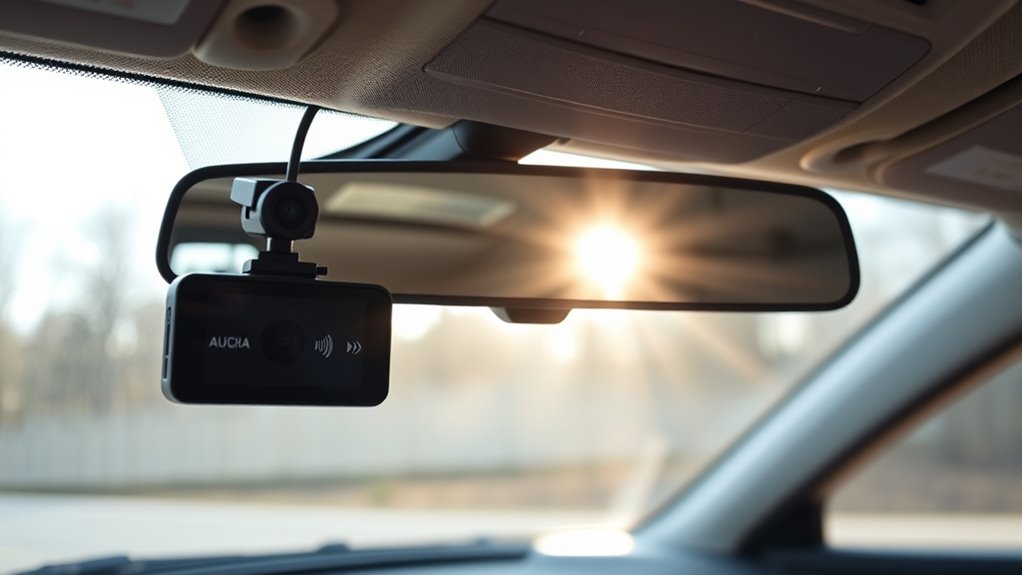
To guarantee your dash cam is both safe and compliant, you need to choose the right mounting position that doesn’t obstruct your view. Make sure the device is securely installed using proper techniques to prevent it from falling or causing distractions. Regularly check the setup to maintain clear visibility and stable operation during your drives. Additionally, being aware of device vulnerabilities can help you implement more effective security measures to protect your dash cam from hacking attempts. Incorporating modern kitchen technology concepts such as automation and connectivity can also enhance your overall vehicle security systems. Understanding navigation and mapping features can further optimize your dash cam’s placement for better coverage and safety. Moreover, considering the How to Status guidelines can help ensure your installation remains compliant with Kentucky laws and regulations. Staying informed about security best practices can help you safeguard your device against potential threats and maintain privacy during recording.
Proper Mounting Positions
Ensuring your dash cam is mounted in a safe and compliant position requires careful attention to placement guidelines. To do this effectively, consider these key points:
- Position the camera behind the rearview mirror, in the lower passenger-side corner, or on the dashboard out of sight lines to avoid obstructing your view.
- Avoid mounting where windshield wipers sweep or within the driver’s primary sight triangle to reduce legal risks and citations.
- Use low-profile, secure mounts—such as flush or adhesive types—that keep wiring out of sight and prevent accidental detachment.
- Understanding mounting regulations is essential, as States vary in their specific laws, so always check your local regulations to ensure proper placement and avoid potential legal issues.
- Being aware of regulatory compliance helps prevent inadvertent violations and ensures your dash cam remains within legal boundaries. Additionally, sound vibrations from improper mounting can affect camera stability and performance.
Maintain Clear Visibility
Maintaining clear visibility with your dash cam involves careful placement and ongoing attention to detail. You should position the camera so it doesn’t block your windshield view, staying outside common obstruction zones—typically no more than a 5-inch square on the driver side or 7 inches on the passenger side. Ensure mounting hardware and wiring don’t create glare or reflections that impair forward visibility, especially at night. Regularly inspect mounts for sagging or degradation that could obstruct your view. After installation, perform a driver sight-check by adjusting your seat and mirrors to confirm a clear view of traffic signals, signs, and pedestrians. Keep cables routed neatly along the headliner and A-pillars, and dim or disable camera LEDs to prevent distractions. Proper placement helps you stay compliant and safe on the road.
Secure Installation Practices
Proper installation of your dash cam is essential to keep it secure and compliant with Kentucky traffic laws. To do this effectively, follow these steps:
- Use a low-profile dashboard mount with a firm adhesive or friction pad to prevent movement and avoid obstructing your view.
- Position the camera behind the rearview mirror for ideal recording without interfering with visibility or airbags.
- Route cables neatly using clips or ties, keeping wires out of sightlines and away from controls or airbag deployment zones.
- Kentucky law prohibits attaching items to the windshield, so avoid suction cups or mounts that rely on suction cups for attachment. Always verify that your dash cam doesn’t block your line of sight and adheres to general traffic laws for safe, compliant installation.
Updates and Changes to Kentucky Dash Cam Laws
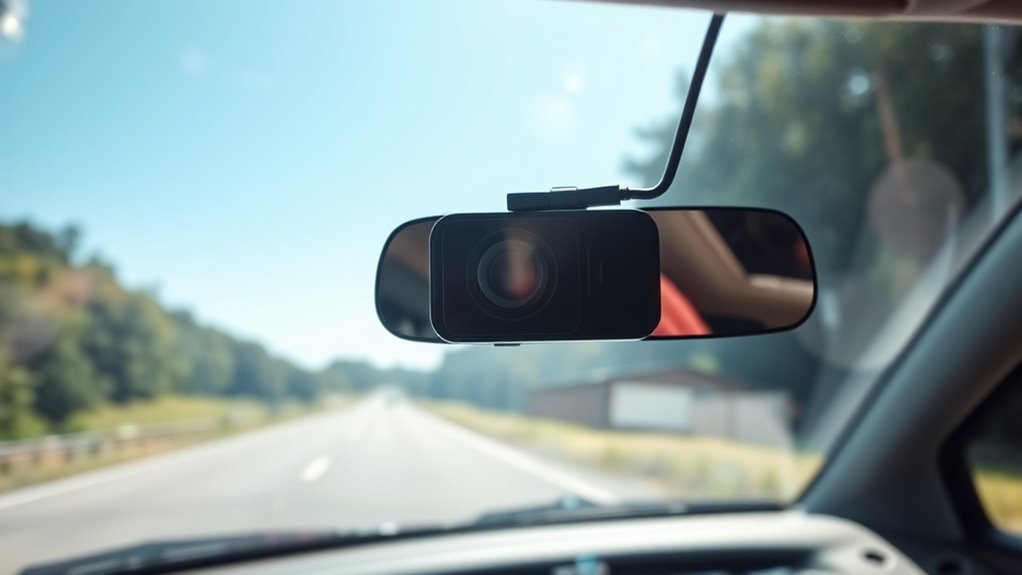
Although Kentucky has not enacted specific legislation addressing dash cam placement or use, recent updates confirm that the laws remain consistent with general traffic safety standards. You can use dash cams freely as long as they don’t obstruct your view or interfere with vehicle operation. No recent changes have introduced new restrictions or requirements. The main focus continues to be ensuring your dash cam doesn’t block your windshield or compromise safety. Audio recording laws also remain unchanged, requiring only single-party consent, so your recordings are legal if you’re the sole party. Overall, Kentucky’s dash cam regulations are stable, aligning with broader traffic safety guidelines. Here’s a quick overview:
| Aspect | Current Status |
|---|---|
| Placement Laws | No specific laws; must not obstruct view |
| Audio Recording | Single-party consent required |
| Usage in Claims | Footage remains admissible in accidents |
Selecting the Right Dash Cam Features for Compliance
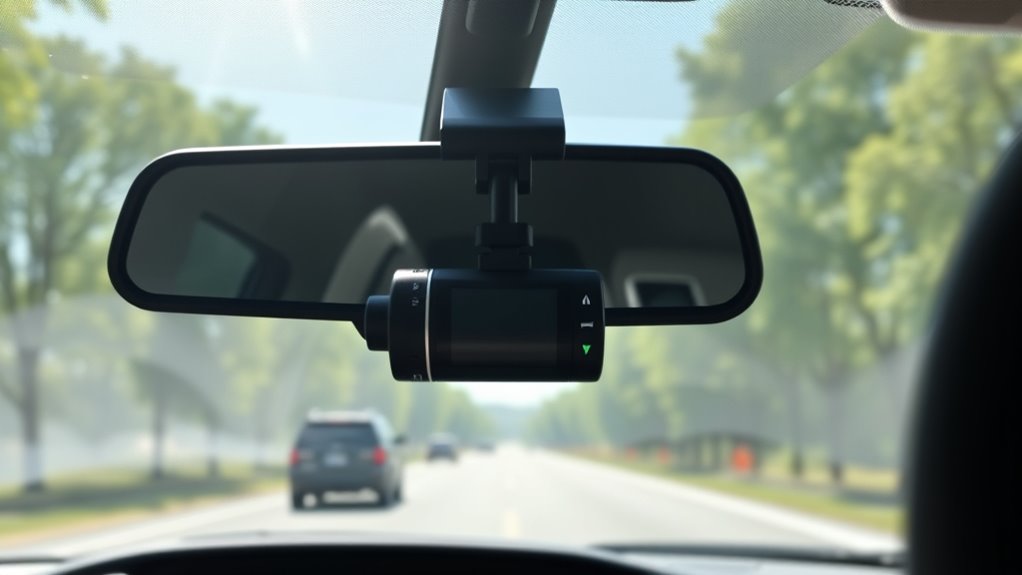
Choosing the right dash cam features guarantees you stay compliant with Kentucky laws and enhance your safety. Focus on selecting models that meet these criteria:
- Size and Profile: Opt for low-profile designs under five by five inches to avoid obstructing your view or attracting citations. Use secure mounting options like friction pads or adhesives to keep the device stable without interfering with airbags.
- Mounting Location: Place your dash cam behind the rearview mirror or in lower corner zones that don’t block your primary sightline. Test the setup to ensure clear visibility and avoid windshield attachment prohibited by Kentucky statutes.
- Audio and Cable Management: Select models with interior and exterior recording capabilities that comply with one-party consent laws. Route cables securely, away from controls and airbags, to prevent interference and maintain a tidy appearance.
Best Practices for Responsible Dash Cam Usage

To guarantee responsible dash cam use, you need to follow best practices that promote safety, privacy, and legal compliance. Regularly clean your lens with a soft cloth to keep footage clear and review recordings to catch issues early. Perform routine checks to ensure your camera functions properly and is securely mounted, avoiding obstruction of your view per FMCSA rules. When parking in unsafe areas, remove the camera to prevent theft or damage. Inform passengers about the camera to respect their privacy, and develop clear policies on recording scope and access. Avoid sharing footage without consent and educate drivers on ethical use. Always check local laws before recording, especially regarding audio, and follow DOT and FMCSA guidelines for installation and safety. Proper footage management and ongoing training help guarantee responsible dash cam use. Additionally, familiarizing yourself with the specific laws and regulations in your area ensures that your dash cam practices remain compliant and respectful of privacy rights.
Frequently Asked Questions
Can I Record Footage of Other Drivers Without Their Consent in Kentucky?
Yes, in Kentucky, you can record footage of other drivers without their consent. Your dash cam captures public road activity, including license plates, faces, and vehicle movements, which is legal and admissible in court. Just guarantee your camera doesn’t obstruct your view, and avoid tampering or sharing footage that discloses private facts. Remember, Kentucky is a one-party consent state, so you’re legally covered when recording audio while driving.
Are There Any Restrictions on Recording Passengers Inside My Vehicle?
Sure, go ahead and record your passengers—Kentucky doesn’t have specific bans on inside-vehicle footage. Just remember, your passengers don’t have a reasonable expectation of privacy in your car, so capturing their conversations or actions is generally legal. To stay on the safe side, inform them you’re recording, and consider posting a notice. Keep it transparent and respectful, or risk turning your dash cam into a voyeur’s dream.
How Long Can I Legally Store Dash Cam Footage in Kentucky?
You can store dash cam footage in Kentucky without a specific legal limit, but it’s best to retain important videos for 30 to 90 days. Automatically deleting non-incident footage after this period is recommended, unless it’s related to an accident or legal matter. Securely store critical footage, especially if needed for insurance or legal purposes, and consider using encryption and access controls to protect your privacy.
Can I Use Dash Cam Footage as Evidence in a Court Case?
You can definitely use dash cam footage as evidence in court, like a clear window into your driving story. When the footage is legally obtained and relevant, it becomes a powerful tool to prove fault, show witness actions, and document accident details. Just make certain your camera’s mounted correctly, and the footage doesn’t violate privacy laws. With proper handling, your dash cam can be your ace in the courtroom.
Are There Any Specific Safety Features Required for Legal Dash Cam Installation?
You don’t need specific safety features mandated by Kentucky law for dash cam installation. However, you must guarantee your device doesn’t obstruct your view, interfere with safety systems like airbags or ADAS sensors, or cause glare that impairs driving. Use secure, vibration-resistant mounts, route wiring properly, and avoid placement near airbags. These steps help keep your dash cam safe, compliant, and effective without risking safety hazards or legal issues.
Conclusion
In Kentucky, over 60% of drivers use dash cams for safety and proof, but staying compliant is key. By following mounting, audio, and privacy laws, you safeguard yourself legally and ethically. Remember, responsible use not only keeps you within the law but also preserves everyone’s privacy. Staying informed about updates ensures you’re always covered. With the right practices, your dash cam becomes a powerful tool for safe driving and peace of mind on Kentucky roads.