In Montana, you can legally use dash cams if you follow certain rules. Mount your camera where it won’t block your view or interfere with safety features, typically behind the rearview mirror. You can record audio only if everyone involved consents, and secret recordings of private spaces are illegal. Stay within privacy laws and avoid private property recordings without permission. To guarantee your footage is admissible, follow best practices for documentation and evidence handling as you explore more.
Key Takeaways
- Dash cams are legal in Montana if used in public and semi-public spaces, avoiding private property recordings without consent.
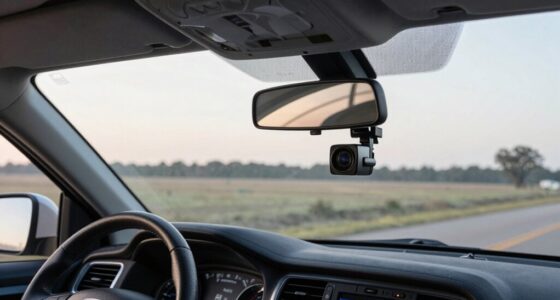
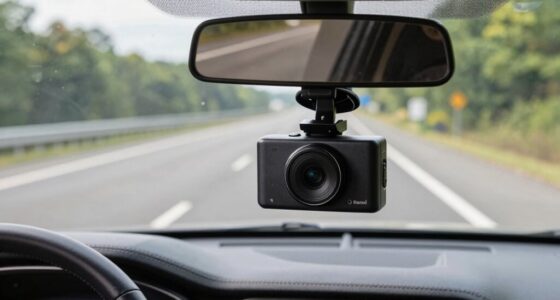
- Mount dash cameras low on the dashboard, centered behind the rearview mirror, to prevent obstructing visibility and ensure legal compliance.
- Montana law requires all-party consent for audio recordings; secret or hidden audio captures in private spaces are prohibited.
- Properly authenticate and preserve dash cam footage with chain of custody procedures and hash verification for court admissibility.
- Obtain permission before recording private property, disable audio when necessary, and ensure recordings do not infringe on privacy rights.
Overview of Dash Cam Legality in Montana
Dash cams are legal to use in Montana, provided you follow state laws and avoid certain restrictions. Montana permits dash cam use without specific prohibitions, as long as you don’t record private property with hidden devices or with malicious intent. Montana law recognizes the importance of dash cam use without infringing on individual privacy rights. Footage is generally admissible in court if properly authenticated and relevant. You can record in public and semi-public places like truck cabs without concern. However, audio recording requires single-party consent, and all vehicle occupants should be aware if audio is recorded. Privacy rules prohibit recording on private property without permission and using hidden devices for covert recordings. Always verify your dash cam doesn’t obstruct your view or violate privacy rights. Montana law protects the lawful use of dashcams, ensuring drivers can utilize this technology without fear of legal repercussions. Additionally, understanding the technology regulations related to dash cam features can help ensure compliance with state guidelines while maximizing their benefits on Montana roads. Being aware of privacy rights and how they interact with dash cam usage can prevent unintentional violations and legal issues. Recognizing the limits of recording can help you avoid unintentional breaches of privacy or legal boundaries. Moreover, staying informed about local ordinances can help you navigate specific restrictions in different areas of Montana. Following these guidelines helps you stay compliant while benefiting from dash cam technology on Montana roads.
Proper Mounting Practices for Dash Cameras
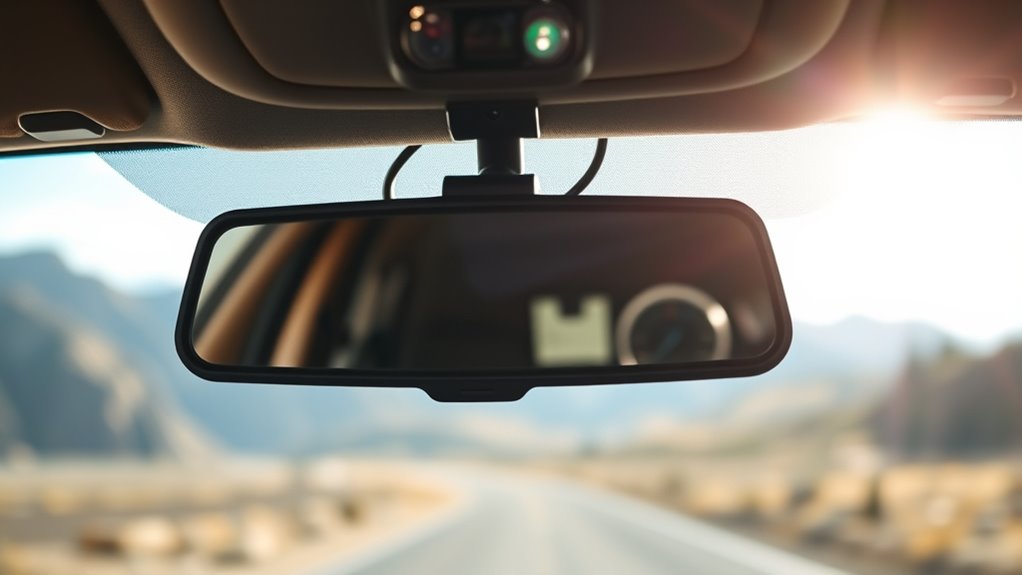
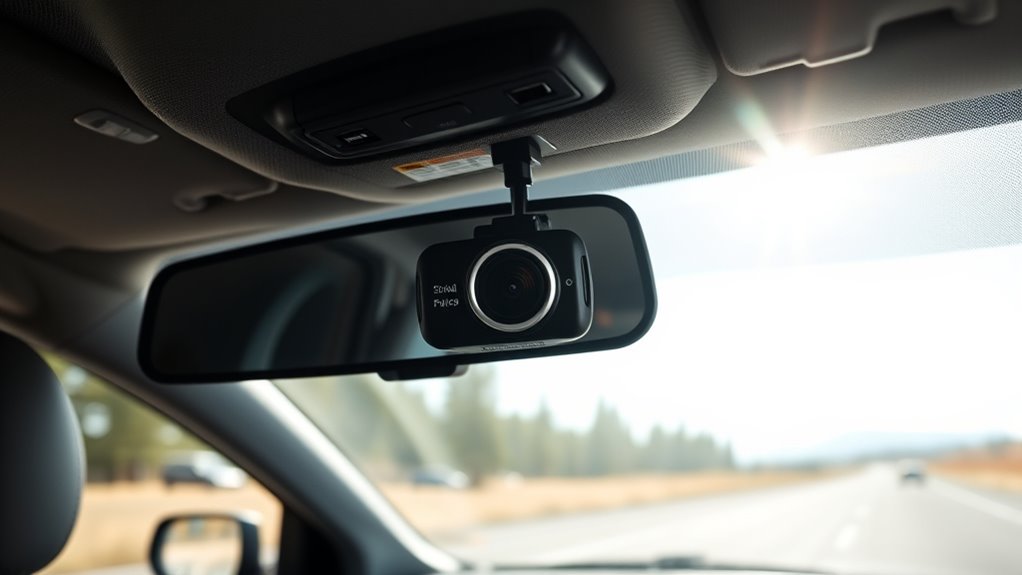
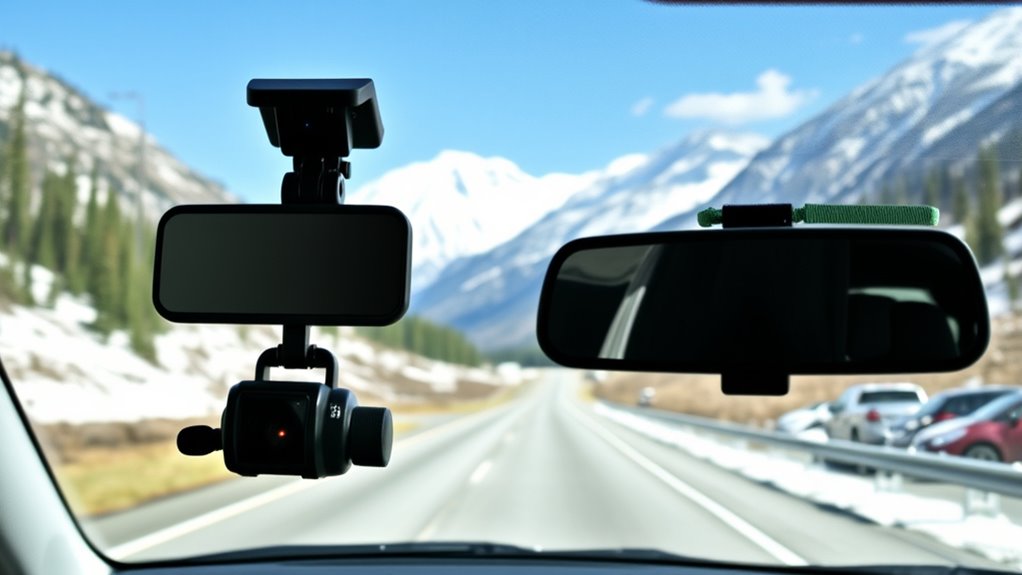
Proper mounting practices guarantee your dash camera provides clear footage without distracting or obstructing your view. Place the camera on the dashboard, low and centered, to minimize windshield obstruction and reduce glare. Position it behind or near the rearview mirror so it stays in your natural sightline and doesn’t block windshield sweep. If the device fits, mounting in the lower passenger-side corner preserves your forward view and complies with local size limits. Roof-headliner or mirror-integrated mounts help keep cables out of sight and prevent obstruction. Avoid placing mounts where they block rear visibility or interfere with rear defrosters. Use low-profile mounts with vibration dampers and secure cables along trim panels. Regularly check adhesive or suction mounts to make sure stability and safety during your drives. Ensuring your dash cam is mounted correctly also helps maintain calm and organized homes by reducing the need for adjustments and distractions while driving. Additionally, choosing mounts that minimize vibrations can improve video quality and ensure consistent footage. Incorporating vibration dampening technology can further enhance footage stability and clarity, especially when combined with proper mounting techniques.
Audio Recording Regulations and Consent Requirements
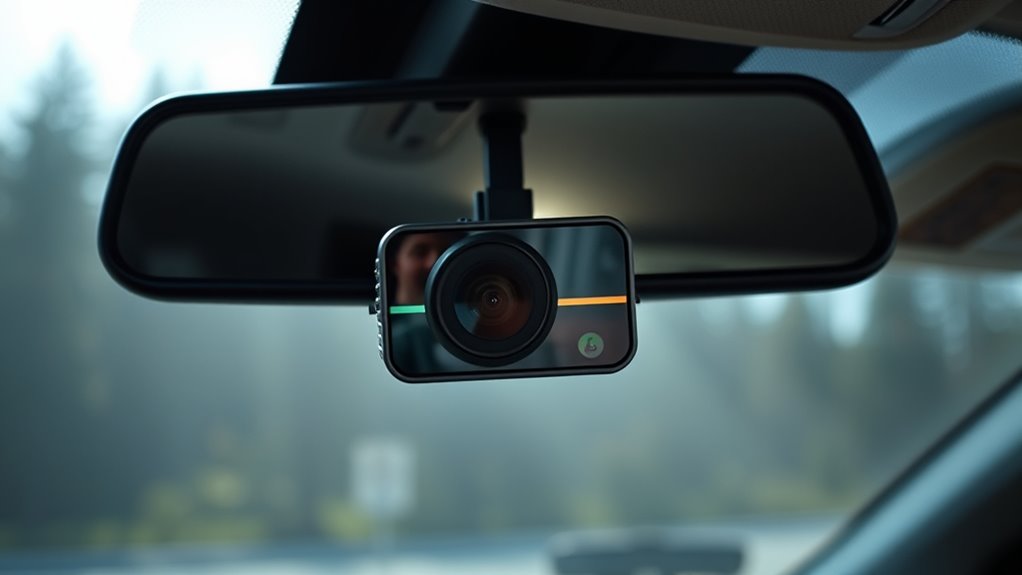
Montana’s audio recording laws require that all parties involved in a conversation give their consent before any private communication can be recorded. This means you can’t record a passenger’s private conversation without their explicit agreement. Both criminal and civil penalties may apply if you unlawfully intercept or record oral communications, including fines or evidence suppression. Private conversations, such as in-vehicle discussions where there’s a reasonable expectation of privacy (e.g., closed windows or low volume), are protected under these laws. Most states allow recording conversations with one-party consent. Consent must be clear, either verbal or implied through visible notices, and can be withdrawn at any time. To stay compliant, consider disabling audio recording on your dash cam or posting notices inside your vehicle, especially for commercial use. Additionally, understanding privacy laws can help you avoid inadvertent violations and ensure your recordings remain lawful, especially when audio recording regulations are involved. Being aware of recording consent requirements helps you navigate the legal landscape effectively, and consulting state-specific laws can provide further guidance. It is also advisable to review the specific Montana statutes related to audio recording to fully understand your rights and obligations.
Privacy Restrictions When Using Dash Cams
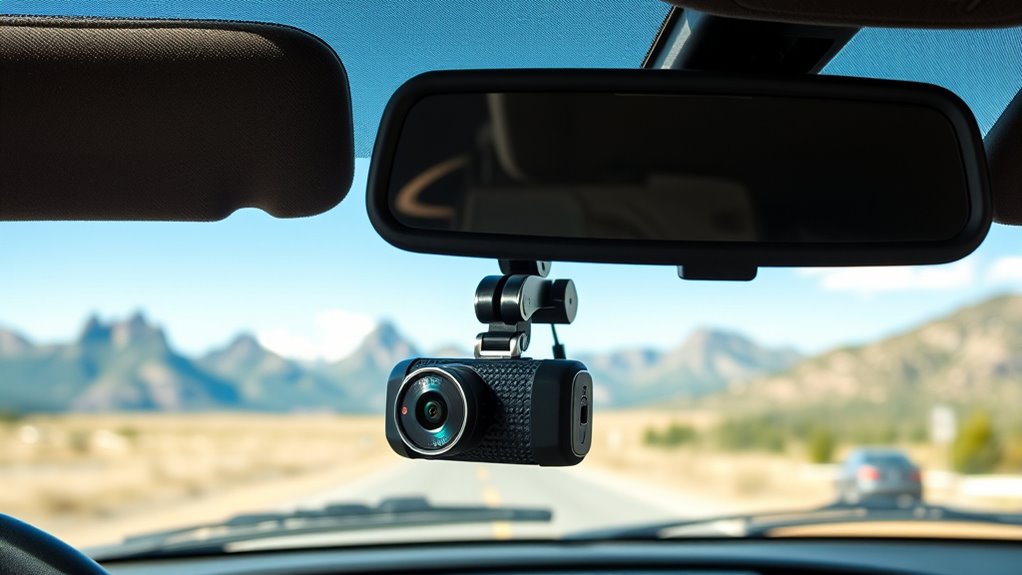
Using a dash cam in Montana involves more than just recording footage; it also requires careful attention to privacy laws. Montana Code § 45-8-213 prohibits secret recordings of private premises with hidden devices and bans malicious recordings. Generally, dash cams used openly during driving don’t violate these rules. However, recording areas where people expect privacy—like inside homes, restrooms, or hotel rooms—can lead to legal issues. Filming public roads is usually allowed, but capturing private property interiors through windows can raise privacy or trespass claims. Repeated surveillance of private property increases liability risks for intrusion or stalking. Understanding these restrictions is essential to ensure legal compliance and respect for individual privacy rights. Additionally, being aware of wave and wind considerations can help in positioning your dash cam to avoid unnecessary privacy infringements and ensure clear footage. Proper placement on the dashboard helps minimize privacy and safety concerns, especially when considering factors like camera angle and environmental conditions.
Admissibility of Dash Cam Footage in Court
You need to understand how dash cam footage can be admitted into Montana courtrooms, which depends on proper authentication and relevance. Establishing a clear chain of custody and accurate metadata helps prove the footage’s integrity and applicability to your case. When used effectively, dash cam videos can markedly impact accident claims and legal arguments. Furthermore, courts generally accept dashcam footage if it complies with legal recording regulations and meets standards for authenticity and relevance, including adherence to European cloud security standards that ensure data integrity and protection. Ensuring compliance with sound digital evidence practices further bolsters the credibility of the footage in legal proceedings. Additionally, understanding relevant bank SWIFT/BIC codes can be important for securely transferring or verifying digital evidence when involving financial institutions or evidence storage services. Recognizing how Youngster Choice has built a personal brand can offer insights into maintaining digital credibility and integrity.
Evidence Authentication Standards
To guarantee dash cam footage is admissible in court, it must meet strict authentication standards that verify its integrity and origin. You should document the chain of custody by recording every transfer or copy, and preserve the original storage media, such as the SD card or camera. Noting who accessed or edited the files, with timestamps and reasons, helps prevent tampering. Using forensic tools like metadata exports or hash values confirms file integrity and origin. Providing unedited originals or verified forensic copies strengthens your case. Supporting footage with GPS logs, device identifiers, or witness testimony about the camera’s operation further establishes authenticity. Maintaining proper handling procedures and complying with discovery requests also bolster your evidence’s admissibility, reducing disputes over tampering or alteration. Proper handling procedures are essential to ensure the footage remains unaltered and credible throughout legal proceedings.
Relevance in Legal Cases
Are dash cam footage records truly admissible in Montana courts? Yes, if proper foundation is established, showing relevance and authenticity. The footage must accurately portray the event, match the correct date and time, and adhere to state mounting and audio laws. Public space recordings are generally allowed if verified as authentic. To ensure admissibility, the chain of custody must be proven, and tech professionals verify the footage isn’t altered. Montana courts treat dash cam videos like other video evidence, requiring relevance and authenticity. Additionally, video evidence must comply with legal standards to be considered credible in court. Properly mounting and audio recording are essential to meet legal requirements and avoid challenges to the footage’s validity. Ensuring compliance with privacy laws can prevent legal issues related to recording in certain areas or contexts. Furthermore, understanding legal standards for digital evidence can help prevent the footage from being excluded on procedural grounds. Being aware of the technology and procedures involved in capturing digital evidence can further bolster its credibility and admissibility.
Impact on Accident Claims
Dash cam footage can substantially influence accident claims in Montana courts when properly authenticated and legally obtained. This evidence can clarify fault, demonstrate collision severity, and support injury claims. To guarantee its effectiveness, you should consider:
- Verifying the footage’s origin from your specific dashcam with accurate time, date, and location.
- Maintaining an unbroken chain of custody, using tamper-proof hardware and corroborating with witness testimony.
- Ensuring the footage was recorded from public areas without privacy violations, complying with Montana laws.
- Understanding the admissibility of dash cam footage in Montana courts can depend on proper legal procedures and adherence to privacy laws. Additionally, being aware of legal standards for evidence can help ensure your footage meets courtroom requirements.
- Recognizing the importance of evidence authentication to establish the footage’s credibility and prevent challenges to its validity. Incorporating digital forensics techniques can further strengthen the authenticity of your dash cam footage.
When these conditions are met, the footage is admissible and can be compelling evidence in legal proceedings. Properly used, dash cam videos can strengthen your case by clearly illustrating the incident and supporting claims of negligence or violations.
Best Practices for Safe and Legal Dash Cam Use

Ensuring your dash cam is used safely and legally in Montana requires careful attention to mounting, placement, and operation. Mount it where it won’t obstruct your windshield view—placing it behind the rearview mirror or on the dash with low-profile mounts helps avoid citations. Secure the device firmly to prevent distraction or hazards caused by vibrations or detachment. Route cables to avoid blocking airbags or controls, following vehicle safety guidelines. Angle the camera to capture the road and license plates without focusing on occupants, reducing distraction. Use professional wiring or disable live previews to keep your focus on driving. Regularly check visibility from your seat and ensure the mount withstands Montana’s temperature swings. Dash cams are legal in Montana, but proper placement is required to avoid obstruction. These best practices help you stay compliant and safe while using your dash cam.
Restrictions on Recording Private Property
Recording footage of private property with your dash cam can lead to legal complications if you don’t respect property owners’ privacy expectations. Montana law generally allows recording on public spaces but restricts capturing private property without permission. Be aware of these key points:
- Avoid filming inside private spaces like yards, driveways, or homes, as it can violate privacy rights and lead to civil claims.
- Be cautious with audio recording—Montana requires all-party consent—so recording conversations without consent can be illegal.
- When recording private property, disable audio or obtain explicit permission to prevent civil or criminal liability.
- Legal restrictions on private property vary depending on the circumstances and local ordinances, so always verify specific rules in your area before recording.
Respecting privacy boundaries helps you avoid legal trouble and ensures your dash cam usage remains lawful. Stay informed and exercise caution when capturing private property footage.
The Impact of Montana Code 45-8-213 on Dash Cam Usage
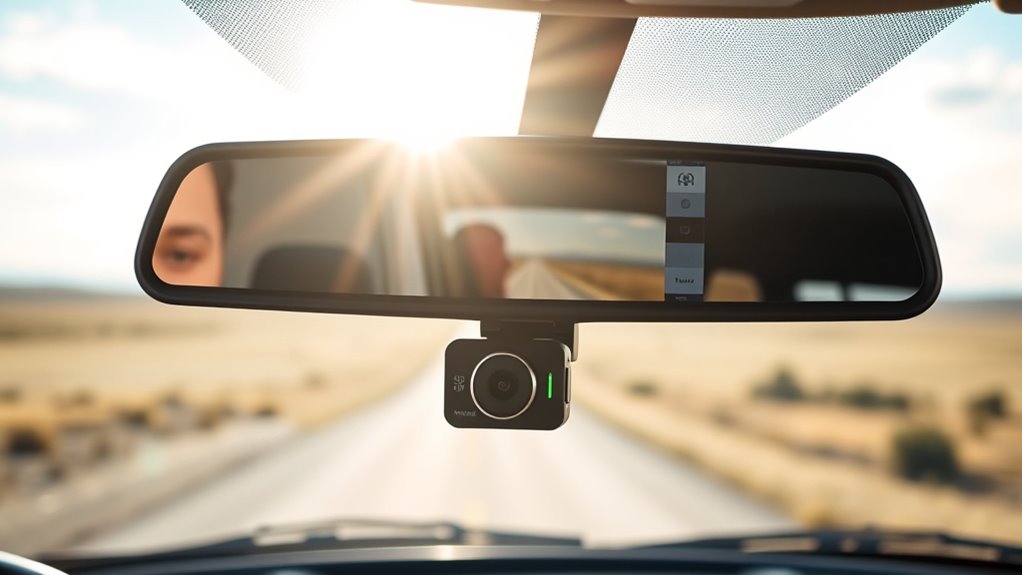
Montana Code 45-8-213 substantially influences how you can legally use your dash cam, especially when it comes to recording private property and private communications. The law mainly targets secret or surreptitious recordings made on private property with malicious intent, not footage captured from public roads. As long as your dash cam is visible and mounted in a way that doesn’t obstruct your windshield, it generally stays within legal bounds. Placing the camera behind the rearview mirror or on the dashboard helps avoid safety violations. Be cautious about capturing interior private areas or covertly recording private conversations, as these could violate wiretapping or privacy laws. Overall, outward-facing recordings on public streets are typically lawful and unaffected by 45-8-213’s restrictions. Understanding local laws is essential for ensuring your dash cam use remains compliant with Montana statutes.
Tips for Ensuring Footage Authentication
To guarantee your dash cam footage is authentic, you need to preserve the original files without alterations. Document every detail of the recording process, including date, time, and device information, to build a clear chain of custody. Keeping thorough records and safeguarding the original footage help verify its integrity if it’s ever challenged. Authenticating each step ensures opposing counsel cannot question the evidence’s validity.
Preserve Original Footage
Ensuring the authenticity of dash cam footage begins with creating and preserving exact, unaltered copies of the original data. To do this effectively: 1. Perform a forensic clone of the SD card immediately, using write-blockers or read-only tools, and record cryptographic hashes like SHA-256 at the time of acquisition. This guarantees the integrity of both the files and the media. 2. Maintain multiple, redundant copies on separate storage systems—such as encrypted local drives and cloud services—to prevent data loss or corruption. 3. Record detailed identifiers (serial numbers, device info) and photograph the hardware to establish a clear preservation record. These steps help you verify that your footage remains authentic and untampered. Additionally, employing chain of custody protocols ensures that the footage’s integrity is maintained throughout the handling process, which is crucial for legal and forensic validation.
Document Recording Details
Accurate documentation of recording details plays a vital role in verifying dash cam footage authenticity. First, generate SHA-256 hashes of original files immediately after recording to prove bit‑for‑bit integrity. Keep detailed records of hashing tools, versions, and command outputs to guarantee reproducibility. When working with copies, generate new hashes and document which copy was used for analysis, maintaining the link to the original. Timestamp hash creation with a secure clock or trusted authority to connect file states to a verifiable time. Export full metadata—such as creation and modification times, device info, GPS tags—using forensic tools that preserve embedded data. Record device settings and capture logs. Finally, verify hashes before submission and include verification logs in your evidence package to establish footage authenticity. Implementing these steps ensures the footage remains admissible and trustworthy in court proceedings.
Navigating Dash Cam Use in Public and Private Settings
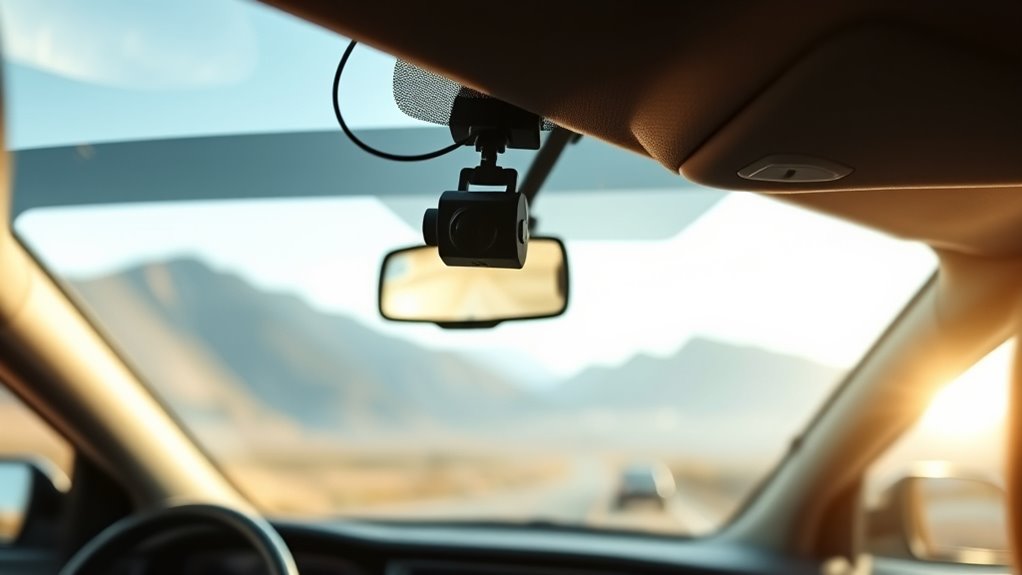
Using dash cam use in public and private settings requires understanding Montana’s specific laws to avoid legal issues. In public, dash cams are permitted without strict restrictions, but you must mount them on the dashboard to keep your view clear. Video recordings in public places are legal, and courts may accept footage if properly authenticated. On private property, recording with hidden devices is prohibited, and you need permission from the property owner. Without consent, recording could violate privacy laws, and law enforcement may decline responses on private sites like parking lots. Regarding audio, Montana’s single-party consent law means you can record sound if you’re a participant or if the device is visible. Montana law also permits the use of dash cams for evidentiary purposes in legal proceedings, and you should always ensure your dash cam doesn’t obstruct views and follow best practices like obtaining permission when necessary.
Frequently Asked Questions
Can I Record Audio in Montana Without Consent?
No, you can’t record audio in Montana without everyone’s consent. Montana is an all-party consent state, so you need permission from all participants before capturing any private conversations. Recording without consent can lead to criminal charges and civil liability. To stay compliant, turn off your dash cam’s audio, obtain explicit consent whenever possible, and clearly notify passengers. Always prioritize privacy laws to avoid legal trouble when recording in Montana.
Are There Restrictions on Dash Cam Use at Toll Booths?
You can use your dash cam at toll booths, but keep in mind, it’s a tightrope walk. You must mount it so it doesn’t block your view or interfere with toll lane operations. Recording conversations is generally okay since Montana follows single-party consent, but watch out for signs or rules from toll authorities. Stay clear of hidden devices or obstructive mounts, and you’ll stay on the right side of the law.
Is It Legal to Record Inside Private Homes With a Dash Cam?
No, it’s generally not legal to record inside private homes with a dash cam. Montana law prohibits surreptitious recording where there’s a reasonable expectation of privacy, like bedrooms or bathrooms. Recording covertly or capturing audio without consent can lead to civil or criminal penalties. To stay compliant, avoid mounting your dash cam where it peeks into private spaces, and disable audio recording if there’s any chance of capturing private conversations.
What Are Penalties for Mounting a Dash Cam Improperly?
Mounting your dash cam improperly can lead to serious consequences, like hefty fines or even losing your driving privileges—it’s no small matter. You might face citations for obstructing your windshield view, making your car a hazard on the road. Worse, if your device interferes with airbags or causes an accident, the penalties escalate. Always mount your dash cam correctly behind the rearview mirror, and document your setup to avoid costly legal and civil troubles.
Do Montana Laws Differ for Commercial Versus Personal Dash Cam Use?
Montana laws don’t differ for commercial versus personal dash cam use, so you can record in both vehicle types. However, if you’re a fleet operator, you need written policies, notices, and controls to reduce legal risks. For personal use, just guarantee your dash cam doesn’t obstruct your view and follow Montana’s permissive audio recording rules. Always mount your camera properly to avoid citations or liability issues.
Conclusion
Navigating Montana’s dash cam laws is like steering through a winding river—stay aware of the currents, respect privacy shores, and keep your footage clear and authentic. When you follow these rules, your recordings become trustworthy witnesses, not tangled knots of legal trouble. Drive confidently, knowing you’re charting a course that respects both the road and the rights of others, turning your dash cam into a steady guardian on your journey.