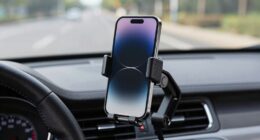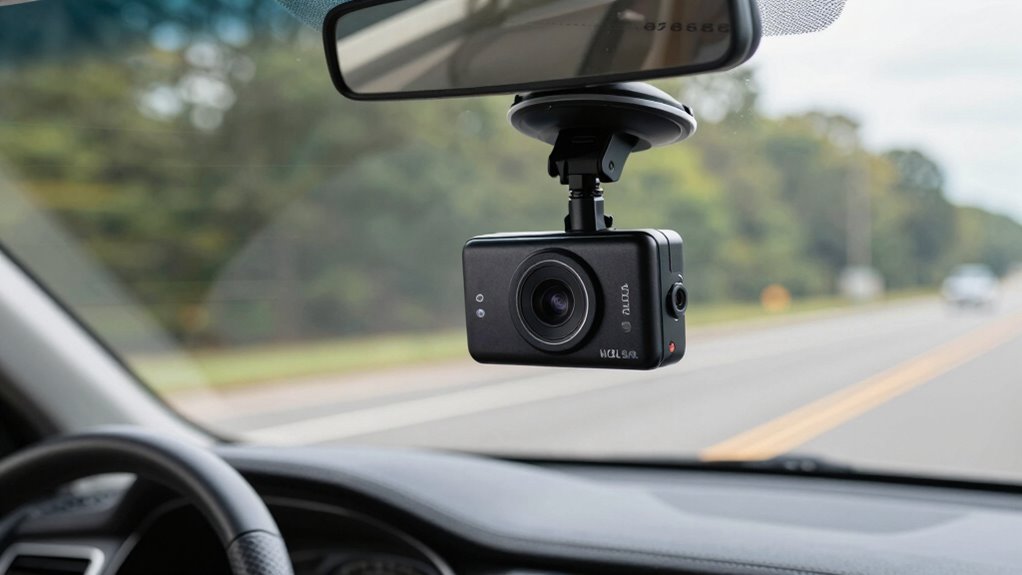
In North Carolina, you can freely mount your dash cam as long as it doesn’t block your view or airbags, with safe placement behind or near the rearview mirror. The state requires only one-party consent for audio recordings, so you can record conversations you’re involved in without issues. To use footage in court and protect privacy, it’s important to understand proper handling, legal standards, and how to manage access—learn more about staying compliant and effective with your dash cam setup.
Key Takeaways
- No specific North Carolina laws regulate dash cam mounting; ensure it doesn’t block views or airbags.
- North Carolina allows one-party consent for audio recording, so dash cam audio is generally legal if you’re a participant.
- Recordings in public spaces are permitted; private recordings may require consent or court approval.
- Properly secure and position the dash cam to avoid obstructing the driver’s view or safety features.
- Maintain original footage integrity and document handling to ensure admissibility in legal proceedings.
Legal Requirements for Mounting Your Dash Cam in North Carolina
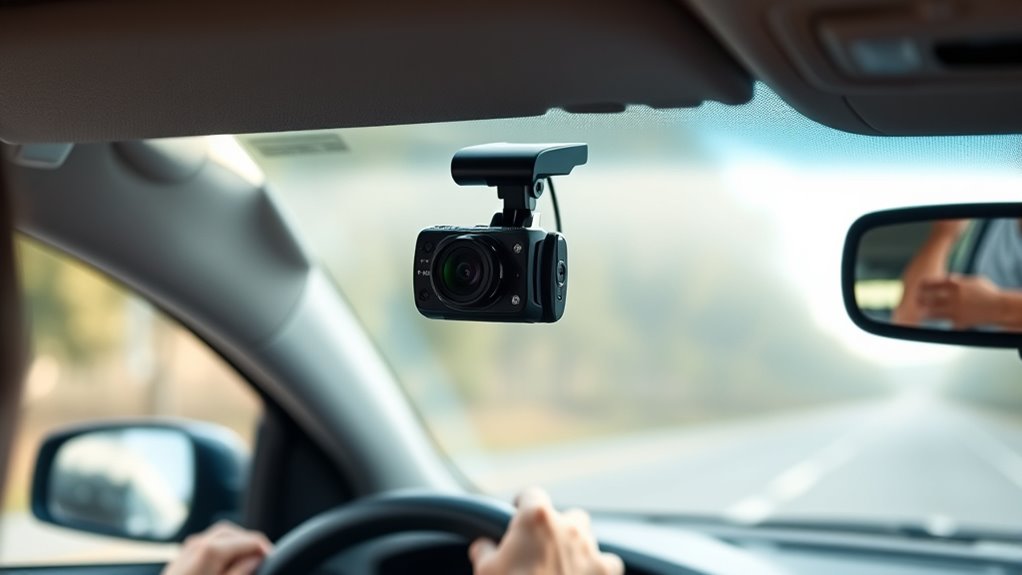
In North Carolina, there are no specific state laws that regulate how you must mount your dash cam. You’re free to install it on your windshield or dashboard without strict guidelines, unlike some neighboring states. However, your primary focus should be on safety: avoid blocking your view of the road. State laws prohibit objects that obstruct your vision while driving. Also, guarantee your dash cam doesn’t interfere with airbag deployment, especially if mounted on the dashboard. The safest placement is on the dashboard, where it’s less likely to impair your sight or safety systems. Proper dash cam placement can help you stay compliant with safety regulations and prevent fines. You can install it yourself or have it professionally done. Overall, as long as your dash cam doesn’t interfere with driving or safety features, it’s legally permissible to use in North Carolina. Additionally, understanding vehicle safety regulations can further ensure that your dash cam setup remains compliant with state laws. Ensuring compliance with laws not only promotes safety but also avoids potential legal issues related to improper mounting. Properly securing your dash cam with adhesive mounts or suction cups can also help maintain compliance and safety.
Best Practices for Dash Cam Placement and Visibility

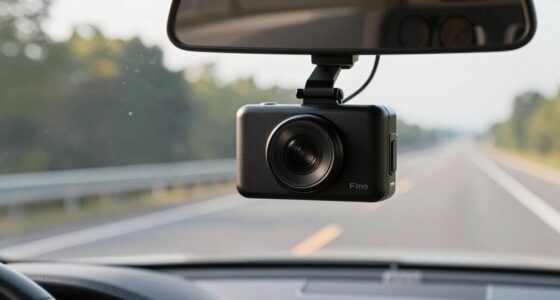
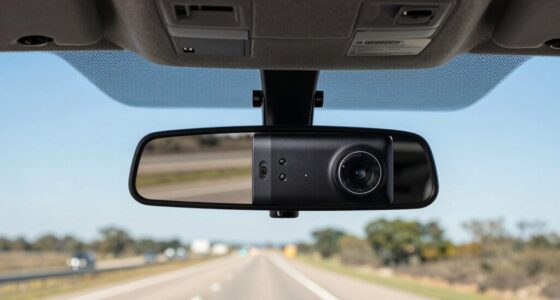
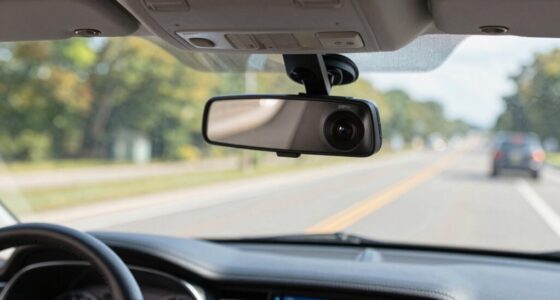
To maximize your dash cam’s effectiveness and avoid distractions, you should carefully consider its placement and visibility. Mount it behind or adjacent to the rearview mirror to keep your main sightlines and windshield clear. If that’s not possible, position it low and centered on the dashboard, but avoid blocking your view or placing it within your eyeline, which could lead to citations. Keep the device small to reduce glare and obstruction. Route cables along the headliner and A-pillar to prevent dangling wires that could distract or snag airbags. Orient the lens to avoid sun reflections during peak travel times, and use matte mounts to minimize glare. Test the setup at different sun angles and with polarized sunglasses to ensure clear footage without distracting reflections. Proper placement is essential for legal compliance and optimal footage quality. Additionally, regularly check and adjust your dash cam to maintain the best video clarity and coverage. Being aware of privacy considerations can also help prevent potential legal issues or disputes. Moreover, understanding the importance of mounting position can enhance both safety and footage quality, especially in dynamic driving conditions.
Understanding Audio Recording Laws and Consent in NC
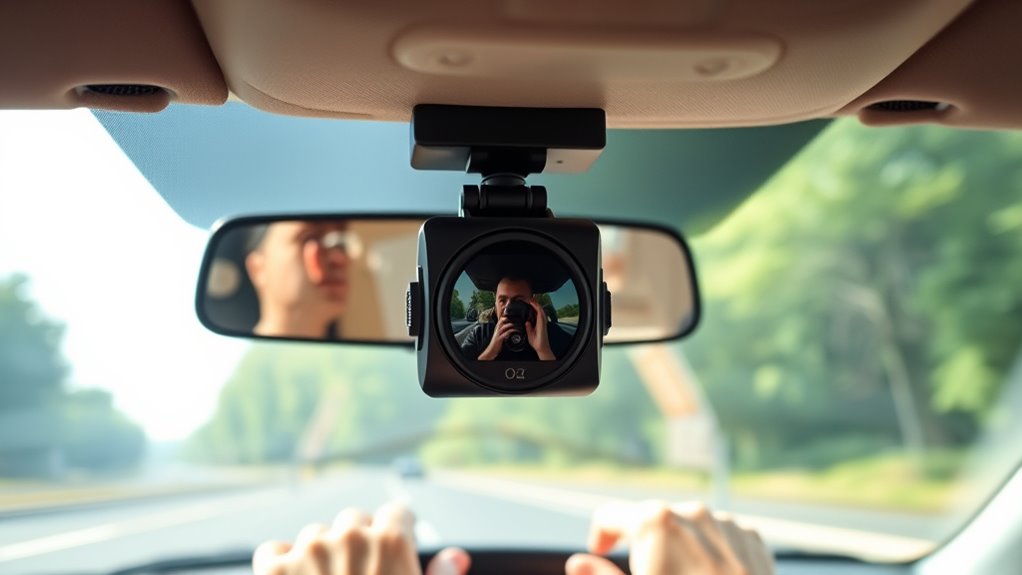
In North Carolina, you only need one person’s consent to record audio conversations, which makes in-vehicle recordings generally lawful if you’re a participant. However, recording conversations where you’re not involved, like secret taping of third-party calls, can breach wiretapping laws and be illegal. Always consider privacy expectations and location—what’s acceptable on public streets might not be on private property. Be aware that audio recording laws vary by jurisdiction and can impact the legality of your recordings. Additionally, understanding privacy policies and how they govern data collection can help you stay compliant. Familiarity with state-specific regulations is also essential, as laws can differ significantly across regions. Knowing the laws governing audio recording can help you avoid potential legal issues and protect privacy rights. It is also important to stay informed about body piercing regulations and guidelines if recording involves personal or sensitive situations related to piercings.
One-Party Consent Rules
North Carolina’s one-party consent rule means you can legally record conversations if you’re a participant or have permission from at least one person involved. This law makes it a Class H felony to willfully intercept or record wire, oral, or electronic communications without proper consent (G.S. 15A‑287). If you’re recording your own conversations inside a vehicle with a dash cam, it’s generally lawful, as you’re a participant. However, recording conversations between others without their knowledge can violate the law unless you have explicit or implied consent. Verbal permission or warning that recording is happening can establish implied consent. Keep in mind that recording outside conversations or in jurisdictions with different rules could lead to legal issues, especially if multiple states’ laws conflict. Additionally, it’s important to be aware that state-specific regulations may impose further restrictions on audio recording and privacy. To stay compliant, users should familiarize themselves with both state and federal laws regarding audio recording laws and privacy rights. For example, understanding the privacy laws related to audio and video recordings can help prevent potential legal violations. Moreover, awareness of self-sufficiency practices such as rendering lard can contribute to a more resilient preparedness strategy. Being informed about wave and wind considerations can also influence the placement and use of dash cams to ensure optimal performance and privacy compliance.
Privacy Expectations in Recording
Understanding privacy expectations when recording with a dash cam in North Carolina is essential, especially regarding audio capture. In public spaces like highways and roads, recording is permitted because there’s no expectation of privacy. Dash cam footage can capture interactions without violating privacy, and audio recordings follow state laws allowing public conversations to be recorded without notification. However, on private property like malls or stores, recording is restricted, and privacy expectations apply. Footage from private areas might face admissibility challenges.
| Public Spaces | Private Property |
|---|---|
| No privacy expectation | Expectation of privacy exists |
| Recording allowed openly | Limited recording use |
| Audio follows public law | Private interactions protected |
Always consider these rules to ensure lawful recording.
Using Dash Cam Footage as Evidence in Court

When using dash cam footage as evidence, you need to verify it’s authentic and properly authenticated to prove it accurately reflects the events. Avoid any editing or tampering, as courts favor unaltered, original files to establish credibility. Make sure to preserve your footage exactly as recorded, backing up files immediately to prevent loss or corruption. Properly securing the footage is essential for maintaining its integrity in legal proceedings. Additionally, understanding Free Floating storage methods can help ensure that your footage remains tamper-proof and reliable throughout the legal process. Utilizing glycolic acid products can improve skin texture and clarity, which may be beneficial in ensuring you look presentable and confident when appearing in court.
Ensuring Authenticity and Foundation
To guarantee dash cam footage is accepted as evidence in court, you must demonstrate its authenticity and proper foundation. First, verify the footage is relevant to the accident. Then, confirm the video is unedited and unaltered, with clear timestamps to support its reliability. You can strengthen its credibility by:
- Providing witness testimony, especially from the camera owner, confirming the camera’s functionality and the scene’s accuracy
- Showing the footage matches the claimed content without signs of tampering
- Using high-quality video to support the court’s assessment of authenticity and reliability
- Ensuring the footage is properly stored and preserved to prevent tampering or accidental deletion, which can undermine its credibility. Additionally, maintaining proper documentation and chain of custody for the footage enhances its admissibility and trustworthiness in legal proceedings.
Courts scrutinize for signs of editing or manipulation, so maintaining the original, unaltered footage is essential. Proper foundation and verification help your evidence stand up during legal proceedings.
Preventing Editing and Tampering
Ensuring your dash cam footage isn’t edited or tampered with is essential for it to be accepted as reliable evidence in North Carolina courts. Courts scrutinize footage for signs of manipulation, and any edited version risks exclusion. To boost acceptance, use unedited footage with clear timestamps and high resolution, which help verify the sequence of events. Authenticity is confirmed through metadata and by demonstrating the footage depicts the exact incident without alterations. Police may seize your dash cam to preserve its integrity, preventing post-incident editing. Be aware that unaltered speed recordings and audio can also be scrutinized, as they might reveal violations or distractions. To avoid legal issues, always keep your footage intact and unaltered, ensuring it stands up to court’s reliability standards. Proper preservation of evidence is crucial to maintaining its credibility in legal proceedings. Additionally, understanding the role of chain of custody in evidence handling can further strengthen the reliability of your footage. Moreover, familiarizing yourself with court admissibility standards can help ensure your dash cam footage meets legal requirements for courtroom presentation. Maintaining an original copy of your footage and documenting its handling process can serve as an extra layer of protection against claims of tampering. Incorporating digital signatures or hashes can also verify that the footage remains unaltered from the time of recording to presentation. As technology advances, implementing secure storage solutions can further safeguard your footage from unauthorized access or modification.
Preserving Original Files
Preserving the original dash cam files is essential to ensuring their admissibility as evidence in court. To do this effectively, you need to keep the footage intact with all relevant details. This includes maintaining timestamps that prove when the recording was made, ensuring the files are unedited, and verifying their authenticity. You should also be prepared to demonstrate the footage’s relevance to the incident. Here are key steps:
- Store the original files securely, with all metadata intact.
- Avoid modifying or editing the footage to preserve its integrity.
- Use chain of custody documentation and expert reviews to prove authenticity.
- Regularly backing up the footage to prevent data loss and ensure it remains accessible for legal proceedings.
Access and Privacy of Law Enforcement Dashcam and Bodycam Recordings

Access to law enforcement dashcam and bodycam recordings in North Carolina is tightly controlled by state law, which prioritizes privacy and security. These recordings are classified as non-public records and are exempt from the general public records act, meaning they’re not automatically accessible. Requests for access must go through the court system, where a petitioner files in superior court, and the court considers factors like public interest, confidentiality, and petitioner status. Law enforcement agencies must disclose recordings to prosecutors and for official purposes, but public access is limited. The law allows agencies to deny requests to protect safety, reputation, or ongoing investigations. Only those with a legal interest or court approval can obtain recordings, emphasizing privacy and controlled access. Furthermore, the procedures require strict compliance with court approval and procedural safeguards to prevent unauthorized disclosure. Additionally, the law emphasizes record confidentiality to safeguard individual privacy rights and law enforcement investigations, highlighting the importance of privacy protections in these processes.
A thorough understanding of access procedures can help ensure compliance with legal standards and protect individual rights.
Privacy Considerations When Recording in Public and Private Spaces
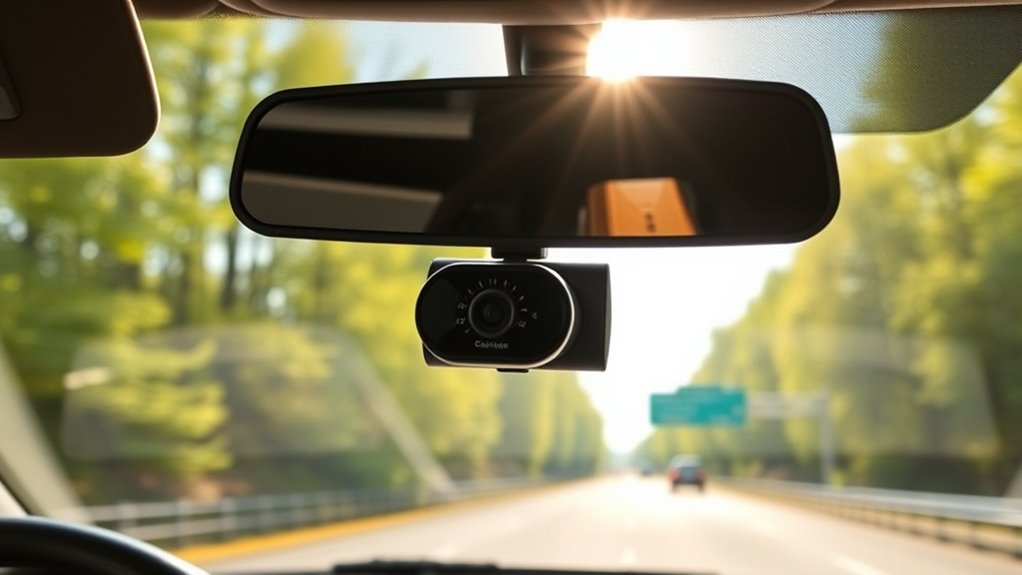
Recording in public spaces generally doesn’t raise privacy concerns because these areas are open to everyone, and your dash cam footage of public interactions is usually admissible in court if it’s relevant, authentic, and unedited. You can record public roadways without consent, but mounting your camera shouldn’t obstruct your view or airbags. When it comes to audio, North Carolina requires only single-party consent—if you’re recording your own conversations, you’re in the clear. Be cautious on private property, where recording can infringe on privacy rights and may be inadmissible. Courts prioritize privacy, especially if footage contains sensitive info, reputation concerns, or safety risks. To stay compliant, avoid intrusive recording and understand that private spaces generally require court approval for access or dissemination. Recording laws in North Carolina also specify that footage obtained without proper authorization may be subject to legal restrictions, emphasizing the importance of respecting privacy boundaries. Additionally, understanding the privacy laws related to recording can help you avoid unintentional legal violations. Being aware of public versus private spaces helps ensure you remain within legal limits while capturing footage.
Preserving and Managing Your Dash Cam Footage

After capturing footage with your dash cam, managing that data properly becomes essential to guarantee it remains available when needed. Immediately stop loop recording and enable manual file protection to prevent overwriting critical incident footage. Remove the memory card or copy files promptly to a computer or external drive, creating primary backups. Maintain at least two independent copies—one locally and one in the cloud—to minimize the risk of corruption or loss. Verify file integrity by playing back the saved footage and checking timestamps, audio, and video continuity. Record relevant metadata, like date, time, and location, along with chain-of-custody details to support legal authenticity. Use high-quality, high-endurance microSD cards, format them regularly, and keep firmware updated to optimize storage reliability and longevity.
Interacting With Authorities and Handling Evidence Requests

When interacting with law enforcement officers at the scene, it’s important to remain calm and compliant while paying attention to whether they inform you about recording. Officers are generally required to notify you when their body or dash cameras are active unless unsafe or impractical. You should also:
Stay calm, compliant, and watch for police notifications when cameras are recording.
- Verbally ask for officer identification and badge info to help with later records requests.
- Note if the officer turns off a camera, including the time and reason given.
- Avoid interfering with law enforcement equipment, as this can cause legal issues and harm your case.
To request footage later, file a detailed, specific request including date, time, and incident details. If denied or ignored, you can petition the court for review, especially if the recordings are essential to your case.
Frequently Asked Questions
Can I Legally Record Audio Inside My Vehicle Without All Passengers’ Consent?
Yes, you can legally record audio inside your vehicle without all passengers’ consent in North Carolina because of the one-party consent rule. As long as you participate in the conversation, you’re allowed to record it. Just keep in mind that recording private conversations without permission may raise legal issues, especially if others are not aware. It’s wise to consult an attorney if you plan to use the footage in court.
Are There Specific Restrictions on Mounting Dash Cams on Commercial Vehicles in NC?
Imagine steering a busy highway with a clear view as your best ally. In North Carolina, there are no strict restrictions on mounting dash cams on commercial vehicles. You should ensure they don’t obstruct your view or interfere with airbags. Just like a well-placed mirror, your dash cam must be positioned safely and prudently. Professional installation can help you stay compliant and keep your driving safe and legal.
How Long Can Law Enforcement Retain Footage From Private Dash Cams?
In North Carolina, law enforcement can retain footage from private dash cams if it’s relevant to an investigation or incident. The retention period isn’t fixed but generally follows agency policies aligned with record retention schedules. Recordings depicting death or serious injury can be kept longer upon request. You may need to petition the court for access, and unauthorized copying or release without court approval is illegal.
Is It Legal to Share or Publish Dash Cam Videos Online in North Carolina?
Sharing dash cam videos online in North Carolina is legal if you’re on public roads and the footage doesn’t invade someone’s privacy. Think of it as walking a tightrope: you can share what’s visible, but avoid revealing personal details or private property without permission. Be cautious, as courts and privacy laws can cut you down if your sharing crosses the line. When in doubt, respect others’ privacy to stay on the right side.
What Are the Penalties for Obstructing My View With a Dash Cam Mount?
If you obstruct your view with a dash cam mount in North Carolina, you could face traffic citations for windshield obstruction, and any resulting accidents might increase your civil liability. Your footage could also be deemed inadmissible if it shows negligence or obstructs your view, which might be used against you in court or insurance claims. To avoid penalties, make certain your dash cam is mounted on the dashboard without blocking your line of sight.
Conclusion
In steering North Carolina’s nuanced dash cam laws, remember to mount, monitor, and manage your recordings responsibly. Stay savvy with statutes, safeguard privacy, and stay compliant while capturing crucial moments. By balancing best practices with legal limits, you protect your rights and promote proper privacy protocols. Ultimately, informed interaction and mindful management make your dash cam a trustworthy tool—turning traffic tales into trouble-free testimonials. Stay smart, secure, and savvy behind the wheel!