In Oregon, you can legally use a dash cam as long as you follow rules on mounting and privacy. Place your device on the dashboard or behind the rearview mirror without obstructing your view or violating windshield laws. Be aware that audio recording requires all-party consent, so consider disabling microphones if others are in the vehicle. Night vision features are legal but make certain they don’t impair visibility. To ensure you’re compliant and understand the finer details, continue exploring the full scope of Oregon’s dash cam regulations.

Get business pricing on garage and car supplies
- Business-only prices and quantity discounts
- Tax-exempt purchasing
- Multiple users, one account, clear invoices
Key Takeaways
- Dash cams are legal in Oregon, but mounting must avoid obstructing the windshield per ORS 815.260.
- Mount dash cams on the dashboard or behind the rearview mirror, following manufacturer instructions for safety.
- All-party audio recording requires explicit consent; disable microphones unless all occupants agree.
- Proper placement ensures footage is admissible and complies with privacy laws; avoid private areas and sensitive locations.
- Local jurisdictions may have additional rules; verify specific regulations to ensure legal use of dash cams.
As an affiliate, we earn on qualifying purchases.
Overview of Oregon Dash Cam Regulations
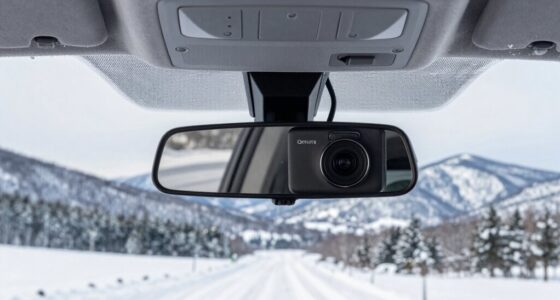
In Oregon, dash cams are legal to use, and there are no laws explicitly prohibiting owning or recording with them. However, your use must follow Oregon’s windshield obstruction law, ORS 815.260, which bans placing material that blocks your view. Dash cams mounted behind the rearview mirror are generally safest, as they’re less likely to impair vision. State guidance treats dash-cam footage as admissible evidence in crashes and crimes, but privacy considerations still apply. Local ordinances usually align with state rules, though some cities might have specific policies. Federal locations, like border crossings, can impose additional restrictions. Overall, as long as your dash cam doesn’t obstruct your view and complies with visibility laws, you can record and own a dash cam legally in Oregon. It’s also important to be aware of the video recording regulations that govern how footage can be used and shared. Additionally, understanding the privacy laws related to recording others is crucial to avoid potential legal issues. Furthermore, being aware of the dash cam mounting guidelines can help ensure compliance with safety standards and prevent legal complications. Knowing the state-specific regulations can also help you stay updated on any recent changes or local variations. Familiarizing yourself with proper installation practices can also prevent unintentional violations and improve overall safety.
As an affiliate, we earn on qualifying purchases.
Permissible Locations for Mounting Your Dash Cam
Mounting your dash cam correctly is essential to stay within Oregon’s legal requirements. You must avoid obstructing your view or violating visibility laws. You should also consider the European cloud innovation standards to ensure your device’s placement does not interfere with vehicle safety features. Here are four permissible locations:
Proper dash cam placement in Oregon ensures legality and safety without obstructing your view.
- Dashboard – Mount your dash cam on the dashboard in a low-profile position to prevent blocking your view. Proper placement reduces the risk of violations and ensures clear visibility. To ensure compliance, consider the angle and placement so that it does not reflect sunlight or create glare. Additionally, verifying your vehicle’s ventilation considerations can help prevent overheating of the device.
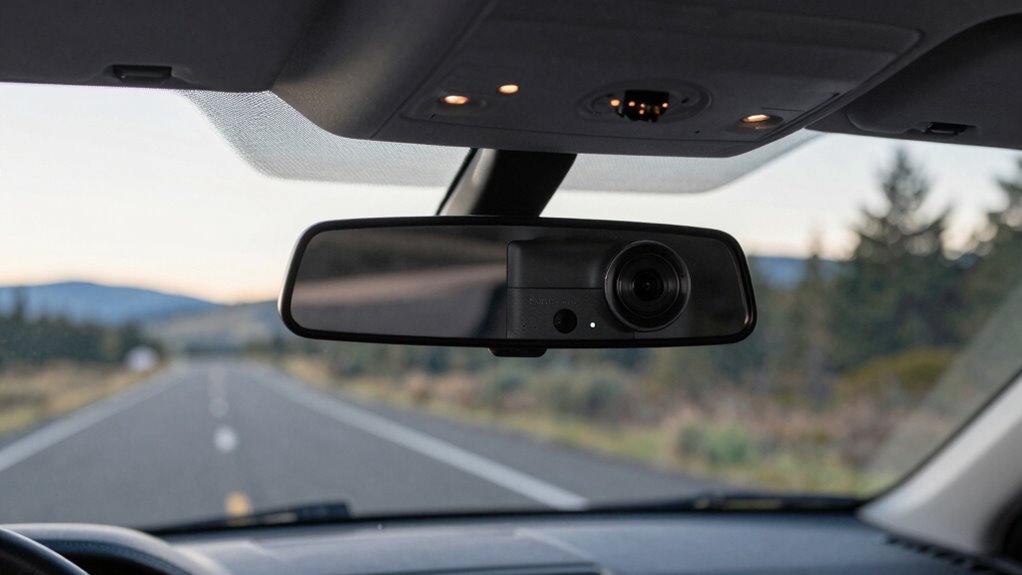
- Behind the Rearview Mirror – If minimal and doesn’t obstruct your line of sight, this location is technically allowed. Additionally, ensuring your camera does not block essential sensors or driver visibility helps maintain safety and legality.
- Lower Corner Zones – These are not specifically prohibited but should be chosen carefully to avoid glare or reflections.
- Manufacturer-Recommended Spots – Follow their instructions for safe, legal mounting options that don’t interfere with controls or airbags. Always verify that your mount adheres to state regulations to avoid any legal issues.
As an affiliate, we earn on qualifying purchases.
Legal Considerations for Night Vision and Recording Features

You can use night-vision dash cams in Oregon, but you need to be mindful of privacy laws and mounting rules. Recording interior conversations or private spaces without consent can lead to legal trouble, especially if audio is involved. Understanding these restrictions helps you avoid violations while capturing useful footage at night. You should also be aware of privacy laws that regulate the recording of private property and conversations. Additionally, it’s important to ensure that your dash cam’s placement does not infringe upon the privacy of others or violate any local regulations. Proper privacy compliance ensures that your use of night vision features remains within legal boundaries, and being informed about vetted wave and wind considerations can help you navigate environmental factors that affect recording quality and legal use. Being aware of electric bike horsepower and motor power can also be relevant when considering the safety features of your dash cam setup in various environments.
Night Vision Legality
Night-vision dash cams are legal to use in Oregon, as no state laws specifically prohibit infrared or night-vision features. You can install and operate these devices without worry, provided your setup complies with visibility laws. Keep these key points in mind:
- The legality aligns with general dash-cam rules—installation must not obstruct your view.
- Federal IR export/import restrictions don’t affect consumer-grade night-vision dash cams used in vehicles.
- Law enforcement accepts low-light footage as evidence if lawfully obtained.
- Commercial fleet use requires attention to workplace policies, even though night-vision features are permitted.
- Manufacturers’ guidelines help ensure your device remains compliant with applicable regulations.
- Additionally, it’s important to verify that your device’s night-vision capabilities do not interfere with other vehicle systems or violate any local ordinances. For example, some vehicle safety standards may impact how your dash cam functions.
- Be aware that some privacy laws may impact how you record and store footage, especially in sensitive areas.
- It’s also wise to stay informed about any updates to state or local regulations regarding vehicle recording devices to ensure ongoing compliance.
- Remember that the security of your footage is essential to protect your privacy and avoid potential legal issues.
Always make certain your device doesn’t block your windshield or create glare, and remember that audio recording may involve additional privacy considerations.
Recording Feature Restrictions
Legal restrictions on recording features in Oregon dash cams primarily focus on audio and mounting practices that could compromise privacy or obstruct visibility. Oregon law requires all-party consent for in-vehicle audio recordings, so onboard microphones should be disabled or turned off to avoid legal issues. Mounting your dash cam improperly—such as obstructing the driver’s view or using adhesive or permanent mounts—may violate windshield obstruction laws and invalidate recordings. Suction and adhesive mounts should be secure to prevent falling and creating hazards. Even if your device has automatic start/stop features tied to power or movement sensors, improper mounting can still produce unlawful footage. Proper placement is essential for legal compliance to ensure the footage is admissible and legally obtained in case of an accident. Additionally, understanding AI detection methods can help you identify any potential issues with your recordings’ authenticity. Always confirm your dash cam’s placement and audio settings comply with state laws to record legally and avoid potential penalties.
Privacy Implications
Using night-vision features on your dash cam can raise significant privacy concerns, especially when capturing footage of public streets or private spaces. You need to be aware of legal boundaries and potential risks: 1. Recording into private indoor areas through vehicle windows can lead to legal trouble under privacy laws. 2. Enhanced night-vision that clearly identifies faces increases the chance of privacy complaints and evidence challenges. 3. Sharing night-vision footage publicly may violate individuals’ reasonable privacy expectations, leading to claims. 4. Mounting your dash cam improperly, such as on the windshield in a way that obstructs visibility, can violate Oregon’s obstruction laws. Furthermore, being mindful of these issues helps you avoid legal pitfalls and protect others’ privacy rights.
compact rearview mirror dash cam
As an affiliate, we earn on qualifying purchases.
As an affiliate, we earn on qualifying purchases.
State Laws Governing Audio Recording in Dash Cams

In Oregon, laws strictly govern audio recording in dash cams to protect individuals’ privacy rights. ORS 165.540 requires all-party consent for in-person conversations, meaning you must inform and get consent from everyone involved before recording. Courts interpret “obtaining” and “informing” narrowly; a simple warning about being “monitored” can suffice. Recording without consent can lead to civil and criminal penalties, including evidence exclusion and fines. Exceptions exist for recordings during life-threatening felonies or law enforcement activities conducted openly. Inside vehicles, you must obtain consent from all occupants, or disable the microphone to stay compliant. Visible signage or verbal notices help establish consent, reducing legal risks. Recording law enforcement or public officials is permitted but still requires careful adherence to notice requirements. Additionally, understanding the legal implications of audio recording laws can help you avoid potential violations and protect your privacy rights. It is also advisable to familiarize yourself with privacy rights related to audio recordings to ensure full compliance with state regulations. Being aware of recording restrictions can further help you prevent unintentional violations and safeguard personal privacy.
Privacy Rules and Expectations When Recording in Oregon
Understanding privacy expectations when recording in Oregon is key to avoiding legal issues. As a driver, you must respect privacy laws and be transparent about recording. Keep these points in mind:
- All parties in your vehicle must consent to audio recordings, as Oregon is a two-party consent state.
- Inform passengers about audio recording capabilities, ideally with visible notices or verbal acknowledgment.
- Recording in public spaces is generally permitted without consent, but avoid private areas with reasonable privacy expectations.
- Limit footage that captures bystanders or sensitive personal details, and be cautious when sharing recordings online.
- Oregon law also requires that recordings do not infringe on individuals’ reasonable privacy expectations to prevent potential legal issues. Being aware of privacy laws helps ensure your recordings remain compliant and respectful of others’ rights. Additionally, understanding recording regulations can help you navigate complex situations and prevent inadvertent violations. It is also advisable to stay informed about privacy expectation standards to maintain ethical recording practices. Familiarity with public recording rights can further clarify where recording is appropriate and lawful. Moreover, staying informed about privacy breach consequences is essential to avoid inadvertent legal complications.
Using Dash Cam Footage as Evidence in Legal Proceedings
When presenting dash cam footage as evidence in Oregon courtrooms, it is essential to understand the standards that determine its admissibility. First, the footage must be relevant under the Oregon Evidence Code. You’ll also need to authenticate the video through chain-of-custody records, device metadata, timestamps, and witness affidavits. The judge evaluates the footage’s relevance, authenticity, potential prejudice, and statutory compliance. Ensuring that the recording complies with privacy laws is crucial to prevent its exclusion on legal grounds. Proper appliance testing and maintenance can also help verify the reliability of electronic devices used in evidence collection.
Restrictions on Recording at Border Crossings and Private Spaces
Federal rules and security protocols heavily influence recording practices at border crossings and federal facilities. You should be aware that:
- CBP officers can require you to disable or delete recordings during inspections.
- Photography may be restricted in secure areas or tenant-agency spaces without permission.
- Federal property rules can be enforced at land border crossings, limiting dash cam use while stopped.
- No blanket federal ban exists, but restrictions come from property rules, directives, and security orders.
Recording restrictions vary depending on the specific location and circumstances. You might be asked to stop recording or show footage at border points. Compliance is often necessary to proceed. At federal sites, security takes precedence, and ignoring these restrictions can lead to delays or legal issues.
Employer Policies and Vehicle Recording Requirements
In Oregon, employers have the legal right to install dash cams in company vehicles, provided they follow state regulations. You must mount cameras in non-obstructive positions, like the dashboard, avoiding windshield mounting if it impairs visibility under ORS 815.270. Employers are required to notify employees about dash cam use, including purpose, data handling, and expectations, often through policies in employee handbooks. For audio recordings, all-party consent is mandatory under ORS 165.540, so drivers must ensure everyone in the vehicle agrees to recording. Data must be stored securely, with breach notifications and proper retention. Proper policies help protect your company legally and ethically.
| Aspect | Requirement | Key Point |
|---|---|---|
| Mounting | Non-obstructive, dashboard only | Windshield mounting prohibited |
| Employee Notification | Must inform employees | Transparency builds trust |
| Audio Recording | All-party consent required | Two-party consent applies |
| Data Storage | Secure storage, breach notice | Ensures privacy and compliance |
| Usage Restrictions | Limited to safety, legal use | Prevents misuse and overreach |
Variations in Local Ordinances and City-Specific Rules
Local ordinances can vary markedly, even within Oregon cities, affecting how you can use your dash cam. Enforcement practices differ from place to place, so what’s acceptable in one city might be restricted in another. It’s important to check specific rules in your area to stay compliant and avoid fines.
City Regulations Variability
While Oregon’s statewide dash cam laws set a clear baseline, cities can implement their own regulations that add or modify these rules. You should always verify local rules to avoid violations. Here are key points to consider:
- Some cities, like Portland, follow state rules without extra ordinances but still restrict obstructing your view.
- Salem and Bend strictly adhere to state laws, prohibiting objects blocking visibility and aligning with statewide audio and mounting restrictions.
- Local police departments or municipal websites can provide clarifications on city-specific enforcement nuances.
- Variations are possible, so it’s essential to check with your city’s official resources for updates or unique rules beyond state regulations.
Always stay informed to ensure your dash cam use complies locally.
Local Enforcement Differences
Enforcement of dash cam regulations varies markedly across Oregon’s municipalities due to differences in priorities, resources, and local policies. Some departments focus more on traffic safety, leading to frequent stops for windshield obstructions, while others rely on complaints or automated systems like photo‑radar, shifting enforcement away from individual citations. Budget constraints also influence whether minor infractions, like camera placement, are proactively enforced or overlooked. Local interpretations of “impair the ability to see” differ—some treat small dashboard cameras as acceptable, while others cite statutes on tinting or stickers to justify citations. Enforcement of audio-recording laws depends on local prosecution priorities, with some cities being stricter. Privacy ordinances and data-sharing rules further shape how footage is used or restricted within each jurisdiction.
Staying Updated on Changing Dash Cam Laws in Oregon
Staying updated on changing dash cam laws in Oregon requires regularly monitoring official sources and reputable secondary outlets. This helps you stay aware of new regulations, enforcement trends, and legal developments.
Regularly monitor official sources to stay informed about Oregon dash cam laws and legal updates.
Here are key ways to keep informed:
- Subscribe to the Oregon Legislature RSS feed for bill alerts related to vehicle equipment and privacy.
- Follow the Oregon DMV newsletters for updates on equipment regulations.
- Check the NHTSA website for federal guidelines influencing state laws.
- Use legal databases like Fastcase to track ORS revisions and case law.
Although laws have remained stable since 2025, upcoming federal or insurance-related changes could prompt updates. Staying proactive guarantees your dash cam setup remains compliant and legally sound.
Frequently Asked Questions
Are There Any Specific Restrictions on Dash Cam Models Approved in Oregon?
Yes, Oregon has specific restrictions on approved dash cam models. You need models compatible with mounting rules that avoid obstructing your view, especially for regulated programs like taxis. Devices must be tamper-resistant, securely mounted, and positioned properly, often avoiding windshield mounts. Additionally, models must handle audio recording carefully, allowing you to disable audio to comply with privacy laws. verify your chosen device meets these technical and legal standards for approval.
Can I Record Audio in My Dash Cam Without Notifying Passengers?
No, you shouldn’t record audio in your dash cam without notifying passengers. Oregon law requires informing all parties if you’re intercepting conversations, which means you need to give them notice—either verbally or with visible signage—before recording audio. Recording secretly risks violating privacy laws and could lead to criminal and civil penalties. To stay compliant, it’s best to obtain explicit consent or make certain your recording setup makes everyone aware.
How Does Oregon Law Handle Dash Cam Footage Sharing on Social Media?
You should be cautious when sharing dash cam footage on social media in Oregon. While there’s no specific law banning public sharing, privacy laws restrict exposing sensitive information like faces, license plates, or personal details without consent. To protect yourself legally, anonymize footage, redact private info, and avoid sharing anything that could violate others’ privacy. It’s best to limit sharing to legal professionals or internal use, not broad online posting.
Are There Penalties for Mounting a Dash Cam on the Windshield?
Yes, you can face penalties for mounting a dash cam on the windshield in Oregon. If your device obstructs your view, law enforcement may issue a citation under ORS 815.260, treating it as a windshield obstruction. Penalties vary but can include fines or points on your driving record. To avoid issues, mount your dash cam on the dashboard or behind the rearview mirror where it doesn’t block your visibility.
Do Different Cities in Oregon Have Unique Dash Cam Laws or Restrictions?
You won’t find unique dash cam laws in Oregon’s cities; they all follow statewide rules. Portland, Eugene, Salem, and Bend restrict windshield mounting if it obstructs your view, but otherwise, mounting on dashboards is standard. Remember, Oregon requires all-party consent for audio recordings, and local laws don’t add extra restrictions. Always check municipal websites or police for any updates, especially if you’re installing dash cams for work or personal use.
Conclusion
Staying informed about Oregon’s dash cam laws keeps your vehicle’s camera a helpful eye on the road, not a legal minefield. Picture your dash cam as a vigilant guardian, quietly capturing moments while respecting privacy and laws. By knowing where to mount it, understanding audio rules, and respecting private spaces, you can drive confidently through Oregon’s scenic landscapes. Keep up with updates, and your dash cam will be a trusted companion on every journey.
Fall Picks
fall essentials
As an affiliate, we earn on qualifying purchases.