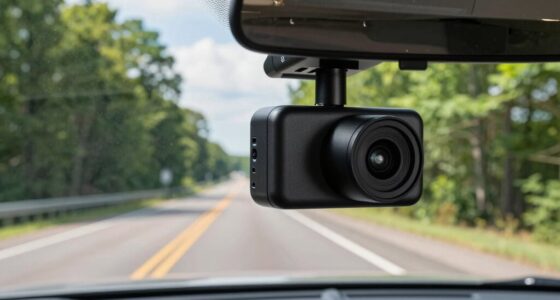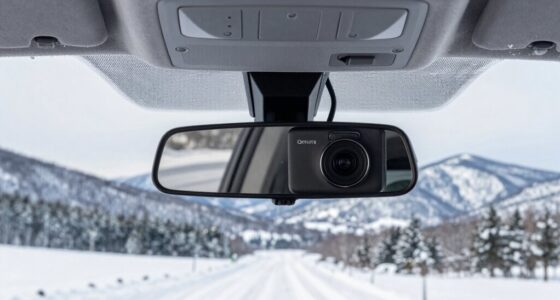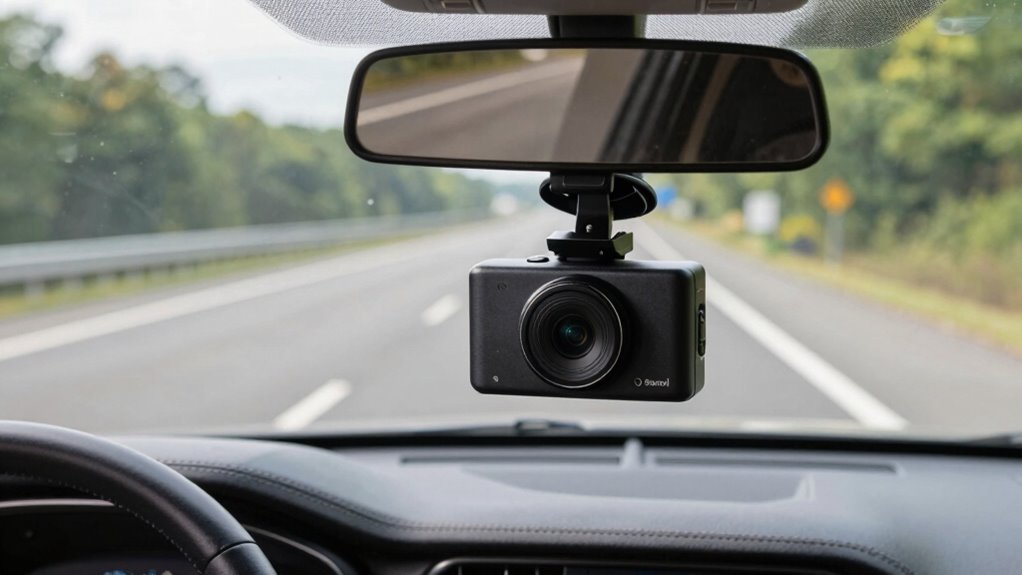

In Pennsylvania, you can legally use a dash cam if you follow rules about mounting and privacy. Mount the device behind the rearview mirror or in unobtrusive corners to avoid obstructing your view. You must obtain consent before recording audio, as Pennsylvania requires all-party permission. Keep the screen out of sight while driving to prevent distractions. If you want to understand more about lawful use and tips, there’s more to explore below.
Key Takeaways
- Dash cams are legally permitted in PA if mounted properly, avoiding airbags and obstructing views; placement behind the rearview mirror is recommended.
- Pennsylvania law prohibits driving with screens visible to the driver, requiring dash cams to have sleep modes or automatic shutdown features.
- Audio recording requires all-party consent; inform passengers and disable audio if necessary to comply with Pennsylvania’s two-party consent law.
- Footage can be used as legal evidence if properly preserved, unaltered, and documented, respecting privacy laws and chain of custody protocols.
- Proper installation, secure storage, and adherence to privacy regulations ensure lawful and safe use of dash cams in Pennsylvania.
Legal Framework for Dash Cams in Pennsylvania
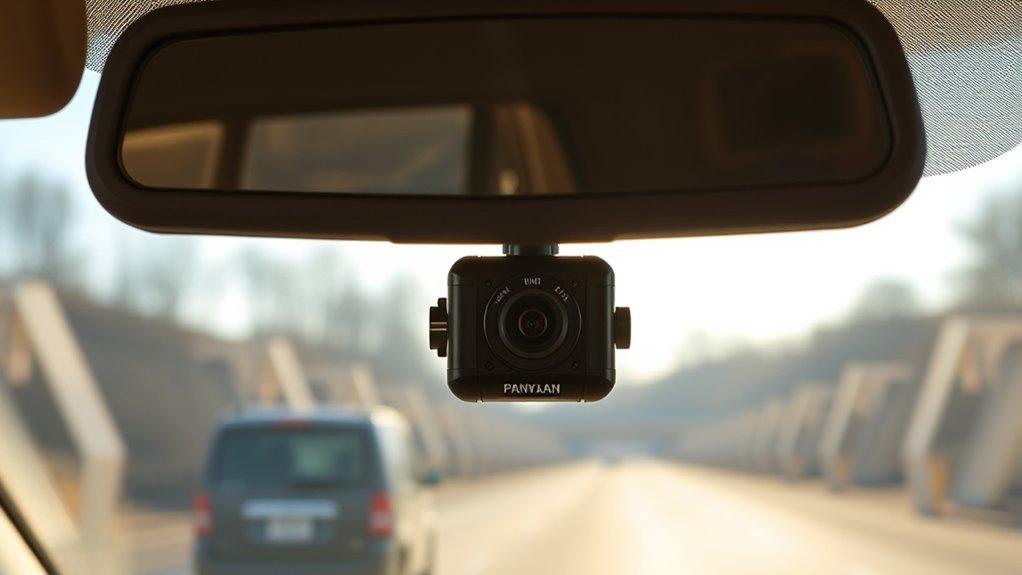
In Pennsylvania, dash cams are legally permitted under the Vehicle Code, provided you follow specific rules. These video recorders can capture both audio and video, but installation must conform to restrictions, such as avoiding airbags’ deployment zones. You can use dash cams nationwide, but state-specific laws apply, especially regarding audio recording. Pennsylvania is a two-party consent state, meaning all passengers must be informed or give consent before audio is recorded. Visible notices are mandatory for audio capture, but video alone is legal without consent. Footage can be used in court if all laws are followed. Proper installation, respecting mounting restrictions, ensures your dash cam remains legal and admissible. Always stay informed about regulations to avoid compromising your evidence or facing legal issues. Compliance with privacy laws is essential to ensure your dash cam use remains lawful. Additionally, understanding audio recording regulations helps prevent unintentional violations related to two-party consent requirements. Being aware of state-specific dash cam laws can further safeguard your rights and avoid legal complications. Moreover, being aware of dash cam mounting restrictions helps ensure your device remains within legal boundaries and does not interfere with vehicle safety features. Knowing vehicle safety features and how they relate to dash cam placement can prevent accidental damage or safety hazards during installation. Consulting local traffic laws can provide further clarity on specific restrictions and requirements.
Proper Mounting and Placement Guidelines
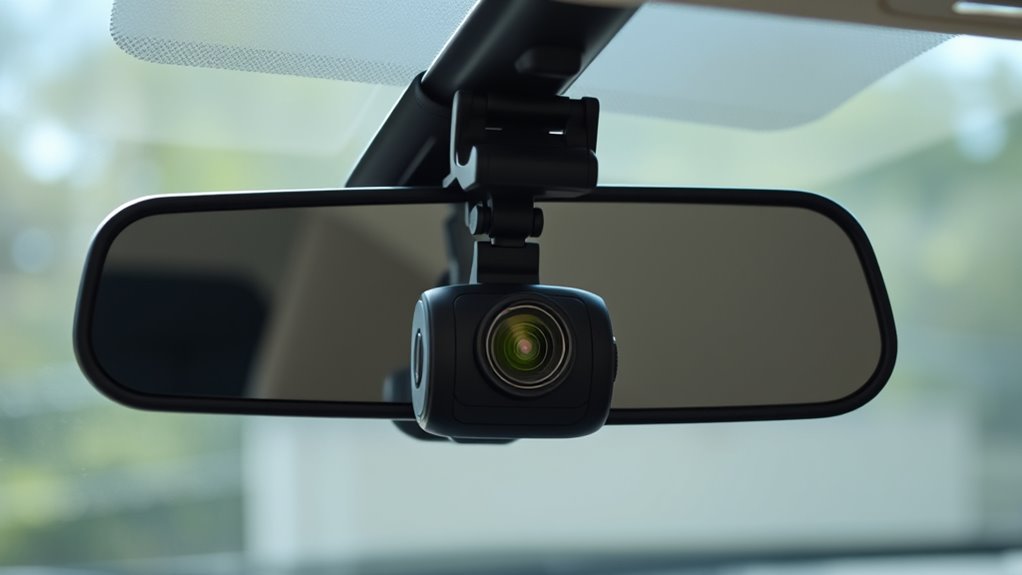
Proper mounting and placement of your dash cam are essential to guarantee legal compliance and safe driving. You should mount the device on the dashboard or in areas that don’t obstruct your view. The lower-right or lower-left windshield corners are acceptable within limited areas (~5-7 sq inches) to avoid airbag interference. The upper-center windshield is permissible in small zones (~5 sq inches), but placement behind the rearview mirror is recommended if it doesn’t block your view. Use low-profile mounts or adhesives suitable for your windshield type. Route cables carefully along trim or under panels to prevent interference with airbags or controls. Always check that your dash cam doesn’t block critical sightlines or create distractions. Additionally, ensure your device’s application and use comply with state laws to avoid legal issues. Familiarize yourself with camera placement regulations to stay compliant and avoid potential citations. Paying attention to projector contrast ratios can also help ensure your dash cam footage remains clear in various lighting conditions. Understanding visibility guidelines can further assist in optimal camera positioning for legal and safety reasons. Being aware of these regulations can also help you avoid fines or penalties associated with improper mounting.
Rules Governing Audio Recording and Consent
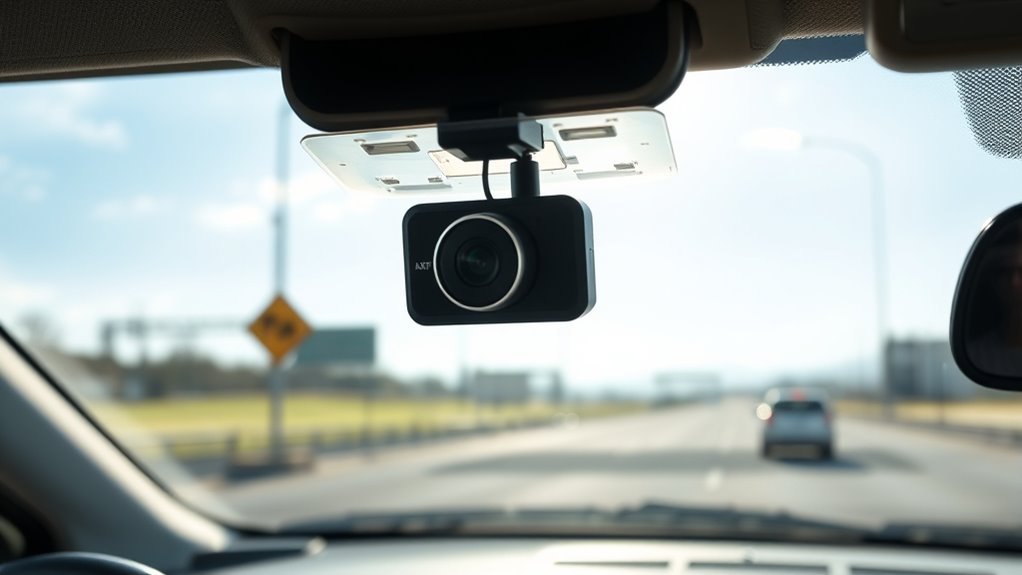
Pennsylvania’s two-party consent law requires that all parties involved in a conversation must give their permission before any audio recording can take place. This means you need to obtain consent from passengers before activating your dash cam’s audio feature. Failing to do so violates wiretapping laws and can make the recording inadmissible in court. To stay compliant, inform everyone in the vehicle upfront that audio is being recorded and post visible notices warning of recording activity. It’s recommended to get verbal permission from all occupants, including passengers and employees. If you’re unsure about consent, disable the audio recording feature. Many dash cams allow you to record video only, which avoids legal issues while still capturing important footage. Always prioritize clear communication to avoid violating privacy laws. Properly obtaining consent is essential to ensure your recordings are legally valid and admissible. Additionally, understanding privacy laws can help you navigate situations where audio recording might be sensitive or restricted. Knowing the regulations governing audio recordings can further safeguard you from potential legal complications, especially considering wave and wind privacy considerations in outdoor environments. Being aware of audio recording restrictions can help you avoid unintentional violations and protect your rights.
Privacy Considerations and Wiretapping Laws
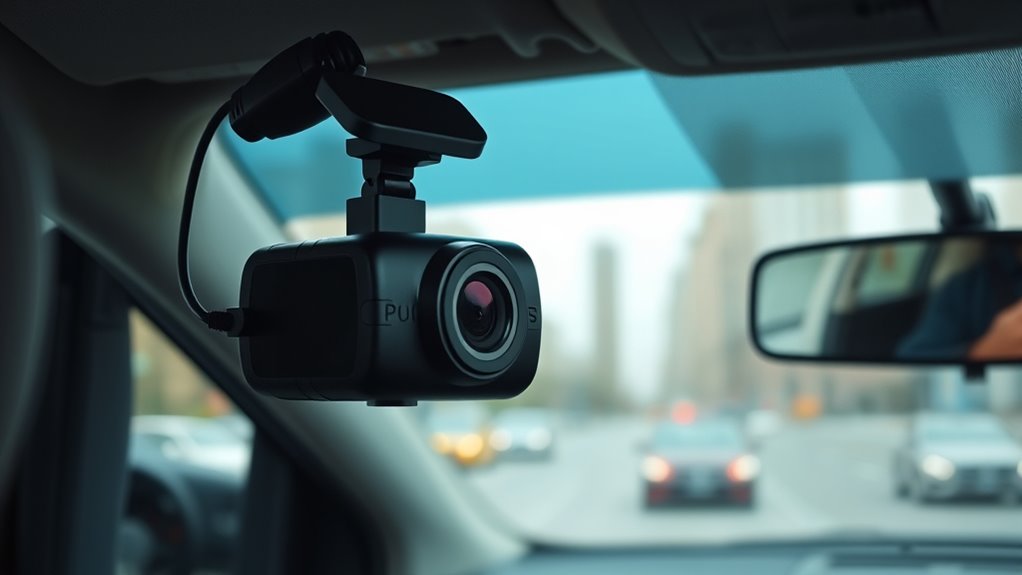
Understanding the privacy implications and legal restrictions surrounding dash cam recordings is essential to staying compliant with Pennsylvania law. The Wiretap and Surveillance Control Act makes it a crime to intercept oral communications without consent, risking felony charges, fines, and civil liability. Audio recordings without all-party consent can be excluded from court, making them inadmissible. Using dash cams in commercial settings requires clear notice or verbal disclosure to avoid violations. Video-only recordings are less risky legally because they don’t capture oral conversations, but audio recordings are more scrutinized. If your dash cam records audio, ensure you obtain proper consent to prevent evidence exclusion or legal penalties. Additionally, body piercing care and proper hygiene practices can influence overall safety and health, which parallels the importance of understanding legal boundaries when recording. Sharing recordings with third parties or storing them improperly can also increase your legal exposure under privacy laws. Violating the act can result in criminal and civil penalties, emphasizing the importance of understanding consent requirements. Furthermore, being aware of privacy law compliance can help you avoid inadvertent legal violations when managing dash cam footage. It is also beneficial to stay informed about evolving surveillance technology regulations to adapt your practices accordingly. Maintaining awareness of AI ethics related to surveillance technologies can further support responsible recording practices.
Restrictions on Screen Usage and Live Viewing
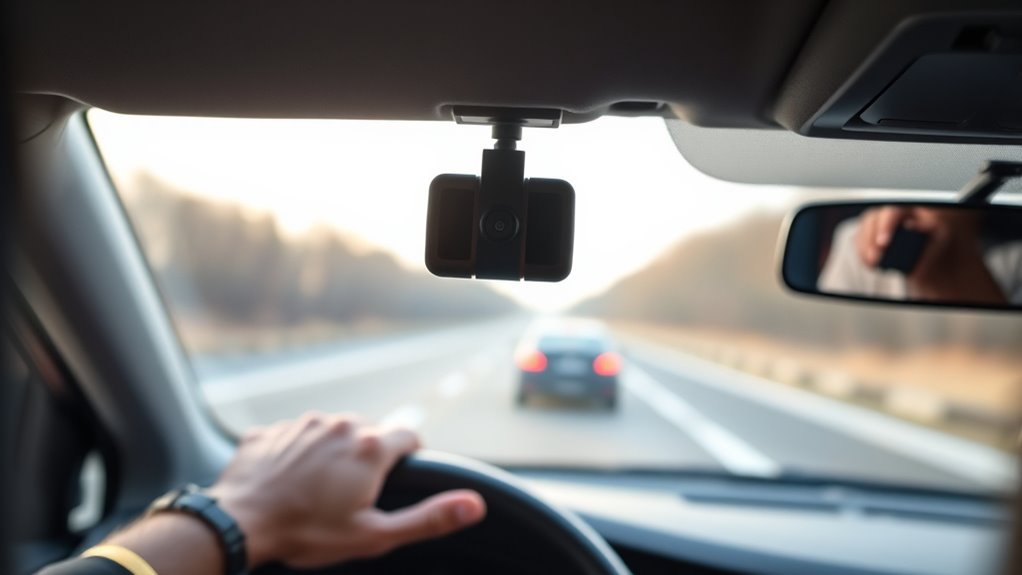
Pennsylvania law strictly prohibits drivers from viewing live dash cam feeds while on the road to prevent distractions. Devices must either lack screens or have them set to sleep automatically when the vehicle is in motion. Ensuring your dash cam complies with these restrictions helps you stay legal and safe. Additionally, many dash cams are equipped with privacy features that automatically disable audio recording or alert drivers to recording activities, further supporting lawful use. It is also important to understand industry trends to ensure your device remains compliant with evolving regulations. Staying informed about technological integration can help you select devices that meet legal standards while providing optimal security and functionality.
No Live Viewing
Operating a vehicle with a dashcam that displays live video streams is prohibited under Pennsylvania law, specifically Vehicle Code Section 4527. This law bans drivers from operating a vehicle if their dashcam shows real-time video feeds. The purpose is to prevent driver distraction and ensure safety. Your dashcam can record and store footage, but you can’t view live footage while driving. To comply, you should:
- Disable or cover your dashcam screen during operation
- Configure the device for loop recording only
- Mount the dashcam outside of the driver’s line of sight
- Avoid checking the screen while on the road
- Remember that any live viewing during driving is illegal and may lead to citations or inadmissible footage to prevent distractions. Being aware of driver safety laws related to dashcam use helps you avoid unintentional violations. Maintaining awareness of free floating principles in your vehicle setup can further reduce the risk of accidental distractions while on the road.
Distraction-Free Display Requirements
To prevent driver distraction, Pennsylvania law imposes strict display requirements for dash cams and other image display devices. You cannot operate a vehicle on the highway with a display showing broadcast TV or live stream video during driving. These restrictions apply to any device capable of showing such images. The law, under Pennsylvania Vehicle Code Section 4527, makes it illegal to display restricted images while driving, and violations are considered unlawful operation. To stay compliant, your dash cam’s screen must not be visible to you while driving, and mounting should avoid obstructing your view or interfering with airbags. Proper placement in designated areas ensures you avoid obstruction violations and keep your footage admissible. Additionally, understanding the distraction-free display requirements helps ensure safe driving practices and legal compliance. Keeping your dash cam’s mounting position in mind is essential for both safety and adherence to the law. It’s also advisable to familiarize yourself with vehicle safety laws and how they relate to modern in‑vehicle technology. For example, being aware of driver distraction mitigation strategies can further enhance road safety and compliance. Moreover, regularly reviewing your device’s exposure to legal standards can help prevent inadvertent violations and promote responsible usage.
Screen Sleep Mode
Since display restrictions are in place to prevent driver distraction, dash cams must have a sleep mode that turns off the screen during driving. Pennsylvania law requires screens to automatically enter sleep or blank mode when the vehicle is in motion, preventing live viewing while driving. This aligns with vintage design principles that emphasize unobtrusive and safety-conscious technology integration. This helps ensure your device aligns with networking hardware standards for safety. This means your dash cam should disable or black out the display during operation to avoid violations. To stay compliant, ensure your device:
- Turns off or blanks the screen when the vehicle moves
- Doesn’t show live streams or broadcasts while driving
- Has an automatic sleep or blank mode
- Does not display real-time footage during transit
- Follows state guidelines on screen placement and operation
Failure to adhere can result in fines or legal issues, as law enforcement actively enforces these restrictions. Proper functioning of sleep mode is essential to ensure your dash cam complies with Pennsylvania’s safety regulations.
Using Dash Cam Footage as Evidence
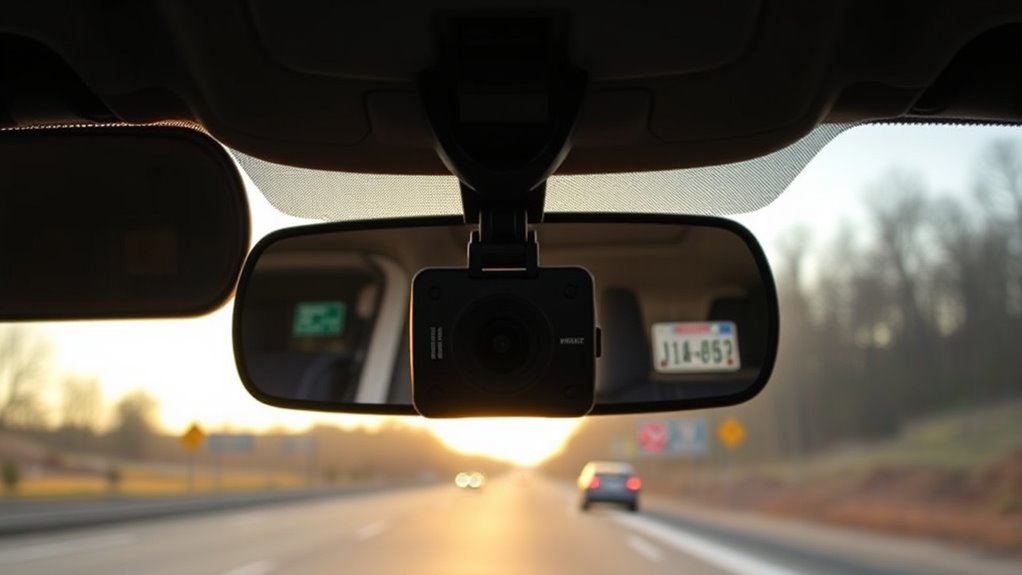
When using dash cam footage as evidence in Pennsylvania courts, it’s vital to meet specific admissibility standards. You need to guarantee the footage is authentic, relevant, and unaltered, with proper documentation like timestamps and chain of custody. Understanding these criteria helps you present your case effectively and avoid challenges to the footage’s credibility.
Legal Evidence Standards
Using dash cam footage as evidence in Pennsylvania courts requires strict adherence to authenticity standards. You must guarantee the footage is unaltered and properly preserved, with original files maintained in their unedited state. Metadata like timestamps or GPS data supports credibility, and witness testimonies or affidavits often confirm the footage’s origin. A clear chain of custody documents the footage’s integrity throughout handling.
Key points include:
- Verifying footage authenticity and unaltered status
- Preserving original files and metadata
- Establishing the source via witness or affidavit
- Maintaining chain of custody documentation
- Ensuring relevance to the incident
Meeting these standards helps your footage serve as credible, admissible evidence in court proceedings.
Admissibility Conditions
In Pennsylvania courts, dash cam footage must meet specific admissibility conditions to be accepted as evidence. You should preserve the original, unedited file whenever possible, as courts prefer to see unaltered recordings. Retaining metadata—timestamps, GPS data, and file details—helps establish authenticity. Document how footage was transferred, stored, and accessed to reduce claims of tampering. An affidavit or testimony from the installer or recorder can authenticate the footage’s origin. The footage must be relevant, accurately depict the events, and maintain continuity with the incident, supported by metadata or witness testimony. Ensure the recording is clear and unambiguous. Additionally, comply with privacy laws—disabling audio or obtaining proper consent may be necessary. Proper mounting and adherence to statutory rules also support the evidence’s admissibility. Legal standards for evidence also require that the footage is obtained legally and not in violation of privacy laws, which can affect its admissibility in court.
Best Practices for Compliance and Safety
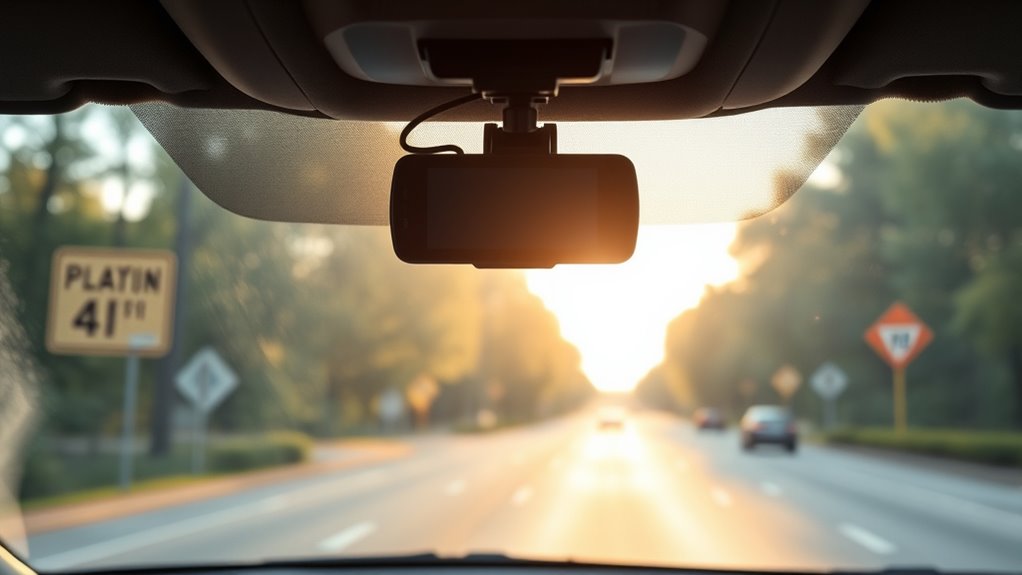
To guarantee your dash cam complies with Pennsylvania laws and promotes safety, proper mounting and operation are essential. Ensure your device doesn’t obstruct your view by mounting it on the dashboard or in approved windshield areas, avoiding airbags and sightlines. Use models with sleeping screens or driver-lock modes to prevent distractions. Hardwire your dash cam professionally to secure wiring and avoid loose mounts. Never review footage or change settings while driving—pull over safely first. Always disable audio recording or get explicit consent from passengers, especially in private settings. Keep footage secure, retain original files, and avoid editing to preserve evidence integrity. Legal restrictions on audio recording vary by jurisdiction, so be mindful of privacy laws, and share footage responsibly, understanding police and insurer requests. Prioritize safety and compliance to make your dash cam a helpful tool rather than a hazard.
Frequently Asked Questions
Can I Install a Dash Cam in a Rental Vehicle?
Yes, you can install a dash cam in a rental vehicle. Just make sure to mount it on the dashboard, not obstructing your view or airbag zones. Check your rental company’s policy first, and remember to disable audio recording unless everyone consents. Keep the footage safe for legal purposes, and avoid permanent modifications to the vehicle. Always follow mounting and privacy rules to stay compliant with Pennsylvania laws.
Are There Specific Brands Recommended for Legal Compliance?
Yes, certain brands are recommended for legal compliance in Pennsylvania. Look for models with flexible dashboard mounting options, discreet screens, and clear instructions to avoid obstruction and airbag zones. Choose dash cams with easy-to-control audio settings, encryption, and privacy features. Brands like Garmin, BlackVue, and Thinkware offer such features, providing secure storage, easy export, and compliance tools. Always verify that the device’s mounting and features meet local regulations to minimize legal risks.
How Long Can Dash Cam Footage Be Retained Legally?
You can retain dash cam footage for different periods depending on its use. For private recordings, keep files until claims or lawsuits are fully resolved, avoiding deletion to prevent spoliation. Police recordings are kept for at least 75 days, with longer retention if flagged or involved in investigations. Act 22 requests require response within 30 days, and evidence must be preserved until investigations conclude, ensuring legal compliance throughout the process.
Is There a Penalty for Mounting the Dash Cam Outside Regulations?
Yes, you can face penalties if you mount your dash cam outside the regulations. Authorities may issue fines or citations for obstructing your view or violating mounting rules. Non-compliance could also make your footage inadmissible in court, and repeated violations might lead to more serious consequences. To avoid issues, always follow the prescribed mounting locations, guarantee your dash cam doesn’t distract you, and verify it doesn’t interfere with airbags or safety features.
Can Dash Cam Footage Be Shared on Social Media Without Consent?
Sharing dash cam footage on social media without consent isn’t recommended because it can violate privacy laws, especially if it includes identifiable third parties or private conversations. While public road recordings are legal, posting videos that reveal private details risks legal trouble and privacy breaches. To protect yourself, avoid posting unless you have all-party consent, and always consider the privacy implications before sharing footage online.
Conclusion
By understanding Pennsylvania’s dash cam laws, you can avoid legal pitfalls and keep your footage in check—think of it as your modern-day quill and parchment, but with a tech twist. Always guarantee proper mounting, respect privacy, and get consent when needed. Stay up-to-date like a wise old owl, and use your dash cam responsibly, so you’re ready to face any legal battle or just impress your friends with your savvy. Safe driving!