In Virginia, using a dash cam is legal as long as you follow mounting rules to avoid obstructing your view, like placing it behind the rearview mirror. You can record audio since Virginia allows one-party consent, but be mindful of privacy laws when capturing private property or individuals. Proper placement and understanding of these rules help keep your recordings legal and useful. If you want to learn more about best practices, you’re in the right spot.
Key Takeaways
- Dashcams are legal in Virginia; proper mounting should avoid obstructing views to comply with state laws.
- Audio recording with dashcams is permitted under Virginia’s one-party consent law, but privacy considerations apply.
- Mounting the device behind the rearview mirror or on the lower passenger side ensures legal compliance and clear footage.
- Recordings taken in public are generally lawful; interior recordings of private spaces may raise privacy concerns.
- Proper handling, backup, and storage of footage are essential for legal evidence and privacy protection.
Legal Status of Dashcams in Virginia
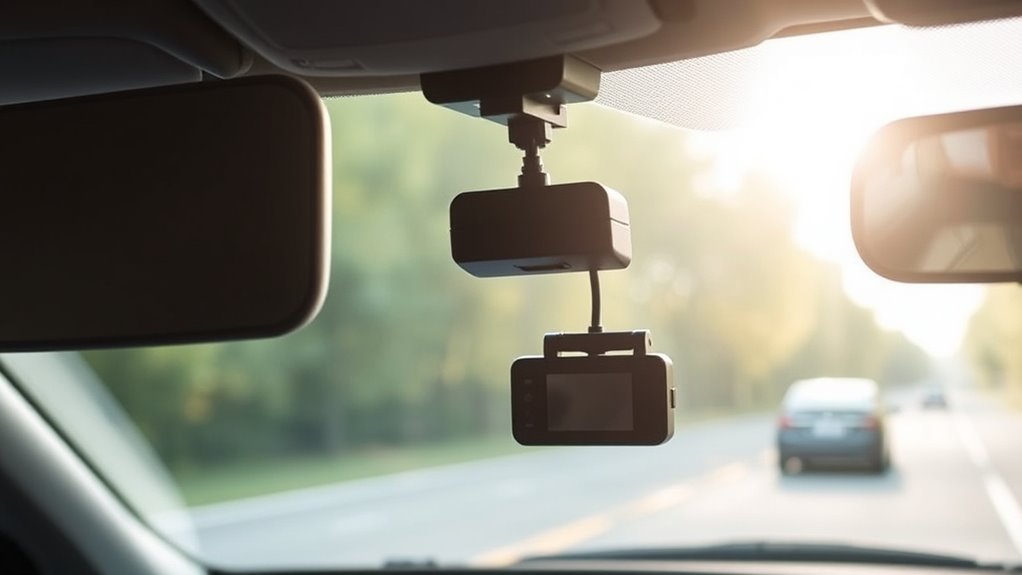
Are dashcams legal in Virginia? Yes, they are. Virginia law doesn’t have specific restrictions on owning or installing dashcams, and federal regulations don’t prohibit them either. You’re free to purchase and use a dashcam in your vehicle, whether for personal or commercial use. All US states, including Virginia, allow dashcam use, but placement is key. You must avoid obstructing your view or creating blind spots, as Virginia Code § 46.2-1054 prohibits devices that block your windshield or rear window. You can record audio since Virginia is a single-party consent state, meaning only one person needs to agree to be recorded. Proper mounting is crucial to prevent legal issues, and understanding vehicle safety regulations can help you avoid violations. Proper placement ensures compliance and safe driving, as improper mounting can lead to fines or other penalties. Additionally, being aware of privacy considerations can help you avoid potential legal complications related to recording in public or private spaces. Being familiar with privacy laws and respecting others’ rights when recording can further protect you from legal disputes.
Proper Mounting Practices and Placement Rules
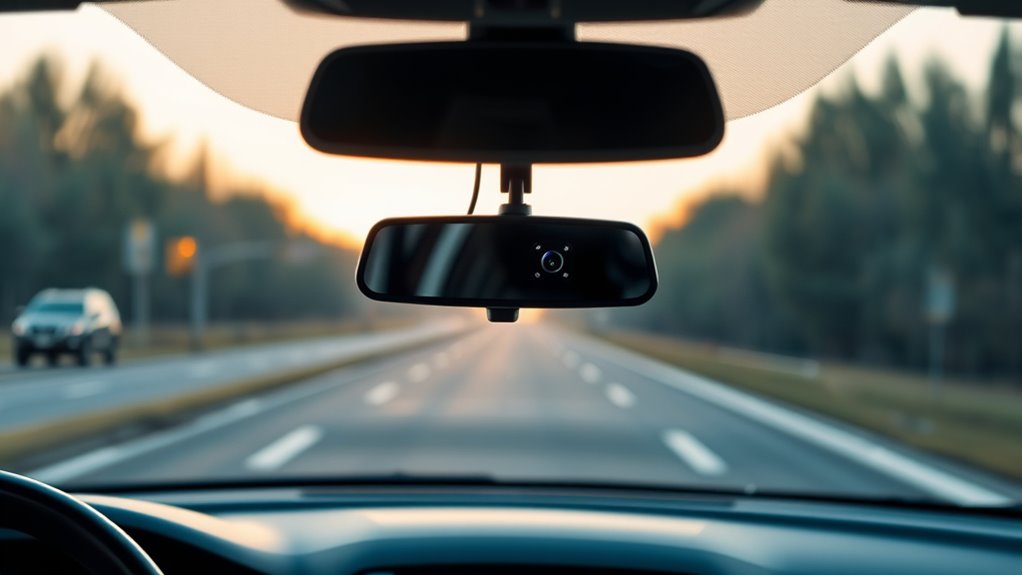
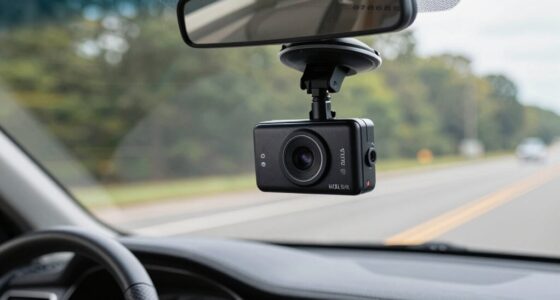
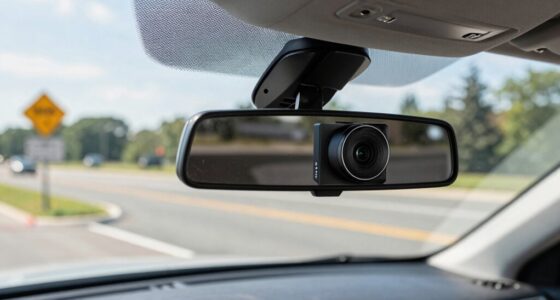
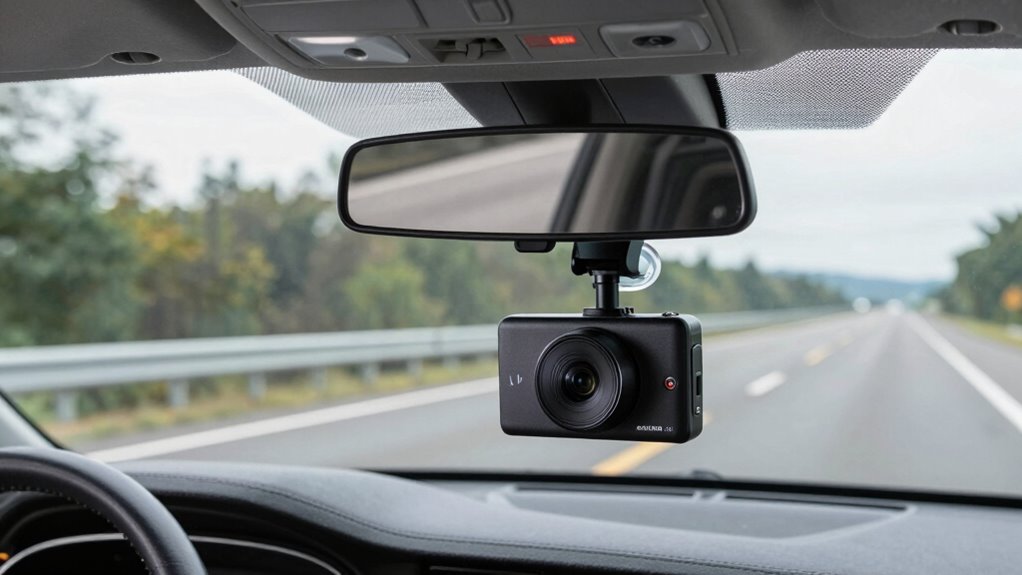
Proper mounting practices and placement rules make certain your dashcam captures clear footage without violating Virginia laws or obstructing your view. Mount your device behind the rearview mirror to minimize windshield obstruction and keep it within the central field of view. If that’s not possible, place it on the lower passenger side corner, ensuring it doesn’t interfere with your sight lines. For hardwired setups, consider mounting on the roof headliner or behind the rearview mirror housing to preserve visibility and reduce cable exposure. Avoid mounts that block your view of the windshield, side windows, or rear window, as Virginia law prohibits substantial obstructions. Use manufacturer-recommended mounts rated for Virginia’s climate, and verify your device’s placement doesn’t interfere with airbags or safety features for safe, compliant recording. Additionally, ensure your chosen mount is securely attached to prevent accidental falls or movement during driving. Proper mount positioning can also help avoid potential legal issues related to improper installation. Maintaining the correct device placement not only ensures compliance but also enhances the quality of your footage and overall safety. Paying attention to installation standards helps ensure your dashcam remains effective and within legal limits. Being aware of state-specific laws can further prevent inadvertent violations and ensure your dashcam’s legal operation. Incorporating regulatory guidelines into your setup can further safeguard you against legal complications.
Audio Recording Regulations and Consent Laws
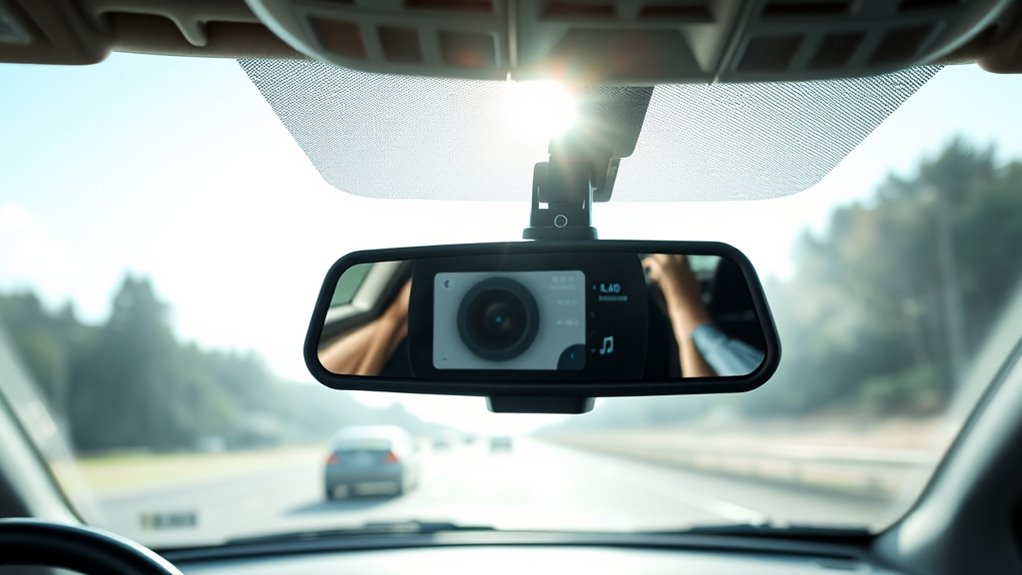
Virginia’s one-party consent law allows you to record audio inside your vehicle without informing passengers, as long as you are a participant in the conversation. This means you can legally record audio with your dashcam during drives without notifying others, provided you’re involved in the conversation. The law applies to private vehicle recordings and distinguishes Virginia from all-party consent states like Maryland or Massachusetts. Dashcams with audio are legal here, and recordings can be used as evidence in legal or insurance cases if obtained legally. You should, however, be cautious—audio recordings can be used against you in fault disputes. Responsible use is essential, especially regarding storage and privacy. Currently, no specific laws restrict or prohibit audio-enabled dashcams, making them a valuable tool for capturing incident details. Understanding these regulations helps ensure you remain compliant and protect your rights when using audio recording features. Additionally, being aware of audio recording regulations can help prevent potential legal complications, especially considering privacy laws and how they may vary by jurisdiction.
Privacy Considerations and Data Use
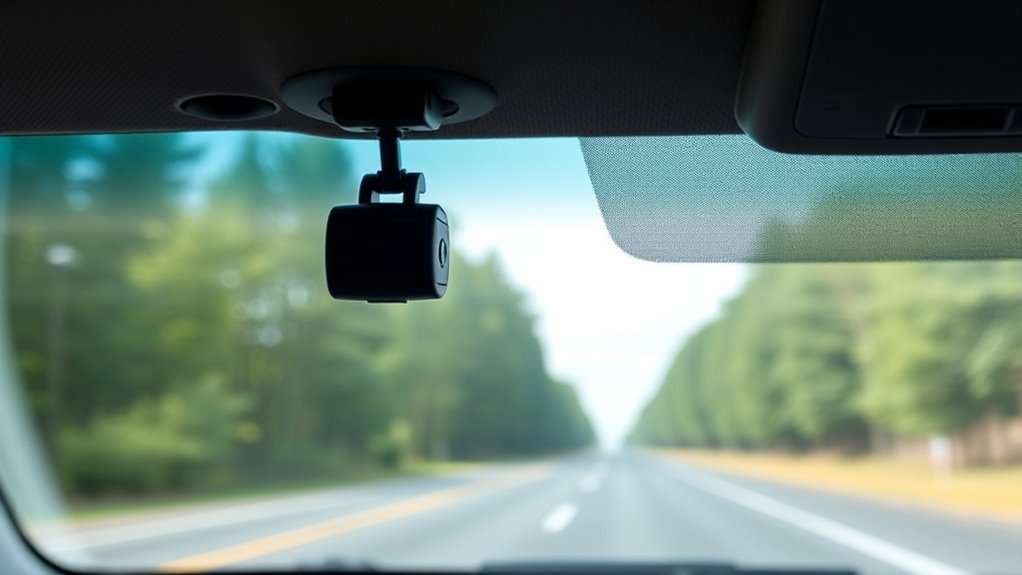
When using a dashcam in Virginia, understanding how mounting and visibility restrictions impact your privacy and legal responsibilities is essential. You must avoid obstructing your view or interfering with safety features like airbags, as improper placement can create safety risks and legal liabilities. Sharing footage with insurers is permitted but may influence claims, and law enforcement can seek your footage with a warrant or exigent circumstances. It’s wise to create backup copies, as deletion isn’t allowed during seizures. Recording in public areas is generally lawful, but interior recordings of occupants or private property can raise privacy concerns, especially if intrusive. When sharing footage, redact metadata like location and timestamps to protect privacy. Storing data securely—preferably with encryption—reduces risks of unauthorized access or tampering. Additionally, understanding legal restrictions on audio recording in Virginia can help you avoid potential privacy violations, as state laws may require consent from all parties involved. Being aware of privacy considerations related to dashcam footage ensures you stay compliant with legal standards and respect others’ rights. It’s also important to stay informed about recent changes in privacy laws to ensure ongoing compliance and proper handling of recorded data. Proper awareness of data storage best practices can further safeguard your recordings from unauthorized use, especially considering the vetted nature of privacy policies and security measures.
Interactions With Law Enforcement and Evidence Handling
Law enforcement officers in Virginia often use body-worn cameras and vehicle dashcams during traffic stops and incidents, which means your dashcam footage can play an essential role in legal disputes or investigations. Officers are required to activate in-car video during traffic stops, pursuits, and emergency driving, providing objective evidence of events. Your dashcam footage can influence police behavior and may lead officers to drop charges or alter their conduct. Virginia’s one-party consent law allows you to record conversations with police without their permission. You’re not obligated to share your footage, and you can refuse to hand it over—though police cannot seize your dashcam without a warrant or probable cause. Recording in public areas or where there is no reasonable expectation of privacy is generally permitted, which can help protect your rights and ensure the integrity of your footage. Understanding privacy rights related to dashcam recordings can help you navigate interactions with law enforcement more confidently. Being aware of evidence handling procedures can further ensure your recordings are preserved properly for legal use. Additionally, familiarizing yourself with recording regulations can prevent unintentional violations of the law. Protect your footage by backing it up immediately, as it can be critical evidence in legal cases or disputes. Properly managing digital storage ensures your recordings remain accessible when needed. Moreover, knowing how to manage storage and backups can help prevent accidental loss of important recordings.
Frequently Asked Questions
Can I Use a Dashcam for Commercial Fleet Monitoring in Virginia?
Yes, you can use a dash cam for your commercial fleet in Virginia. Just make certain it’s mounted in a way that doesn’t obstruct the driver’s view, such as behind the rearview mirror or in the lower windshield corner. You can record audio if you have the driver’s consent, but avoid capturing conversations without proper policies. Keep equipment secure and compliant with vehicle and safety regulations to avoid fines or violations.
Are There Specific Brands or Models Recommended for Legal Compliance?
You should consider brands like Nextbase, Garmin, BlackVue, Thinkware, and Viofo for legal compliance. These models feature compact designs, flexible mounting options, and clear instructions to avoid obstructing your view. Look for models with adjustable lenses, secure storage, and audio controls, such as the Nextbase 622GW or BlackVue DR900X. These choices help guarantee your dash cam meets Virginia’s mounting, privacy, and audio standards, keeping your recordings admissible and compliant.
How Long Can Dashcam Footage Be Stored Legally in Virginia?
Did you know that most insurance claims are settled within 6 to 12 months? In Virginia, you can store dashcam footage for as long as necessary unless law enforcement or legal proceedings require longer retention. Typically, it’s wise to keep original, unedited files for at least a year to cover potential disputes. Just remember to back up your footage and preserve metadata to maintain its admissibility and authenticity in case you need it.
Do I Need to Notify Passengers if I Record Audio Inside My Vehicle?
You don’t need to notify passengers if you record audio inside your vehicle in Virginia, thanks to the one-party consent rule. As the driver, your participation counts as consent, so you can record without informing others. However, for politeness and transparency, it’s a good idea to let passengers know they’re being recorded. Just make certain your recording complies with legal standards and is used responsibly.
Can Law Enforcement Access My Dashcam Footage Without a Warrant?
Law enforcement generally can’t access your dashcam footage without a warrant unless there’s an urgent situation like hot pursuit or immediate safety threats. If they seize your device, they need probable cause supported by a warrant to view or take your recordings. In non-emergency cases, they must follow proper legal procedures, such as obtaining a court order or subpoena, before accessing your footage.
Conclusion
Navigating Virginia’s dash cam laws is like steering through a well-marked road—clear, straightforward, and designed to keep you safe. By understanding proper mounting, respecting privacy, and knowing your rights with law enforcement, you’re the captain of your own journey. Think of your dash cam as a loyal co-pilot, capturing your story without causing turbulence. Stay informed, stay compliant, and enjoy the ride with confidence—your road adventure, smooth and worry-free.