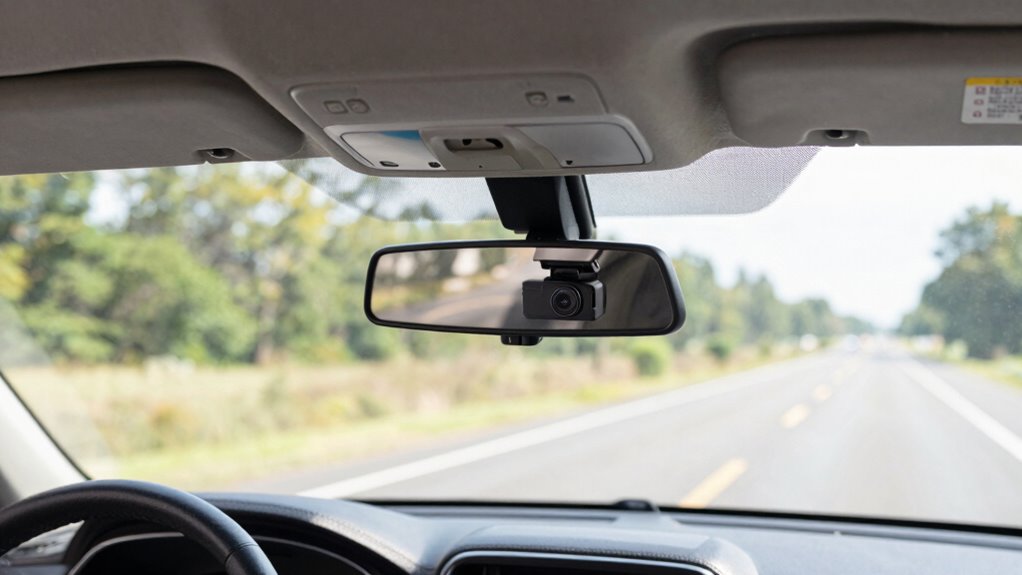

In West Virginia, you can legally install a dash cam on your dashboard or behind your rearview mirror, but it must not block your view or interfere with safety features. You can record audio if at least one person consents, but recording private conversations without permission may violate laws. Keep your camera unobtrusive and avoid windshield mounts that obstruct visibility. To learn more about proper placement and privacy tips, continue exploring the details.
Key Takeaways
- Dash cams must be mounted out of the driver’s direct view, preferably on the dashboard, to comply with West Virginia obstruction laws.
- Recording conversations is legal with at least one-party consent; privacy laws prohibit recording private conversations without permission.
- Dash cams are permitted if they do not block the driver’s view or interfere with vehicle safety features, following WV Code § 17C.
- Audio recording requires careful attention to privacy laws; disabling audio or obtaining consent can prevent legal issues.
- Proper installation and placement ensure compliance, safety, and privacy, avoiding obstruction of windshield visibility and safety controls.
Mounting Requirements for Dash Cams in West Virginia
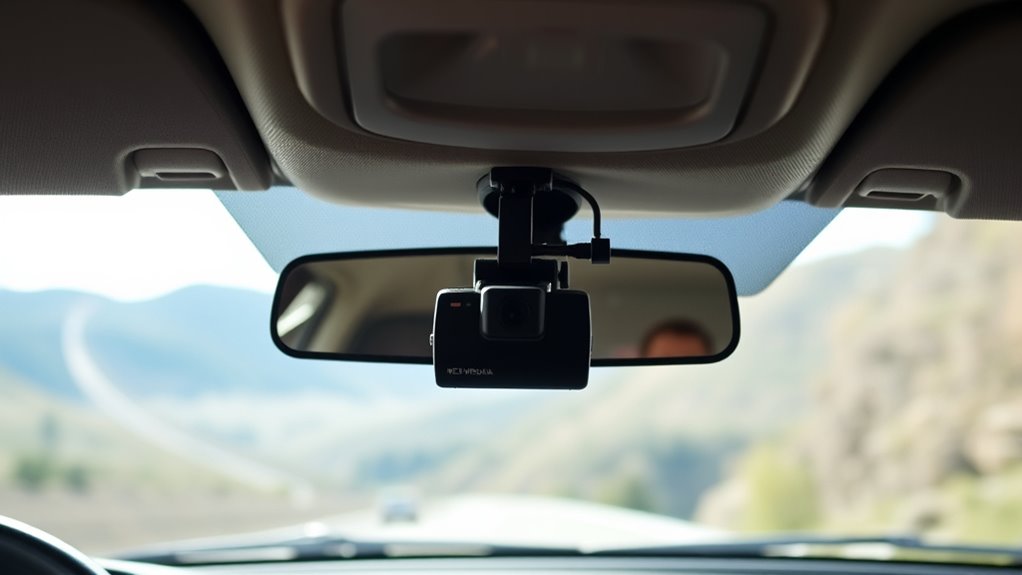
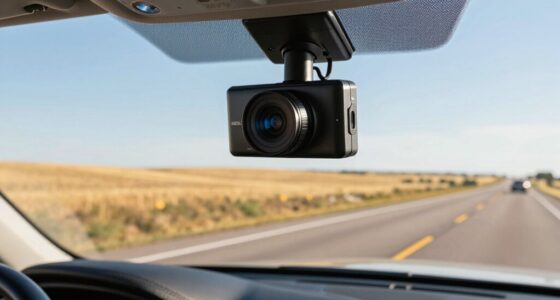
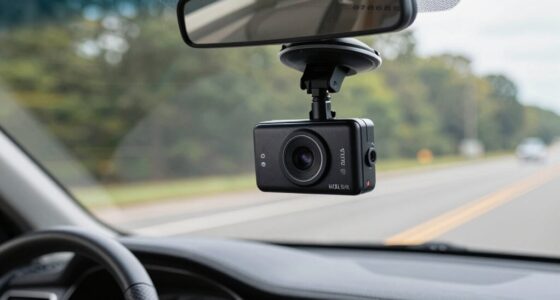
In West Virginia, you can legally use a dash cam, but you must follow specific mounting rules to avoid violations. The law prohibits blocking your view with non-transparent materials, meaning windshield-mounted cameras that obstruct your line of sight are not allowed. Industry guidance suggests mounting the dash cam on the dashboard rather than the windshield to stay clear of obstruction rules. Position the camera in the center or offset spots that don’t interfere with airbags, controls, or safety labels. Mounting behind or near the rearview mirror is acceptable only if the device is transparent and doesn’t create an obstruction. Avoid placing the camera in the lower corners of the windshield. Use low-profile mounts or adhesive pads to keep the device unobtrusive, ensuring your view remains unobstructed at all times. Additionally, considering the importance of European cloud innovation, selecting quality mounting equipment can help ensure your dash cam remains securely in place without compromising safety, especially when integrating advanced technology features. Proper installation techniques can also help mitigate distraction risks associated with improper mounting, and understanding vehicle safety regulations can further ensure compliance. Being aware of safety standards can also guide you in choosing the right mounting options to stay compliant with state laws.
Audio Recording Regulations and Privacy Considerations
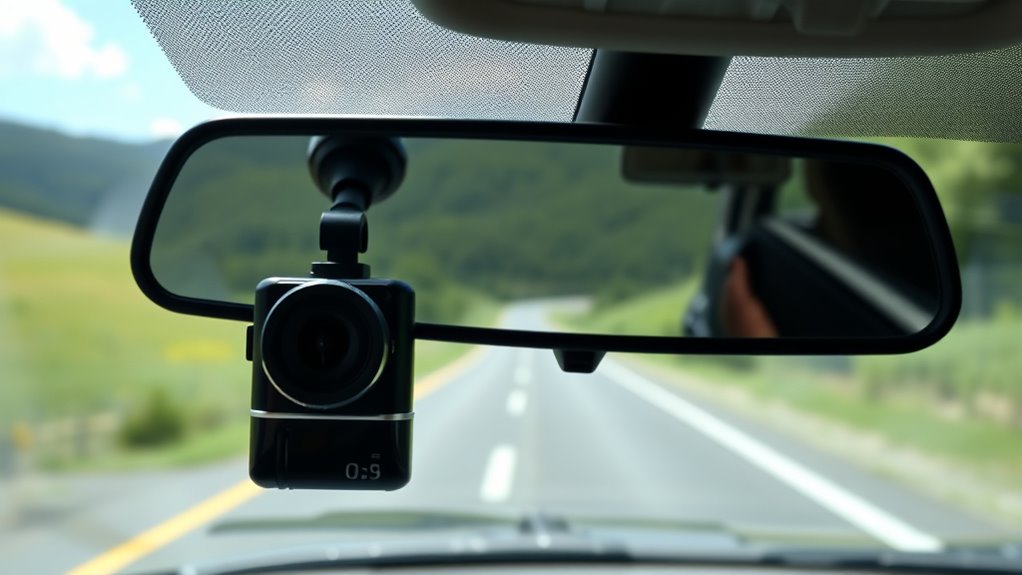
Understanding West Virginia’s audio recording laws is essential when using a dash cam, as the state follows a one-party consent rule. This means recording is lawful if at least one person involved in the conversation agrees. If you’re recording your own conversations or those where you’re a participant, you’re generally compliant. However, recording private conversations without consent can lead to criminal or civil penalties under wiretapping laws. Be cautious in private settings like homes or sensitive vehicle conversations, especially if passengers expect privacy. To minimize risks, consider disabling audio when not needed or obtaining verbal consent from passengers. Posting notices about recording and logging consent can strengthen your legal position and help avoid disputes over privacy or admissibility. Additionally, audio laws vary by jurisdiction, so staying informed about local regulations is crucial to ensure lawful use of dash cam audio features. It’s also advisable to review state-specific regulations regularly, as they can change or be subject to legal interpretation. Moreover, being aware of privacy expectations in different environments can help prevent inadvertent violations and protect your rights. Regularly consulting legal resources or authorities can provide further guidance on compliance and best practices. Being aware of the potential legal consequences of improper recording can help you make informed decisions and avoid penalties. Recognizing the importance of informed consent ensures you respect others’ privacy rights and adhere to legal standards.
Restrictions on Windshield and Other Window Mountings

Mounting a dash cam on your windshield is illegal in West Virginia because state law prohibits placing non-transparent objects on the front glass that could obstruct your view. The law, under WV Code § 17C, requires that nothing block your clear view of the road. Installing a dash cam on the windshield violates these rules and general vehicle obstruction laws. Instead, you should mount your camera on the dashboard, ensuring it’s out of your direct line of sight and doesn’t interfere with your driving. Rear windows are not explicitly restricted, so mounting there is permitted. Avoid placing your dash cam where it could obscure your vision or be within the sweep of windshield wipers. Prioritize a low, central dashboard position for compliance and safety. Additionally, consider the importance of vehicle obstruction laws to ensure your dash cam setup remains legal and unobtrusive. Proper placement also helps prevent potential distractions that could compromise your safety and adherence to dash cam regulations. Being aware of camera mounting restrictions can help you avoid inadvertent violations and stay within West Virginia law.
Legal Status and Compliance Guidelines
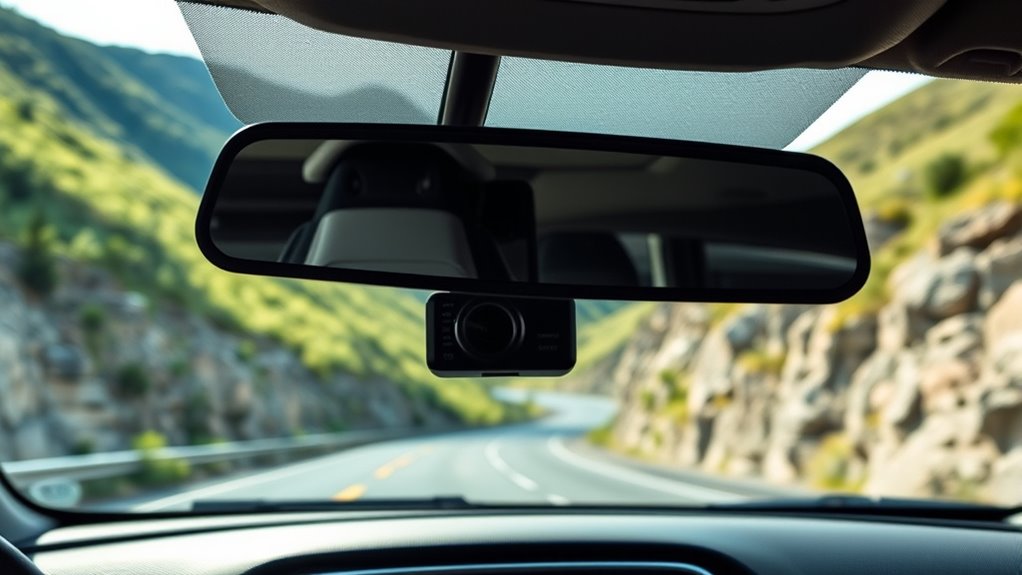
Dash cams are legal throughout West Virginia as long as they don’t obstruct your view of the road. You can install one on your dashboard, provided it follows WV Code § 17C for proper placement and doesn’t block your line of sight. There’s no statewide ban on dash cam use, and they’re permitted in every US state with placement rules. When recording audio, one-party consent applies, meaning you can record if you’re involved or have agreement. The law doesn’t restrict recording footage from other windows or using the footage, as long as privacy isn’t violated. Mounting your dash cam with transparent materials on the windshield is essential. Police enforce these rules by checking for visibility obstructions, and no automated citations exist for dash cam violations. Legal admissibility of footage varies depending on compliance with recording laws and proper placement. Ensuring your device complies with privacy considerations helps prevent legal issues related to recording. Additionally, being aware of state-specific regulations can help you stay compliant and avoid potential legal complications. Regularly reviewing dash cam laws and updates can also ensure ongoing compliance and avoid inadvertent violations. It’s also advisable to familiarize yourself with wiring basics to ensure your dash cam is installed safely and correctly. Staying informed about recording consent laws is crucial to avoid infringing on others’ privacy rights.
Best Practices for Safe and Legal Dash Cam Usage

To guarantee your dash cam provides reliable footage while complying with West Virginia laws, adopting best practices for placement and operation is key. Proper mounting ensures clear visibility and legal compliance. First, position your dash cam on the dashboard to avoid windshield obstruction. Second, ensure it doesn’t block your view or interfere with front windows or mirrors. Third, use non-transparent materials and avoid mounting near windshield wipers or in areas that could hinder your driving. Additionally, follow these tips:
- Regularly inspect your mount for security and clear lens view.
- Use only one-party consent for audio recordings, and record selectively.
- Combine parking mode with your dash cam for stationary protection.
- Consider the Horsepower of electric dirt bikes when choosing a dash cam for high-speed driving conditions, as higher speeds may require models with enhanced video resolution for clearer footage. Being aware of Youngster Choice can also help you stay informed about legal and safety considerations related to vehicle modifications and accessories. Also, understanding the field-of-view of your camera can help optimize coverage and ensure comprehensive recording during your drives. Additionally, selecting a dash cam with advanced night vision can improve footage quality in low-light conditions, ensuring better evidence in various environments.
Frequently Asked Questions
Can I Use a Dash Cam With a Built-In Display That Faces Me?
Yes, you can use a dash cam with a built-in display facing you in West Virginia. As long as the device is mounted on the dashboard or another non-obstructive location, it won’t block your view through the windshield. Just make certain the display doesn’t interfere with your line of sight or violate any obstruction standards. Keep the device compact and positioned safely to avoid tickets or evidence issues.
Are There Specific Dash Cam Models Approved for Use in West Virginia?
There are no specific dash cam models approved for use in West Virginia. You should focus on choosing a model that complies with mounting rules—like low-profile or mirror-mounted designs—and guarantees your view isn’t obstructed. Opt for models with good video quality, reliable GPS, and features like incident-locking. Remember, the legality depends on proper installation and use, not on a particular brand or model being approved by the state.
Do Dash Cam Recordings Need to Be Stored Securely to Comply With Laws?
Your dash cam recordings are like fragile treasure chests, requiring secure storage to avoid falling into the wrong hands. While West Virginia laws don’t specify exact storage standards, you must encrypt footage, restrict access, and maintain audit logs to guard privacy and prevent leaks. Retain recordings only as long as necessary, then delete responsibly. Failing to secure your footage can expose you to legal risks and civil penalties, so treat your data like a precious resource.
Is There a Limit to How Long I Can Record With My Dash Cam?
You don’t have a specific time limit for recording with your dash cam in West Virginia. Your device’s storage capacity and settings determine how long you can record before old footage loops over. Continuous recording is allowed as long as your storage permits. Just remember, if you want to keep important footage, save or back it up before it gets overwritten. There’s no law restricting recording duration for personal use.
Can I Legally Share Dash Cam Footage Publicly Without Consent?
Yes, you can legally share dash cam footage publicly in West Virginia if it’s recorded in public places, like roads, where privacy expectations are low. Just make sure you don’t share private details or footage taken in private settings like driveways or restrooms. Inform passengers about recording signage, and avoid sharing sensitive content that could lead to privacy claims. Keep proper records and secure your footage to stay compliant.
Conclusion
As you install your dash cam, picture it securely mounted, capturing every moment on the road while respecting privacy laws. Imagine the quiet hum of your vehicle as footage records without interference, like a silent witness ensuring safety and legality. When you follow West Virginia’s mounting and audio rules, you create a clear, unobstructed view—turning your dash cam into a trusted co-pilot. With these practices, safe driving and legal compliance go hand in hand.