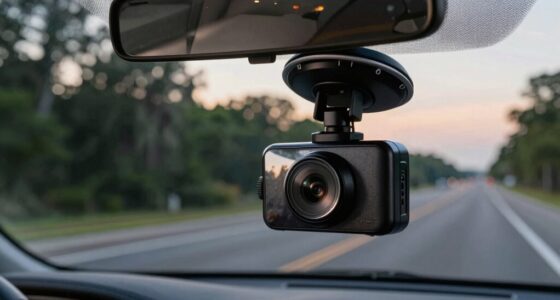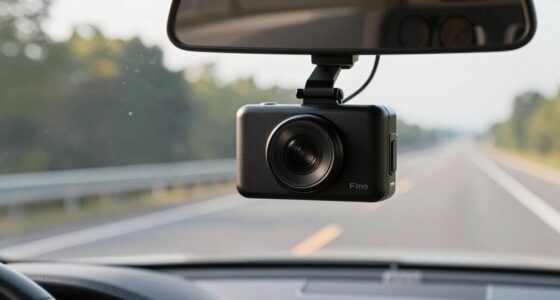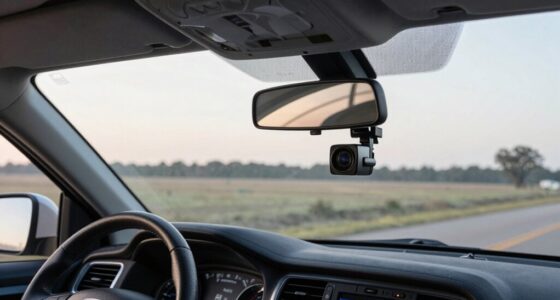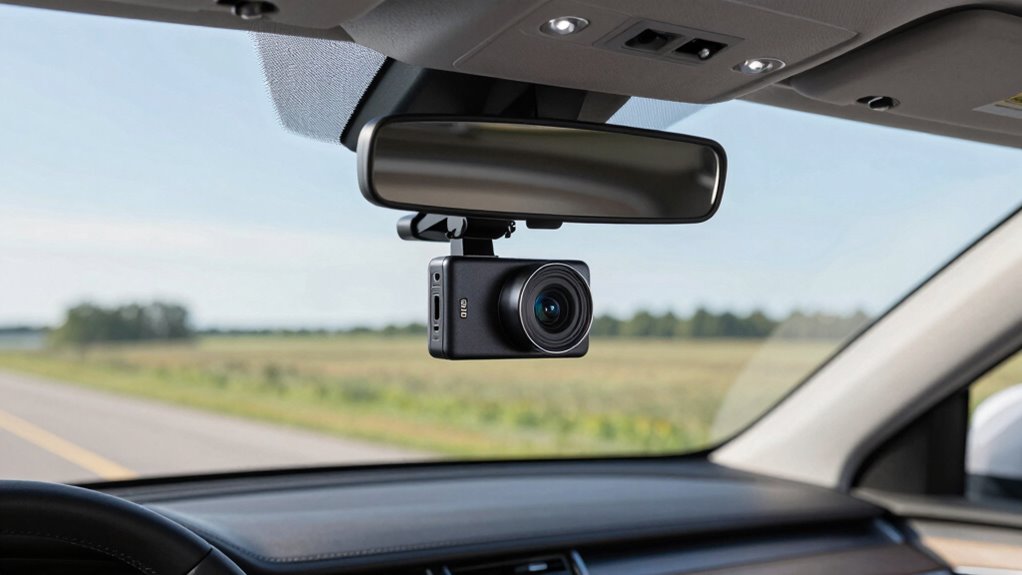
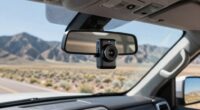
In Wisconsin, you can legally use a dash cam as long as it’s mounted properly behind or near the rearview mirror on the windshield, avoiding wiper sweep zones and obstructions. You can record audio with one-party consent, meaning only one person involved needs to agree. Be mindful of privacy laws, especially when capturing private conversations, and manage your footage responsibly. To guarantee full compliance and protect yourself, keep exploring the details ahead.

Get business pricing on garage and car supplies
- Business-only prices and quantity discounts
- Tax-exempt purchasing
- Multiple users, one account, clear invoices
Key Takeaways
- Dash cams must be mounted behind or near the rearview mirror without obstructing visibility or safety features.
- Only one-party consent is required to legally record audio in Wisconsin, including conversations inside the vehicle.
- Nontransparent dash cam materials on the windshield are prohibited unless mounted behind the rearview mirror.
- Recording private conversations without consent can violate privacy laws; avoid capturing sensitive or private settings.
- Proper installation and placement ensure compliance with safety standards and help prevent legal issues.
Wisconsin compliant dash cam mount
As an affiliate, we earn on qualifying purchases.
As an affiliate, we earn on qualifying purchases.
Legal Requirements for Mounting Dash Cameras in Wisconsin
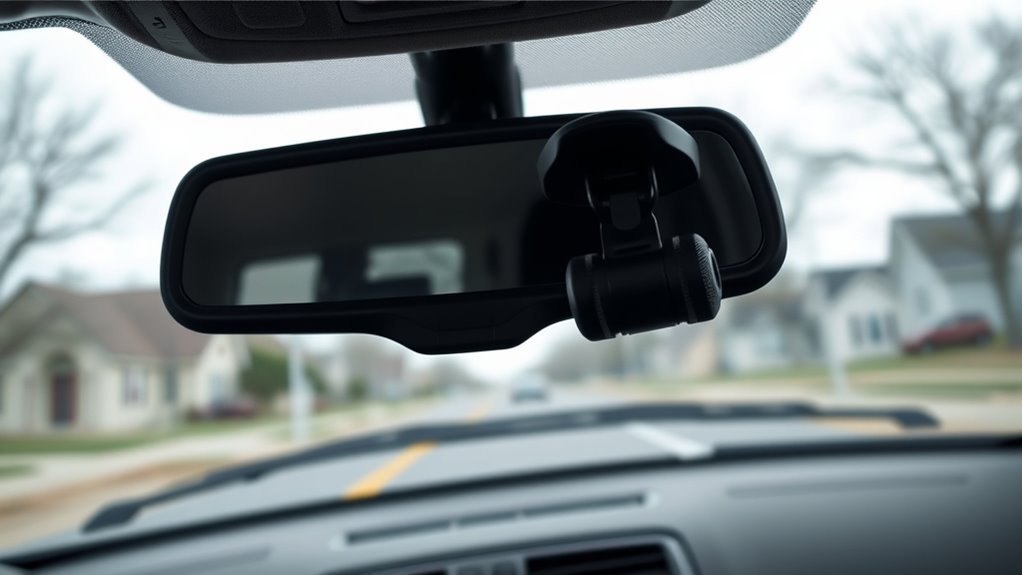
In Wisconsin, mounting a dash camera requires careful attention to visibility laws that aim to keep your view of the road unobstructed. State statutes prohibit objects that materially block your clear view through the windshield, so placement behind the rearview mirror is preferred and explicitly accepted if it doesn’t obstruct your vision. Devices within the wiper sweep zone are prohibited, so your camera must be outside that area. Industry guidance recommends low-profile mounts on the dashboard or behind the mirror, avoiding glare and reflections. There are no fixed size limits, but keeping the device small and out of primary sightlines helps guarantee compliance. Enforcement depends on whether an officer judges the obstruction as significant, making proper placement vital to avoid citations or challenges. Ensuring your dash camera’s proper mounting position not only complies with legal standards but also enhances its effectiveness. Proper dash camera placement can help prevent legal issues and improve video quality during incidents. Additionally, being aware of the privacy considerations and audio recording laws in Wisconsin can help you avoid unintentional violations. Understanding dash camera regulations in your state helps ensure compliance and protects your rights. Being informed about state-specific laws can further assist in avoiding inadvertent violations.
As an affiliate, we earn on qualifying purchases.
Where to Position Your Dash Cam for Compliance
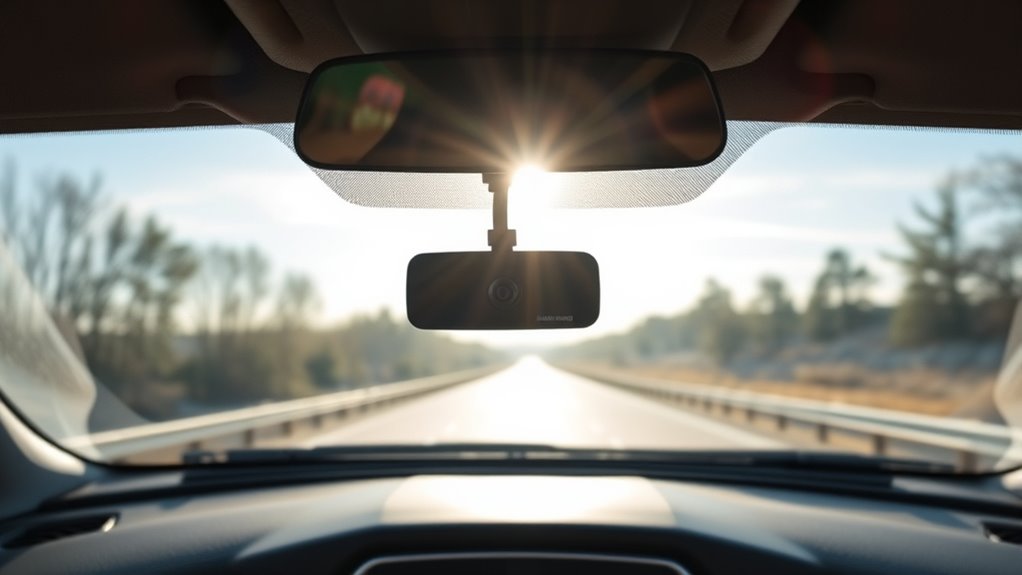
To guarantee your dash cam complies with Wisconsin laws, position it behind or near the rearview mirror on the windshield, as this area is the preferred mounting zone. This placement keeps the device outside your primary sight lines and prevents obstructing your view. It also avoids the windshield wipers’ sweep area, reducing visibility issues. Use low-profile mounts to limit glare and reflection at night. Route cables along the headliner and A-pillar to prevent interference with airbags and mirror adjustments. Here’s a quick overview:
| Placement Area | Pros | Considerations |
|---|---|---|
| Behind rearview mirror | Outside primary sight, no obstruction | Ensure no block to traffic signals |
| Dashboard | Avoid windshield rules, low visibility impact | Keep away from airbags and vents |
| Rear/Side Window | Records rear traffic, avoid visibility obstruction | Securely mounted, weatherproof housing |
Additionally, ensure your dash cam is properly secured to prevent it from becoming a projectile in the event of a crash. When selecting a mounting position, consider local regulations to ensure full compliance with Wisconsin law. Proper placement also helps in minimizing glare, which is especially important for nighttime recordings. Adjusting the mounting angle can further improve the clarity of recordings and reduce reflections, enhancing overall safety and compliance.
dash cam with windshield mounting
As an affiliate, we earn on qualifying purchases.
As an affiliate, we earn on qualifying purchases.
Wisconsin Laws on Window Obstructions and Visibility
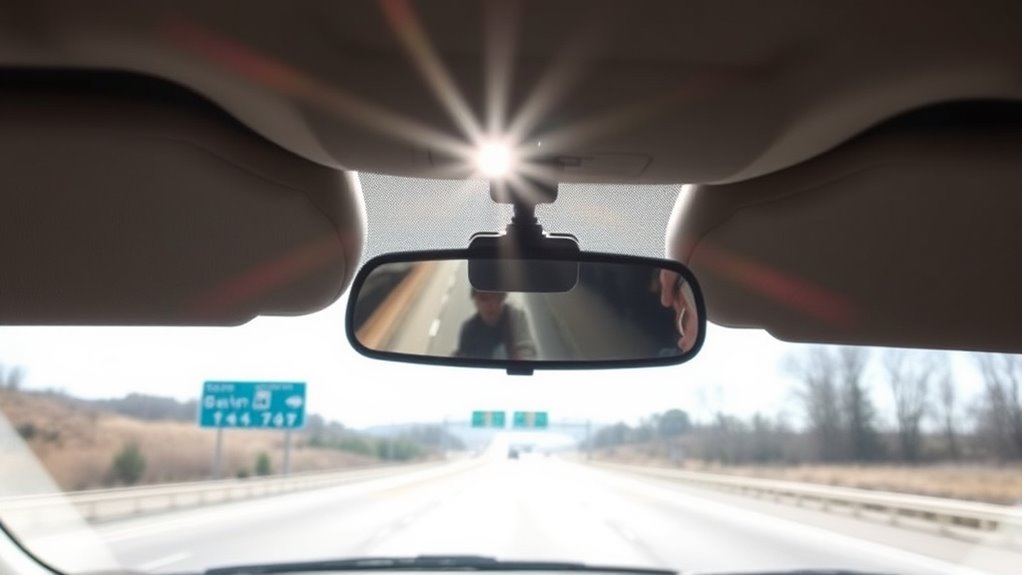
Wisconsin law strictly prohibits placing any object on or near the front windshield if it obstructs your clear view of the road. You can’t mount dash cams on the windshield unless they’re behind the rearview mirror, and mounting within the wiper’s sweep area is forbidden. Nontransparent materials on the windshield are banned, meaning dash cams are considered obstructions. To stay compliant, mounting your dash cam on the dashboard is recommended. The law requires that nothing block your view of the road ahead, and even minor obstructions can be violations. Enforcement depends on whether the object actually impairs visibility. Wisconsin statutes specify that only stickers in the lower left corner are allowed on the windshield, and rear window obstructions must be outside the driver’s view. Following these guidelines helps you avoid legal issues. State regulations prioritize driver visibility, so ensuring your dash cam placement does not interfere with the windshield’s transparency is essential. Additionally, proper mounting techniques can help you stay within legal limits and maintain a clear view while driving. Being aware of vehicle safety standards can further assist in complying with all relevant laws, including backup power options that ensure visibility and safety during outages. Properly securing your dash cam using secure mounting methods can prevent it from becoming a hazard or obstruction while on the road. Implementing regular vehicle inspections can also help identify and correct any potential obstructions before they lead to violations.
As an affiliate, we earn on qualifying purchases.
Audio Recording Laws and One-Party Consent in Wisconsin
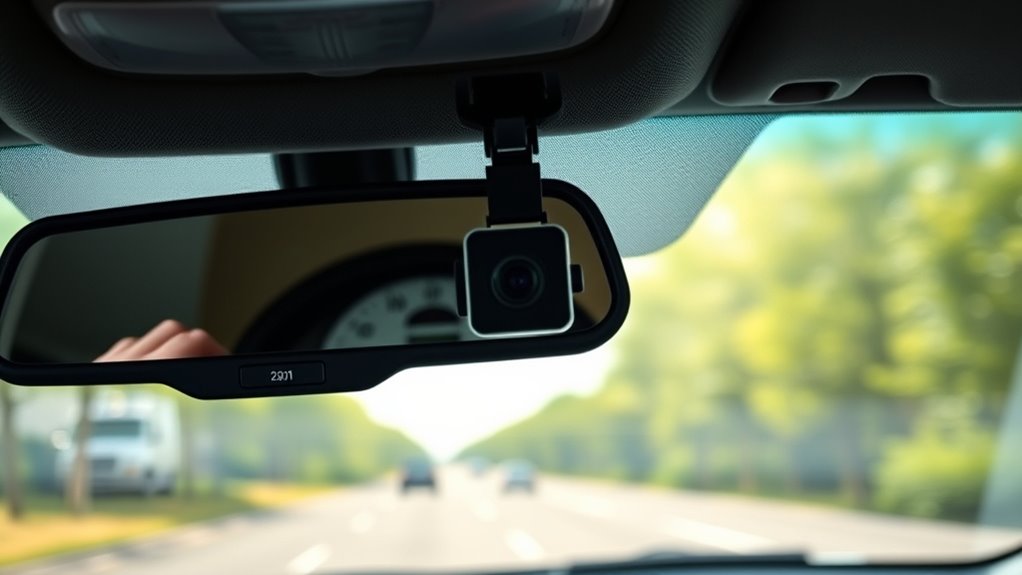
In Wisconsin, only one person needs to consent to record audio, so if you’re recording your own conversations in your vehicle, you’re likely compliant. However, recording passenger conversations without their knowledge could raise privacy concerns, especially if they expect privacy. Be aware that unauthorized recordings might lead to legal risks or disputes, so understanding the limits is vital. Proper consent protocols are essential to avoid potential legal issues. Additionally, the state’s recognition of One-party consent laws simplifies lawful audio recording in many situations. It is also important to note that privacy laws can vary depending on the context and setting, so staying informed helps ensure compliance. Moreover, understanding battery warranty considerations can prevent unintentional voiding of warranties if reconditioning is attempted. Being aware of recording regulations helps ensure that your actions stay within legal boundaries and protect your privacy rights. Familiarity with privacy policies further supports responsible recording practices and legal adherence.
One-Party Consent Rule
The One-Party Consent Rule in Wisconsin allows you to record oral or telephone communications as long as at least one person involved in the conversation agrees. This means you can record conversations you’re part of without needing permission from others, provided you have a reasonable expectation of privacy. If you’re not a participant, you can still record if one involved party consents after full knowledge of the recording. However, recording someone without their knowledge in private settings, like restrooms or dressing rooms, is illegal. The law also applies to calls made across state lines, with stricter rules in other jurisdictions. Violating these rules can lead to criminal charges, civil damages, or both, so always ensure consent is clear before recording. Additionally, Wisconsin’s law emphasizes that recordings must be made for lawful purposes and in compliance with privacy protections. It is also important to understand that the legality of recording can vary depending on the context and location, especially when considering public versus private spaces.
Passenger Recording Limits
Since Wisconsin follows a one-party consent law for audio recordings, as long as the driver agrees, you can record conversations involving passengers without needing their explicit permission. This means your dash cam’s audio is legal if you, as the driver, give consent. You don’t need all passengers to agree, making recording straightforward during trips. Keep in mind:
- Audio recording is permitted with driver consent.
- Passengers’ knowledge isn’t always required.
- No explicit limit on passenger audio capture.
- Vehicle recordings are considered private settings.
- Law applies equally to private vehicle use.
- Understanding audio consent laws is important to ensure compliance and avoid potential legal issues. However, be cautious with sensitive conversations or private property. While recording is generally allowed, informing passengers beforehand can help prevent disputes and ensure everyone understands the recording’s purpose.
Privacy and Legal Risks
Understanding the legal landscape around audio recording in Wisconsin is essential to avoid potential risks. Wisconsin is a one-party consent state, meaning your consent as the driver is enough to legally record audio inside your vehicle. You don’t need everyone’s permission, but recordings of private conversations without a reasonable expectation of privacy could be risky. Unlawful recordings can lead to fines or lawsuits, especially if shared or used improperly. If you’re unsure about consent, it’s wise to disable audio or display a notice indicating recording is active. Violating wiretapping laws may result in criminal or civil penalties, and illegally obtained audio can be inadmissible in court. State laws are specific about when and how audio can be recorded, and following best practices helps protect you from legal trouble and ensures your dash cam use remains compliant. Being aware of audio recording laws also helps you understand the nuances of privacy rights and how they apply in different situations.
Privacy Considerations for In-Vehicle Recordings
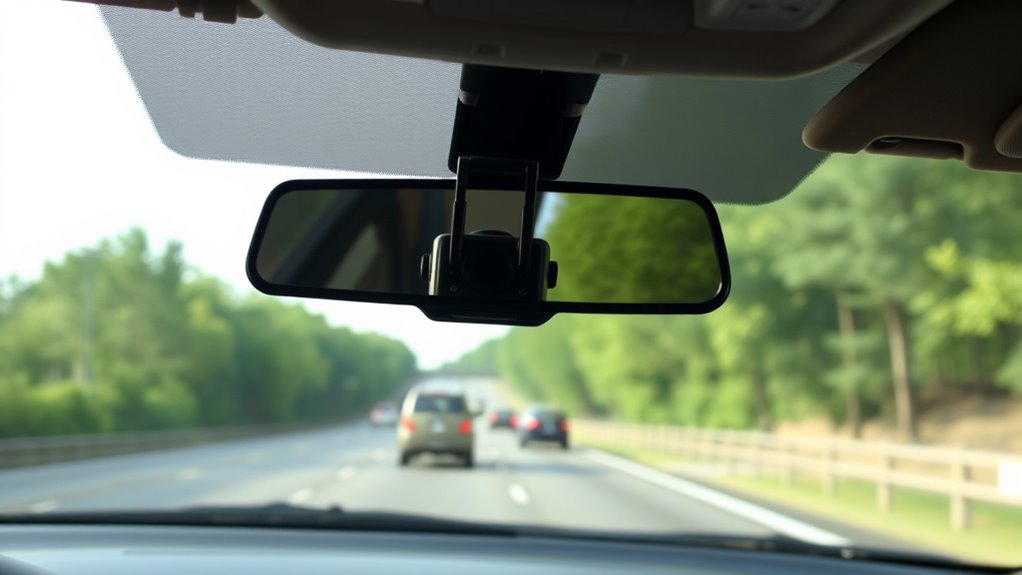
Privacy considerations for in-vehicle recordings hinge on the expectation of privacy in different settings and the type of data captured. You need to recognize that recording in public areas like streets usually has a lower privacy expectation, but capturing private conversations or sensitive details raises legal and ethical concerns. Passengers might expect privacy for their conversations, even inside your vehicle. Be aware that identifying faces or license plates counts as collecting personal data and may trigger data-protection rules. Recording on private property could require consent or raise trespassing issues. To stay compliant, consider these best practices:
- Post visible recording notices inside the vehicle
- Obtain explicit passenger consent when possible
- Disable audio recording in sensitive situations
- Limit data collection to necessary footage
- Know the privacy laws relevant to your location
Retention and Management of Dash Cam Footage
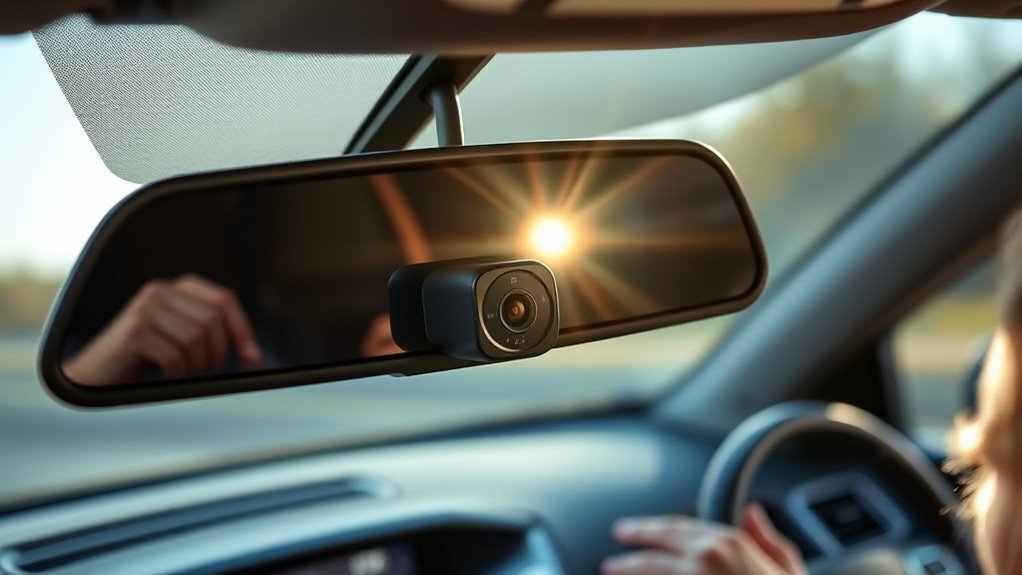
You need to understand how Wisconsin law guides the retention and management of dash cam footage. Agencies follow specific data retention policies, with some recordings kept for decades and others for just a few months. Proper access controls and preservation standards are essential to make certain the footage remains admissible and protected throughout its lifecycle. Maintaining data integrity is crucial to prevent unauthorized alterations that could compromise legal proceedings. Implementing secure storage practices helps ensure that footage remains unaltered and accessible only to authorized personnel. Data from body cameras are generally retained for a minimum of 120 days post-recording; recordings of serious incidents (death, injury, arrests, searches, use of force) are retained until case finalization. Additionally, agencies often implement data management practices to ensure compliance and security of the footage, including retention schedules tailored to different types of recordings to optimize storage and review processes.
Data Retention Policies
Wisconsin’s dash cam data retention policies vary depending on the agency and the type of recording, but generally, footage must be maintained for specific minimum periods to guarantee availability for investigations or legal proceedings. Law enforcement agencies retain body camera data for at least 120 days, with longer periods if incidents involve death, injury, or criminal cases. State patrol recordings related to criminal investigations are kept for 50 years, while crash footage is preserved for at least five years. Municipal agencies typically purge routine data after 120 days but keep evidence until investigations conclude. Private organizations usually retain footage for 30–90 days unless linked to an incident. To ensure legal compliance, always understand the specific retention timelines, storage requirements, and circumstances that trigger extended data preservation. Understanding retention policies is crucial for legal and privacy reasons. Proper storage practices and secure handling are essential to protect sensitive information. Additionally, data management protocols should be implemented to ensure that footage is properly indexed and accessible when needed for audits or reviews. Maintaining accurate metadata can facilitate quick retrieval and proper management of the stored footage.
Access and Privacy Controls
Managing access to dash cam footage requires strict controls to guarantee proper retention and security. Public records laws in Wisconsin prevent destruction until a request is granted or 60 days after denial, with a 90-day hold if the requester is incarcerated. During enforcement actions, destruction isn’t allowed. Law enforcement agencies act as custodians for body camera footage and must deny public requests for recordings they don’t create. Sensitive content, like victim information, is protected unless public interest outweighs privacy concerns, especially for minors or private locations. Data must be securely stored with encryption and access controls, and organizations should provide clear retention policies. To ensure integrity, footage needs to include time-stamps, GPS data, and a chain of custody, with periodic reviews starting in 2025.
Legal Preservation Standards
To guarantee the integrity and availability of dash cam footage, law enforcement agencies in Wisconsin must adhere to strict retention standards. Generally, non-evidentiary recordings are kept for at least 120 days, but exceptions apply. For incidents involving death, injury, arrests, or force, retention extends until case resolution. Criminal investigation footage is preserved for 50 years, and crash data is stored a minimum of 5 years. Preservation orders can extend retention if the footage has evidentiary value, and data used in legal proceedings isn’t destroyed until final disposition. Prohibitions include destroying footage after open records requests unless law permits. Key practices involve encrypted storage, periodic reviews, and adherence to agency policies, ensuring footage remains intact and accessible when needed.
Admissibility of Dash Cam Videos in Court Proceedings

Courts in Wisconsin carefully evaluate dash cam videos to determine if they can be used as evidence. To be admissible, you’ll need to establish authenticity and relevance, often through witness testimony or forensic certification. The court looks at whether the recording is continuous, unaltered, and accurately depicts events, especially if a forensic custodian confirms this. Chain-of-custody documentation showing how the video was preserved and handled strengthens admissibility and helps prevent tampering claims. Even without a live witness, videos may still be admitted if foundational testimony links the footage to the event and confirms its accuracy. Be aware that portions containing testimonial statements or officer commentary might raise confrontation or hearsay issues, which courts will scrutinize under Wisconsin law. Proper redaction can address privacy concerns without jeopardizing admissibility. Additionally, courts may consider whether the use of the dash cam complies with videoconferencing standards, ensuring that the evidence was obtained and handled following established legal procedures.
Regulations for Commercial Vehicle Dash Cam Installations
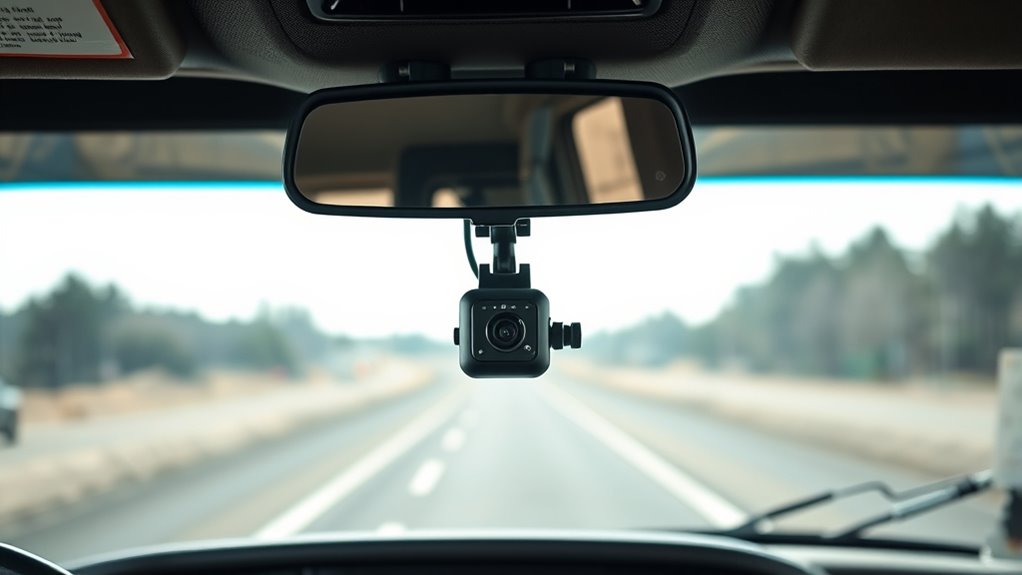
Installing dash cams in commercial vehicles requires careful attention to federal and state regulations to guarantee compliance. You must verify your device doesn’t obstruct your view or interfere with safety features. Common compliant mounting locations include behind or adjacent to the rearview mirror or on the dashboard below the wiper sweep area. Be cautious of devices that occupy the windshield cleaning zone or block required sightlines, as enforcement may issue citations. Consider vehicle-specific factors like larger mirrors and A-pillars to avoid obstruction. Use low-profile mounts rated for vibration and temperature, and document exact mounting positions in your fleet records. Proper placement is essential to ensure footage is admissible as evidence in legal proceedings.
- Mount behind or near the rearview mirror
- Avoid windshield wiper areas
- Use vibration-resistant mounts
- Document installation details
- Ensure visibility isn’t obstructed
Best Practices for Using Dash Cam Footage Responsibly
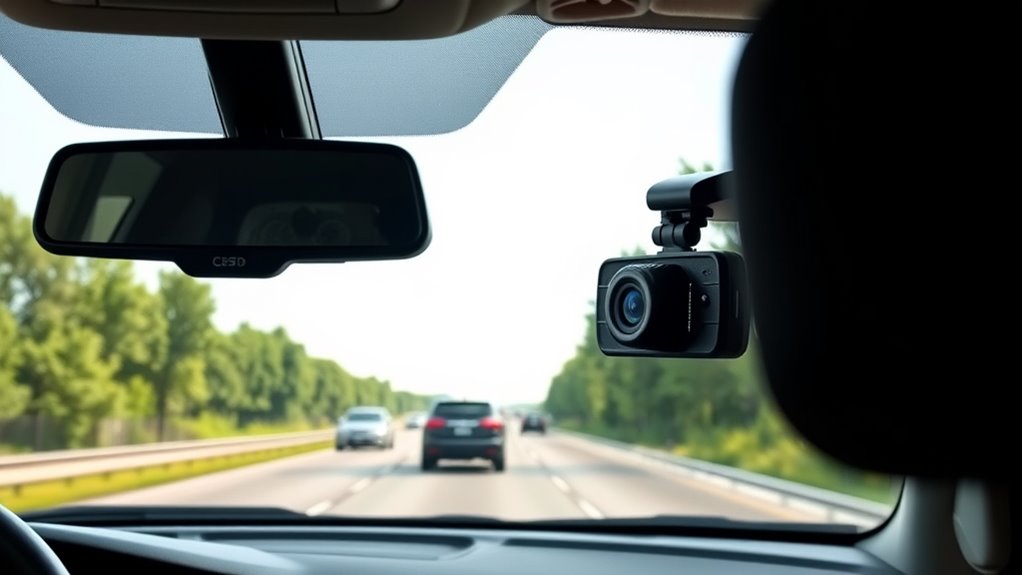
Using dash cam footage responsibly requires clear policies and proactive measures to protect privacy while ensuring legal compliance. Post visible signage indicating recording to inform passengers and reduce surprises. Use written consent forms on private property where privacy is expected, and limit audio recording to avoid capturing private conversations, aligning with Wisconsin’s one-party consent law. Provide passengers with options to object, like disabling audio or choosing alternative transport. Define retention periods for footage, encrypt data, and restrict access through role-based permissions, logs, and strong security measures. Preserve original files and metadata for evidentiary purposes, and establish chain-of-custody procedures. Respond to law enforcement promptly, but consult legal counsel when necessary. Embed time stamps and annotate footage to support legal and insurance claims, minimizing misuse and liability. Proper installation and clear policies help ensure footage is used responsibly and legally.
Frequently Asked Questions
Are There Size Restrictions for Dash Cams in Wisconsin?
In Wisconsin, there are no specific size restrictions for dash cams, so you don’t have to worry about dimensions. The law mainly focuses on preventing obstruction of your view, especially on the windshield, and recommends dashboard placement outside your direct line of sight. As long as your device doesn’t obstruct your driving, you’re generally compliant. Just make certain it’s mounted correctly and doesn’t interfere with your visibility.
Can I Record Audio Without Notifying Passengers in Wisconsin?
Yes, you can record audio without notifying passengers in Wisconsin because it’s a one-party consent state. As the driver, your consent suffices for audio recording inside your vehicle during operation. However, consider informing passengers with a visible sticker or verbally, to prevent disputes. Always review footage before sharing and disable audio if you’re unsure about consent, ensuring you stay within legal boundaries and protect privacy.
How Long Can I Legally Keep Dash Cam Footage in Wisconsin?
You can keep dash cam footage in Wisconsin for as long as you need, but best practices suggest retaining non-incident videos for 30 to 90 days. If footage relates to an incident, legal case, or investigation, hold it until final resolution or court order. Always preserve metadata and maintain a clear chain of custody to guarantee your footage remains admissible and protected from spoliation or destruction.
Are There Specific Mounting Rules for Commercial Vehicles in Wisconsin?
You should guarantee your commercial vehicle dash cam complies with Wisconsin’s guidelines, which favor placement outside the windshield wiper’s sweep to avoid obstructing your view. Mount it behind the rearview mirror or on the dashboard, using approved brackets and discreet wiring. Remember, the device must not block your sightlines or airbags, and following federal FMCSA rules helps you stay on the right side of regulations while keeping your fleet safe and compliant.
Does Wisconsin Law Require Driver Consent for In-Vehicle Dash Cam Recordings?
Yes, Wisconsin law requires your consent for in-vehicle dash cam audio recordings. Since the state follows one-party consent rules, only your agreement as the driver is needed to record audio. You don’t need to get permission from passengers. However, it’s good practice to inform them, even if not legally required, to avoid privacy concerns. Just remember, as long as you consent, recording is legal under Wisconsin law.
Conclusion
Understanding Wisconsin’s dash cam laws helps you stay compliant and protect your privacy. Remember, a popular theory suggests that dash cams deter dishonest behavior, and evidence shows they can increase accountability on the road. By following mounting, audio, and privacy rules, you make sure your footage is both legal and valuable. Stay informed, use your dash cam responsibly, and drive confidently knowing you’re respecting laws and others’ rights.
Halloween Picks
halloween
As an affiliate, we earn on qualifying purchases.