
TL;DR

Get business pricing on garage and car supplies
- Business-only prices and quantity discounts
- Tax-exempt purchasing
- Multiple users, one account, clear invoices
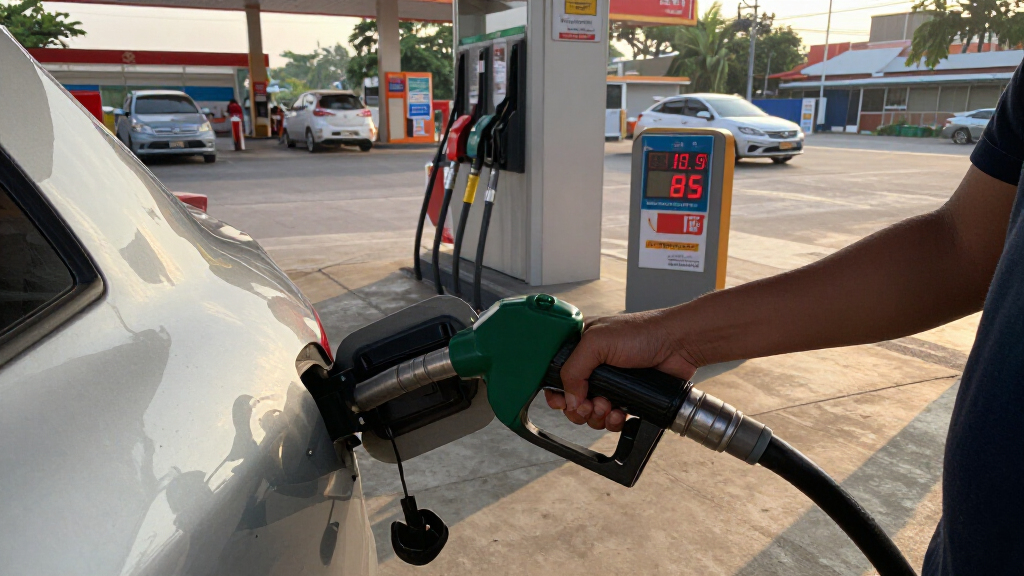
Thailand’s fuel prices increased by 85 satang per liter starting this morning, marking a significant price hike. This update affects consumers nationwide, with reasons still under review.
Thailand’s retail fuel prices rose by 85 satang per liter starting this morning, marking a notable increase that has prompted widespread concern among consumers and industry stakeholders. The price hike is confirmed and has taken effect immediately, affecting gasoline and diesel prices across the country.
According to reports from local fuel stations and market sources, the increase was implemented without prior notice, leading to immediate public reaction. The rise is part of a broader trend of fluctuating global oil prices, although specific reasons for this particular increase have not been officially disclosed. The new prices are now reflected at service stations nationwide, with consumers experiencing higher costs at the pump.
Officials from the Energy Policy and Planning Office have acknowledged the hike but have not provided detailed explanations. Industry insiders suggest that recent global oil market movements, including geopolitical tensions and supply chain disruptions, may have contributed to the price adjustment. The increase affects both gasoline and diesel fuels, which are widely used across Thailand for transportation and commercial activities.
Consumers and business owners are reacting with frustration, citing the impact on household budgets and operating costs. The timing coincides with ongoing inflation concerns, adding pressure on household finances and business profitability. The government has not yet announced any measures to mitigate the impact or clarify the reasons behind the price change.
Why the Price Increase Matters for Thai Consumers
The recent 85 satang per liter increase in oil prices directly impacts everyday expenses for Thai consumers, who rely heavily on gasoline and diesel for daily transportation. For households, this translates into higher fuel costs, potentially raising overall living expenses amid ongoing inflation pressures. For businesses, especially logistics and transportation companies, the rise increases operating costs, which could lead to higher prices for goods and services.
Moreover, the timing of the increase amid economic uncertainties amplifies concerns about inflation and cost-of-living adjustments. The government’s response or lack thereof could influence public perception of economic stability and policy effectiveness. This development also underscores the vulnerability of Thailand’s economy to global oil market fluctuations, which are often unpredictable and driven by external factors.
As an affiliate, we earn on qualifying purchases.
Recent Trends in Global Oil Prices and Local Impact
Thailand’s fuel prices are closely linked to global oil markets, which have experienced volatility due to geopolitical tensions, supply chain disruptions, and fluctuating demand. Over the past few months, international crude oil prices have shown upward trends, though specific causes remain complex and multifaceted.
Locally, fuel prices have historically been subject to government regulation and subsidies, but recent adjustments reflect more market-driven pricing. The current increase is part of a broader pattern of rising fuel costs in Southeast Asia, with some neighboring countries also experiencing price hikes. Prior to this, Thailand saw relatively stable fuel prices, but recent market signals and external shocks have prompted adjustments.
Analysts warn that continued volatility could lead to further price fluctuations, affecting economic stability and consumer confidence. The government has previously intervened with subsidies or price caps during periods of rapid increases, but no such measures have been announced in relation to this recent hike.
As an affiliate, we earn on qualifying purchases.
Unconfirmed Reasons Behind the Price Hike
It is not yet clear what specific factors triggered the immediate 85 satang per liter increase. Officials have cited global market conditions but have not provided detailed data or official statements explaining the precise cause or whether further adjustments are planned.
Market analysts suggest external influences like geopolitical tensions, supply disruptions, or currency fluctuations could be involved, but these remain unconfirmed. The government’s future policy responses or intervention measures are also still uncertain, leaving some questions unanswered for consumers and industry stakeholders.
As an affiliate, we earn on qualifying purchases.
Next Steps and Monitoring Market Movements
Authorities are expected to continue monitoring global oil prices and their impact on domestic fuel costs. The government may consider measures such as subsidies or price stabilization policies if the increase leads to significant economic strain.
Consumers and businesses should stay alert to further price adjustments or official announcements. Market analysts will likely track international crude oil trends and currency exchange rates to forecast future changes.
In the coming weeks, officials might clarify the reasons behind this hike or introduce measures to mitigate its impact, depending on market developments and public response.
As an affiliate, we earn on qualifying purchases.
Key Questions
Why did fuel prices increase this morning?
The increase is linked to global oil market fluctuations, though specific reasons have not been officially detailed by Thai authorities.
How much has the price risen?
Fuel prices have increased by 85 satang per liter across Thailand, affecting both gasoline and diesel.
Will prices go higher or stabilize?
It is currently uncertain. Market trends and external factors will influence future prices, and officials are monitoring the situation.
Is the government planning any relief measures?
No official measures have been announced yet, but authorities may consider interventions if the price hike causes significant economic impact.
How will this affect consumers and businesses?
Higher fuel costs will increase household expenses and operational costs for businesses, especially those dependent on transportation and logistics.
Source: local
Halloween Picks
halloween
As an affiliate, we earn on qualifying purchases.