
TL;DR
Listen free for 30 days with Audible
Thousands of audiobooks and originals — cancel anytime.
Start your free trialAs an affiliate, we earn on qualifying purchases.
Russian engineers have developed a turbo-style alternator driven by exhaust gases. This innovation could impact vehicle efficiency and energy recovery systems. Details about its performance and applications are still emerging.
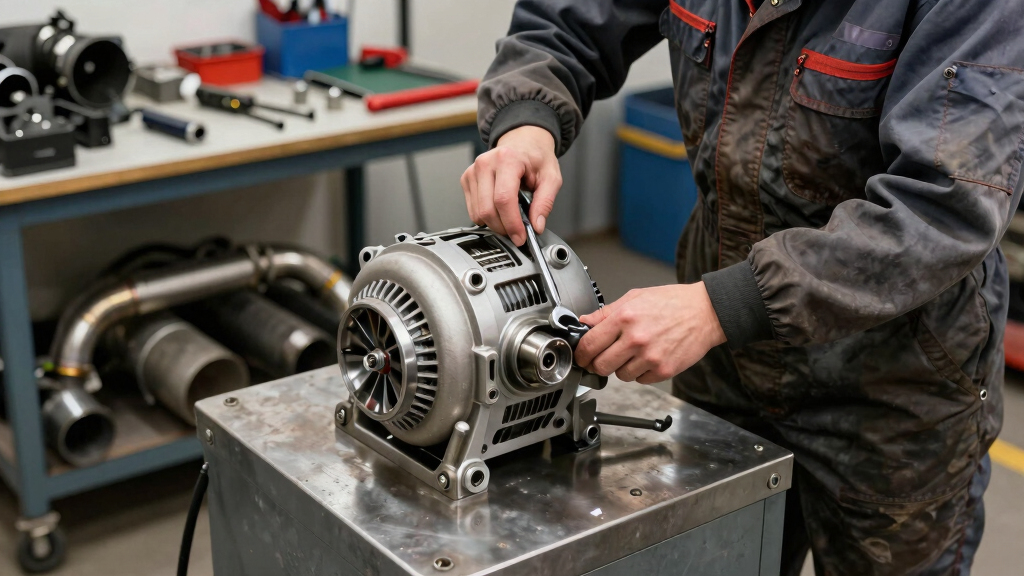
Russian engineers have developed a turbo-style alternator that is powered directly by exhaust gases. This new device aims to improve energy recovery and efficiency in vehicles, marking a significant technical innovation. The development was publicly announced in March 2024, with initial tests indicating promising performance, though full details remain undisclosed.
The new alternator design integrates a turbo-like turbine directly connected to an electrical generator, utilizing exhaust gases from an engine to produce electricity. According to the Russian engineering team, this setup can potentially increase energy recovery from exhaust heat, reducing fuel consumption and emissions. The device is still in the experimental stage, with ongoing testing to evaluate its durability and efficiency under real-world conditions. The engineers claim that this approach could be adapted for both internal combustion engines and hybrid systems, offering a novel method to harness otherwise wasted energy. No independent verification or third-party testing results have been released yet, and the exact specifications of the device remain undisclosed.Sources close to the project indicate that the design leverages high-temperature exhaust to spin a turbine, which then drives a generator similar to traditional turbochargers but optimized for electrical output. The innovation aims to combine turbocharging and power generation in a single component, potentially reducing weight and complexity in future vehicle designs. The Russian team has not yet announced commercial plans or partnerships, and it is unclear when or if this technology will reach production or widespread use.Experts in automotive engineering have expressed cautious interest, noting that integrating such a system would require overcoming challenges related to thermal management, durability, and cost. Nevertheless, the concept represents a novel approach to energy harvesting from exhaust gases, a longstanding goal in vehicle efficiency research.Potential Impact on Vehicle Energy Efficiency
This innovation could significantly enhance energy recovery in vehicles by converting exhaust heat directly into electricity, potentially reducing fuel consumption and emissions. If scalable, it may influence future vehicle design, especially in hybrid and electric powertrain systems, by providing an additional source of onboard energy. The development also highlights ongoing efforts in Russia to advance automotive and energy technologies amid global competition. However, the practical benefits depend on successful testing, cost-effectiveness, and integration into existing vehicle architectures.

TD05 20G Turbocharger Compatible For Mitsubishi Eclipse Talon 4g63 4g63t 2.0 Engine Water And Oil Cooled
- Power Increase: Boosts engine power by 30-50%
- Torque Enhancement: Improves torque by 20-40%
- Compact Design: Small size with high power output
As an affiliate, we earn on qualifying purchases.
As an affiliate, we earn on qualifying purchases.
Russian Innovation in Exhaust Energy Recovery
Developments in exhaust energy recovery have been ongoing worldwide, with various forms of turbochargers and thermoelectric systems explored to harness waste heat. Russia has invested in alternative energy and automotive technology, with recent projects focusing on improving fuel efficiency and reducing emissions. This new turbo-style alternator is part of a broader trend to develop compact, efficient systems that can generate electricity directly from engine exhaust. Prior efforts have included thermoelectric generators and hybrid turbo systems, but none have yet become mainstream. The announcement in March 2024 marks a notable step in Russia’s ongoing pursuit of advanced vehicle energy systems, though the technology remains in early testing stages.
“This device represents a new way to harness exhaust energy, combining turbocharging and power generation in a single compact unit.”
— Russian engineering team spokesperson

Replacement Alternator fits Kia Optima 2011-2013 2.0L l4 Turbocharged
- Vehicle Compatibility: Fits Kia Optima 2011-2013 2.0L Turbo
- Function: Recharges vehicle battery and powers electrical systems
- Replacement Purpose: Replaces faulty alternator for proper voltage
As an affiliate, we earn on qualifying purchases.
As an affiliate, we earn on qualifying purchases.
Unconfirmed Performance and Deployment Details
It is still unclear how the device performs under long-term operational conditions or how easily it can be integrated into existing vehicle platforms. No independent testing results or detailed specifications have been released, and the timeline for commercial deployment remains uncertain. Additionally, questions remain about the cost and durability of the system in real-world applications.

Victron Energy Ekrano GX with Built-in Waterproof 7-Inch Display
- Maximize Performance Anywhere: Most powerful GX device for optimal control
- Comprehensive Monitoring: Battery, power, tank levels, and temperature
- 7-Inch Waterproof Touchscreen: Instant system overview and settings adjustment
As an affiliate, we earn on qualifying purchases.
As an affiliate, we earn on qualifying purchases.
Next Steps in Testing and Potential Commercialization
The Russian team plans to continue testing the turbo-style alternator, focusing on durability, efficiency, and thermal management. They have not announced a timeline for commercial release but are expected to seek partnerships or funding to scale development. Industry observers will be watching for independent validation and real-world performance data, which will determine whether this innovation can influence future vehicle designs.

Generator Exhaust Extension Silencer Kit with Three Universal Adapters Compatible ALL Portable Generators with ALL-IN-ONE KIT,Insulated Through-Wall Mounting Plate Safely Vent Exhaust Reduce Noise 55%
- Universal Compatibility: Fits most portable generators with adapters
- All-in-One Kit: Includes mounting plate, tape, and gloves
- Noise Reduction: Reduces exhaust noise by over 55%
As an affiliate, we earn on qualifying purchases.
As an affiliate, we earn on qualifying purchases.
Key Questions
How does this turbo-style alternator differ from traditional systems?
This device directly uses exhaust gases to spin a turbine that drives an electrical generator, integrating turbocharging and power generation in one unit, unlike traditional turbochargers which only boost engine air intake.
What are the potential benefits of this technology?
If successful, it could improve fuel efficiency, reduce emissions, and recover energy that would otherwise be wasted in exhaust heat.
When might this technology be available for commercial vehicles?
It is currently in the experimental stage, with no confirmed timeline for commercial deployment. Further testing and validation are required.
Are there any known drawbacks or challenges?
Challenges include ensuring durability under high-temperature conditions, managing thermal stresses, and keeping costs competitive with existing systems.
Could this technology be used in electric vehicles?
Likely not directly, as electric vehicles do not have exhaust gases; however, similar energy recovery concepts could be adapted for hybrid systems.
Source: rss
Pool season Picks
robotic pool cleaners
As an affiliate, we earn on qualifying purchases.