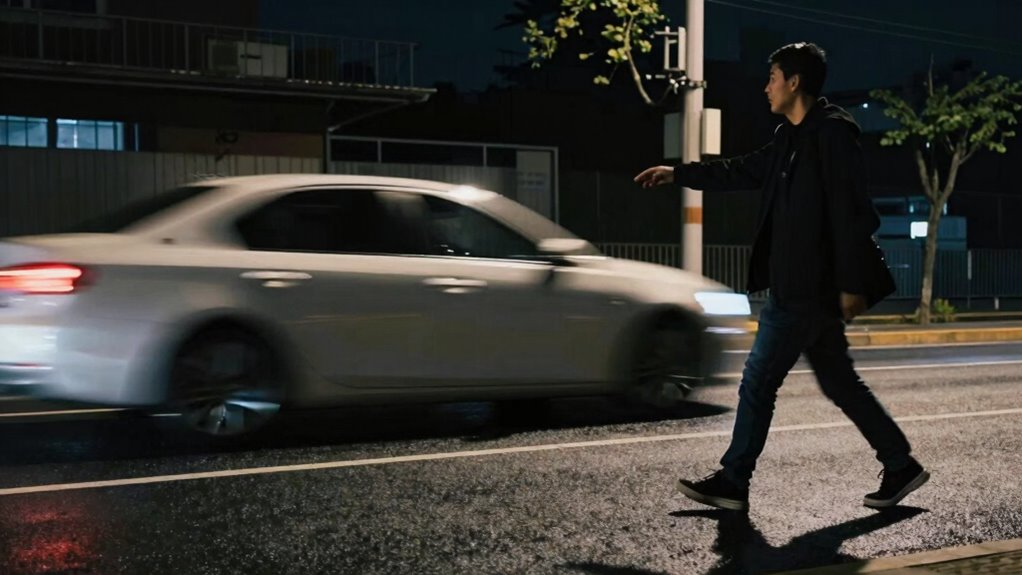

Motion detection can miss a hit-and-run because cameras often have limited angles, poor lighting, or weather conditions that obscure the scene. Environmental obstructions, such as foliage or parked cars, create blind spots, and impact sensors might not detect subtle or low-force collisions. False alarms from animals or shadows can also cause system failures or ignored alerts. To understand how these issues affect law enforcement and evidence collection, continue exploring these challenges further.

Get garage and car supplies delivered free — and shop member deals
- Fast, free delivery on millions of items
- Access to Prime Big Deal Days deals on October 6–7
- Prime Video, Amazon Music and more included
Key Takeaways
- Obstructions like parked cars, foliage, or weather can block the camera view, causing missed detection of vehicle impacts.
- Limited sensor sensitivity and narrow detection ranges can fail to identify low-force or subtle hit-and-run impacts.
- False alarms from shadows, animals, or environmental movement may lead to ignored or overlooked actual incidents.
- Poor lighting, glare, and weather conditions reduce footage clarity, making impact detection unreliable during night or adverse weather.
- Impact sensors may not trigger on quick or minimal-force collisions, especially if improperly calibrated or obstructed.
Limitations of Camera Placement and Angles
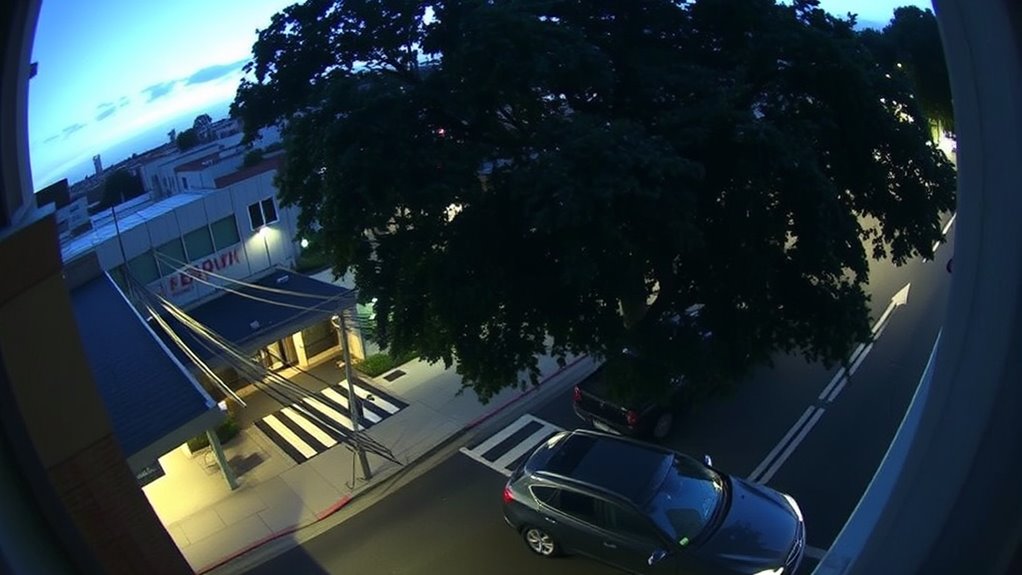
Camera placement and angles often limit what footage can capture, making it harder to identify key details in a hit-and-run. Surveillance cameras are usually fixed in specific positions, providing only partial views of an incident. Traffic cameras monitor vehicle flow but often miss side actions or sudden maneuvers. Business security systems offer multiple angles but may overlook critical areas. Street pole cameras focus on public spaces with limited surrounding coverage, leaving blind spots. Obstructions like trees, parked cars, or building features can block the view completely. Additionally, dashcams mounted on windshields create driver blind spots and may shift during impacts. These limitations mean essential moments—such as evasive actions or side collisions—can go completely unseen, hindering investigations. The effectiveness of camera footage can also be impacted by wave and wind conditions, which may cause camera shake or obstruct views altogether. Limited coverage areas further reduce the chances of capturing all vital details during a hit-and-run. Moreover, camera resolution can affect the clarity of footage, making it difficult to identify license plates or faces. Incorporating advanced imaging technology, such as infrared or night vision, can help mitigate some visibility issues during low-light situations. In addition, the fixed nature of most cameras means that dynamic incidents may not be captured from the most informative angles.
Challenges in Nighttime and Weather Conditions
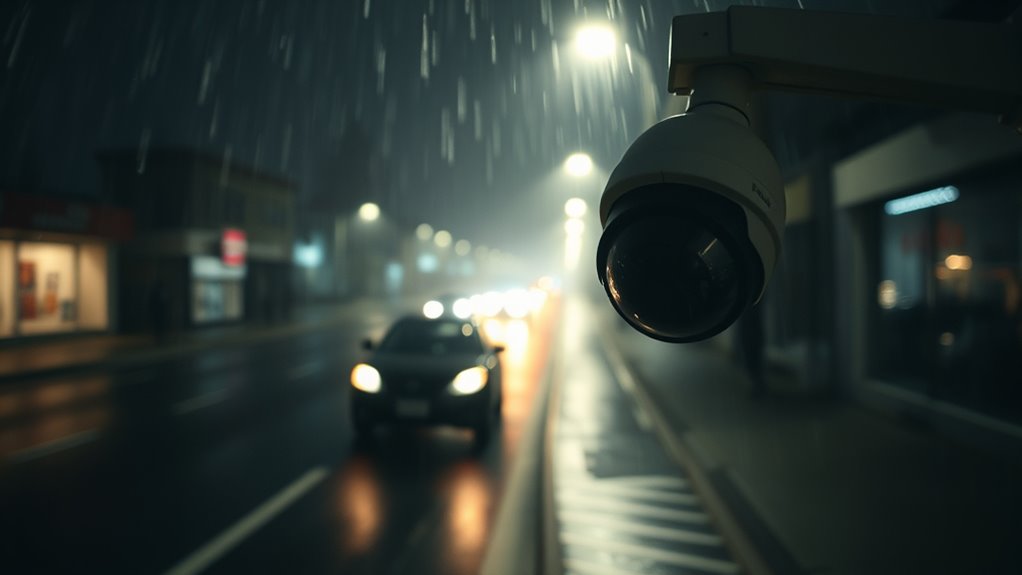
Nighttime and weather conditions considerably hinder motion detection systems, making it harder to capture and identify hit-and-run incidents. Reduced sensor signal-to-noise ratios at night, caused by artificial lighting variability, create scenes with low contrast, leading to missed detections. Headlight glare and lens flare produce artifacts that confuse algorithms and mask real vehicle movement. Longer camera exposures increase motion blur, making fast-moving vehicles harder to detect, while infrared illumination offers limited range and reduced contrast for vehicle features. Weather conditions like rain, fog, and snow scatter light, reduce contrast, and cause reflections that obscure motion cues. Wet surfaces amplify reflections, creating false signals, and wind-driven vibrations can introduce global motion, further complicating detection during storms. These factors markedly challenge the reliability of nighttime and weather-affected motion detection. Additionally, poor lighting conditions can cause camera sensors to struggle with capturing clear footage, further reducing detection accuracy in adverse weather or low-light scenarios. Increased sensor sensitivity and adaptive algorithms are being developed to better handle these challenging environments. Implementing advanced image processing techniques can also improve detection reliability under such conditions, especially when combined with environmental adaptive systems that adjust to changing weather and lighting. Moreover, utilizing multi-sensor fusion approaches that combine data from various sources can enhance detection robustness in complex conditions.
Shortcomings of Motion Detection Technology
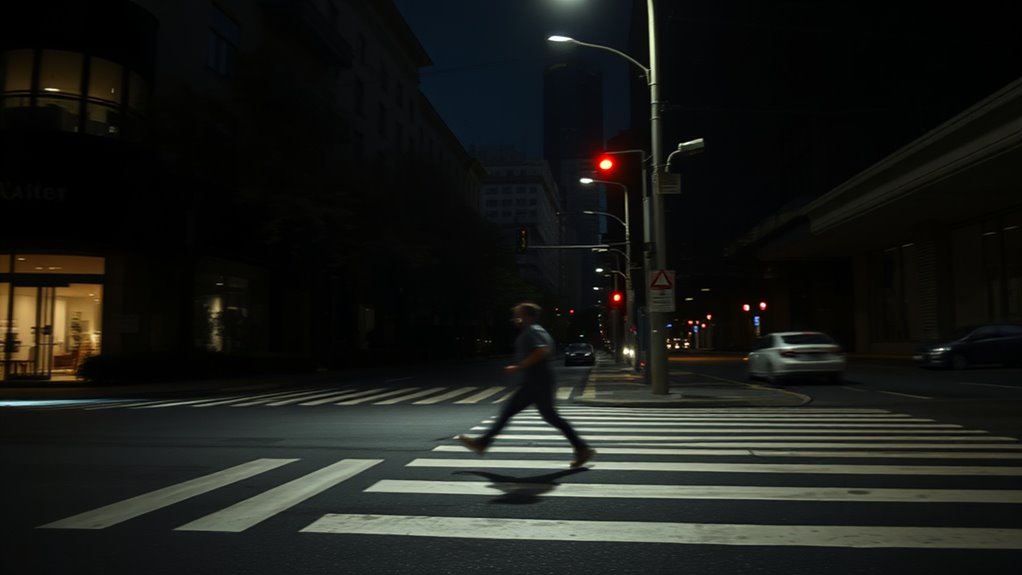
Motion detection technology often falls short because it can generate false alarms from harmless movements like passing animals, leaves, or shadows, which makes it difficult to distinguish real threats from background noise. Sensitive sensors react to minor environmental changes, resulting in unnecessary alerts that waste your security team’s time. They often can’t tell humans from animals or objects, causing frequent false positives. To reduce these, you need to adjust sensitivity settings, but this isn’t always effective. Additionally, detection range is limited—most PIR sensors cover only 5-10 meters, leaving larger areas unmonitored. Narrow fields of view create blind spots, especially in outdoor spaces with bushes or complex layouts. These limitations make it hard for motion detection to reliably identify genuine threats, especially in dynamic or expansive environments. Advances in video analytics and AI are being developed to address these issues and improve detection accuracy, offering smarter threat identification capabilities. Incorporating AI-powered surveillance can significantly enhance the ability to differentiate between false alarms and real security events. Moreover, integrating advanced sensor technology can help overcome some of these inherent limitations by increasing detection reliability. Enhanced sensor precision is crucial for reducing false positives and expanding effective coverage areas. For example, sensor calibration techniques help fine-tune detection parameters to better adapt to specific environments.
Impact Detection and Its Gaps

Impact detection often misses glancing collisions or low-force impacts that don’t produce clear G-force peaks. Obstructions or device placement can prevent sensors from capturing true impact signals, reducing accuracy. Additionally, False alarms from non-crash events can lead to missed or ignored alerts, further weakening detection reliability. Proper sensor positioning is crucial to ensure comprehensive coverage and reliable impact detection. Without proper calibration and sensor maintenance, the system’s effectiveness can decline over time. Regular testing and adjustment can help maintain detection sensitivity and overall system performance.
Misses Glancing Collisions
Glancing collisions often slip past detection systems because they produce only minimal sensor signals that fall below activation thresholds. These impacts don’t generate enough acceleration, pressure, or sound to trigger crash alerts. Lower-speed or gentle hits, like side grazes, produce subtle forces that sensors fail to recognize. Impact angles matter—certain glancing blows don’t register full impact severity due to sensor limitations. Accelerometers, gyroscopes, and microphones may miss these minor contacts because they lack the abrupt changes needed for detection. Devices in purses or gloveboxes, or mounted far from the impact zone, further dilute signals. Environmental factors like poor lighting or limited camera angles also hinder visual detection of such minor collisions. As a result, many glancing hits go unnoticed, increasing the risk of missed hit-and-run events. Studies show that motion detection systems often overlook these subtle impacts because they are designed to prioritize more severe or obvious collisions. Additionally, advancements in sensor technology aim to improve the detection of minor impacts, but current systems still face significant challenges in recognizing these low-intensity events. Improving impact sensitivity could help close these detection gaps and reduce hit-and-run incidents. Incorporating impact detection thresholds that adapt to different collision scenarios might be key to better recognition of minor impacts, especially as sensor accuracy continues to improve. Developing adaptive detection algorithms is essential to enhance the overall sensitivity of impact recognition systems.
Obstructed View Challenges
Obstructions to a vehicle’s view considerably hinder the effectiveness of impact detection systems. Limited camera placement and blind zones mean many impact events occur outside the camera’s field of view. Low-mounted cameras often get blocked by parts like the hood or roof rack, missing close impacts. Narrow lenses exclude adjacent lanes, reducing chances of capturing fleeing vehicles. Parking in tight spaces behind walls or pillars creates blind spots that move only when the offender already left. Multi-camera setups help but increase processing needs and still leave vertical gaps. Environmental factors like foliage, pedestrians, or weather artifacts further block views, obscuring impacts. Below is a summary of common obstructions:
| Obstruction Type | Impact on Detection |
|---|---|
| Blind Zones | Missed impacts outside camera view |
| Low Mounting Heights | Hidden impacts from vehicle parts |
| Narrow-Angle Lenses | Reduced coverage of nearby lanes and spots |
| Environmental Clutter | Occlusion from pedestrians, foliage, debris |
| Tightly Parked Spaces | Blocked license plates, contact points |
Additionally, sensor placement strategies can help mitigate some of these challenges by optimizing camera locations and angles. Implementing advanced impact sensors may also improve detection accuracy in complex environments.
False Alarm Risks
False alarms pose a significant challenge to the reliability of impact detection systems, often leading to alert fatigue and complacency. When false positives flood your alerts—caused by weather, animals, shadows, or scene clutter—you become desensitized, risking missed real events like hit-and-runs. High false-alarm rates, sometimes as high as 98%, cause operators to ignore or disable notifications, increasing the chance of overlooking genuine incidents. Sensor calibration issues, environmental triggers, and basic pixel-change detection contribute to these false positives. Additionally, AI-based methods and single-modal systems often misclassify non-impact motion or miss atypical impacts, leaving gaps in detection. Without proper filtering, multi-sensor verification, or contextual awareness, false alarms undermine trust and effectiveness, making impact detection less reliable when it matters most. Advanced AI algorithms and continuous learning can help mitigate these issues by better distinguishing between false triggers and true impacts, improving detection accuracy over time.
View Restrictions of Single-Camera Setups

Single-camera setups inherently limit your coverage because their field of view is restricted, typically ranging from 70° to 120°. This narrow perspective leaves peripheral areas unmonitored unless you add more cameras, increasing costs. Wide-angle lenses can expand coverage but cause distortion and reduce resolution at the edges, making identification harder. Blind spots behind objects like pillars or parked cars remain unseen, allowing vehicles to pass undetected. Long driveways or streets often extend beyond the camera’s effective range, reducing motion detection sensitivity over distance. Additionally, precise placement is vital; a single camera can’t cover all angles, leaving gaps in your surveillance. Occlusions, perspective foreshortening, and limited depth perception further hinder detection, especially during fast or partially hidden vehicle movements. Incorporating navigation and mapping technologies can help optimize camera placement and coverage areas. Moreover, understanding the limitations of single-camera systems is crucial for designing an effective surveillance setup that minimizes blind spots and maximizes detection accuracy. Recognizing these constraints emphasizes the importance of multi-camera configurations to achieve comprehensive coverage and reliable motion detection. It’s also essential to consider the cost-effectiveness of expanding your system to include multiple cameras for better overall security.
Environmental Factors Affecting Footage Clarity

Environmental conditions can substantially impair the clarity of surveillance footage, directly affecting the accuracy of motion detection and vehicle identification. Weather effects like rain, snow, fog, and mist distort images by scattering light, creating streaks, blurring details, or obscuring view. You might notice license plates hidden by blowing snow or fog reducing contrast, making recognition difficult. Additionally, wet surfaces cause glare and flares that confuse cameras’ exposure controls, masking moving objects. Essential oils, known for their antimicrobial and soothing properties, are sometimes used in cleaning solutions to reduce dirt and debris buildup on camera lenses, potentially improving image clarity. Additionally, wet surfaces cause glare and flares that confuse cameras’ exposure controls, masking moving objects.
Reliability Concerns for Legal Evidence

You should be aware that footage’s integrity can be questioned if chain-of-custody or authentication issues arise, making it less reliable in court. Metadata and original file provenance are often compromised during extraction or transfer, which can lead to challenges against its authenticity. These vulnerabilities increase the risk that video evidence may be excluded or diminished, affecting legal outcomes. Surveillance footage and digital data are crucial in modern hit-and-run investigations, but their reliability depends on proper handling and verification.
Footage Integrity Challenges
Footage integrity is a vital concern for legal evidence, as motion detection systems often produce unreliable recordings that can be challenged in court. You face issues like false triggers from leaves, shadows, or light changes, which can cast doubt on the footage’s authenticity. Nighttime recordings are especially vulnerable, as poor infrared performance and low-light conditions often result in missed events. Additionally, environmental factors can cause inconsistent activation, making it hard to trust that every incident was captured. False triggers due to environmental changes undermine authenticity. Moreover, the sensitivity settings of some G-Sensor dash cams might be overly reactive or insufficiently responsive, leading to missed important events or unnecessary recordings. Night vision limitations lead to missing crucial evidence. Inconsistent activation across devices raises questions about reliability.
Legal Admissibility Risks
Motion detection systems can produce recordings that are difficult to authenticate in court, raising significant concerns about their reliability as legal evidence. These issues include chain-of-custody vulnerabilities, such as overwritten files, missing continuous timestamps, and obscure provenance due to cloud processing. Time discrepancies caused by device settings can produce contestable timestamps, undermining credibility. Additionally, technical limitations—like missed events, frame rate reductions, or compression artifacts—can weaken the evidentiary value. Expert analysis faces Daubert and Frye scrutiny, especially when protocols aren’t standardized or fully disclosed. Courts require a solid foundation under FRE 901, but motion clips often lack verifiable provenance, jeopardizing admissibility. Understanding these risks helps you recognize why motion detection alone may not suffice in court.
| Risk Type | Specific Concern | Resulting Challenge |
|---|---|---|
| Chain-of-Custody | Overwrites, missing timestamps | Authentication issues |
| Provenance & Metadata | Cloud processing obscures origin | Forensic verification |
| Technical Limitations | Missed events, compression artifacts | Incomplete or degraded evidence |
| Expert Analysis | Lack of protocols, overreach | Potential exclusion or challenge |
| Legal Standards | FRE 901, best-evidence rule | Risk of inadmissibility |
False Positives and Missed Incidents
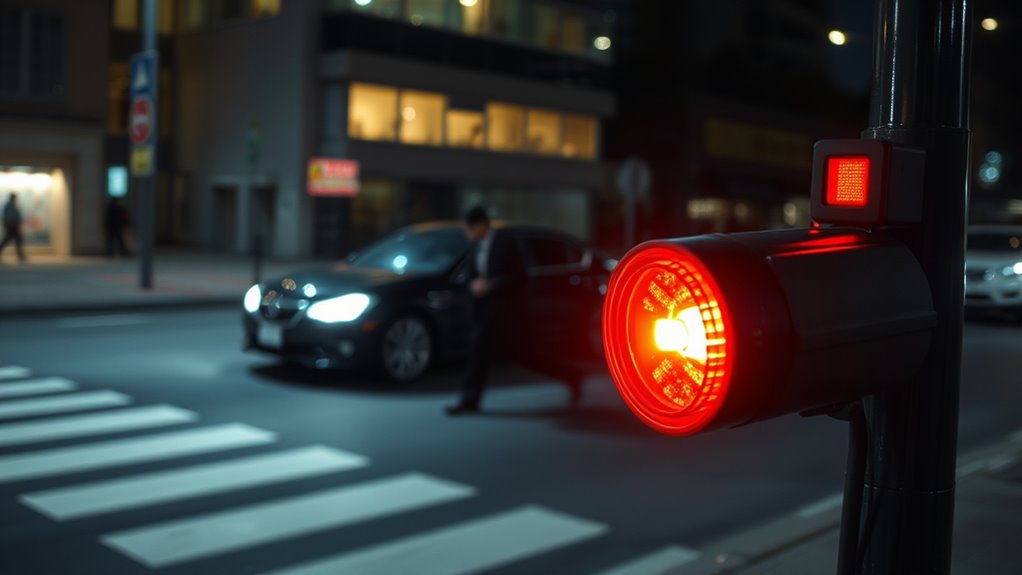
False positives and missed incidents pose significant challenges for automated detection systems, often leading to safety lapses or unnecessary interventions. You might rely on these systems to detect pedestrians or obstacles, but misclassification remains a concern. For example:
- Pedestrians can be mistaken for vehicles, bicycles, or unknown objects, even with continuous tracking.
- The system may detect an object early but fail to predict its path, missing the impact.
- Detection thresholds based on motion data can overlook subtle movements, especially in complex environments.
- Sensor limitations can cause the system to overlook objects entirely, especially in adverse conditions or cluttered scenes.
Low false positive rates are prioritized, but this can cause false negatives, meaning real threats slip through unnoticed. Environmental factors like wet roads or poor lighting further impair detection accuracy, increasing the risk of missed incidents.
Overwriting and Storage Limitations
Your surveillance footage won’t be available forever, as most systems only store data for a limited time before overwriting it. Once that window closes, essential evidence can vanish, making it hard to prove a hit-and-run occurred. Without prompt preservation, your ability to access critical footage becomes a race against time. Proper storage procedures are crucial to ensure that important recordings are retained long enough for review and legal proceedings.
Limited Storage Duration
Limited storage capacity on consumer dashcams and surveillance systems means that recorded footage doesn’t stay accessible for long. Once the storage fills up, older clips are automatically overwritten unless you manually save them. Higher resolution videos, like 4K, consume storage faster, shrinking retention times considerably. Busy areas with frequent triggers can fill the storage quickly, causing important incident footage to be lost sooner. Additionally, fixed retention windows—often 24 to 90 days—mean older recordings are deleted regardless of relevance. Without organized backups or archives, critical hit-and-run evidence can disappear before investigators access it. Storage limitations can hinder the ability to review footage after an incident, especially if multiple events occur in quick succession.
- Loop recording overwrites oldest files automatically
- Short retention windows limit how long footage remains available
- Frequent small clips accelerate data overwrite, risking loss of essential evidence
Automatic Data Overwrite
Automatic data overwrite occurs when a recording device reaches its storage capacity, causing it to delete the oldest footage to make room for new recordings. This happens on microSD cards, HDDs, or DVR systems, which are designed to overwrite data in a continuous loop. Once full, the oldest recordings are automatically erased, often in a non-recoverable manner. If you’re relying on motion detection, the system may overwrite important clips more quickly since it shortens the retention period by increasing recording frequency. Devices with overwrite capability can be configured via device menus or web interfaces, but older models might lack this feature. To avoid losing critical footage, it’s crucial to back up recordings regularly and consider expanding storage capacity or disabling overwrite functions when necessary.
Privacy and Legal Implications
Have you considered how privacy laws and legal standards impact the use of motion detection footage in hit-and-run cases? These regulations can restrict or complicate evidence collection and sharing. For example, you might face challenges like:
- Variability in court acceptance of motion-activated footage, especially if chain-of-custody isn’t clear.
- Privacy laws such as GDPR or CCPA demanding lawful basis for storing or disclosing footage, risking non-compliance if not followed.
- Anonymization techniques, like masking, which hinder identification and can reduce evidence value, while strict data retention rules risk deleting essential clips before investigations conclude.
- Legal requirements for secure data handling and audit trails to ensure admissibility in court and protect against legal disputes.
Balancing privacy with legal obligations requires careful planning. Failing to do so might lead to legal liabilities, compromised evidence, or regulatory penalties, making the use of motion detection in hit-and-run cases more complex than it seems.
Frequently Asked Questions
Can Private Camera Footage Be Easily Accessed After an Incident?
You can’t easily access private camera footage after an incident unless you’re authorized or have the owner’s permission. Access is strictly regulated by privacy laws, and sharing without consent risks legal trouble. Police might obtain footage with a warrant or owner’s consent, but unauthorized viewing or sharing can lead to civil or criminal penalties. Always follow legal procedures to access footage, respecting privacy rights and restrictions.
How Long Is Typical Surveillance Footage Available Before Being Overwritten?
You’re likely to find your footage available for about 7 to 30 days before it gets overwritten. Coincidentally, this window aligns with many consumer and small-business systems’ default retention. If you want to preserve critical evidence like a hit-and-run, you need to act fast—download or archive the footage immediately. Delays could mean losing essential footage, especially if motion detection missed the event or if storage limits are reached quickly.
Does Weather or Nighttime Always Impair Motion Detection Accuracy?
Weather and nighttime don’t always impair motion detection accuracy, but they often do. You might still get reliable detection in clear conditions or during the day, especially with advanced sensors like LiDAR or radar. However, adverse weather like rain, fog, snow, or low light can degrade performance. Your system’s effectiveness depends on the sensor types used, their fusion, and how well they’re calibrated for challenging conditions.
Are There Advanced Detection Methods That Overcome These Camera Limitations?
Think of your camera as a vigilant sentinel, but even the sharpest eye can be clouded by fog or darkness. Advanced detection methods like GAN-based dehazing and multimodal large language models cut through these barriers. They enhance visibility, recognize objects in low-light or foggy conditions, and track movements across frames. These innovations turn a simple watchtower into a keen observer, ensuring hit-and-run incidents don’t slip through unnoticed.
What Legal Challenges Exist in Using Dashcam Footage as Court Evidence?
You face legal challenges when using dashcam footage as evidence, including proving its relevance and authenticity. You must verify the footage is original, untampered, and properly preserved with reliable metadata. Privacy laws and consent requirements can complicate admissibility, especially with audio. Additionally, chain-of-custody issues and potential editing risks might lead courts to exclude your evidence. You’ll need expert testimony and thorough documentation to strengthen your case.
Conclusion
Ultimately, relying solely on motion detection is like chasing shadows in a fog—it can miss the vital moment when a hit-and-run occurs. Cameras, with their blind spots and fleeting glimpses, are imperfect witnesses in the chaos of a crime. To truly catch the culprits and bring justice into the light, you need a tapestry of trusted, well-placed eyes, not just a fragile web of fleeting signals.
Halloween Picks
halloween
As an affiliate, we earn on qualifying purchases.