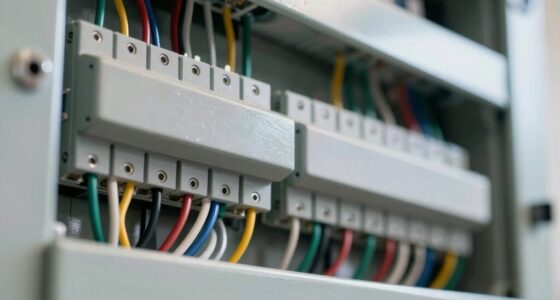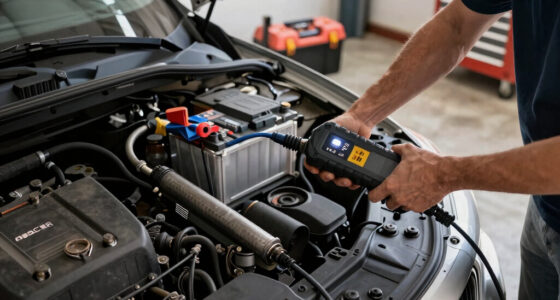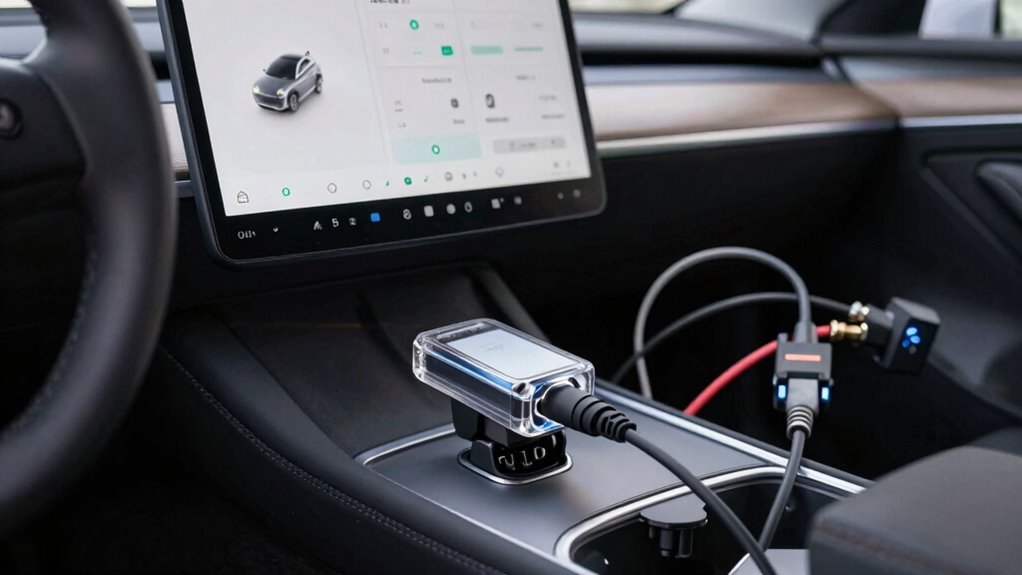

Using the OBD port for power makes connecting your diagnostic device easy and quick because it taps directly into your vehicle’s electrical system. However, this simplicity can hide issues like unstable power, sensor compatibility problems, or electrical system weaknesses, which can affect performance and accuracy. Relying solely on this straightforward approach might lead to overlooked troubleshooting details. To guarantee reliable diagnostics, it’s important to understand the potential limitations—keep going to learn more about avoiding these pitfalls.

Get business pricing on garage and car supplies
- Business-only prices and quantity discounts
- Tax-exempt purchasing
- Multiple users, one account, clear invoices
Key Takeaways
- Connecting via OBD port simplifies setup but may overlook electrical system stability issues affecting device performance.
- Ease of connection can mask underlying power or sensor compatibility problems, leading to inaccurate diagnostics.
- Relying solely on simple power sources risks device malfunctions if vehicle electrical systems are weak or inconsistent.
- Simple design may ignore the need for proper power management, impacting device longevity and data accuracy.
- Prioritizing ease over system checks can result in incomplete diagnostics and troubleshooting challenges.
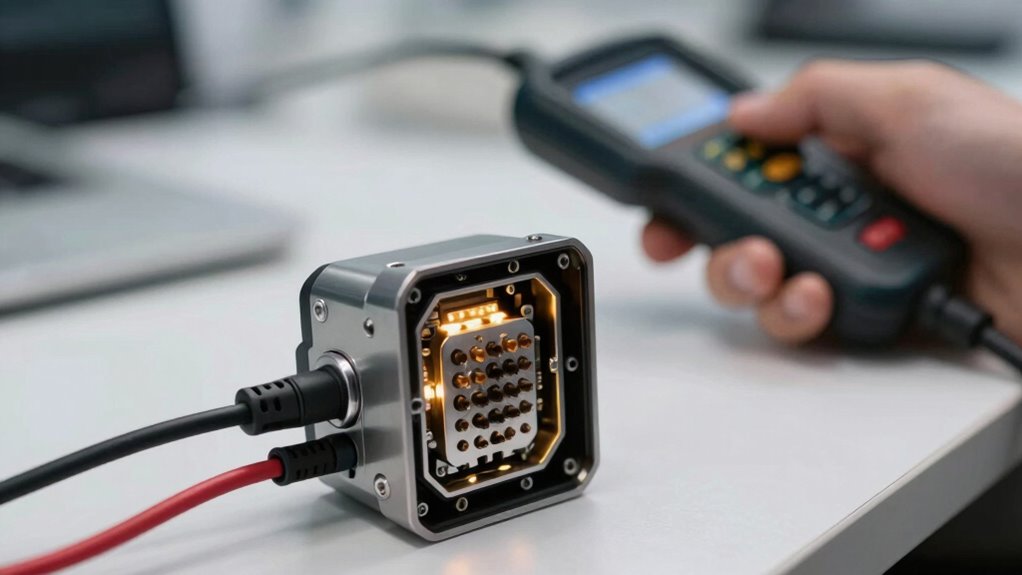
Understanding OBD power is essential if you want to effectively diagnose and troubleshoot your vehicle’s issues. When working with an OBD scanner or device, knowing how it draws and manages power helps you avoid problems and guarantees accurate readings. OBD systems are designed to be straightforward, which makes them accessible for most users. They generally draw power from the vehicle’s electrical system through the OBD port, simplifying the connection process. This simplicity is appealing because it reduces the need for additional power sources or complicated wiring. However, this convenience can sometimes hide limitations, especially when it comes to sensor compatibility and power management.
Understanding how OBD devices draw and manage power is key to accurate diagnostics and avoiding system issues.
Because OBD devices rely on the vehicle’s power supply, their ability to function properly depends heavily on the stability and capacity of that power source. If your vehicle’s electrical system is weak or inconsistent, it might cause the OBD scanner to malfunction or produce inaccurate data. That’s why understanding power management is crucial, especially if you’re trying to perform detailed diagnostics. Power fluctuations can lead to miscommunication between the scanner and the vehicle’s sensors, which impacts the reliability of the information you receive. In some cases, older or poorly maintained vehicles may have electrical issues that limit the effectiveness of your OBD device, making troubleshooting more challenging. Additionally, power stability plays a vital role in maintaining consistent diagnostic results and device longevity.
Sensor compatibility is another aspect that influences the effectiveness of your OBD system. Not all sensors are compatible with every OBD device, and this can limit what data you can access or interpret. Many modern vehicles have numerous sensors that monitor critical engine and emission functions, but some older models or aftermarket devices may not support all sensor types. This mismatch can cause gaps in the data or prevent certain diagnostics altogether. When working with OBD power, you need to ensure your device is compatible with your vehicle’s sensor suite, otherwise, you might think you have a problem when, in fact, the issue is just a compatibility mismatch. Additionally, sensor compatibility can vary based on the vehicle’s make and model, so checking this beforehand is essential. Proper knowledge of OBD system limitations can help prevent unnecessary troubleshooting and ensure you get accurate diagnostic results. Furthermore, understanding electrical system health can provide insight into potential power issues affecting your diagnostics.
While OBD power systems are designed to be simple and user-friendly, this simplicity doesn’t mean they’re foolproof. You still need to pay attention to power management and sensor compatibility to get accurate, complete diagnostic results. Relying solely on the ease of connection can lead to overlooked issues, especially if your vehicle’s electrical system isn’t in top shape or your scanner isn’t fully compatible. Additionally, power management practices can significantly improve diagnostic accuracy and device longevity. So, while OBD power is simpler—often a big advantage—it’s not always the best choice if you want thorough and precise diagnostics. Being aware of these factors helps you troubleshoot more effectively and avoid unnecessary frustration.
As an affiliate, we earn on qualifying purchases.
Frequently Asked Questions
How Does OBD Power Compare to Traditional Vehicle Power Sources?
Obd power offers a convenient alternative power source compared to traditional vehicle systems. It’s often easier to access and can enhance energy efficiency by reducing reliance on engine power. However, it’s not always better because it might lack the robustness or capacity of traditional sources, especially for high-demand applications. You might find obd power ideal for simple tasks, but for more intensive needs, traditional vehicle power sources still hold an advantage.
Can OBD Power Support All Vehicle Electronic Components?
OBD power can’t support all vehicle electronic components because of limited compatibility and power stability. You’ll find that some devices require more power than OBD sources can provide, especially high-demand systems like entertainment or advanced sensors. While OBD power is convenient for basic diagnostics, it’s not suitable for all vehicle electronics. For maximum performance and safety, confirm your vehicle’s components are compatible and consider alternative power sources when needed.
Is OBD Power Suitable for High-Demand or Aftermarket Devices?
You might find that OBD power isn’t ideal for high-demand or aftermarket devices. Coincidentally, many vehicles aren’t designed for such loads, risking power instability. If your devices require stable, robust power, compatibility issues could arise, and performance might suffer. To guarantee your high-demand gadgets work reliably, consider dedicated power sources rather than relying solely on OBD power. Always check vehicle compatibility before connecting demanding aftermarket electronics.
How Secure Is OBD Power for Sensitive Vehicle Data?
OBD power isn’t very secure for sensitive vehicle data, as it lacks robust data encryption, making it vulnerable to hacking. While it offers stable power delivery, this doesn’t protect your information. You should be cautious when connecting to OBD ports for critical data, especially in high-security situations. Using additional security layers, like encryption or secure interfaces, helps safeguard your vehicle’s sensitive data from potential threats.
What Are the Long-Term Impacts of Using OBD Power?
Did you know that over 60% of vehicle owners notice battery efficiency declines after prolonged OBD power use? Long-term, relying on OBD power can impact your vehicle’s power stability, leading to drained batteries and potential electrical system issues. While it’s convenient, continuous use may cause wear and tear, ultimately reducing your vehicle’s reliability and lifespan. You should weigh these risks against the ease it provides for troubleshooting and diagnostics.
vehicle electrical system diagnostic tool
As an affiliate, we earn on qualifying purchases.
As an affiliate, we earn on qualifying purchases.
Conclusion
Think of OBD power like a gentle stream—simple, straightforward, and easy to tap into. It’s like holding a small flashlight in a dark room, illuminating just enough to see your way. But sometimes, that gentle glow isn’t enough when you need a floodlight’s power. While OBD’s simplicity can be a blessing, remember that bigger isn’t always better. Choose what best lights your path, whether a steady glow or a powerful beam.
OBD sensor compatibility checker
As an affiliate, we earn on qualifying purchases.
As an affiliate, we earn on qualifying purchases.
car electrical system stability tester
As an affiliate, we earn on qualifying purchases.
As an affiliate, we earn on qualifying purchases.
Evergreen bestsellers Picks
bestsellers
As an affiliate, we earn on qualifying purchases.