
TL;DR

Get business pricing on garage and car supplies
- Business-only prices and quantity discounts
- Tax-exempt purchasing
- Multiple users, one account, clear invoices
Voltpost has developed a new type of electric vehicle charger specifically for people living without private driveways. This innovative solution aims to increase EV adoption among apartment and urban residents by providing accessible charging options in public spaces.
Voltpost has introduced a new electric vehicle (EV) charging station designed specifically for people living in apartments or urban areas without access to private driveways. This development aims to expand EV charging infrastructure and facilitate broader adoption of electric vehicles among city residents, a demographic that has faced challenges in charging access.
The new Voltpost charger is a publicly accessible, pole-mounted device that can be installed on existing street infrastructure, such as utility poles or streetlight poles. Unlike traditional home chargers, which require private parking or dedicated garage space, this solution is intended for installation in public rights-of-way, making EV charging more available in densely populated areas.
According to Voltpost, the chargers are designed to be durable, weather-resistant, and capable of fast charging, with some models offering up to 150 kW of power. The company states that the chargers can be integrated with existing electrical infrastructure and managed remotely for maintenance and billing purposes. The initiative is part of Voltpost’s broader goal to increase EV adoption by addressing the ‘range anxiety’ and access issues faced by urban residents.
Voltpost has partnered with several city governments and utility companies to pilot this project in select urban neighborhoods. The company emphasizes that the chargers are intended to blend seamlessly into existing street furniture, reducing visual clutter and minimizing installation costs. The project is still in the pilot phase, with a limited number of units installed for testing and evaluation.
Expanding EV Access for Urban Residents
This development is significant because it addresses a key barrier to EV adoption: lack of accessible charging infrastructure for residents without private parking. As urban populations grow and more people live in apartment buildings, the availability of convenient, public charging options becomes critical for increasing EV adoption and meeting climate goals. Voltpost’s approach could serve as a model for cities seeking scalable, cost-effective ways to expand charging networks in dense areas.
By leveraging existing street infrastructure, the solution has the potential to reduce installation costs and speed up deployment. This could accelerate the transition to electric vehicles in urban environments, reducing emissions from transportation and improving air quality. The initiative also highlights a shift toward more inclusive charging infrastructure that considers diverse housing situations, rather than focusing solely on private garages or dedicated charging stations.
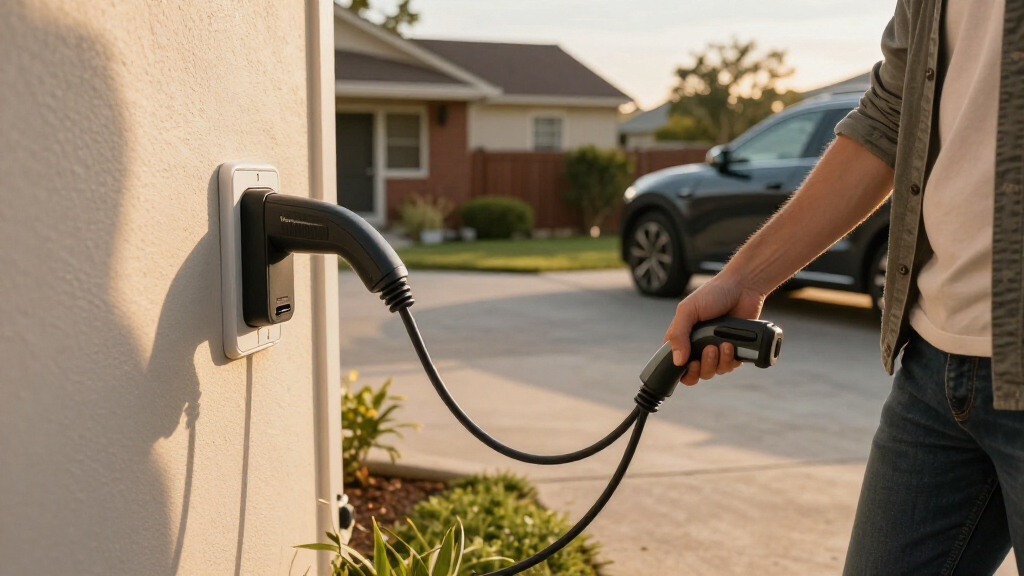
public EV charging station for city residents
As an affiliate, we earn on qualifying purchases.
As an affiliate, we earn on qualifying purchases.
Growing Need for Urban EV Charging Solutions
Electric vehicle adoption has been increasing steadily, but a significant barrier remains for city residents who do not have access to private garages or driveways. According to the International Energy Agency, urban areas account for a substantial portion of EV sales, yet many lack sufficient public charging infrastructure tailored to their needs. Traditional charging stations are often located in parking lots or private properties, leaving residents of apartment buildings with limited options.
Recent efforts by city governments and private companies have focused on expanding public charging networks, but challenges persist related to cost, installation complexity, and visual impact. Voltpost’s approach of integrating chargers into existing street infrastructure aims to address these issues, offering a scalable and less intrusive solution. Pilot programs in several cities are currently underway to evaluate effectiveness and user acceptance.
This initiative follows broader industry trends emphasizing equitable access to EV charging, recognizing that without inclusive infrastructure, the transition to electric vehicles could leave behind urban residents without private parking.
pole-mounted electric vehicle charger
As an affiliate, we earn on qualifying purchases.
As an affiliate, we earn on qualifying purchases.
Unanswered Questions About Deployment and Usage
It is not yet clear how quickly Voltpost plans to scale the deployment beyond pilot programs or how widespread adoption will be among city governments. Details about the cost to municipalities, potential user fees, and integration with existing electrical grids are still emerging. Additionally, questions remain about the durability of the chargers in various weather conditions and their compatibility with different EV models.
Further, it is uncertain how residents will respond to public chargers in terms of convenience, safety, and cost. The impact on existing parking and street infrastructure, as well as regulatory hurdles, are still being evaluated.
As an affiliate, we earn on qualifying purchases.
Upcoming Pilot Expansions and Evaluation Milestones
Voltpost plans to expand pilot installations in multiple cities over the coming months, with ongoing assessments of technical performance, user satisfaction, and economic viability. The company aims to gather data to refine the design and deployment strategy before broader rollout.
City officials and utility partners will monitor these pilots closely, with potential for increased funding or policy support if results are positive. The next major milestone is expected in late 2024, when Voltpost will publish comprehensive results and potentially announce wider deployment plans.
urban streetlight EV charging station
As an affiliate, we earn on qualifying purchases.
As an affiliate, we earn on qualifying purchases.
Key Questions
How does Voltpost’s public charger differ from traditional EV charging stations?
Voltpost’s chargers are designed to be installed on existing street infrastructure, such as utility poles, making them more accessible for residents without private parking. They are integrated into public spaces, unlike traditional stations often located in parking lots or private properties.
What are the main benefits of street-mounted EV chargers?
Street-mounted chargers can expand access for urban residents, reduce installation costs, and minimize visual clutter by blending into existing street furniture. They also help address range anxiety by providing more charging options in dense areas.
When will Voltpost’s chargers be available for widespread use?
Deployment is currently in pilot phases, with broader availability depending on pilot success. Voltpost expects to evaluate initial results by late 2024 and may expand installations afterward.
Are there any concerns about safety or weather resistance?
Voltpost states that the chargers are weather-resistant and designed for durability, but detailed testing results and safety assessments are still forthcoming as part of the pilot programs.
Will residents have to pay for charging at these public stations?
Pricing models are still being developed; some pilots may include free charging, while others might implement fees managed remotely. Details will depend on city agreements and operational costs.
Source: rss
Halloween Picks
halloween
As an affiliate, we earn on qualifying purchases.