
TL;DR
Mercedes-Benz has presented a holographic windshield display concept among several technologies it is considering for future production models. A dashboard projector and specially laminated glass would put images on the windshield, with Mercedes saying content can be separated by viewing angle. The company has not announced a production model or launch date, and the safety and practical limits of showing more content in a driver’s field of view remain unclear.
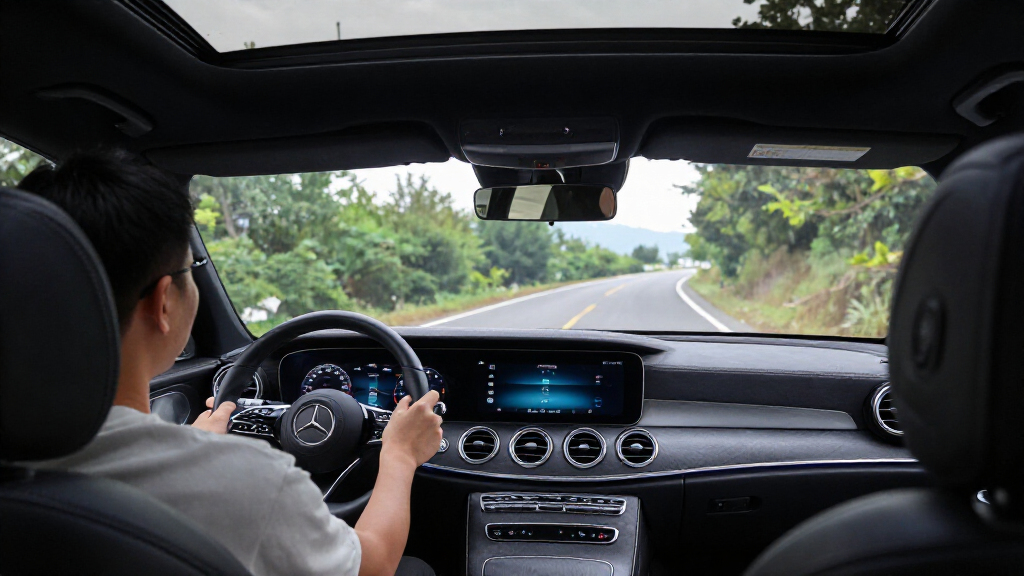
Mercedes-Benz is considering a holographic windshield display for future production models, using a dashboard projector and specially laminated glass to show digital images on the windshield. The automaker says the system could display navigation, points of interest and video, but it has not announced a vehicle, production decision or release date for the technology.

Get business pricing on garage and car supplies
- Business-only prices and quantity discounts
- Tax-exempt purchasing
- Multiple users, one account, clear invoices
In a company press release, Mercedes described a system that combines a projector built into the dashboard with windshield glass containing what it calls “holographic optical elements.” Those elements selectively reflect certain wavelengths of light from the projector to form images. Mercedes says the projection is concentrated so that it remains visible in direct sunlight.
The company also says the display can be controlled by viewing angle: the driver would not see content shown to the passenger, and the passenger would not see the driver’s display. Mercedes named navigation, points of interest and videos as possible uses. Because images are projected rather than permanently displayed on the glass, the automaker says the windshield would not be continuously covered when the system is off.
The windshield concept was one of several technologies Mercedes presented as possibilities for future vehicles. The company also described LED projection for rear-window warning messages and a power converter intended to manage current flow at the individual cell level in EV battery packs. The announcement does not establish that any of these systems has been approved for a specific production vehicle.
More Display Space, More Driver Questions
A windshield display could give automakers another way to present navigation and other information without adding a conventional screen to the dashboard. Passenger-only content could also expand in-car entertainment options while keeping it outside the driver’s view, if the stated angle controls work as intended.
But placing projected content across a windshield puts the technology close to the driver’s line of sight. The concept therefore raises practical questions about distraction, visibility and how much information should appear while a vehicle is moving. Mercedes’ announcement describes potential functions, not evidence that displaying video or other content in this way is safe in real-world driving.
The idea also arrives as automakers face consumer resistance to interiors dominated by screens. The central question is not only whether the projection works, but whether drivers and passengers want a larger digital display in a space traditionally kept clear for seeing the road.
Products Worth Considering

Chemical Guys 10-Piece Car Wash Kit with Foam Gun

Chemical Guys 17-Piece Car Detailing Kit for Interior, Exterior, and Wheels

Chemical Guys 16-Piece Ceramic Car Wash and Protection Kit with Big Mouth Foam Cannon
As an affiliate, we earn on qualifying purchases.
A Broader Push Beyond Dashboard Screens
Mercedes already markets large interior display systems, including its Hyperscreen and Superscreen. The windshield concept would extend that screen-heavy approach beyond the dashboard, rather than simply adding another conventional panel. Mercedes has not said whether the technology is intended to complement those systems or replace any existing displays.
The Drive reported that the concept resembles ideas discussed elsewhere in the industry. In a 2024 interview with the publication, Nissan design chief Alfonso Albaisa predicted that the windshield could become a screen, arguing that people may want access to digital content while driving even if they dislike screens and digital interfaces. Apple also filed a patent application for similar technology in 2023, according to The Drive; a patent filing alone does not show that a product will be made.
Windshield projection has a familiar reference point in today’s head-up displays, which project limited driving information into a driver’s view. Mercedes’ proposal could extend that approach to a larger area and additional content, but the company has not provided public technical specifications or described how the system would be restricted while the car is moving.
““holographic optical elements””
— Mercedes-Benz, in its press release
Production Plans and Safety Limits
No production commitment or launch schedule was included in the announcement. Mercedes has not identified a model that will use the system, said whether the concept has reached road testing, or explained what regulatory approvals or restrictions would apply.
The company also has not published details on the display’s size, brightness under different conditions, response to glare, or how passenger and driver viewing zones would be calibrated. Its statements about sunlight visibility and angle-based separation remain claims from the automaker, not independently verified findings in the material provided.
It is also unclear whether video would be available only to passengers, whether particular content would be disabled while the car is moving, or how the system would avoid distracting the driver. The announcement gives examples of possible uses but does not answer those questions.
Watch for a Vehicle Commitment
The next clear milestone would be a Mercedes announcement tying the technology to a named vehicle, production program or testing schedule. Until then, the windshield display should be treated as a technology under consideration, not a confirmed feature buyers can expect in an upcoming model.
More detail would also be needed to judge how the system performs and how Mercedes plans to limit driver exposure to distracting content. The company may provide those answers if the concept moves toward production; its current announcement does not set a timetable for further updates.
Key Questions
Has Mercedes confirmed that the windshield display will enter production?
No. Mercedes has presented it as a technology it is considering for future production models, but has not named a vehicle or confirmed a production decision.
How would the Mercedes windshield display work?
A dashboard-mounted projector would send light to specially laminated windshield glass. Mercedes says optical elements in the glass selectively reflect that light to create images.
What content could appear on the windshield?
Mercedes cited navigation, points of interest and videos as possible uses. It has not specified which content would be available to drivers or passengers while the vehicle is moving.
Would the display block the driver’s view?
Mercedes says images are projected rather than permanently attached to the windshield, so the glass is not continuously covered. The company also says viewing angles can separate driver and passenger content, but it has not released independent testing or detailed safety information.
What other technologies did Mercedes present?
The company also outlined LED projection for rear-window warning messages and a power converter designed to manage current flow at the cell level in EV battery packs. No production timing was given for those technologies either.
Source: thedrive.com