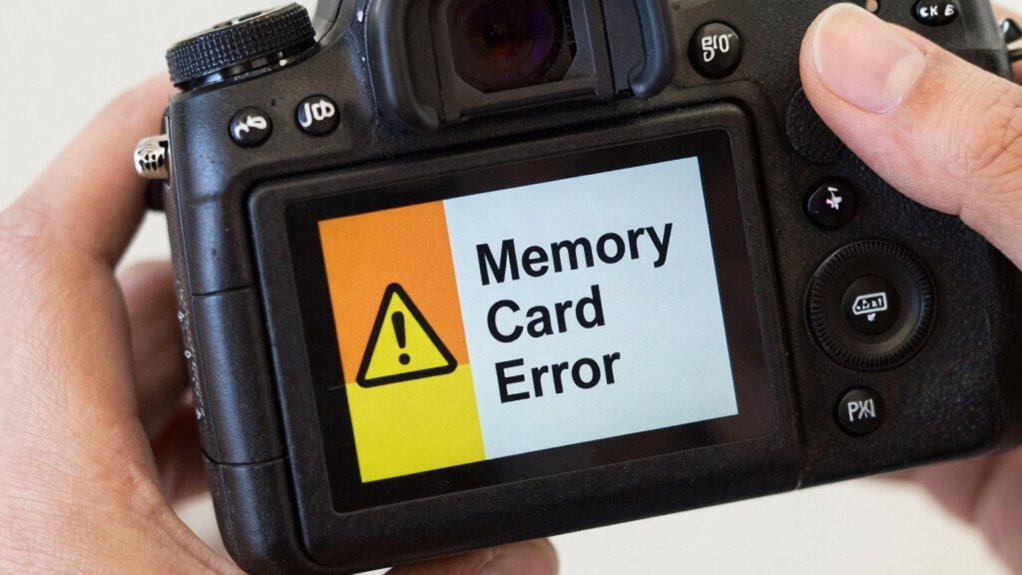

To fix a memory card error, start by carefully removing and cleaning the contacts with a soft cloth and isopropyl alcohol. Try reinserting the card firmly or testing it in different devices and card readers to rule out hardware issues. Run error repair tools, update device drivers and firmware, and verify you’re using the correct file system. If problems persist, consider backing up your data and formatting the card. More tips await if you continue exploring.
Key Takeaways
- Clean contacts and slot with isopropyl alcohol and compressed air to remove dirt and debris.
- Reinsert the card firmly, ensuring proper alignment and compatibility with your device.
- Test the card on multiple devices and card readers to identify hardware or card-specific issues.
- Use error repair tools and backup data before formatting or repairing the card.
- Update device drivers and firmware, and consider replacing the card if errors persist.
Checking and Re-inserting Your Memory Card
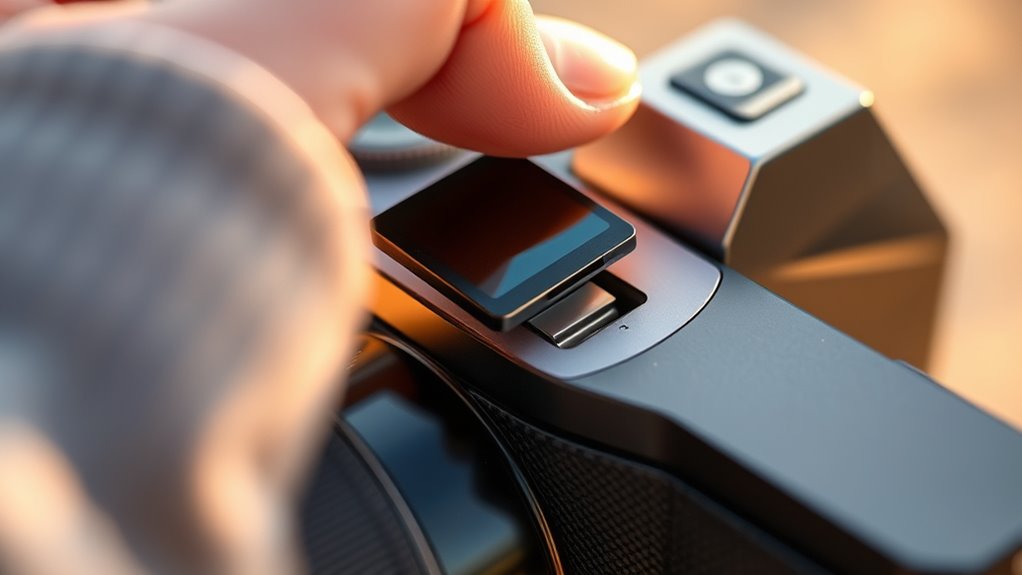
If you’re experiencing memory card errors, the first step is to check and re-insert the card. This simple action often resolves common issues related to memory card troubleshooting. Carefully remove the card from your device, ensuring you handle it gently to avoid damage. Inspect the card for any visible dirt or debris that could interfere with proper connection. Afterward, re-insert the card firmly, making sure it’s seated correctly in the slot. Proper storage device maintenance is essential to prevent future errors. Sometimes, a loose connection can cause read/write problems, so double-check that it’s securely in place. Additionally, ensuring your memory card has the appropriate compatibility and meets the device specifications can help prevent errors. Regularly cleaning contacts with a soft, dry cloth can also improve connection stability. Implementing proper storage practices can extend the lifespan of your memory card and reduce error occurrences. Using high-quality memory cards designed for your device can further enhance reliability and prevent common issues. Incorporating regular backups of important data is also recommended to safeguard against data loss. This quick step can often fix minor glitches without further troubleshooting, saving you time and avoiding unnecessary complications.
Cleaning the Memory Card and Card Slot
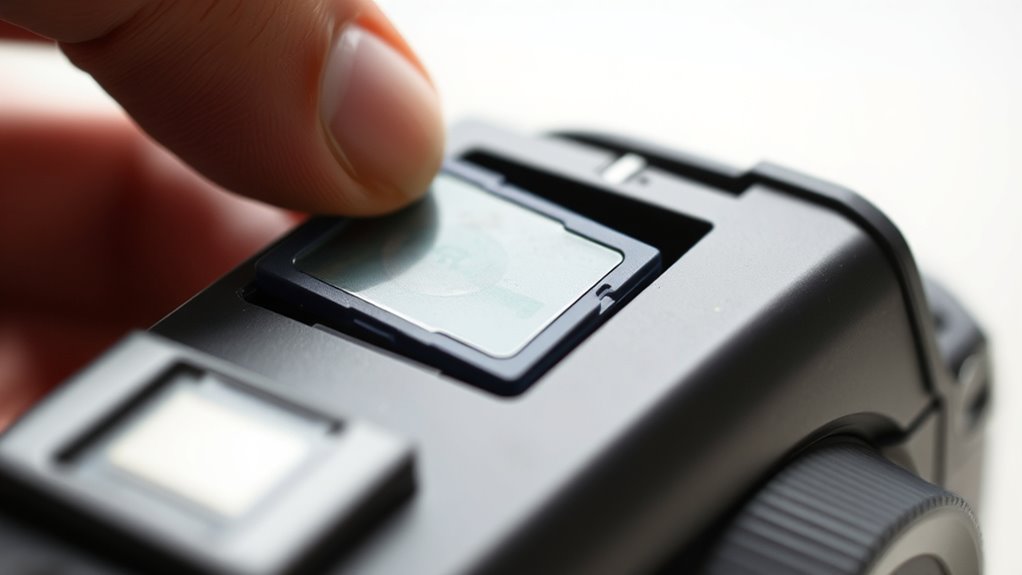
To make certain your memory card works properly, you should clean both the card and the slot. Remove any dust or debris carefully, and consider using a small amount of isopropyl alcohol for stubborn dirt. Gently reinsert the card afterward to make sure it connects securely. Regularly inspecting your card and slot can help prevent connection issues, and ensuring proper air purifier maintenance can keep your devices functioning optimally. Incorporating creative storytelling techniques can also help you remember to perform these maintenance steps regularly. Additionally, understanding Free Floating concepts can help you develop more effective troubleshooting routines for electronic devices. Paying attention to hardware components can further enhance your troubleshooting strategies and ensure your devices stay in top condition.
Remove Dust and Debris
Dust and debris can often cause memory card errors, so maintaining the card and its slot free of dirt is vital. Regular dust removal and debris clearing prevent connection issues. Carefully inspect the card and slot for dust buildup, then use a soft brush or compressed air to remove particles. Avoid touching the contacts directly to prevent damage. When cleaning, make sure you’re gentle to avoid scratches. Keep your workspace clean to minimize future dirt intrusion. Proper handling and storage also reduce the risk of damage, ensuring long-term reliability. Proper cleaning techniques also help preserve the integrity of the electrical contacts, which is essential for reliable data transfer. Additionally, understanding memory card types can help you choose the right card for your device. Recognizing the differences in compatibility ensures optimal performance. Here’s a simple guide:
| Step | Action | Tools Needed |
|---|---|---|
| 1 | Inspect for debris | Good lighting |
| 2 | Dust removal | Soft brush or compressed air |
| 3 | Clear debris | Tweezers (if needed) |
| 4 | Check contacts | Clean cloth |
| 5 | Reinsert carefully | N/A |
Use Isopropyl Alcohol
Using isopropyl alcohol is an effective way to thoroughly clean your memory card and its slot, especially when dirt or grime persists after dust removal. Dip a lint-free cloth or cotton swab into 70% isopropyl alcohol, then gently wipe the contacts on the memory card. For the card slot, carefully clean the metal contacts and surrounding areas, ensuring no residue remains. This method promotes memory card safety by removing oils, dirt, and corrosion that could interfere with data transfer. Proper cleaning can improve connection stability and reduce errors. Additionally, regular maintenance of electronic components can also extend their lifespan and enhance performance. Incorporating this cleaning step can aid in data recovery techniques by ensuring a clean, reliable connection and minimizing potential damage. Remember, always let the card and slot dry completely before reinserting. Incorporating proper drying techniques can further prevent moisture-related issues. Avoiding excessive moisture exposure helps prevent corrosion, which can cause long-term damage to your device. To further protect your device, consider using protective covers to keep dust and moisture away from sensitive parts.
Gently Reinsert the Card
After thoroughly cleaning the memory card and its slot, carefully reinsert the card to guarantee a proper connection. Confirm the card is compatible with your device, as incompatible cards can cause errors. When reinserting, handle the card gently to avoid damaging the connectors or the slot. Check that the storage capacity matches your device’s supported limits; exceeding this can lead to read errors or recognition issues. Make sure the card is aligned correctly, with the contacts facing the right way, and press it firmly until it clicks into place. Proper reinsertion helps establish a stable connection, reducing the chances of error messages or data corruption. Ensuring device compatibility and correct installation are key to maintaining optimal performance. Taking these steps ensures your memory card functions smoothly and maintains its storage capacity without issues. Creating calm and organized homes by handling devices carefully can also reduce stress and prevent frustration. Additionally, regularly inspecting the card slot for dust or debris can prevent connection problems over time and maintain optimal contact.
Using a Different Card Reader or Device

If your memory card still isn’t recognized or shows errors, trying a different card reader or device can often resolve the issue. Sometimes, the problem stems from the card reader itself or compatibility issues with your device. Using alternative card readers designed for various card types can help determine if the original reader is faulty. Also, testing the card on a different device ensures compatibility and reveals if the issue is device-specific. Here’s a quick overview:
| Card Reader Type | Device Compatibility | Common Use Cases |
|---|---|---|
| USB Card Reader | Most computers & laptops | Quick data transfer |
| SD Card Adapter | Cameras, tablets | Mobile device use |
| Micro SD Adapter | Smartphones, drones | Compact storage |
Switching devices can pinpoint whether the problem lies with the card or the hardware. Additionally, device compatibility plays a crucial role, as different devices may support varying card formats and speeds. Ensuring proper maintenance of your card readers can also prevent common issues and prolong their lifespan. Regularly cleaning the contacts and avoiding physical damage are essential aspects of device care that can help prevent errors. Moreover, keeping your device’s firmware up to date can improve overall compatibility and performance. To further reduce issues, consider checking card formatting and ensuring the card is formatted correctly for your device type.
Attempting to Access the Card on a Different Computer

When your memory card still won’t open on your current device, testing it on a different computer can help identify the source of the problem. If the card works elsewhere, it might be a card compatibility issue with your original device. Sometimes, file system issues cause the problem; for example, if the card’s format isn’t recognized by your device, it won’t open. Using a different computer can clarify whether the issue stems from the card itself or your device’s compatibility. Make sure the second computer supports the card’s format and file system. If the card opens normally on another computer, you may need to reformat it or update your device’s drivers to resolve the issue. Understanding file system compatibility is essential for troubleshooting such errors effectively.
Running Error-Repair Tools on Your Computer

Start by choosing trusted error-repair tools to guarantee safety and effectiveness. Next, follow the instructions carefully to run the scan properly and avoid missing issues. Proper use of these tools can save you time and help fix your memory card errors quickly.
Choosing Reliable Tools
Choosing reliable error-repair tools is essential to guarantee your memory card issues are fixed effectively without causing further problems. When selecting tools, consider the memory card’s durability—opt for software developed specifically for storage devices to make certain compatibility. Additionally, prioritize tools from reputable brands known for their reliability and positive user feedback. A trusted brand reputation indicates that the software has been tested thoroughly and is less likely to cause data loss or corruption. Avoid free or unverified tools, as they might do more harm than good. Investing in well-reviewed, reputable error-repair tools helps protect your data and extends the lifespan of your memory card. Reliable software assures your repair process is safe, efficient, and effective.
Running Scan Properly
Are you confident you’re running your error-repair tools correctly? Properly running scans is vital for effective data recovery and resolving memory card errors. Start by connecting your card to a computer with compatible hardware to guarantee card compatibility. Use trusted error-repair tools and run them as administrator to maximize their effectiveness. Make certain to select the correct drive or card when initiating the scan, avoiding any mix-ups. Allow the tool to complete the process without interruption, and review the results carefully. Running scans properly helps identify corrupt files or bad sectors that may hinder data recovery. By following these steps, you improve the chances of fixing memory card errors and recovering your valuable data efficiently.
Formatting Your Memory Card Safely
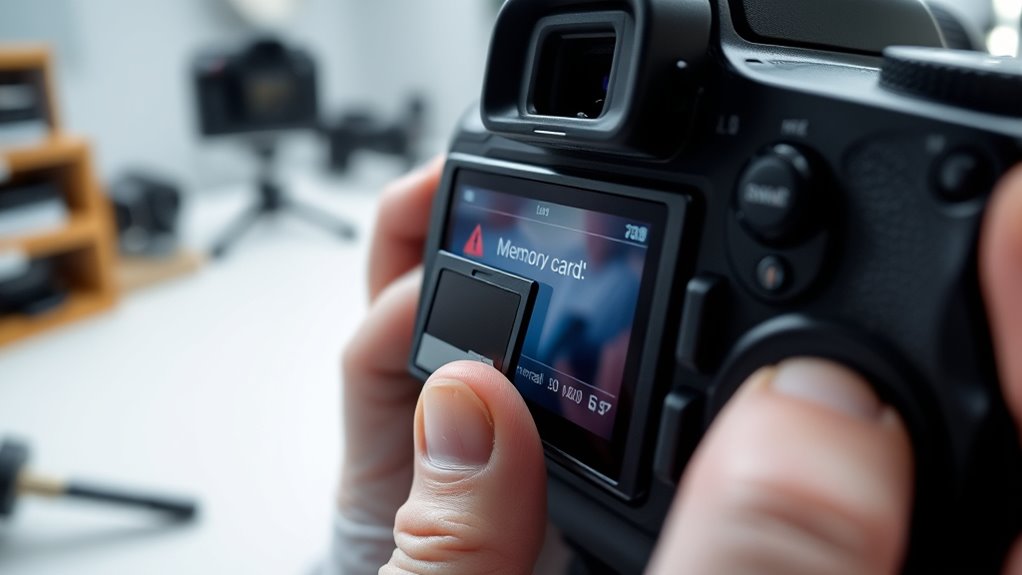
Formatting your memory card is a crucial step to resolve errors and guarantee peak performance, but it must be done carefully to prevent data loss or further issues. Before formatting, always perform a data backup to preserve important files. If data recovery is needed later, formatting can complicate retrieval, so ensure your backup is thorough. Use the device’s built-in formatting option or a reliable computer tool to minimize risks. Choose the correct file system and avoid quick formats if you suspect deeper errors. Keep in mind that improper formatting may cause additional problems, so double-check your selections. For added safety, disconnect the card after formatting to prevent accidental data overwrite. Proper formatting maintains optimal card function and extends its lifespan, ensuring smooth performance over time.
Recovering Data Before Formatting
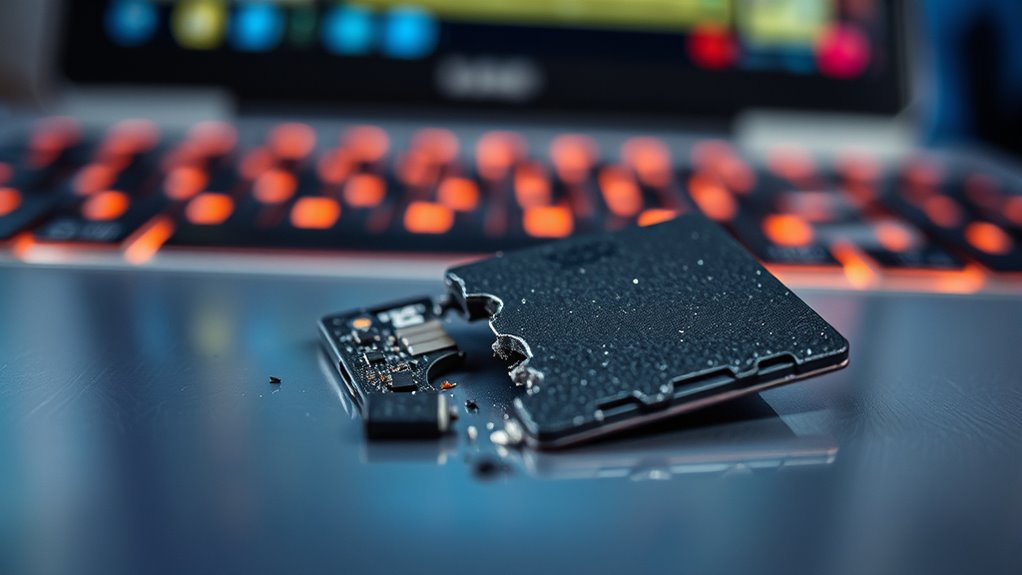
Before you proceed with formatting your memory card, it’s vital to recover any important data stored on it. Start by connecting your card to a computer using a reliable card reader. Use data recovery software to scan the card for lost or corrupted files. This process helps you retrieve photos, videos, and documents before erasing anything. Once the recovery is complete, create a file backup on your computer or an external drive to make sure your data is safe. Avoid rushing into formatting without securing your files, as this step is critical to prevent permanent data loss. Taking these precautions guarantees you won’t lose valuable information and makes the formatting process smoother if needed later.
Updating Device Drivers and Firmware

Updating your device drivers and firmware is an essential step to guarantee your memory card functions correctly. Proper driver updates improve device compatibility, ensuring your card communicates seamlessly with your computer or camera. Outdated drivers can cause errors or detection issues, so keeping them current is key. To do this, visit your device manufacturer’s website or use your system’s update tools. Regularly check for firmware updates, as they often include bug fixes and performance enhancements.
Updating device drivers and firmware ensures your memory card works smoothly and stays compatible with your devices.
- Verify your device model before downloading updates
- Use official sources to prevent security risks
- Restart your device after installing updates
- Keep a backup of current drivers in case you need to revert
Replacing the Memory Card if Necessary
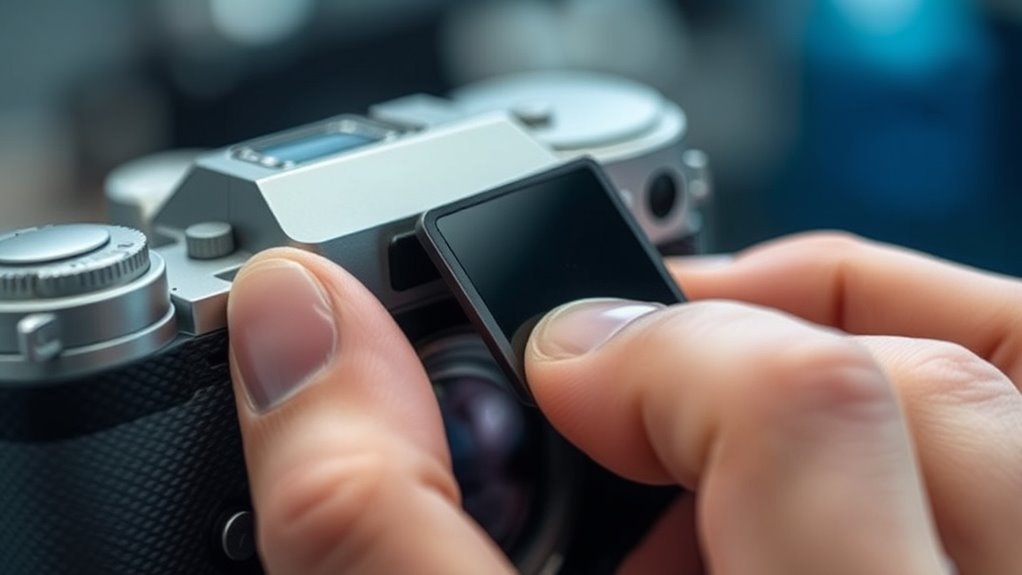
If your memory card continues to cause errors despite updating drivers and firmware, replacing it might be necessary. Over time, card durability diminishes, reducing the overall memory card lifespan. A worn or damaged card is more prone to errors, corrupt files, and data loss. When considering a replacement, choose a card with a higher quality build and better durability features to extend its lifespan. Check for signs of physical damage, such as cracks or corrosion, and consider whether the card has been heavily used or exposed to extreme conditions. Investing in a reputable brand can improve reliability and ensure your data stays secure. Remember, sometimes replacing an aging or compromised memory card is the best way to prevent ongoing errors and protect your stored files.
Frequently Asked Questions
How Can I Prevent Memory Card Errors in the Future?
To prevent memory card errors, you should practice good data recovery and memory management habits. Always eject your card properly before removing it, avoid removing it during data transfer, and keep your device updated. Regularly back up your data to prevent loss and use reliable card readers. Also, avoid filling your card to capacity, as this can cause errors. Proper care helps extend your card’s lifespan and minimizes the risk of future issues.
What Are Signs My Memory Card Is Permanently Damaged?
Your memory card shows signs of a sinking ship when you notice frequent data corruption, unreadable files, or sudden failures. Storage degradation or physical damage often cause these issues, making it nearly impossible to recover your data. If your card exhibits these symptoms, it’s a clear sign it’s permanently damaged. Don’t ignore these signs—replace the card to avoid losing important memories or files permanently.
Is It Safe to Use Third-Party Repair Tools?
Using third-party repair tools can be risky, but if you choose reputable data recovery and repair software, it’s generally safe. These tools often help recover lost data or fix minor errors without damaging your memory card further. However, always back up your data first, and research reviews to verify the software is trustworthy. Avoid shady programs, as they might cause more harm or compromise your data security.
How Do I Recover Lost Data After a Card Error?
To recover lost data after a card error, stop using the card immediately to prevent further damage. Use reliable data recovery software designed for file restoration, like Recuva or EaseUS Data Recovery. Connect your card to your computer via a card reader and scan it with the software. Follow the prompts to recover and save your files to a different storage device, ensuring your data is safe and intact.
Can Formatting Fix Recurring Memory Card Problems?
Think of your memory card as a delicate bridge between your device and data. Formatting can sometimes reset this bridge, fixing recurring problems caused by card compatibility issues, but it also risks deleting your precious files. Before formatting, use reliable data recovery software to save what you can. If the card’s still troublesome after, formatting might help, but only if you’re prepared for potential data loss and compatibility checks.
Conclusion
Don’t let a memory card error ruin your day—try these fixes and get back to capturing memories. Whether it’s a quick cleaning or updating drivers, these steps are your modern toolkit. Remember, even in a world of smartphones, a reliable memory card is as essential as a quill in the Age of Enlightenment. If all else fails, replacing the card might be your best bet—think of it as upgrading from a trusty quill to a sleek stylus.