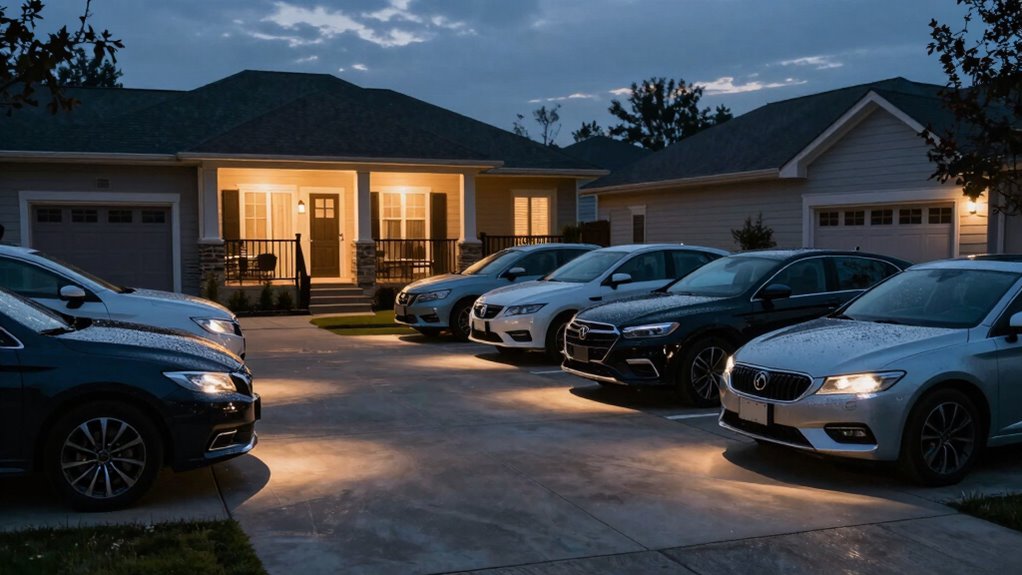

To reduce morning surprises, make certain your vehicle is parked in a well-lit, secure area with good visibility. Check and maintain tire pressure, fluid levels, and lock all doors before leaving. Remove valuables, activate alarms, and clear away snow or debris if needed. Use a cover to protect against weather and dirt. Regularly inspect safety features and keep emergency supplies handy. Keep these routines consistent to make mornings smoother—and there’s more to discover for an even safer, hassle-free start.

Get business pricing on garage and car supplies
- Business-only prices and quantity discounts
- Tax-exempt purchasing
- Multiple users, one account, clear invoices
Key Takeaways
- Ensure the vehicle is parked in a well-lit, visible area with security measures in place.
- Remove valuables and check for any overnight debris or damage before leaving.
- Use a car cover and clear snow or ice to protect the vehicle from weather-related surprises.
- Set reminders to inspect the vehicle in the morning and verify all safety features are functional.
- Maintain regular cleaning, washing, and routine checks to keep the vehicle in optimal condition.
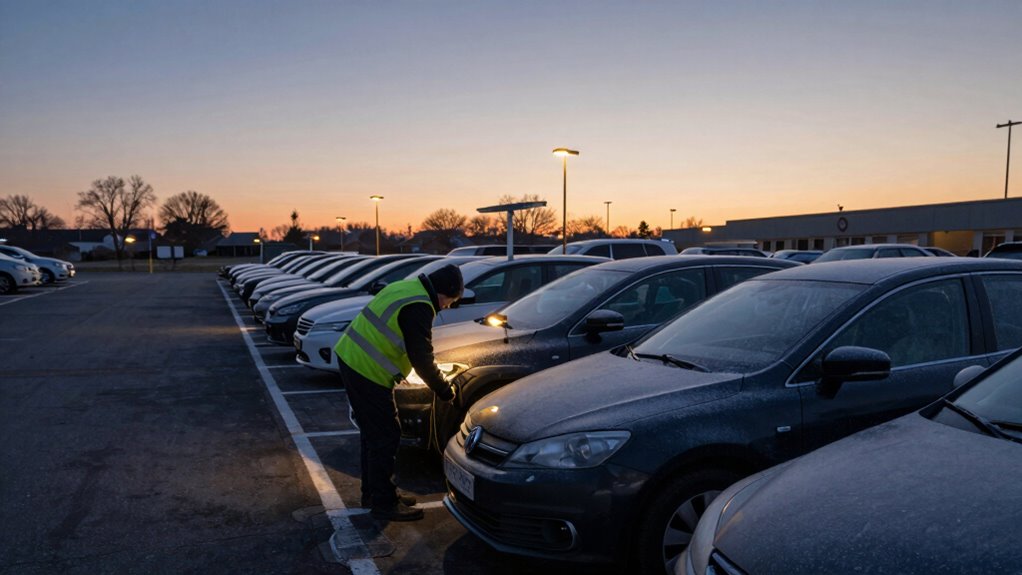
Parking your car overnight requires a simple but careful routine to guarantee safety and convenience. When you settle your vehicle into a parking lot, whether it’s at your apartment complex, work, or a public lot, the first priority is confirming parking lot safety. You want to make sure your car is in a well-lit area, ideally near security cameras or patrols. Bright lighting deters potential thieves and vandals, giving you peace of mind that your vehicle is protected through the night. Avoid secluded or poorly lit spots, as they increase the risk of damage or theft. Before you leave, take a quick walk around your vehicle to check for anything unusual or out of place—this quick inspection can alert you to any existing damage or suspicious activity you might notice.
Next, it’s essential to pay attention to your vehicle maintenance before parking overnight. A well-maintained car is less likely to encounter issues that could leave you stranded in the morning. Make sure your tires are properly inflated, as underinflated tires can lead to flat spots or damage over time, especially during long periods of inactivity. Check your fluid levels—oil, coolant, windshield washer fluid—and top them off if needed. If your car has a dead or weak battery, consider disconnecting the negative terminal to prevent drainage, or at least ensure that your battery is in good condition. Also, remove any perishable or valuable items from your vehicle to avoid tempting thieves or accidental damage. Lock all doors securely, and activate your car’s alarm system if it has one. These simple steps help prevent theft and keep your vehicle in good shape over time. Additionally, paying attention to body piercing safety when handling your vehicle or jewelry can prevent accidental injuries or damage, especially if you wear jewelry while working on or around your car. It’s also helpful to familiarize yourself with basic vehicle maintenance procedures, which can save you time and money in the long run. Regularly checking your vehicle’s safety features can further enhance your peace of mind during overnight parking. Remember to keep a vehicle emergency kit in your car for unexpected situations, which is an essential part of a thorough safety routine.
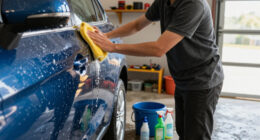
Once parked, it’s wise to take a few extra precautions to reduce your morning surprises. If possible, set a reminder to check your vehicle in the morning and remove any snow, ice, or debris that might have accumulated overnight. Consider investing in a car cover if you frequently park outside, as it shields your vehicle from the elements and keeps it cleaner. Maintaining a regular routine of washing and waxing your car not only preserves its appearance but also protects the paint from damage caused by dirt and environmental factors. When you leave your vehicle at a parking lot, the combination of focusing on parking lot safety and vehicle maintenance can make your mornings smoother. You wake up knowing that your car is secure, well-kept, and ready for the day ahead. This routine minimizes surprises, saves you time, and extends the lifespan of your vehicle, making your overnight parking experience as stress-free as possible.
Frequently Asked Questions
What Is the Best Time to Park Overnight?
You should park overnight during late evening hours, typically around 10 p.m. to midnight, when parking lot etiquette is less strict and fewer vehicles are around. This timing helps avoid disturbances and guarantees your vehicle stays safe. Remember to follow vehicle maintenance tips by parking in well-lit areas, locking your doors, and avoiding leaving valuables visible. Proper timing and precautions make your overnight parking more secure and hassle-free.
Can Overnight Parking Damage My Vehicle?
Your vehicle’s like a fragile flower, so overnight parking can pose risks like weather damage and theft. If you choose a safe, well-lit spot, you minimize these dangers. However, extreme weather—hail, snow, or rain—can harm your car’s exterior, and unprotected parking might attract thieves. To protect it, use covers or find secure, monitored areas. Proper precautions turn overnight parking from a gamble into a safe haven.
Are There Legal Restrictions on Overnight Parking?
Yes, there are legal restrictions on overnight parking. You need to be aware of local parking regulations, which can vary by city or neighborhood. Some areas prohibit overnight parking altogether, while others may require a special permit or have designated overnight zones. Additionally, you must guarantee your vehicle displays the proper license requirements, such as valid registration and permits, to avoid fines or towing. Always check local signs and regulations before parking overnight.
How Do I Secure My Vehicle During Overnight Parking?
Worried about your vehicle’s safety overnight? You should secure it with window locks and activate vehicle alarms if available. These simple steps deter thieves and prevent unauthorized entry. Always double-check that windows are fully closed and locked, and consider installing a steering wheel lock for added security. You’ll rest easier knowing your vehicle is protected from theft or vandalism during those overnight hours.
What Should I Do if My Car Gets Towed?
If your car gets towed, stay calm and check for notices or signs nearby for towing details. Contact the local impound lot promptly and bring your ID, registration, and proof of ownership. To prevent towing, follow parking lot etiquette, avoid parking in restricted areas, and adhere to posted parking rules. Using towing prevention tips like displaying a permit or parking within lines can also help you avoid this stressful situation.
Conclusion
By sticking to this simple overnight parking routine, you’d think you’d wake up stress-free. Instead, you might find yourself marveling at the irony — that the one night you skip the routine, you’ll wake up to a surprise that’s anything but peaceful. All those careful steps meant to prevent morning chaos could turn into a morning mystery. Sometimes, the best-laid plans just set the stage for a morning full of unexpected adventures.
Fall Picks
fall essentials
As an affiliate, we earn on qualifying purchases.