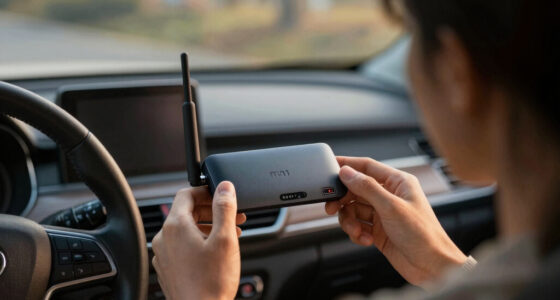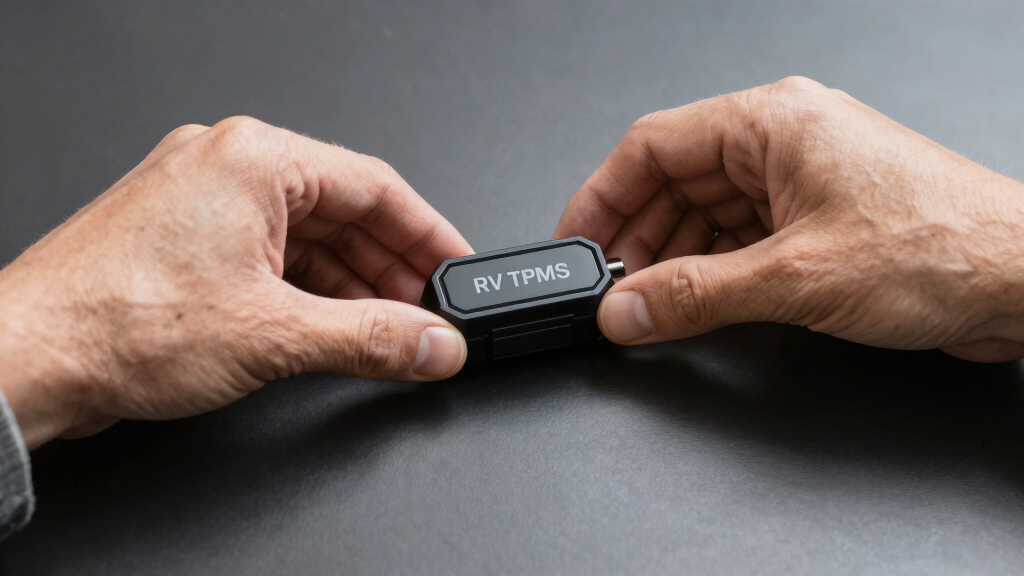

Finding the best TPMS for RVs can be challenging with so many options that vary in features and price. The TireMinder i10 RV TPMS with 10 transmitters stands out as the overall top choice for its extensive sensor capacity and reliable performance. For those seeking affordability without sacrificing essential features, the Tymate TM12 RV Tire Pressure Monitoring System offers great value, while the GUTA Trailer Tire Pressure Monitoring System provides a solid option for trailers. The main tradeoffs involve balancing sensor range, ease of use, and budget—more advanced systems tend to cost more but offer better connectivity and durability. Continue reading for a detailed comparison to find the best fit for your RV setup.

Get business pricing on garage and car supplies
- Business-only prices and quantity discounts
- Tax-exempt purchasing
- Multiple users, one account, clear invoices
Key Takeaways
- The best TPMS for RVs balances sensor quantity with ease of setup, preventing overload but covering multiple wheels effectively.
- Wireless connectivity and external sensors generally outperform Bluetooth-only models for larger RVs, offering more reliable range and alerts.
- Solar charging features add convenience but may introduce variability in performance depending on climate and usage patterns.
- Pricing varies widely; premium models often include features like auto calibration and extensive alarm modes, but budget options provide core monitoring capabilities.
- Ease of installation and user interface are critical for non-technical users, making simple displays and quick setup highly valuable.



More Details on Our Top Picks
TireMinder i10 RV TPMS with 10 Transmitters
The TireMinder i10 RV TPMS excels in monitoring multiple vehicles simultaneously, making it ideal for RV owners with several to keep track of. Its inclusion of 10 transmitters allows extensive coverage, surpassing models like the Tymate RV system, which typically offers fewer sensors. While it offers reliable tire data and is compact for easy installation, its limited display features and lack of app connectivity might leave tech-savvy users wanting more. Compared to systems with color screens and app alerts, the i10’s straightforward design favors simplicity over advanced features. The main tradeoff is that it lacks detailed digital interface, which could be a drawback for those seeking comprehensive data on a smartphone. This pick makes the most sense for RV owners who prioritize extensive coverage and ease of use over advanced tech integration.
Pros:- Monitors multiple vehicles simultaneously
- Includes 10 transmitters for extensive coverage
- Compact and easy to install
Cons:- Limited details on display features
- No app connectivity or remote monitoring options
Best for: RVers managing multiple vehicles or tires who need a straightforward, reliable monitoring system with extensive coverage
Not ideal for: Tech enthusiasts seeking app connectivity or advanced digital displays, as this system is more basic
- Package Dimensions:24.4 H x 7.1 L x 18.6 W centimeters
- Package Weight:2.5 pounds
- Number of Transmitters:10
- Vehicle Monitoring Capacity:up to four vehicles
- Country of Origin:China
Bottom line: This system is best suited for RV owners who need reliable, multi-vehicle tire monitoring without complex tech features.
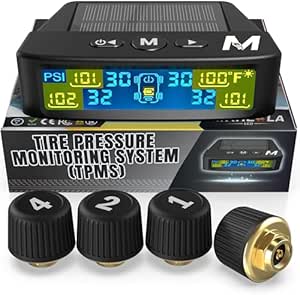
Marcala Tire Pressure Monitoring System – Set of 4 TPMS Sensors for Trailer, RV, Camper, Truck (0-98 PSI) | 50ft Extended Range Air Monitor Kit | Solar Charge & 6 Alarm Modes
The Marcala TPMS offers outstanding value for RV owners who require extended monitoring range and real-time alerts. Its 50-foot range outperforms many competitors like Tymate’s systems, which typically have shorter distances. The bright LCD display, auto-dimming for night use, and solar plus USB charging make it a versatile, user-friendly choice. However, setup can be more complex, especially for those unfamiliar with electronic systems, and the maximum PSI limit of 98 might be restrictive for high-pressure tires. Compared to the Tymate RV system, which offers a color display and multiple alarm modes, the Marcala provides a broader range at a lower cost but with slightly more setup effort. This makes it ideal for budget-conscious RV owners needing extended coverage and reliable alerts.
Pros:- Extended 50-foot range for large vehicles
- Real-time pressure and temperature alerts
- Bright, auto-dimming LCD display
- Solar and USB charging options
Cons:- Setup may be complex for some users
- Limited to 98 PSI maximum pressure
Best for: Budget-conscious RVers who need long-range monitoring and solar charging for multiple tires or trailers
Not ideal for: Those with high-pressure tires exceeding 98 PSI or users preferring plug-and-play simplicity
- Sensors:4 TPMS sensors
- Maximum PSI:98 PSI
- Range:50 feet
- Display:Colorful LCD with auto-dimming
- Charging:Solar and USB
- Waterproof:IP67
Bottom line: This system is ideal for RV owners seeking an affordable, extended-range TPMS with solar power and straightforward alerts.
Tymate RV Tire Pressure Monitoring System, Solar & USB Charge, 6 Sensors, Color Display, Repeater, 0-87 PSI
The Tymate RV TPMS distinguishes itself with a bright color LCD display and six external sensors, providing clear, real-time tire pressure and temperature data. Its durability is reinforced by an IP67 waterproof rating and extended transmission range via repeaters, making it suitable for rugged RV conditions. Compared to the Marcala system, which offers a longer range, Tymate’s focus on a vivid display and multiple alarm modes makes it more user-friendly for those who want quick visual cues. The pressure limit of 87 PSI might be limiting for high-pressure tires, and some users may find adjusting alarm thresholds a bit complex. Nonetheless, its durable build and easy calibration suit RV owners who prioritize durability and visual clarity in monitoring.
Pros:- Bright color LCD display for easy reading
- Durable IP67 waterproof sensors
- Extended range with repeaters
- Multiple alarm modes including leak and high temp
Cons:- Pressure range limited to 87 PSI
- Alarm threshold adjustments can be complex
Best for: RV owners who value a bright, easy-to-read display and durable sensors for regular use in diverse weather conditions
Not ideal for: Users with high-pressure tires or those seeking longer transmission distances beyond 87 PSI and 50+ feet range
- Sensors:6 external sensors
- Display:Color LCD
- Alarm Modes:5 modes including leak, high/low pressure
- Pressure Range:0-87 PSI
- Battery Life:Up to 2 years
- Water Resistance:IP67
Bottom line: This TPMS suits RV owners needing a durable, visually accessible system with reliable alerts, especially in harsh conditions.
RV Tire Pressure Monitoring System with 6 Sensors, Solar & USB Charging, Color LCD Display, 0-144 PSI Range, IP67 Waterproof
The RV TPMS with 6 sensors stands out for its broad pressure range up to 144 PSI and a vivid color LCD, making it suitable for larger RVs and high-pressure tires. Its voice alerts provide a hands-free experience, and the solar plus USB charging ensures continuous operation. Compared to Tymate or Marcala, this model offers the highest PSI capacity, which is beneficial for heavy-duty tires. Its waterproof IP67 rating allows reliable use in all weather conditions, but proper sensor placement is key to maintaining accuracy. The display’s visibility can diminish in direct sunlight, and it only monitors pressure and temperature, lacking additional diagnostics. This makes it a solid choice for RV owners who need high-pressure capacity combined with durability.
Pros:- High pressure capacity up to 144 PSI
- Bright color LCD with auto-brightness
- Voice alerts for hands-free monitoring
- IP67 waterproof for all weather conditions
Cons:- Limited to pressure and temperature monitoring
- Sensor placement impacts accuracy
Best for: Owners of larger RVs with high-pressure tires seeking an easy-to-install, weatherproof monitoring system
Not ideal for: Those with lower pressure tires or looking for multi-vehicle systems with extensive sensor counts
- Number of Sensors:6
- Display:Color LCD
- Range:0-144 PSI
- Alarm Modes:6
- Charging:Solar and USB
- Water Resistance:IP67
Bottom line: This TPMS is best for RV owners needing high-pressure support and durability in all weather conditions.
Tymate TM7 Tire Pressure Monitoring System with Wireless External Sensors and Color Display
The Tymate TM7 stands out for its straightforward installation and clear, colorful display, making it ideal for RV owners who want quick, at-a-glance tire data without complex setup. Compared to the TireMinder i10, which offers extensive tire capacity, the TM7’s simplicity suits those with smaller or less demanding setups. Its multiple alarm modes boost safety, but it requires pairing and calibration, adding an extra step for precise readings. The dual USB ports add convenience for charging devices on the go, making it a practical choice for full-time RVers or those with limited dashboard space. However, sensors need battery replacements, and for long trailers, a repeater may be necessary to maintain signal strength. This pick makes the most sense for RVers seeking reliable, easy-to-use monitoring with a vibrant display.
Pros:- Easy plug-in installation with no complex wiring
- Bright, adjustable color display for visibility in all lighting conditions
- Multiple alarm modes enhance safety awareness
- Includes dual USB ports for device charging
Cons:- Requires pairing and calibration for accurate readings
- Sensor batteries need replacement over time
- May need a repeater for long or multi-axle trailers
Best for: RVers who prioritize ease of installation, clear visuals, and basic tire monitoring for up to 4 tires
Not ideal for: Users with large trailers or multiple vehicles needing extensive tire coverage without additional repeaters
- Sensor Quantity:4 external sensors
- Display:Color LCD with adjustable backlight
- Pressure Range:0-144 PSI
- Alarm Modes:High/low pressure, leakage, high temperature, low battery, signal lost
- Power Source:Plug-in cigarette lighter socket
- Additional Features:Dual USB charging ports, auto calibration, towing compatibility
Bottom line: Ideal for RV owners seeking a simple, reliable, and visually clear TPMS solution for smaller setups.
6-Wheel RV Tire Pressure Monitoring System (TPMS) – 6 Sensors & 6 Alarm Modes | Solar/USB Charging | for Dually Trucks & Heavy-Duty Trailers
This 6-sensor TPMS offers professional-grade monitoring with ultra-fast updates every 0.3 seconds, making it a top choice for heavy-duty trucks and large RVs. Unlike the TireMinder i10, which supports up to 40 tires but with a higher price, this system emphasizes durability and rapid response for critical tire conditions. Its customizable alarm modes allow tailored alerts for different scenarios, and dual solar and USB-C charging ensure continued operation even during extended trips. The straightforward 3-step installation minimizes downtime but requires proper sealing to avoid leaks, and sensor batteries will eventually need replacement, adding maintenance consideration. It’s best suited for owners who demand real-time data and robust build quality for demanding environments.
Pros:- Rapid response updates every 0.3 seconds for real-time monitoring
- Six customizable alarm modes for various tire issues
- Dual solar and USB-C charging for continuous power
- Simple 3-step installation process
Cons:- Proper sealing needed during installation to prevent leaks
- Sensor battery replacements over time
- Initial setup may be complex for some users
Best for: Heavy-duty RV users or truck owners needing quick, reliable alerts on multiple tires
Not ideal for: Casual RV owners with fewer tires or those seeking a less complex, lower-cost solution
- Number of Sensors:6
- Pressure Range:0-144 PSI
- Pressure Accuracy:±1.5 PSI
- Display Refresh Rate:Every 6 seconds
- Charging Methods:Solar and USB-C
- Warranty:3 years
Bottom line: Designed for heavy-duty applications where fast, reliable tire data is critical, making it ideal for large RVs and trucks.
TireMinder i10 RV TPMS with 6 Transmitters
The TireMinder i10 excels in monitoring up to 40 tires across multiple vehicles, making it a top pick for large RV fleets or multi-vehicle owners. Its sizable 3.15-inch color LCD provides easy readability, surpassing smaller displays in alternatives like the Tymate TM12. The included Rhino signal booster enhances communication stability, particularly over long distances, though setup can be complex—especially for users unfamiliar with advanced TPMS configurations. Its high price reflects its extensive capacity, but this makes it less suitable for owners with fewer tires or simpler needs. This system is best for those requiring detailed, reliable coverage across multiple RVs or trailers, with automatic vehicle switching for convenience.
Pros:- Supports monitoring of up to 40 tires simultaneously
- Large, clear color LCD display for quick readings
- Includes signal booster for improved reliability
- Supports automatic vehicle switching and multiple storage profiles
Cons:- Setup can be complex for non-technical users
- Higher cost compared to basic models
- Limited to RV use, not suitable for standard vehicles
Best for: Owners of large RVs or multiple trailers seeking comprehensive, reliable tire monitoring with automatic vehicle recognition
Not ideal for: Casual RVers or owners with only a few tires who prefer a simpler, more affordable system
- Display:3.15-inch color LCD
- Tire Monitoring Capacity:Up to 40 tires
- Tire Pressure Range:0-199 psi
- Accuracy:+/- 1 PSI
- Signal Booster:Rhino included
- Warranty:3 years
Bottom line: Best suited for large RV operations or fleets needing extensive, dependable tire coverage with advanced features.
Tymate TM12 RV Tire Pressure Monitoring System, 6 Sensors, USB/Solar Charging, 2026 Latest Version, 50ft Range, 0-116 PSI
The Tymate TM12 offers a balanced mix of features for RVers needing to monitor multiple tires, with its split-screen display supporting up to 12 tires. Compared to the GUTA system, which supports fewer tires but includes a large monitor, the TM12 emphasizes versatility with dual power options and easy installation. Its real-time alerts and multiple alarm modes enhance safety, though solar charging can be inconsistent in shaded conditions, requiring initial USB-C charging. The auto-calibration simplifies setup, but larger setups might need additional sensors or repeaters for optimal coverage. This model fits owners who want detailed, flexible monitoring for various vehicle types without the complexity of extremely high-capacity systems.
Pros:- Supports up to 12 tires with split-screen monitoring
- Real-time pressure and temperature alerts
- Dual power options with USB-C and solar charging
- Auto-calibration simplifies setup
Cons:- Solar charging output depends on sunlight conditions
- Initial USB-C charging necessary
- Additional sensors or repeaters may be needed for larger setups
Best for: RVers with multiple vehicles or trailers needing reliable, easy-to-use tire monitoring with flexible power options
Not ideal for: Owners seeking a system with the highest tire capacity or minimal setup complexity
- Display:Color screen supporting 12 tires
- Range:50 ft (extendable to 100+ ft with repeater)
- Pressure Range:0-116 PSI
- Alarm Modes:High/low pressure, high temperature, leakage, sensor low battery, signal loss
- Power Supply:USB-C and solar
- Installation:Plug-and-play with auto calibration
Bottom line: A flexible, user-friendly TPMS ideal for RV owners with multiple vehicles or trailers seeking reliable alerts and easy installation.
GUTA Trailer Tire Pressure Monitoring System with 10 Sensors for RVs and Trailers
The GUTA TPMS excels with its large display showing data for up to 10 tires, making it suitable for sizeable RVs and trailers. Its wireless setup is straightforward, and multiple alert modes improve safety by catching pressure or temperature issues early. Compared with the Tymate TM12, which supports more tires but with a split-screen, the GUTA’s single large display offers simplicity for users who prefer a comprehensive overview at a glance. The rechargeable monitor with power-saving mode extends usability, but the system’s performance depends on proper installation on metal valve stems, and frequent recharging may be necessary during active use. This model benefits owners who want an easy-to-read, reliable, and rechargeable TPMS for larger vehicles.
Pros:- Large display shows 10 tires clearly
- Wireless setup with optional signal booster
- Multiple alert modes for pressure and temperature
- Rechargeable monitor with power-saving features
Cons:- Installation on metal valve stems needed for best performance
- Monitor battery life may require frequent recharging
- Setup process can be complex for some users
Best for: RV and trailer owners needing a large, easy-to-read display with straightforward wireless setup
Not ideal for: Owners with more than 10 tires or those seeking advanced multi-vehicle features
- Sensor Count:10
- Display:Large screen showing 10 tires
- Maximum Tire Pressure:188 psi
- Maximum Tire Temperature:185 ℉
- Alarm Range:+25% PSI to -15% PSI of reference
- Battery Life (Sensors):Up to 4 years
- Monitor Battery:Rechargeable lithium, 12-14 days per charge
Bottom line: Best for large RVs or trailers where a big, easy-to-read display and straightforward setup are priorities.
TireMinder i10 RV TPMS with 4 Transmitters
This model stands out for its large 3.15-inch color LCD that provides clear, simultaneous PSI and temperature readings, making it easier to monitor multiple tires at a glance. Compared with the Masoll M13, which emphasizes auto calibration and solar power, the TireMinder i10 excels in user interface and monitoring capacity, supporting up to 40 tires. However, it demands careful setup and calibration, which can be daunting for first-timers. Its high accuracy and frequent updates make it reliable for RV owners who want comprehensive visibility. The inclusion of a signal booster enhances performance in challenging environments, but the complexity may be a barrier for those seeking a plug-and-play solution.
Pros:- Large, bright color LCD for easy readability
- Supports monitoring of up to 40 tires
- High accuracy with frequent PSI and temperature updates
Cons:- Requires initial setup and calibration, which can be complex
- Potentially overwhelming for users unfamiliar with TPMS systems
Best for: RV owners who prioritize a large, easy-to-read display and monitoring multiple tires simultaneously.
Not ideal for: First-time users or those preferring a plug-and-play system without complex calibration steps.
- Display:3.15-inch color LCD
- Monitoring Capacity:Up to 40 tires
- Pressure Range:0-199 psi
- Accuracy:+/- 1 PSI
- Includes:4 transmitters, signal booster, rhino signal booster
- Update Frequency:Every 6 seconds
Bottom line: This is a great choice for RV owners who need detailed, real-time insights across many tires and are comfortable with a setup process.
Tire Pressure Monitoring System with Solar Charging & Auto Calibration for RV/Trailer
The Masoll M13 TPMS makes the list for its auto calibration and solar-powered operation, reducing the hassle of manual setup and ongoing power concerns. Compared with the TireMinder i10, which offers detailed multi-tire monitoring, the M13 is better suited for smaller RVs or trailers with up to 4 tires, thanks to its straightforward auto calibration and alarm thresholds. Its solar charging feature supports continuous operation without battery worries, but it’s limited to vehicles with four tires and may require a signal booster for longer trailers. The high-definition LCD with auto backlight ensures clear readings day and night, making safety checks more straightforward. However, the limited pressure range (up to 87 PSI) could be restrictive for high-pressure tires common in some RVs.
Pros:- Auto calibration simplifies setup
- Solar charging reduces need for battery replacements
- Clear LCD display with auto backlight for day/night use
Cons:- Limited to 4 sensors, unsuitable for larger vehicles
- Requires a signal booster for trailers over 38ft
- Pressure range may not cover high-pressure tires
Best for: Owners of small RVs, trailers, or trucks seeking an eco-friendly, low-maintenance TPMS with automatic setup.
Not ideal for: Larger RVs or vehicles with more than four tires, as it lacks additional sensors and higher pressure range.
- Display:M13 LCD
- Sensors:4 sensors
- Pressure Range:0-87 PSI
- Accuracy:1.5 PSI
- Power Source:Solar charging
- Alarm Thresholds:25% higher, 15% lower than reference
Bottom line: This pick is ideal for smaller RVs or trailers prioritizing ease of use and eco-friendly operation but isn’t suited for larger setups.
How We Picked
Products were selected based on their suitability for RV use, focusing on sensor quantity, connectivity reliability, display clarity, and durability. We prioritized systems with wide PSI ranges, extended wireless range, and features like solar charging or auto calibration. The ranking considers user interface simplicity, setup ease, and value for money, ensuring options cater to both casual and experienced RV owners. Systems with proven durability, positive reviews, and comprehensive alarm modes rank higher, as these factors directly impact safety and convenience on the road.
Factors to Consider When Choosing Best TPMS For RVs
Choosing the best TPMS for your RV involves considering several key factors beyond just sensor count and price. Understanding these factors can help you avoid common pitfalls and select a system that truly meets your needs, whether you’re a weekend camper or a full-time traveler. The right TPMS improves safety, reduces maintenance, and enhances peace of mind, but picking the wrong one can lead to false alarms or unreliable readings. Keep these considerations in mind as you evaluate options.
Sensor Quantity and Coverage
The number of sensors should match your RV’s wheel configuration. Larger RVs or those with multiple axles benefit from systems with more sensors—often 6 or 10—providing comprehensive monitoring. However, more sensors can mean increased complexity and higher cost. For smaller RVs or trailers, fewer sensors might suffice, simplifying setup while still offering essential insights. Always verify that the system supports your specific wheel setup to avoid gaps in coverage.
Wireless Range and Connectivity
For RVs, especially larger ones, a strong wireless range is crucial to receive alerts reliably while parked or on the road. Many systems use Bluetooth, which can be limited to close proximity, leading to missed alerts. RF or Wi-Fi enabled systems typically offer superior range and stability, making them more suitable for sizable RVs. Consider your typical usage environment—if your RV remains stationary for extended periods, range may be less critical, but for mobile setups, robust connectivity is essential.
Power Source and Charging
Solar charging and USB power options add convenience by reducing maintenance, but their performance depends on your climate and usage. Solar-powered systems work well in sunny environments but may struggle in overcast conditions, potentially leading to inaccurate readings or dead batteries. USB charging offers more reliability but requires access to power sources. Evaluate your typical travel conditions and choose a system with the power features that align with your lifestyle.
Display and User Interface
A clear, easy-to-read display helps prevent misinterpretation of tire data, especially during quick checks. Color displays or LCD screens with intuitive icons make monitoring straightforward, reducing the chance of overlooking warnings. Touchscreen or simplified button controls further enhance usability. Avoid overly complex systems if you prefer quick, glanceable information, but prioritize clarity over features if you often need to troubleshoot on the go.
Alarm Modes and Alerts
Effective alarm modes—visual, audible, or both—are vital for timely responses to tire issues. Advanced systems offer multiple alarm modes, including high/low-pressure warnings, temperature alerts, and auto calibration. Be cautious of systems with limited alert options, as they might not inform you of all potential tire problems. Select a model that provides comprehensive, customizable alerts suited to your driving and parking conditions, which can significantly enhance safety.
Frequently Asked Questions
Can a TPMS be used on all tires of an RV?
Most TPMS systems are designed for standard tires and can monitor multiple wheels simultaneously. However, compatibility depends on the sensor type and system capacity. Many models support 4 to 10 sensors, making them suitable for RVs with multiple axles or trailers. Before purchasing, verify that the system supports your RV’s wheel configuration to ensure all tires are monitored effectively. Proper installation and calibration are also key to accurate readings across all tires.
How does solar charging impact the reliability of a TPMS?
Solar charging offers a maintenance-free power source, reducing the need to replace batteries regularly. However, its efficiency depends on sunlight exposure; in shaded or cloudy conditions, solar panels may produce less power, potentially affecting sensor operation. Some systems include backup batteries or USB charging options to mitigate this issue. For consistent performance, consider your typical travel environment and whether solar alone can reliably power your TPMS or if supplementary charging methods are necessary.
Is it necessary to upgrade to a more expensive TPMS system?
Higher-priced systems often provide extended features like auto calibration, more alarm modes, and longer wireless ranges, which can be beneficial for larger or more complex RV setups. However, for smaller RVs or casual users, a basic system with essential monitoring features may suffice. Evaluate your specific needs—if you frequently travel long distances with multiple tires or want advanced alerts, investing in a premium model makes sense. Otherwise, a budget-friendly option may deliver reliable performance at a lower cost.
What are common installation mistakes to avoid with RV TPMS?
Many users encounter issues due to improper sensor placement or calibration. Ensuring sensors are tightly secured to the valve stems and correctly programmed is essential for accurate readings. Avoid mixing incompatible sensor types or neglecting to set the correct tire pressure thresholds. Additionally, positioning the display unit in a central, easily accessible location prevents missed alerts. Proper installation and calibration are critical to maximize the system’s reliability and lifespan.
How often should I check my TPMS system during trips?
While many systems provide real-time alerts, it’s wise to perform periodic manual checks, especially before long trips or after tire maintenance. Confirm that sensors are functioning correctly and that the display is operational. Regularly inspecting tire pressures visually can help catch issues early, even if alerts are missed. Relying solely on the system without periodic verification might lead to unnoticed problems, so a combination of system alerts and manual checks offers the best safety margin.
Conclusion
For most RV owners, the TireMinder i10 RV TPMS with 10 transmitters offers the best overall balance of coverage, reliability, and ease of use, making it ideal for full-time travelers or those with multiple wheels. Budget-conscious buyers should consider the Tymate TM12 RV Tire Pressure Monitoring System, which provides essential features at a lower price. For those seeking premium features like auto calibration and extensive alarm modes, the GUTA Trailer Tire Pressure Monitoring System or other high-end models are worth the investment. Beginners or casual RVers will benefit from systems with simple displays and straightforward setup, while experienced owners should prioritize connectivity and sensor capacity to match their complex setups.
Fall Picks
fall essentials
As an affiliate, we earn on qualifying purchases.