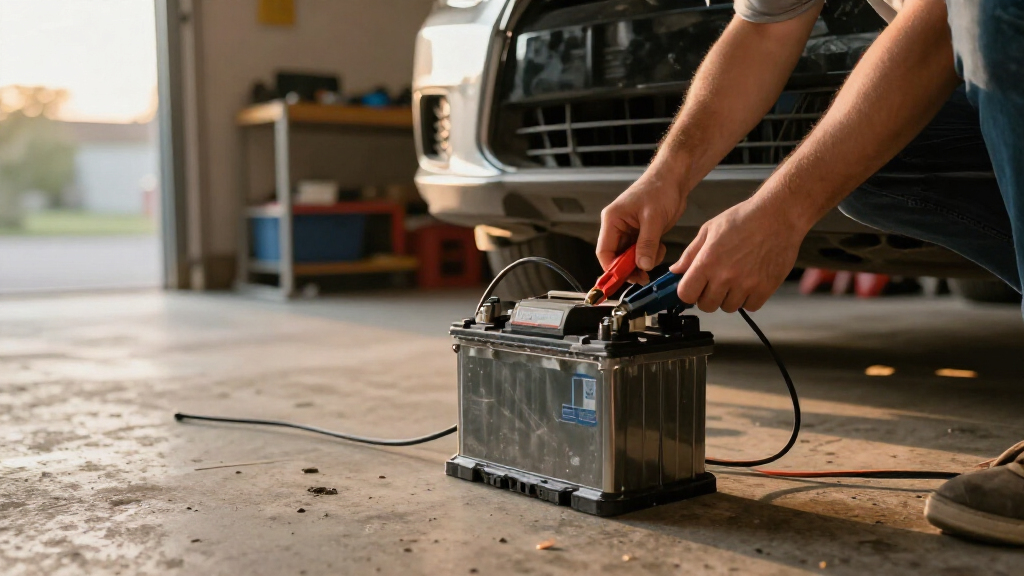

Among these automotive battery chargers, I rank the NOCO GENIUS10 as the best overall for its balance of charging power, 6V/12V compatibility, and maintenance use. The Schumacher SC1281 is a stronger fit if you want a traditional charger with engine-start assistance, while the NOCO GENIUS5 suits owners who value a smaller unit for routine battery care. The main tradeoffs are charging speed versus gentle maintenance, and compact convenience versus the bulk and extra functions of wheeled starters. Battery voltage, battery type, and how often a vehicle sits should guide the choice as much as amperage. Read on for the full comparison and buying advice.

Get business pricing on garage and car supplies
- Business-only prices and quantity discounts
- Tax-exempt purchasing
- Multiple users, one account, clear invoices
Complete the kit


Key Takeaways
- NOCO GENIUS10 leads for all-around use: Its 10A output and 6V/12V support make it more versatile than the smaller GENIUS5 and GENIUS1, without the size and starting focus of wheeled Schumacher units.
- Engine-start assistance changes the category: Schumacher’s SC1445, SC1446, SC1361, and SC1281 suit buyers who want help starting a vehicle, but they are bulkier and serve a different job than compact maintainers.
- Higher amperage is most useful when time matters: The E-FAST 25A and TowerTop’s selectable output target faster charging, while lower-output NOCO models make more sense for long-term care of vehicles that sit.
- 12V/24V flexibility narrows the fit: E-FAST, ConveniBee, PLXX, and NEXPEAK support both systems, but buyers with only passenger cars may prefer a simpler 6V/12V or 12V-only model.
- Brand and feature variety do not replace compatibility checks: Across the lineup, confirm battery chemistry and capacity support before purchase; voltage and amperage alone do not establish a safe match.
| NOCO GENIUS10 10A 6V/12V Smart Battery Charger and Maintainer |  | Best for Versatile Long-Term Maintenance | Output voltage: 12V output; supports 6V and 12V batteries | Input voltage: 120V | Amperage: 10A | VIEW LATEST PRICE | See Our Full Breakdown |
| Schumacher Electric SC1281 6V/12V Battery Charger and Maintainer |  | Best for Jump-Starting and Battery Checks | Model: SC1281 | Battery voltage support: 6V and 12V | Charging current: 2A–6A | VIEW LATEST PRICE | See Our Full Breakdown |
| E-FAST 25A Smart Battery Charger and Maintainer for 12V/24V Batteries |  | Best for High-Current 12V/24V Charging | Output voltage: 12V or 24V | Input voltage: 110V | Maximum output current: 25A at 12V; 15A at 24V | VIEW LATEST PRICE | See Our Full Breakdown |
| TowerTop 12V Smart Car Battery Charger and Maintainer, 2A/10A/25A |  | Best for 12V Lead-Acid Batteries with Engine-Start Backup | Output voltage: 12V | Input voltage: 120V AC | Charging current settings: 2A, 10A, 25A, and AUTO | VIEW LATEST PRICE | See Our Full Breakdown |
| ConveniBee 12V/24V Automatic Car Battery Charger and Maintainer, 15A |  | Best for Clear, All-Season Charging Status | Model: BC-108 | Output voltage: 12V and 24V DC | Input voltage: 110V | VIEW LATEST PRICE | See Our Full Breakdown |
| PLXX 12V/24V 15A Smart Battery Charger and Maintainer |  | Best for 12V/24V Flexibility | Model: BC-603 | Output voltage: 12V output; supports 12V and 24V batteries | Input voltage: 120V | VIEW LATEST PRICE | See Our Full Breakdown |
| 12V 15A Smart Automatic Car Battery Charger |  | Best for 12V Lithium Compatibility | Output specification: Listed as 15V DC output | Input: 110–240V AC, 50–60Hz | Current: 15A | VIEW LATEST PRICE | See Our Full Breakdown |
| Schumacher Electric SC1445 Wheeled 6/12V Battery Charger and 250A Engine Starter |  | Best for Engine Starting | Model: SC1445 | Battery voltage: 6V and 12V | Engine start: 250A | VIEW LATEST PRICE | See Our Full Breakdown |
| NOCO GENIUS5 5A 6V/12V Smart Battery Charger and Maintainer |  | Best Compact Maintainer | Output voltage: 12V charger; supports 6V and 12V batteries | Input voltage: 120V | Current: 5A | VIEW LATEST PRICE | See Our Full Breakdown |
| Schumacher Electric SC1280 15A Car Battery Charger and Maintainer, 6V/12V |  | Best for Automatic 6V/12V Charging | Model: SC1280 | Charging voltage: 6V and 12V | 12V charge rate: 15A | VIEW LATEST PRICE | See Our Full Breakdown |
| Schumacher Electric SC1446 10A Battery Charger and 200A Engine Starter |  | Best for Heavy-Duty Starting Support | Model: SC1446 | Battery voltage: 6V and 12V | Charge mode: 10A | VIEW LATEST PRICE | See Our Full Breakdown |
| NEXPEAK 15A 12V/24V Smart Battery Charger and Maintainer |  | Best for 12V and 24V Smart Charging | Output voltage: 12V | Input voltage: 110V | Charging current: 15A at 12V; 8A at 24V | VIEW LATEST PRICE | See Our Full Breakdown |
| NOCO GENIUS1 1A 6V/12V Smart Battery Charger and Maintainer |  | Best Compact Long-Term Maintainer | Output voltage: 12V output; compatible with 6V and 12V batteries | Input voltage: 120V | Amperage: 1A | VIEW LATEST PRICE | See Our Full Breakdown |
| Schumacher Electric SC1361 12V Battery Charger, Maintainer, and Engine Starter |  | Best for Automatic 12V Charging and Starting | Model: SC1361 | Voltage: 12V | Engine start: 50A | VIEW LATEST PRICE | See Our Full Breakdown |
| Clore Automotive PL2320 20-Amp Automatic Battery Charger and Maintainer |  | Best for Multi-Rate Lead-Acid Charging | Model: PL2320 | Voltage: 6V and 12V | Charge rates: 2A, 10A, and 20A | VIEW LATEST PRICE | See Our Full Breakdown |
| automotive battery charger | Input voltage | Output voltage | Model |
|---|---|---|---|
| NOCO GENIUS10 10A 6V/12V Smart | 120V | 12V output; supports 6V and 12V batteries | — |
| Schumacher Electric SC1281 6V/ | — | — | SC1281 |
| E-FAST 25A Smart Battery Charg | 110V | 12V or 24V | — |
| TowerTop 12V Smart Car Battery | 120V AC | 12V | — |
| ConveniBee 12V/24V Automatic C | 110V | 12V and 24V DC | BC-108 |
| PLXX 12V/24V 15A Smart Battery | 120V | 12V output; supports 12V and 24V batteries | BC-603 |
| 12V 15A Smart Automatic Car Ba | — | — | — |
| Schumacher Electric SC1445 Whe | — | — | SC1445 |
| NOCO GENIUS5 5A 6V/12V Smart B | 120V | 12V charger; supports 6V and 12V batteries | — |
| Schumacher Electric SC1280 15A | — | — | SC1280 |
| Schumacher Electric SC1446 10A | — | — | SC1446 |
| NEXPEAK 15A 12V/24V Smart Batt | 110V | 12V | — |
| NOCO GENIUS1 1A 6V/12V Smart B | 120V | 12V output; compatible with 6V and 12V batteries | — |
| Schumacher Electric SC1361 12V | — | — | SC1361 |
| Clore Automotive PL2320 20-Amp | 120V AC | — | PL2320 |
More Details on Our Top Picks
NOCO GENIUS10 10A 6V/12V Smart Battery Charger and Maintainer
The GENIUS10 is my pick for owners who want one compact charger to handle regular charging and ongoing battery care across more than one battery chemistry. Its 6V/12V and lead-acid/LiFePO4 compatibility gives it broader reach than the 12V lead-acid-only TowerTop, while its 10A output is better suited to larger batteries than a low-current maintainer. Temperature adjustment helps tailor charging to ambient conditions, and Force Mode can attempt charging a battery down to zero volts—useful when a battery is deeply discharged, though it is not a guarantee of recovery. It also supports indefinite maintenance. The tradeoff is that it lacks the Schumacher SC1281’s engine-start and testing functions, and the manual needs careful reading to use its modes properly.
Pros:- Supports 6V and 12V lead-acid and LiFePO4 batteries
- Temperature-adjusted charging adapts to ambient conditions
- Force Mode can charge batteries down to zero volts
- Supports indefinite battery maintenance
Cons:- Listed battery charge time is 10 hours
- Using its charging modes properly requires reading the manual
- Does not provide engine starting or battery and alternator testing
Best for: Drivers maintaining several 6V or 12V vehicles, including vehicles with LiFePO4 batteries, who want one charger for periodic charging and long-term upkeep.
Not ideal for: Buyers who need an engine-start boost or built-in alternator testing; the Schumacher SC1281 offers those functions, while the GENIUS10 focuses on charging and maintenance.
- Output voltage:12V output; supports 6V and 12V batteries
- Input voltage:120V
- Amperage:10A
- Battery compatibility:6V and 12V lead-acid and LiFePO4
- Maximum battery capacity:230Ah
- Listed battery charge time:10 hours
- Cable lengths:72in AC cable; 80in DC cable
- Warranty:3 years
Our verdict“Choose the GENIUS10 for adaptable charging and long-term care across lead-acid and LiFePO4 batteries, not for engine starting or diagnostic functions.”
Schumacher Electric SC1281 6V/12V Battery Charger and Maintainer
The Schumacher SC1281 stands apart from chargers that mainly focus on charging and maintenance: it combines those jobs with battery and alternator testing, reconditioning, and a 100A engine-start function. That makes it a more useful choice for a garage where a battery problem may need diagnosis or a vehicle may need help starting. Its 6V/12V support and compatibility with standard, AGM, deep-cycle, and 12V LiFePO4 batteries also give it wider application than the 12V lead-acid-only TowerTop. Charging current is listed at 2A–6A, however, so it is less focused on high-current routine charging than the TowerTop’s 25A setting or the E-FAST’s 25A 12V output. I’d choose it for its extra functions, not as the quickest charger in this group.
Pros:- Combines charging, maintenance, testing, reconditioning, and engine starting
- Supports both 6V and 12V batteries
- Works with standard, AGM, deep-cycle, and 12V LiFePO4 batteries
- Includes reverse-polarity protection and automatic shutoff
Cons:- Charging current is listed at only 2A–6A
- The provided information does not specify a battery capacity limit or charge time
- Includes only the charger and user manual
Best for: Home-garage owners who want a single 6V/12V unit for charging, maintenance, battery and alternator checks, and occasional engine starting.
Not ideal for: Buyers prioritizing fast, high-current charging; its listed charging current is 2A–6A, below the E-FAST and TowerTop’s maximum charging outputs.
- Model:SC1281
- Battery voltage support:6V and 12V
- Charging current:2A–6A
- Boost charging current:12A–30A
- Engine-start current:100A
- Compatible battery types:Standard, AGM, deep-cycle, and 12V LiFePO4
- Functions:Charging, maintaining, testing, reconditioning, and engine starting
- Safety features:Reverse-polarity protection and automatic shutoff
Our verdict“Pick the SC1281 if engine-start assistance and battery checks matter more than having the highest routine charging current.”
E-FAST 25A Smart Battery Charger and Maintainer for 12V/24V Batteries
For owners who need higher charging output and both 12V and 24V support, the E-FAST offers a different balance from the smaller-maintenance-focused NOCO GENIUS10. It supplies up to 25A at 12V and 15A at 24V, with selectable current levels or an auto mode, so it can suit different battery needs rather than forcing one fixed rate. Its eight-stage process, temperature-adjusted modes, repair function, and safety protections add useful controls for varied conditions. The 200-second booster is limited to 12V batteries, though, and the 16-hour repair mode is a lengthy process rather than a quick fix. Compared with the TowerTop, it adds 24V compatibility and LiFePO4 support, but it does not list an engine-start function.
Pros:- Supports 12V and 24V lead-acid and LiFePO4 batteries
- Offers selectable current settings up to 25A at 12V
- Includes auto mode, temperature-adjusted modes, and an eight-stage process
- Aluminum housing, cooling fan, and multiple electrical safety protections
Cons:- The 200-second booster mode works only with 12V batteries
- Repair mode takes 16 hours
- Does not list an engine-start function
Best for: Owners of 12V and 24V vehicles or equipment who want selectable charging rates, support for lead-acid and LiFePO4 batteries, and a high 12V output.
Not ideal for: Buyers who need an engine-start feature or a short repair cycle; the E-FAST lists neither engine starting nor a repair mode faster than 16 hours.
- Output voltage:12V or 24V
- Input voltage:110V
- Maximum output current:25A at 12V; 15A at 24V
- Current settings:2A, 8A, 20A, 25A, and Auto
- Compatible batteries:Lead-acid types including AGM, GEL, SLA, flooded, and EFB; LiFePO4
- Charging process:8-stage
- Booster mode:200 seconds; 12V batteries only
- Repair mode:16 hours
- Dimensions and weight:8.5 × 4.9 × 7.5in; 3.7lb
Our verdict“Choose the E-FAST for selectable high-current charging across 12V and 24V batteries, provided you do not need engine-start assistance.”
TowerTop 12V Smart Car Battery Charger and Maintainer, 2A/10A/25A
The TowerTop is a strong fit for garages centered on 12V lead-acid batteries, particularly when a charger also needs to provide engine-start assistance. Its 2A, 10A, 25A, and automatic settings give more charging-rate flexibility than the NOCO GENIUS10’s 10A output, while its 100A engine-start function adds a capability the GENIUS10 lacks. The LCD, eight-stage charging, repair mode, and winter mode make operating status and seasonal use easier to manage. Its narrower chemistry support is the key tradeoff: unlike the E-FAST, it does not support 24V batteries or list LiFePO4 compatibility. It also cannot repair completely drained batteries, so owners dealing with severely depleted batteries should not treat its repair feature as a recovery guarantee.
Pros:- Selectable charging at 2A, 10A, and 25A, plus AUTO
- 100A engine-start function
- Supports multiple 12V lead-acid battery types, including AGM and deep-cycle
- LCD status display, eight-stage charging, and winter mode
Cons:- Works with 12V lead-acid batteries only
- Cannot repair completely drained batteries
- Does not offer the 24V or LiFePO4 support found on the E-FAST
Best for: Owners of 12V lead-acid cars, trucks, or deep-cycle setups who want several charging rates and an engine-start function in one garage charger.
Not ideal for: Drivers with 24V systems, LiFePO4 batteries, or completely drained batteries they hope to repair; the E-FAST covers 24V and LiFePO4, while TowerTop excludes those uses.
- Output voltage:12V
- Input voltage:120V AC
- Charging current settings:2A, 10A, 25A, and AUTO
- Maximum charging current:25A
- Engine-start current:100A
- Compatible batteries:STD, AGM, GEL, wet, MF, EFB, calcium, and deep-cycle
- Charging stages:8
- Dimensions:7.68 × 10.04 × 4.92in
- Certifications:BC, ETL, FCC
Our verdict“Choose the TowerTop for a 12V lead-acid garage setup that benefits from selectable charging rates and engine-start backup.”
ConveniBee 12V/24V Automatic Car Battery Charger and Maintainer, 15A
The ConveniBee makes charge monitoring a central part of its appeal: its LCD shows voltage, current, and charge percentage, giving owners a clearer readout than the TowerTop’s listed LCD status display. It supports both 12V and 24V lead-acid batteries and offers fast-charge, maintenance, pulse-repair, winter, and all-season modes. That makes it a flexible choice for owners who move between cars, motorcycles, RVs, or boats, though its 15A output falls below the E-FAST’s 25A maximum at 12V. Its chemistry range is also narrower than the E-FAST’s, since LiFePO4 support is not listed. Pulse repair is specified for batteries above 3V, so this is not the right pick for attempting to recover a battery below that threshold.
Pros:- Supports 12V and 24V lead-acid batteries
- LCD displays voltage, current, and charge percentage
- Includes fast-charge, maintenance, pulse-repair, and seasonal modes
- Lists reverse-polarity and overcharge protection
Cons:- Pulse repair is specified only for batteries above 3V
- LiFePO4 compatibility is not listed
- 15A output is lower than the E-FAST’s 25A maximum at 12V
Best for: Owners of 12V and 24V lead-acid vehicles who want an LCD with charge details and seasonal charging and maintenance modes.
Not ideal for: Buyers needing LiFePO4 compatibility, output above 15A, or repair for a battery at or below 3V; the E-FAST offers LiFePO4 support and higher 12V output.
- Model:BC-108
- Output voltage:12V and 24V DC
- Input voltage:110V
- Current:15A
- Battery compatibility:AGM, GEL, wet/flooded, EFB, MF, and deep-cycle lead-acid
- Charging modes:Smart Charge, Auto Maintain, Pulse Repair, Auto Shutoff, Winter Mode, and All-Season Mode
- Pulse-repair threshold:Designed for batteries above 3V
- Dimensions and weight:11.2 × 5.6 × 8.2in; 12.2lb
- Warranty:3 years
Our verdict“Choose the ConveniBee for readable charge data and seasonal care across 12V and 24V lead-acid batteries, but skip it if you need LiFePO4 support or higher output.”
PLXX 12V/24V 15A Smart Battery Charger and Maintainer
The PLXX is a fit for garages that service both 12V and 24V lead-acid batteries, a range the NOCO GENIUS5 does not cover. Its 15A output and support for batteries from 4 to 300Ah give it more headroom for larger compatible batteries than that 5A NOCO, while winter mode, desulfation, and repair functions add options for seasonal or neglected batteries. The LCD reports voltage, current, and charge percentage, so it offers more at-a-glance detail than a basic maintainer. The tradeoff is its 12.8-pound, bench-sized body; it is less convenient to keep in a small vehicle kit than the compact GENIUS5. Repair mode also has a limit: the battery must be above 3V, and the charger is not intended for lithium batteries.
Pros:- Supports both 12V and 24V lead-acid systems and a broad range of battery types.
- 15A charging and a stated 4–300Ah capacity range suit batteries larger than those typically paired with low-output maintainers.
- Includes winter, desulfation, and repair modes alongside fast and trickle charging.
- LCD charge information, electrical protections, and a 3-year warranty.
Cons:- At 12.8 lb and 11.4 × 5.8 × 8.5 in, it is bulky for portable or glove-box use.
- Repair mode does not work on batteries below 3V.
- Does not support lithium batteries.
Best for: DIY owners and small workshops that charge several types of 12V and 24V lead-acid batteries, including larger deep-cycle batteries.
Not ideal for: Drivers seeking a lightweight travel charger or a charger for LiFePO4 batteries; this unit is relatively heavy and supports lead-acid chemistry only.
- Model:BC-603
- Output voltage:12V output; supports 12V and 24V batteries
- Input voltage:120V
- Compatible battery capacity:4–300Ah
- Battery types:AGM, gel, wet/flooded, EFB, calcium, MF, and deep-cycle lead-acid
- Modes:Fast charge, slow trickle charge, winter, repair, and desulfation
- Display:LCD showing voltage, current, and charging percentage
- Dimensions and weight:11.4 × 5.8 × 8.5 in; 12.8 lb
- Warranty:3 years
Our verdict“Choose the PLXX if you need one substantial charger for varied 12V and 24V lead-acid batteries and can accept its size and weight.”
12V 15A Smart Automatic Car Battery Charger
This charger stands out for pairing 15A output with 12V LiFePO4 support, a combination that separates it from the lead-acid-only PLXX. It also accepts several 12V lead-acid types, while its LCD includes ambient temperature and seasonal mode information—useful cues when charging in a cold garage or changing weather. Its compact 2 × 5 × 9-inch case is easier to store than the wheeled Schumacher SC1445, though the SC1445 is the stronger choice when engine-start assistance matters. There are operating limits: the instructions say not to leave it running unattended for more than 12 hours, and it needs an AC source rather than serving as a portable power bank. Buyers should also verify that the listed 15V DC output specification matches their expectations for a charger described as 12V.
Pros:- Supports both 12V lead-acid batteries and LiFePO4 batteries.
- 15A current offers faster charging potential than the 5A NOCO GENIUS5.
- LCD reports voltage, current, battery level, ambient temperature, and seasonal mode.
- Compact dimensions and multiple stated electrical protections.
Cons:- Instructions advise against leaving the charger operating unattended for more than 12 hours.
- Limited to 12V systems, unlike the 12V/24V PLXX.
- Requires a power source before use and does not provide engine starting.
Best for: Owners of 12V vehicles or equipment who need a compact charger for either lead-acid batteries or LiFePO4 batteries and can supervise charging sessions.
Not ideal for: Drivers with 24V systems, those wanting unattended long-term maintenance, or anyone needing an engine-start function.
- Output specification:Listed as 15V DC output
- Input:110–240V AC, 50–60Hz
- Current:15A
- Compatible batteries:12V lead-acid (AGM, GEL, SLA, VRLA) and LiFePO4
- Modes:Charging, maintenance, trickle charging, and pulse repair
- Display:LCD showing voltage, current, battery level, ambient temperature, and seasonal mode
- Safety protections:Eight-layer protection, including reverse connection, short circuit, overcurrent, and overheating
- Cable lengths:Input: 102 cm; output: 60 cm
- Dimensions:2 × 5 × 9 in
Our verdict“Pick this model for supervised 12V charging when LiFePO4 support and a compact case matter more than 24V coverage or hands-off operation.”
Schumacher Electric SC1445 Wheeled 6/12V Battery Charger and 250A Engine Starter
The SC1445 is the lineup’s choice for a weak battery that may need more than a slow charge: its 250A engine-start function and 25A/50A boost modes add capabilities absent from the automatic Schumacher SC1280. It also handles 6V and 12V standard, AGM, gel, and deep-cycle batteries. The wheeled steel cabinet and retractable handle make sense for a garage where the charger moves between vehicles, but they make it a poor fit for a portable roadside kit. Unlike the SC1280 or NOCO GENIUS5, the SC1445 uses a manual timer and does not list automatic charging. That puts more responsibility on the operator to monitor charging and stop at the right time. Choose it for hands-on starting and boost duties, not for unattended maintenance.
Pros:- 250A engine-start output can assist with starting a vehicle with a weak battery.
- Offers 25A and 50A boost modes plus a 10A charging mode.
- Works with 6V and 12V standard, AGM, gel, and deep-cycle batteries.
- Wheels and retractable handle help move the heavy-duty steel unit around a garage.
Cons:- Manual timer requires the user to manage charging time.
- No automatic charging or maintenance mode is described, unlike the Schumacher SC1280.
- Wheeled cabinet is bulky for storage in a car or compact workshop.
Best for: Home mechanics and small garages that want a mobile 6V/12V charger with strong engine-start and boost capability.
Not ideal for: Drivers wanting an automatic maintainer for long-term battery care, or buyers who need a compact charger to carry in a vehicle.
- Model:SC1445
- Battery voltage:6V and 12V
- Engine start:250A
- Boost charge:25A and 50A
- Charge mode:10A
- Timer:Manual timer up to 135 minutes
- Battery types:Standard, AGM, gel, and deep-cycle
- Construction and mobility:Heavy-duty steel case, retractable handle, and wheels
- Power cord:6 ft
Our verdict“Choose the SC1445 when engine starting and high-current boost matter more than automatic charging or portability.”
NOCO GENIUS5 5A 6V/12V Smart Battery Charger and Maintainer
The GENIUS5 favors careful, low-fuss battery care over rapid recovery. Its 5A output and compact format suit smaller batteries and vehicles that sit between drives; temperature sensing adjusts charging, and its monitoring system supports indefinite maintenance. It also covers 6V and 12V lead-acid batteries plus LiFePO4, giving it a chemistry option the Schumacher SC1280 lacks. For a depleted battery, Force Mode and charging down to 1V offer more recovery flexibility than a basic maintainer. The tradeoff is speed: its stated charge time is 8 hours, and 5A is less suited to larger batteries than the PLXX’s 15A output. The listed maximum capacity is 120Ah, so owners of large batteries who need quicker turnaround should look at a higher-current charger instead.
Pros:- Supports 6V and 12V lead-acid batteries as well as LiFePO4.
- Temperature sensing adjusts charging to help suit changing conditions.
- Force Mode and operation down to 1V provide options for deeply discharged batteries.
- Monitoring system supports indefinite maintenance.
Cons:- 5A output can mean long charging sessions for larger batteries.
- Maximum supported battery capacity is listed as 120Ah.
- Less suited to rapid charging than the 15A Schumacher SC1280.
Best for: Owners of cars, motorcycles, or seasonal vehicles who want a compact charger for routine 6V/12V maintenance and occasional low-voltage recovery.
Not ideal for: Workshops or owners of large batteries who need fast turnaround; its 5A output is slower than the 15A PLXX and Schumacher SC1280.
- Output voltage:12V charger; supports 6V and 12V batteries
- Input voltage:120V
- Current:5A
- Battery compatibility:6V and 12V lead-acid and LiFePO4
- Maximum battery capacity:120Ah
- Low-voltage charging:Can charge batteries as low as 1V; includes Force Mode
- Battery charge time:8 hours
- Cable lengths:AC: 72 in; DC: 80 in
- Warranty:3 years
Our verdict“Choose the GENIUS5 for compact, chemistry-flexible maintenance and low-voltage recovery, not for fast charging large batteries.”
Schumacher Electric SC1280 15A Car Battery Charger and Maintainer, 6V/12V
The SC1280 is a practical middle ground for owners who want automatic charging and maintenance without the manual oversight required by the wheeled SC1445. It detects 6V or 12V batteries, charges 12V batteries at 15A, and switches to a 3A maintenance rate; it also tests and restores compatible standard, AGM, gel, and deep-cycle batteries. That makes it a stronger everyday garage choice than the GENIUS5 when charging speed matters, though the NOCO supports LiFePO4 and the SC1280 does not. Its 6V charge rate is only 2A, so owners of larger 6V batteries should not expect the same pace as its 12V mode. It also needs AC power and lacks the SC1445’s high-current engine-start function.
Pros:- Combines charging, maintenance, testing, and restoration functions.
- Automatic voltage detection handles compatible 6V and 12V batteries.
- 15A charging for 12V batteries is faster than the 5A NOCO GENIUS5.
- Includes desulfation and reverse-clamp protection.
Cons:- The 15A rate applies to 12V charging; 6V charging is limited to 2A.
- Does not list LiFePO4 compatibility, unlike the NOCO GENIUS5.
- Requires AC power and does not provide engine starting.
Best for: Owners of 6V and 12V lead-acid vehicles who want automatic charging, battery testing, and maintenance in one AC-powered unit.
Not ideal for: LiFePO4 owners, people needing a portable battery-powered solution, or users who want an engine starter or high-current boost mode.
- Model:SC1280
- Charging voltage:6V and 12V
- 12V charge rate:15A
- 6V charge rate:2A
- Maintenance rate:3A
- Battery types:Standard, AGM, gel, and deep-cycle
- Functions:Charging, maintenance, testing, restoration, and desulfation
- Safety feature:Reverse-clamp protection
- Cable lengths:Power cord: 6 ft; booster cables: 6 ft
Our verdict“Choose the SC1280 for automatic 6V/12V lead-acid charging and maintenance, especially when its 15A 12V mode suits your needs.”
Schumacher Electric SC1446 10A Battery Charger and 200A Engine Starter
The SC1446 is the choice here when charging is only part of the job: its 200A engine-start mode and two boost settings add recovery and starting capability that the compact NOCO GENIUS1 cannot provide. It handles 6V and 12V batteries across standard, AGM, gel, and deep-cycle types, making it useful around a garage with varied equipment. Wheels and a retractable handle help move the steel-cased unit, though its six-foot leads still limit where it can reach from an outlet. The tradeoff is hands-on operation: its manual timer and analog ammeter call for monitoring, unlike the automatic charging approach of the Schumacher SC1361. Choose it for high-output starting help, not unattended maintenance.
Pros:- 200A engine-start mode adds starting assistance beyond routine charging
- Works with 6V and 12V standard, AGM, gel, and deep-cycle batteries
- Wheels and a retractable handle ease movement around a garage
- Analog ammeter and manual timer provide direct control over charging
Cons:- Manual operation requires the user to monitor the charging session
- Product information does not specify automatic shutoff
- Six-foot cables can restrict placement around a vehicle
Best for: Garage owners and vehicle hobbyists who need a wheeled charger that can also provide substantial starting assistance to 6V or 12V vehicles.
Not ideal for: Drivers seeking a compact, automatic maintainer for unattended charging, since this model uses a manual timer and requires monitoring.
- Model:SC1446
- Battery voltage:6V and 12V
- Charge mode:10A
- Engine start:200A
- Boost modes:40A at 12V; 20A at 6V/12V
- Battery types:Standard, AGM, gel, and deep-cycle
- Timer and display:Manual timer up to 135 minutes; analog ammeter
- Mobility and construction:Heavy-duty steel case, retractable handle, and wheels
- Cable lengths:6 ft booster cables and 6 ft power cord
Our verdict“Choose the SC1446 if you want a movable, high-output charger and starter and are comfortable supervising manual charging.”
NEXPEAK 15A 12V/24V Smart Battery Charger and Maintainer
The NEXPEAK 15A suits owners who need one charger for both 12V and 24V batteries, with a higher 15A output at 12V than the small NOCO GENIUS1. Its nine-stage charging, LCD status display, and protective features make charging status easier to follow, while trickle mode can maintain a charged battery. It also supports both lead-acid and LiFePO4 batteries, a broader chemistry mix than the lead-acid-only Clore PL2320. The key limit is battery condition: the product description says it cannot charge completely dead batteries, so it is not the pick for every recovery situation. It also needs AC power, which makes it a garage or driveway tool rather than a portable solution for roadside use.
Pros:- Supports both 12V and 24V batteries, with different output rates for each
- Compatible with lead-acid and LiFePO4 batteries
- LCD displays charging information and status
- Trickle mode and built-in protections support maintenance charging
Cons:- Cannot charge completely dead batteries
- Requires an AC outlet, limiting use away from home or a workshop
- Single clamp connection means it is designed to charge one battery at a time
Best for: Owners of cars, light trucks, or equipment with 12V and 24V lead-acid or LiFePO4 batteries who want a display and maintenance mode near an AC outlet.
Not ideal for: Drivers dealing with completely dead batteries or needing a charger that works without household AC power.
- Output voltage:12V
- Input voltage:110V
- Charging current:15A at 12V; 8A at 24V
- Trickle charging current:1.75A
- Charging stages:9
- Compatible batteries:Lead-acid and LiFePO4
- Dimensions and weight:8.46 x 7.28 x 4.13 in; 2.4 lb
- Cord length:8.9 ft
- Connection:Cable clamp/alligator clip; one port
Our verdict“Pick the NEXPEAK if you need a displayed, multi-stage charger for live 12V and 24V batteries and do not need dead-battery recovery.”
NOCO GENIUS1 1A 6V/12V Smart Battery Charger and Maintainer
The NOCO GENIUS1 prioritizes compact maintenance over fast charging. Its 1A output is suited to keeping a small battery topped up or maintaining a vehicle stored between drives, not quickly recharging a large automotive battery. Compared with the 15A NEXPEAK, it is far slower, but it adds 6V support and a temperature sensor that adjusts charging to ambient conditions. Force Mode can address batteries down to zero volts, a recovery feature not specified for the NEXPEAK, though it does not change the GENIUS1’s low charging rate. Compatibility includes lead-acid and LiFePO4, with LiFePO4 capacity capped at 30Ah. Clamps and eyelet terminals give owners two connection options; this is a small-battery specialist rather than an all-purpose fast charger.
Pros:- Compact 1A output is suited to maintaining batteries during storage
- Supports 6V and 12V lead-acid and LiFePO4 batteries
- Temperature sensing adjusts charging for ambient conditions
- Force Mode can charge batteries down to zero volts
Cons:- Low 1A current makes it slow for routine automotive recharging
- LiFePO4 compatibility is limited to batteries up to 30Ah
- A single charging rate offers less flexibility than the Clore PL2320’s 2A, 10A, and 20A options
Best for: Owners storing motorcycles, smaller vehicles, or equipment with 6V/12V batteries who want slow, long-term maintenance and flexible connections.
Not ideal for: Drivers who need fast charging for a car battery or routinely maintain LiFePO4 batteries larger than 30Ah.
- Output voltage:12V output; compatible with 6V and 12V batteries
- Input voltage:120V
- Amperage:1A
- Compatible batteries:6V and 12V lead-acid and LiFePO4
- Maximum LiFePO4 capacity:30Ah
- Charging features:Temperature sensing, Force Mode, maintenance, and pulse desulfation
- Included connections:Battery clamps and eyelet terminals
- DC cable length:110 in
- Warranty:3 years
Our verdict“Choose the GENIUS1 for compact, low-current maintenance and occasional recovery, not for fast charging a full-size vehicle battery.”
Schumacher Electric SC1361 12V Battery Charger, Maintainer, and Engine Starter
The Schumacher SC1361 makes the most sense for buyers who want starting assistance without the manual oversight of the wheeled SC1446. Its 50A engine-start mode is lower-output than the SC1446’s 200A setting, but the SC1361 adds automatic 2A–6A charging, maintenance, and automatic shutoff. Reverse-polarity protection and spark-proof clamps also reduce the chance of common connection errors. It supports standard, AGM, and LiFePO4 batteries, giving it a useful chemistry range for a 12V-focused unit. That focus is also its main limitation: unlike the Clore PL2320, which supports both 6V and 12V lead-acid batteries, the SC1361 is designed for 12V only. It is a practical vehicle-battery choice, not a multi-voltage shop charger.
Pros:- Combines charging, maintenance, and 50A engine-start functions
- Automatic 2A–6A charging and shutoff reduce the need for manual monitoring
- Supports standard, AGM, and LiFePO4 12V batteries
- Reverse-polarity protection and spark-proof clamps add connection safeguards
Cons:- Designed for 12V batteries only
- 50A engine-start output is below the SC1446’s 200A rating
- Charging output tops out at 6A, so it is less suited to faster charging than higher-current options
Best for: 12V car and light-truck owners who want automatic charging and maintenance, plus engine-start assistance and built-in connection protections.
Not ideal for: Owners of 6V vehicles or mixed-voltage equipment, and anyone needing the stronger starting output of the SC1446.
- Model:SC1361
- Voltage:12V
- Engine start:50A
- Boost charge:10A
- Charging current:2A–6A
- Battery types:Standard, AGM, and LiFePO4
- Charging control:Microprocessor-controlled automatic charging and automatic shutoff
- Safety features:Reverse-polarity protection and spark-proof clamps
Our verdict“Choose the SC1361 for automatic 12V charging with moderate starting help, but look elsewhere for 6V support or higher-output starting.”
Clore Automotive PL2320 20-Amp Automatic Battery Charger and Maintainer
The Clore Automotive PL2320 stands out for its choice of 2A, 10A, and 20A charging rates, letting owners match output to a maintenance task or a more substantial recharge. It also offers battery maintenance and a stable power supply mode for service work, features that make it more workshop-oriented than the compact NOCO GENIUS1. Unlike the NEXPEAK, it supports 6V as well as 12V, but its battery chemistry coverage is limited to lead-acid types; it is not the pick for LiFePO4 batteries. The supplied data describes automatic charging, but does not specify engine-start capability, so buyers needing a jump-start function should choose the SC1361 or SC1446 instead. Its range of rates and battery types favors garage versatility over lithium compatibility.
Pros:- Three charging rates support both maintenance and higher-current charging
- Works with 6V and 12V lead-acid batteries
- Includes battery maintenance and stable power supply modes
- Supports flooded, AGM, gel, marine, and deep-cycle batteries
Cons:- Does not support LiFePO4 batteries
- No engine-start capability is listed
- A one-year warranty is specified
Best for: Home mechanics and service users who need selectable charging rates, maintenance, and stable power supply for 6V or 12V lead-acid batteries.
Not ideal for: Owners of LiFePO4 batteries or drivers seeking a charger with an engine-start function.
- Model:PL2320
- Voltage:6V and 12V
- Charge rates:2A, 10A, and 20A
- Input voltage:120V AC
- Battery types:Flooded, AGM, gel cell, spiral wound, marine, and deep-cycle
- Operating modes:Battery maintenance and stable power supply
- Dimensions:8 x 9.4 x 4.5 in
- Weight:1.3 lb
- Warranty:1 year
Our verdict“Choose the PL2320 for flexible-rate charging and service functions across 6V and 12V lead-acid batteries, not for lithium batteries or starting assistance.”
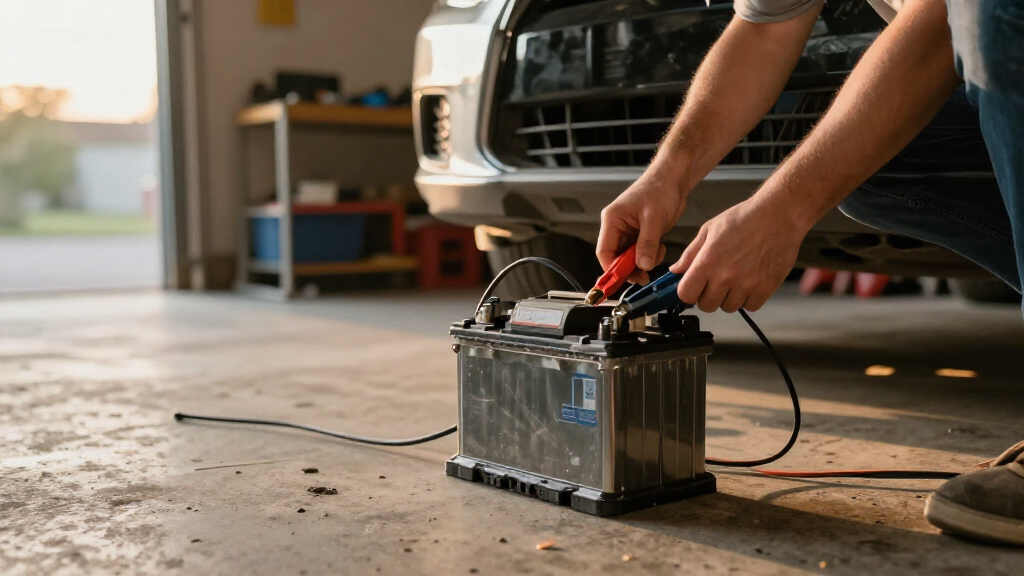
How We Picked
I compared these chargers on the factors that most affect ownership: voltage and battery compatibility, charging output, maintenance capability, ease of use, and added starting functions. I gave preference to models that serve common automotive needs without requiring buyers to pay for functions they may not use. I also separated compact, low-output maintainers from high-output chargers and engine-start units, since they solve different problems rather than competing on amperage alone.
The ranking reflects usefulness across a range of drivers, not a single specification. The NOCO GENIUS10 ranks first for balancing output and broad 6V/12V use; the Schumacher SC1281 earns a place among the standouts for buyers who want starting support. Dual-voltage models rank higher for mixed 12V/24V needs, while portable maintainers make more sense for slow upkeep than quick recovery. Since detailed battery-chemistry and capacity compatibility can vary, I advise checking each model’s manufacturer specifications before choosing.
Factors to Consider When Choosing Automotive Battery Chargers
Choosing an automotive charger starts with the vehicle and the task, not the largest amperage number. I would first identify the battery system and chemistry, then decide whether I need routine maintenance, a faster recharge, or emergency starting support. These distinctions help avoid buying a capable unit that is poorly matched to how the car is actually used.
Match voltage and battery chemistry
Start by checking the battery label or vehicle manual for voltage and chemistry, such as lead-acid, AGM, or another supported type. A 6V/12V charger can suit more than one vehicle system, while a 12V/24V model may be useful for equipment or vehicles beyond ordinary passenger cars. Do not assume that a charger supports every battery just because its voltage matches; charging profiles can differ by chemistry. A wrong mode can lead to poor charging or battery damage. I would verify the charger’s supported battery types and any capacity limits against the battery maker’s guidance before connecting it.
Choose output for the job, not the headline
Amperage affects charging pace, but more output is not automatically better for every owner. Higher-output units can shorten recharge time when a battery needs recovery, while lower-output chargers are often a practical match for maintaining a vehicle that sits between drives. The battery’s condition and capacity also affect how long charging takes, so output alone cannot promise a specific turnaround. Buying a high-output model for occasional maintenance may add size and complexity without much benefit. If you need both quick charging and upkeep, check whether the unit offers selectable modes rather than relying on its maximum rating.
Decide whether engine-start assistance is worth the bulk
A charger with engine-start assistance combines battery charging with a short burst intended to help start a vehicle. That can be useful in a garage where a weak battery sometimes prevents starting, but it is not the same as a compact portable jump starter or a substitute for diagnosing a failing battery. These units can be heavier and less convenient to store than small maintainers. Consider how often you face no-start situations and whether the charger will stay in one place. If you mainly want to preserve a healthy battery, a dedicated maintainer is usually the simpler fit.
Think through where and how you will use it
Setup and storage affect whether a charger gets used consistently. Look at lead length, clamp access, display readability, controls, and whether the unit can stay connected safely for maintenance according to its manual. A larger charger may be easier to operate from a fixed garage shelf, while a compact model is simpler to keep with seasonal equipment. Outdoor charging calls for extra care: check the manufacturer’s placement and weather guidance rather than assuming a unit is weatherproof. Also plan a safe location with ventilation and a power outlet before buying.
Pay for flexibility only when you need it
Multi-voltage support and selectable modes can make one charger serve a mixed garage, but extra capability has little value if every vehicle uses the same battery system. Before choosing a dual-voltage unit, list the vehicles and batteries you intend to charge and check that the charger supports each one. A simpler model can be easier to use and store for a single-car household. On the other hand, a shop or owner of varied equipment may benefit from broader compatibility. I would spend more for features tied to a real use case, not a longer feature list.
Know when charging is not the fix
A charger can restore charge, but it cannot repair every battery problem. Repeated discharge, a battery that will not hold charge, corroded connections, or an underlying alternator issue may call for testing or repair rather than a more powerful charger. Avoid repeatedly using engine-start modes as a stand-in for maintenance or diagnosis. Follow the manual for connection order, charging location, and safety precautions, especially around damaged batteries. If a battery behaves abnormally, stop charging and seek a qualified inspection.
Frequently Asked Questions
Should I choose a 10A or 15A automotive battery charger?
Choose based on how quickly you expect to recharge and the batteries you need to support, rather than treating the larger number as universally better. A 15A charger may be preferable when faster charging is a recurring need, while a 10A unit can be a more balanced choice for a mix of charging and maintenance. Actual charging time depends on battery capacity, condition, and the charger’s operating mode. Check the battery maker’s recommendations and the charger’s supported capacity before deciding. For a vehicle that mostly sits with a healthy battery, maintenance features may matter more than the difference in output.
Can I leave an automotive battery charger connected while my car is parked?
Some chargers are designed to maintain a battery over time, but you should only leave one connected if its manual permits that use and it is set to the correct battery mode. A charger’s maintenance function does not make every setup safe in every location. Follow the instructions for ventilation, connection points, and the electrical outlet, and keep cables clear of moving or hot parts. Check whether the battery chemistry is supported before using long-term maintenance. If the battery or charger becomes unusually hot, damaged, or behaves abnormally, disconnect it safely and get advice.
Will a battery charger start my car if the battery is completely dead?
Not necessarily: a standard charger may need time to raise the battery charge before the vehicle can start. Models with an engine-start function are intended to provide added starting assistance, but they are not guaranteed to work with every vehicle or battery condition. A deeply discharged, damaged, or internally failed battery may not respond to either feature. Check the unit’s starting instructions and vehicle compatibility before relying on it in an emergency. If the car repeatedly fails to start, have the battery and charging system tested rather than treating the charger as a permanent fix.
Is a 12V/24V charger a good choice for a regular passenger car?
A 12V/24V charger can charge a 12V passenger-car battery if the model supports that battery’s chemistry and capacity. The 24V setting is useful only when you also have compatible 24V equipment or vehicles; it does not improve charging of a 12V battery. A dual-voltage unit may add flexibility for a mixed garage, but it can be unnecessary for a household with only 12V cars. Check how voltage selection works so you can avoid choosing the wrong setting. If you have no 24V use, a simpler charger may be easier to operate.
When should I buy a charger with engine-start assistance instead of a maintainer?
Choose engine-start assistance if you want one garage unit to charge batteries and provide help during occasional no-start situations. Pick a maintainer if your main goal is preserving a battery in a car that sits for long periods, since compact, lower-output models are often easier to store and use for that job. Starting units can be larger and heavier, so consider where you will keep one and how often you expect to need the extra function. Neither type replaces a proper battery test when failures recur. For frequent roadside emergencies, compare a dedicated jump starter as a separate tool.
Conclusion
For most drivers, I would choose the NOCO GENIUS10 as the best overall because its 10A output and 6V/12V support balance routine charging with broader use. The best value depends on the job: the NOCO GENIUS5 is a sensible middle ground for owners prioritizing maintenance, while the GENIUS1 fits slow upkeep of a vehicle that rarely moves. For a premium, higher-capability garage setup, consider the E-FAST 25A if its 12V/24V support and higher output match your equipment; the Schumacher SC1445 is the more relevant pick if engine-start assistance and wheels matter. Beginners who want a compact, simpler charger can start with the GENIUS5, while buyers with 24V needs should compare the E-FAST, ConveniBee, PLXX, and NEXPEAK against their battery specifications. Before buying, confirm chemistry and capacity compatibility—those details matter more than selecting the biggest amperage rating.