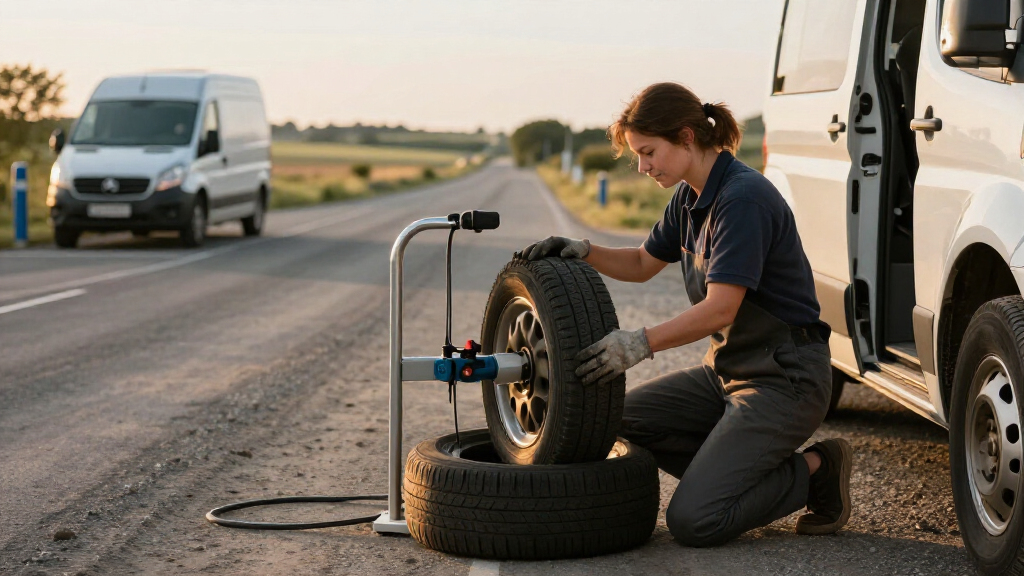
Portable tire changing machines range from compact manual stands for occasional car-tire work to powered equipment built for truck wheels and busy shops. My best overall pick is the LCTX Manual Tire Changer, whose stated 12–21-inch rim range and tire capacity up to 39 inches give it broad manual versatility. The VEVOR Manual Tire Changer is a simpler small-wheel option, while the KATOOL ME 2.0HP 24-inch Changer and Balancer Combo suits buyers who need powered changing and balancing in one setup. The main tradeoffs are portability versus stability, manual effort versus power, and a wide fit range versus a machine designed for a specific wheel type. Read on for the full breakdown, buying advice, and answers to common fit and setup questions.

Get business pricing on garage and car supplies
- Business-only prices and quantity discounts
- Tax-exempt purchasing
- Multiple users, one account, clear invoices
Complete the kit


Key Takeaways
- The lineup splits into three different jobs: compact manual changers for car and light-duty work, powered changer-and-balancer combinations for shop use, and specialized pneumatic or electric machines aimed at truck tires.
- The LCTX manual model stands out for stated size range: its 12–21-inch rim capacity and up-to-39-inch tire capacity cover more varied wheel sizes than the VEVOR model’s stated 8–16-inch tire range.
- Manual portability comes with a labor tradeoff: the Auto Dynasty, DNA Motoring, LCTX, and VEVOR options avoid relying on a powered changer, but demand more operator effort and a secure mounting surface.
- Combo machines prioritize workflow over easy transport: WEIZE and KATOOL changer-and-balancer packages combine two shop tasks, but buyers should plan for their footprint, power needs, and setup rather than treating them like roadside tools.
- Truck-focused models are not interchangeable: the JARYANNIX 22.5-inch pneumatic unit, TECHTONGDA electric machine, and XK semi-truck changers target heavier wheel work; confirm wheel compatibility, air or electrical requirements, and mounting arrangements before choosing among them.
| Auto Dynasty Manual Tire Changer for 15–21-Inch Tires |  | Best Compact Manual Pick | Brand: Auto Dynasty | Tire diameter compatibility: 15–21 inches | Material: High-carbon steel | VIEW LATEST PRICE | See Our Full Breakdown |
| DNA Motoring Manual Tire Changer Portable Hand Bead Breaker for 15″ to 21″ Tires – Model TOOLS-00781 |  | Best for Small Garages and Light Shops | Manufacturer: DNA MOTORING | Model: TOOLS-00781 | Tire compatibility: 15–21 inches | VIEW LATEST PRICE | See Our Full Breakdown |
| XK Heavy-Duty Electric Semi-Truck Tire Changer |  | Best Portable Electric Truck Option | Brand: XK | Model: XK-Electric Truck Tire Changer | Power source: 110V | VIEW LATEST PRICE | See Our Full Breakdown |
| WEIZE 2 HP Tire Changer with Rim Clamp Style and 4 Clamping Protectors |  | Best Powered Choice for Light-Vehicle Shops | Brand: WEIZE | Model: PLA-1010 | Motor power: 2 HP | VIEW LATEST PRICE | See Our Full Breakdown |
| WEIZE Tire Changer and Wheel Balancer Combo |  | Best Complete Shop Setup | Brand: WEIZE | Item weight: 718 pounds | Tire changer motor power: 1.5 kW (2 HP) | VIEW LATEST PRICE | See Our Full Breakdown |
| LCTX Manual Tire Changer for 12–21-Inch Rims and Tires up to 39 Inches |  | Best Manual Range | Rim compatibility: 12–21 inches | Maximum tire diameter: 39 inches (990 mm) | Compatible tire types: Tubeless and low-profile | VIEW LATEST PRICE | See Our Full Breakdown |
| JARYANNIX 22.5-Inch Pneumatic Portable Truck Tire Changer |  | Best for R22.5 Truck Tires | Compatible tire size: R22.5 inches | Power source: Pneumatic | Operating air pressure: 0.8–1.2 MPa | VIEW LATEST PRICE | See Our Full Breakdown |
| KATOOL ME 2.0HP 24″ Tire Changer and Wheel Balancer Combo (Max Tire Diameter 39″, Inside Clamp 14″-24″) |  | Best Integrated Shop Setup | Motor power: 2.0 HP | Voltage: 110V (120V North American version available) | Maximum tire diameter: 39 inches | VIEW LATEST PRICE | See Our Full Breakdown |
| KATOOL Tire Changer and Wheel Balancer Combo, 2.0 HP, KT-T830 + KT-B700 |  | Best for High-Volume Shop Use | Model: KT-T830 + KT-B700 | Motor power: 2.0 HP | Outside clamp range: 12–24 inches | VIEW LATEST PRICE | See Our Full Breakdown |
| VEVOR Manual Tire Changer for 8–16-Inch Tires |  | Best Compact Manual Pick | Compatible tire size: 8–16 inches | Material: Q235B forged steel | Weight: 30.9 lb | VIEW LATEST PRICE | See Our Full Breakdown |
| XK Heavy-Duty Portable Pneumatic Semi-Truck Tire Changer |  | Best Portable Pick for Common 22.5-Inch Truck Tires | Power source: Pneumatic | Working pressure: 0.8–1.2 | Rotation speed: 5 RPM | VIEW LATEST PRICE | See Our Full Breakdown |
| XK Heavy-Duty Pneumatic Portable Semi-Truck Tire Changer |  | Best for Patent-Specified 22.5-Inch Fleet Work | Power source: Pneumatic | Working pressure: 0.8–1.2 | Rotation speed: 5 RPM | VIEW LATEST PRICE | See Our Full Breakdown |
| TECHTONGDA Portable Electric Tire Changer for R16, R17–19.5, and R22.5 Tires |  | Best Low-Profile Electric Option | Voltage: 110V | Motor power: 4 kW | Compatible tires: R16, R17–19.5, and R22.5 series | VIEW LATEST PRICE | See Our Full Breakdown |
| KATOOL ME-T500 Tire Changer Machine |  | Best for a Fixed Workshop with Broad Rim Coverage | Model: MET500 | Motor power: Conflicting listings: 2.0 HP in title and 1.5 HP in description | Voltage: 120V | VIEW LATEST PRICE | See Our Full Breakdown |
| KATOOL 2.0 HP Tire Machine Combo Double Assist Tire Changer and Wheel Balancer (Model 830/760) |  | Best Complete Fixed-Shop Package | Model: 830760 | Motor power: 2.0 HP | Voltage: 120V / single-phase | VIEW LATEST PRICE | See Our Full Breakdown |
| portable tire changing machine | Package dimensions |
|---|---|
| Auto Dynasty Manual Tire Chang | — |
| DNA Motoring Manual Tire Chang | 37 × 9 × 9 inches |
| XK Heavy-Duty Electric Semi-Tr | 31.5 × 17.3 × 22.4 inches |
| WEIZE 2 HP Tire Changer with R | — |
| WEIZE Tire Changer and Wheel B | — |
| LCTX Manual Tire Changer for 1 | 25.98 × 14.76 × 11.81 inches |
| JARYANNIX 22.5-Inch Pneumatic | 33 × 25 × 20 inches |
| KATOOL ME 2.0HP 24" Tire Chang | 45 × 32 × 32 inches |
| KATOOL Tire Changer and Wheel | — |
| VEVOR Manual Tire Changer for | — |
| XK Heavy-Duty Portable Pneumat | 31.5 × 17.3 × 22.4 inches |
| XK Heavy-Duty Pneumatic Portab | 31.5 × 17.3 × 22.4 inches |
| TECHTONGDA Portable Electric T | — |
| KATOOL ME-T500 Tire Changer Ma | — |
| KATOOL 2.0 HP Tire Machine Com | 47 × 39 × 34 inches |
More Details on Our Top Picks
Auto Dynasty Manual Tire Changer for 15–21-Inch Tires
For a portable setup aimed at passenger vehicles, I’d put the Auto Dynasty manual changer ahead of the much heavier powered machines in this lineup. At 37 pounds, it is a more plausible choice to store between jobs or move around a home garage, while its 15–21-inch range covers many sedan and SUV tires. The high-carbon steel frame, rust-resistant coating, anti-slip bolts, and lock pins address stability and wear during manual work. That simplicity comes with a clear limit: there is no motor to reduce effort, and the description specifies light vehicles rather than broader truck compatibility. The DNA Motoring model lists a similar size range and safety approach, so I’d choose between them based on verified vehicle fit and setup needs rather than expecting a different class of machine here.
Pros:- 15–21-inch compatibility covers a useful range of light-vehicle tires.
- 37-pound weight is more manageable for storage and repositioning than the powered shop machines here.
- High-carbon steel frame is suited to repeated manual work.
- Anti-slip bolts, safety lock pins, and rust-resistant coating support steadier, longer-term use.
Cons:- Manual operation demands physical effort and time.
- Vehicle compatibility beyond sedans, SUVs, and other light vehicles is not specified.
- Its 21-inch limit excludes larger tire and rim applications.
Best for: DIY car and SUV owners who need a manually operated changer that can be stored or repositioned in a home garage.
Not ideal for: Drivers changing tires often, buyers who need powered assistance, or anyone working with vehicles beyond the stated light-vehicle fit.
- Brand:Auto Dynasty
- Tire diameter compatibility:15–21 inches
- Material:High-carbon steel
- Safety features:Anti-slip bolts and safety lock pins
- Item weight:37 pounds
- Dimensions:18 × 14.5 × 37 inches
- Manufacturer part number:ADTOOLS00781
Our verdict“Choose the Auto Dynasty if you want a storable manual changer for light vehicles and can accept the effort involved.”
DNA Motoring Manual Tire Changer Portable Hand Bead Breaker for 15″ to 21″ Tires – Model TOOLS-00781
The DNA Motoring manual changer makes the most sense for buyers who want a portable 15–21-inch tool that the listing positions for both DIY garages and small shops. Its 32.5-pound listed weight is lighter than the Auto Dynasty’s 37 pounds, though either still calls for deliberate handling rather than casual one-handed transport. Both models share a high-carbon steel build, rust-resistant coating, and anti-slip bolts with lock pins, so the distinction is less about capability than about the DNA’s stated broader fit for sedans, SUVs, trucks, and light motor vehicles. That fit should be checked against the actual vehicle and tire before buying. Like the Auto Dynasty, this is a hand-operated machine: the portable format saves space and power requirements, but not the physical work of changing a tire.
Pros:- Listed 32.5-pound weight is lower than the Auto Dynasty manual changer’s listed 37 pounds.
- 15–21-inch range suits many passenger and light-vehicle applications.
- High-carbon steel frame and rust-resistant coating are intended for repeated use.
- Anti-slip bolts and lock pins provide stability-focused features.
Cons:- Manual bead work requires physical effort.
- At 32.5 pounds, frequent carrying may still be inconvenient.
- Maximum listed tire range is 21 inches, with no support stated for larger tires.
Best for: DIY mechanics and small-garage operators who want a manual changer for compatible 15–21-inch passenger and light-vehicle tires.
Not ideal for: High-volume shops or buyers who need effortless powered operation, tire sizes above 21 inches, or a machine that is easy to carry frequently.
- Manufacturer:DNA MOTORING
- Model:TOOLS-00781
- Tire compatibility:15–21 inches
- Item weight:32.5 pounds
- Package dimensions:37 × 9 × 9 inches
- Frame material:High-carbon steel
- Safety features:Anti-slip bolts and lock pins
- Coating:Rust-resistant
Our verdict“Pick the DNA Motoring for a compact manual setup when its stated vehicle fit matches your tires and you do not need powered assistance.”
XK Heavy-Duty Electric Semi-Truck Tire Changer
Among these five, the XK is the only machine aimed directly at heavy-duty semi-truck tires while offering electric operation. Its 110V supply and 5 RPM rotation support powered mounting at a controlled pace, and the listed 22.5-inch tire sizes make its use case much more specific than the WEIZE machines for cars and light trucks. The patented structure is intended to improve mounting efficiency and reduce bead damage, but that stated aim is not a guarantee of results. “Portable” also needs context: at 175 pounds, this is movable equipment, not a lightweight carry-in tool like the manual Auto Dynasty. It requires access to 110V power, and the 17.5–19.5-inch and 24.5-inch sizes call for optional tools. I’d shortlist it for truck-tire work, not mixed passenger-car service.
Pros:- Designed for a broad list of heavy-duty 22.5-inch truck tire sizes.
- Electric operation avoids the manual mounting effort required by the Auto Dynasty and DNA Motoring changers.
- 110V power and 5 RPM rotation are specified for its operating setup.
- Patented structure is intended to improve mounting efficiency and reduce bead damage.
Cons:- At 175 pounds, moving it requires planning and is unlike carrying a manual portable unit.
- Requires a 110V power source.
- 17.5–19.5-inch and 24.5-inch tire sizes require optional tools.
Best for: Truck-tire service operators who need electric mounting support for the listed 22.5-inch semi-truck sizes and can move a 175-pound machine.
Not ideal for: Passenger-car owners, buyers without 110V access, or anyone seeking a genuinely easy-to-carry changer for roadside work.
- Brand:XK
- Model:XK-Electric Truck Tire Changer
- Power source:110V
- Rotation speed:5 RPM
- Weight:175 pounds
- Package dimensions:31.5 × 17.3 × 22.4 inches
- Compatible tire sizes:Listed 11R22.5, 12R22.5, 13R22.5, 275/80R22.5, 315/70R22.5, 285/60R22.5, 315/75R22.5, 295/60R22.5, 315/80R22.5, 305/60R22.5, and 315/60R22.5
- Optional tire sizes:17.5–19.5 inches and 24.5 inches
- Patent:US 12,545,063 B2
Our verdict“Choose the XK for powered work on its listed semi-truck tire sizes, not for a light or broadly versatile portable setup.”
WEIZE 2 HP Tire Changer with Rim Clamp Style and 4 Clamping Protectors
The WEIZE 2 HP is a better fit for a fixed garage or small shop than for frequent transport: its 20.5 × 30.3 × 54.5-inch package points to a substantial machine, even though it is more practical for routine car, van, and light-truck work than the 175-pound XK semi-truck changer. Its motorized operation and broad clamping ranges give it a different role from the Auto Dynasty and DNA Motoring manual units, which are simpler to store but require more hands-on effort. The WEIZE clamps rims from 10–22 inches outside or 12–24 inches inside, and four protectors help reduce direct contact during clamping. It is not a universal shop solution: motorcycle clamps are not included, and the stated vehicle scope stops at light trucks. A one-year warranty offers a defined coverage period.
Pros:- 2 HP all-copper motor provides powered operation unlike the manual Auto Dynasty and DNA Motoring models.
- Outside clamping range of 10–22 inches and inside range of 12–24 inches cover varied rim sizes.
- Four clamping protectors are included.
- One-year warranty is specified.
Cons:- Large package dimensions make it a poor match for frequent transport or tight storage.
- Motorcycle clamps are not included.
- Intended for cars, vans, and light trucks rather than heavy-duty truck tires.
Best for: Small automotive shops and serious home mechanics who change car, van, and light-truck tires at a fixed 110V-ready work area.
Not ideal for: Motorcycle shops, buyers needing a compact carryable machine, or operators servicing heavy semi-truck tires.
- Brand:WEIZE
- Model:PLA-1010
- Motor power:2 HP
- Outside rim clamping range:10–22 inches
- Inside rim clamping range:12–24 inches
- Included accessories:4 clamping protectors
- Intended vehicles:Cars, vans, and light trucks
- Warranty:1 year
- Package size:20.5 × 30.3 × 54.5 inches
Our verdict“Choose the WEIZE 2 HP if you want a powered, fixed-location changer for regular light-vehicle shop work.”
WEIZE Tire Changer and Wheel Balancer Combo
This WEIZE combo earns its place for buyers who want tire changing and wheel balancing in one shop setup, rather than a machine that is easy to carry from job to job. At 718 pounds, it is the least portable choice here in any everyday sense; its value is the paired equipment and broad stated capacity, including a 10–24-inch changer clamping range and a balancer for 10–28-inch rims. The separate WEIZE 2 HP changer is a more focused purchase if balancing is already handled elsewhere, while the XK targets much larger semi-truck tires rather than passenger and light-truck service. This combo’s 110V/60Hz requirement also narrows where it can be used. Multiple balancing modes add flexibility, but buyers need floor space, power access, and a plan for placing a machine this heavy.
Pros:- Combines a tire changer and wheel balancer, covering two shop tasks.
- Changer clamping ranges span 10–22 inches outside and 12–24 inches inside.
- Balancer accepts 10–28-inch rims and offers multiple balancing modes.
- Maximum tire diameter is listed at 39.4 inches, with maximum tire width of 14.96 inches.
Cons:- At 718 pounds, it is not practical for routine transport or mobile work.
- Requires 110V / 60Hz power.
- The combined setup needs substantial floor space compared with the standalone WEIZE changer.
Best for: Established passenger-car or light-truck shops that need both tire changing and wheel balancing and have fixed floor space.
Not ideal for: Mobile tire technicians, home users with limited space, or buyers who need a machine for heavy semi-truck tire service.
- Brand:WEIZE
- Item weight:718 pounds
- Tire changer motor power:1.5 kW (2 HP)
- Tire changer shaft torque:1200 Nm
- Outside / inside clamping range:10–22 inches / 12–24 inches
- Maximum tire width / diameter:14.96 inches (380 mm) / 39.4 inches (1000 mm)
- Wheel balancer rim range:10–28-inch rim diameter; 1.5–18-inch rim width
- Wheel balancer motor and speed:250 W; 200 RPM
- Voltage and frequency:110 V / 60 Hz
Our verdict“Choose this combo only if you need both machines in a fixed shop and can accommodate its weight, size, and power requirements.”
LCTX Manual Tire Changer for 12–21-Inch Rims and Tires up to 39 Inches
The LCTX is the manual pick for buyers who need more size coverage than a compact changer can offer. Its 12–21-inch rim range and 39-inch maximum tire diameter include tubeless and low-profile tires, a broader fit than the VEVOR Manual Tire Changer’s 8–16-inch limit. Steel construction and supplied mounting, demounting, and bead-breaking tools make it a more complete setup than a simple hand bead breaker. The tradeoff is that this is not a quick, self-contained solution: it weighs about 80 pounds, needs assembly, and relies on shop air at 120–145 psi. The listing recommends watching an instructional video before purchase, which points to a steeper setup and learning curve than the lighter VEVOR. I’d choose it for varied tire sizes when manual operation and an air supply are acceptable.
Pros:- 12–21-inch rim compatibility covers a wider range than the VEVOR manual model.
- Accepts tubeless and low-profile tires up to 39 inches in diameter.
- Steel construction and included bead breaker, mounting, and demounting tools provide a more complete setup.
- Portable compared with full shop changers, with components supplied for assembly.
Cons:- Requires 120–145 psi operating air pressure, so a capable compressor is necessary.
- Assembly and the recommended instructional video add setup work.
- At about 80 pounds, it is not an especially easy one-person lift.
Best for: Home mechanics or small garages changing a mix of 12–21-inch tubeless and low-profile tires who already have a compressor capable of 120–145 psi.
Not ideal for: Buyers seeking a lightweight, ready-to-use manual changer, or anyone without a suitable air compressor and time for assembly.
- Rim compatibility:12–21 inches
- Maximum tire diameter:39 inches (990 mm)
- Compatible tire types:Tubeless and low-profile
- Operating pressure:120–145 psi (8–10 bar)
- Construction:Steel
- Product weight:80 lb
- Package dimensions:25.98 × 14.76 × 11.81 inches
- Included equipment:Mounting and demounting tools, bead breaker arm, tire pry bar, stabilizing stand, and assembly hardware
Our verdict“Choose the LCTX if you need broad manual tire coverage and have both a high-pressure air source and patience for setup.”
JARYANNIX 22.5-Inch Pneumatic Portable Truck Tire Changer
For a buyer focused specifically on commercial truck tires, the JARYANNIX fills a different niche from the LCTX and VEVOR manual changers: it is built for R22.5-inch tires, not a range of passenger-car rim sizes. Its pneumatic drive operates without an electrical connection, and the slow 1 RPM rotation favors controlled handling over speed. Tool-free tire securing and a bead scraper designed to protect beads and rims can simplify field or shop setup. That specialization is also its main limitation: it does not offer the broad fit of the LCTX, and the 210-pound machine still needs an air compressor supplying 0.8–1.2 MPa. I’d shortlist it for truck-tire work where electrical power is unavailable, but skip it for mixed vehicle fleets or anyone seeking a genuinely light carry-in tool.
Pros:- Purpose-built for mounting and dismounting R22.5 commercial truck tires.
- Pneumatic operation avoids dependence on an electrical connection.
- Tool-free tire securing can reduce setup steps.
- Bead scraper is designed to help protect tire beads and rims.
Cons:- Fits only the specified R22.5 tire size, limiting its usefulness across vehicle types.
- Requires an air compressor capable of 0.8–1.2 MPa.
- At 210 pounds, portability is relative and transport still takes planning.
Best for: Truck operators, fleet maintenance teams, and mobile tire technicians working mainly with R22.5 commercial tires and carrying a suitable air compressor.
Not ideal for: Passenger-car owners or mixed-vehicle shops that need broad rim compatibility, as well as users without access to compressed air.
- Compatible tire size:R22.5 inches
- Power source:Pneumatic
- Operating air pressure:0.8–1.2 MPa
- Rotating speed:1 RPM
- Weight:210 lb
- Package dimensions:33 × 25 × 20 inches
- Manufacturer part number:FT239769
Our verdict“Pick the JARYANNIX for dedicated R22.5 truck work when compressed air is available and electrical power is not.”
KATOOL ME 2.0HP 24″ Tire Changer and Wheel Balancer Combo (Max Tire Diameter 39″, Inside Clamp 14″-24″)
The KATOOL ME is the most workflow-focused option here: it pairs a tire changer with an integrated wheel balancer, so a garage or repair shop can handle two stages without buying separate machines. Its 14–24-inch inside clamp range, 12–22-inch outside range, and 39-inch maximum tire diameter give it broader shop coverage than the manual LCTX, while the 6–9-second cycle time is aimed at repeat service rather than occasional roadside repairs. A stainless-steel mounting head with a protective cover helps reduce rim contact damage, and the balancer accepts wheels up to 143 pounds. But calling it portable only makes sense relative to fixed shop equipment: at 473 pounds, it needs a planned installation, and the 110V/120V voltage variation calls for checking the exact version before setup. It suits a garage with space and power, not mobile work.
Pros:- Integrated wheel balancer reduces the need to move wheels between separate machines.
- Broad clamp ranges and a 39-inch maximum tire diameter suit varied automotive work.
- Protective-covered stainless-steel mounting head helps limit rim damage.
- Listed 6–9-second cycle time supports repeated shop use.
Cons:- At 473 pounds, it is difficult to relocate and is not portable for field service.
- The 45 × 32 × 32-inch package takes substantial space.
- Voltage is listed as 110V, with a 120V North American version also noted, so buyers must confirm the supplied configuration.
Best for: Automotive repair shops and serious home garages that want tire changing and wheel balancing in one machine and have a dedicated installation area.
Not ideal for: Mobile tire technicians or small garages that need frequent relocation; its 473-pound weight, footprint, and electrical requirements make that impractical.
- Motor power:2.0 HP
- Voltage:110V (120V North American version available)
- Maximum tire diameter:39 inches
- Clamp ranges:Outside: 12–22 inches; inside: 14–24 inches
- Balancer rim diameter capacity:10–24 inches
- Maximum wheel weight:143 lb
- Cycle time:6–9 seconds
- Item weight:473 lb
- Package dimensions:45 × 32 × 32 inches
Our verdict“Choose the KATOOL ME when integrated balancing and shop throughput matter more than moving the machine between locations.”
KATOOL Tire Changer and Wheel Balancer Combo, 2.0 HP, KT-T830 + KT-B700
The KT-T830 + KT-B700 is the lineup’s shop-duty choice, pairing tire changing and balancing with a 2.0 HP motor and wide clamp ranges. It reaches 12–24 inches on outside clamping and 14–26 inches inside, exceeding the KATOOL ME’s inside range and making this combo better suited to shops handling varied wheel sizes. Soft jaw covers and protective interfaces help reduce rim damage, while the enclosed body and hardened alloy-steel jaws are intended for demanding regular use. The cost of that capacity is a substantial machine: at 583 pounds and 47 × 39 × 34 inches, it is less portable than the 473-pound KATOOL ME and far removed from a mobile manual changer such as the VEVOR. I’d rank it for a fixed, busy service bay, not a home garage that needs to reclaim floor space.
Pros:- Combines tire changing and wheel balancing in one shop system.
- Outside clamps cover 12–24-inch rims and inside clamps cover 14–26-inch rims.
- Soft jaw covers and protective interfaces are designed to reduce rim damage.
- Enclosed body and hardened alloy-steel jaws are built for repeated shop use.
Cons:- At 583 pounds, it is difficult to move once installed.
- Its 47 × 39 × 34-inch dimensions demand a sizable work area.
- Its shop-scale design is excessive for occasional or mobile tire work.
Best for: High-volume tire shops needing a combined changer and balancer with broad clamping capacity and a fixed, dedicated service bay.
Not ideal for: Home mechanics, mobile technicians, and small garages without room for a 583-pound machine and its large footprint.
- Model:KT-T830 + KT-B700
- Motor power:2.0 HP
- Outside clamp range:12–24 inches
- Inside clamp range:14–26 inches
- Cylinder diameter:8 inches
- Jaw material:Alloy steel
- Item weight:583 lb
- Product dimensions:47 × 39 × 34 inches
- Jaw interface carburization depth:0.8–1.1 mm
Our verdict“Choose this KATOOL combo for a fixed, busy service bay that needs broad clamping range and integrated balancing, not portable field work.”
VEVOR Manual Tire Changer for 8–16-Inch Tires
The VEVOR is the most practical choice here for light-duty work when low weight and simple storage matter more than broad tire coverage. At 30.9 pounds, it is far easier to move than the 80-pound LCTX, though its 8–16-inch compatibility excludes larger rims that the LCTX can handle. The forged-steel frame and X-shaped base with pre-drilled holes help anchor the unit, while rounded tire-contact parts are intended to reduce the risk of wheel or tire damage during manual work. This is a basic tool for cars, SUVs, pickups, lawn mowers, and similar light vehicles—not a substitute for the KATOOL shop combos or a commercial truck changer. You’ll also need to lubricate during operation, and the manual process takes effort. I’d pick it for occasional small-tire jobs, not a commercial workload.
Pros:- At 30.9 pounds, it is lighter and easier to store than the LCTX manual changer.
- Supports 8–16-inch tires across cars, SUVs, pickups, and lawn mowers.
- Forged-steel construction and an X-shaped base promote stability.
- Rounded tire-contact parts are designed to help protect tires and wheels.
Cons:- Not intended for commercial vehicles or larger truck tires.
- Its 16-inch upper limit is narrower than the LCTX’s 21-inch rim compatibility.
- Manual operation requires effort, and lubrication is recommended.
Best for: DIY vehicle owners, small garages, and lawn-equipment maintainers who need a movable manual changer for 8–16-inch tires.
Not ideal for: Commercial tire shops, truck operators, or owners of vehicles with rims larger than 16 inches; this model is limited to light motor vehicles.
- Compatible tire size:8–16 inches
- Material:Q235B forged steel
- Weight:30.9 lb
- Dimensions:18.1 × 15 × 37 inches
- Base:X-shaped with three pre-drilled holes
- Intended use:Light motor vehicles; not for commercial vehicles
- Model:LTCZ-B
Our verdict“Pick the VEVOR for occasional light-vehicle tire work when a compact, movable manual tool matters more than larger-size compatibility.”
XK Heavy-Duty Portable Pneumatic Semi-Truck Tire Changer
For mobile truck-tire service centered on common 22.5-inch tires, this XK pneumatic unit is a more relevant portable choice than the KATOOL ME-T500, which is a much heavier workshop machine for passenger and light truck rims. Its 166-pound weight and package dimensions make it movable between service locations, though it is not a lightweight, hand-carried tool. The 5 RPM rotation speed favors controlled mounting over fast shop throughput, while the patented structure is intended to improve efficiency and reduce bead-damage risk. The fit limitation matters: some heavy-duty truck tires are unsupported, and the optional tools for 17.5–19.5-inch and 24.5-inch tires are not included. I would choose it for a defined 22.5-inch service range, not as a universal truck-tire machine.
Pros:- Portable format for truck-tire service away from a fixed shop
- Designed for many common 22.5-inch truck tire sizes
- Patented structure is intended to improve mounting efficiency
- Design is intended to reduce the chance of bead damage
Cons:- Not compatible with some heavy-duty truck tires
- Tools for optional 17.5–19.5-inch and 24.5-inch sizes are not included
- At 166 pounds, moving it still takes planning and effort
Best for: Mobile tire technicians and fleet maintenance teams whose work is mainly on compatible 22.5-inch truck tires.
Not ideal for: Shops servicing a broad mix of heavy-duty truck tires or optional sizes who need all tooling included in the standard package.
- Power source:Pneumatic
- Working pressure:0.8–1.2
- Rotation speed:5 RPM
- Supported tire size:Most 22.5-inch truck tires
- Optional tire sizes:17.5–19.5 inches and 24.5 inches with optional tools
- Weight:166 lb
- Package dimensions:31.5 × 17.3 × 22.4 inches
Our verdict“Choose this XK when your mobile workload is mostly compatible 22.5-inch truck tires and you can work within its size limits.”
XK Heavy-Duty Pneumatic Portable Semi-Truck Tire Changer
This XK shares the core portable format of the XK Heavy-Duty Portable Pneumatic Semi-Truck Tire Changer: both weigh 166 pounds, run at 5 RPM, and target most 22.5-inch truck tires. Its listed US patent number gives buyers a clearer identifier for the patented design, but the supplied specs do not show a different capacity or operating advantage over its near-match. That makes fit verification more useful than choosing between the two by name alone. The machine is aimed at controlled pneumatic mounting, with a structure intended to limit bead damage; it is not a broad-fit replacement for a general workshop changer such as the KATOOL ME-T500. Some serious truck-tire sizes are excluded, and optional tooling is needed for 17.5–19.5-inch and 24.5-inch tires. I would confirm the exact tire list before assigning it to a fleet.
Pros:- Portable pneumatic design for truck-tire service
- Targets most 22.5-inch truck tires
- Patented structure is intended to improve mounting efficiency and protect beads
- Patent number is supplied for model identification
Cons:- Does not fit several listed truck tire sizes
- Optional tooling is required for 17.5–19.5-inch and 24.5-inch tires
- Supplied specifications do not distinguish its performance from the similar XK 22.5-inch model
Best for: Fleet service operators who need a portable pneumatic machine for compatible 22.5-inch tires and want the model’s patent information documented.
Not ideal for: Technicians who routinely service excluded serious-truck sizes or need optional-size tools supplied with the machine.
- Power source:Pneumatic
- Working pressure:0.8–1.2
- Rotation speed:5 RPM
- Compatible tire size:Most 22.5-inch truck tires
- Optional tire sizes:17.5–19.5 inches and 24.5 inches with optional tools
- Weight:166 lb
- Package dimensions:31.5 × 17.3 × 22.4 inches
- Patent:US 12,545,063 B2
Our verdict“Pick this model for portable 22.5-inch fleet work only after confirming its excluded sizes match your service needs.”
TECHTONGDA Portable Electric Tire Changer for R16, R17–19.5, and R22.5 Tires
The TECHTONGDA stands apart from the two XK pneumatic machines by using a 110V electric motor and covering specified R16, R17–19.5, and R22.5 series rather than focusing on most 22.5-inch truck tires alone. Its 10.2-inch loading height can make positioning a wheel easier, and the polished shovel head is designed to reduce bead damage. A remote control also keeps operation at a distance from the working area. The portability claim needs a close check, however: the listing gives conflicting weights of 304 pounds and 35.8 pounds, so I would not plan transport around either figure until the seller confirms it. At four rotations per minute, it is not presented as a high-throughput shop machine, and its compatibility remains limited to the named series.
Pros:- 110V electric operation with a 4 kW motor
- Low 10.2-inch height supports easier wheel loading
- Remote control lets the operator work away from the machine
- Polished shovel head is designed to protect tire beads
Cons:- Listing gives conflicting weights of 304 lb and 35.8 lb
- Compatibility is limited to the specified tire series
- Four rotations per minute may not suit buyers prioritizing faster shop throughput
Best for: Mobile technicians with access to 110V power who service the listed R16, R17–19.5, or R22.5 tire series and need a low loading height.
Not ideal for: Buyers who need dependable weight and transport information before dispatching a machine, or who service tire sizes outside the listed series.
- Voltage:110V
- Motor power:4 kW
- Compatible tires:R16, R17–19.5, and R22.5 series
- Rotation speed:4 times per minute
- Dimensions:29.1 × 16.9 × 10.2 inches
- Listed weight:Conflicting figures: 304 lb in description and 35.8 lb in technical details
- Manufacturer part number:L033313
Our verdict“Consider this TECHTONGDA for low-loading electric service on its listed tire series, but verify its actual weight before relying on it as a mobile unit.”
KATOOL ME-T500 Tire Changer Machine
The ME-T500 offers more rim-size flexibility than the portable XK truck changers, with outside clamping from 12–22 inches and inside clamping from 14–24 inches. That makes it a better fit for a stationary shop handling varied wheel sizes, but its 473-pound weight and 45 × 32 × 32-inch body work against the portable-tire-changer brief. A 120V single-phase motor suits standard North American workshop circuits, while plastic protection on the mounting head helps guard rims during service. There is a specification conflict to resolve before purchase: motor power is listed as 2.0 HP in the title and 1.5 HP in the description. Unlike the TECHTONGDA electric unit, this is not presented as a low-profile, movable machine; I would treat it as fixed equipment and confirm the motor rating.
Pros:- Broad inside and outside clamping ranges
- Protective mounting-head cover helps guard rims from scratches
- 120V single-phase power suits standard workshop circuits
- Suitable for a fixed shop serving varied wheel sizes
Cons:- 473-pound weight makes relocation difficult
- Motor power conflicts between the 2.0 HP title and 1.5 HP description
- Large dimensions are poorly suited to compact or mobile setups
Best for: Workshop owners who service a range of passenger and light-truck rim sizes, have a permanent installation space, and use 120V single-phase power.
Not ideal for: Mobile technicians or buyers with limited floor space, and anyone who needs a confirmed motor rating before selecting equipment.
- Model:MET500
- Motor power:Conflicting listings: 2.0 HP in title and 1.5 HP in description
- Voltage:120V
- Phase:Single-phase
- Outside clamping range:12–22 inches
- Inside clamping range:14–24 inches
- Weight:473 lb
- Product dimensions:45 × 32 × 32 inches
Our verdict“Choose the ME-T500 for a fixed 120V shop that values broad rim coverage more than portability, after confirming its motor rating.”
KATOOL 2.0 HP Tire Machine Combo Double Assist Tire Changer and Wheel Balancer (Model 830/760)
This KATOOL combo is the least portable choice here, but the most complete fixed-shop setup: it pairs a tire changer with an integrated wheel balancer, double-side assist arms, and an automatic A/D measurement ruler. Compared with the ME-T500, it adds balancing capability and more assistance for tire work, rather than focusing on clamping flexibility alone. Its 2.0 HP motor and 120V single-phase supply suit a shop seeking a combined station without a listed three-phase requirement. The tradeoff is substantial: at 583 pounds and 47 × 39 × 34 inches, moving or fitting it into a small garage is difficult. The broad clamp ranges are useful across many wheel sizes, but buyers seeking a truly portable machine should choose one of the lighter XK pneumatic units instead.
Pros:- Combines a tire changer and wheel balancer in one package
- 2.0 HP motor with 120V single-phase power
- Double-side assist arms support tire-changing work
- Automatic A/D measurement ruler simplifies measurement entry
Cons:- 583-pound weight makes it difficult to relocate
- Large package dimensions demand substantial shop space
- Poor fit for mobile tire service despite its broad tire-machine capability
Best for: Established home garages or professional shops that want tire changing and wheel balancing in one 120V setup and have room for heavy equipment.
Not ideal for: Mobile service operators, small garages, or buyers who need to move equipment between work locations.
- Model:830760
- Motor power:2.0 HP
- Voltage:120V / single-phase
- Item weight:583 lb
- Package dimensions:47 × 39 × 34 inches
- Clamping ranges:Outer: 12–22 inches; inner: 14–24 inches
- Included equipment:Double-assist tire changer and wheel balancer
- Manufacturer part numbers:KT-T800, KT-B760
Our verdict“Choose this combo when a fixed shop needs changing and balancing in one station; skip it if portability is a real requirement.”
How We Picked
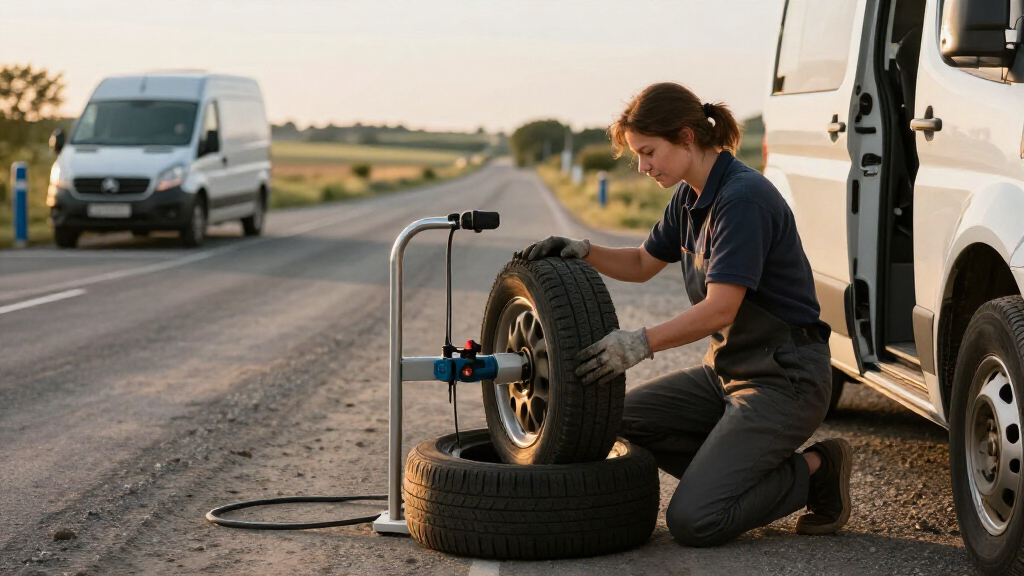
I compared these 15 machines by the needs that shape a portable tire-changing purchase: stated wheel and tire fit, manual or powered operation, intended vehicle class, and whether balancing is included. I gave more weight to options with clearly stated size ranges and a distinct use case, since a machine that fits the buyer’s actual wheels matters more than a broad feature list. I also weighed the practical meaning of portability: a manual stand may be easier to move but still needs a firm anchor, while powered equipment can reduce effort yet needs suitable space, power, or compressed air.
The ranking favors versatility and a clearly defined role, then separates compact manual tools from shop-oriented combos and specialized truck equipment. The LCTX leads the manual group because its stated range is broad; the VEVOR is a more focused small-wheel alternative. Powered combos rank higher for buyers who need a full shop workflow, while truck units are best judged against the exact wheel and service setup rather than treated as general-purpose machines. Product names alone do not establish performance, compatibility, or included accessories, so I recommend checking the manufacturer’s specifications and asking the seller about fit and installation before ordering.
Factors to Consider When Choosing Portable Tire Changing Machines
Before choosing a machine, start with the wheel work you actually expect to do. Portability can mean a stand you carry to a job, a machine that fits a small garage, or equipment that can be relocated around a shop; those are not the same requirement. These factors help separate a compact manual tool from a powered shop machine or a truck-specific changer.
Match the Machine to the Full Wheel, Not Just the Rim Label
Check both the rim diameter and the complete tire dimensions against the machine’s stated capacity. A listed rim range does not automatically mean every tire profile, width, or wheel design within that range will be workable. Confirm whether the limit refers to tire diameter, rim size, or a particular clamping position, and ask about motorcycle, low-profile, run-flat, or specialty wheels if those are in your workload. A common mistake is buying for the most frequent wheel while ignoring the largest or hardest-to-handle tire you expect to service. If your wheel mix varies, a broad stated range can be useful, but only when the maker confirms compatibility with your wheel types.
Treat Portability as a Setup Question
Ask how the machine is moved, secured, and used—not just whether the product is called portable. Manual changers can be compact, yet leverage forces make a stable floor or solid mounting point important for safe, controlled work. Powered equipment may be movable within a garage but still require a dedicated location, suitable electrical service, or an air supply. If roadside use is the goal, check the complete packed size, weight, power source, and the availability of a stable work surface. A tool that travels easily but cannot be anchored or powered at the job site may be less useful than a heavier unit kept in a service vehicle or shop.
Choose Manual or Powered Based on Workload
Manual changers can make sense for occasional tire work, limited budgets, or locations without shop utilities, but the operator supplies the force. Repeated jobs, stiff tires, and larger wheels can make that effort a meaningful cost in time and fatigue. A powered changer may reduce physical work, but it introduces utility requirements, more setup, and additional equipment to maintain. Estimate how many tires you will handle in a typical week and whether you will work alone before deciding that manual operation is sufficient. For sporadic use, paying for power may add complexity without saving much time; for frequent work, manual operation may become the bottleneck.
Decide Whether You Need Wheel Balancing On-Site
A changer and balancer combo can reduce trips between machines and keep a small shop’s workflow together. It also means a larger equipment footprint and a more involved setup than a standalone manual changer. Buyers should confirm whether the package includes the balancer, what wheel sizes it supports, and what accessories or calibration steps are required. Do not assume that combining two machines makes the package portable in the roadside sense. If tires are changed only occasionally and balancing is available nearby, a separate changer may be the simpler purchase; if one work area handles the complete job, a combo can make better operational sense.
Check Power, Air, Anchoring, and Included Parts
For electric machines, verify voltage, circuit requirements, and plug type; for pneumatic models, confirm the needed air pressure, flow, and compressor capacity. A compressor that can run small air tools may not keep up with a tire machine’s demand. Manual units also need scrutiny: find out what must be bolted down and whether the bead breaker, mounting tools, and protective pieces are included. Missing accessories can add expense and delay a first job, while unsuitable power or air can limit a machine’s real output. Ask for a parts list and installation instructions before purchase, especially when the product description uses broad fit claims.
Pay for Capacity You Will Use, Not a Bigger Label
Heavy-duty or truck-focused equipment is worthwhile when your regular work involves the matching wheels and you have the utilities and space to support it. For car and light-truck service, a specialized truck changer may add bulk and setup demands without helping with everyday jobs. At the other extreme, the smallest manual stand may leave you without enough capacity when wheel sizes grow. Make a list of current and likely future wheel types, then compare that list with verified machine limits and service requirements. Spending more makes sense when it removes a real workflow constraint, not simply because a model has a larger stated capacity or a longer feature list.
Frequently Asked Questions
Can a portable manual tire changer handle the same jobs as a powered tire machine?
Not in the same way: a manual changer relies on the operator’s leverage, while powered equipment uses a motor or air system to do more of the work. Manual models can suit occasional service and buyers who need a simpler setup, but effort rises with tire size, stiffness, and job frequency. Check the machine’s stated fit limits and ask about difficult tire types rather than assuming a listed rim range guarantees easy mounting. If you expect repeated work or large tires, compare the time and physical effort against the added space and utility needs of a powered machine.
Will a machine listed for a certain rim diameter fit every tire with that rim size?
No. Rim diameter is only one part of fit; tire diameter, width, profile, wheel construction, and the changer’s clamping method can also matter. Some listings state a maximum tire diameter separately, while others provide less detail, so check the manufacturer’s full specifications. Ask directly about specialty wheels, such as low-profile or run-flat tires, if you plan to service them. Confirming fit before purchase is safer than relying on a single number in a product name.
Is a tire changer and wheel balancer combo a good choice for a small garage?
A combo can be useful when you regularly change and balance wheels in the same work area, since both tasks stay together. It may be a poor match if the garage has limited floor space, lacks the required electrical supply, or only sees occasional tire work. Check the assembled footprint, installation needs, supported wheel sizes, and what the package includes. If balancing can be handled elsewhere, a standalone changer may leave more room and involve less setup.
What should I check before buying a pneumatic truck tire changer?
Confirm that the unit supports the exact wheel and tire type you service, then check its air pressure and airflow requirements against your compressor. Also ask how it is mounted or stabilized, whether it can be transported in your service vehicle, and which operating accessories are included. A truck-specific designation does not mean every commercial wheel is compatible. Compare the JARYANNIX, TECHTONGDA, and XK options by their stated operating method and confirmed fit, not just by their shared truck focus.
What is the better first purchase for occasional home tire work: a manual changer or a powered combo?
A manual changer is often the more straightforward starting point when you have a secure mounting surface, modest tire volume, and no need to balance wheels at home. A powered combo may be a better fit if you already have suitable utilities and plan to handle repeated changes and balancing in one place. Neither choice removes the need to check wheel compatibility, accessories, and safe setup. Think about how often you will use the machine and where each step of the job will happen before paying for extra capacity.
Conclusion
For the broadest manual fit among these choices, I would start with the LCTX Manual Tire Changer; its stated 12–21-inch rim and up-to-39-inch tire range gives it the strongest versatility case in the manual group. My best value-style pick for simple small-wheel work is the VEVOR Manual Tire Changer, provided its 8–16-inch range covers your wheels. Beginners with occasional jobs may prefer a manual stand over a powered combo, but should be ready to anchor it securely and supply the effort. For a premium shop setup, compare the KATOOL and WEIZE changer-and-balancer combinations by fit, utilities, footprint, and included components rather than assuming the packages are identical. For specific truck-tire work, shortlist the JARYANNIX, TECHTONGDA, or XK machines only after confirming wheel fit and air or electrical requirements; the right choice depends on your service setup, not the broad category label.
Halloween Picks

12.5-Foot Lighted Halloween Inflatable Archway

Haunted Hill Farm 4.6‑Ft Head‑Spinning Beatrix Halloween Animatronic Prop

JOYIN 5-Foot Halloween Animatronic Drinking Skeleton
As an affiliate, we earn on qualifying purchases.