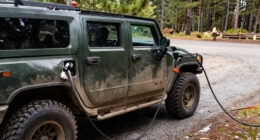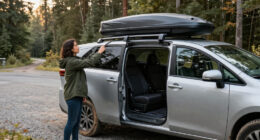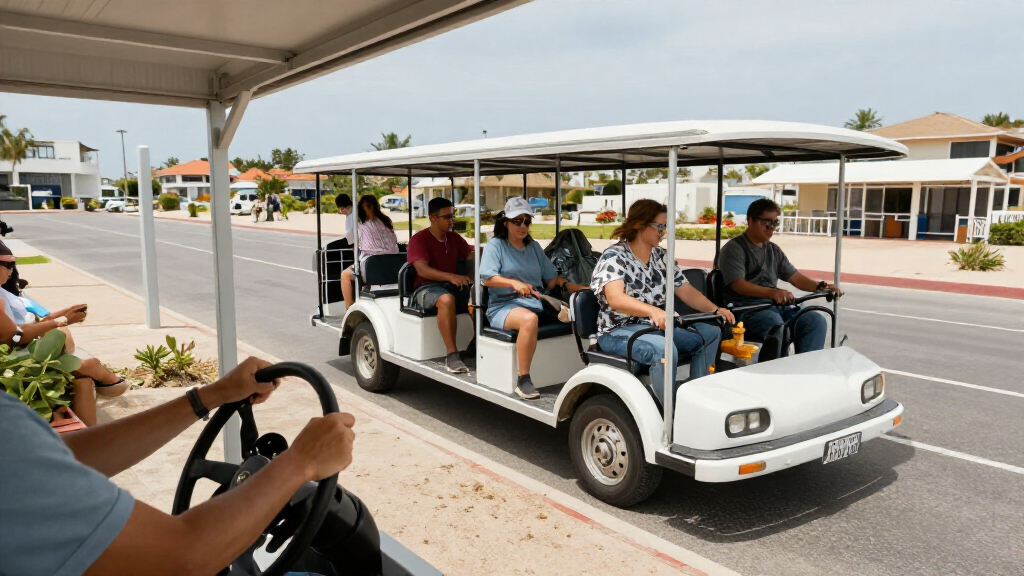

Choosing an open-air shuttle vehicle means balancing passenger comfort, operating range, weather protection, and the routes you need to cover. I rank the Innova Dash EV first for its stated 65-mile range, low-speed vehicle safety specification, and connected features; the GO UP Two-Seat Electric Golf Cart is the stronger fit for golf courses and tourism sites where ride comfort and two-person seating matter; and the Power-Buggy DX stands out for an individual rider who wants a canopy, storage, and visible road-safety equipment.

Get business pricing on garage and car supplies
- Business-only prices and quantity discounts
- Tax-exempt purchasing
- Multiple users, one account, clear invoices
These are not interchangeable vehicles. The Innova is the closest match for short neighborhood shuttle duties, but its listed speed is limited to 35 mph and its range claims conflict. The GO UP offers a more substantial two-seat platform, yet its range and charging time are not provided. The Power-Buggy adds weather cover and practical storage, though it is an electric scooter rather than a passenger shuttle. I’ve ranked them by how well their documented features support open-air transportation, while giving weight to fit, clarity of specifications, and the tradeoffs buyers should resolve before purchasing.
Complete the kit


Key Takeaways
- The Innova Dash EV is my best overall pick for neighborhood and campus routes because it is described as a low-speed vehicle with a 65-mile stated range, fast charging, and FMVSS 500 compliance; confirm its conflicting range claims before relying on that figure.
- The GO UP is the clearest fit for two-person golf-course or tourism use, with independent suspension and a 4 kW motor, but the listing does not state range or charging time.
- The Power-Buggy DX is better suited to one rider than shuttle service; its canopy, lockable storage, turn signals, and E-ABS brakes do not make it a multi-passenger vehicle.
- Do not compare the three on speed alone: the Innova lists 35 mph, the GO UP lists 30 km/h, and the Power-Buggy description supplies no maximum speed.
- Before buying any of these for a route, verify passenger capacity, road-use rules, charging arrangements, weather exposure, and the exact range under your expected load and terrain.
| Innova Dash EV Electric Utility Vehicle, Yellow, 65-Mile Range |  | Best Overall for Neighborhood Shuttle Routes | Vehicle type: Electric neighborhood vehicle | Maximum speed: 35 mph | Listed range: 65 miles in title and measurements; description also claims up to 150 miles | VIEW LATEST PRICE | See Our Full Breakdown |
| GO UP Two-Seat Electric Golf Cart |  | Best for Golf Courses and Tourism Sites | Seating: 2 seats | Motor: 4 kW electric motor | Battery: 48V 105Ah lithium | VIEW LATEST PRICE | See Our Full Breakdown |
| Power-Buggy DX Four-Wheel Electric Scooter with Canopy |  | Best for Personal Mobility with Weather Cover | Vehicle type: Four-wheel electric scooter | Motor: 700W brushless | Claimed range: Up to 43 miles per charge | VIEW LATEST PRICE | See Our Full Breakdown |
| open-air shuttle vehicle | Vehicle type | Maximum speed | Motor |
|---|---|---|---|
| Innova Dash EV Electric Utilit | Electric neighborhood vehicle | 35 mph | — |
| GO UP Two-Seat Electric Golf C | — | 30 km/h | 4 kW electric motor |
| Power-Buggy DX Four-Wheel Elec | Four-wheel electric scooter | — | 700W brushless |
More Details on Our Top Picks
Innova Dash EV Electric Utility Vehicle, Yellow, 65-Mile Range
The Innova Dash EV takes my top position because it is the only option here described directly as an electric neighborhood vehicle, rather than a scooter or golf cart. Its stated 35 mph maximum speed and claimed 65-mile range give buyers a starting point for planning short urban or suburban trips, while the listing says it meets the FMVSS 500 low-speed vehicle safety specification. That combination makes it the most shuttle-oriented choice in this group, though it does not establish suitability for every public road or route.
Its fast-charging claim and connected equipment may appeal to operators who want a vehicle with a touchscreen, Bluetooth, GPRS, and 4G LTE. Those features can make communication and passenger-facing use more convenient, but they do not outweigh the need to confirm the vehicle’s seating capacity, permitted routes, and charging details. The description does not specify how many passengers it carries, so I would not assume it can serve a particular group size based on the product name alone.
The largest caveat is the inconsistent range information. The title and measurements indicate 65 miles, while the description says up to 150 miles. Those figures lead to very different route plans, so I would ask the seller or manufacturer to confirm which figure applies to this exact configuration and under what conditions. Its 35 mph ceiling also makes it a poor match for routes that require sustained higher-speed travel. Compared with the GO UP, it gives a more useful stated range but less specific ride-comfort information; compared with the Power-Buggy, it is the more credible shuttle candidate but has less clearly documented shelter and storage.
I place it first because its vehicle category, stated low-speed safety specification, and route-oriented range information align most closely with neighborhood shuttle use. I would still make the purchase conditional on written confirmation of the passenger layout, true range, charging time, and local road eligibility.
Pros:- Described as an electric neighborhood vehicle, making it the most shuttle-oriented option in this lineup.
- Lists a 65-mile range and fast charging, subject to confirmation because the description also claims up to 150 miles.
- The listing states compliance with the FMVSS 500 low-speed vehicle safety specification.
- Touchscreen, Bluetooth, GPRS, and 4G LTE provide more connectivity than the other two listed options.
Cons:- The 65-mile and up-to-150-mile range claims conflict, making route planning uncertain.
- Maximum speed is limited to 35 mph, so it is not suited to routes that demand faster travel.
- The supplied details do not state seating capacity, charging time, or weather protection.
Best for: Operators seeking an electric vehicle for short neighborhood, campus, or property shuttle routes who can verify passenger capacity and range before purchase.
Not ideal for: Buyers who need higher-speed road travel, a confirmed multi-passenger layout, or a dependable range figure without first resolving the listing’s conflicting claims.
- Vehicle type:Electric neighborhood vehicle
- Maximum speed:35 mph
- Listed range:65 miles in title and measurements; description also claims up to 150 miles
- Charging:Fast charging; time not specified
- Connectivity:GPRS, 4G LTE, and Bluetooth
- Infotainment:Touchscreen LCD
- Safety specification:Listing states FMVSS 500
- Color:Yellow
Our verdict“I rank the Innova first for neighborhood shuttle potential, but I would buy only after confirming its passenger configuration and actual range.”
GO UP Two-Seat Electric Golf Cart
The GO UP is my specialist pick for two-person trips around a managed property. It is explicitly presented for golf courses and tourism sites, and its two-seat layout is more clearly defined than the Innova’s unspecified seating. A 4 kW motor and a 48V 105Ah lithium battery establish a substantial electric-cart setup, while the independent suspension and MacPherson strut front suspension are aimed at smoothing out bumps. For a site moving a pair of guests between nearby destinations, those details matter more than a connectivity package.
Ride and stopping equipment also set it apart. The GO UP lists front disc and rear drum brakes, headrests, an acrylic windshield, and a steel bumper. Its 10.1-inch touchscreen and 6.5-inch speakers add passenger amenities. Compared with the Power-Buggy, this is the more credible passenger-carrying option because it is specifically a two-seat cart; compared with the Innova, it provides better documented seating and suspension but gives buyers less help with route planning.
The main gap is operational: no range or charging time is stated. Battery capacity alone cannot tell a site manager how many circuits the cart can complete or how long it may be out of service between shifts. Its maximum speed is 30 km/h, which is lower than the Innova’s listed 35 mph, though speed figures should be considered alongside local rules and the specific venue. The listing also gives a one-year warranty, but buyers should confirm what that covers for the battery and other major components.
I would choose this model over the Innova when two-seat comfort and managed-site use matter most, and over the Power-Buggy when passenger transport is the actual job. I would not select it for a route until the seller supplies a credible range estimate, charging requirements, and details about passenger and cargo limits.
Pros:- A clearly stated two-seat layout suits paired guest or staff transport better than the single-rider scooter.
- Independent suspension and MacPherson strut front suspension are designed to reduce the impact of uneven surfaces.
- A 4 kW motor and 48V 105Ah lithium battery provide useful powertrain details for fleet evaluation.
- Includes an acrylic windshield, headrests, front disc brakes, rear drum brakes, and a steel bumper.
Cons:- The listing does not give battery range or charging time, limiting route and fleet planning.
- Maximum speed is 30 km/h, which may not suit routes requiring faster travel.
- The supplied description identifies two seats but does not establish broader passenger or cargo capacity.
Best for: Golf-course, resort, and tourism-site operators who need a defined two-seat electric cart with comfort-focused suspension.
Not ideal for: Buyers who need a published range and charge time for route scheduling, or anyone needing higher speeds or capacity beyond the stated two seats.
- Seating:2 seats
- Motor:4 kW electric motor
- Battery:48V 105Ah lithium
- Maximum speed:30 km/h
- Suspension:MacPherson strut front; independent suspension system
- Brakes:Front disc; rear drum
- Dimensions:2900 × 1180 × 1860 mm
- Warranty:1 year
Our verdict“I recommend the GO UP for two-person golf-course and tourism trips, provided the seller confirms range and charging details first.”
Power-Buggy DX Four-Wheel Electric Scooter with Canopy
The Power-Buggy DX earns a place in this roundup for buyers who want covered personal mobility, not for operators shopping for a conventional passenger shuttle. The listing describes a four-wheel electric scooter with a 700W brushless motor and a claimed range of up to 43 miles per charge. Its weather-resistant canopy offers a practical advantage over the GO UP’s listed acrylic windshield and the Innova, whose supplied description does not specify a roof or canopy.
There is useful everyday equipment here: an ergonomic seat, a lockable rear box, under-seat storage, lights, turn signals, and E-ABS brakes. That package makes the Power-Buggy more self-contained for an individual rider carrying small belongings. Against the GO UP, however, it lacks the stated two-seat passenger layout and the cart’s suspension details. Against the Innova, it offers clearer shelter and storage but has no listed maximum speed, connectivity, or low-speed vehicle safety specification.
Range is listed as up to 43 miles per charge, but the description does not explain the conditions behind that figure, and no charging time is supplied. Assembly is required, which adds setup work before use, and the listing says a restricted return policy applies. Those points deserve attention before ordering, particularly for a vehicle whose fit and operation may depend on the rider and intended site. I would confirm assembly requirements, return terms, weight and load limits, and whether local rules permit use on the planned route.
This is the least suitable of the three for carrying multiple passengers, which is why it ranks third as a shuttle vehicle. It may still be the right purchase for a property that needs a single-person mobility option with a canopy and secure storage. Buyers focused on moving guests together should choose the GO UP or investigate the Innova’s passenger configuration instead.
Pros:- Four-wheel design is intended to provide a stable base for personal mobility.
- Weather-resistant canopy offers shelter from sun and rain.
- Lockable rear storage and under-seat space support everyday carrying needs.
- Includes lights, turn signals, and E-ABS brakes.
Cons:- It is described as a scooter, not a multi-passenger shuttle vehicle.
- Assembly is required before use.
- The listing states that a restricted return policy applies, and maximum speed is not provided.
Best for: A rider or property manager seeking a four-wheel personal electric scooter with a canopy, storage, lights, and turn signals.
Not ideal for: Shuttle operators who need to carry more than one person, a stated maximum speed, or detailed passenger-vehicle specifications.
- Vehicle type:Four-wheel electric scooter
- Motor:700W brushless
- Claimed range:Up to 43 miles per charge
- Canopy:Weather-resistant
- Storage:Lockable rear box and under-seat space
- Safety equipment:Lights, turn signals, and E-ABS brakes
- Assembly:Required
- Return policy:Listing states a restricted return policy applies
Our verdict“I would choose the Power-Buggy for covered single-rider mobility, but not as a replacement for a two-seat or neighborhood shuttle.”
How We Picked
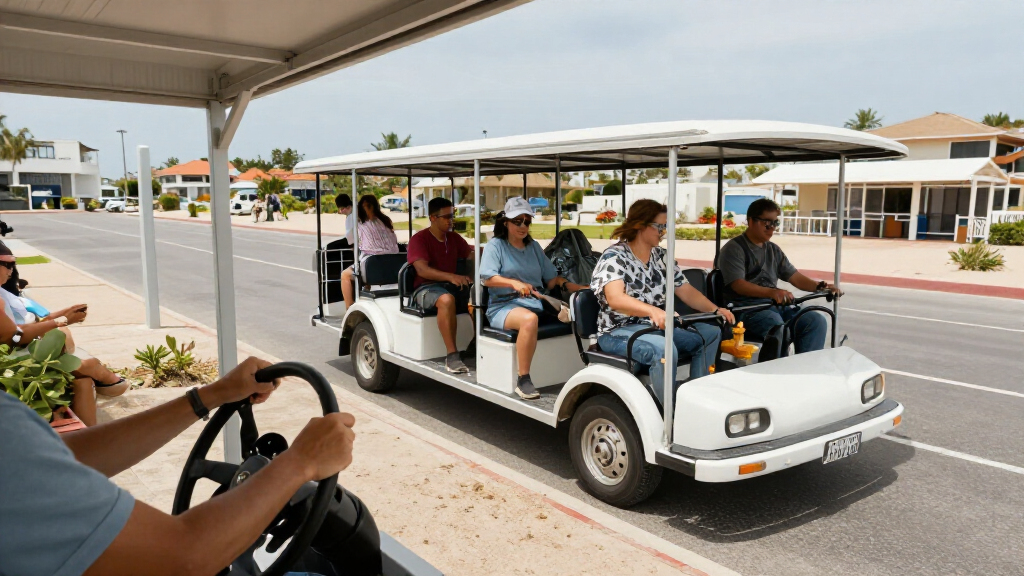
I ranked these options by their usefulness as open-air transport, not by treating every electric cart or scooter as a shuttle. That distinction matters: carrying several passengers between stops calls for a different vehicle than giving one person a covered way to travel around a property. The supplied listings describe one neighborhood vehicle, one four-wheel electric scooter, and one two-seat golf cart, so I make their intended roles explicit rather than implying they serve the same job.
My leading criteria were passenger fit, route capability, and usable operating information. I looked at the seating information, stated speed and range, weather cover, ride and braking equipment, charging notes, and the listed applications. A specification only helps a buyer when it answers a practical question. For example, the Innova’s range figure can guide route planning only after the conflicting 65-mile and up-to-150-mile statements are clarified; the GO UP’s battery capacity is useful context, but it cannot replace a missing range or charge-time figure.
I also treated tradeoffs and uncertainty as part of the ranking. The Innova leads because it is described as an electric neighborhood vehicle and lists FMVSS 500, while its speed and range ambiguity limit route assumptions. The GO UP earns the second role for its two seats, suspension, and stated golf-course and tourism use, but it lacks key operating-distance information. The Power-Buggy comes third for shuttle work because its description identifies it as a scooter, not a multi-passenger vehicle; its canopy and storage make it useful for personal mobility, not a substitute for a shuttle cart.
I did not infer passenger capacity, road legality beyond the specific safety claim supplied, terrain performance, charging duration, or real-world range where the listings did not provide those details. Buyers should check local rules and obtain written specifications for their own route, passenger load, and charging setup before committing.
| open-air shuttle vehicle | Vehicle type |
|---|---|
| Innova Dash EV Electric Utilit | Electric neighborhood vehicle |
| GO UP Two-Seat Electric Golf C | — |
| Power-Buggy DX Four-Wheel Elec | Four-wheel electric scooter |
Factors to Consider When Choosing Best Open-air Shuttle Vehicles
I would choose an open-air vehicle by starting with the route and passenger job, not by comparing motor figures in isolation. These three listings cover different use cases: a neighborhood electric vehicle, a two-seat golf cart, and a personal electric scooter. The best fit depends on who rides, where the vehicle can travel, and how much distance it must cover between charges.
Match the vehicle to the passenger task
Begin by writing down how many people need to ride at once, whether they travel together or make separate trips, and what they carry. The GO UP states two seats, making its passenger layout the clearest of this group for paired trips. The Innova is described as a neighborhood vehicle, but the supplied details do not state passenger capacity; confirm the exact seating configuration rather than assuming it. The Power-Buggy is identified as an electric scooter, so I would treat it as a single-rider mobility option unless the manufacturer supplies different documentation.
This distinction affects both safety and day-to-day usefulness. A canopy and storage do not turn a scooter into a shuttle, and a large battery does not establish how many passengers a cart can carry. For hotels, campuses, golf courses, and tourism venues, check the rated occupant and cargo limits, seat-belt or restraint details if applicable, and access arrangements for the riders who will use the vehicle.
Plan around real route distance, not battery claims alone
Range is one of the most consequential specs for a shuttle because an unexpectedly short operating day can interrupt service. The Innova lists 65 miles in its title and measurements, yet the description also claims up to 150 miles. I would ask which figure applies to the exact vehicle and request the conditions used to determine it. The Power-Buggy lists up to 43 miles per charge, while the GO UP provides battery capacity but no range figure.
For any candidate, ask how passenger load, hills, stop-and-go use, temperature, and accessory use affect the manufacturer’s estimate. Then compare that answer with your longest route and the distance the vehicle must cover before it can recharge. A route plan should include a practical buffer rather than using the most favorable advertised range as a daily target. Get charging time and charger requirements in writing, especially for the GO UP, where those details are absent from the listing.
Check speed and where the vehicle may operate
The Innova lists a maximum speed of 35 mph, and its listing states that it meets the FMVSS 500 low-speed vehicle safety specification. The GO UP lists 30 km/h. The Power-Buggy description does not state a maximum speed. These figures are not a simple ranking: a vehicle may be limited to specific roads or private property, and local rules determine where it can legally operate.
Before selecting a vehicle, map the proposed route and check speed limits, road crossings, traffic exposure, and any local requirements for registration, insurance, equipment, or operator eligibility. Do not treat a product listing’s safety statement as a blanket approval for every road or use. If the route includes public streets, ask the seller for the exact vehicle classification and documentation that applies to the model and configuration being offered.
Choose shelter and comfort for the conditions
Open-air travel can work well in mild weather, but sun, rain, wind, and uneven pavement change what passengers need. The Power-Buggy’s weather-resistant canopy is its clearest advantage for personal trips exposed to the elements. The GO UP lists an acrylic windshield, headrests, and independent suspension, which may suit managed-site routes where passenger comfort and surface variation matter. The Innova’s supplied details do not identify a canopy, windshield, or suspension system, so buyers should ask what the delivered configuration includes.
Think beyond the vehicle’s roof or windshield. Ask about seating position, entry and exit, access for passengers with mobility needs, weather protection for the sides, and storage for bags or supplies. The Power-Buggy has a lockable rear box and under-seat space, while the GO UP lists passenger amenities but no storage capacity in the provided details. A venue should inspect its own paths and turning areas before choosing a vehicle that will make frequent trips through them.
Compare controls, braking, and practical equipment
The listings describe different equipment priorities. The GO UP specifies front disc and rear drum brakes, while the Power-Buggy lists E-ABS brakes, lights, and turn signals. The Innova lists a low-speed vehicle safety specification and connectivity, but the supplied details do not enumerate its braking equipment. I would ask each seller for the full equipment list and operating manual rather than treating the short product description as a complete safety assessment.
Connectivity can help with convenience, but it is not a substitute for controls and training. The Innova’s touchscreen and GPRS, 4G LTE, and Bluetooth features distinguish it from the other models; the GO UP adds a touchscreen and speakers. Buyers should decide whether these features support an actual operating need or simply add complexity. For fleet use, parts availability, service arrangements, warranty coverage, and staff familiarity can have a greater effect on reliability than entertainment features.
Factor in setup, service, and purchase conditions
The Power-Buggy listing says assembly is required and that a restricted return policy applies. I would review those terms before purchase and determine who will assemble and inspect the vehicle. The GO UP lists a one-year warranty, but the description does not explain coverage details. For the Innova, the information supplied here does not state a warranty term. Ask about the battery warranty, replacement parts, routine maintenance, charger inclusion, and service support for all three.
For a commercial site, these details affect how much time a vehicle can remain in service and who can repair it. Request written answers about expected maintenance, battery replacement, delivery configuration, and whether the seller supports the product in your area. If a vehicle must serve a regular schedule, a clear service plan and reliable access to parts may be more useful than a feature that is rarely used.
Frequently Asked Questions
Which option is the best fit for a neighborhood shuttle?
I rank the Innova Dash EV first for neighborhood shuttle potential because it is described as an electric neighborhood vehicle and its listing states FMVSS 500 compliance. I would still confirm passenger capacity, local road eligibility, and the actual range before buying. Its listing gives conflicting range claims, so I would not plan a route from the higher figure without written confirmation.
Which vehicle is most clearly suited to carrying two passengers?
The GO UP is the clearest answer because its specifications explicitly list two seats and identify golf courses and tourism sites as intended settings. The Innova may serve shuttle duties, but its supplied description does not state seating capacity. The Power-Buggy is described as a scooter, so it is not my choice for moving two passengers together.
Which option provides the most weather protection?
The Power-Buggy DX is the only one of these listings to specify a weather-resistant canopy. That makes it the clearest choice for a rider who wants shelter from sun and rain, though the listing does not establish full enclosure or all-weather operation. The GO UP has an acrylic windshield, while the Innova’s supplied description does not specify a canopy or windshield.
Can I compare the listed range figures directly?
Not confidently. The Innova listing conflicts between 65 miles and up to 150 miles, the Power-Buggy claims up to 43 miles without giving test conditions, and the GO UP does not provide a range figure. I would request the expected range under comparable load and route conditions, along with charging time, before using any number to plan a shuttle schedule.
What should I verify before using one of these on public roads?
Check the vehicle’s exact classification, local road-use rules, speed limits, registration and insurance requirements, and any required safety equipment or operator qualifications. The Innova listing’s FMVSS 500 statement is relevant information, but it does not by itself confirm that every route or local use is permitted. I would request the applicable vehicle documents from the seller and confirm requirements with the relevant local authority.
Conclusion
For an operator planning short neighborhood or campus routes, I would start with the Innova Dash EV because it is the most directly aligned with shuttle use and lists a low-speed vehicle safety specification. I would proceed only after confirming its passenger layout, road eligibility, and conflicting range figures. For a golf course, resort, or tourism site moving two people at a time, the GO UP is my preferred fit thanks to its explicit two-seat layout and suspension details; first obtain the missing range and charging information. For a single rider who needs shelter and storage, I would choose the Power-Buggy DX, while treating it as a personal mobility scooter rather than a shuttle. If your route needs higher speed, a larger passenger count, or an assured operating range, none of these listings supplies enough information to decide without further confirmation from the manufacturer or seller.