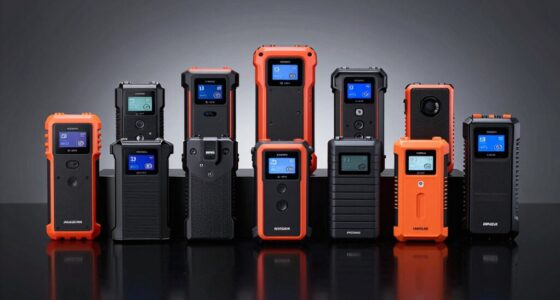

Choosing among the best solid-state batteries depends first on what you need to power: a vehicle’s starter, or an RV, marine, or home-storage system. My strongest pick for automotive fitment flexibility is the Lipower Group 48/H6, which pairs a 1,200 CCA claim with a 140-minute reserve capacity. For a larger Group 27/27F vehicle battery, the Lipower Group 27/27F claims more starting output and very low self-discharge. The Renogy 12V 104Ah is the one to look at for off-grid storage, with a stated long cycle life and cold-weather self-heating.

Get garage and car supplies delivered free — and shop member deals
- Fast, free delivery on millions of items
- Access to Prime Big Deal Days deals on October 6–7
- Prime Video, Amazon Music and more included
These are not interchangeable choices: two are intended for specific car battery bays, while Renogy is designed for deep-cycle use and is described as LiFePO4, semi-solid-state. I rank them by how closely their stated chemistry and features match the solid-state brief, then by practical usefulness for their intended application. Before choosing, verify vehicle group size and terminals, or check that a storage battery’s voltage, charging profile, and system connections suit your setup.
Complete the kit


Key Takeaways
- The Lipower Group 48/H6 is my most balanced automotive pick here, combining a stated 1,200 CCA with 140 minutes of reserve capacity in a 17.6-pound package.
- The Lipower Group 27/27F claims the highest cranking output in this lineup at 1,500A, but it fits only vehicles that accept its group size, dimensions, and right-positive terminal layout.
- Renogy’s 104Ah battery is the only listed option aimed at RV, marine, solar, and home storage; its LiFePO4 chemistry is described as semi-solid-state, not simply as a car starter battery.
- Cold-weather features differ by job: the Lipower car batteries list starting output or operating-temperature claims, while Renogy lists a 150W self-heater and limited low-temperature charging.
- Both Lipower automotive options call for careful fitment checks and OBD registration; Renogy instead requires compatibility with the charging and monitoring setup of a storage system.
| Lipower Group 48 (H6) Solid-State Car Battery |  | Best Overall for Group 48/H6 Automotive Fitments | Voltage: 12 V | Chemistry: Lithium ion; described as solid-state | Capacity: 60 Ah | VIEW LATEST PRICE | See Our Full Breakdown |
| Renogy 12V 104Ah LiFePO4 Battery with Self-Heating |  | Best for Cold-Weather RV and Solar Storage | Chemistry: LiFePO4, semi-solid-state | Voltage and capacity: 12V; 104Ah | Cycle-life claim: 6,000+ cycles at 80% DOD | VIEW LATEST PRICE | See Our Full Breakdown |
| Lipower Group 27/27F Solid-State Start-Stop Car Battery |  | Best High-Output Option for Group 27/27F Vehicles | Chemistry and voltage: Solid-state; 12V | Fitment: BCI Group 27/27F | Cold cranking amps: 1,500A | VIEW LATEST PRICE | See Our Full Breakdown |
| solid-state batterie | Chemistry | Cold cranking amps | Warranty |
|---|---|---|---|
| Lipower Group 48 | Lithium ion; described as solid-state | 1,200 CCA | 5 years |
| Renogy 12V 104Ah LiFePO4 Batte | LiFePO4, semi-solid-state | — | 8 years |
| Lipower Group 27/27F Solid-Sta | — | 1,500A | — |
More Details on Our Top Picks
Lipower Group 48 (H6) Solid-State Car Battery
The Lipower Group 48/H6 takes my top spot because its stated specifications make a well-rounded case for a replacement in a matching passenger-car or start-stop application. It lists 1,200 CCA for starting and a 140-minute reserve capacity, so buyers can weigh both engine-starting output and the ability to support electrical loads when the alternator is not supplying power. Its 60Ah capacity and 17.6-pound weight round out a package that is much lighter than a conventional lead-acid battery of similar fitment, according to the product description’s liquid-free design.
Compared with the Lipower Group 27/27F, this H6 version gives up the other model’s higher claimed 1,500A starting figure, but it includes a clear reserve-capacity figure and targets a different, common group-size class. That makes it the more balanced pick when the vehicle calls for Group 48/H6 rather than the larger Group 27/27F format. It is also an automotive starter battery, not an alternative to Renogy’s 104Ah storage battery: the Renogy is designed around deep-cycle use, while this Lipower is aimed at starting a vehicle.
The practical limitation is fitment and setup. Group labels are a useful first filter, not proof that a particular battery suits every trim or electrical system. Check the dimensions, terminal arrangement, vehicle requirements, and whether your car needs battery registration. The supplied details say OBD registration may be needed after installation, which can add a step or require a shop with the right diagnostic tools. The stated 10-year lifespan and 3,000-plus cycles are product claims, and the five-year warranty is the more concrete coverage detail listed; neither removes the need to verify warranty terms and application compatibility before purchase.
I would choose this option when the vehicle is confirmed to accept an H6/Group 48 battery and the priority is a combination of strong claimed starting power and useful reserve capacity. I would skip it if the car takes Group 27/27F, if registration access is a problem, or if the actual need is long-duration energy storage for an RV or solar setup.
Pros:- Stated 1,200 CCA and 140-minute reserve capacity cover two useful automotive comparison points.
- Liquid-free design weighs 17.6 pounds according to the supplied specifications.
- Listed for passenger cars, trucks, and start-stop system vehicles.
- Five-year warranty is stated, alongside a claimed 10-year lifespan.
Cons:- The exact vehicle fitment and terminal layout need to be checked before ordering.
- OBD battery registration may be required after installation.
Best for: Drivers whose vehicle specifies Group 48/H6/L3/66L3 and who want a lightweight, liquid-free starter battery with stated 1,200 CCA and 140-minute reserve capacity.
Not ideal for: Owners whose vehicle requires another battery group or who want a deep-cycle battery for RV, marine, or home energy storage.
- Voltage:12 V
- Chemistry:Lithium ion; described as solid-state
- Capacity:60 Ah
- Cold cranking amps:1,200 CCA
- Reserve capacity:140 minutes
- Group size:48/H6/L3/66L3
- Dimensions and weight:10.9 × 7.44 × 6.88 in; 17.6 lb
- Warranty:5 years
Our verdict“For a confirmed Group 48/H6 vehicle, I would pick this as the most balanced car option because it combines strong stated cranking output with a specified reserve capacity.”
Renogy 12V 104Ah LiFePO4 Battery with Self-Heating
The Renogy 12V 104Ah earns a place in this roundup for buyers who need stored energy rather than a conventional car starter battery. Its chemistry is listed as LiFePO4, semi-solid-state, and its intended jobs include RV, marine, solar, and home energy storage. That distinction matters: its 104Ah capacity and cycle-life claim point toward repeated charging and discharging, not a replacement for the Lipower batteries in a vehicle’s starter-battery tray.
Its standout feature is the 150W self-heating function, paired with a stated ability to charge at 10A down to 14°F (-10°C). Cold conditions can restrict charging for many lithium battery systems, so heating support may make this a more practical choice for an RV or off-grid installation exposed to chilly weather. The stated 6,000-plus cycles at 80% depth of discharge, smart BMS with more than 60 protections, and eight-year warranty provide a deeper set of storage-oriented details than either Lipower car battery. The IP67 rating, CAN communication, and app monitoring also suit buyers who want system visibility, though those features are most useful when the rest of the installation can work with them.
Compared with the two Lipower models, Renogy wins on storage capacity, cycle-life information, and charging-system features, but it is not the better automotive choice. Its 12.8kg weight is also notably heavier than the listed 17.6-pound H6 battery, despite the slim 61mm profile. That thin shape may help in a space-constrained enclosure, while weight still matters if a battery must be carried or mounted in a lightweight vehicle. The product information does not provide a starting-current rating, so I would not infer that it can crank an engine simply because it is a 12V battery.
This option suits buyers building a compatible storage bank, especially where cold-weather charging and remote monitoring matter. Its scalability claim supports up to 16 batteries in a 48V, 416Ah arrangement, but a buyer should confirm that battery configuration, inverter, charger, wiring, and communications protocol all match. The listing information supplied here includes no customer review or rating material; more importantly for a technical purchase, it also does not substitute for checking the full manual and system limits. Choose Renogy for deep-cycle storage with cold-weather support, not as a direct competitor to a Group-size car battery.
Pros:- 104Ah capacity and a stated 6,000-plus cycles at 80% depth of discharge suit repeated storage use.
- 150W self-heating and listed low-temperature charging support address cold-weather operation.
- Smart BMS, CAN communication, app monitoring, and IP67 rating add system-management features.
- Eight-year warranty and stated scalability up to 16 batteries are useful planning details.
Cons:- LiFePO4 semi-solid-state chemistry and deep-cycle design do not make it a direct replacement for either Lipower car battery.
- At 12.8kg, it is heavier than the Lipower H6 despite its slim 61mm profile.
- Buyers must verify charger, inverter, communications, and bank configuration compatibility.
Best for: RV, marine, solar, and home-storage buyers seeking a 12V LiFePO4 battery with stated self-heating, system monitoring, and expansion options.
Not ideal for: Drivers shopping for a direct automotive starter replacement, or storage buyers whose charger and inverter cannot support the battery’s requirements.
- Chemistry:LiFePO4, semi-solid-state
- Voltage and capacity:12V; 104Ah
- Cycle-life claim:6,000+ cycles at 80% DOD
- Charging:Maximum 100A; 150W self-heating
- Maximum discharging current:200A
- Cold-weather charging:10A down to 14°F (-10°C)
- Size and weight:61mm thick; 12.8kg
- Protection and connectivity:Smart BMS with 60+ protections; CAN; DC Home App; IP67
- Warranty:8 years
Our verdict“I would choose Renogy for a compatible cold-weather storage system, while steering car-starter shoppers toward one of the two fitment-specific Lipower batteries.”
Lipower Group 27/27F Solid-State Start-Stop Car Battery
The Lipower Group 27/27F is the specialist pick for drivers whose vehicle actually requires this larger BCI group size. Its headline figure is a claimed 1,500A CCA, the highest stated starting output among these three products. The battery also lists a broad operating range from -30°C to 65°C, a liquid-free build, and a claim that it weighs 60% less than traditional lead-acid batteries. Those details may appeal to a driver seeking strong starts and a lighter replacement, but they are only useful if the battery’s dimensions and terminal layout match the car.
Compared with the Group 48/H6 Lipower, this model claims 300A more cranking output and lists a very low monthly self-discharge rate of no more than 0.04%. The H6, however, supplies a stated 140-minute reserve-capacity figure and weighs 17.6 pounds, while the Group 27 listing does not provide reserve capacity or an exact weight. Those missing points make the H6 easier to compare for buyers weighing reserve performance and package weight. The Group 27 is not a universal upgrade: a battery with a higher CCA claim cannot compensate for a mismatched tray, hold-down, terminal position, or vehicle charging system.
Its claimed 3,000-plus deep cycles and 10-year lifespan are long-range product claims, while the supplied warranty period is five years. I would read the warranty terms closely and treat the lifespan statement as a claim rather than a guaranteed service interval. Installation is another differentiator: the listing says OBD battery registration is required after installation, while registration on the H6 is described as something that may be required. Buyers who lack a compatible diagnostic tool should plan for that step before selecting this battery.
This model makes the most sense for an owner with a verified Group 27/27F requirement who values its stated high cranking output, low self-discharge, and cold-temperature operating claim. Compared with Renogy, it is built for starting a vehicle rather than storing energy for repeated household or RV loads. Skip it if your vehicle needs H6, if right-positive terminal placement does not match, or if you want a battery with a published reserve-capacity figure in the supplied details.
Pros:- Claims 1,500A CCA, the highest listed cranking figure in this roundup.
- States operation from -30°C to 65°C and monthly self-discharge of no more than 0.04%.
- Liquid-free design and a stated 60% weight reduction versus traditional lead-acid batteries.
- Lists a five-year warranty and a claimed 10-year lifespan.
Cons:- OBD battery registration is required after installation according to the supplied information.
- Dimensions and right-positive terminal polarity must match the vehicle.
- The supplied specifications omit an exact weight and reserve-capacity figure.
Best for: Drivers with a verified Group 27/27F vehicle fitment who prioritize the listed 1,500A CCA, low self-discharge, and cold-weather operating range.
Not ideal for: Owners whose vehicle takes Group 48/H6 or another size, or buyers who need published reserve-capacity and weight figures for comparison.
- Chemistry and voltage:Solid-state; 12V
- Fitment:BCI Group 27/27F
- Cold cranking amps:1,500A
- Dimensions:12.05 × 6.81 × 8.58 in
- Terminal polarity:Right positive
- Operating temperature:-30°C to 65°C
- Cycle and lifespan claims:3,000+ deep cycles; 10-year lifespan
- Monthly self-discharge:≤0.04%
- Warranty and installation:5 years; OBD registration required
Our verdict“For a vehicle that specifically accepts Group 27/27F, this is my high-output choice, but its fitment and required OBD registration make it less convenient as a general-purpose recommendation than the H6.”

How We Picked
I compared these three products by intended use, stated battery chemistry, and buyer-facing specifications, rather than treating every battery with a solid-state label as a direct substitute. The supplied information describes two Lipower products as solid-state car batteries, while Renogy is identified as a LiFePO4 battery with semi-solid-state chemistry. Since a car starter battery and a deep-cycle storage battery serve different purposes, I did not rank them as if their capacity figures or operating demands were directly equivalent.
For the automotive picks, I prioritized fitment clarity, cold-cranking claims, reserve capacity where provided, weight, and installation requirements. A high CCA figure can matter when an engine needs strong starting current, but it cannot compensate for the wrong group size, terminal position, or vehicle charging requirements. For Renogy, I focused on its stated 104Ah capacity, cycle-life claim, cold-weather charging support, protection features, and suitability for storage systems. I also noted the connectivity and ingress-protection information because those details can affect how a battery fits into an RV, marine, or solar installation.
I treated lifespan, cycle count, and warranty as manufacturer-stated claims, not as independently verified performance guarantees. The product details provided do not establish comparative test results, vehicle-by-vehicle compatibility, or long-term field performance. That limits how confidently I can compare durability across different chemistries and uses. My ranking therefore reflects the evidence supplied: Group 48/H6 earns the broadest automotive recommendation because its starting and reserve details make its role clear; Group 27/27F is a stronger specialist for a matching larger fitment; Renogy is a distinct storage choice rather than a drop-in replacement for either car battery.
| solid-state batterie | Chemistry |
|---|---|
| Lipower Group 48 | Lithium ion; described as solid-state |
| Renogy 12V 104Ah LiFePO4 Batte | LiFePO4, semi-solid-state |
| Lipower Group 27/27F Solid-Sta | — |
Factors to Consider When Choosing Best Solid-state Batteries
I would start by matching the battery to the job, then check fitment and system requirements. The product name alone does not tell you whether a battery can replace your current unit: starter batteries and deep-cycle storage batteries have different roles, even when both are 12V.
Decide whether you need a starter or storage battery
A car starter battery supplies a strong burst of current to start an engine. The two Lipower batteries in this lineup are presented for vehicle starting and specific group-size fitments. Renogy’s 104Ah LiFePO4 battery is aimed at RV, marine, solar, and home storage, where repeated charging and discharging are central to the job. Its amp-hour capacity and stated cycle life are relevant to that use, but they do not establish that it can replace a vehicle starter battery. I would choose the application before comparing headline specifications.
Verify the battery group, dimensions, and terminals
For automotive purchases, compare the existing battery label and your vehicle’s manual with the replacement’s group size, measurements, terminal position, and hold-down arrangement. The H6 is listed as Group 48/H6/L3/66L3; the other Lipower is Group 27/27F and has right-positive polarity. Similar voltage does not mean either will fit. A battery that sits poorly, has reversed terminals, or cannot be secured correctly is the wrong choice even if its cranking claim looks attractive. When the fitment chart and physical tray disagree, confirm the correct specification with a qualified parts supplier or vehicle technician.
Read CCA and reserve capacity as separate measures
Cold cranking amps describe a battery’s stated starting output under cold-test conditions, so they are useful when comparing starter batteries in the same application. They do not tell you how long a battery can support accessories with the engine off. Reserve capacity addresses a different kind of use; the Group 48/H6 listing supplies a 140-minute figure, while the Group 27/27F details supplied here do not. I would not treat the 1,500A claim on the Group 27 as proof that it is the better match for every vehicle than the H6’s 1,200 CCA.
Match chemistry to the charging system
Before installing a lithium or semi-solid-state battery, check whether the vehicle, alternator, charger, and battery-management requirements are compatible. The product information identifies the two Lipower options as car batteries and notes registration requirements, but it does not provide a full vehicle-by-vehicle charging compatibility list. For Renogy, the charger, inverter, battery bank, and any CAN-connected equipment should match its operating limits and manual. I would not assume that a device designed for one battery chemistry can safely charge another without checking the manufacturer’s directions.
Treat cycle life and lifespan as stated claims
Cycle-life numbers can help compare options designed for the same duty, but the conditions behind them matter. Renogy states 6,000-plus cycles at 80% depth of discharge; the Lipower listings state more than 3,000 cycles or deep cycles, and each car option also includes a claimed 10-year lifespan. Those numbers do not describe identical products or test conditions, so they are not a simple durability ranking. Check the warranty’s coverage, required installation practices, and any limits for temperature or use before relying on a long lifespan claim.
Plan for cold-weather use and installation
Cold-weather claims differ by category. The Lipower Group 27/27F lists operation from -30°C to 65°C, while Renogy describes a 150W self-heating feature and charging at 10A down to 14°F (-10°C). These statements refer to different functions: an operating-temperature range does not mean the same thing as a supported charging condition. The H6’s supplied details focus on its 1,200 CCA claim. For installation, both Lipower listings mention OBD registration, with the Group 27/27F specifying that registration is required. Factor in that diagnostic step, along with safe handling and correct mounting, before deciding which option is convenient for you.
Choose monitoring and expansion features only when your setup needs them
Renogy lists a smart BMS, CAN communication, DC Home App monitoring, IP67 protection, and expansion up to 16 batteries in a stated 48V, 416Ah configuration. Those features can help buyers managing a storage system, but only if their equipment can use the connection and the planned battery bank follows the manufacturer’s configuration rules. The Lipower automotive batteries are simpler choices in the sense that the supplied details focus on vehicle fitment and starting. I would not pay attention to storage-system connectivity when the actual need is a direct car battery replacement, and I would not choose a starter battery when the installation calls for sustained stored energy.
Frequently Asked Questions
Are all three batteries fully solid-state?
No. The two Lipower products are presented as solid-state car batteries in the supplied descriptions. Renogy is listed as a LiFePO4 battery with semi-solid-state chemistry. Since the chemistry wording differs, I would compare each product by its specified application and verified technical documentation rather than assume the labels mean the same construction or performance.
Can the Renogy 104Ah battery replace a Lipower car battery?
Not as a direct replacement based on the information supplied. Renogy is designed for RV, marine, solar, and home storage, while the Lipower models are listed as automotive starter batteries for specific group sizes. The Renogy specifications provided do not include a cold-cranking rating or a vehicle fitment group. I would use it in a vehicle only if the manufacturer and a qualified installer confirm that the vehicle’s starting, charging, and mounting requirements are supported.
Which Lipower battery has the higher starting output?
The Group 27/27F listing claims 1,500A CCA, compared with 1,200 CCA for the Group 48/H6. That makes the Group 27/27F the higher stated-output option, but it does not make it a universal upgrade. Your vehicle must accept Group 27/27F dimensions and right-positive terminal placement. The H6 may be the correct option for a vehicle specified for Group 48/H6 and also lists a 140-minute reserve capacity.
Do I need to register a Lipower battery after installation?
Possibly, and the requirements differ between the listings. The Group 48/H6 description says OBD battery registration may be required, while the Group 27/27F description says registration is required after installation. Check your vehicle manufacturer’s procedure and the battery instructions before fitting the battery. If registration applies and you do not have compatible diagnostic equipment, arrange for a shop or technician to complete it.
Which option is better for cold weather?
It depends on whether you mean starting a vehicle or charging a storage battery. For vehicle starting, the Lipower listings provide CCA claims, and the Group 27/27F also states an operating range of -30°C to 65°C. For a storage system, Renogy lists a 150W self-heater and charging support at 10A down to 14°F (-10°C). Those features address different needs, so I would select by application and confirm the full temperature limits in the manufacturer’s documentation.
Conclusion
For a vehicle that takes Group 48/H6, I recommend the Lipower H6 as the most balanced automotive pick: it pairs a stated 1,200 CCA with a listed 140-minute reserve capacity. Choose the Lipower Group 27/27F instead when your vehicle’s fitment is confirmed and its claimed 1,500A CCA, low self-discharge, and cold-temperature operating range match your priorities; plan for required OBD registration. For an RV, marine, solar, or home-storage system, Renogy is the relevant option because it offers 104Ah capacity, self-heating, monitoring, and a stated cycle-life claim. I would not substitute it for a car starter battery without explicit compatibility confirmation. Across all three, confirm chemistry, dimensions, terminals, charging requirements, and warranty terms before purchase.
Halloween Picks
halloween
As an affiliate, we earn on qualifying purchases.