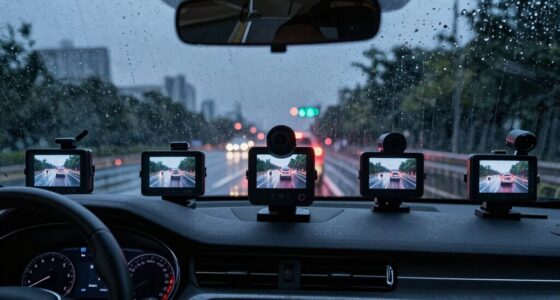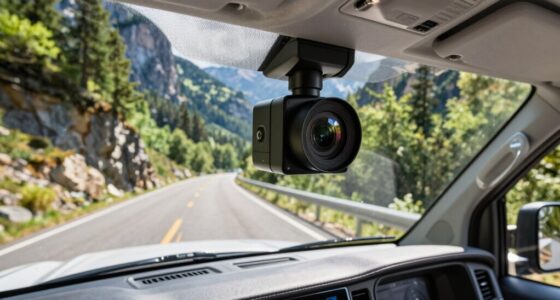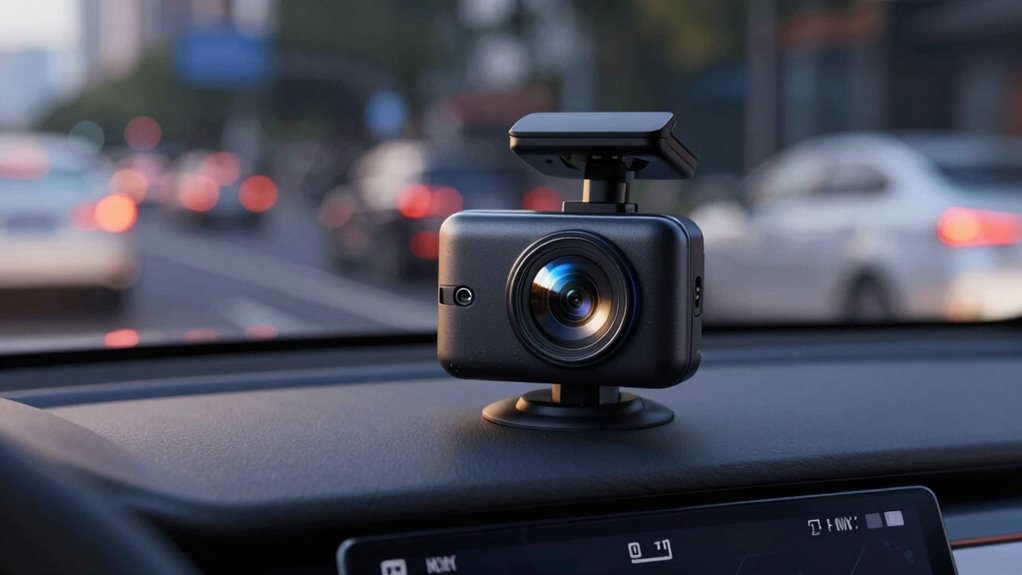
A premium supercapacitor dash cam pairs dependable power-loss protection with the video coverage and features that fit your driving. My best overall pick is the REXING V1 4K, a straightforward front camera with GPS, Wi-Fi, and a supercapacitor; for broader coverage, the REXING V1 4K Ultra HD offers a similar single-camera approach, while the COOAU D30S adds an interior view and infrared lighting. The main tradeoff is between a focused front camera and a more complex dual-, cabin-, or 360-degree system, along with the cost of storage and parking-mode accessories. A supercapacitor can suit hot-car conditions better than a conventional battery, but it does not replace a hardwire kit or guarantee recording while parked. Read on for my comparison of all 13 options and the details that matter before you choose.

Get business pricing on garage and car supplies
- Business-only prices and quantity discounts
- Tax-exempt purchasing
- Multiple users, one account, clear invoices
Complete the kit


Key Takeaways
- The two Rexing V1 listings explicitly name a supercapacitor. Several other models offer broader coverage or newer video features, but their supplied product names do not confirm supercapacitor power, so check the manufacturer specification before treating them as direct matches.
- The COOAU D30S is the clearest cabin-recording choice. Its front-and-interior setup and infrared LEDs are designed for monitoring passengers in low light, while dual front-and-rear models focus on the road behind the car.
- More cameras mean more coverage, not automatically better evidence. The 4-channel and 360-degree options can see more angles, but add installation, storage, and configuration demands compared with a single-camera unit.
- Resolution is only one part of useful footage. The listed 2K 60fps VIOFO A119 Mini 2 prioritizes a compact form and higher frame rate, while several 4K models add rear or cabin views that may better suit coverage needs.
- Included cards vary across the lineup. Listings range from 32GB and 64GB cards to 128GB or no card specified; buyers should check recording capacity and supported card limits before relying on a bundled card.
| 4K+4K Dual Dash Cam Front and Rear with 128GB Card and Night Vision |  | Best for Matching Front-and-Rear Detail | Resolution: 3840 x 2160 (4K) front and rear | Field of view: 170° front, 150° rear | Aperture: f/1.5 | VIEW ON AMAZON | See Our Full Breakdown |
| RexingUSA V1-4K Ultra HD GPS Dash Cam with 2.4″ LCD, Wi-Fi, 170° Wide Angle, G-Sensor, WDR, Loop Recording, Supercapacitor, Mobile App, CPL Filter, Supports 256GB |  | Best Single-Camera Supercapacitor Pick | Resolution: 4K Ultra HD | Frame rate: 30fps | Field of view: 170° | VIEW ON AMAZON | See Our Full Breakdown |
| 2.5K Front + 1080P Rear Dual Dash Cam with WDR Night Vision and Parking Monitor |  | Best Value Dual-View Supercapacitor | Front resolution: 2.5K (1440p) | Rear resolution: 1080P | Field of view: 130° | VIEW ON AMAZON | See Our Full Breakdown |
| COOAU D30S 4K Dash Cam with GPS Wi-Fi, Front and Inside Dual 2.5K 1080P, Uber Car Camera with Infrared Night Vision, Supercapacitor, 4 IR LEDs, G-Sensor, Parking Mode, Loop Recording |  | Best for Rideshare and Cabin Recording | Single-front resolution: 4K at 25fps | Dual-channel resolution: 2.5K front and 1080P inside | Field of view: 170° front; 150° cabin | VIEW ON AMAZON | See Our Full Breakdown |
| ROVE R2-4K Dual Dash Cam Front and Rear with 128GB Card |  | Best High-Capacity Storage Package | Front resolution: Upscaled 4K (2160P) | Rear resolution: 1080P | Sensor: Sony STARVIS 2 IMX675 | VIEW ON AMAZON | See Our Full Breakdown |
| 4-Channel Dash Cam with 360° View, GPS, WiFi, Night Vision, and 128GB Card |  | Best for Full-Vehicle Coverage | Camera configuration: 4 channels: front, rear, left, and right | Resolution: 1080P Full HD per camera | View angle: 160 degrees | VIEW ON AMAZON | See Our Full Breakdown |
| REDTIGER F17 4K 3-Channel Dash Cam with STARVIS 2 Sensor, HDR, 64GB Card, WiFi, GPS |  | Best for Three-View Detail | Camera configuration: 3 channels: front, inside, and rear | Video resolution: 2160p front | Field of view: 150 degrees | VIEW ON AMAZON | See Our Full Breakdown |
| 360° Dash Cam Front and Inside 4K+2.5K, 2 Channel Dashcam for Car |  | Best for Rideshare Drivers | Camera configuration: 2 channels: front and interior | Front resolution: 4K | Interior resolution: 2.5K | VIEW ON AMAZON | See Our Full Breakdown |
| Galphi 4K Dash Cam Front, 5GHz WiFi, 32GB Card Included, Mini Dashcam |  | Best Compact Front-Only Pick | Resolution: 2160p (4K UHD) | Field of view: 160 degrees | Frame rate: 30 fps | VIEW ON AMAZON | See Our Full Breakdown |
| REDTIGER 4K STARVIS 2 Dual Dashcam with WiFi and GPS |  | Best for Front-and-Rear Recording | Camera configuration: Front and rear | Resolution: 4K UHD front, 1080P rear | Sensor: STARVIS 2 | VIEW ON AMAZON | See Our Full Breakdown |
| REXING V1 4K Ultra HD Car Dash Cam with Wi-Fi, 170° Wide Angle, G-Sensor, WDR, and Supercapacitor |  | Best for Wide-Angle 4K Coverage | Resolution: 2160p (4K Ultra HD) | Field of view: 170 degrees | Screen: 2.4 inches | VIEW ON AMAZON | See Our Full Breakdown |
| VIOFO Dash Cam A119 Mini 2, 2K 60fps, STARVIS 2 Sensor, Compact Car Camera |  | Best Compact Pick for Night and Motion Detail | Sensor: STARVIS 2 IMX675 | Video resolution: 2560×1440p at 60fps; 2592×1944p at 30fps | Field of view: 140 degrees | VIEW ON AMAZON | See Our Full Breakdown |
| 70mai A810 Lite 4K Dash Cam Front and Rear, Wi-Fi 6, GPS, Night Vision, Parking Mode, Voice Control |  | Best Premium Dual-Camera Coverage | Video resolution: 4K front; 1080p rear | Wi-Fi: Wi-Fi 6 (5GHz) | Night vision: HDR with F1.55 large-aperture lens | VIEW ON AMAZON | See Our Full Breakdown |
| premium supercapacitor dash cam | Field of view |
|---|---|
| 4K+4K Dual Dash Cam Front and | 170° front, 150° rear |
| RexingUSA V1-4K Ultra HD GPS D | 170° |
| 2.5K Front + 1080P Rear Dual D | 130° |
| COOAU D30S 4K Dash Cam with GP | 170° front; 150° cabin |
| ROVE R2-4K Dual Dash Cam Front | — |
| 4-Channel Dash Cam with 360° V | — |
| REDTIGER F17 4K 3-Channel Dash | 150 degrees |
| 360° Dash Cam Front and Inside | — |
| Galphi 4K Dash Cam Front | 160 degrees |
| REDTIGER 4K STARVIS 2 Dual Das | — |
| REXING V1 4K Ultra HD Car Dash | 170 degrees |
| VIOFO Dash Cam A119 Mini 2 | 140 degrees |
| 70mai A810 Lite 4K Dash Cam Fr | — |
More Details on Our Top Picks
4K+4K Dual Dash Cam Front and Rear with 128GB Card and Night Vision
For drivers who want the same stated resolution from both directions, this model stands apart from the ROVE R2-4K Dual Dash Cam, whose rear camera records at 1080P. Its 4K front and rear recording can provide more detail when reviewing incidents behind the car, while the included 128GB card gets a basic setup started without a separate memory-card purchase. Dual-band Wi-Fi, GPS, and a 3-inch screen offer several ways to manage and check footage. The tradeoff is that its listed 25fps is lower than the RexingUSA V1’s 30fps, and the product data does not identify its power source as a supercapacitor. Parking mode requires a hardwire kit, and buyers who prefer a simpler installation may find the setup involved.
Pros:- Records at stated 4K resolution from both front and rear cameras
- Includes a 128GB memory card and supports cards up to 512GB
- Dual-band Wi-Fi and GPS support wireless access and location-tagged use
- 3-inch IPS display is larger than the RexingUSA V1’s 2.4-inch screen
Cons:- Product data does not specify a supercapacitor, a key detail for this roundup
- 25fps is lower than the 30fps listed for the RexingUSA V1 and COOAU D30S
- Parking mode needs a separate hardwire kit, and setup may be complex
Best for: Drivers who want stated 4K resolution from both front and rear cameras and an included memory card for everyday recording.
Not ideal for: Buyers prioritizing confirmed supercapacitor construction, higher frame rates, or parking monitoring without a separate hardwire kit.
- Resolution:3840 x 2160 (4K) front and rear
- Field of view:170° front, 150° rear
- Aperture:f/1.5
- Frame rate:25fps
- Wi-Fi:Dual-band 5GHz and 2.4GHz
- Included storage:128GB memory card
- Maximum storage:512GB
- Display:3-inch IPS widescreen
Our verdict“Choose this model if matching 4K front-and-rear resolution matters more than a confirmed supercapacitor or a simpler parking-mode setup.”
RexingUSA V1-4K Ultra HD GPS Dash Cam with 2.4″ LCD, Wi-Fi, 170° Wide Angle, G-Sensor, WDR, Loop Recording, Supercapacitor, Mobile App, CPL Filter, Supports 256GB
The RexingUSA V1 is the clearest fit for buyers who put supercapacitor power ahead of having a rear camera. Its stated operating range of -20°F to 176°F addresses temperature resilience directly, unlike the 4K+4K model, whose power source is unspecified. The 4K, 30fps recording, 170° view, WDR, and G-sensor make it a focused front-facing setup, with GPS and app-connected Wi-Fi for reviewing and managing clips. Compared with the dual-view COOAU D30S, it gives up cabin coverage and infrared recording, but avoids making a second camera the center of the system. Parking monitoring requires a separately sold hardwire kit, and storage tops out at 256GB, below the ROVE R2-4K’s stated 1TB support.
Pros:- Supercapacitor power is specified for operation from -20°F to 176°F
- Records 4K video at 30fps with a 170° field of view
- Built-in GPS, Wi-Fi, and mobile app support footage management
- WDR and G-sensor add contrast handling and collision-triggered file protection
Cons:- Single-camera configuration does not record rear or cabin views
- Parking monitor requires a separate hardwire kit
- Maximum supported card capacity is 256GB, below the ROVE R2-4K’s 1TB limit
Best for: Drivers seeking a front-facing 4K camera with a specified supercapacitor and broad operating-temperature range.
Not ideal for: Rideshare drivers or owners who need rear or cabin footage, or buyers who want storage beyond 256GB.
- Resolution:4K Ultra HD
- Frame rate:30fps
- Field of view:170°
- Display:2.4-inch LCD
- Power:Supercapacitor
- Operating temperature:-20°F to 176°F
- Connectivity:Wi-Fi, GPS, and mobile app
- Maximum storage:256GB microSD
Our verdict“Pick the RexingUSA V1 if you want a temperature-rated supercapacitor and detailed front footage without paying for extra camera coverage.”
2.5K Front + 1080P Rear Dual Dash Cam with WDR Night Vision and Parking Monitor
This is the practical choice for buyers who want front-and-rear coverage with a specified supercapacitor but do not need 4K. Its 2.5K front and 1080P rear setup gives it more coverage than the single-camera RexingUSA V1, while its 30fps recording exceeds the 25fps listed for the 4K+4K model. WDR is intended to help manage difficult lighting, and the included 32GB card lets owners begin recording after installation. The compromises are clear: the front resolution is lower than the 4K models here, the 130° field of view is narrower than the RexingUSA V1’s 170°, and the 2-inch screen is small for reviewing clips in the car. Parking monitoring also needs a separate hardwire kit.
Pros:- Specified supercapacitor design suits buyers focused on heat-resistant power
- Records both front and rear, unlike the single-camera RexingUSA V1
- 30fps video and WDR support smoother capture and challenging-light footage
- Includes a 32GB microSD card and supports up to 256GB
Cons:- Front resolution is 2.5K rather than the 4K offered by the RexingUSA V1
- 130° field of view is narrower than several alternatives in this roundup
- Small 2-inch display and separate hardwire-kit requirement limit convenience
Best for: Drivers who want front-and-rear evidence, a stated supercapacitor, and a straightforward resolution-and-storage package.
Not ideal for: Buyers who prioritize 4K detail, a very wide field of view, or a large screen for on-device playback.
- Front resolution:2.5K (1440p)
- Rear resolution:1080P
- Field of view:130°
- Frame rate:30fps
- Power:Supercapacitor
- Display:2-inch screen
- Included storage:32GB microSD card
- Maximum storage:256GB
Our verdict“Choose this dual-channel model if supercapacitor power and front-and-rear coverage matter more than 4K resolution or a wider view.”
COOAU D30S 4K Dash Cam with GPS Wi-Fi, Front and Inside Dual 2.5K 1080P, Uber Car Camera with Infrared Night Vision, Supercapacitor, 4 IR LEDs, G-Sensor, Parking Mode, Loop Recording
Where the RexingUSA V1 records only forward, the COOAU D30S adds a front-and-cabin view aimed at rideshare, taxi, and delivery drivers. Its dual-channel mode records 2.5K ahead and 1080P inside, with four infrared LEDs for cabin capture in darkness. The product also specifies a supercapacitor and a -4°F to 158°F operating range, making its power design more relevant to this roundup than the 4K+4K model’s unspecified power source. A single-front mode is listed at 4K, but dual recording is not 4K on both channels; buyers seeking rear-window coverage should note that the interior camera is not a substitute. GPS, Wi-Fi, and three parking modes add flexibility, though parking use requires a hardwire kit and the included card is not specified.
Pros:- Front-and-cabin dual recording includes 2.5K front and 1080P interior video
- Four infrared LEDs support cabin recording in darkness
- Supercapacitor and stated -4°F to 158°F operating range
- Built-in GPS, Wi-Fi, G-sensor, and three parking-monitoring modes
Cons:- Dual-channel recording is 2.5K plus 1080P, not 4K on both cameras
- Cabin camera does not provide a dedicated view through the rear window
- Parking monitoring requires a separate hardwire kit, and a memory card is not included
Best for: Rideshare, taxi, and delivery drivers who need evidence of both the road ahead and activity inside the cabin.
Not ideal for: Drivers who need a dedicated rear-window camera, want 4K on both channels, or prefer parking mode without hardwiring.
- Single-front resolution:4K at 25fps
- Dual-channel resolution:2.5K front and 1080P inside
- Field of view:170° front; 150° cabin
- Night vision:Four infrared LEDs for cabin recording
- Power:Supercapacitor
- Operating temperature:-4°F to 158°F
- Connectivity:Wi-Fi and GPS
- Maximum storage:256GB microSD
Our verdict“Choose the D30S if documenting passengers and the road is more useful to you than a dedicated rear camera or matching high-resolution channels.”
ROVE R2-4K Dual Dash Cam Front and Rear with 128GB Card
The ROVE R2-4K is a strong fit for drivers who want dual-camera recording plus room to keep more footage on the device: it includes a 128GB card and supports up to 1TB, more than the other specified limits in this group. Its front camera is described as upscaled 4K, while the rear records at 1080P; that makes it less resolution-matched than the 4K+4K model, but it still offers coverage behind the car. The Sony STARVIS 2 sensor, HDR night-vision description, GPS, and dual-band Wi-Fi round out the package. Compared with the COOAU D30S, this uses a rear camera rather than an interior view. Parking mode needs a separate hardwire kit, and the stated upscaled front resolution is not native 4K.
Pros:- Includes a 128GB microSD card and supports up to 1TB
- Front-and-rear recording covers more than the single-camera RexingUSA V1
- Sony STARVIS 2 sensor and HDR night-vision features target low-light capture
- Dual-band Wi-Fi and built-in GPS support transfers and route details
Cons:- Front 4K is described as upscaled rather than native, and rear resolution is 1080P
- Parking mode requires a separate hardwire kit
- Installation may take more effort than a single-camera setup
Best for: Drivers who want front-and-rear recording, a large included card, and the option to expand storage substantially.
Not ideal for: Buyers who require native 4K front footage, 4K rear footage, or cabin recording for rideshare work.
- Front resolution:Upscaled 4K (2160P)
- Rear resolution:1080P
- Sensor:Sony STARVIS 2 IMX675
- Wi-Fi:Dual-band 5.8GHz and 2.4GHz
- Included storage:128GB microSD card
- Maximum storage:1TB
- Display:3-inch IPS screen
- Power:Built-in supercapacitor with thermal protection
Our verdict“Pick the ROVE R2-4K if expandable storage and rear coverage matter more than native 4K capture or recording inside the cabin.”
4-Channel Dash Cam with 360° View, GPS, WiFi, Night Vision, and 128GB Card
I’d choose this model when coverage around the vehicle matters more than maximum resolution: its four 1080P cameras record front, rear, left, and right, giving it a broader view of events than the front-and-rear REDTIGER F7N TOUCH. Infrared night vision and WDR help with dim conditions, while the included 128GB card gives it a more useful starting point than models supplied with 32GB. Its supercapacitor also suits buyers concerned about temperature extremes and long-term reliability compared with a conventional battery design. The tradeoff is that GPS is optional, and parking mode requires a separately purchased hardwire kit. Four-camera coverage also means a more involved installation than a simpler two-camera setup. I’d shortlist it for drivers who need views from multiple sides, not for buyers chasing 4K detail.
Pros:- Four cameras cover front, rear, left, and right sides
- Infrared night vision and WDR support low-light recording
- Includes a 128GB memory card
- Supercapacitor design is suited to temperature variation
Cons:- GPS logger is sold separately
- Parking mode requires a separately purchased ACC hardwire kit
- Four-camera installation can be more involved than a dual-camera setup
Best for: Drivers who want front, rear, and side coverage for a larger vehicle, fleet vehicle, or frequent street parking.
Not ideal for: Buyers who want the sharpest license-plate detail or a quick, simple installation; all four channels are 1080P and setup may take more effort.
- Camera configuration:4 channels: front, rear, left, and right
- Resolution:1080P Full HD per camera
- View angle:160 degrees
- Night recording:Infrared lights and WDR
- Supercapacitor:Yes
- WiFi:5GHz
- Included memory card:128GB
- Parking mode:Yes; requires ACC hardwire kit
- GPS:Optional; sold separately
Our verdict“Choose this if all-around vehicle coverage matters more to you than 4K resolution or a simpler installation.”
REDTIGER F17 4K 3-Channel Dash Cam with STARVIS 2 Sensor, HDR, 64GB Card, WiFi, GPS
The REDTIGER F17 balances 4K front recording with inside and rear coverage, making it a stronger fit for drivers who need cabin evidence as well as road footage. Its STARVIS 2 sensor and HDR are aimed at improving low-light capture, while built-in GPS adds route context without the separate purchase required by the four-channel 1080P model in this roundup. Compared with the REDTIGER F7N TOUCH, the F17 adds an interior camera, but its listed card is only 64GB and storage is a more immediate limitation than on the F7N’s included 128GB card. The three-camera view also cannot match the side coverage of the four-channel option. Setup may take patience, so I’d favor it for buyers who value cabin coverage and sharper front footage over an especially straightforward install.
Pros:- 4K front recording paired with inside and rear cameras
- STARVIS 2 sensor and HDR support low-light footage
- Built-in GPS provides route tracking
- Built-in supercapacitor and parking monitoring
Cons:- Listed memory card capacity is limited to 64GB
- Setup may be challenging for less experienced installers
- Three channels do not provide the side views offered by the four-camera model
Best for: Rideshare drivers and vehicle owners who want to record the road, cabin, and rear view, with GPS included.
Not ideal for: Drivers who need side-facing coverage, a larger included storage card, or the simplest possible setup.
- Camera configuration:3 channels: front, inside, and rear
- Video resolution:2160p front
- Field of view:150 degrees
- Image sensor:STARVIS 2 CMOS
- Display:3 inches
- Memory card:64GB
- GPS:Built-in
- Supercapacitor:Built-in
- Parking monitor:Yes
Our verdict“Pick the F17 if you need cabin footage and built-in GPS alongside 4K front recording, and can accept a more involved setup.”
360° Dash Cam Front and Inside 4K+2.5K, 2 Channel Dashcam for Car
For rideshare drivers, the appeal here is the pairing of 4K front video with a high-resolution interior view, including a 185-degree cabin lens that can capture more of the passenger area than the REDTIGER F17’s three-channel arrangement is designed to emphasize. Built-in GPS and WiFi make trip information and footage easier to access, and the supercapacitor is specified for operation across a -22°F to 158°F range. That temperature range gives it a clear case for buyers facing hot or cold parking conditions. The compromise is the included 32GB card, smaller than the 64GB card listed with the F17 and the 128GB supplied with the four-channel model. It supports up to 512GB, though expanding storage means an additional card. I’d pick it for front-and-cabin detail, not for rear or side-camera coverage.
Pros:- 4K front and 2.5K interior recording
- 185-degree cabin lens covers a broad passenger area
- Built-in GPS and WiFi
- Supercapacitor specified for a wide temperature range
Cons:- Included storage is only 32GB
- Extended recording may call for a separate, higher-capacity card
- Two channels do not provide dedicated rear or side coverage
Best for: Rideshare and taxi drivers who need detailed front footage, a broad cabin view, and built-in GPS.
Not ideal for: Drivers seeking dedicated rear or side cameras, or those who want ample included storage without buying another card.
- Camera configuration:2 channels: front and interior
- Front resolution:4K
- Interior resolution:2.5K
- Front lens:146 degrees
- Cabin lens:185 degrees fisheye
- Temperature range:-22°F to 158°F
- Storage:32GB included; supports up to 512GB
- Connectivity:WiFi and GPS
- Recording features:G-sensor and loop recording
Our verdict“Choose this for rideshare work when cabin coverage and temperature tolerance matter more than rear-camera coverage or included storage capacity.”
Galphi 4K Dash Cam Front, 5GHz WiFi, 32GB Card Included, Mini Dashcam
The Galphi is the most discreet choice here: its screen-free, adhesive-mounted design keeps the windshield less cluttered than the REDTIGER F17’s 3-inch display. It records a single front view in 4K at 30 fps, with a 160-degree field of view, 5GHz WiFi, and app control for retrieving clips. Compared with the dual-channel REDTIGER F7N TOUCH, it gives up rear footage and built-in GPS, but its simpler front-only setup may suit drivers who want a compact recorder rather than a multi-camera system. The included 32GB card is a modest starting point, although support for cards up to 256GB allows expansion. Parking mode is listed as 24-hour, but the hardwire kit is not included. I’d choose this for a tidy front-camera installation, not for whole-vehicle evidence or on-device viewing.
Pros:- 4K front recording with a 160-degree field of view
- Compact, screen-free design reduces windshield clutter
- 5GHz WiFi supports app-based video access
- Supports memory cards up to 256GB
Cons:- Records only the front view
- No built-in display for live viewing
- 24-hour parking mode requires a separately purchased hardwire kit
Best for: Drivers who want a discreet front-only 4K camera and prefer checking clips through a phone app rather than a built-in screen.
Not ideal for: Buyers who need rear or cabin footage, built-in GPS, or live viewing directly on the camera.
- Resolution:2160p (4K UHD)
- Field of view:160 degrees
- Frame rate:30 fps
- Included memory card:32GB
- Maximum memory support:256GB
- WiFi:5GHz
- Control:App
- Parking mode:24-hour; hardwire kit not included
- Incident protection:G-sensor
Our verdict“Choose the Galphi if you want a low-profile front-only 4K camera and do not need GPS, a rear view, or an onboard screen.”
REDTIGER 4K STARVIS 2 Dual Dashcam with WiFi and GPS
The REDTIGER F7N TOUCH is a practical middle ground for drivers who want 4K front and 1080P rear recording without moving to a cabin-focused or four-camera system. Its STARVIS 2 sensor, WDR, and HDR target clearer footage in difficult lighting, while built-in GPS records location and speed without the optional add-on needed for the four-channel model. It also comes with a 128GB card, a larger included capacity than the F17’s listed 64GB and the 32GB cards bundled with the Galphi and front-and-interior option. The tradeoff is that parking monitoring needs a separately purchased hardwire kit, and routing rear-camera wiring can make installation less simple than using the single-camera Galphi. I’d favor this model for everyday front-and-rear evidence; the F17 is the better match when inside-cabin footage is also required.
Pros:- 4K front and 1080P rear recording
- STARVIS 2 with WDR and HDR for challenging light
- Built-in GPS tracks location and speed
- Includes a 128GB SD card
Cons:- Parking monitoring requires a separately purchased hardwire kit
- Rear-camera wiring adds installation work
- Does not provide the interior coverage offered by the REDTIGER F17
Best for: Drivers who want a high-resolution front view, a rear camera, built-in GPS, and a generous included memory card.
Not ideal for: Rideshare drivers who need cabin recording or owners who want parking monitoring without a hardwire installation.
- Camera configuration:Front and rear
- Resolution:4K UHD front, 1080P rear
- Sensor:STARVIS 2
- Front camera angle:170 degrees
- Rear camera angle:140 degrees
- WiFi:5GHz
- Included storage:128GB SD card
- GPS:Built-in
- Parking monitoring:Yes; requires hardwire kit
Our verdict“Choose the F7N TOUCH for front-and-rear coverage with built-in GPS and a 128GB card, unless cabin recording is a priority.”
REXING V1 4K Ultra HD Car Dash Cam with Wi-Fi, 170° Wide Angle, G-Sensor, WDR, and Supercapacitor
The REXING V1 suits drivers who want a broad view from a discreet, front-facing camera. Its 4K recording and 170° lens cover more of the scene than the VIOFO A119 Mini 2’s 140° view, which may help capture activity nearer the edges of the road. WDR and loop recording add practical support for changing light and ongoing use, while Wi-Fi provides app access to footage. The supercapacitor is rated for temperatures from -20°F to 176°F, a useful match for cars exposed to seasonal heat or cold. The tradeoff is that its parking monitor needs a separate smart hardwire kit, and the adhesive mount is less flexible to remove or reposition. Unlike the dual-camera 70mai A810 Lite, this is a front-only setup.
Pros:- 4K recording paired with a 170° field of view
- Supercapacitor operation rated from -20°F to 176°F
- Wi-Fi enables mobile-app viewing and sharing
- WDR, G-sensor, loop recording, and vibration-triggered parking monitoring
Cons:- Parking monitoring requires a separate smart hardwire kit
- Adhesive mounting is less convenient to remove or reposition
- Records from the front only
Best for: Drivers who want a discreet front camera with 4K detail and a particularly wide field of view, including those parking in very hot or cold conditions.
Not ideal for: Buyers who need rear-camera coverage, want parking monitoring without extra wiring, or expect to move the camera between vehicles.
- Resolution:2160p (4K Ultra HD)
- Field of view:170 degrees
- Screen:2.4 inches
- Connectivity:Wi-Fi
- Storage support:Up to 256GB microSD
- Power:Supercapacitor
- Operating temperature:-20°F to 176°F
- Frame rate and aperture:30 FPS; f/2.8
Our verdict“Choose the REXING V1 for wide-angle 4K front footage and temperature-tolerant power, but pick the 70mai A810 Lite if you need rear coverage.”
VIOFO Dash Cam A119 Mini 2, 2K 60fps, STARVIS 2 Sensor, Compact Car Camera
The VIOFO A119 Mini 2 prioritizes discreet installation and smooth, detail-rich front footage over the REXING V1’s wider 170° coverage or 4K resolution. Its 2K recording at 60fps can capture motion more smoothly than the REXING’s 30fps, while the STARVIS 2 sensor and DOL-HDR are aimed at clearer day and night scenes. Built-in GPS adds location data without relying on a separate module, and 5GHz Wi-Fi helps with app access and file transfers. Its compact size is a strong fit for drivers who want the camera tucked behind a mirror. That small footprint comes with firm limits: there is no rear-camera support, and both a memory card and hardwire kit are separate purchases. The 70mai A810 Lite records front and rear, making it a better fit for drivers who need coverage beyond the windshield.
Pros:- 2K recording at 60fps for smoother motion capture
- STARVIS 2 sensor with DOL-HDR for day and night footage
- Compact body can be concealed behind a mirror
- Built-in GPS and 5GHz Wi-Fi
Cons:- Front-only recording with no rear-camera support
- Memory card is not included
- Hardwire kit is required separately for hardwired parking modes
Best for: Drivers seeking a small, mirror-concealed front camera with 60fps recording, GPS, and sensor features suited to night driving.
Not ideal for: Drivers who want front-and-rear recording, an included memory card, or a parking setup without buying a separate hardwire kit.
- Sensor:STARVIS 2 IMX675
- Video resolution:2560×1440p at 60fps; 2592×1944p at 30fps
- Field of view:140 degrees
- Night recording:DOL-HDR with large-aperture lens
- Wi-Fi:5GHz
- GPS:Built-in
- Parking modes:Auto Event Detection, Low Bitrate Recording, Buffered Parking
- Memory card compatibility:64GB–512GB, Class 10 or UHS-I
- Power and form:Supercapacitor; mini size
Our verdict“Pick the VIOFO A119 Mini 2 when compact size and smooth 2K front footage matter more than the REXING V1’s wider view or the 70mai’s rear camera.”
70mai A810 Lite 4K Dash Cam Front and Rear, Wi-Fi 6, GPS, Night Vision, Parking Mode, Voice Control
For drivers who want coverage at both ends of the car, the 70mai A810 Lite is the most complete fit in this group. It pairs 4K front recording with 1080p rear video, whereas the REXING V1 and VIOFO A119 Mini 2 record only forward. HDR and an F1.55 aperture support its night-vision focus, while Wi-Fi 6 is designed for faster transfers than the VIOFO’s 5GHz Wi-Fi. GPS combines GPS, GLONASS, and BDS data, and voice control offers another way to operate the camera. Its supercapacitor-based power suits a dash cam exposed to vehicle temperatures. The added coverage and features bring installation and storage questions: parking mode needs a hardwire kit, and the supplied information does not specify a memory card or supported capacity. Choose this over the single-camera options when rear incidents matter; skip it if a simpler front-only setup is enough.
Pros:- Records 4K video at the front and 1080p at the rear
- HDR night vision with an F1.55 aperture
- Wi-Fi 6 and voice control support convenient camera access
- GPS uses GPS, GLONASS, and BDS
Cons:- Parking mode requires a separate hardwire kit
- Provided product details do not state whether a memory card is included or give a supported capacity
- Dual-camera coverage calls for a more involved setup than the front-only VIOFO A119 Mini 2
Best for: Drivers who want 4K forward footage plus rear recording, GPS tracking, and parking features in one dual-camera system.
Not ideal for: Buyers who prefer a simple front-only installation, want confirmed included storage, or do not want to hardwire the camera for parking mode.
- Video resolution:4K front; 1080p rear
- Wi-Fi:Wi-Fi 6 (5GHz)
- Night vision:HDR with F1.55 large-aperture lens
- GPS:Three-system GPS: GPS, GLONASS, and BDS
- Parking mode:24-hour parking with G-sensor and time-lapse
- Power:Supercapacitor
- Connectivity:Smart app control
- Warranty:18 months
Our verdict“Choose the 70mai A810 Lite if rear coverage is a priority; the REXING V1 is a simpler alternative for drivers who only need a wide-angle front camera.”

How We Picked
I ranked these options around the promise of a premium supercapacitor dash cam: power design first, then usable video coverage, practical operation, and the compromises involved in installation and storage. The Rexing V1 models lead because their supplied names explicitly state that they use a supercapacitor. I gave the single-camera V1 a slight overall edge for a simpler, focused setup, while the second V1 listing remains a close alternative. The COOAU D30S ranks highly for buyers who need cabin footage, but its specialized coverage is not the right fit for everyone.
For the remaining models, I compared the stated resolution, camera count, night-vision features, GPS and Wi-Fi, included storage, and parking-mode claims. Those details help distinguish useful roles, but I do not treat a product as confirmed supercapacitor-powered when the supplied name does not say so. Models with expanded views rank well for particular needs, while compact or single-camera choices suit drivers who want less equipment. Since the provided listings do not establish every detail of heat performance, card compatibility, or parking power, I call out those points as items for buyers to verify rather than assume.
Factors to Consider When Choosing Premium Supercapacitor Dash Cam
Choose by matching the camera’s power design and coverage to the way your car is used. I would verify the exact model specification before judging a dash cam as a supercapacitor option, then plan for storage, installation, and parking recording as separate decisions.
Confirm the Power Design, Not Just the Marketing
A supercapacitor stores energy differently from a conventional rechargeable battery and is commonly selected for dash cams that face hot cabin conditions. Do not assume every model in a premium-looking lineup uses one: the product name or a retailer headline may not tell the whole story. Check the manufacturer’s specifications for the exact model and regional version, and distinguish the camera’s power-loss shutdown support from its ability to record while parked. A supercapacitor alone does not provide hours of parking coverage. If power resilience is the reason for buying, make that confirmation before comparing screen size or app features.
Choose Coverage Around the Evidence You Need
A front camera captures the road ahead, while a rear camera can help document impacts or driving behavior behind you. Interior cameras are more useful for rideshare drivers, family monitoring, or incidents inside the cabin, and infrared lighting can help when that area is dark. Multi-channel and 360-degree systems widen the view but can add blind spots of their own, more wiring, and extra footage to manage. A common mistake is choosing the highest camera count without deciding which direction needs evidence. Map your likely scenarios first, then select the fewest channels that cover them.
Balance Resolution With Frame Rate and Night Detail
Higher resolution can preserve more detail, but it does not guarantee readable plates in motion, glare, or low light. Frame rate, sensor performance, exposure handling, lens placement, and windshield reflections all affect what a clip shows. When comparing a 4K camera with a 2K 60fps model, think about whether extra image detail or smoother motion better suits your routes. Rear and cabin cameras may also record at lower resolutions than the front unit. Check sample footage from the exact camera channels you plan to use, not only the headline resolution.
Plan Storage for Every Active Camera
More channels and higher resolutions create more video files and can fill a card quickly. A bundled card is convenient, but its capacity may be modest for continuous recording, especially in a multi-camera system. Confirm the maximum supported capacity, recommended card type, and whether the manufacturer calls for a high-endurance card built for repeated writing. Loop recording overwrites older unlocked clips, so important footage may need prompt protection or backup. Buyers often focus on the included card and overlook the ongoing need to check and replace storage media.
Treat Parking Mode as a Separate Power Project
A parking-mode label does not by itself explain how the camera stays powered after the ignition is off. Check whether the mode requires a compatible hardwire kit, whether that kit is included, and how the system handles the car battery’s voltage. Motion detection and impact-triggered recording also work differently, and either may miss an event outside its trigger conditions. A battery-protection setting can reduce the risk of draining the vehicle battery, but installation and compatibility still matter. If parked-car coverage is a priority, budget time and parts for a proper power setup rather than choosing by the camera name alone.
Weigh Installation and Daily Usability
GPS, Wi-Fi, voice control, and an LCD can make footage easier to review or manage, but each feature adds a different kind of convenience. App-based transfer may be useful for quick clips, while a screen can help with setup without opening a phone. Rear and cabin cameras require extra placement and cable routing, and a multi-channel setup can be more demanding still. Before buying, check that the camera and mount fit behind your mirror without blocking the driver’s view or interfering with sensors. A simpler camera that you can install and operate reliably may be a better choice than a feature-heavy system that is awkward in your vehicle.
Frequently Asked Questions
Which models in this roundup explicitly list a supercapacitor?
The supplied product names explicitly identify a supercapacitor in the RexingUSA V1-4K and the REXING V1 4K Ultra HD. The other listings include features such as GPS, parking mode, or multi-camera recording, but those names do not confirm their power-storage design. Check the maker’s specification for the exact model before buying if supercapacitor construction is a firm requirement. Do not treat parking mode as proof of a supercapacitor. This distinction is why I separate confirmed naming from broader feature comparisons.
Does a supercapacitor mean the dash cam will record all night while parked?
No. A supercapacitor supports the camera’s power handling and shutdown behavior, but it is not a large energy source for extended recording after the car is off. Parking coverage typically depends on a separate power arrangement, often a compatible hardwire kit, plus the camera’s parking-mode functions. Check whether the kit is included and whether its battery-protection settings suit your vehicle. Also confirm which events trigger recording, since motion and impact modes may capture different situations. If overnight monitoring is your goal, verify the complete power setup rather than the capacitor alone.
Should I choose a front-and-rear camera or an interior camera?
Choose front and rear coverage if documenting traffic behind your car is the priority. An interior camera makes more sense for rideshare work, passenger-related incidents, or monitoring the cabin, and the COOAU D30S listing specifically describes infrared lighting for its interior view. Some products offer several viewpoints, but extra channels increase wiring and storage demands. Consider where an incident is most likely to happen and what footage would help explain it. If you rarely need cabin footage, a simpler front-and-rear arrangement may be easier to install and manage.
Is a bundled memory card enough for a multi-channel 4K dash cam?
Not necessarily. Several listings include cards of different capacities, and the card’s useful recording time depends on resolution, camera count, and recording settings. A multi-channel system can use storage much faster than a single front camera. Confirm the maximum supported capacity and the recommended high-endurance card type for the exact model before relying on the included card. Save important clips promptly because loop recording can overwrite older footage. A bundled card is a starting point, not a guarantee of long-term retention.
What should I verify before using parking mode?
Check how the camera receives power with the ignition off, whether a hardwire kit is needed, and if that kit is compatible with your car and camera. Read how low-voltage protection works so the setup does not leave the vehicle battery unable to start the car. Confirm whether parking recording uses motion detection, impact detection, time-lapse, or a combination, since the available modes affect what gets saved. Also check whether the camera can enter parking mode automatically or needs configuration. These details matter more to parked coverage than a general parking-mode label.
Conclusion
For the best overall confirmed supercapacitor choice, I would start with the REXING V1 4K Ultra HD when a straightforward front camera with Wi-Fi, GPS, and a named supercapacitor fits the job; the RexingUSA V1-4K is a close alternative with a listed screen and CPL filter. The best for cabin recording is the COOAU D30S, while the best for broad multi-angle coverage is the 4-channel 360-degree model, provided you are ready for added setup and storage demands. For a compact setup, the VIOFO A119 Mini 2 emphasizes a small form and 2K 60fps, though its listing does not confirm a supercapacitor. Beginners may prefer a simpler single-camera layout, but should verify power design and included accessories before ordering. If supercapacitor construction is non-negotiable, prioritize the two Rexing listings and confirm the exact model specification; choose the other cameras for their coverage or feature set only after checking that point.
Halloween Picks
halloween
As an affiliate, we earn on qualifying purchases.