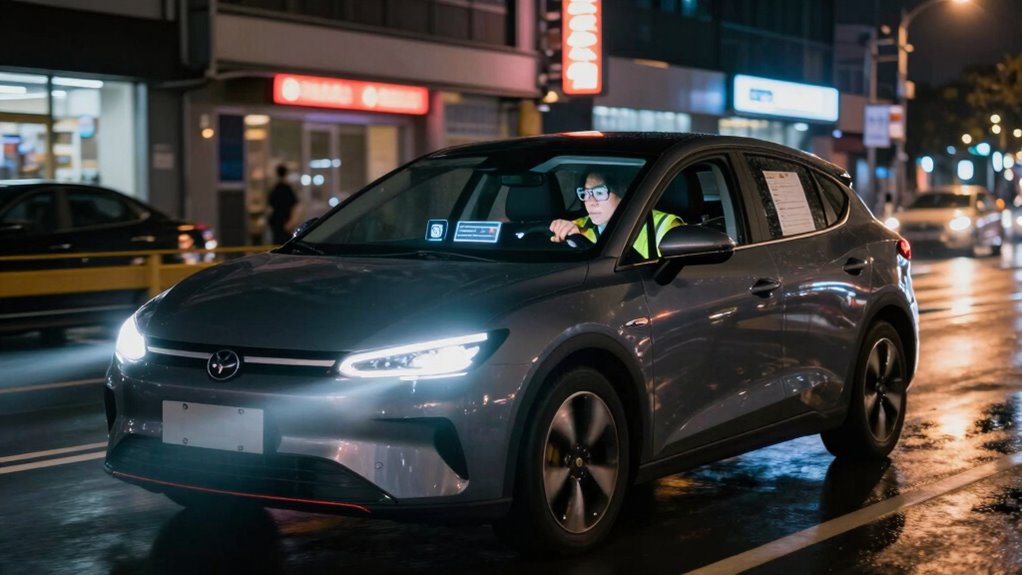

Driving late at night can be risky due to reduced visibility, fatigue, and higher chances of encountering unsafe situations or impaired drivers. To stay safe, get enough rest before shifts, take regular breaks, and avoid working overly long hours. Use safety tech like dashcams and emergency tools, choose well-lit pickup spots, and stay alert to your surroundings. Following these proven habits helps protect you and your passengers, and you’ll find more tips to improve your safety during late-night drives.

Get business pricing on garage and car supplies
- Business-only prices and quantity discounts
- Tax-exempt purchasing
- Multiple users, one account, clear invoices
Key Takeaways
- Prioritize 7-9 hours of sleep before night shifts to reduce fatigue risks.
- Take regular 15-30 minute breaks every 2-4 hours to maintain alertness.
- Use safety technology like AI dashcams, emergency buttons, and trip sharing with trusted contacts.
- Limit shift durations to 8-10 hours and avoid working during circadian lows (2-5 AM).
- Choose well-lit, safe pickup locations and stay vigilant to mitigate personal safety risks.
Understanding the Risks of Nighttime and Late-Night Driving
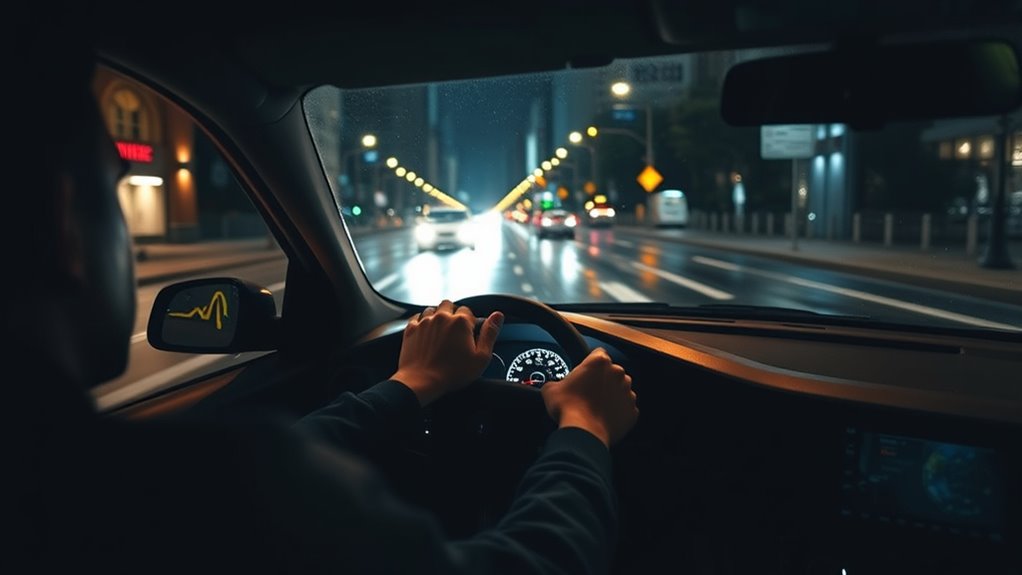
Driving at night presents unique risks because your vision is markedly impaired in low-light conditions. Your visual acuity drops, making it harder to see road signs, lane markings, and small hazards from typical driving distances. Contrast sensitivity decreases, so pedestrians, cyclists, or dark-clad objects become much harder to detect. Headlights create a narrow illuminated field and cause glare for oncoming drivers, reducing reaction distance compared to daytime. Poorly lit or unlit roads have a higher crash fatality rate, especially for older drivers facing age-related vision decline. Additionally, alcohol and drug impairment increase at night, with a significant portion of nighttime fatalities involving impaired drivers. Pedestrians are also more vulnerable after dark, with reduced visibility and higher fatality rates, especially on poorly lit streets. Increased fatigue and decreased alertness can further impair driver reaction times during late-night hours. Moreover, visual impairment in low-light conditions can be compounded by weather factors like fog or rain, further reducing visibility and increasing accident risk. Ensuring proper lighting and visibility is crucial for safer nighttime driving and is supported by research on nighttime crash risks. Studies also show that driver alertness significantly impacts reaction times and overall safety during late-night driving. Recognizing the importance of proper vision correction can help mitigate some of these risks and improve safety on late-night roads.
The Impact of Fatigue and Sleep Deprivation on Driver Performance
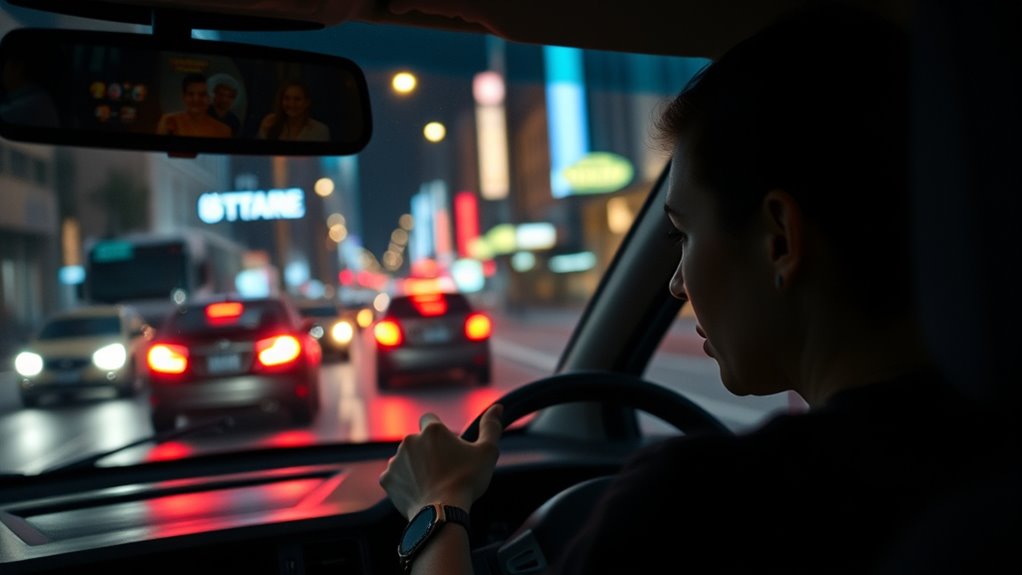
Fatigue and sleep deprivation considerably impair your ability to perform safely behind the wheel. When you’re tired, your alertness drops, making it harder to notice road signs and hazards. Your focus weakens, increasing the chance of distraction or missing critical cues. Judgment suffers, leading to poor decisions and risky behaviors. Reaction times lengthen, and your memory and coordination decline, making it harder to respond swiftly. Signs of fatigue, like eyelid closure or microsleeps, are common and often linked to crashes. Driving while sleep-deprived is as dangerous as driving intoxicated—after 20 hours awake, your impairment matches a BAC of 0.08%. Research shows that fatigue is a key factor in traffic accidents, especially during late-night hours when sleep deprivation is common. Recognizing these effects helps you understand why staying rested is essential for safe late-night driving.
Recognizing the Dangers Posed by Other Road Users After Dark
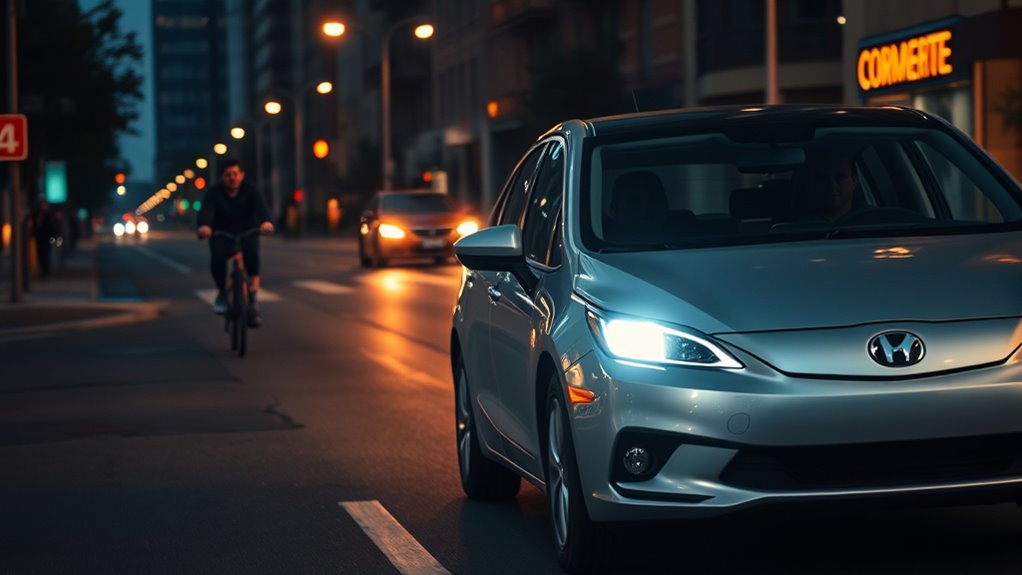
Nighttime conditions considerably reduce visibility, making it harder to spot road signs, pedestrians, and wildlife in time to react safely. With less light, your reaction time diminishes, increasing the risk of accidents. Pedestrians are three to seven times more vulnerable at night, especially on urban arterial roads, where most fatalities occur in darkness. Drivers under the influence of alcohol or drugs, particularly between midnight and 3 a.m., elevate the danger—they account for nearly 75% of nighttime traffic fatalities. Also, impaired drivers are more active after dark, making encounters more hazardous. You must stay alert for unpredictable behaviors, watch for pedestrians hiding in shadows, and anticipate the increased presence of impaired drivers. Recognizing these risks helps you stay proactive and reduce the likelihood of a crash during late-night hours. Night driving in California is 12 times deadlier than daytime, emphasizing the importance of vigilance and cautious driving during these hours. Additionally, proper lighting and visibility aids can significantly improve safety during late-night driving. Being aware of nighttime driving risks can help you develop safer driving habits and reduce accident chances in low-light conditions. Incorporating advanced vehicle lighting systems can further enhance your visibility and reaction time, providing an extra layer of safety. Staying informed about lighting technologies and how they interact with various driving conditions can make a critical difference in safety. Moreover, understanding how driver behavior impacts safety during night hours can help you remain cautious and alert at all times.
Personal Safety Challenges for Rideshare Drivers During Late Hours
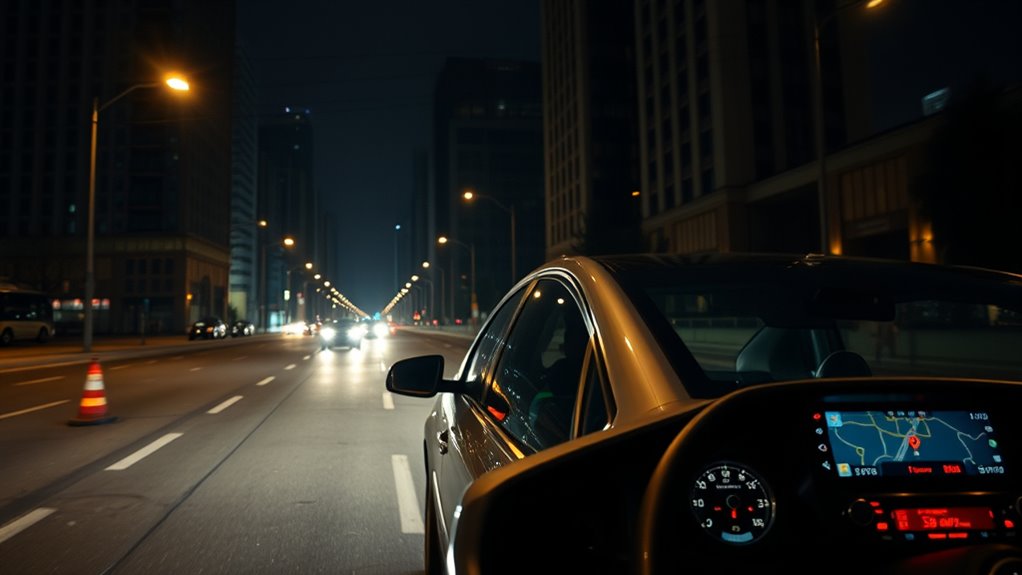
Driving late at night puts you at greater risk of assault and feeling isolated, especially when you’re alone in unfamiliar areas. These conditions make you more vulnerable and heighten your personal safety concerns. Fortunately, safety tech solutions are emerging to help protect you, but understanding their limitations is key. For example, some drivers consider electric bikes as alternative transportation options for safer, more flexible travel during late hours. Being aware of wave and wind conditions can also influence how you plan your routes and stay safe during late-night rides. Additionally, consulting resources like therightequityrelease.com can provide valuable insights into safety and financial planning for those working unconventional hours. Incorporating home safety measures into your routine can further enhance your overall security during off-hours, especially when combined with personal safety apps that offer real-time assistance.
Nighttime Assault Risks
Late-night hours pose significant safety challenges for rideshare drivers, especially when pickups occur near bars and entertainment venues. These locations have higher risks of assaults, with over 47,000 nighttime assaults recorded in NYC taxi zones from 2017-2018. Ridesharing trips to bars are linked to a slight increase in assault likelihood, often involving intoxicated or vulnerable passengers. Be aware that:
- Many assaults happen during late-night weekend rides from bars.
- A significant percentage involve intoxicated passengers traveling alone.
- Drivers and passengers with prior complaints are at higher risk of attack.
- Over 400,000 reports of sexual misconduct in Uber trips from 2017-2022 highlight the ongoing safety concerns in late-night rides. While assaults at restaurants are less associated with ridesharing, bar-related incidents remain a concern. Staying alert and choosing safe pickup spots can help mitigate these risks during late hours. Additionally, maintaining a heightened awareness during late-night trips can significantly improve safety for both drivers and passengers. Implementing safety protocols such as sharing trip details with trusted contacts can further enhance security during risky late-night rides. Being familiar with personal safety strategies can also empower drivers to respond effectively in emergency situations. Educating oneself about risk mitigation techniques can further reduce the chance of incidents during vulnerable hours. Moreover, understanding the Gold IRA markets can provide drivers with insights into secure financial planning for the future.
Isolation and Vulnerability
Operating alone during late hours exposes rideshare drivers to significant safety risks, as isolation makes it harder to get help quickly in emergencies. Without regular contact with peer networks, you miss out on informal safety advice and support, increasing feelings of loneliness. Company platforms limit driver-to-driver data sharing, making it difficult to warn others about problematic riders or dangerous locations. The fear of deactivation discourages reporting incidents or organizing safety efforts, weakening collective protection. Solo driving also raises your vulnerability to opportunistic crimes like robbery or carjacking, especially in poorly lit or unfamiliar areas. Reliance on mobile devices can distract you, and limited access to passenger history heightens exposure to potentially disruptive or violent individuals. Peer support networks can provide crucial safety tips and real-time assistance, helping to mitigate these risks. These factors combine to elevate your personal safety risks during late-night rides. Research indicates that incidents of violence against drivers increase during late-night hours, emphasizing the importance of community and safety networks.
Safety Tech Solutions
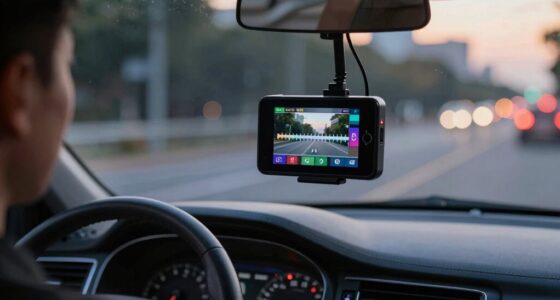
Ever wondered how technology can augment your safety during late-night rides? Modern safety tech offers powerful tools to protect you and your passengers. For example, IoT sensors communicate with cloud systems for route optimization and problem detection, while integration with RapidSOS provides precise location info during emergencies. You also benefit from verification tech like Safety Screens that display passenger details and prevent fraud. AI cameras monitor driver alertness, detecting fatigue or distraction in real-time. Telematics track driving behavior, offering safety alerts and reducing risks. Additionally, ultrasonic proximity verification ensures correct passenger entry, and AI dashcams alert you to unsafe behaviors. These innovations work together to improve safety, accountability, and response times, giving you peace of mind during those late-night shifts. IoT technology as a breakthrough also enables real-time communication between driver and passenger devices and the cloud, further enhancing safety measures.
Technological Solutions and Safety Features to Enhance Night-Driving Security
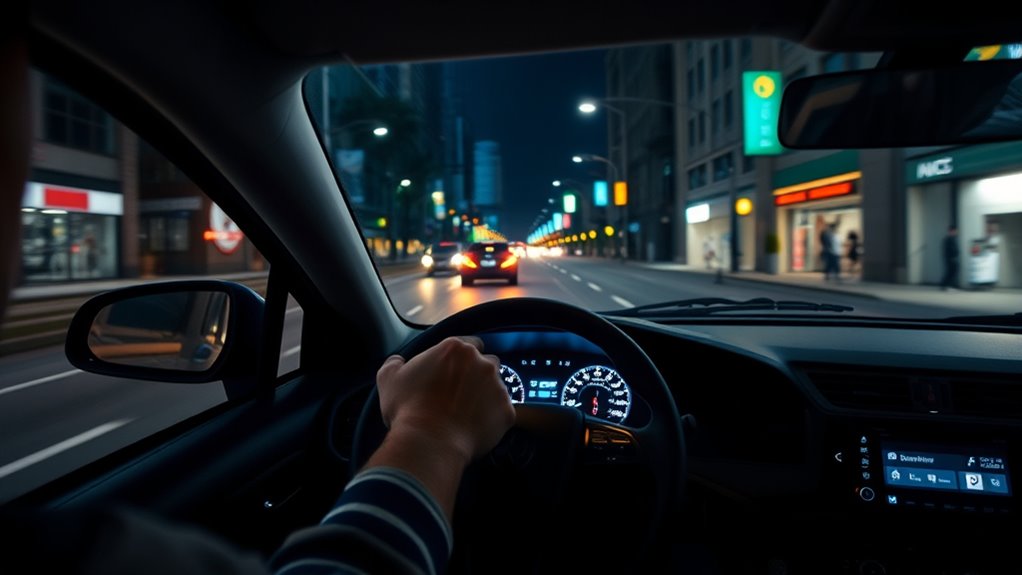
You can rely on in-app emergency tools that quickly connect you to response centers and send your location during a crisis. Vehicle security technologies, like automatic emergency braking and lane-keeping systems, help prevent accidents in low-light conditions. Many modern vehicles incorporate filtration systems that improve air quality inside the car, enhancing passenger comfort and safety.] Rideshare services have also contributed to an increase in traffic fatalities, highlighting the importance of safety features in vehicles. Together, these features boost your safety and give you peace of mind during late-night drives.
In-App Emergency Tools
In-app emergency tools considerably enhance night-driving safety by providing quick access to help when it’s most needed. They enable you to connect with emergency services seamlessly and discreetly, reducing response times and escalating threats. For instance, in-app 911 buttons can transmit your real-time location and trip data directly to dispatchers, speeding up assistance. You also benefit from discreet panic features, which let you summon help silently during hostile situations by triggering alerts to trusted contacts or emergency services. Additionally, automated trip monitoring detects anomalies like crashes or unexpected stops, prompting immediate verification or escalation if needed. These tools include:
- In-app 911 call buttons with real-time location sharing
- Discreet panic controls for silent emergencies
- Automated trip monitoring and anomaly detection
Furthermore, Real-time data sharing with emergency responders ensures first responders are better equipped with detailed incident information, improving response effectiveness. Incorporating location tracking technology enhances these features by providing precise navigation assistance during emergencies. Understanding and utilizing these safety features can significantly improve night-driving security and driver confidence.
Enhancing these safety features with user-friendly interfaces can also improve quick accessibility during emergencies, making the tools more effective in high-stress situations.
A deeper understanding of technological solutions and their capabilities can further empower drivers to stay safe during late-night rides.
Vehicle Security Technologies
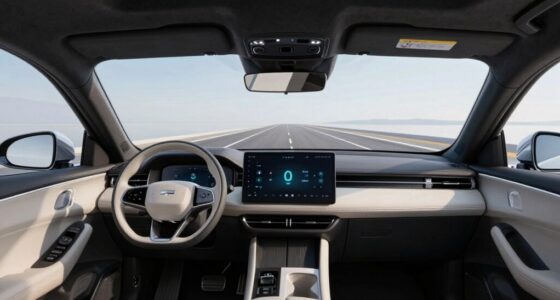
Vehicle security technologies play a vital role in enhancing safety during night driving by actively monitoring and responding to potential threats. Advanced driver-assistance systems like adaptive cruise control automatically adjust your speed to maintain safe distances, reducing collision risks. Automatic emergency braking intervenes to mitigate crashes when human reaction is too slow. Lane-keeping systems help prevent lane departures in low visibility, providing steering corrections. Night-optimized cameras and infrared sensors extend your perception beyond what your eyes can see, aiding safer decision-making. Connectivity tools transmit real-time data on your location, driving behavior, and vehicle health, enabling remote monitoring and quick safety interventions. Biometric and proximity authentication verify driver and passenger identities, preventing unauthorized use and ride-mismatch. These technologies collectively boost your safety during late-night rides. Additionally, Liability for autonomous vehicle accidents may fall on manufacturers, software developers, or third parties, emphasizing the importance of reliable security features to prevent incidents. Ensuring the integration of security features with existing vehicle systems enhances overall night-driving safety and reduces vulnerability to cyber threats. Incorporating vehicle cybersecurity measures is essential to guard against emerging digital vulnerabilities and protect sensitive data. Moreover, implementing regular software updates can address newly discovered security flaws, maintaining the integrity of your vehicle’s defenses.
Best Practices for Managing Shift Length and Rest Periods
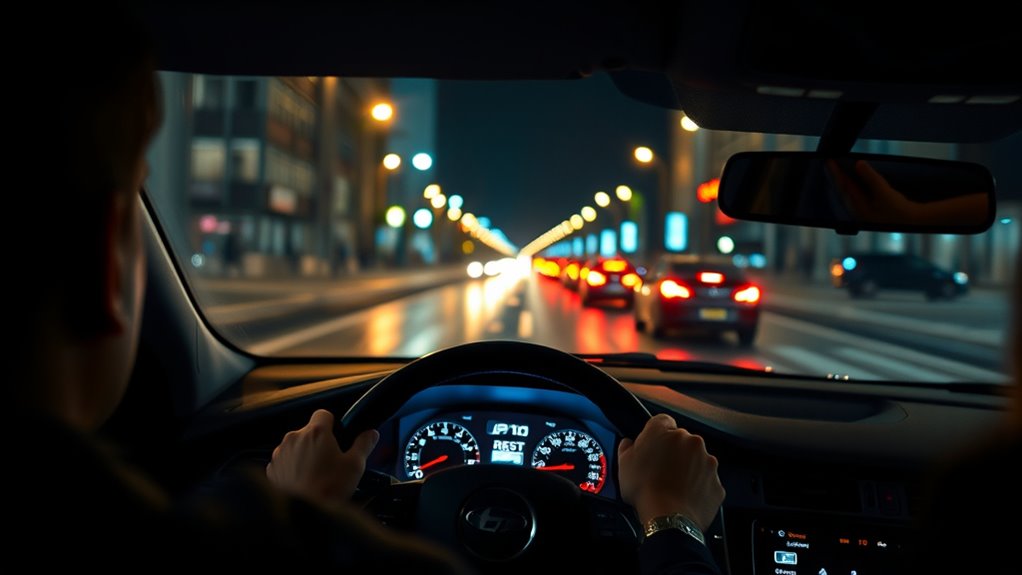
Effective management of shift length and rest periods is crucial for ensuring safety during late-night driving. To minimize fatigue, follow these best practices:
- Limit shifts to 8–10 hours, especially during circadian troughs (02:00–05:00), to reduce impairment risks.
- Take 15–30 minute breaks every 2–4 hours to boost alertness and performance.
- Schedule continuous sleep of 7–9 hours before night shifts to restore alertness and cognitive function.
- Be aware that longer shifts can significantly increase the risk of fatigue-related accidents, emphasizing the importance of adhering to recommended working hours.
Major platforms enforce policies like a 6-hour break after 12 hours of driver mode, and regional laws may impose daily maximums. Be aware that exceeding recommended shift durations increases cognitive impairment, similar to intoxication levels. Prioritizing shorter shifts, regular breaks, and sufficient sleep helps maintain alertness and reduces the risk of accidents during late-night rides.
Policy and Industry Strategies to Reduce Nighttime and Fatigue-Related Incidents
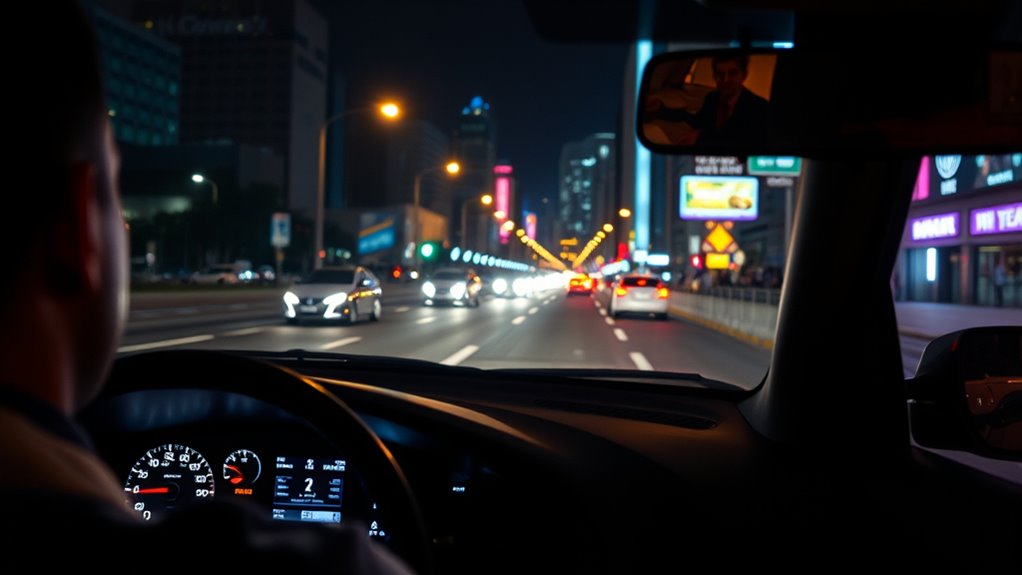
To reduce nighttime and fatigue-related incidents, policymakers and industry leaders are implementing targeted strategies that address the unique risks of late-night driving. They require mandatory reporting of crash data, including time-of-day and fatigue factors, to identify hotspots and high-risk periods. Rideshare platforms must adopt fatigue-risk management policies, such as limiting consecutive night shifts and mandating rest breaks. Incentives like tax credits or reduced fees motivate drivers to complete safety and fatigue-awareness training. Additionally, data sharing between platforms and safety agencies helps in targeted enforcement and infrastructure improvements. Enforcing vehicle safety standards and vehicle monitoring devices addresses visibility and distracted driving concerns. These combined efforts aim to reduce fatigue, risky behaviors, and crash rates during high-risk nighttime hours.
| Policy Incentives | Industry Strategies |
|---|---|
| Fatigue reporting | Adjust surge algorithms for fatigue |
| Safety training | Smarter ride-matching to reduce deadheading |
| Data sharing | App prompts for fatigue detection |
| Vehicle standards | Emergency features for night rides |
Frequently Asked Questions
How Can Rideshare Drivers Effectively Monitor Their Fatigue Levels During Long Shifts?
You can effectively monitor your fatigue levels during long shifts by using wearable devices like Fitbit or Vigo headsets that track sleep and alertness signs. Rely on in-car systems with facial and steering pattern monitoring or fatigue detection apps that provide real-time alerts. Pay attention to your body signals, take regular breaks, and stay hydrated to maintain alertness and guarantee safe driving throughout your shift.
What Specific In-App Safety Features Are Most Effective for Late-Night Driver Protection?
Imagine it’s 2024, and you’re steering late-night streets with your trusty smartphone. The in-app safety features most effective for your protection include real-time GPS tracking, which keeps your trip monitored and allows quick intervention if needed. Automated anomaly detection flags unusual stops or route deviations. Share-ETA and trusted contacts let others watch your trip. Plus, one-tap SOS and in-app emergency workflows ensure you can quickly summon help, keeping you safe on every ride.
Are There Recommended Guidelines for Maximum Shift Duration to Prevent Fatigue?
You should aim to limit your shifts to no more than 8-10 hours to prevent fatigue. Taking regular breaks every 2-3 hours helps maintain alertness. Listen to your body—if you feel tired, it’s better to stop driving and rest. Prioritize quality sleep and avoid back-to-back long shifts. Setting personal boundaries guarantees safety, reduces errors, and keeps you alert during late-night hours.
How Do Local Laws Regulate Driver Rest Periods and Safety in Nightlife Districts?
Local laws regulate driver rest periods and safety in nightlife districts through zoning rules, designated pickup zones, and enhanced lighting. Cities often implement spatial controls like cameras and special policing to guarantee safe pickups and curb unsafe interactions. They may also impose vehicle inspections and background checks. Some areas limit total ride-hailing licenses or vehicle hours, reducing fatigue risks. These measures work together to promote driver safety during late-night hours.
What Technological Innovations Are Emerging to Detect Driver Drowsiness in Real Time?
You can leverage advanced tech to detect driver drowsiness in real time. Vision-based systems track facial cues like blink rate and yawns, using lightweight ML models on edge devices for quick detection. Physiological sensors monitor heart rate and eye temperature, while vehicle data analyze steering patterns and lane deviations. Combining these multimodal approaches improves accuracy and early warning capabilities, helping you stay alert and safe during late-night rides.
Conclusion
Driving late at night can feel like steering through a maze of shadows and surprises, but staying alert, rested, and aware keeps you safe. Embrace technology, follow best practices, and prioritize your well-being—because one moment of fatigue can turn your night into a nightmare. By taking these habits seriously, you’ll outshine the dangers lurking after dark and keep your journeys safe and smooth, no matter how late the hour.
Fall Picks
fall essentials
As an affiliate, we earn on qualifying purchases.