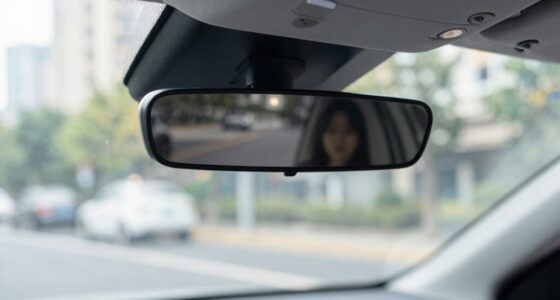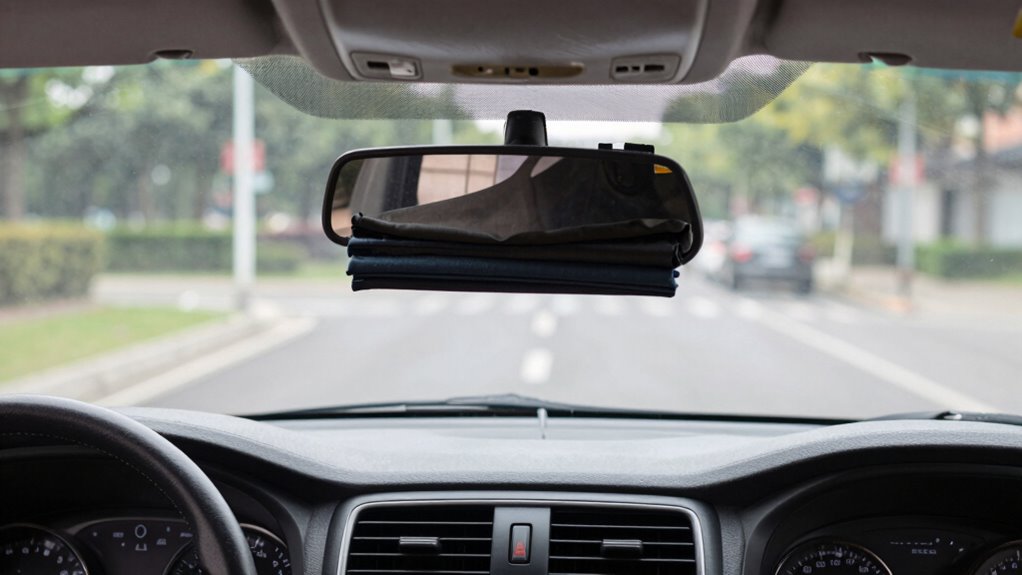

To avoid a ticket for windshield obstructions, keep your view clear by limiting dashboard clutter, properly positioning sun visors, and avoiding hanging items or bulky decals that block your line of sight. Make sure your window tinting complies with local laws—typically, front windows must let in at least 70% light—and remove snow, ice, or frost promptly. Staying within these rules helps you stay safe and legal; learn more to keep your car fully compliant.

Get business pricing on garage and car supplies
- Business-only prices and quantity discounts
- Tax-exempt purchasing
- Multiple users, one account, clear invoices
Key Takeaways
- Keep the windshield clear of debris, stickers, decals, and interior clutter that obstruct the driver’s line of sight.
- Properly position sun visors to block sunlight without blocking your view of the road.
- Avoid hanging objects or accessories in the windshield area unless specifically approved or mounted properly.
- Ensure window tints meet legal VLT limits and avoid reflective or mirrored films that cause glare.
- Regularly clean and inspect the windshield for obstructions and remove frost or snow promptly during winter.
What Counts as a Windshield Obstruction
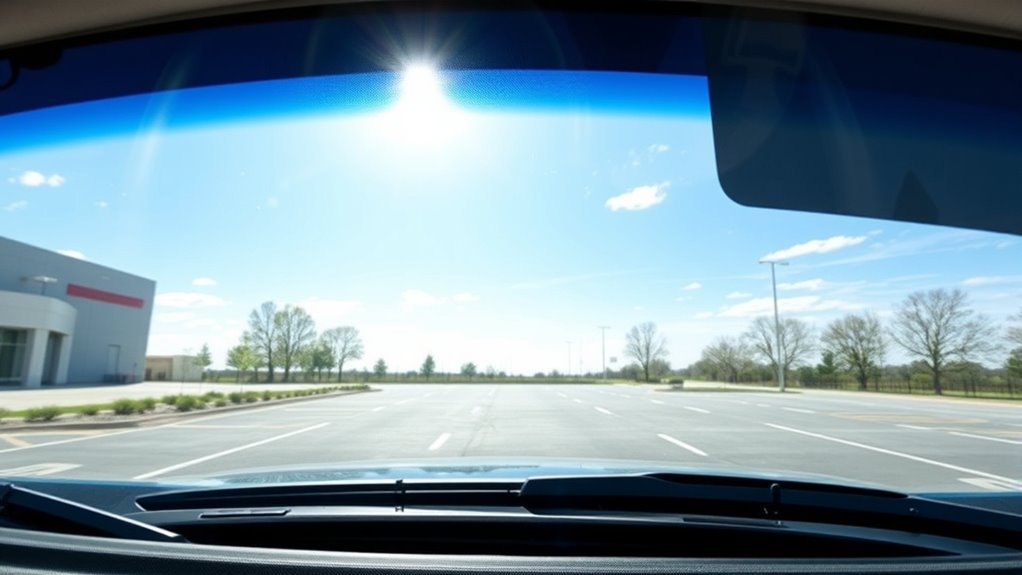
A windshield obstruction is any object or substance that blocks your view of the road, making it difficult to see clearly while driving. Common obstructions include dashboard clutter, which can reflect sunlight and create glare, reducing visibility. Sun visor restrictions also count as obstructions if they are too low or improperly used, blocking part of your view. Items like GPS mounts, phone holders, or hanging decorations can also be problematic if they interfere with your line of sight. The key is ensuring nothing on or near your windshield hampers your ability to see traffic, signals, or pedestrians. Staying aware of these potential obstructions helps you avoid tickets and drive safely. Additionally, projector technology can influence the clarity and visibility of displays inside your vehicle, which may affect overall safety. Properly managing driver visibility is essential for maintaining safe driving conditions and avoiding violations, especially as visual distractions continue to evolve with new vehicle features. For example, automotive display systems can sometimes contribute to distractions if not properly designed or used correctly. Being mindful of reconditioning batteries and keeping your vehicle’s electrical components in good condition can also support safe driving by ensuring all electronic systems function reliably.
Legal Limits for Window Tinting and Accessories
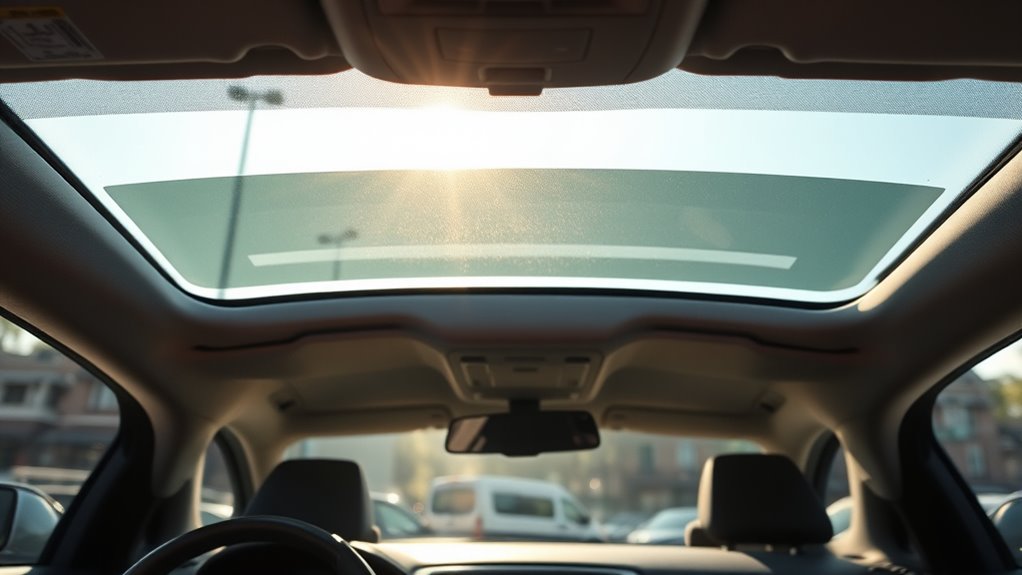
Have you ever wondered how dark your window tint can legally be? Knowing the legal limits helps you avoid fines and keeps your vehicle compliant. Here are key points about window tinting and accessory regulations:
Understanding legal window tint limits helps you stay compliant and avoid fines.
- The front side windows typically require a certain percentage of visible light transmission (VLT), often around 70% or higher. This ensures adequate visibility for safe driving.
- The rear windows may have more leniency, allowing darker tints depending on state laws. Some states permit almost complete tinting on rear and side windows if the vehicle has other safety features.
- Windshield tinting is usually limited to a strip at the top, known as an AS-1 line or sun visor strip. This prevents obstruction of the driver’s view.
- Accessories like reflective or mirrored tinting might be prohibited altogether, as they can obstruct views and violate safety rules. Such effects can also cause glare that endangers other drivers. Additionally, window tinting regulations vary widely, making it essential to stay informed about your local laws.
- Understanding vetted regulations ensures your vehicle remains within legal limits and avoids penalties. Familiarity with state-specific laws is crucial, as regulations can vary significantly between jurisdictions. Additionally, being aware of window tinting exceptions helps in case your vehicle qualifies for special permits or exemptions.
- Regularly checking your vehicle’s compliance can prevent unintentional violations and fines, especially if laws change over time.
Common Items That Can Lead to Violations
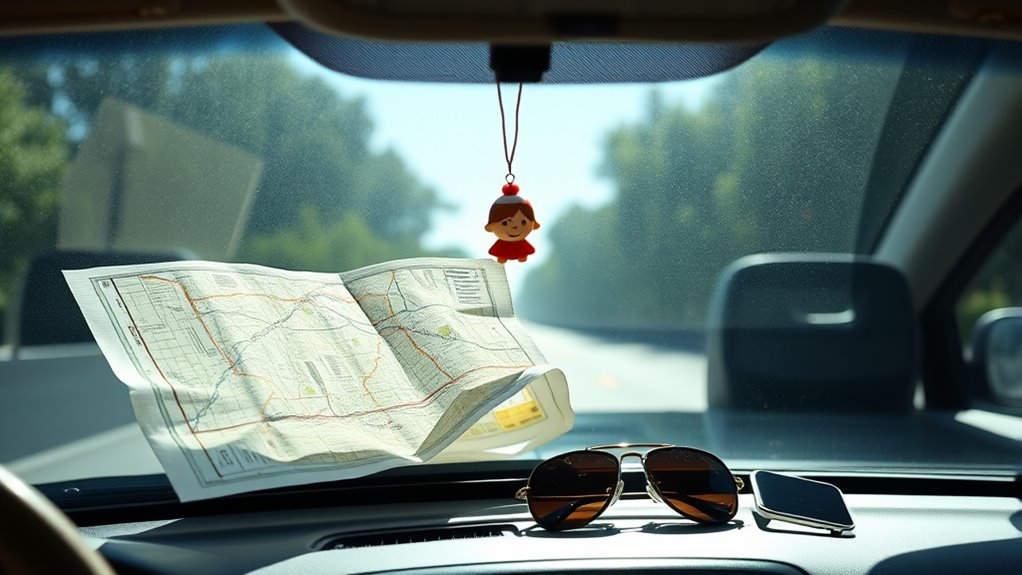
Certain items on your vehicle can lead to violations if they obstruct your view or violate state regulations. Common offenders include dashboard clutter, which can block your line of sight, and improper sunshade placement that can reflect sunlight into your eyes. To avoid tickets, keep your dashboard clear of unnecessary items and ensure sunshades are used correctly. Here’s a quick guide:
| Item | What to Watch For | Impact |
|---|---|---|
| Dashboard clutter | Excess objects blocking view | Ticket risk for obstructed vision |
| Sunshade placement | Incorrectly positioned sunshades | Glare or visibility issues |
| Obstructive decals | Large stickers or decals | Can block important view areas |
Additionally, being aware of visual clarity can help you maintain a safe driving environment and prevent violations related to obstructions. Maintaining a clear windshield is essential for safe driving and avoiding tickets. Properly managing vehicle interior items can further enhance your visibility and compliance. Being mindful of electric dirt bikes’ horsepower and speed capabilities can also improve your overall safety on the road.
How to Properly Maintain Your Windshield for Visibility
Keeping your windshield clear and in good condition is key to maintaining ideal visibility while driving. Regular windshield cleaning prevents dirt, bugs, and streaks that can impair your view. To reduce sun glare, ensure your wipers are in excellent condition and replace them if they streak or skip. Here are four tips to maintain your windshield:
- Clean your windshield with a quality glass cleaner frequently. Proper cleaning techniques help prevent scratches and ensure clear visibility.
- Use a microfiber cloth to avoid scratches during cleaning.
- Replace wiper blades annually for maximum windshield wiping.
- Park in shaded areas to minimize sun glare and heat damage.
- Check your smartphone accessories regularly for safe and distraction-free driving. When using devices while driving, consider hands-free technology to enhance safety on the road. Incorporating connected home fitness concepts, like smart tech, can inspire more innovative and safety-oriented approaches to vehicle maintenance and driver awareness. Additionally, understanding the importance of air quality considerations can help you maintain a healthier environment inside your vehicle. Maintaining good vehicle interior hygiene can also contribute to better air quality and overall safety.
Penalties and Consequences of Obstructing Your View
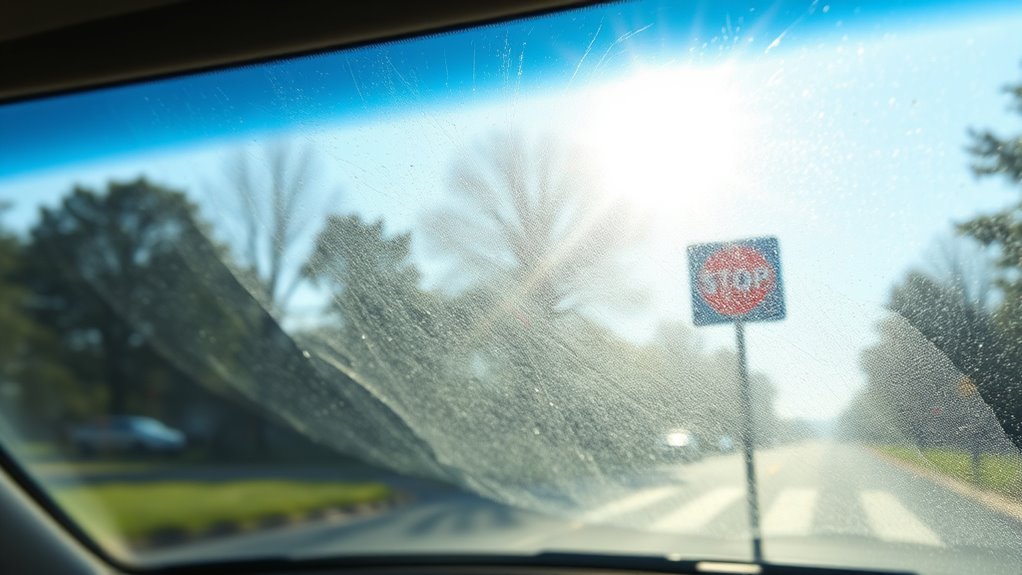
If you obstruct your windshield, you could face hefty fines and legal penalties that add up quickly. You also increase your risk of accidents, putting yourself and others in danger. Understanding these consequences helps you stay compliant and drive safely. To prevent issues, it’s important to keep your view clear and unobstructed, especially from Free Floating objects or debris in your backyard that could inadvertently fall onto your vehicle. Regularly inspecting and removing any obstructions like clutter or overgrown foliage can further ensure your view remains unobstructed. Additionally, being aware of state regulations regarding windshield obstructions can help you avoid unintentional violations. Maintaining a clear windshield also involves understanding home maintenance practices that can help prevent debris accumulation around your property.
Fines and Legal Penalties
Obstructing your windshield can lead to serious legal consequences, including hefty fines and penalties. These legal measures emphasize driver safety and uphold vehicle maintenance standards. If caught, you may face:
- Significant monetary fines that vary by state and severity of the violation.
- Points added to your driving record, affecting insurance premiums.
- Mandatory court appearances, which can result in further legal fees.
- Potential vehicle inspection requirements to guarantee your vehicle meets safety standards. Proper vehicle maintenance ensures your windshield remains unobstructed and compliant with regulations, minimizing the risk of penalties. Keeping your windshield clean and free of obstructions is a simple yet crucial step in maintaining overall road safety.
Ignoring windshield obstructions not only risks fines but also compromises your ability to drive safely. Staying compliant helps protect you from legal trouble and keeps your vehicle maintenance on track, ensuring clear visibility and safe driving conditions. Additionally, understanding the signs of narcissism can help you recognize manipulative behaviors that may compromise your safety or well-being while on the road or in other situations. Regular vehicle inspections can help identify potential issues early, preventing unintentional obstructions. Awareness of automotive repair basics can help you address minor issues before they lead to unsafe conditions or violations.
Increased Accident Risk
When your windshield is obstructed, your view of the road becomes severely limited, increasing the likelihood of accidents. Different obstruction types, such as cracked glass, stickers, or objects hanging from your mirror, create significant visibility hazards. These obstructions can block critical visual cues like traffic signals, pedestrians, or other vehicles, reducing your reaction time. The more your view is compromised, the higher your risk of collisions. Ignoring these visibility hazards puts you and others in danger. Not only do you face legal penalties, but you also increase the chance of causing accidents that could result in injuries or fatalities. Keeping your windshield clear is essential for safe driving and avoiding unnecessary risks on the road.
Tips for Staying Compliant and Avoiding Tickets
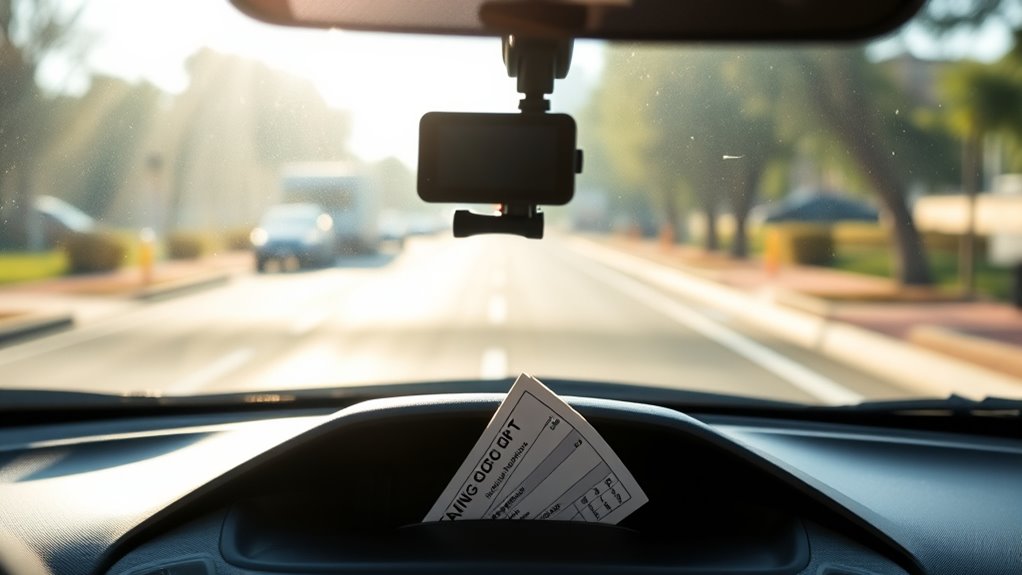
To stay compliant and avoid tickets, you need to make certain your windshield offers clear visibility at all times. Properly placed objects or stickers should never obstruct your view of the road or mirrors. Keep these essentials in mind to prevent accidental violations and stay safe on the road.
Clear Visibility Essentials
Maintaining clear visibility through your windshield is essential for safe driving and avoiding tickets. To stay compliant, keep your view unobstructed at all times. Here are some key tips:
- Regularly clean your windshield to remove dirt, streaks, and debris, ensuring clear sightlines.
- Avoid excessive or obstructive decorative decals that block your view or violate local laws.
- Ensure emergency equipment like first aid kits or warning triangles are stored properly, not hanging or cluttering your windshield area.
- Remove any frost, snow, or ice promptly to prevent obstruction during winter months.
Sticking to these essentials helps you stay focused on the road and compliant with regulations, reducing the risk of a ticket or accident.
Proper Obstruction Placement
Proper obstruction placement is crucial for staying compliant and avoiding tickets. You should keep dashboard clutter minimal, removing unnecessary items that can block your view. Avoid placing objects that distract or obscure your line of sight through the windshield. When using your sun visor, ensure it’s correctly positioned—tilted away from your view when not needed and flipped down only if it doesn’t block your vision. Don’t hang accessories or mount devices on the windshield unless they’re approved and do not interfere with your line of sight. Regularly check your windshield for any obstructions and adjust your sun visor accordingly. Maintaining clear visibility by managing dashboard clutter and positioning your sun visor correctly helps you stay within legal limits and prevents potential violations.
Frequently Asked Questions
Are There Different Rules for Commercial Versus Personal Vehicles?
Yes, there are different rules for commercial versus personal vehicles. Commercial vehicles often have stricter tint regulations, and certain obstructions like added decals or equipment may be more restricted. Make sure your vehicle registration is current, and check local laws to avoid tickets. For personal vehicles, rules tend to be more lenient, but you still need to follow tint regulations and avoid obstructing your view through the windshield.
Can Temporary Stickers or Decals Cause Violations?
Temporary stickers or decals can cause violations if they block your windshield’s view like a foggy window. You need to guarantee they stay clear and visible, so they don’t obstruct your line of sight. Make sure the stickers are placed in a way that doesn’t cover essential areas, and regularly check their position. Proper decal visibility helps you stay compliant and avoid a ticket while keeping your view unobstructed.
Do Police Have Discretion to Issue Warnings Instead of Tickets?
Yes, police have discretion to issue warnings instead of tickets. When you get pulled over, the officer considers factors like your attitude, the violation’s severity, and your driving history. If you’re cooperative and the issue isn’t serious, they might give a warning rather than a ticket. Remember, police discretion allows them to choose the best course of action, so staying respectful can sometimes help you avoid a ticket altogether.
How Do Weather Conditions Affect Windshield Obstruction Laws?
Imagine driving through foggy conditions where visibility restrictions are intense, like trying to see through a thick curtain. Weather affects windshield obstruction laws because reduced visibility from fog, snow, or rain can make any obstruction, like a cracked windshield or objects hanging from your mirror, illegal. Always clear your windshield and keep your view unobstructed. If weather worsens, you risk tickets for any obstruction that hinders your ability to see clearly.
Are There Specific Rules for Aftermarket Window Treatments?
You need to follow specific rules for aftermarket window treatments, like tint darkness and decal placement. Check your state’s regulations because they often restrict how dark your tint can be on the windshield and windows. Decals should be placed where they don’t obstruct your view or violate size restrictions. Staying within these guidelines helps you avoid tickets and ensures your vehicle remains compliant with local laws.
Conclusion
Staying compliant with windshield obstruction rules keeps you safe and avoids costly tickets. Regularly check your windows for any obstructions and make sure your tinting and accessories meet legal standards. Are you prepared to drive without risking penalties? Keep your view clear and your record clean by following these simple tips. Remember, a little maintenance now can save you from unnecessary fines later—so why take the risk when staying within the law is this easy?
Halloween Picks
halloween
As an affiliate, we earn on qualifying purchases.