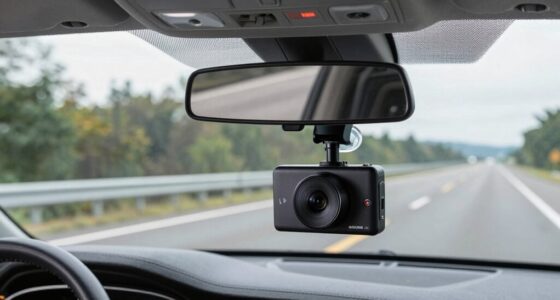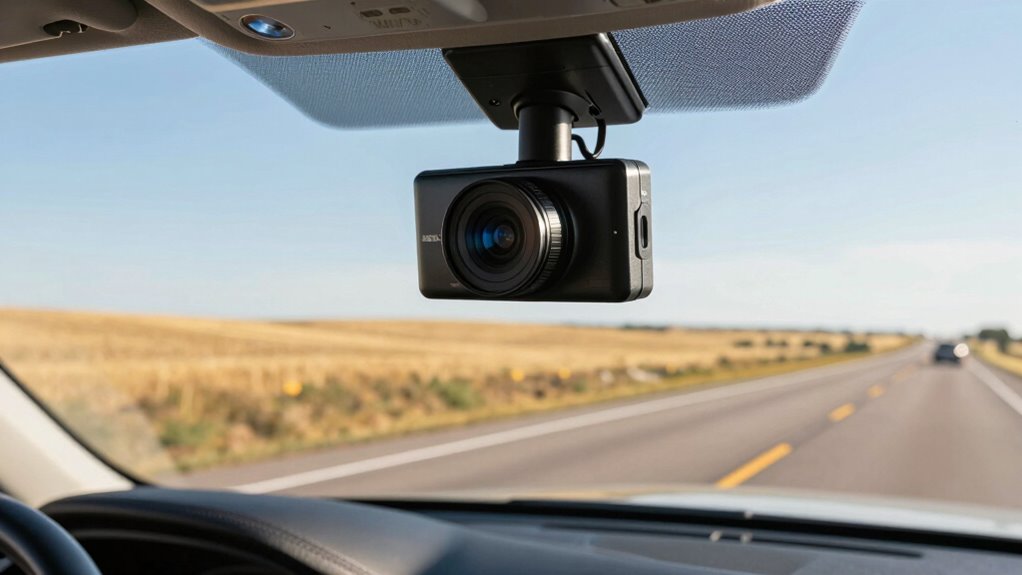
In North Dakota, you can use a dash cam as long as you install it properly without obstructing your view or safety features like airbags. Mount it on the dashboard or behind the rearview mirror—avoid windshield drilling or large stickers on windows. You can record audio with passenger consent, following one-party consent laws, but should disable it if you’re unsure. To stay compliant and protect your rights, understanding these rules will help you set up your dash cam correctly.

Get business pricing on garage and car supplies
- Business-only prices and quantity discounts
- Tax-exempt purchasing
- Multiple users, one account, clear invoices
Key Takeaways
- Dash cams are legal in North Dakota if properly mounted on the dashboard or below the windshield’s sightline.
- Windshield-mounted dash cams are discouraged or prohibited to avoid obstructing driver visibility.
- Audio recording inside the vehicle requires at least one-party consent; all passengers should be informed.
- Proper mounting ensures footage is admissible in court and prevents legal violations or safety hazards.
- Maintaining clear windows and avoiding obstructive stickers or posters helps stay compliant with visibility laws.
dash cam low profile adhesive mount
As an affiliate, we earn on qualifying purchases.
As an affiliate, we earn on qualifying purchases.
Overview of North Dakota Dash Cam Regulations

In North Dakota, dash cams are legal as long as they are securely installed and do not violate placement rules. You can use them to record your drives without specific restrictions beyond proper mounting. There are no statewide bans on operating dash cams, and footage can be used in court if it’s relevant and properly authenticated. Recording in public spaces is generally allowed under state law, making it legal to capture scenes outside your vehicle. However, you must ensure your dash cam doesn’t obstruct your view or violate windshield regulations. All windows should remain free of stickers, posters, or non-transparent materials. Proper placement on the dashboard is essential to avoid fines, and ethical considerations come into play when recording private areas without consent. Proper installation practices are crucial for ensuring compliance and safety while using a dash cam. Additionally, understanding privacy laws helps prevent potential legal issues related to audio recording and private property. Being aware of audio recording restrictions ensures that you do not inadvertently violate laws regarding private conversations. It is also important to familiarize yourself with local ordinances, as some cities or counties may have specific rules regarding dash cam usage or placement. Furthermore, keeping up-to-date with any changes in state legislation can help ensure ongoing compliance with dash cam regulations. Always verify the specific regulations in your local jurisdiction to avoid unintended violations.
dashboard camera with legal mounting options
As an affiliate, we earn on qualifying purchases.
As an affiliate, we earn on qualifying purchases.
Proper Mounting Locations and Obstruction Laws
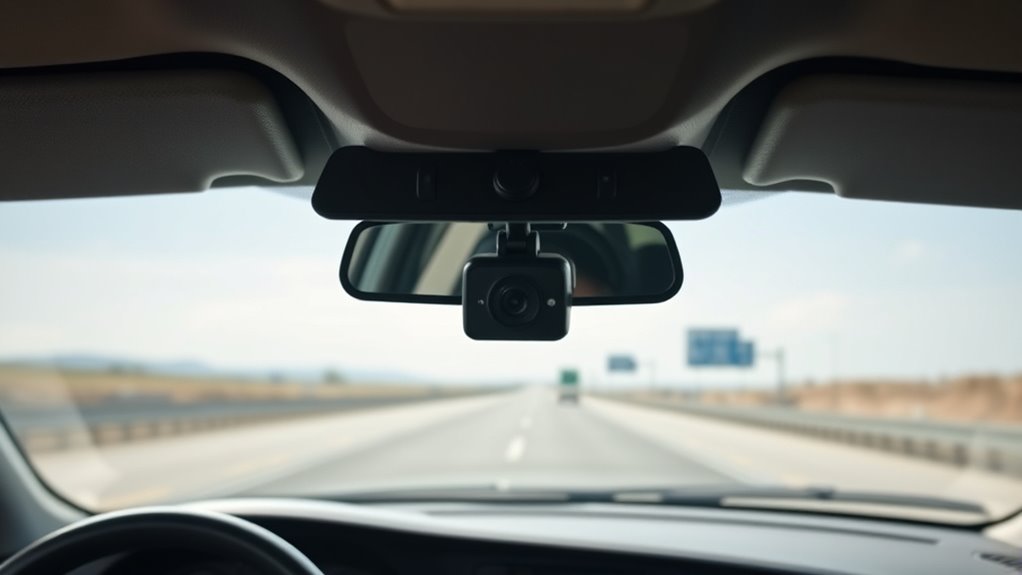
To stay compliant with North Dakota laws, you should carefully choose where to mount your dash cam, as improper placement can lead to violations or safety hazards. Mounting your device on the dashboard is recommended to avoid windshield-obstruction violations, provided it doesn’t block airbags or driver sightlines. Use low-profile or adhesive flat mounts to minimize obstruction risks under “clear window” rules. If dashboard mounting isn’t possible, consult your vehicle manual and keep the camera below your sightline. North Dakota explicitly prohibits windshield-mounted dash cams, and all windows must remain clear of stickers, posters, and nontransparent devices. Enforcement focuses on ensuring your view isn’t obstructed, so avoid bulky or tinted mounts that could interfere with traffic signals, pedestrians, or the road. Secure your mount properly to prevent dislodgement and hazards. Proper placement is essential for legal compliance and safety, and understanding vehicle safety guidelines can help prevent accidents caused by obstructed views. Additionally, being aware of mounting regulations can help you avoid unintentional violations and ensure your dash cam enhances rather than compromises your driving safety. Paying attention to visual obstructions and how they impact your visibility can further improve safe driving practices. Recognizing the importance of driver awareness ensures you maintain a clear view and stay compliant with local laws, promoting responsible use of your dash cam.
audio recording dash cam with one-party consent
As an affiliate, we earn on qualifying purchases.
As an affiliate, we earn on qualifying purchases.
Restrictions on Windshield and Window Stickers or Devices
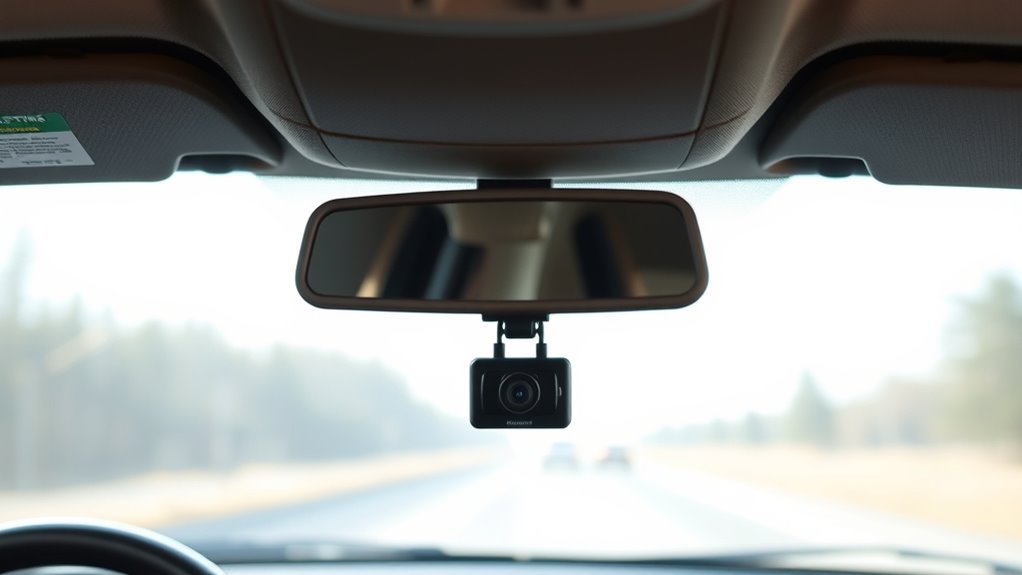
Are stickers, posters, or nontransparent devices allowed on your vehicle’s windshield or windows in North Dakota? No. North Dakota law prohibits placing nontransparent materials on the windshield or windows that obstruct your view. This includes stickers, posters, and devices attached to glass, which can be cited if they impair visibility. The focus is on whether an object causes a material obstruction, not on its type. Dash cams mounted on the windshield are explicitly discouraged; industry guidance recommends placing them on the dashboard instead. Small, required decals for registration or inspection are generally permitted if they don’t block your view. However, large or numerous stickers that reduce glass visibility may lead to citations under obstruction laws. Always ensure your vehicle’s glass remains clear and unobstructed to avoid violations. Proper placement is essential to avoid legal issues and maintain safe driving conditions. Additionally, understanding vehicle glass obstruction laws can help you prevent unintended violations and ensure compliance with state regulations. Being aware of the influence of cultural practices on vehicle modifications can also help you stay informed about what is acceptable and safe on North Dakota roads. It’s also important to consider whether your vehicle’s modifications may affect the integrity of safety features, such as sensors or cameras. Regularly reviewing local regulations can help you stay updated on any changes that may impact vehicle modifications and safety standards.
vehicle dash cam for North Dakota laws
As an affiliate, we earn on qualifying purchases.
As an affiliate, we earn on qualifying purchases.
Audio Recording Laws and Consent Requirements

In North Dakota, you’re allowed to record audio inside your vehicle if at least one person, usually you as the driver, consents. You should be aware that recording conversations in private areas without permission can lead to legal issues, while recordings in public spaces are generally permitted. To stay compliant, it’s best to inform passengers about audio recording and ensure you follow the state’s consent rules. Additionally, understanding the distinction between private and public conversations is crucial to avoid privacy violations and to comply with privacy policies, including the rules surrounding user privacy. Being aware of the legal implications of audio recording helps you avoid unintentional violations and ensures you respect others’ rights. Moreover, knowing the specific laws about audio recording consent can help you maintain legality and protect privacy rights in various situations.
Legal Consent Requirements
Understanding North Dakota’s audio recording laws is essential for dash cam users to stay compliant. North Dakota generally follows one-party consent, meaning only one participant needs to agree to recording, such as the driver capturing in-car conversations. However, recording third-party conversations or private calls without consent can be illegal and lead to criminal or civil penalties. Federal wiretapping laws may also apply in certain situations, especially involving interstate communications. To stay compliant, consider disabling audio recording or posting notices informing passengers they’re being recorded. Keep records of consent procedures, especially for commercial use. In some cases, the use of dash cams with audio recording features may require obtaining explicit consent from all involved parties to avoid legal issues. Additionally, understanding privacy laws related to surveillance can help prevent inadvertent violations. Being aware of free floating regulations surrounding audio recordings can further assist in ensuring your dash cam use remains within legal boundaries.
Public Space Recording Rules
Recording in public spaces generally requires fewer restrictions due to lower privacy expectations, but knowing the specific rules helps you stay compliant. North Dakota is a one-party consent state, meaning at least one person involved must agree to record conversations, including in public areas. You can record audio in public spaces like entryways, parking lots, and store aisles without extra notice, as long as you avoid private zones like bathrooms or dressing rooms. Public transportation also permits audio surveillance for safety. While signage or verbal notices are recommended, they aren’t mandatory in public areas. However, private spaces with a reasonable privacy expectation are off-limits for recording without consent. Remember, court and administrative rules may impose additional restrictions on audio recordings involving victims or witnesses. Understanding local laws is essential to ensure your recording practices remain lawful and respectful of individual rights. Additionally, being aware of privacy expectations helps prevent unintentional violations of individuals’ rights when recording in various settings. For example, using appropriate recording devices, such as dash cams or smartphones, can help ensure compliance with legal standards. It is also advisable to stay informed about any specific regulations related to audio recording in public spaces to avoid legal complications. Awareness of privacy rights can further guide your recording practices to respect personal boundaries and legal boundaries alike.
Privacy Considerations for In-Car Footage
When using dash cams, you must be mindful of privacy laws that protect individuals’ in-car conversations and images. To stay compliant, consider these key points:
- Always inform passengers about audio recording to ensure they’re aware and consent is respected.
- Use clear signage near doors indicating that recording occurs inside the vehicle, especially if audio is involved.
- Disable audio recording when unfamiliar passengers are present to avoid privacy violations.
- Be aware that in some states, audio recording may require all-party consent, so understanding state-specific laws is essential.
Legal Standards for Authenticating Video Evidence
You need to understand that establishing the chain-of-custody is vital for proving a dash cam video’s integrity. Reliable metadata, like timestamps and GPS data, helps verify the recording’s accuracy and detect tampering. To authenticate video evidence, you’ll rely on specific methods such as witness testimony, technical device details, and certification procedures under North Dakota rules. Additionally, self-authenticating documents can streamline this process by providing verified records that do not require extrinsic proof. Implementing digital signature verification techniques can further bolster the credibility of the recorded footage and ensure its integrity throughout the legal process. Recognizing the importance of metadata verification can also help ensure that accidental or humorous footage is preserved as part of the evidence chain when relevant, especially when combined with proper documentation practices that support the authenticity of the evidence.
Chain-of-Custody Importance
The chain-of-custody process is essential for establishing the authenticity and integrity of dash-cam video evidence in court. It creates a documented timeline that shows who collected, accessed, transferred, or analyzed the video and when each event occurred. This process ensures that the evidence remains uncontaminated and unaltered from collection to presentation. This helps prove the video is original or a forensically identical copy, preventing tampering or substitution. To guarantee a solid chain of custody, you should:
- Assign a unique identifier to each media item at collection.
- Record precise date, time, location, and collector identity during seizure.
- Log every transfer, access, and storage detail, including recipient, purpose, and timestamps.
Following these steps helps protect your evidence from challenges, ensuring its reliability and admissibility in court.
Metadata Reliability Factors
Legal standards for authenticating video evidence primarily rely on the integrity and reliability of metadata, which must meet strict criteria to be admissible in court. You need to verify key details like location, date, and time, which are essential for establishing authenticity. Tools like eyeWitness collect metadata that adheres to legal requirements, but beware—metadata can be altered without detection. Hash values automatically generate a digital fingerprint at capture, helping help ensure integrity. Use multiple validated tools to verify metadata consistency and look out for signs of manipulation. Remember, not all metadata is trustworthy, especially with deepfake technology evolving. The table below highlights critical factors affecting metadata reliability:
| Factor | Impact | Verification Method |
|---|---|---|
| Metadata alteration risk | Undermines evidence integrity | Validation tools, hash comparison |
| Legal standards | Define admissibility criteria | FRE 901, 902 certifications |
| Digital fingerprint | Ensures unaltered capture | Cryptographic signing, hash checks |
Furthermore, implementing robust verification methods is crucial to uphold the integrity of video evidence in legal proceedings.
Authenticity Verification Methods
Authenticating video evidence requires establishing that the footage is genuine and unaltered, which involves applying specific legal standards and methods. To do this, you should focus on these key methods:
- Chain of Custody Documentation: Maintain detailed records of everyone handling the footage, including transfer dates, times, and purposes. Use physical control measures and cryptographic checksums to preserve file integrity. Proper chain of custody is essential to demonstrate that the evidence has not been tampered with or compromised during storage and transfer.
- Witness and Operator Testimony: Obtain sworn statements from those who installed, operated, or retrieved the dash cam, as well as eyewitnesses, to confirm the footage’s accuracy and connection to the event.
- Technical Authentication and Forensic Analysis: Conduct forensic examinations of files, verify hashes, and compare device data with external sources to detect possible edits or manipulations. Expert analysis can help verify the integrity of the footage, ensuring it remains reliable for legal purposes.
Applying these methods ensures your dash cam footage meets legal standards for authenticity.
Vehicle Safety and Equipment Compliance for Dash Cams
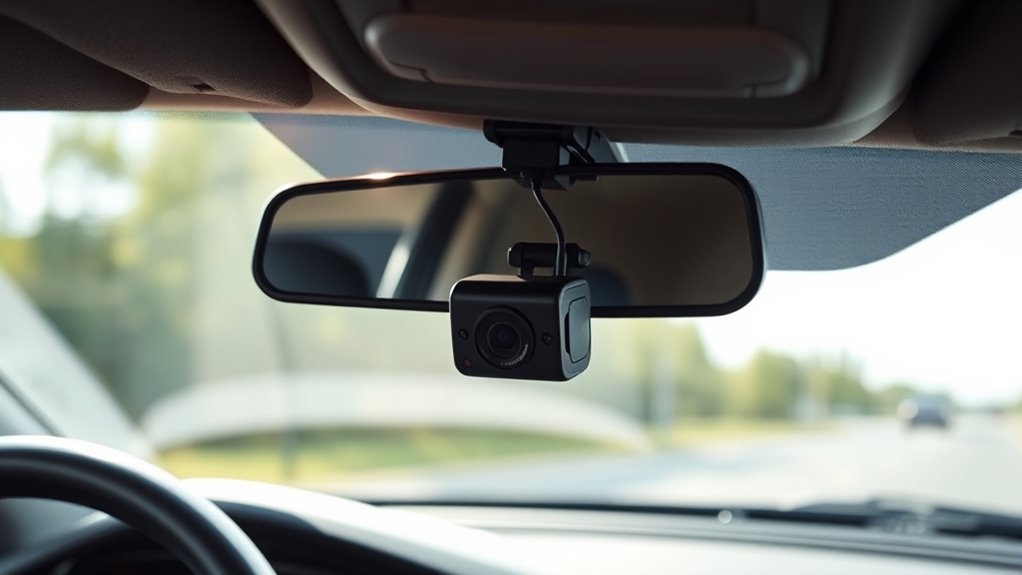
To guarantee your dash cam complies with North Dakota vehicle safety and equipment rules, you need to pay close attention to proper mounting and placement. Your dash cam should be installed so it doesn’t obstruct your view or interfere with safety features like airbags. A compact unit placed behind the rearview mirror or on the dashboard is ideal. Avoid drilling or permanent adhesives on the windshield, as these can violate regulations. Hardwired installations must still keep your sightline clear. Use adhesive or suction mounts for easy removal and to prevent citations during inspections. Additionally, commercial operators should verify federal or employer-specific mounting rules. Proper placement ensures compliance and safety, minimizing legal risks.
| Mounting Location | Recommended Type | Obstruction Risk |
|---|---|---|
| Behind rearview | Low-profile mount | Low |
| Dashboard | Adhesive/suction | Minimal |
| Windshield | Not recommended | High |
| Glazing modifications | Avoid drilling | Violates rules |
| Federal/employer requirements | Confirm | Varies |
Best Practices for Installing and Using Dash Cameras
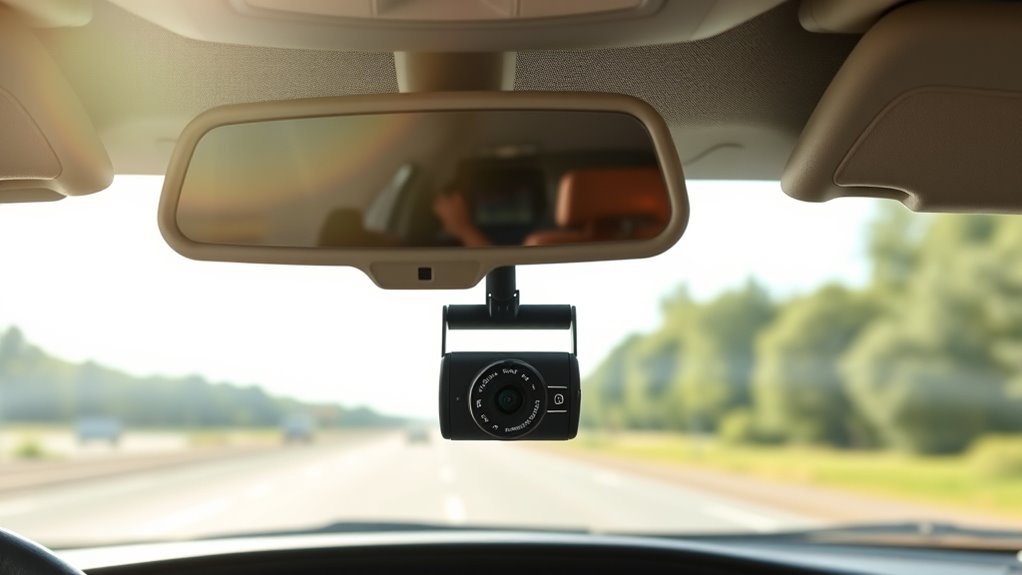
When installing your dash cam, choose a mounting spot behind the rearview mirror to keep it unobstructed and guarantee clear footage. Make sure the camera is positioned high on the windshield for a wider view and minimal glare, testing angles before securing it permanently. Also, be aware of audio recording laws in North Dakota to avoid unintentionally capturing conversations you’re not allowed to record. Selecting the right location ensures your dash cam functions effectively without distraction or obstruction.
Optimal Mounting Locations
Installing your dash cam on the dashboard is essential for legal compliance and effective recording in North Dakota. To guarantee proper placement, follow these best practices:
- Mount the dash cam low on the dashboard to maintain stability.
- Position it out of the driver’s direct sightline to avoid distractions.
- Use a secure suction or adhesive mount to prevent movement while driving.
Make sure the dash cam doesn’t obstruct your view of the road or block any windows. Avoid placing it on side windows or in a way that limits visibility. Regularly check the camera’s position to confirm it remains unobstructed. Proper placement helps you stay compliant with state laws and ensures your footage captures the road clearly, without interfering with your driving.
Audio Recording Consent
Proper placement of your dash cam guarantees it doesn’t obstruct your view or violate mounting laws in North Dakota. When recording audio, remember the state’s one-party consent rule: only one participant, like you, needs to agree to the recording. For in-vehicle recordings, your consent covers the driver, but capturing third parties’ conversations or external sounds may raise privacy concerns. To stay compliant, post a visible notice in the vehicle indicating audio and video recording is active, and give an explicit verbal announcement at the start of each trip. Obtain documented consent from routine passengers or employees, and keep an incident log linking footage to consent. When consent isn’t possible, disable audio recording and rely on video-only footage to reduce legal risks. Use device settings to timestamp, watermark, and store separate audio and video tracks for flexibility.
Enforcement Actions and Penalties for Violations
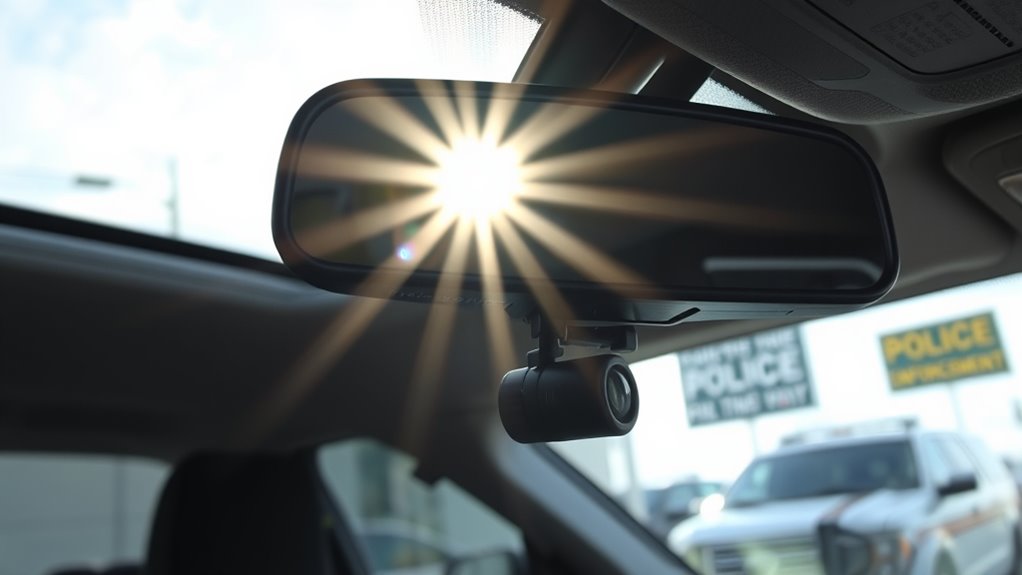
Violations of North Dakota’s dash cam laws can lead to immediate enforcement actions and penalties. If you obstruct your windshield or mount your dash cam improperly, law enforcement may issue tickets or order corrections. To avoid penalties, you should:
- Make certain your dash cam is dashboard-mounted and not obstructing your view.
- Keep your windshield and windows free of materials that block visibility.
- Correct any mounting issues promptly and document your compliance.
- Electronic device restrictions also apply when using dash cams, especially for drivers under 18, to prevent distracted driving violations. Distracted driving citations can also be issued if your dash cam use causes impairment, with fines up to $100. Under-18 drivers face additional penalties for electronic device use. Law enforcement may seize your device if footage is vital for an investigation, and tampering with recordings can be considered evidence destruction. Staying compliant helps you avoid costly fines and legal issues.
Retention and Sharing of Dash Cam Footage
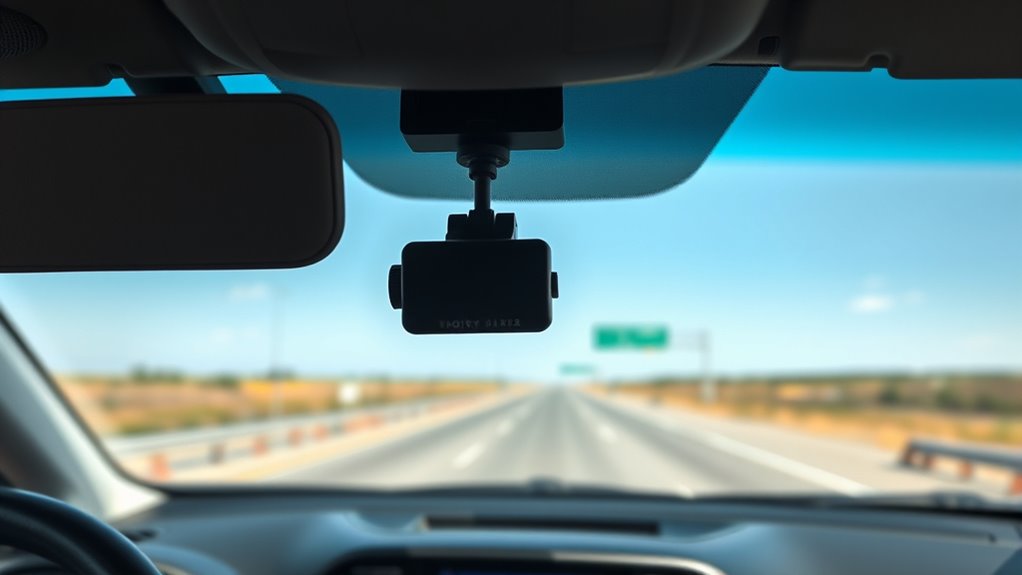
Since North Dakota does not have specific laws mandating how long you must retain dash cam footage, best practices typically recommend keeping recordings for 30 to 90 days. This timeframe balances utility and privacy, especially when footage is relevant to ongoing incidents, claims, or investigations. Many dash cams use loop recording, so configuring storage to retain at least 30–90 days helps prevent unintentional overwrites. When footage relates to a legal matter, preserve it by extending retention and documenting its storage. Original, unaltered files with timestamps and metadata are vital for admissibility. If law enforcement requests footage after a serious crash, cooperate and document the seizure. Be mindful of privacy laws when sharing footage, especially if it contains third-party personal data. Proper documentation and secure storage practices ensure footage remains admissible and protected from unauthorized access.
Frequently Asked Questions
Can I Record Audio Inside My Vehicle Without Passenger Consent in North Dakota?
Yes, you can record audio inside your vehicle without passenger consent in North Dakota because it’s a one-party consent state. As the driver, your permission is enough to legally record conversations happening inside your vehicle. Just make certain you’re aware of privacy expectations, avoid recording private or sensitive talks without notice, and consider posting visible notices or providing verbal disclosures to minimize legal risks and stay compliant with state laws.
Are There Specific Brands or Models Approved for Legal Dash Cam Installation in North Dakota?
Think of your dash cam as a vigilant guardian on your dashboard’s stage, silently watching over your drive. While North Dakota doesn’t endorse specific brands, popular models like Thinkware, Garmin, Cobra, Nextbase, and Viofo are trusted choices. Make certain your chosen camera mounts securely and doesn’t block your view. Look for features like adjustable audio controls to respect privacy. Remember, safety and compliance often depend on how you install and operate your device, not just the brand.
How Long Can I Legally Retain Dash Cam Footage Before Deletion?
You can retain dash cam footage in North Dakota for 30 to 90 days for non-incident recordings, but it’s best to keep footage related to accidents or investigations indefinitely until resolved. Avoid deleting or editing files tied to incidents to prevent legal issues. Use secure storage with timestamps, and document your retention policies. Law enforcement may seize footage, so maintain unaltered copies of critical recordings for as long as needed.
Do Commercial Drivers Face Different Dash Cam Mounting or Recording Restrictions?
You won’t face different dash cam mounting or recording restrictions as a commercial driver in North Dakota. The rules apply equally to personal and commercial vehicles, requiring dash cams to be dashboard-mounted without obstructing your view or airbags. Audio recording is allowed with your knowledge, and you should notify passengers if recording. Overall, your responsibilities are similar to those of a personal driver, with no special restrictions for commercial use.
Can Dash Cam Footage Be Used as Evidence in North Dakota Courts Without Certification?
Can dash cam footage be used as evidence in North Dakota courts without certification? Absolutely. Think of it as a story told directly from the camera’s lens—if you can verify its authenticity through sworn statements or testimony, courts accept it. As long as the footage is relevant, unaltered, and properly authenticated—showing date, time, and location—it can stand in court without a formal certification, serving as a powerful piece of your case.
Conclusion
By understanding North Dakota’s dash cam laws, you can confidently record your drives while respecting privacy and safety regulations. Some might worry about legal complexities, but staying informed and following proper mounting, audio, and sharing guidelines makes it simple. Remember, responsible dash cam use not only protects you legally but also helps document important moments. Keep your equipment compliant, respect others’ privacy, and enjoy the peace of mind that comes with responsible recording on the road.
Evergreen bestsellers Picks
bestsellers
As an affiliate, we earn on qualifying purchases.