If you’re a tall driver, avoid placing your camera where it blocks your sightline, as this can hide vital traffic signs, signals, or hazards and increase your risk of accidents. Proper placement at or below eye level, aligned with your view, helps guarantee you see everything clearly. Use adjustable mounts and other vehicle features designed for height. Keep in mind, many solutions can improve your visibility—learn more on how to optimize your setup.
Key Takeaways
- Position cameras away from eye level to prevent blocking your forward view, especially for taller drivers.
- Use adjustable mounts to customize camera angles and avoid obstructing your sightline.
- Place cameras near the top or lower left corner within legal and safe distance limits.
- Verify local laws and standards to ensure proper camera placement that doesn’t hinder visibility.
- Consider vehicle modifications like higher seats or larger windows to improve overall driver visibility.
The Challenges Tall Drivers Face With Standard Camera Placement
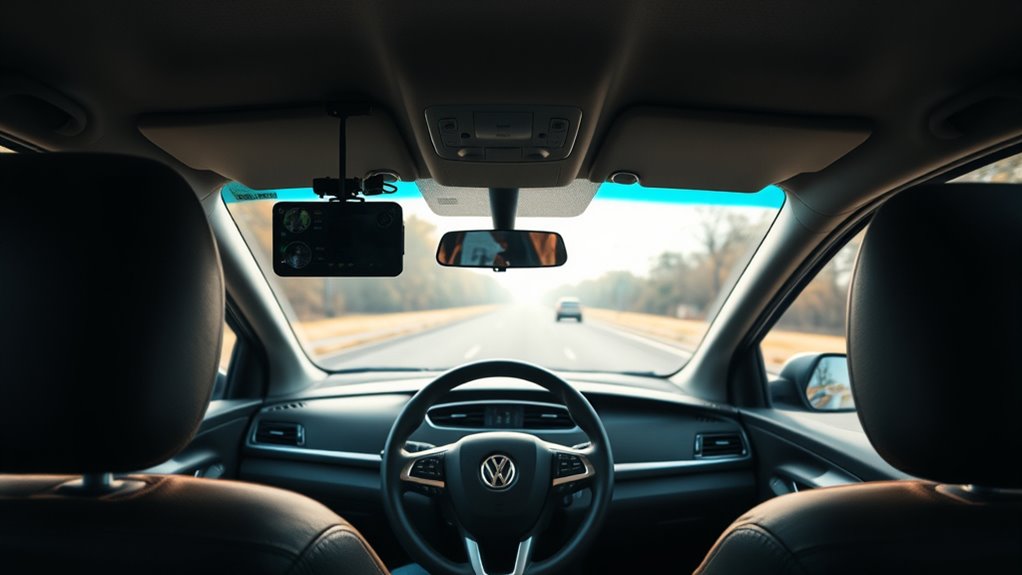
Tall drivers often encounter problems with standard camera placement because these systems are designed around average eye heights, usually near 1.08 meters (3.54 feet). If you’re over 6 feet tall, the camera’s position can block your view or misalign with your line of sight. Factory cameras and sensors are typically placed based on average driver dimensions, meaning they often fall into your field of view or create blind spots. Roof-mounted cameras or those near A-pillars may intrude into your forward vision, and adjustable mounts often don’t accommodate your height without modifications. Additionally, calibration tools assume typical heights, leading to inaccurate lane guidance or blind-spot warnings for taller drivers. All these factors make it harder for you to see clearly and stay safe on the road. Adjusting camera placement can help taller drivers improve visibility and ensure safer driving experiences.
How Obstructed Sightlines Increase Accident Risks
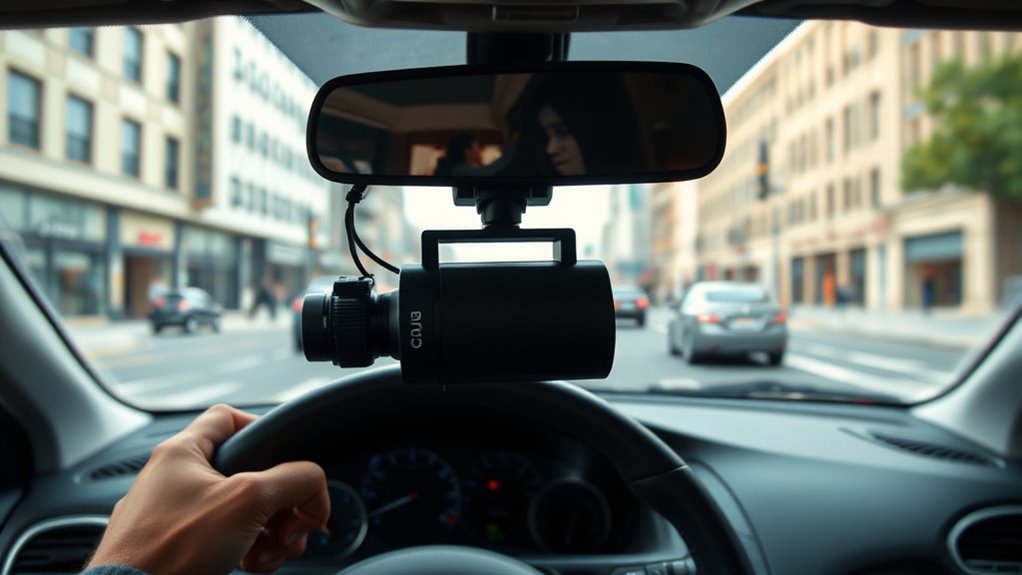
When your sightlines are blocked, it becomes harder to see other vehicles, pedestrians, or traffic signals, increasing the risk of collisions. Obstructions in critical views, like buildings or large vehicles, often lead to misjudging gaps or speeds, especially during turns. These visibility issues directly impact safety, making accidents more likely when drivers can’t fully see their surroundings. Proper mirror adjustment and head-turning are essential for safety to compensate for blind spots and prevent overlooked hazards. Additionally, contrast ratio affects how clearly you can distinguish objects in different lighting conditions, which can further influence reaction times in complex traffic scenarios. To enhance safety, drivers should be aware of potential visual obstructions and actively work to minimize their impact on sightlines. Maintaining an optimal visibility environment inside and outside the vehicle can significantly reduce risks associated with obstructed sightlines. Properly managing visual obstructions like dashboard glare or tinted windows can also improve overall visibility and safety. Being aware of Gold IRA markets and their influence on investment decisions can also inform drivers about broader risks and safety considerations in their personal and financial lives.
Blind Spots and Collisions
Obstructed sightlines considerably increase the risk of collisions, especially during lane changes. When your vision is blocked, you’re less likely to notice other vehicles, pedestrians, or cyclists, raising the chance of an accident. Blind spots contribute to about 15% of lane-change crashes, with over 840,000 incidents annually in the U.S. Large trucks are involved in thousands of fatal crashes each year, often due to inadequate surveillance or blind spots. Drivers who fail to check mirrors properly before lane changes greatly raise crash risks—17% neglect the left, 36% the right. These blind spots are especially dangerous at highway speeds, where crashes tend to occur around 35-41 mph. Improving visibility and awareness through technology and careful checks is crucial to reducing these deadly collisions. Proper mirror adjustment can significantly improve your field of view and help prevent accidents caused by blind spots. Incorporating advanced safety features such as blind-spot monitoring systems can further enhance your awareness and collision prevention to reduce risks. Additionally, understanding and eliminating blind spots through regular checks can make a substantial difference in overall driving safety, especially by staying aware of driver vigilance and the importance of proactive observation.
Obstructions in Critical View
Obstructions in critical view substantially elevate the risk of intersection accidents by limiting your ability to see approaching vehicles, pedestrians, and traffic signals clearly. When your sightlines are blocked, you’re less likely to notice oncoming traffic or pedestrians crossing, increasing the chance of a collision. Studies show that sightline obstructions occur in about 40% of crash cases, with near-misses showing an 18% obstruction rate. Surprisingly, traffic control devices and turning lanes don’t influence obstruction levels. Restricted sight distance at junctions raises crash risks by over 40%, especially at stop-controlled and approach-turn areas. Improving your intersection’s field of view can reduce crashes by over 50%, giving you more time to react and avoid accidents. Ensuring your visibility is unobstructed is essential for safe, confident driving through intersections. Furthermore, maintaining proper vehicle positioning can help optimize your sightlines and reduce blind spots. Proper vehicle positioning not only enhances your view but also makes your intentions clearer to other drivers, further reducing collision risks. Regularly trimming bushes or removing objects that block your line of sight can significantly improve your sightline and overall safety. Clear sightlines are essential for safe, confident driving through intersections.
Impact of Visibility on Safety
Limited visibility at intersections markedly raises the risk of accidents, especially during turns. When your sightlines are blocked or restricted, you struggle to spot pedestrians or other vehicles in time. Larger blind zones—over 30%—increase pedestrian crash odds by nearly 70%. Narrow front fields of view (≤85°) also heighten turning crash risks. Longer near-vehicle-person distances (>9 m) reduce your ability to detect pedestrians early. Design flaws like pillars or seat height further limit your sightlines. Proper filtration and pump protection can help maintain clear visibility by ensuring your view isn’t obstructed by equipment malfunctions. Additionally, driver awareness plays a crucial role in compensating for visibility limitations and preventing accidents. Recognizing and addressing these visibility issues can significantly improve safety outcomes, emphasizing the importance of safe driving practices in challenging conditions. Implementing advanced safety technologies, such as sensors and cameras, can further assist drivers in overcoming sightline restrictions and reducing collision risks.
Optimal Mounting Heights to Maximize Visibility
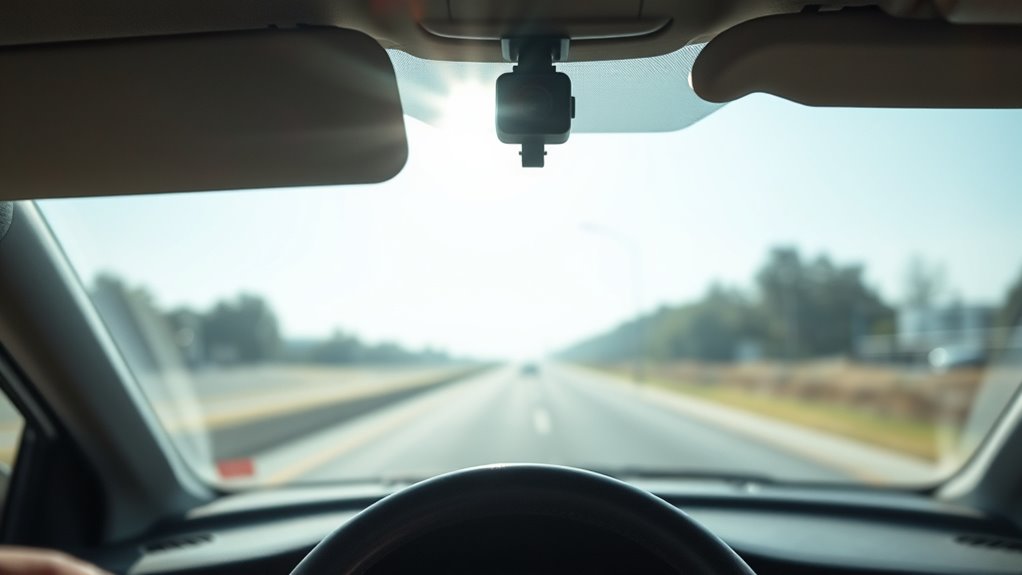
To maximize visibility, choosing the right mounting height for your camera is essential, as it directly affects the clarity of your view and compliance with regulations. Mount your camera near the center of the windshield, just below the rearview mirror, or in the top 20%, avoiding obstructions. In Vermont, keep it within 2 inches high and 2.5 inches wide in the upper left corner, or less than 4 inches high and 12 inches wide in the lower right. Utah recommends positioning close to the top or lower left corner, within 4 inches. Hawaii suggests placing it in the top or bottom corners, 5 to 7 inches square. Ensure your camera doesn’t extend more than 4 inches down from the windshield’s top edge or out more than 4 inches on the lower left. Additionally, always verify local dash cam laws to prevent legal issues. Proper installation practices help ensure your camera remains within legal and safety standards. Also, consider mounting height guidelines to optimize your camera’s performance and avoid blind spots. Selecting a height that minimizes obstructed views can greatly improve footage quality and safety during driving. When positioning your camera, be mindful of vehicle safety standards to prevent accidental damage or dislodgement during vehicle operation. Ensuring your camera’s placement aligns with safe mounting standards can help prevent accidental damage or dislodgement during vehicle operation.
Practical Adjustments to Improve Your Camera View
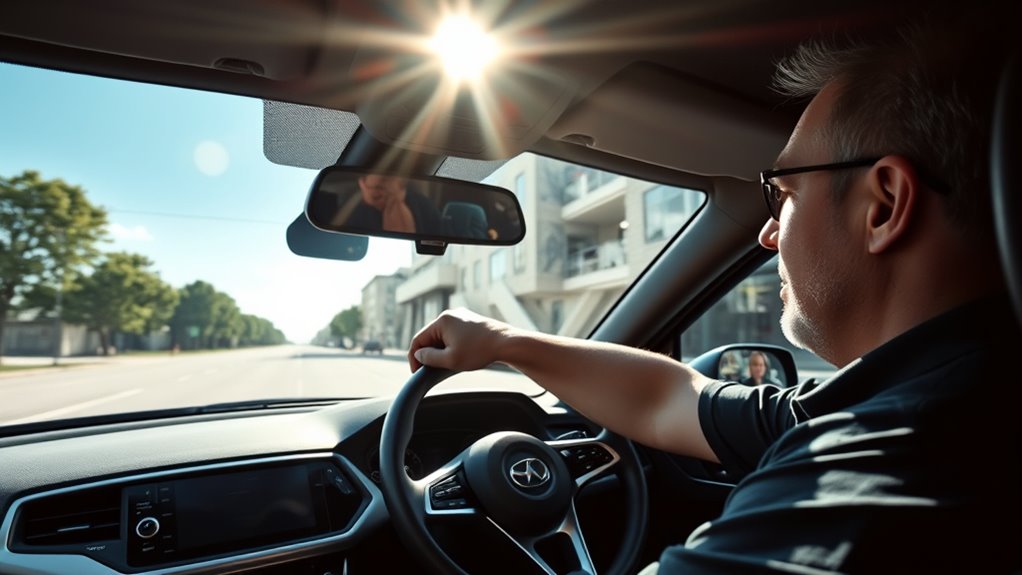
Adjusting your camera setup can considerably enhance visibility and safety. Start by aligning the camera axis so the main lens sits at or below your eyeline to avoid blocking your central forward view. Offset the camera laterally from your direct sightline to use parallax, shifting blind zones away from critical areas. Angle the camera downward 5–10 degrees to better capture the road while reducing sky glare. Position the mount immediately behind the rearview mirror footprint, utilizing existing occlusion zones instead of creating new blockages. Use low-profile mounts and adhesive bases to minimize protrusions into your peripheral vision and avoid expanding blind spots. Consider adding secondary or repeater cameras on the roof or A-pillars to cover blind areas and improve overall coverage without obstructing your main view.
Vehicle Features That Help Tall Drivers Overcome Sightline Barriers
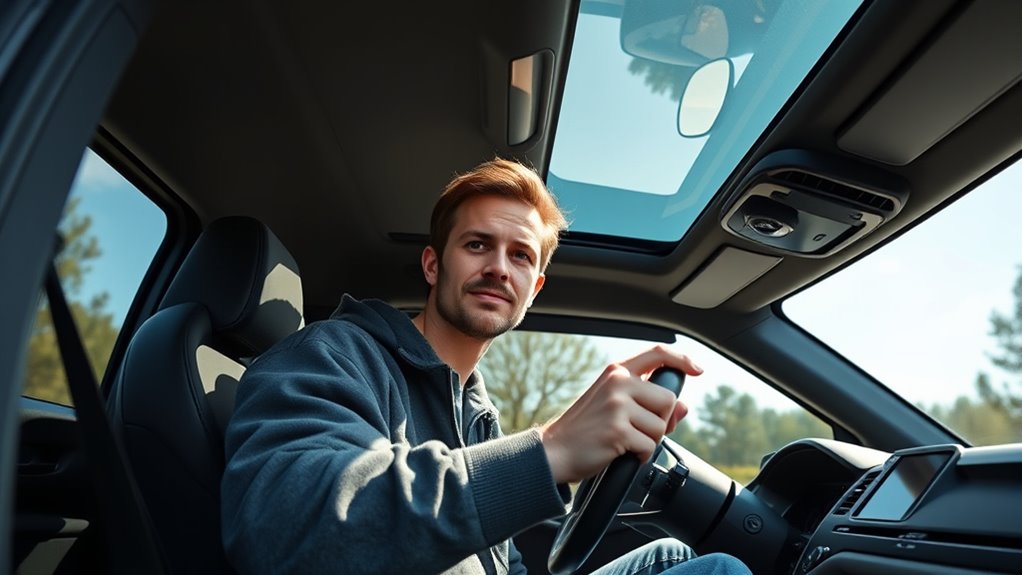
Elevated seating positions and large windows are key features that help tall drivers overcome sightline barriers. They provide a commanding view of the road, reducing blind spots and improving safety. Vehicles like the Range Rover and Audi Q7 offer high seats and expansive glasshouses, giving you better all-around visibility. The Tiguan balances height for traffic spotting and easy entry, while the Volkswagen Atlas’s large greenhouse enhances your view. Adjustable seats, like those in the Toyota Highlander and Ford Kuga, let you customize your position for comfort and ideal sightlines. Combined with tilt and telescoping steering, these features ensure a clear line of sight, helping you stay aware of your surroundings. Understanding aviation regulations is essential for comprehensive knowledge that can enhance your overall driving awareness and safety. Recognizing vehicle design features that cater to taller drivers can further optimize your driving experience.
The Role of Aftermarket Accessories in Enhancing Driver Visibility
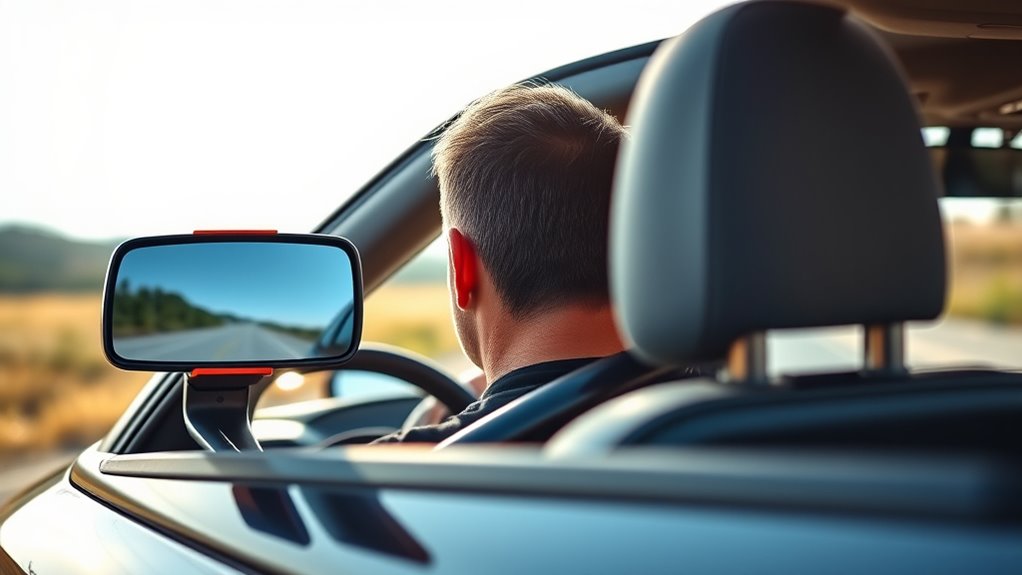
Adjustable mount options, seat, and pedal modifications let you fine-tune your driving position for better visibility. Custom camera positioning guarantees your view isn’t blocked by the vehicle’s design or accessories. By combining these aftermarket solutions, you can greatly improve your sightlines and drive more safely. Market growth in vehicle accessories has led to a wider variety of innovative mounting and positioning options tailored for tall drivers. Additionally, Free Floating design elements in modern vehicle accessories can help minimize obstructions and optimize your view. Incorporating ergonomic adjustments can further enhance your driving comfort and visibility. Staying informed about technology advancements ensures you select the best options for your specific vehicle setup.
Adjustable Mount Options
Aftermarket mounts play a crucial role in improving your visibility by offering versatile options to position cameras and devices precisely where they’re most effective. With adjustable mounts, you can fine-tune angles to reduce glare and guarantee clear views. For example:
- Use adjustable joints on vent or dashboard mounts to customize camera angles easily.
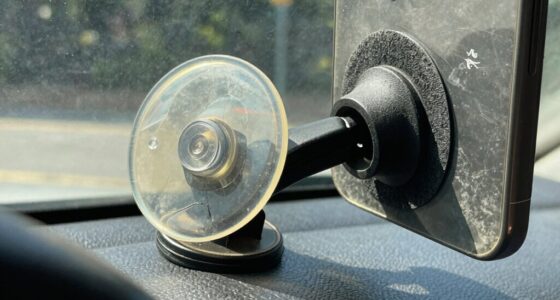
- Rotate suction cup mounts 360° on hoods or windshields for ideal positioning.
- Rely on tilting mounts like the Tilta Hydra Alien Mini Kit for vibration-free, precise adjustments.
These options allow you to avoid obstructing your sightlines while capturing high-quality footage. Compatibility with smartphones and accessories like V-Mount systems ensures quick setup and flexible use, empowering you to keep your view clear and safe.
Seat and Pedal Modifications
By modifying your seat and pedals with aftermarket accessories, you can substantially improve your visibility and driving comfort. Elevating your seat height to 1,624mm or even 1,742mm gives you a clearer view of your surroundings and better side visibility for lane changes. Proper seat adjustments help you find the most effective position, reducing blind spots. Pedal extenders allow taller drivers to maintain an upright posture without sacrificing eye height, improving pedal reach and windshield view. They also help position your eyes farther from side mirrors, shrinking blind zones. Additionally, aftermarket cushions and boosters raise your eye level, especially useful if your seat travel is limited. These modifications ensure you stay aware of your environment, making every drive safer and more comfortable. Adjustments to seat positioning can also alleviate fatigue during long drives.
Custom Camera Positioning
Custom camera positioning plays an essential role in boosting your visibility on the road, especially when you’re taller and seated higher. Proper placement guarantees you get the best view without occlusion. Here are key options to contemplate:
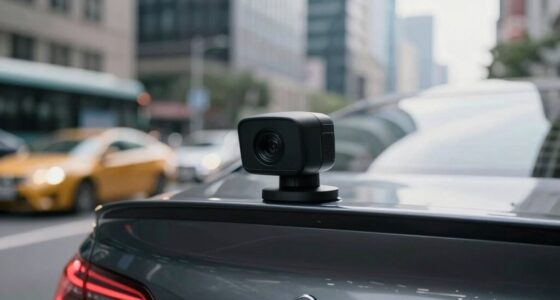
- High-mounted cameras (above-rear-window or tailgate) give a wider rear view and clear cargo or ground obstacles that factory mounts might hide. High-mounted cameras also help taller drivers see over larger vehicles or cargo, reducing blind spots that can cause accidents.
- Bumper-mounted cameras show the ground and bumper hazards, reducing low-impact collision risks for taller drivers.
- Pivoting or gimbal mounts allow you to adjust angles after installation, aligning the camera with your eye level for ideal visibility.
These aftermarket accessories help tailor your view, minimize blind spots, and improve overall safety on the road.
Policy Gaps and the Need for Adjustable Camera Standards
Current policies often overlook the diverse physical characteristics of drivers, particularly taller individuals, leading to safety risks and visibility issues. Most state-specific mounting restrictions specify fixed areas for camera placement, ignoring driver height variations. Federal guidelines lack requirements for adjustable mounts, offering only fixed positioning rules that don’t accommodate taller drivers’ needs. Uniform placement mandates behind the rearview mirror or on specific windshield corners ignore individual differences, often resulting in obstructed views for taller drivers. Privacy laws focus on consent, not sightline clearance, while enforcement relies on standard positions that don’t consider height. Without adjustable standards, taller drivers are left vulnerable to blocked sightlines, increasing accident risks. To improve safety, policies must incorporate flexible, adjustable camera mounting options that respect driver diversity and promote clear visibility. Additionally, implementing adjustable mounting systems that can be tailored to individual driver heights would significantly enhance safety and compliance across diverse driver populations.
Tips for Customizing Your Setup for a Clearer View
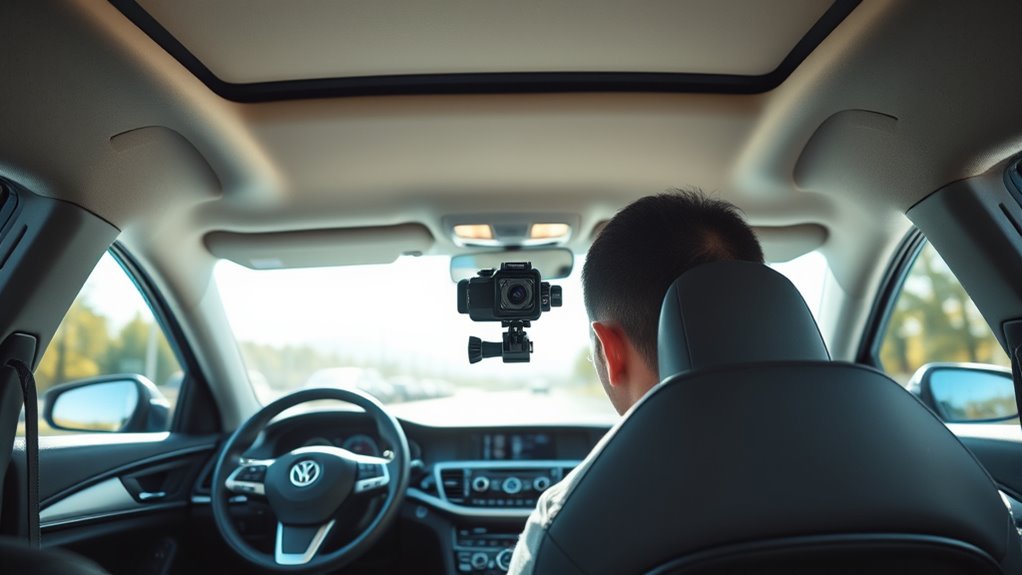
To guarantee your camera setup provides a clear and unobstructed view, focus on ideal placement within recommended zones and angles. Position the camera at or above your eye level, about 8.5 inches below the windshield’s upper edge, and keep it within the windshield wiper sweep. Aim for a frame with 60–80% road and minimal sky to capture useful detail. Proper placement helps in reliable footage capture and legal compliance. Consider these tips: 1. Use mounts with multi-axis tilt and swivel to adjust angles easily for different drivers and seat positions. 2. Route cables securely along headliners and A-pillars, avoiding interference with airbags and safety zones. 3. Test placement from the driver’s seat to ensure no obstruction of signs, signals, or your primary view before finalizing.
Frequently Asked Questions
Are There Legal Regulations for Camera Mounting Height Adjustments?
Yes, there are legal regulations for camera mounting height adjustments. You need to guarantee your camera doesn’t obstruct your view of the road, signals, or pedestrians. Many states specify maximum areas or dimensions for mounting—like behind the rearview mirror or within certain inch limits—while some prohibit windshield mounts altogether. Always check your state’s specific laws to comply and avoid blocking critical sight lines or interfering with safety systems.
How Do Different Vehicle Types Affect Camera Positioning Options?
Vehicle types vary vastly, affecting camera positioning options. Sedans favor flush-mounts for sleek visibility, SUVs prefer high-top hatch mounts or multi-angle setups for maximum rear view, trucks often use outside rear mounts and surround systems for all-encompassing coverage, while vans and fleets opt for dual or single dash cams and rearward mounts for versatile views. You should consider each vehicle’s size, shape, and purpose to position cameras safely and effectively.
Can Adjustable Camera Mounts Be Installed on All Car Models?
Adjustable camera mounts can’t be installed on all car models because surface compatibility varies. You need smooth, non-porous surfaces like windshields or hoods for suction cups, but some vehicles or rental cars may have surfaces unsuitable for these mounts. Always test fit your specific vehicle first. If your car’s surface isn’t compatible, consider alternative mounting options like velcro or specialized brackets to ensure a secure, unobstructed setup.
What Are the Best DIY Solutions for Improving Tall Drivers’ Visibility?
You can improve your visibility with simple DIY solutions like adding foam or cushion supports to raise your seat height, giving you a better view over the steering wheel and dashboard. Adjust your side and rearview mirrors outward for wider coverage and eliminate blind spots. Remove or modify sun visors to reduce glare, and keep your windshield and windows clean for clearer sightlines. These easy fixes help you drive safer and more comfortably.
Do Insurance Policies Cover Damages Caused by Visibility-Related Accidents?
Yes, insurance policies often cover damages from visibility-related accidents. For example, if you’re involved in a crash caused by poor lighting or foggy weather, your policy’s collision or extensive coverage can help pay for repairs and medical bills. Keep in mind, maintaining your vehicle and ensuring good visibility can also reduce premiums. Always review your policy details to understand specific coverage limits and any exclusions related to weather or visibility issues.
Conclusion
Don’t let your view be clouded by misplaced cameras. Think of your sightline as the window to your safety—keep it clear and unobstructed. By adjusting your camera placement, you’re sharpening your vision like a lighthouse cutting through fog, guiding you safely home. Take control of your setup, because your safety isn’t just a feature—it’s your journey’s compass. Clear sightlines light the path to safer roads for you and everyone around you.