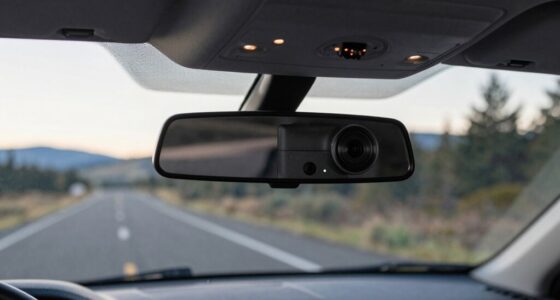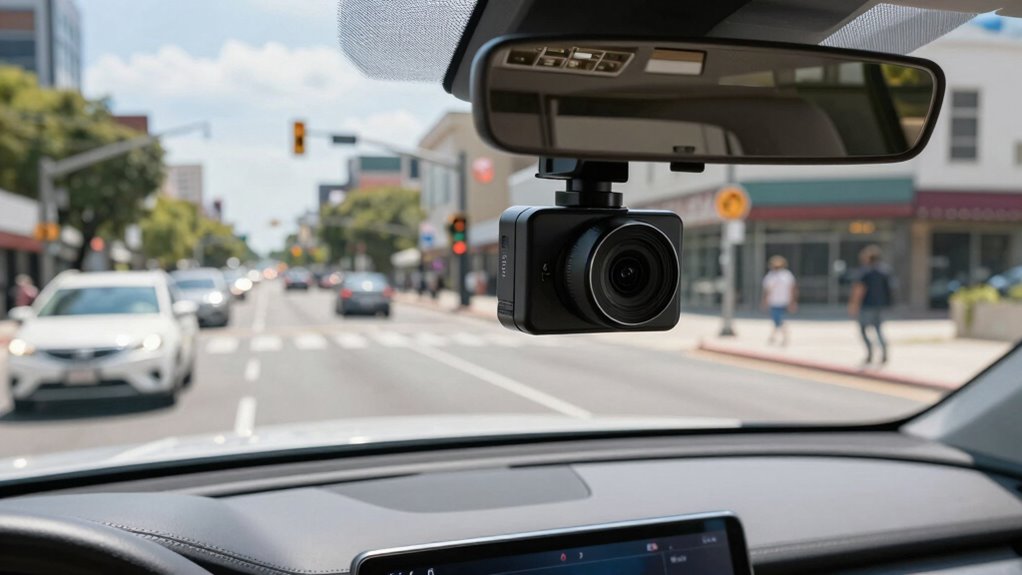

Yes, dash cams are generally legal across most states in the U.S., but specific laws vary regarding privacy, consent, and mounting rules. You can record in public spaces without issue, but capturing private conversations or property may raise legal concerns. Laws about audio recording differ by state, so understanding local regulations is important. To guarantee you’re compliant and protected, you’ll find plenty of important details if you explore further.
Key Takeaways
- Dash cams are generally legal in most U.S. states, but laws vary by location.
- Recording in public spaces is typically permitted; audio recording may require all-party consent.
- Proper mounting below the AS-1 line and away from airbags is necessary for safety and legality.
- Recording private conversations without consent can violate wiretapping and privacy laws.
- Using dash cam footage in legal or commercial contexts must comply with state and federal privacy regulations.
The General Legal Status of Dash Cams in the U.S

In the United States, the legality of dash cams varies by state, but generally, they are legal to use. However, concerns about privacy invasion and consent requirements can influence their legality. Most states don’t restrict dashboard camera use as long as you’re not recording in private spaces where people expect privacy, like homes or bathrooms. It is crucial to note that recording audio may have additional rules; some states require all parties’ consent, while others only need one-party consent. You should be aware of privacy invasion laws to avoid legal issues. Some states also have specific recording regulations that address how and where footage can be legally captured. While dash cams are widely accepted, respecting privacy and understanding consent laws help ensure you stay within legal boundaries and prevent potential disputes. Additionally, understanding camera legality can help you navigate the complex landscape of state-specific regulations effectively, especially considering privacy laws that vary across jurisdictions. Being familiar with privacy invasion rules can further protect you from unintentional legal violations, especially when sharing or storing footage.
State Laws and Regulations on Recording
Since recording laws differ across states, understanding what’s required where you drive is vital. Some states have specific parking regulations that affect dash cam use, especially when you’re parked and recording. For example, certain jurisdictions restrict audio recording without consent, which can impact dash cam footage with sound. Additionally, your recordings may have insurance implications; clear footage can help support claims, but improper recording practices might complicate legal processes. It’s essential to familiarize yourself with your state’s laws to avoid fines or legal trouble. Always check local regulations to ensure your dash cam use complies, especially when recording in public or private areas. Being informed helps you protect your rights while staying within legal boundaries. Furthermore, understanding body camera laws can provide insight into how recording devices are regulated in various contexts.
Privacy Concerns and Laws

When using dash cams, you need to consider your rights to privacy and how laws protect or limit recording. Public spaces generally allow recording, but there are rules about capturing private conversations or property. It’s important to understand these laws to avoid infringing on others’ privacy while using your dash cam. Additionally, understanding privacy laws can help you stay compliant and protect yourself legally. Being aware of laws concerning recording can also prevent potential legal issues related to footage obtained without proper consent. Knowing the legal boundaries of recording in various settings ensures you responsibly use your dash cam without violating others’ rights. Familiarity with flat iron bike regulations may also influence where and how you use your dash cam in certain environments. It’s also wise to stay informed about reconditioning batteries if you depend on dash cams for extended periods, ensuring your device remains functional and legal.
Recording Privacy Rights
Recording privacy rights are a key concern for drivers using dash cams, as capturing footage often involves other people and private property. You must be aware that recording without consent can lead to accusations of privacy invasion, especially if footage is shared publicly. Laws protect individuals’ privacy rights, and improper use of dash cam footage may violate data security standards. To avoid issues, keep recordings limited to public spaces and avoid capturing private moments. Consider the risks of exposing sensitive information or personal details. Additionally, understanding public vs. private spaces is essential to ensure compliance with privacy laws. Being aware of privacy laws helps in maintaining legal boundaries when recording in different environments. Familiarity with Gold IRA markets can also inform how financial data and personal information are handled securely. Recognizing the difference between legal and illegal recording practices is crucial for responsible dash cam use, especially given the varying state regulations that govern recording laws.
Public Spaces and Laws
Public spaces generally allow the use of dash cams without violating privacy laws, but you still need to be mindful of legal boundaries. While recording in public is legal, privacy breaches can occur if you capture people in compromising situations or share footage without consent. This can lead to ethical dilemmas, especially when recording sensitive moments. To stay compliant, consider the following:
- Avoid focusing on individuals’ faces unnecessarily
- Refrain from sharing footage that invades someone’s privacy
- Understand state-specific laws about recording in public spaces
- Be cautious about recording near private property
- Respect requests to delete footage if someone objects
- Be aware of home owner association rules that may restrict dash cam usage in certain areas. Additionally, understanding privacy laws related to public recordings in various jurisdictions helps ensure responsible usage. Remaining aware of these guidelines helps you use dash cams responsibly, avoiding legal issues related to privacy concerns and ethical dilemmas. Being informed about potential cybersecurity vulnerabilities associated with digital footage can further protect your recordings from unauthorized access.
Audio Recording Laws Versus Video Recording

Understanding the legal differences between audio and video recording is essential if you’re considering using a dash cam. Audio privacy is a key concern, as recording conversations often requires recording consent, depending on your state’s laws. In some states, recording audio without all parties’ consent violates wiretapping laws, making it illegal. Video recording, however, generally doesn’t face the same restrictions when capturing public spaces, since there’s usually no expectation of privacy. Be aware that recording audio without consent can lead to legal issues, even if your dash cam records video legally. Always check your state’s regulations to ensure you’re complying with laws around recording consent and audio privacy, to avoid potential legal penalties or privacy violations. Understanding recording laws is crucial to ensure your dash cam use remains within legal boundaries. Additionally, being aware of privacy expectations can help you navigate the nuances of filming in various environments, especially considering the increasing emphasis on sustainable fabrics like Suprem, which are reshaping fashion industry standards.
Mounting and Placement Restrictions
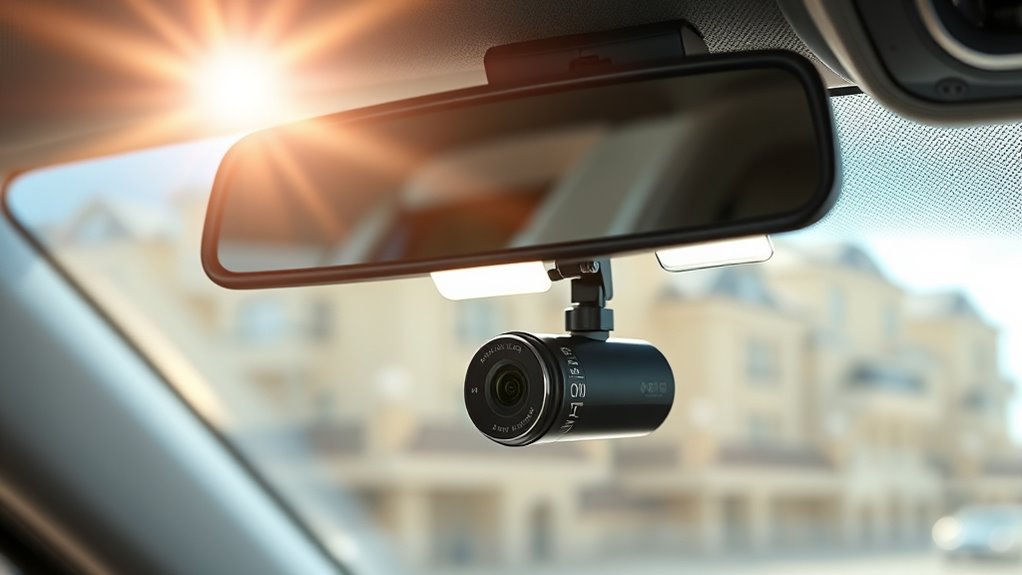
When installing your dash cam, make sure you follow windshield mounting rules to keep it secure and legal. Avoid placing it where it might obstruct your view while driving, as this can be dangerous and against regulations. Pay attention to placement restrictions to confirm your camera is both effective and compliant with local laws. Additionally, be aware of necessary cookies that ensure your device functions properly during installation. It’s also helpful to select a top dog bed for Golden Retrievers to ensure comfort and support for your pet if you plan to make adjustments to your vehicle’s interior for better visibility. Considering home security systems can also provide added peace of mind when you’re away, highlighting the importance of comprehensive safety measures. Developing a methodical approach to installation can help you adhere to best practices and avoid inadvertent violations, especially when understanding vehicle compliance regulations.
Windshield Mounting Rules
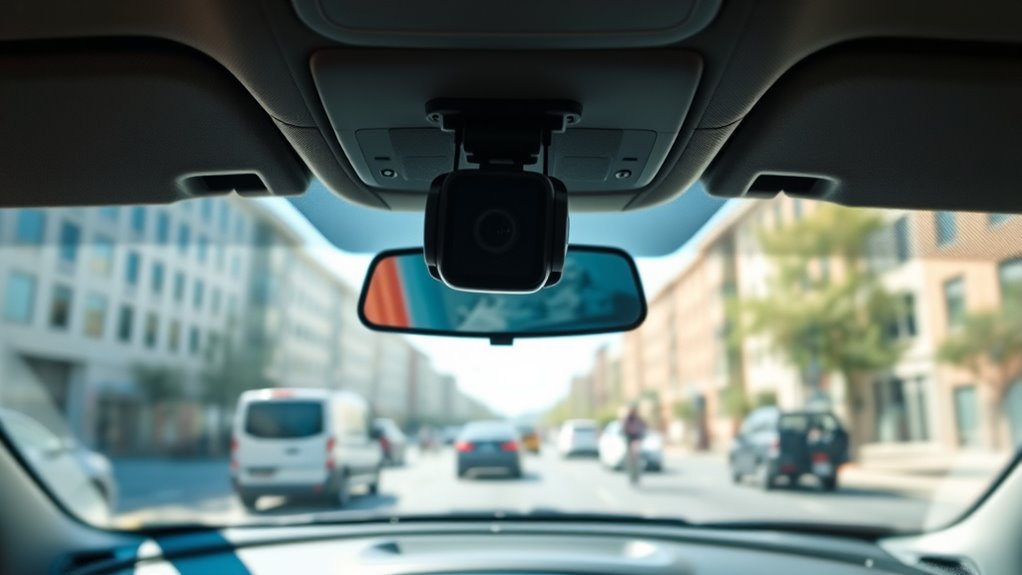
Many states have specific rules about where you can mount your dash cam on your windshield. To stay compliant, make certain your device doesn’t obstruct your view or interfere with your vehicle accessories. Different dash cam brands offer various mounting options, but placement remains vital. Here are key points to consider:
- Mount the camera below the windshield’s AS-1 line or as close to the dashboard as possible
- Keep the camera away from airbags and safety sensors
- Avoid blocking critical driver’s line of sight
- Use mounts that don’t leave permanent damage or residue
- Check if your state restricts mounting near the rearview mirror or sun visors
- Proper thermal behavior considerations can help ensure your dash cam operates reliably in different climates
Following these windshield mounting rules helps you avoid legal issues and guarantees your dash cam functions effectively.
Obstructing Driver View
Mounting your dash cam improperly can considerably obstruct your view and compromise safe driving. If the device blocks your line of sight, it creates safety hazards by preventing you from seeing essential road signals, pedestrians, or other vehicles. Many states have laws against obstructing the driver’s view, so placing the camera too high or in a position that covers critical areas can lead to violations. Confirm your dash cam is mounted in a way that does not interfere with your ability to see the road clearly. Avoid placing it in the center of the windshield or directly in front of your eyes. Proper placement minimizes obstruction and safety risks, helping you stay compliant with state regulations and keeping your focus on driving safely.
Placement Restrictions
To guarantee your dash cam complies with legal requirements and doesn’t interfere with your view, it’s important to follow specific mounting and placement restrictions. Proper placement ensures clear video quality and prevents obstruction, which is essential for capturing important footage and maximizing storage capacity. Keep these guidelines in mind:
- Mount the camera behind the windshield’s AS-IL legal line
- Avoid placing it in your direct line of sight
- Secure it firmly to prevent vibration or movement
- Ensure it doesn’t block critical mirrors or sensors
- Use a stable mount to maintain consistent video quality
Following these restrictions helps avoid legal issues and ensures your dash cam provides clear, reliable footage when needed. Proper placement not only preserves your view but also maximizes storage capacity for longer recordings.
Use of Dash Cam Footage in Legal Proceedings
Dash cam footage can play a crucial role in legal proceedings by providing unbiased visual evidence, helping you establish fault or innocence. When involved in an accident, having clear footage can support your dash cam insurance claim, making it easier to prove your case and potentially reducing your premiums. To guarantee your footage is admissible, regular dash cam maintenance is essential; check that your camera is functioning properly and that recordings are clear and unaltered. Courts often accept dash cam recordings as credible evidence, especially when the footage is timestamped and properly stored. Keep in mind that laws about recording audio may vary by state, so understanding your local regulations can help you use dash cam footage effectively in legal situations.
Restrictions for Commercial Vehicles and Fleet Cameras
While commercial vehicles and fleet cameras are valuable tools for safety and accountability, their use is often subject to specific restrictions. To comply with commercial vehicle restrictions and fleet camera regulations, you need to be aware of certain rules that limit camera placement, recording areas, and data storage. These regulations aim to prevent driver distraction and protect privacy.
- Cameras cannot obstruct the driver’s view
- Recording must not violate privacy rights
- Audio recording may require consent
- Storage duration is regulated
- Use of footage must comply with privacy laws
Understanding these restrictions helps you avoid legal issues and ensures your fleet camera practices align with federal and state laws. Staying informed about commercial vehicle restrictions is essential for responsible fleet management.
Ethical Considerations and Best Practices
Implementing fleet cameras responsibly involves more than just following legal restrictions—it requires a commitment to ethical practices that respect driver privacy and foster trust. You’ll face ethical dilemmas, such as balancing safety benefits with individual rights. To navigate these, always seek user consent before installing cameras or recording footage. Clearly communicate how recordings will be used, stored, and who will have access. Respect driver privacy by limiting footage access to necessary personnel and avoiding intrusive monitoring. Regularly review policies to ensure they uphold ethical standards, and be transparent about your practices. By prioritizing consent and privacy, you create an environment where safety and trust coexist, demonstrating your commitment to ethical fleet management.
Future Trends and Potential Legislation

As technology advances and public awareness grows, future trends in fleet camera use are likely to focus on smarter, more integrated systems that enhance safety and efficiency. Expect to see AI-powered features that automatically detect hazards, analyze driver behavior, and improve incident response. Legislation may evolve to better balance technology advancements with consumer privacy concerns, ensuring data is protected. You might also see restrictions on recording areas or sharing footage to prevent misuse. Additionally, cloud-based storage solutions could become standard, making data management easier. As these developments unfold, staying informed about new laws and best practices will help you navigate the changing legal landscape.
Future fleet cameras will feature AI detection, enhanced privacy, cloud storage, and evolving legal standards for safer, smarter operations.
- AI integration for real-time alerts
- Enhanced privacy protections
- Stricter data access regulations
- Wireless and cloud storage adoption
- Updated legal standards
Frequently Asked Questions
Can I Record My Passengers Without Their Consent?
You can record your passengers without their consent, but privacy concerns and consent requirements vary by state. While it’s generally legal to record in public spaces, capturing audio or video of someone in a private setting may require their permission. To avoid legal issues, inform your passengers beforehand or check your state’s laws. Respecting privacy helps you stay within legal boundaries and maintains trust with your passengers.
Are There Specific Dash Cam Models Approved by Law?
There aren’t specific dash cam models officially approved by law, but you should choose one that respects privacy concerns and offers clear footage. Opt for reputable brands with strong reviews to ensure reliability. Using a dash cam can provide insurance benefits and help document accidents, but always be mindful of privacy laws in your state to avoid legal issues. Select a model that balances security, privacy, and legal compliance.
How Long Can I Legally Store Dash Cam Footage?
You can usually store dash cam footage for up to 30 to 60 days, but it varies by state and your storage capacity. Be mindful of privacy concerns, especially if you record in public or private areas, and make sure you delete footage that invades others’ privacy. Keep footage only as long as needed, since longer storage might raise questions about evidence admissibility in legal cases or disputes.
Does Recording in Public Places Affect My Legal Rights?
Recording in public places doesn’t typically violate your legal rights, as 70% of states allow you to record in public without consent. However, privacy concerns and recording ethics matter—be mindful not to record where people expect privacy, like bathrooms or private property. Always respect others’ privacy rights and stay informed about local laws to avoid legal issues. Your responsible recording helps balance safety and privacy.
Are There Penalties for Using Dash Cam Footage Unlawfully?
Yes, there are penalties if you use dash cam footage unlawfully. You could face privacy concerns or recording restrictions if you share or use footage without consent, especially if it captures private conversations or sensitive information. Laws vary by state, so you need to understand local regulations. Violating these rules might lead to legal actions, fines, or other penalties, so always verify you’re compliant when handling dash cam footage.
Conclusion
So, the truth is, dash cams are officially legal in most parts of the U.S., but ignoring the rules could turn your confident recording into a legal nightmare overnight. One wrong placement or accidental audio recording can *unleash* a storm of legal trouble. Stay informed, follow state laws, and use your dash cam responsibly—because a simple camera could become your ultimate hero or your worst nightmare in a court battle. Don’t risk it—know the rules and stay protected!