
Police can seize your dash cam if they have a warrant supported by probable cause or if an emergency situation, like an accident or imminent evidence loss, justifies it. During traffic stops, they generally need legal reasons or your consent to take your device. Without proper legal steps, the seizure may be unlawful. To understand your rights and learn how law enforcement handles dash cam seizures, keep exploring this important topic.
Key Takeaways
- Police generally need a warrant or probable cause to seize a dash cam unless exigent circumstances apply.
- During routine stops, officers can request footage but cannot usually seize the device without legal justification.
- Warrantless seizure is permitted in emergencies to prevent evidence loss or protect safety, under specific legal exceptions.
- Proper procedures, including documentation and respecting Fourth Amendment rights, are essential for lawful seizure.
- Individuals can refuse to hand over their dash cam without a warrant and should document interactions for legal protection.
When Can Police Legally Seize a Dash Cam
Police can seize your dash cam without a warrant at accident scenes if they believe it’s necessary to preserve evidence or prevent footage destruction. If officers suspect the footage could be lost—such as in reckless driving cases—they’re justified in acting quickly. They treat the dash cam as a container holding digital images, similar to luggage, which can be seized under the totality of circumstances for reasonableness. A three-day hold is permitted while they seek a search warrant afterward. This authority applies especially when there’s a risk of footage being deleted or overwritten during ongoing investigations. The seizure aims to secure vital evidence for the case, and courts have upheld such actions as lawful when justified by the situation. Additionally, law enforcement is expected to follow proper procedures to ensure the integrity of digital evidence like dash cam footage. Courts often consider the reasonableness of the seizure based on the circumstances, emphasizing the need for adherence to legal standards. California law also provides guidelines on how law enforcement can handle digital evidence like dash cam footage, emphasizing the importance of proper procedures to maintain evidentiary integrity. Moreover, courts assess whether the seizure was based on probable cause, especially when no warrant is obtained initially. Legal standards for digital evidence dictate that law enforcement actions must align with constitutional protections to avoid violating rights. In some cases, officers might also need to document their seizure process thoroughly to ensure compliance with legal requirements.
Understanding Exigent Circumstances in Seizures

Understanding exigent circumstances is essential because it defines when authorities can lawfully bypass the warrant requirement to seize your dash cam. Exigent circumstances are a narrow exception that allows warrantless seizure when immediate action is necessary to prevent harm or loss of evidence. Courts evaluate each case based on the total circumstances, not a fixed rule. Common justifications include preventing imminent physical harm, evidence destruction, hot pursuit, or emergencies requiring aid. The government must prove that delay would cause loss or destruction of evidence or pose a safety risk. The reasonableness of the seizure depends on whether officers acted diligently and within a reasonable scope and time. If they created the exigency unlawfully, the seizure might not hold up legally. Legal standards and case law guide courts in determining whether exigent circumstances justify warrantless actions. Recognizing the limits of exigency is crucial for understanding when law enforcement action is legally justified versus when it infringes on individual rights. It is also important to understand how law enforcement procedures are applied during such situations to ensure proper seizure practices.
The Role of Warrants and Probable Cause
Police generally need a warrant supported by probable cause to seize your dash cam, ensuring they have specific facts linking it to evidence or a crime. Probable cause requires clear details showing a likelihood of evidence at a particular location, and officers must justify this with sworn statements. Additionally, search warrants must be based on affidavits or sworn testimony that establish probable cause before the warrant is issued. Understanding the search process helps clarify when law enforcement can act without a warrant. The probable cause standard serves as a critical safeguard to protect individual rights against unwarranted searches and seizures. Recognizing these legal requirements is essential for understanding law enforcement procedures in such cases, including the importance of evidence collection protocols to ensure constitutional compliance. Awareness of pinball machine weight and proper handling techniques can also be relevant during the physical seizure or transportation of equipment, ensuring safety and adherence to legal standards.
Warrant Requirements for Seizure
Warrants are essential for legally seizing dash cams and their recorded content, but they must meet strict standards based on probable cause. Under Federal Rule of Criminal Procedure 41, you need a warrant that clearly describes the property to be seized, including specific identification of the device or storage medium to prevent overbroad searches. Magistrate judges require sworn affidavits or reliable information demonstrating probable cause that the dash cam contains evidence of a crime. Warrants often include provisions for forensic imaging and chain-of-custody preservation. Courts generally treat dash cams as digital evidence containers, so the warrant must specify whether they’re seizing the physical device or just seeking access to the stored recordings. Courts analyze whether law enforcement had probable cause and followed proper procedures, ensuring that seizure respects your Fourth Amendment rights. Additionally, law enforcement typically needs to demonstrate that they have a valid search warrant or meet an exception to the warrant requirement, such as exigent circumstances, before they can seize or access the data. The process is also influenced by the privacy rights associated with digital evidence, which courts continually interpret to balance investigative needs with individual protections. Moreover, courts assess whether law enforcement adhered to due process standards when obtaining and executing the warrant, safeguarding individual liberties during digital searches.
Probable Cause Standards
Probable cause serves as the legal foundation for seizing dashcam footage, ensuring that authorities have reasonable grounds to believe a crime is involved before taking further action. It requires objective facts, like visible contraband, suspicious behavior, or evidence of illegal activity, not just officer intuition. In vehicle cases, probable cause might stem from visible illegal items, erratic driving, or tips from informants. To seize dashcam footage, officers typically need a warrant supported by probable cause, which a judge must approve by reviewing evidence such as tire marks indicating reckless driving or signs of DUI like bloodshot eyes or alcohol odors. Courts require concrete facts linking the footage to criminal activity, emphasizing that probable cause is more than mere suspicion but a reasonable belief based on specific evidence. Additionally, law enforcement must demonstrate that the connection between the observed facts and the potential offense is clear and direct to justify the seizure.
Exceptions to Warrant Need
In certain urgent situations, law enforcement can seize dashcam footage without a warrant if specific legal conditions are met. These exceptions rely on exigent circumstances, such as the risk of evidence destruction or imminent danger. The Supreme Court’s ruling in United States v. Place confirms that warrants aren’t always necessary when swift action is essential. The table below illustrates key exceptions:
| Exception | Condition | Limitation |
|---|---|---|
| Exigent Circumstances | Probable cause + urgent need | Evidence at risk of destruction |
| Automobile Exception | Probable cause + vehicle stopped legally | Data related to crimes in or around vehicle |
| Plain View Doctrine | Immediately visible during lawful access | No warrant needed for plainly visible evidence |
These legal principles allow officers to act swiftly when safety or evidence preservation is at stake. Understanding these exceptions helps law enforcement balance effective investigation with respecting constitutional protections.
How Police Handle Footage During Routine Traffic Stops
During routine traffic stops, police may ask to see your dash cam footage but generally can’t seize it without a warrant or your consent. If they do request the footage, they usually need to follow proper legal procedures, especially if they want to keep it as evidence. You have the right to record interactions and to understand when and how your footage may be handled by law enforcement. Proper procedures are crucial for protecting your rights and ensuring that any evidence obtained is admissible in court. It’s also important to be aware of evidence collection laws that govern how police can handle digital recordings, particularly when it comes to digital evidence such as dash cam footage. Additionally, understanding warrant requirements can help you know when law enforcement is legally permitted to access or seize your recordings. Awareness of digital evidence handling procedures can further inform you about how your footage might be used or challenged in legal situations, especially regarding digital evidence preservation.
Police Request for Footage
When police request dash cam footage during routine traffic stops, they typically follow a formal process to obtain it. You’ll need to submit a request under the Freedom of Information Act (FOIA) or your state’s public records law. Be sure to identify the responding department—local police, State Highway Patrol, or another agency—and include specific details like date, time, location, case numbers, or names of involved individuals. You might need to use department-specific forms, such as Ohio’s OHP 1371 or Illinois’s police forms. You can submit your request online, by mail, or in person during business hours. Keep in mind, the footage is generally public record, but exceptions apply, especially if it’s part of an ongoing investigation. Additionally, understanding public record laws can also assist in your request process and ensure your rights are protected. Knowing how footage is stored and accessed can help you better navigate the system. Being aware of storage methods can also influence how quickly and effectively you can retrieve the footage. It’s important to note that proper security procedures are often in place to prevent unauthorized access to sensitive recordings.
Seizure During Stops
Police officers can seize dash cam footage during a traffic stop if they have probable cause to believe it contains evidence of a crime. This seizure must align with Fourth Amendment principles, typically requiring specific facts or exigent circumstances like immediate evidence loss. During a stop, officers might physically examine or pick up the dash cam if lawful reasons exist, such as arrest or evidence collection. Consent from you, the driver, is often a lawful basis for immediate seizure, but without consent, police need a warrant or probable cause. Failing to adhere to proper procedures risks evidence suppression and civil liability. Proper handling includes documenting the reason for seizure, listing items seized, and ensuring footage is preserved for future use. Lawful procedures must be followed to avoid violations of your rights. Additionally, officers are expected to follow established protocols for evidence handling to maintain the integrity of the footage and protect your legal rights. It is also important that officers understand the concept of Free Floating, which can influence how evidence is preserved or challenged in court. Properly understanding search and seizure laws can help individuals better comprehend their rights during police encounters. Having knowledge of evidence preservation procedures ensures that footage remains unaltered and admissible in court, safeguarding your interests. Furthermore, understanding Glycolic Acid Benefits for Skin can help individuals make informed choices about their skincare routines, though it is unrelated to law enforcement procedures.
The Impact of Audio Recording Laws on Dash Cam Footage
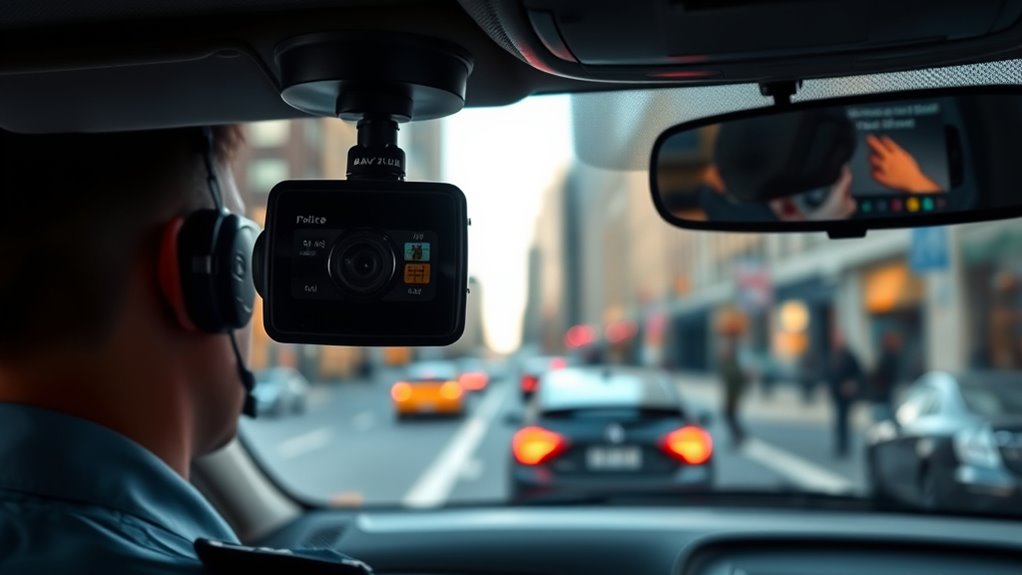
Audio recording laws substantially influence how dash cam footage can be used as evidence, especially regarding the legality of capturing sound inside a vehicle. If you’re in a one-party consent state like Texas or New York, recording audio is permitted if you’re a participant, meaning you can record conversations you’re involved in without others’ permission. However, in all-party consent states such as California or Florida, everyone must agree before audio is recorded. Violating these laws risks your footage being deemed inadmissible in court and could lead to fines or legal penalties. Privacy concerns also arise if passengers are unaware of the recording, potentially leading to invasion claims. To stay compliant, consider displaying notices or turning off audio when necessary, ensuring your dash cam footage remains legally sound and usable as evidence. Additionally, state-specific laws may impose further restrictions on audio recording or sharing, so it’s important to understand local regulations.
Steps to Take if Your Dash Cam Is Seized
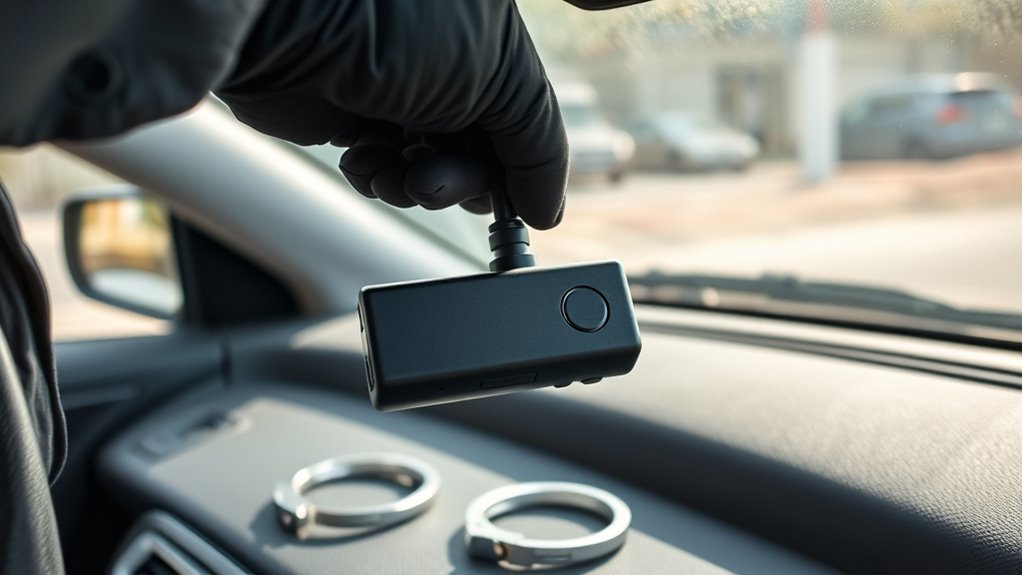
If your dash cam is suddenly seized during an investigation or traffic stop, staying calm and knowing how to respond can protect your rights. Keep your composure, follow lawful orders, and politely decline to voluntarily surrender your device unless a warrant is presented. Remember to note officer details like name, badge number, and patrol car info. Request a written explanation for the seizure. Assert your rights by stating you’re not obligated to hand over the dash cam without a warrant and refuse consent for searches or footage review. Document the incident by recording the interaction if safe, taking photos of the scene, and noting the time and location. Preserve the footage’s integrity by avoiding tampering and backing it up immediately. Properly managing and securing your footage can be crucial if legal issues arise later. Contact a lawyer to guide you through the process.
State-Specific Rules for Dash Camera Use and Seizure
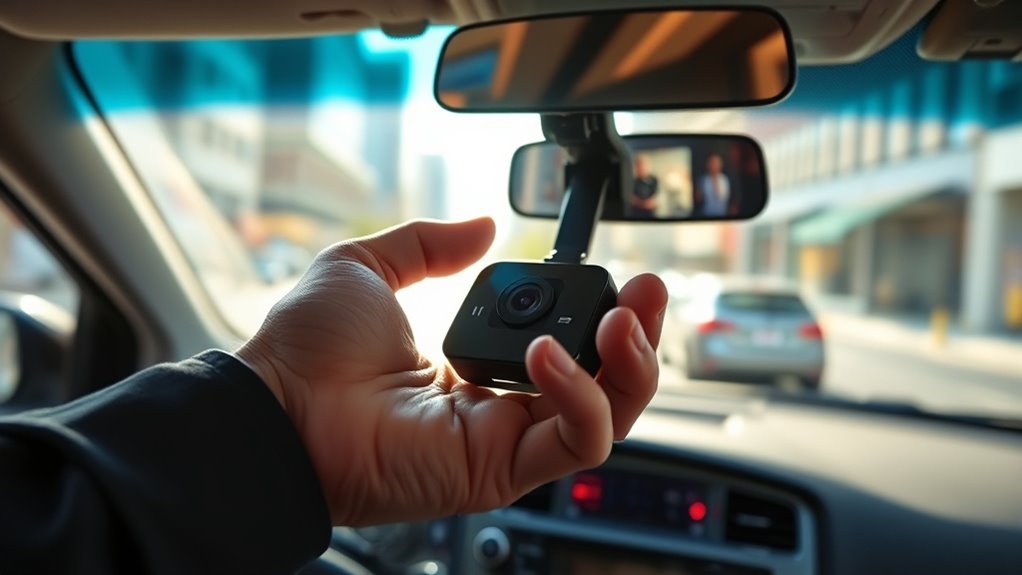
State-specific laws profoundly influence how and where you can mount your dash cam, as well as the circumstances under which it can be seized. For example, Alabama bans windshield mounting, requiring dashboards without obstructing views, while New Hampshire mandates dashboard placement due to a windshield ban. Alaska limits driver’s side mounting to under 5 square inches, and New Jersey recommends dashboard use to prevent obstruction. Laws also vary on audio recording consent, with some states requiring all-party consent, like California and Maryland, and others, like Alaska and Louisiana, allowing single-party consent. Law enforcement generally can’t seize your dash cam without a warrant unless there’s a court order or specific legal exception. Legal protections vary by state, which can affect how your dash cam footage is used in legal proceedings. Following state-specific rules helps ensure your dash cam remains legally compliant and protected from seizure.
Protecting Your Rights When Interacting With Law Enforcement

Knowing your rights during interactions with law enforcement is essential to protecting your dash cam and your legal interests. Stay calm, and clearly state you’re aware of your Fourth Amendment rights. Remember, police need a warrant or exigent circumstances to seize your device. You can ask if they have a warrant and refuse consent for searches. Be cautious about audio recordings—passenger consent is required for legal use. If your dash cam is seized unlawfully, you can file a motion to suppress evidence. Keep detailed records of police statements, reports, and footage. Always consult an attorney to evaluate whether your rights were violated. Additionally, California law requires police to have a warrant or exigent circumstances to seize dash cam footage or devices. – Request a warrant before handing over your dash cam – Know that warrantless seizures require exigent circumstances – Ensure passenger consent for audio recording legality – Review police actions with legal guidance to challenge unlawful seizures
Frequently Asked Questions
Can Police Seize My Dash Cam Without a Warrant During a Traffic Stop?
During a traffic stop, police generally can’t seize your dash cam without a warrant unless they have your voluntary consent, an urgent exigent circumstance like imminent destruction of evidence, or if you’re under arrest and the device is within reach. If they do seize it, they must get a warrant later to view or use its contents unless one of these exceptions applies. Always know your rights and consider refusing consent if you wish to challenge later.
Are There Circumstances Where Police Can Access My Dash Cam Footage Without My Permission?
In some cases, police can access your dash cam footage without your permission. If they have a warrant or there’s an exigent circumstance like hot pursuit or immediate evidence needs, they can seize or view the footage. Additionally, if you voluntarily provide access during a traffic stop or investigation, they can use that footage in court. However, without legal authority or your consent, they generally can’t access your dash cam freely.
What Rights Do I Have if Police Want to Seize or View My Dash Cam Recordings?
You have the right to refuse police requests to view or seize your dash cam footage without a warrant. They need proper legal procedures, like obtaining a warrant or your voluntary consent, to access or confiscate your recordings. If they press for access, politely state you’re not giving permission. Remember, tampering or deleting footage can be a crime, so protect your rights by documenting any interactions.
Does Removing My Dash Cam Prevent Police From Seizing or Viewing Footage?
Think of it like hiding a treasure chest in your attic—removing your dash cam doesn’t stop police from getting the footage if they have a warrant or valid legal reason. They can still access or seize the device or its data through legal channels. So, even if you take it down, it’s not a guarantee your footage stays private. Authorities have ways to get what they need lawfully.
How Do State Laws Vary Regarding Audio Recording and Dash Cam Footage?
State laws vary substantially regarding audio recording and dash cam footage. Some states require all-party consent, meaning you need everyone’s permission to record conversations, while others only need one-party consent. This affects whether your recordings are legal and admissible in court. Remember, laws differ on whether audio recordings are protected, so always check your state’s specific regulations to avoid legal trouble and guarantee your dash cam footage remains admissible.
Conclusion
Knowing your rights can feel like charting a labyrinth, but remember, the law is your loyal squire. If police seize your dash cam, stay calm and ask for a warrant if they don’t have one. Keep in mind, laws vary by state, so stay informed. Think of it like a knight’s code—protect your rights, and don’t be afraid to stand your ground. After all, even Robin Hood knew when to draw his bow.