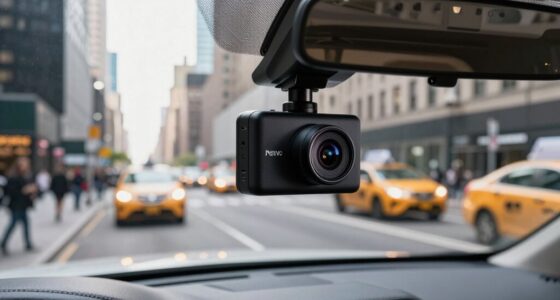

Having confidence with your dash cam is great, but it shouldn’t turn into vigilante energy. When you act beyond legal boundaries or confront others without authority, you risk legal trouble and ethical issues. Respect others’ privacy, follow local laws, and report dangers instead of trying to police fellow drivers. Staying responsible guarantees you protect yourself without causing harm or conflict. Stick around, and you’ll discover how to use your dash cam safely and effectively.
Key Takeaways
- Overconfidence from dash cam footage can lead to unlawful actions or confrontations on the road.
- Vigilante behavior may escalate conflicts and pose safety risks for everyone involved.
- Filming or shaming drivers publicly infringes on privacy rights and can cause legal repercussions.
- Dash cams are tools for self-protection, not for policing or punishing others.
- Responsible use involves reporting issues to authorities, not taking justice into your own hands.

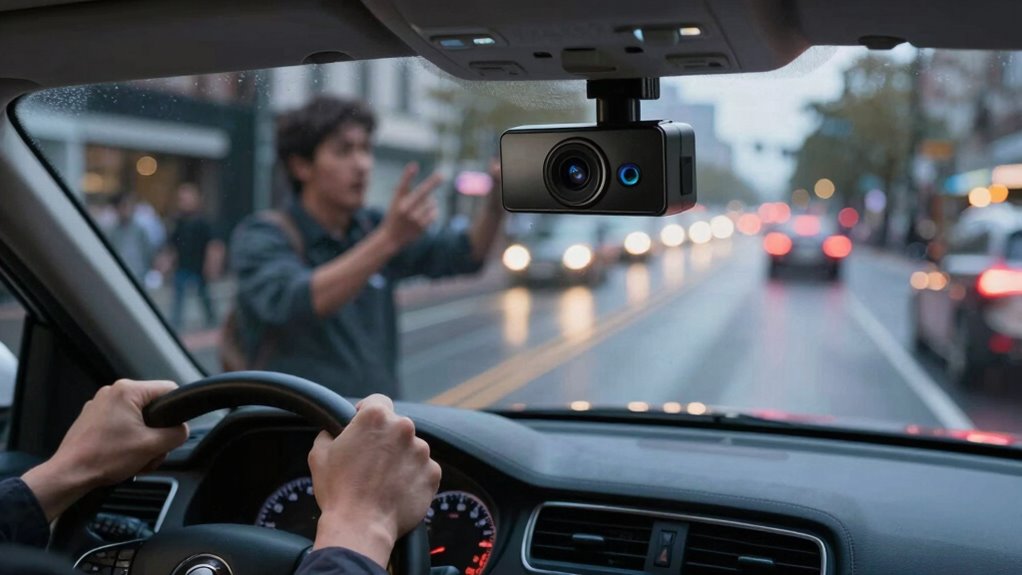
In today’s world, dash cams have become more than just recording devices—they’re tools that boost your confidence on the road and inspire a sense of vigilante energy. You might feel empowered knowing that you have evidence in case of an accident or road rage. However, it’s essential to remember that this confidence shouldn’t cross into vigilantism. When you start actively policing others’ behavior or confronting drivers based solely on footage, you risk stepping into dangerous legal and ethical territory.
Privacy concerns are a real issue. Everyone has a right to some degree of privacy while on the road, and overstepping those boundaries can backfire. Filming other drivers without their consent can create uncomfortable situations, especially if you share footage publicly or use it to shame someone. Many jurisdictions have laws restricting recording or disseminating footage that invades someone’s privacy. If you’re not careful, you could face legal repercussions for misuse of footage or even for recording in sensitive locations. Vigilante tendencies often lead to confrontations that escalate quickly, potentially resulting in legal action against you.
Legal implications are equally critical. While dash cams can protect you, they don’t give you the right to act as a law enforcement officer. Intervening in disputes, trying to “call out” bad drivers, or confronting someone for minor infractions can lead to legal trouble. You might think you’re doing the right thing, but if your actions cause injury or escalate a situation, you could be held liable. Moreover, in some places, recording someone without their consent could violate wiretapping or privacy laws. Always remember that your dash cam’s footage is a tool for self-protection, not a weapon for vigilante justice. Additionally, understanding the legal boundaries of recording in your jurisdiction can help prevent accidental violations. It’s also helpful to familiarize yourself with networking considerations to ensure your footage remains secure and private. Respecting the rights of others while on the road is crucial to maintaining ethical standards and avoiding conflicts. Recognizing the importance of lawful recording can help you stay within the boundaries of legal conduct. Being aware of local laws and regulations about recording can further safeguard your rights and ensure you’re compliant.
It’s tempting to see your dash cam as a symbol of power, but true confidence on the road comes from respecting others’ rights and understanding the limits of your authority. Vigilante energy can quickly turn dangerous, both legally and ethically. Instead of trying to police everyone’s behavior, focus on safe driving and using your footage responsibly. If you witness dangerous driving or misconduct, report it to authorities rather than taking matters into your own hands. Your dash cam should serve as a safeguard, not a license to become a road-side vigilante. Keep your confidence rooted in legality and respect, and you’ll protect yourself and others far more effectively.

REDTIGER 4K Dash Cam Front Rear, STARVIS 2 Sensor, Free Card Included, 5.8GHz WiFi-20MB/s Fast Download, Dash Camera for Cars with GPS, WDR Night Vision, 170°Wide Angle, 24H Parking Mode(F7NP)
[4K+1080P Front & Rear Recording] REDTIGER F7NP dash cam captures every detail with stunning 4K front and 1080P…
As an affiliate, we earn on qualifying purchases.
As an affiliate, we earn on qualifying purchases.
Frequently Asked Questions
Can Dash Cam Footage Be Used as Legal Evidence in Court?
Yes, dash cam footage can be used as legal evidence in court, but you should be aware of privacy concerns and data storage issues. Make sure your footage is clear, properly timestamped, and stored securely to avoid tampering. Be mindful of privacy laws regarding recording in public and private spaces. Properly managing data storage and respecting privacy helps strengthen your case and keeps you compliant with legal requirements.
What Are the Legal Boundaries of Recording Other Drivers?
Imagine the line between right and wrong blurring—you’re recording, but privacy concerns and ethical considerations matter. Legally, you can record public roads, but capturing private property or individuals without consent crosses boundaries. Always respect others’ privacy, avoid invasive footage, and use dash cam recordings responsibly. Staying within legal limits guarantees your recordings serve as evidence, not as tools for vigilante justice, safeguarding both your rights and others’.
How Do You Handle False or Misleading Footage?
When you encounter false or misleading footage, address privacy concerns and ethical considerations by verifying the footage’s authenticity before sharing. Avoid spreading unverified clips that could harm someone’s reputation. If needed, consult legal guidance or authorities to handle the situation properly. Always prioritize responsible use of dash cam footage, respecting others’ privacy, and ensuring your actions don’t cross ethical lines or escalate into vigilante behavior.
What Are Common Mistakes When Using a Dash Cam?
When using a dash cam, you often make mistakes like overlooking privacy concerns or ignoring technical malfunctions. You might forget to regularly update the firmware, risking malfunctions, or position the camera improperly, compromising footage quality. You should also be cautious about recording in private areas, respecting privacy laws. Failing to review footage periodically can lead to missed evidence or storage issues. Stay vigilant to guarantee your dash cam works effectively and ethically.
How Can Dash Cam Footage Impact Insurance Claims?
Dash cam footage can considerably impact insurance claims by providing clear evidence of incidents, which helps in accurate claims processing. However, you should be mindful of privacy concerns and ethical considerations, ensuring you don’t invade others’ privacy or record without consent. Using footage responsibly and within legal boundaries can strengthen your case without crossing ethical lines, maintaining trust and integrity throughout the claims process.

8Pcs Dashcam Windshield Sticke Clear Electrostatic Stickers Sticker Shield for Windshields,Prevent Scratching & Falling,Windshield Sticker for Mounting Dash cam Phone Projection Screen
【Easy Installation】:This dash cam adhesive kit includes high-performance adhesive pads and static cling films to make the installation…
As an affiliate, we earn on qualifying purchases.
As an affiliate, we earn on qualifying purchases.
Conclusion
Remember the driver who thought their dash cam made them a superhero, ready to confront anyone? Confidence is good, but vigilante energy can turn a safety tool into a danger. Like a lighthouse guiding ships safely, your dash cam should illuminate truth without blinding others or yourself. Stay vigilant, but keep your heroism in check. After all, true safety comes from responsible actions, not from chasing justice like a knight with a faulty armor.
dash cam security and privacy kit
As an affiliate, we earn on qualifying purchases.
As an affiliate, we earn on qualifying purchases.
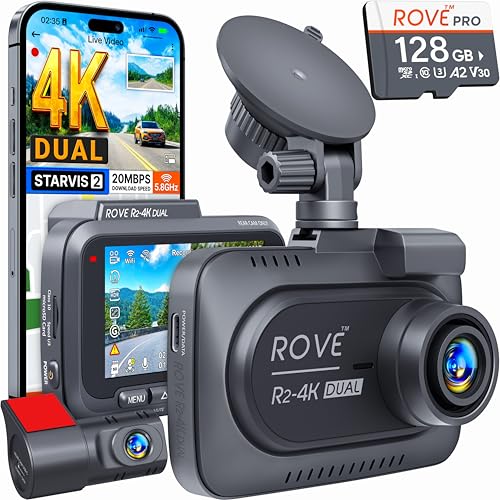
ROVE R2-4K DUAL Dash Cam Front and Rear, STARVIS 2 Sensor, FREE 128GB Card Included, 5G WiFi – up to 20MB/s Fastest Download Speed with App, 4K 2160P/FHD Dash Camera for Cars, 3" IPS, 24H Parking Mode
4K FRONT + 1080P REAR RECORDING – ROVE R2-4K DUAL dash cam offers dual-channel recording capabilities, capturing footage…
As an affiliate, we earn on qualifying purchases.
As an affiliate, we earn on qualifying purchases.