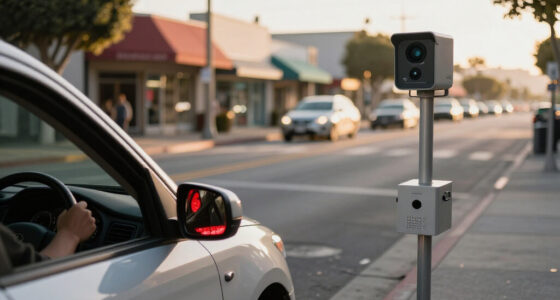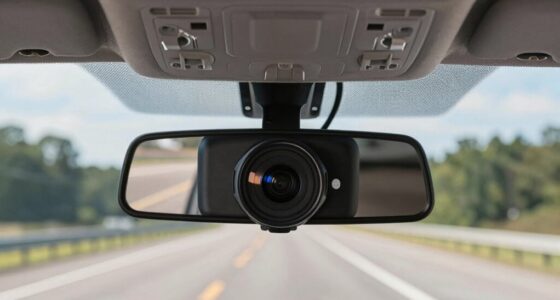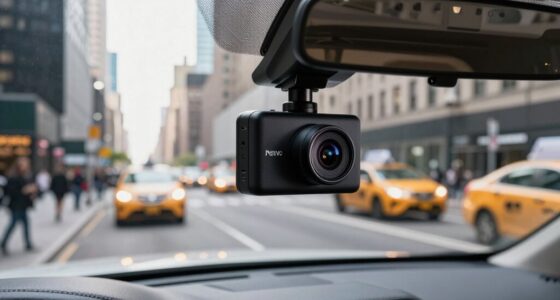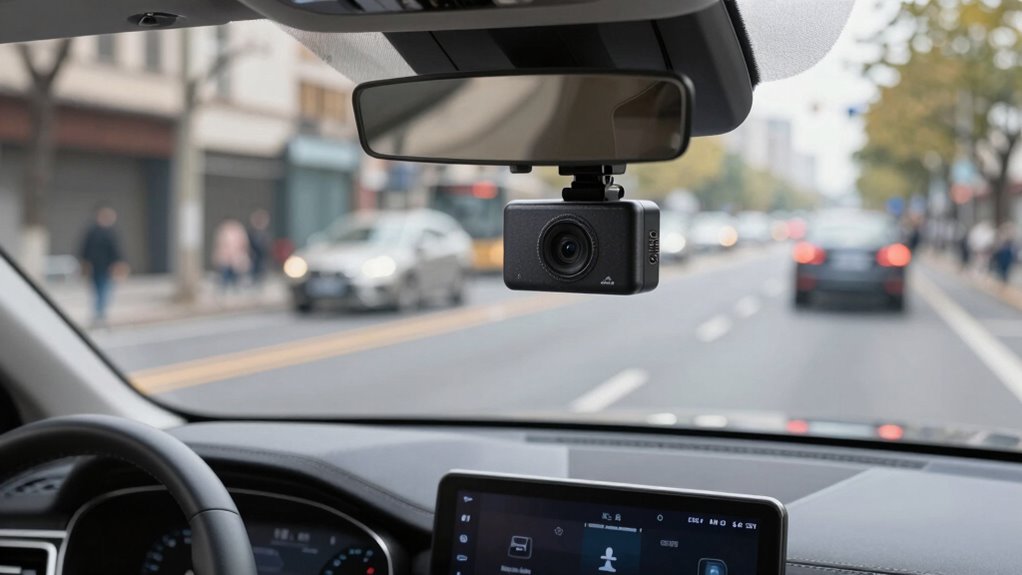

When using a dash cam in a rental car, make sure you follow your state’s laws on mounting and recording—usually placing the device at the windshield corners and avoiding obstructions. Always disclose any cameras to the rental company if required, and be aware of privacy laws around audio recording. To stay compliant and protect your rights, review rental policies and laws carefully. Keep in mind the best practices for safe installation and footage handling for peace of mind if issues arise. If you continue, you’ll learn how to stay fully compliant and avoid common pitfalls.

Get business pricing on garage and car supplies
- Business-only prices and quantity discounts
- Tax-exempt purchasing
- Multiple users, one account, clear invoices
Key Takeaways
- Ensure dash cam placement does not obstruct your view, typically at windshield corners within legal size limits.
- Verify state laws regarding recording consent and privacy, especially in all-party consent states like California and Florida.
- Disclose the presence of dash cams to rental companies if required, and follow their policies on data privacy and recording.
- Use temporary mounts or dashboard placement to avoid damage or illegal obstruction during rental periods.
- Handle recorded footage responsibly, maintaining integrity and chain of custody to ensure legal admissibility.
As an affiliate, we earn on qualifying purchases.
Understanding State Laws and Mounting Restrictions
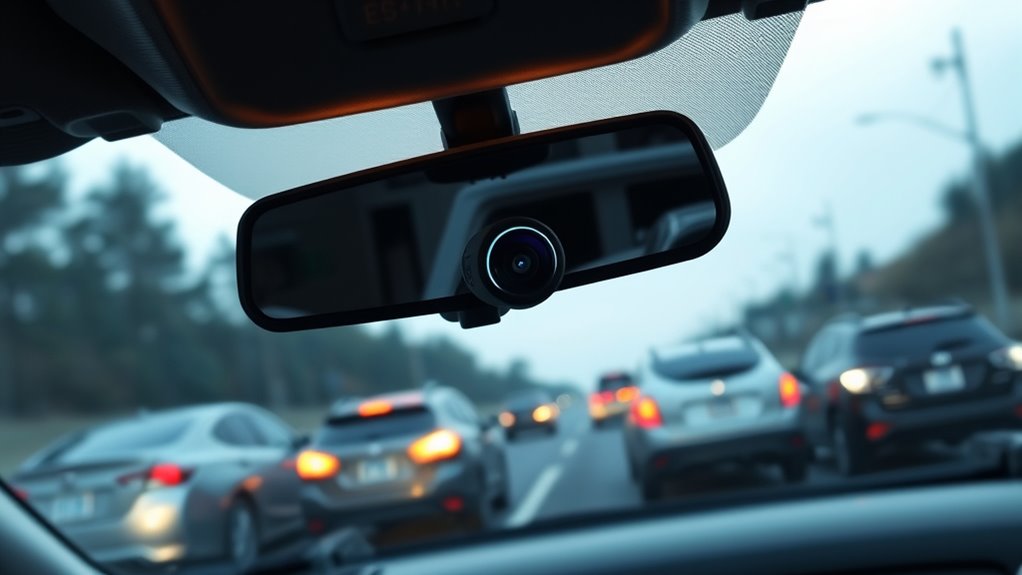
Understanding state laws and mounting restrictions is essential before installing a dash cam in a rental car. Dash cams are generally legal across the U.S., but laws vary by state, focusing on windshield obstruction and recording rules. The main concern is ensuring the device doesn’t block your view of the road. Many states regulate where you can mount a dash cam, often limiting placement to small zones at the lower or upper corners of the windshield, typically within specific size limits like 4 to 7 inches. Some states ban opaque mounts or suction cups that impair visibility, recommending dashboard placement instead. Enforcement hinges on whether the device “substantially” obstructs vision. Always check your state’s specific rules to avoid legal issues while recording your drives. Legal requirements may also specify the type of mounting hardware allowed, so verifying these details beforehand can help prevent inadvertent violations. Additionally, understanding mounting restrictions can help you choose compliant placement options and avoid potential fines or penalties. Being aware of visual obstruction laws ensures you remain within legal boundaries during your recordings. It’s also wise to consider the type of dash cam hardware to ensure compatibility with your vehicle’s regulations. Moreover, staying informed about regulatory updates can help you adapt your setup to any new legal changes or restrictions, including those related to bug out bags or other emergency preparedness gear.
As an affiliate, we earn on qualifying purchases.
Navigating Rental Company Policies and Disclosures
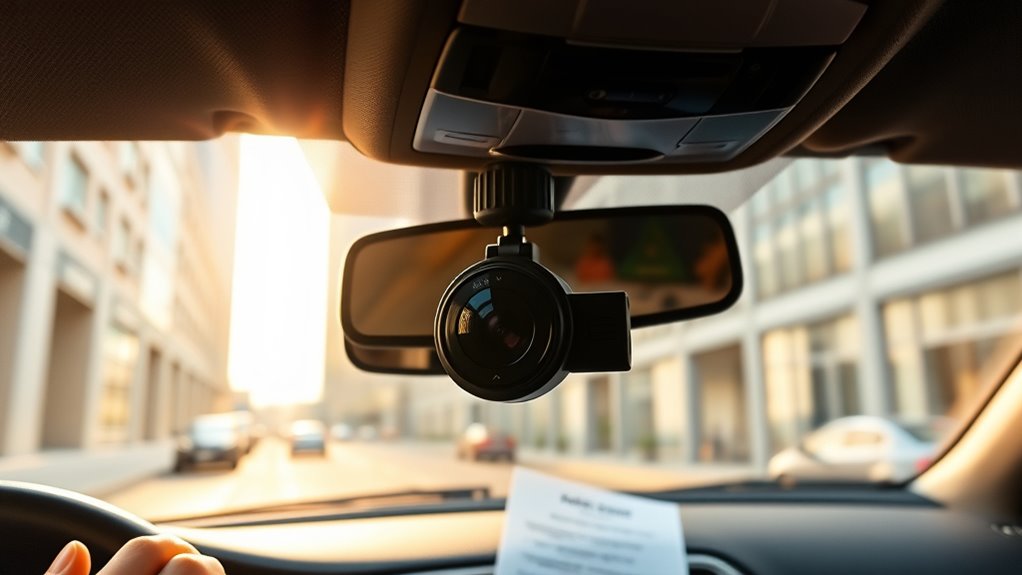
Finding your way through rental company policies and disclosures is essential before installing or using a dash cam in a rental vehicle. Many major rental firms include camera and data-collection clauses in their agreements or privacy notices, often disclosing inside/outside cameras and audio recording. Some companies, like Dollar or Hertz, reference dash cams explicitly in their policies, highlighting renter responsibilities for personal data. Peer-to-peer platforms like Turo require hosts to notify renters of interior cameras and obtain consent before confirming the reservation. Disclosure formats vary—some place notices in privacy policies, others in rental terms or vehicle feature descriptions. Failure to reveal camera presence can lead to complaints, penalties, or legal issues, so always review the specific policies and ensure proper notification and consent. Additionally, understanding the vetted nature of privacy policies can help renters identify what data collection practices are permissible. Being aware of essential disclosures related to camera use ensures transparency and helps avoid potential misunderstandings. Knowing the types of cameras permitted by rental agreements can prevent inadvertent violations and protect your privacy rights. It is also important to recognize that some rental agreements specify camera restrictions to limit the scope of surveillance during your rental period. It’s also helpful to familiarize yourself with rental agreement clauses that specify restrictions or allowances for dash cam installation.
compact dash camera with corner mounting
As an affiliate, we earn on qualifying purchases.
As an affiliate, we earn on qualifying purchases.
Legal Considerations for Audio and Video Recording
Legal considerations for audio and video recording in rental cars depend heavily on the laws of your state, especially regarding consent. States are split between one-party consent, where recording is allowed if one person agrees, and all-party consent, which requires everyone to consent. For example, California, Florida, and Pennsylvania have all-party consent laws, meaning recording passengers without permission can lead to legal trouble. In one-party consent states like New York and Texas, driver consent may suffice, but restrictions still apply—especially for private conversations. Be aware that federal laws may also limit covert audio recordings. State-specific laws can also affect how recordings are used in legal proceedings and what restrictions may apply. It’s also important to understand privacy expectations and how they vary by location to avoid legal issues when recording in rental cars. Additionally, understanding digital privacy rights is essential to ensure compliance with evolving regulations surrounding recordings. Being aware of recording restrictions helps prevent unintended legal violations when capturing audio or video, especially considering the different recording laws across jurisdictions. Recognizing the importance of public vs. private spaces can help clarify when recordings are legally permissible.
As an affiliate, we earn on qualifying purchases.
Best Practices for Safe and Compliant Dash Cam Use

To guarantee dash cams are used safely and in compliance with regulations, proper mounting, installation, and power management are essential. Mount your dash cam behind the rear-view mirror for discreet placement and maximum coverage, ensuring it’s no more than 40mm into the windscreen wiped area. Position rear cameras at the top of the rear window for clear views without obstructing vision. Clean the mounting surface thoroughly and avoid airbags, sensors, or driver sight lines. Use temporary mounts like magnetic or visor clips for easy rental setup. Test the camera to confirm clear forward and rear recordings before driving. Power your dash cam using USB cables or automatic ignition-start features, avoiding hard-wiring. Route cables carefully to prevent interference with driving and safety. Proper installation ensures your dash cam remains effective and legally compliant. Additionally, understanding vehicle interior safety can help prevent accidental damage or distractions while setting up your dash cam. Incorporating professional guidance can further optimize your setup process and ensure all safety considerations are met. Implementing smart-home integrations can also help monitor and control your devices conveniently during setup, adding an extra layer of oversight and security.
Handling Disputes and Protecting Your Privacy
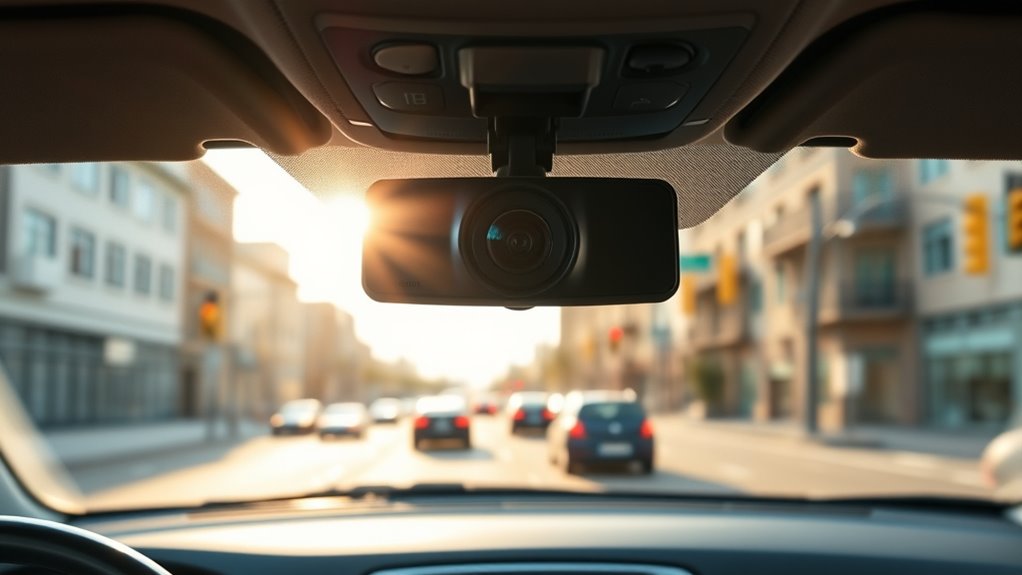
When using dash cams in rental cars, understanding how to handle disputes and protect your privacy is essential. To improve your chances of dispute resolution, ensure your footage’s integrity by keeping timestamps, GPS data, and file hashes intact. Maintain a clear chain of custody, and avoid illegally obtained recordings, as they risk exclusion. Be aware that court acceptance varies by jurisdiction, often balancing probative value against privacy concerns. Also, review rental policies on recording use, as unauthorized recordings or obstructed views can lead to penalties. Additionally, being familiar with piercing care and hygiene can help prevent issues that might otherwise be mistaken for recording-related problems. Understanding the legal landscape surrounding dash cam use can further help in navigating potential disputes effectively. Moreover, understanding evidence preservation techniques can be crucial when presenting dash cam footage in legal settings. Being aware of manufacturer warranties and their impact on reconditioning or repairs can also be beneficial when dealing with technical issues related to dash cam equipment.
Frequently Asked Questions
Can I Legally Record Audio Inside a Rental Car Without Consent?
You generally can’t legally record audio inside a rental car without consent, especially in states with all-party consent laws like California. These laws require everyone involved to agree before recording confidential conversations. Even if you’re in a one-party consent state, you should inform passengers about the recording to avoid legal issues. Always review local laws, provide clear notice, and consider disabling audio recording or limiting it to video only to stay compliant.
Are There Specific Dashboard Mounts Recommended for Rental Vehicles?
You should choose dashboard mounts that are easy to install and remove without damaging the vehicle. Suction-cup mounts are ideal for quick setup and no residue. Low-tack adhesive pads work well if you follow removal instructions carefully. Dashboard-weighted or magnetic mounts also suit rentals because they don’t leave marks. Always clean surfaces before attaching, position mounts behind mirrors or in non-obstructive spots, and remove everything before returning the car to avoid extra charges.
What Are the Penalties for Mounting a Dash Cam in a Restricted Area?
Mounting a dash cam in a restricted area can land you in hot water, like a fly caught in a web. You could face civil fines, points on your license, or even vehicle impoundment. In some states, law enforcement may order you to remove the device during a traffic stop. Plus, if your mounting damages the interior, rental companies might hit you with extra fees or penalties. Stay informed to avoid these pitfalls.
How Do I Ensure My Dash Cam Footage Is Admissible in an Accident Claim?
To guarantee your dash cam footage is admissible, always provide the original, uncompressed file with intact metadata, including timestamps and GPS data. Log every person who accesses or copies the footage, and create a forensic image if possible. Keep the device or SD card untouched, avoid edits, and maintain clear, continuous video. Also, follow legal requirements on audio recording and document all preservation steps for court verification.
Do Rental Companies Monitor or Access My Dash Cam Recordings?
Yes, rental companies can access your dash cam recordings if it’s part of their monitoring policies. They typically review footage for safety, security, or contract compliance, especially after incidents or accidents. To avoid privacy concerns, check your rental agreement and ask the company directly about their access to your recordings. Be aware that laws vary, and some companies require your consent before viewing or using footage from your dash cam.
Conclusion
Staying within the rules is like steering a ship through calm waters—you avoid storms and keep your journey smooth. By understanding state laws, rental policies, and respecting privacy, you can confidently use your dash cam without hitting any bumps. Remember, being informed is your best navigation tool, ensuring your recordings serve as a helpful lighthouse rather than a hidden reef. Keep these tips in mind, and your road trip will stay clear and worry-free.
Fall Picks
fall essentials
As an affiliate, we earn on qualifying purchases.