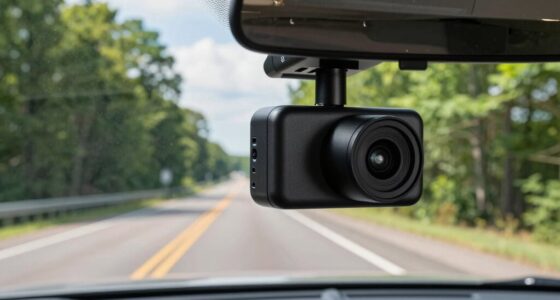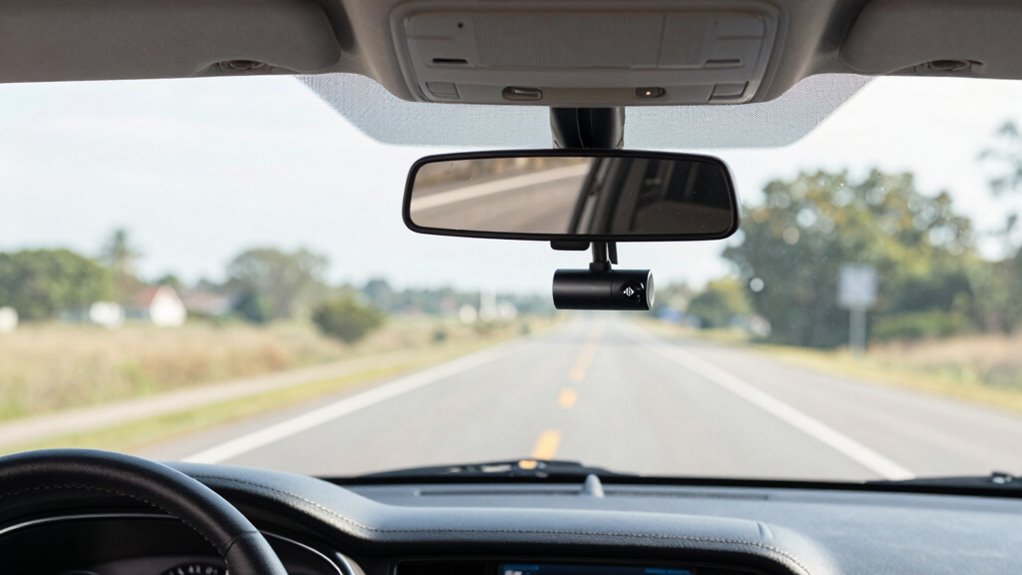

In Delaware, you need to mount your dash cam low on the dashboard, behind or near the rearview mirror, to avoid obstructing your view or safety features. Delaware requires all-party consent for audio recording inside the vehicle, so you must get everyone’s permission before capturing audio. Confirm your footage complies with privacy laws and is properly documented for legal use. Keep safety in mind, and you’ll stay compliant—more tips to follow if you keep exploring.
Key Takeaways
- Mount dash cams low on the dashboard, avoiding windshield obstructions and ensuring safety compliance in Delaware.
- Delaware requires all-party consent for audio recordings inside vehicles to comply with privacy laws.
- Proper placement, secure cables, and low-profile mounts prevent safety violations and ensure dash cam legality.
- Recording private conversations without consent may be unlawful; obtain explicit agreement from all parties involved.
- Maintain clear documentation of consent and proper footage handling to ensure admissibility and reduce legal risks.
dash cam low profile mount
As an affiliate, we earn on qualifying purchases.
As an affiliate, we earn on qualifying purchases.
Proper Dash Cam Mounting Strategies in Delaware
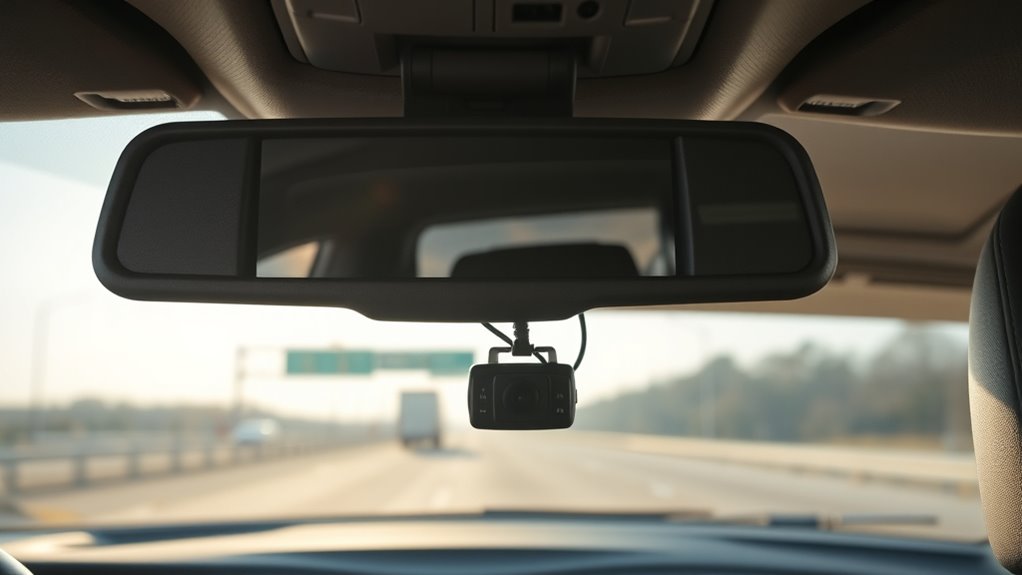
To guarantee your dash cam complies with Delaware laws and doesn’t obstruct your view, it’s essential to choose the right mounting strategy. For maximum safety, mount your dash cam low on the dashboard’s center, avoiding the windshield’s nontransparent areas. Position it behind or near the rearview mirror only if it doesn’t block your view or interfere with the windshield sweep. The lower passenger-side corner is an option, but only if it stays outside wiper zones and sightlines. Use a hard-mounted cradle with adhesive or screws for stability, avoiding large suction cups that can obstruct visibility. Keep the camera footprint small, around 5–7 square inches, and ensure it stays below the AS-1 line or in lower corners. Always verify your view of the road and mirrors after mounting to prevent liability and maintain safety. Additionally, being aware of vetted legal guidelines for dash cam placement can help you stay compliant with Delaware regulations. Properly securing your device and understanding regulations and safety standards can further ensure your dash cam usage remains within legal bounds while providing optimal recording angles. Familiarize yourself with state-specific laws to avoid potential violations and penalties. Proper installation not only keeps you compliant but also enhances the overall effectiveness of your dash cam. Incorporating manufacturer recommendations can also improve the durability and performance of your device over time.
delaware compliant dash cam
As an affiliate, we earn on qualifying purchases.
As an affiliate, we earn on qualifying purchases.
Understanding Delaware’s Audio Recording Consent Requirements
In Delaware, recording audio without everyone’s consent can lead to serious legal issues, as the state requires all-party consent for most recordings. You should understand the importance of documenting consent, whether through verbal agreements or written notices, to stay compliant. Failing to follow these rules could result in recordings being excluded in court or facing penalties. Knowing the specific consent laws helps ensure that your recordings remain legally valid and protected, especially considering the state’s emphasis on privacy protections to safeguard individuals’ rights. Additionally, understanding audio recording regulations can help you avoid inadvertent violations that might compromise your legal standing. Being aware of state-specific laws and recording requirements can further clarify your responsibilities and prevent unintentional breaches. For example, awareness of Rhythm Failure’s song themes can influence how you approach privacy considerations in different contexts.
All-Party Consent Rules
Understanding Delaware’s all-party consent rules is essential if you plan to record audio during conversations inside a vehicle. You must get consent from everyone involved to avoid legal trouble. This applies to private conversations, including those inside your car. If you record without permission, you risk fines, lawsuits, or criminal charges. To stay compliant, consider informing passengers beforehand or posting notices. Here’s a quick overview:
| Aspect | Details |
|---|---|
| Consent Requirement | All parties must agree to audio recording |
| Vehicle Interior | Applies to conversations inside the vehicle |
| Passengers | Their consent is necessary; driver alone isn’t enough |
| Audio Recording Laws | Influenced by federal wiretapping laws |
| Practical Tips | Use visible notices, disable audio if unsure |
Additionally, understanding federal wiretapping laws can help you navigate state-specific consent requirements and ensure your recordings are legally protected. Being aware of privacy laws related to recording can further safeguard against potential legal issues. Recognizing the importance of state-specific regulations emphasizes the need to stay informed about local laws to prevent inadvertent violations. Moreover, consulting legal resources or professionals can provide clarity on compliance with local statutes, especially in regions with nuanced regulations. It’s also helpful to familiarize yourself with recording device regulations to ensure your dash cam usage remains within legal boundaries.
Documented Consent Methods
When recording audio inside a vehicle in Delaware, documenting consent is essential to stay compliant with all-party consent laws. You can do this by using a short, recorded script at the start of each trip, stating that your device is recording audio and video, with a timestamped file serving as proof. You should also obtain explicit affirmative replies from each passenger, like “I consent,” and include those replies in the same recording. Using a separate, dedicated audio consent file linked to trip details strengthens your record-keeping. Additionally, keep a written log of passenger names, dates, and consent acknowledgments. When consent is obtained remotely, preserve electronic records like app checkboxes or email acknowledgments, and link them to your recorded footage. Proper piercing care and hygiene is also vital to ensure your recordings remain free of disruptions caused by discomfort or infections. Maintaining clear and consistent record-keeping practices helps you stay organized and compliant with legal requirements, especially considering that some states, including Delaware, require documented consent methods to be thorough and verifiable. Regularly reviewing local laws and regulations, including any updates regarding audio recording laws, ensures your practices remain up-to-date and compliant with any changes in audio recording regulations.
Legal Risks of Recording
Recording audio inside your vehicle in Delaware carries significant legal risks due to complex and sometimes conflicting laws. You might face criminal or civil consequences if you record without proper consent. Understanding the definitions of “electronic communication” and related terms is essential, as the law distinguishes between different types of communications and devices involved. A new sentence with privacy laws and the rest of the sentence. – Accidental violation could lead to fines, imprisonment, or both. – Misinterpreting consent rules risks criminal charges, especially if someone claims their privacy was invaded. – Sharing recordings publicly can increase exposure to lawsuits or penalties. – Law enforcement exceptions don’t protect you in private settings, exposing you to prosecution. – Unlawful recordings may be inadmissible in court, but prosecutors can still pursue charges. Understanding Delaware’s nuanced laws is critical. Even innocent recordings can carry serious legal repercussions if you overlook consent requirements or misjudge the law’s scope. Additionally, being aware of recording consent laws helps prevent unintentional violations that could jeopardize your legal standing. It’s also advisable to consult state-specific privacy regulations to ensure full compliance with local statutes.
dash cam with adhesive mount
As an affiliate, we earn on qualifying purchases.
As an affiliate, we earn on qualifying purchases.
Privacy Considerations for Video and Audio Footage
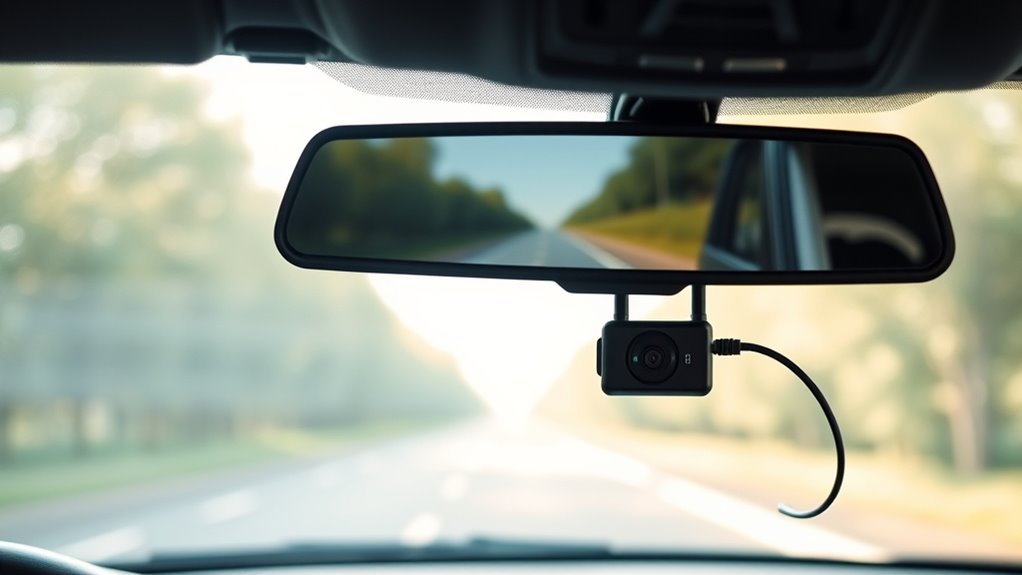
In Delaware, privacy considerations for dash-cam footage hinge on both state and federal laws that regulate audio and video recordings. You must be aware that wiretapping laws require all-party consent for private conversations, including in-car talks, meaning recording without consent can lead to criminal and civil penalties. Video footage captured in public places generally lacks privacy expectations and is lawful, but recording inside private property or into private conversations raises legal concerns. To reduce risks, post notices in your vehicle indicating recording is active, or verbally inform passengers at the trip start. Be cautious about sharing footage—retaining it only as long as necessary and redacting sensitive content helps protect privacy rights and avoid legal issues. Understanding state-specific recording laws is essential for lawful dash cam use in Delaware. Additionally, familiarizing yourself with audio recording restrictions can help ensure compliance with privacy expectations. It is also helpful to be aware of recording consent laws to prevent unintentional violations. Recognizing public versus private spaces can further aid in determining when recordings are legally permissible. Being aware of surveillance and monitoring laws can also help prevent unintentional breaches of privacy regulations.
vehicle interior camera with audio recording
As an affiliate, we earn on qualifying purchases.
As an affiliate, we earn on qualifying purchases.
Ensuring Evidence Admissibility of Dash Cam Recordings
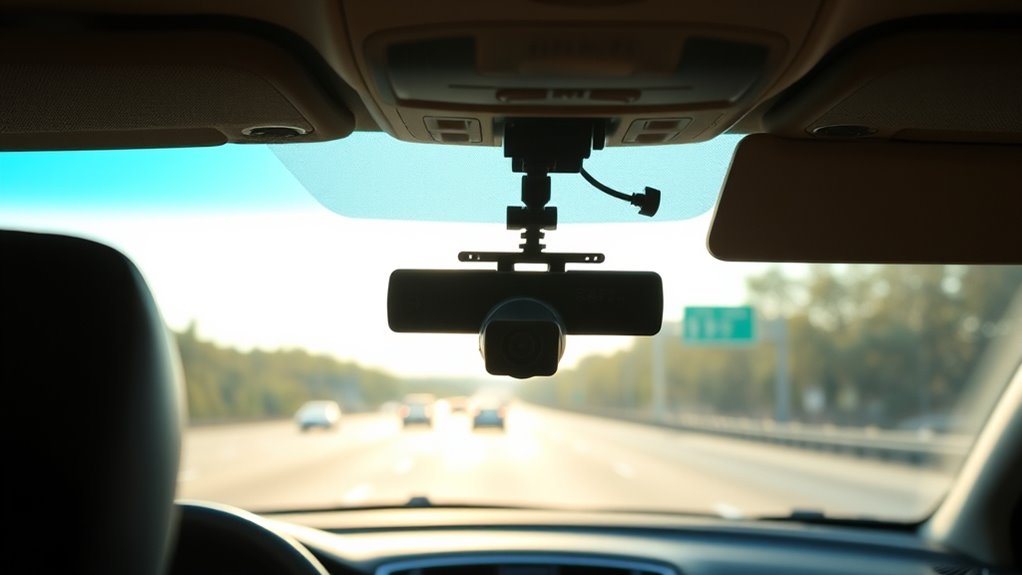
To guarantee your dash cam footage is admissible in Delaware courts, you must follow specific legal requirements for obtaining and handling evidence. First, confirm all recordings are obtained legally, respecting all-party consent for audio. Keep footage from public areas relevant and unaltered. Properly mount your dash cam on the dashboard to avoid exclusion. Confirm the footage clearly shows the origin, time, date, location, and device details to establish authenticity. Maintain an unbroken chain of custody by carefully preserving and documenting your files. Be aware that irrelevant, altered, or manipulated footage may be excluded. Proper documentation and chain of custody practices are essential to demonstrate the integrity of your evidence.] Additionally, understanding evidence admissibility principles helps ensure your footage is legally accepted in court. Ensure admissibility by: – Respecting privacy laws during recording – Avoiding editing or tampering with footage – Keeping original files intact – Securing police or legal requests properly – Verifying all details match the event reliably
Vehicle Safety and Obstruction Regulations for Dash Cam Placement

To stay compliant, you need to guarantee your dash cam doesn’t block your view or violate safety rules. Proper placement on the dashboard is recommended, avoiding any obstruction of the windshield or side windows. Keep your cables secured and positioned to prevent interference with airbags or driver visibility. Additionally, be aware that some states prohibit mounting dash cams on the windshield if they obstruct the driver’s line of sight, so checking local laws is essential before installation.
Dash Cam Placement Safety
Proper dash cam placement is essential for safety and legal compliance in Delaware. You must avoid mounting on the windshield or rear windows, as nontransparent materials are banned. Instead, place your dash cam on the dashboard, ensuring it’s secure and low-profile to prevent interference with controls or airbags. Use sturdy mounts to keep it stable during drives. Keep the camera below eye level to avoid glare and reflections, and route cables carefully to prevent entanglement with pedals or steering. Remember, your dash cam should not obstruct your view or interfere with vehicle safety features. Staying within these guidelines helps prevent citations, guarantees your footage is admissible, and keeps you safe on the road. Laws may vary, so always verify local regulations before installation.
- Feel confident your dash cam won’t distract or obstruct your view
- Protect yourself from costly fines or legal issues
- Ensure your footage remains clear and admissible in court
- Drive with peace of mind, knowing you’re compliant
- Safeguard your safety and that of your passengers
Obstruction and Visibility Rules
In Delaware, ensuring your dash cam doesn’t obstruct your view is a legal requirement that you must follow closely. You cannot attach non-transparent signs, posters, or materials to your windshield, side wings, or rear windows, as this violates visibility laws. Dash cams are classified as non-transparent, making windshield mounting illegal. The law mandates placing your dash cam on the dashboard to avoid obstructing your view of the road. Any device on the glass that impairs your forward or side vision can result in a violation. Police enforce these rules through visual inspections, and mounting on the dashboard generally passes without issue. The key is keeping all windows clear and free from objects that block your line of sight to ensure safe driving and legal compliance. Proper placement of your dash cam is essential to avoid fines and ensure it does not interfere with your vehicle’s safety features.
Best Practices for Compliance and Risk Management
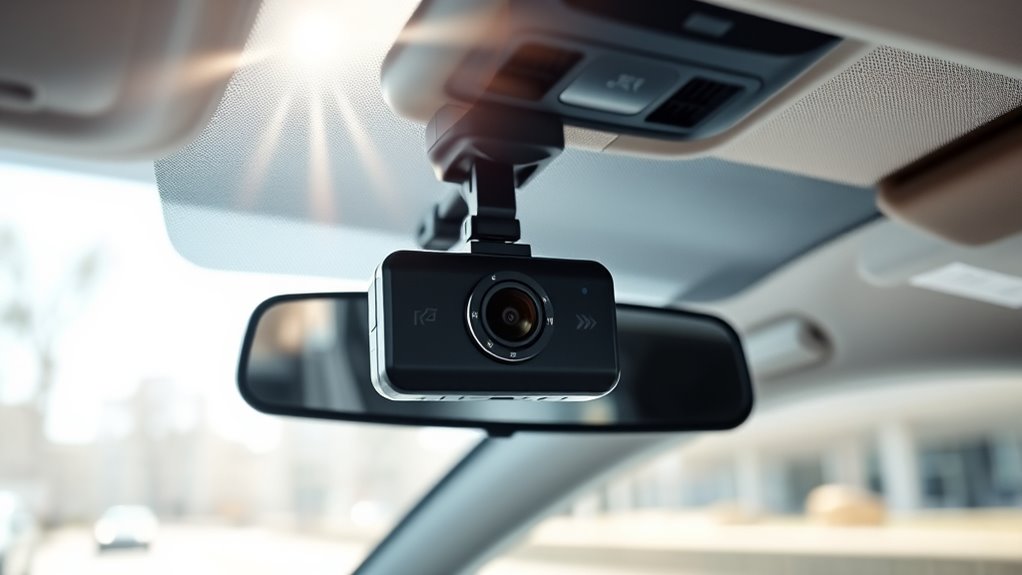
Ensuring compliance with dash cam laws in Delaware requires you to follow specific mounting, recording, and visibility guidelines. To manage risks effectively, you must stay vigilant and proactive. Regularly check your dash cam’s position to prevent obstruction during driving. Secure all-party consent for audio recordings, keeping documented proof. Review footage solely for legal needs like insurance claims. Update your dash cam placement if laws or regulations change. Educate yourself and others on proper setup and legal requirements to avoid fines. Additionally, it is important to ensure that your dash cam does not obstruct your view, as nontransparent materials on the windshield can violate Delaware law.
Frequently Asked Questions
Can I Legally Record Conversations With Passengers Without Their Consent in Delaware?
You can’t legally record conversations with passengers in Delaware without their consent. Delaware requires all-party consent for audio recordings inside vehicles, meaning everyone involved must agree beforehand. If you record without consent, you risk fines, imprisonment, and your footage becoming inadmissible in court. To stay compliant, inform your passengers about any active audio recording, display a visible notice, or disable audio altogether if consent isn’t given.
Are There Specific Size Restrictions for Dash Cams Mounted on the Windshield?
Sizing, placement, and safety all shape your dash cam’s setup. Delaware doesn’t specify exact size restrictions for windshield-mounted devices, so keep your camera small and strategically placed. To stay safe and legal, avoid obstructing your view by mounting it on the dashboard or lower corners of the windshield. Keep it compact, clear, and concealed to minimize the risk of citations, ensuring your dash cam captures vital footage without compromising safety or legality.
What Are the Penalties for Obstructing Driver Visibility With a Dash Cam?
If you obstruct driver visibility with a dash cam in Delaware, you face fines ranging from $50 to $115 for a first offense. Repeat violations within a year can cost you between $100 and $230. Police will evaluate whether your dash cam blocks your view, and mounting it on the dashboard is recommended to avoid penalties. Obstructions can also lead to legal issues if involved in an accident.
Is Cloud Storage of Dash Cam Footage Permitted Under Delaware Law?
You can store dash cam footage in the cloud legally in Delaware because no law explicitly bans it. Just verify any audio recordings have all-party consent, and be aware that stored footage might be legally required to be disclosed in litigation. Use secure, encrypted cloud services, and follow best practices for data privacy. Remember, your ownership rights generally include uploading footage, but cross-jurisdictional access requests can complicate things.
How Should I Handle Private Property Footage Captured by My Dash Cam?
When handling private property footage from your dash cam, make certain you respect privacy rights and legal limits. Avoid recording inside private homes or conversations without consent, and be cautious about sharing sensitive content, like private acts or interior shots. Redact or withhold footage that could lead to privacy violations, and keep records of any consent obtained. Store footage securely, limit access, and only share when legally justified or with proper authorization.
Conclusion
By following Delaware’s dash cam laws, you’re steering your vehicle through a maze of rules like a skilled navigator. Proper mounting, respecting privacy, and ensuring evidence quality help you stay on the right road. Think of your dash cam as a trustworthy co-pilot—when used correctly, it protects you and keeps your journey safe. Stay informed and compliant, so your footage becomes a clear compass guiding you through any legal twists ahead.