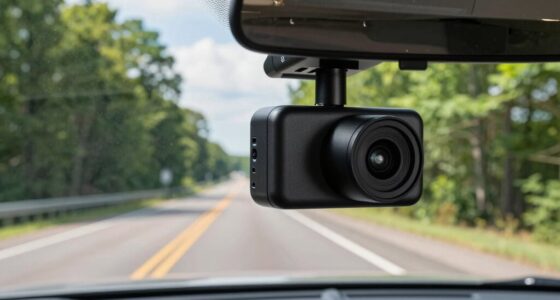
In Rhode Island, you can legally use a dash cam as long as you follow proper mounting and privacy rules. Mount your device behind the rearview mirror or on the dashboard to avoid obstructing your view, and route cables safely. Rhode Island is a one-party consent state for audio, so as long as you’re involved in the conversation, recording is legal—just inform passengers or disable audio if needed. To guarantee you’re fully compliant, keep an eye on regional ordinances and privacy considerations. Keep exploring to learn more.
Key Takeaways
- Dash cams are legal in Rhode Island; proper mounting behind the rearview mirror is recommended to avoid local restrictions.
- Rhode Island follows a one-party consent law, allowing audio recording if at least one involved person, including the driver, consents.
- Inform passengers about audio recording to comply with privacy laws and consider disabling audio to avoid violations.
- Mount the dash cam low on the dashboard or behind the rearview mirror, avoiding windshield obstruction and ensuring visibility.
- Privacy considerations include avoiding recording private spaces and notifying individuals if footage may be shared or used in legal proceedings.
Overview of Rhode Island Dash Cam Regulations
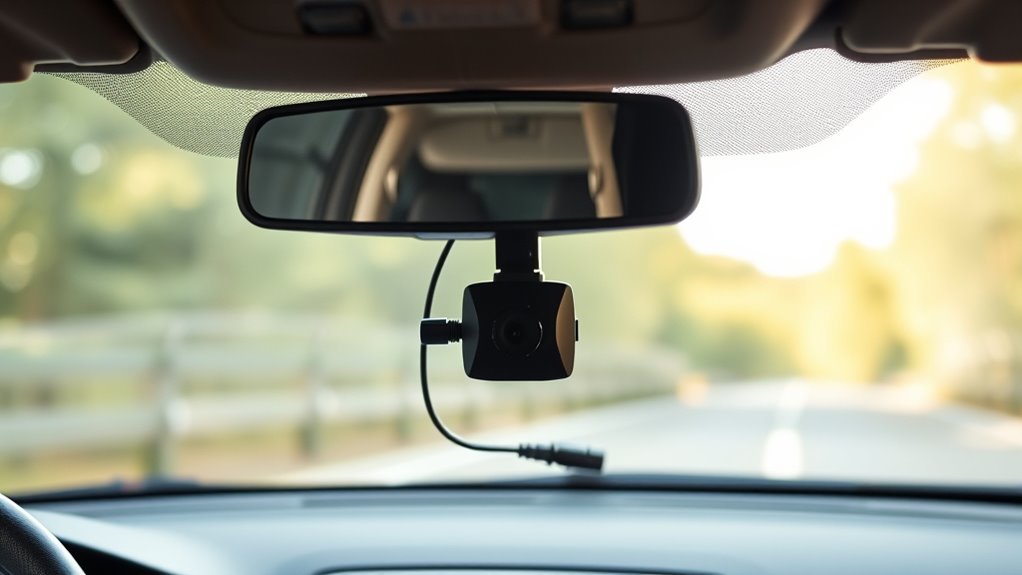
In Rhode Island, dash cams are legal for civilian use, but you must make certain they don’t obstruct your view of the road. There’s no statewide ban on in-vehicle cameras, but device placement must avoid creating an unlawful obstruction according to vehicle code rules. The law differentiates between civilian use and law enforcement camera policies, which are governed separately. Dash cam recordings are admissible in court if they follow proper chain-of-custody and legality standards. Municipal or employer policies might add restrictions, especially regarding placement and data handling. While mounting behind the rearview mirror or on the dashboard is recommended, Rhode Island lacks specific rules on camera dimensions or placement. Violations relating to obstruction can lead to fines or enforcement actions, so proper positioning is essential. Additionally, awareness of vetted wave and wind considerations can help ensure your dash cam setup remains compliant with safety and legal standards, especially in areas with high wind exposure that could affect mounting stability. It’s also advisable to periodically check your camera angle to maintain optimal recording quality and compliance.
Proper Mounting Locations and Visibility Requirements
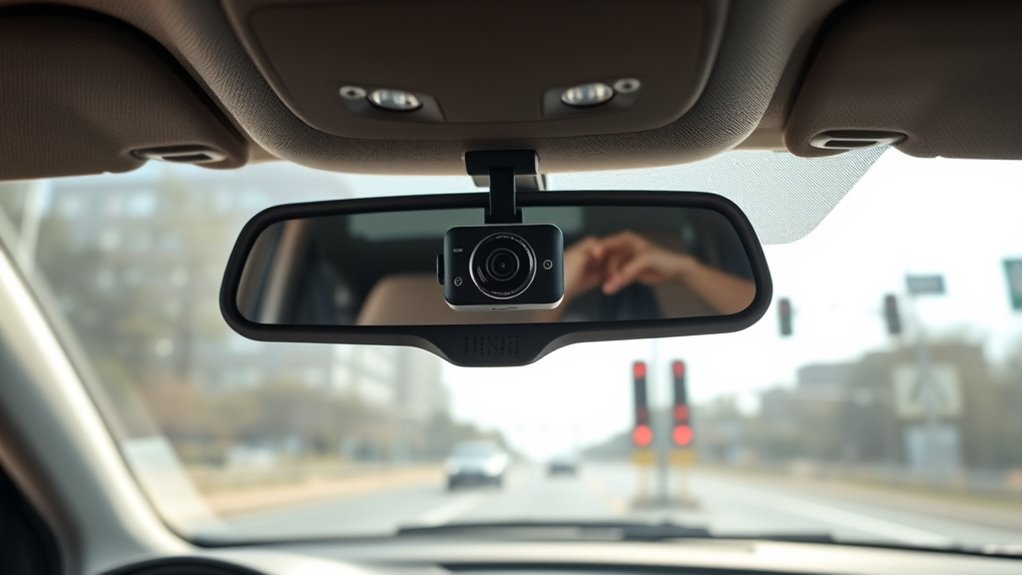
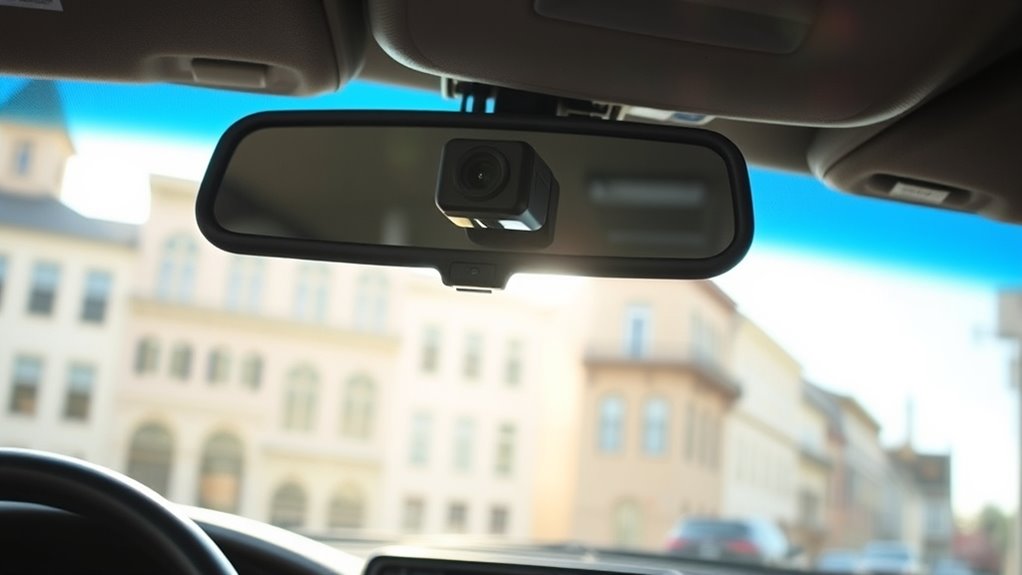
To stay compliant, you should carefully choose your dash cam’s placement, like on the dashboard or behind the rearview mirror, to avoid obstructing your view. Avoid mounting the camera where it blocks your windshield or interferes with wipers, as that can lead to violations. Using low-profile mounts and positioning your device near or behind the mirror helps balance visibility and legal requirements. Proper placement is essential to ensure your footage is admissible in court and that you avoid fines or citations. Additionally, consider the visibility requirements to ensure your camera is clearly seen and functions effectively under Rhode Island law. Ensuring your dash cam’s placement and visibility align with legal standards helps maintain its usefulness and legality. Proper installation techniques can help prevent accidental dislodging or obstruction over time, especially considering the importance of camera positioning in maintaining clear and lawful footage.
Dashboard Placement Tips
Proper dashboard placement is essential to guarantee your dash cam complies with Rhode Island laws while providing clear, reliable footage. Position the camera low on the dashboard directly behind the defroster vents to prevent obstruction and minimize glare. Mount within the vehicle’s centerline when possible to capture an ideal forward view without blocking the windshield. Keep the camera below the top of the dashboard cowling to reduce reflections. Avoid locations that block your instrument cluster or steering controls to maintain safe visibility. Use slim, matte-finish mounts or adhesive pads designed for dashboards, and route cables along the dash edge and A-pillars to prevent interference with pedals or controls. Ensure your placement offers an unobstructed view of the road, aligns with safety standards, and doesn’t impede access to essential vehicle functions. Proper positioning also helps prevent driver distraction and ensures compliance with local regulations. Additionally, selecting appropriate mounting techniques contributes to a secure and unobtrusive setup. Choosing a safe and legal mounting location is key to avoiding potential citations and ensuring your dash cam functions effectively in all driving conditions.
Avoid Windshield Obstructions
Mounting your dash cam in a way that doesn’t block your view is essential for legal compliance and safe driving. Rhode Island law requires a clear view through the windshield and windows, so any obstruction that limits your visibility violates the vehicle code. While windshield mounts are allowed, they must not hinder your line of sight. The safest option is to mount the dash cam on the dashboard, pointing toward the road, using low-profile mounts that keep the device out of your way. Ensure cables are routed safely to prevent distractions or obstructions. Proper mounting techniques also help prevent potential tickets or issues with law enforcement. Additionally, choosing a secure and discreet mounting location can reduce the risk of theft or damage. Using proper installation practices can further ensure your dash cam remains unobtrusive and compliant. Always test your setup before driving to confirm your view remains unobstructed. Being aware of local laws can help you stay informed about any updates or changes to dash cam regulations. By avoiding windshield obstructions, you stay compliant and maintain maximum visibility for safe driving.
Rearview Mirror Use
Ensuring your rearview mirror is correctly positioned and securely mounted is essential for safe driving and legal compliance in Rhode Island. Proper placement guarantees you have a clear view of the highway at least 200 feet behind your vehicle, as required by law. For passenger vehicles, the mirror must be mounted on the left front door or fender. If your vehicle’s rear vision is obstructed, you need a mirror that provides the 200-foot rear view. Vehicles with multiple mirrors must keep them intact and secure. Additionally, aftermarket or replacement mirrors must pass inspection standards. When outside mirrors are present, they can substitute for the center mirror if they provide the same rear view. Proper mounting and adjustment ensure you meet Rhode Island’s visibility requirements and stay safe on the road. Properly installed mirrors can also reduce glare and improve overall visibility, enhancing driving safety. Maintaining the correct mounting locations and ensuring the mirrors are securely fastened can prevent accidents caused by loose or improperly positioned mirrors. Regular inspections and adjustments contribute to ongoing safety compliance, minimizing the risk of violations or accidents. It is also advisable to familiarize yourself with auditory feedback techniques that can help in maintaining proper mirror positioning through consistent self-monitoring.
Audio Recording Laws and Consent Needs
In Rhode Island, audio recording laws are governed by a one-party consent rule, meaning you only need the approval of one person involved in the conversation to record it legally. This applies to in-person, telephone, or electronic conversations, so as long as you’re a participant or one party consents, recording is lawful. You don’t need consent for public conversations where there’s no reasonable expectation of privacy, like street discussions or public areas. When using a dash cam, you can record audio if you’re the driver and a participant. However, be aware that some sources suggest all-party consent might be required, but the primary statute emphasizes one-party consent with privacy exceptions. Always consider informing passengers to avoid privacy concerns. Additionally, understanding privacy laws is essential for ensuring your recordings stay within legal boundaries, especially when considering audio recording laws and consent needs. Being aware of cultural norms around privacy can help you navigate situations where recording might be sensitive. It’s also important to recognize that employer policies may impose additional restrictions on recording in certain environments. Moreover, the behavior of others in public spaces generally influences privacy expectations, so being mindful of how recordings may impact those around you is crucial.
Rules for Avoiding Obstructions and Ensuring Safety
To stay compliant with Rhode Island laws and keep safe on the road, you must position your dash cam so it doesn’t block your view of traffic signals, pedestrians, or other vehicles. Proper mounting ensures you avoid obstruction violations and maintains safety. Here are key considerations:
- Mount the dash cam behind the rearview mirror to minimize obstruction.
- Keep the device outside regulated sightline areas if windshield-mounted.
- Use low-profile, small devices to reduce visibility issues.
- Verify your view from the driver’s seat after installation.
- Avoid routing cables across the dashboard or A-pillar to prevent distractions.
- Ensure your dash cam’s placement does not interfere with view safety or driver ergonomics.
- Confirm that your mounting method adheres to modern vehicle safety standards to prevent accidental dislodging during sudden stops or impacts.
- Properly securing your dash cam can also help prevent damage during collisions, ensuring continuous functionality.
- Additionally, selecting a mount that allows for adjustable positioning can help optimize your camera’s angle while maintaining compliance.
Following these guidelines helps you stay legal and keeps your focus on the road, reducing risks during driving and inspections.
Privacy Considerations for Video and Audio Footage
When using dash cams, it’s important to understand the privacy implications of recording video and audio footage. Rhode Island requires all-party consent for audio recordings, meaning everyone with a reasonable expectation of privacy must agree before recording. Inform passengers and obtain their consent, or disable audio to avoid violations. Video footage captured in public spaces is legal without consent, as no privacy expectation exists there, but avoid recording private areas. Be aware of sensitive content, like nudity or medical emergencies, which are protected from public release. Law enforcement must notify individuals of footage release within 20 days, and victims or witnesses can waive privacy rights in writing. Non-compliance risks legal penalties, privacy claims, and footage deletion consequences. Use notices or disable audio to reduce liability. Additionally, understanding the privacy rights associated with dash cam footage can help you avoid unintended violations. Recognizing your digital privacy rights ensures you stay compliant and protect personal information.
Best Practices for Compliant Dash Cam Usage
Proper installation and secure mounting of your dash cam are essential to guarantee compliance with Rhode Island laws and ensure reliable recording. To do this, avoid obstructing your view by placing the camera behind the rearview mirror or in lower windshield areas. Keep it out of the driver-side sight triangle to prevent citations. Use sturdy mounts that resist vibration and prevent movement during driving or minor collisions. Route wiring behind trim and under weatherstrips to avoid tangling or interference with airbags. Install appropriate fuses and use connectors rated for Rhode Island’s climate. Test your setup for a clear view and consistent power before driving. Remember to:
- Mount behind the rearview mirror or in peripheral windshield areas
- Secure hardware to prevent movement
- Route wiring safely and discreetly
- Use temperature-rated connectors and fuse protection
- Test the system after installation
Additional Local Ordinances to Keep in Mind
Understanding local ordinances is key to ensuring your dash cam use stays compliant across Rhode Island cities. Providence enforces vehicle obstruction laws that ban dash cams blocking driver views through windows. Mounting your dash cam on the dashboard is recommended to meet local traffic codes, which prioritize clear sightlines. While there’s no city-wide ban on windshield mounts if unobstructed, enforcement targets obstructed views. In Cranston, regulations align with state rules, permitting dashboard mounts without extra restrictions, and emphasizing unobstructed views during vehicle inspections. Warwick and East Providence reinforce state laws, advocating dashboard mounting to avoid citations and following statewide police policies. Pawtucket restricts non-transparent windshield materials, emphasizing safety and visibility. Across all cities, audio recording requires all-party consent, and police use dash cams under strict protocols.
Frequently Asked Questions
Can I Use a Dash Cam With Both Video and Audio Recording Simultaneously?
Yes, you can use a dash cam with both video and audio recording simultaneously, but you must be cautious. Rhode Island law requires all-party consent for audio recording, so make certain you get explicit permission from all in-vehicle parties before capturing audio. Use visible notices, obtain consent forms, and configure your device to mute audio when needed. Doing so protects your legal rights and helps keep your recordings admissible in court.
Are There Specific Size Restrictions for Dash Cam Devices in Rhode Island?
You won’t find a specific size limit for dash cams in Rhode Island, making it feel like a legal jungle gym! The state mainly emphasizes that your device shouldn’t block your view, with no fixed dimensions set by law. To stay safe, mount it low on the dashboard or within the mirror area, avoiding sightlines and wiper paths. When in doubt, follow the conservative size guidelines from neighboring states to stay on the right side of the law.
Do I Need to Notify Passengers if I Record Audio Inside My Vehicle?
In Rhode Island, you don’t need to notify passengers if you record audio inside your vehicle, as the law allows one-party consent for in-car conversations. However, it’s best to be transparent by using notices or verbal alerts, especially for commercial purposes. If passengers object or privacy concerns arise, consider disabling audio recording and rely solely on video to avoid potential legal issues or privacy violations.
Can I Mount a Dash Cam on the Rearview Mirror Area?
Yes, you can mount a dash cam on the rearview mirror area in Rhode Island. Just make certain it doesn’t obstruct your view of the road. Mount it behind the rearview mirror so it stays within legal limits and doesn’t block your field of vision. Use a compact size and position it carefully to avoid distracting or reflective surfaces, keeping your driving safe and compliant with the law.
Are There Any Penalties for Mounting a Dash Cam Improperly?
If you mount your dash cam improperly, you risk hefty fines, tickets, and even points on your license. Authorities closely monitor for obstructions that block your view, especially on the windshield. Failing to follow mounting rules could also make your footage inadmissible in court. So, double-check your placement—preferably on the dashboard—to avoid penalties and guarantee your camera’s legal and effective when it counts.
Conclusion
Understanding Rhode Island’s dash cam laws helps you stay compliant and protect your privacy. Did you know over 70% of drivers now use dash cams for security? By following mounting, audio, and privacy rules, you’ll guarantee your footage is legally sound and respectful of others. Stay informed about local ordinances, and your dash cam can be a valuable safety tool without legal worries. Drive confidently knowing you’re covered by Rhode Island’s regulations.