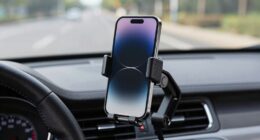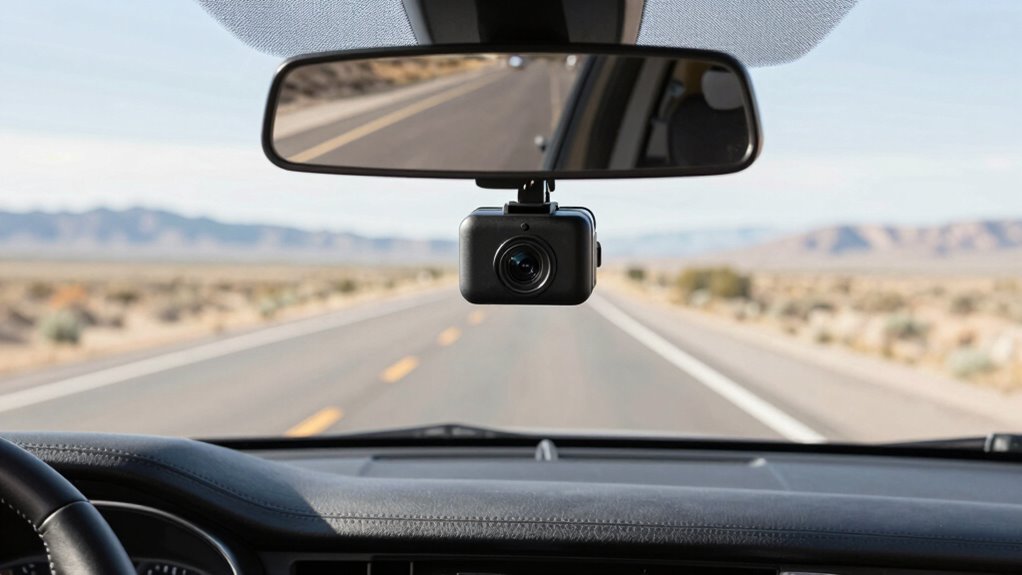

In Utah, you can legally mount your dash cam along the top of your windshield within four inches or in the lower-left corner, but avoid obstructing airbags or your view to prevent citations. Utah is a one-party consent state for audio, so you only need your permission to record conversations you participate in. Be aware of privacy laws when recording inside or outside your vehicle. To guarantee you’re fully compliant and clear on all guidelines, keep exploring more essential tips.
Key Takeaways
- Dash cams must be mounted within Utah’s legal zones, such as the top windshield edge or lower-left corner, without obstructing view or airbags.
- Audio recording laws in Utah require only one-party consent, meaning the driver’s permission suffices for recording conversations.
- Video displays should be hidden or disabled during driving to prevent distraction and comply with laws prohibiting visible screens while in motion.
- Mounting outside legal zones or obstructing views can lead to citations for obstructed vision or safety feature interference.
- Passengers should be informed about active audio recording to ensure transparency and comply with privacy considerations.
Understanding Utah’s Dash Cam Mounting Zones
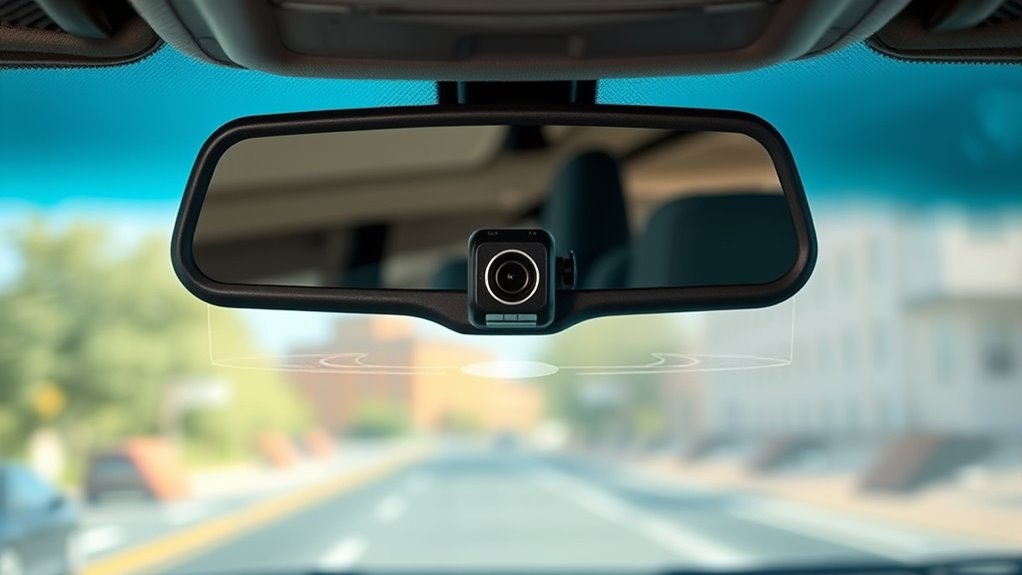
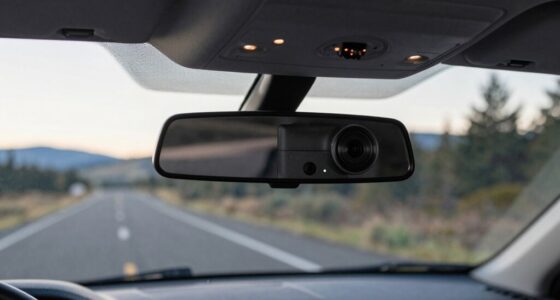
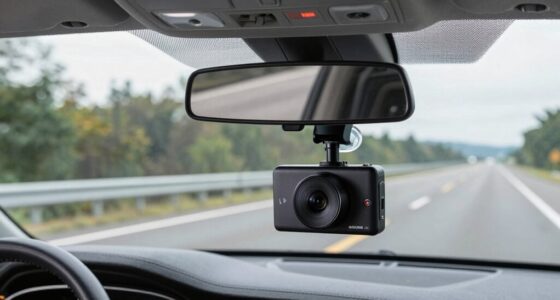
To comply with Utah’s dash cam laws, you need to understand the specific zones where mounting your device is allowed. The top-of-windshield zone permits mounting along the top edge, as long as the device doesn’t extend more than 4 inches downward. This area is designed to keep your device outside the primary sightline and reduce obstruction citations. The lower-left corner zone allows placement on the driver’s side corner, provided the device stays within 4 inches inward or upward from that corner. Additionally, dashboard mounting is permitted if windshield mounting isn’t suitable, and rear-window placement is acceptable if it doesn’t block your view or safety features. Enforcement focuses on whether the device materially obstructs your clear view, not on the device type. Keep your device within these zones to stay compliant. Following proper mounting guidelines ensures your dash cam remains legal and effective, especially in areas where vehicle safety and compliance are crucial. Proper positioning also enhances the visibility of footage, which can be vital in case of an incident. Being aware of local regulations and understanding dash cam laws can help prevent citations and ensure your dash cam is a helpful tool rather than a legal issue.
Placement Tips to Avoid Obstruction Citations
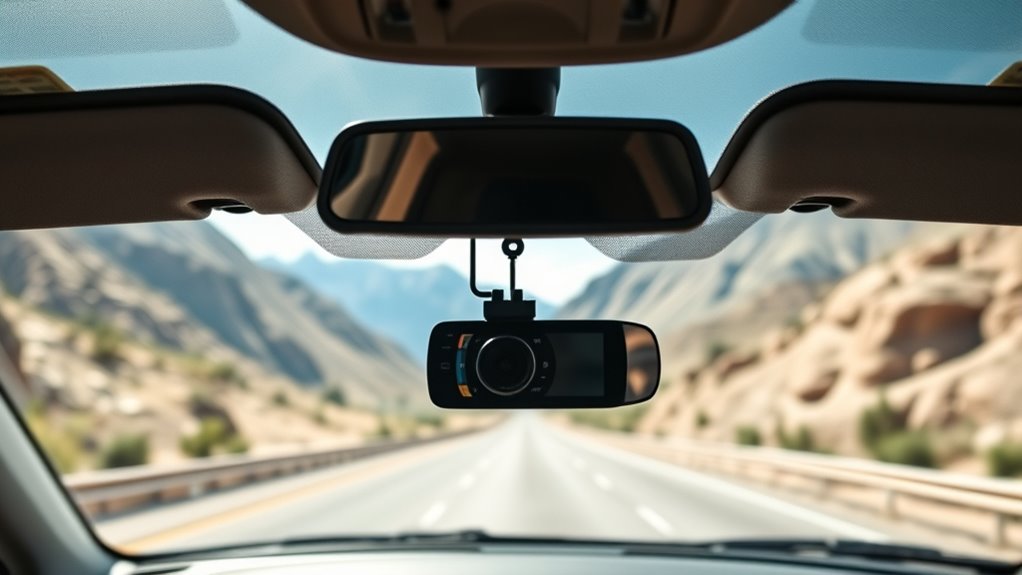
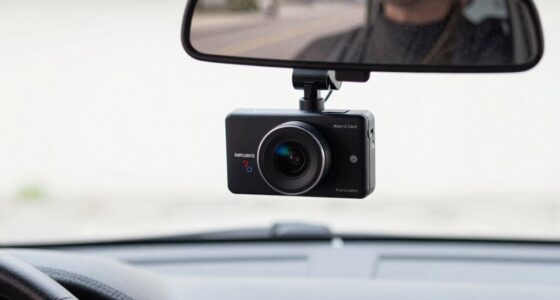
Proper placement of your dash cam is essential to avoid obstruction citations in Utah. Mount your device along the top of the windshield, ensuring it doesn’t extend more than four inches downward. Position it toward the top center or sides to capture a clear forward view without blocking your primary sightline or overlapping with the rearview mirror area. Use suction cups or adhesive within the legal drop limit. If mounting in the lower left corner of the windshield, keep it within four inches from the bottom and avoid protruding into your view. Alternatively, install on the dashboard, low and angled upward, avoiding glare and controls. Always verify your dash cam doesn’t block the 180-degree forward view, rain wiper sweep, or cause glare issues, and test visibility at night. Remember that hydraulics, including the placement of the camera, is important for ensuring maximum visibility and safety while driving. Ensuring proper mounting techniques can help prevent accidental violations and improve your overall recording quality. Additionally, understanding vehicle safety features can aid in selecting the best mounting location without interfering with safety systems. Properly securing your dash cam with the right mounting hardware can also prevent vibrations that blur footage or cause the device to shift during drives.
Legal Requirements for Video Display Devices
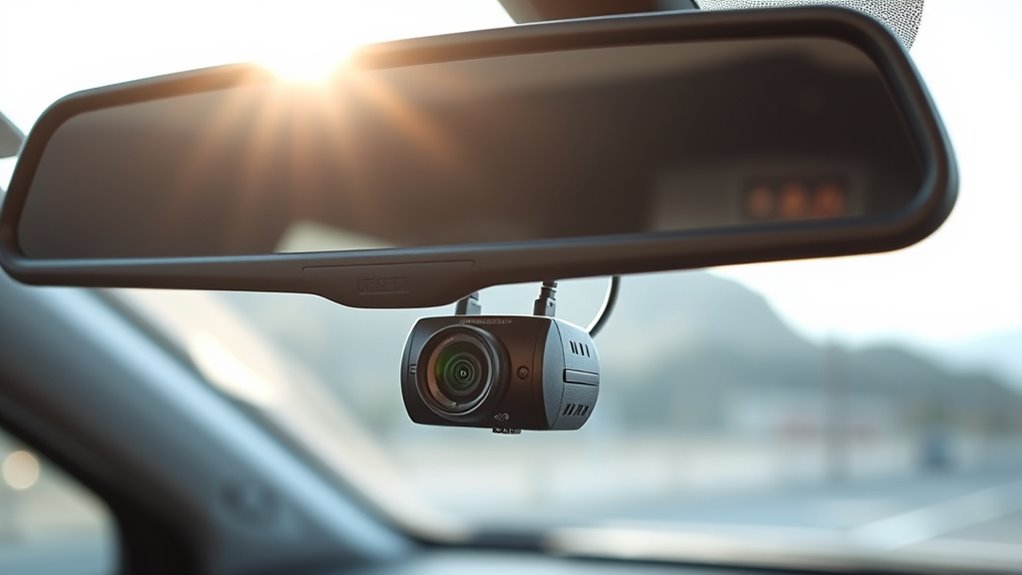
You need to understand Utah’s rules about in-cabin video displays, especially since visible screens while driving are generally prohibited. The law restricts displays that can distract you, with exceptions for navigation and safety info. Make sure your dash cam’s screen is hidden or disabled during motion to stay compliant and avoid citations. Additionally, driver distraction laws in Utah aim to minimize driver distraction from screens, emphasizing the importance of keeping displays out of the driver’s direct line of sight. Awareness of distraction mitigation strategies can help ensure your compliance and promote safer driving habits. Being familiar with modern vehicle technology can also aid in choosing dash cams that are less likely to cause distractions while still providing valuable footage. Understanding visual display regulations can help you select equipment that adheres to legal standards and enhances your safety. Incorporating auditory alerts can further reduce reliance on visual screens and support safer driving practices.
Placement and Obstruction Standards
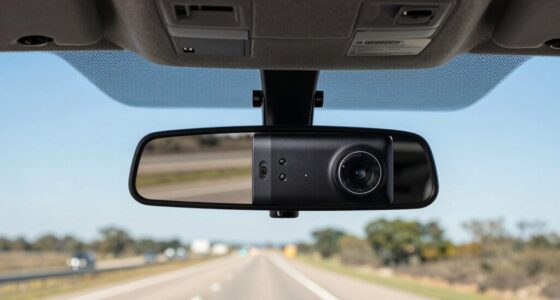
In Utah, mounting a dash cam requires careful attention to placement and obstruction standards to guarantee compliance with safety laws. You should mount your device within the top-center zone, not extending more than four inches downward from the windshield’s top edge, or in the lower-left corner, not exceeding four inches inward or upward. Mounting outside these zones risks being seen as an obstruction, which can impair your view or violate regulations. Placing the camera on the dashboard or rear window is acceptable if the windshield zones aren’t suitable. Your device must not block your view or interfere with windshield wipers, airbags, or controls. Mount it behind or near the rearview mirror for the best chance of avoiding obstruction and remaining compliant with Utah’s standards. To ensure your dash cam setup complies with legal requirements, it’s also important to verify local regulations and guidelines. When installing your dash cam, consider manufacturer recommendations to optimize placement and functionality. Additionally, proper installation techniques can help prevent accidental obstruction and ensure clear footage, especially considering the specific safety standards that govern vehicle equipment. Ensuring your dash cam meets vehicle safety standards can help prevent legal issues and enhance overall road safety.
In-Cabin Display Restrictions
Utah law strictly prohibits displaying video content that is visible to the driver while operating a vehicle, aiming to reduce distractions and enhance safety. If the display shows videos unrelated to driving, it’s illegal, whether from dash cams or other devices. Navigation, camera feeds, and essential vehicle info are allowed, but entertainment or recorded footage isn’t. To stay compliant, position screens so they’re out of the driver’s line of sight. For example, mounting behind the rearview mirror or in passenger areas helps avoid violations. Use shielding or tilting to block non-driving videos from view. This table summarizes key rules:
| Allowed Content | Placement Strategies | Risk of Violation |
|---|---|---|
| Navigation maps | Behind rearview mirror | Showing movies in view |
| Rearview camera | Passenger-side corner | Displaying recorded footage |
| Vehicle info | Use of shielding | Non-driving videos visible |
Audio Recording Laws and Consent in Utah

Since Utah is a one-party consent state for audio recording, only one person involved in a conversation needs to give permission for the recording to be legal. As a driver, your consent counts for any dash cam audio recording, meaning you can record conversations you’re part of without additional approval. This rule applies to situations where only one participant consents, aligning with federal law. Law enforcement officers can also record audio during investigations, whether overtly or secretly, as long as one-party consent is maintained. It’s recommended to inform passengers about active audio recording, either verbally or with visible notices, to ensure transparency. This law is intended to protect individual privacy rights while allowing legitimate recording. Additionally, understanding the scope of laws can help you better navigate legal boundaries and avoid potential violations. Being aware of the Fokos of privacy laws can help you better understand the legal parameters that govern audio recordings to prevent unintentional breaches that could lead to legal issues. For example, knowing how recording laws differ between jurisdictions can prevent inadvertent violations. Being aware of these legal distinctions can help ensure your practices remain compliant and avoid potential fines or lawsuits. Violating these laws can lead to fines, lawsuits, or evidence becoming inadmissible. Always verify your recording practices comply with Utah’s one-party consent standards.
Privacy Considerations When Recording Inside and Outside the Vehicle
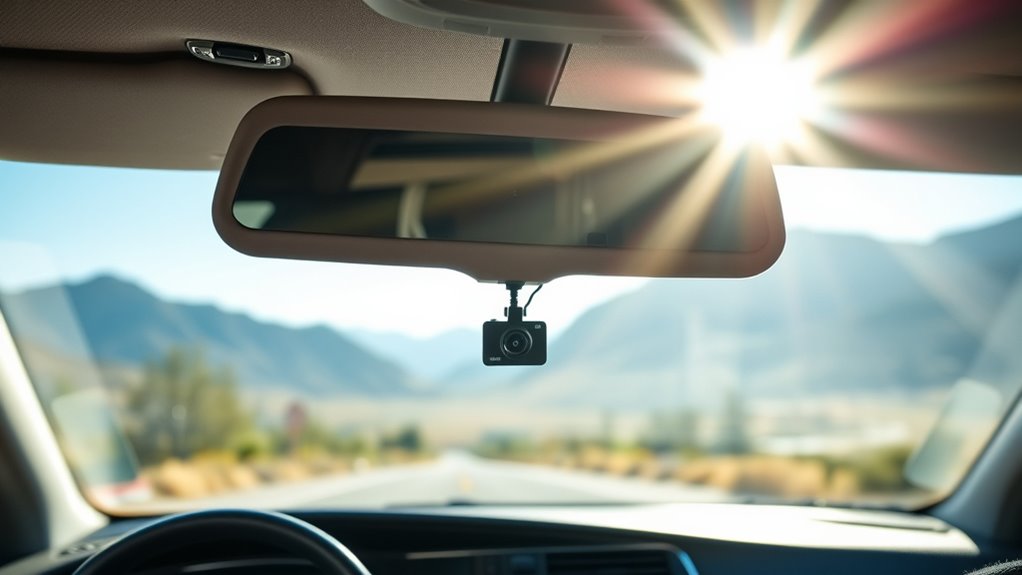
When recording inside or outside your vehicle, understanding privacy boundaries is essential to avoid legal trouble. Recording in public spaces like roads and sidewalks is generally lawful because there’s no reasonable expectation of privacy. However, filming on private property—such as driveways, gated communities, or inside homes—can raise trespassing issues and impact court admissibility. Areas with heightened privacy, like restrooms or private interiors visible through windows, should never be recorded, as doing so can lead to criminal or civil liability. Recording inside private businesses might be permitted for safety but can be restricted by property rules or business policies. To reduce legal risk, crop or blur faces and private scenes when sharing footage publicly. Informing passengers and posting signage about recording practices also helps mitigate privacy concerns. Additionally, understanding privacy laws related to audio recording is crucial, as some jurisdictions require consent from all parties involved before capturing conversations. Being aware of audio recording laws can prevent unintended legal violations when recording inside or near the vehicle.
Using Dash-Cam Footage in Legal and Insurance Cases
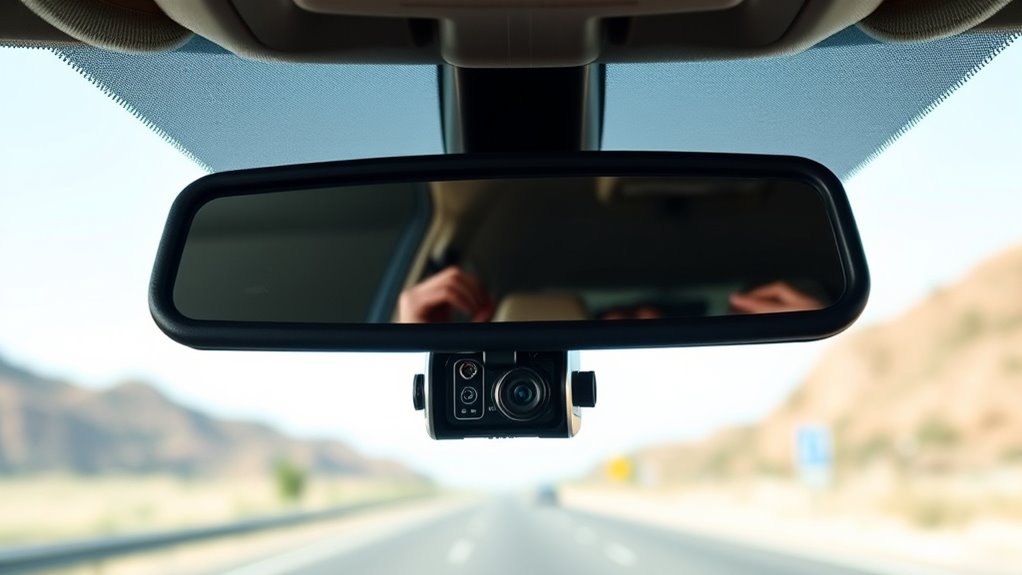
Using dash-cam footage as evidence in legal and insurance cases requires meeting specific criteria to guarantee its admissibility. First, the footage must be directly relevant to the case and properly authenticated. Courts accept relevant, untampered videos, especially those from public areas that bear on the events. However, recordings from private property are generally excluded due to privacy concerns. To use footage effectively, consider these points:
- Ensure the video is legally obtained and unaltered.
- Verify that it clearly relates to the incident in question.
- Be aware that law enforcement may request warrants for access.
- Understand that interior recordings may face restrictions without passenger consent.
- Proper documentation and chain of custody are essential to establish authenticity. Following these guidelines helps you leverage dash-cam footage confidently in court and insurance disputes. Additionally, understanding the privacy considerations involved can help prevent potential legal complications. Incorporating supporting evidence from the dash-cam can strengthen your case, provided all legal standards are met.
Furthermore, being aware of evidence standards and their requirements can be useful when presenting your case in certain legal contexts.
Best Practices for Complying With Utah Dash Cam Regulations
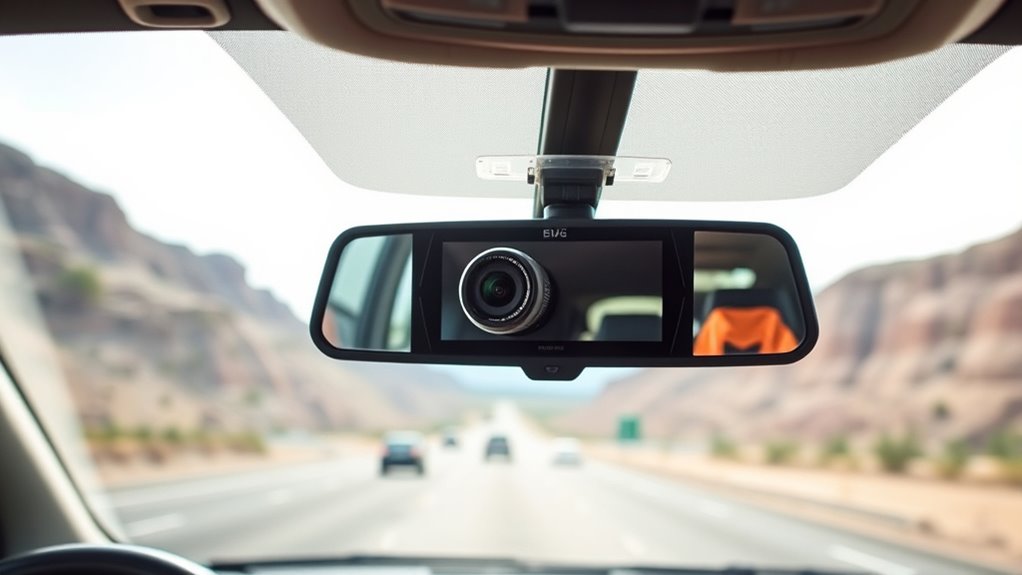
To stay compliant with Utah’s dash cam regulations, you need to select the right mounting locations that don’t obstruct your view or interfere with safety features. Managing audio recordings carefully is also essential, especially since Utah requires only one-party consent but still encourages transparency with passengers. By following these best practices, you can guarantee your dash cam usage is both legal and effective. Utah law allows dashcams on the top of the windshield if within 4 inches, and placing cameras on the back window is also permitted, providing flexibility while maintaining safety standards.
Optimal Mounting Locations
Choosing the right mounting location for your dash cam is essential to guarantee compliance with Utah regulations and assure clear footage. You should prioritize positions that don’t obstruct your view or violate state rules. The windshield top zone is common, but it can’t extend more than 4 inches downward and should stay behind the rearview mirror to reduce glare. The lower left corner is another option, limited to 4 inches outward from the corner to avoid blocking your primary view. Alternatively, mounting on the dashboard keeps your setup legal and unobstructed, provided it’s secure and cables are routed properly. You can also install on the rear window for rear-facing cameras. Always test your placement to confirm clear visibility and avoid citations.
- Follow specified zones and dimensions
- Avoid obstructing your primary sightline
- Secure the mount firmly in place
- Ensure cables do not interfere with controls
Managing Audio Recordings
Managing audio recordings on your dash cam requires understanding Utah’s one-party consent law and following best practices to stay compliant. Since Utah law permits recording audio if at least one participant consents, as the driver, you’re automatically authorized when operating your vehicle. However, it’s wise to inform passengers about active audio recordings to prevent disputes and ensure transparency. Display a visible notice and seek verbal acknowledgment when possible. If you’re unsure about consent, disable audio recording or switch to video-only mode. Limit access to recordings, set retention periods per legal requirements, and delete footage when no longer needed. Avoid altering recordings, as tampering can lead to legal trouble. Utah law also states that recordings must be kept secure to protect privacy. Following these practices helps you stay within Utah’s legal boundaries and protects everyone’s privacy rights.
Enforcement Trends and Common Violations
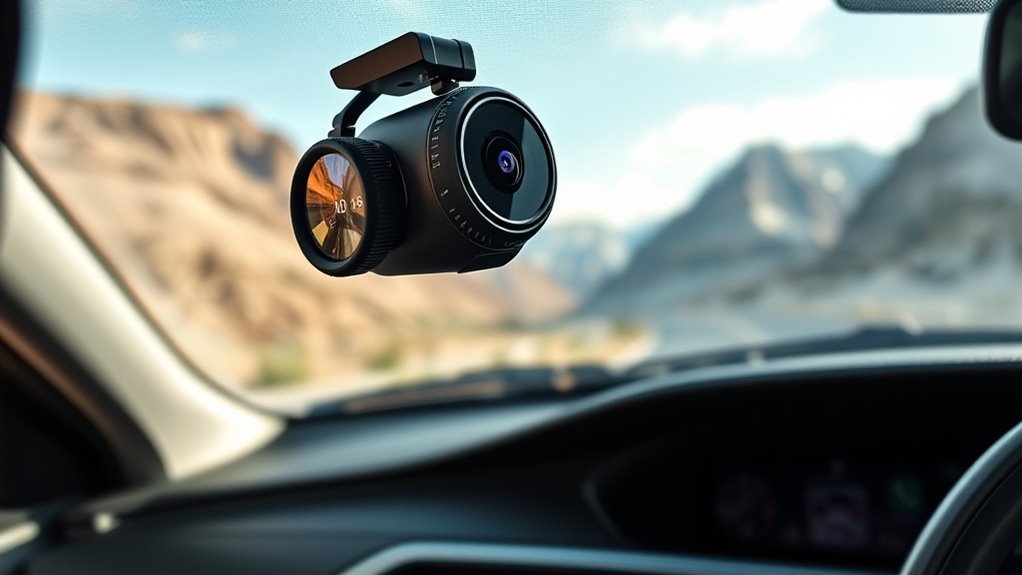
Enforcement trends in Utah reveal that citations for windshield obstruction often increase when dash cams extend more than four inches into the designated windshield zones, which are clearly defined by state mounting rules. Officers frequently cite devices mounted outside the top-center or lower-left zones during traffic stops, citing safety concerns and compliance issues. Common violations include placing dash cams in ways that obstruct airbags or reduce driver visibility, leading to roadside corrective orders. Larger commercial installations and repeated violations are more likely to trigger enforcement actions. To avoid issues, you should be aware that:
- Mount dash cams within the legal four-inch zone
- Ensure devices don’t block airbag deployment
- Properly document mounting location if challenged
- Maintain dash-cam footage integrity to prevent legal disputes
Adhering to these regulations can help prevent enforcement actions and ensure your compliance. Understanding these trends helps you stay compliant and avoid unnecessary citations.
Frequently Asked Questions
Can I Legally Record Audio Inside My Vehicle Without Passenger Consent in Utah?
Yes, you can legally record audio inside your vehicle without passenger consent in Utah since it’s a one-party consent state. As the driver, you’re permitted to record conversations you’re part of without informing passengers. However, to avoid disputes or legal issues, it’s wise to inform passengers or display notices that audio is being recorded. Always make certain you follow the law to prevent penalties or evidence exclusion.
Are There Specific Size Limits for Dash Cams Mounted on the Dashboard?
Think of your dash cam as a tiny guardian watching over your drive. Utah law doesn’t set specific size limits for dashboard-mounted dash cams; instead, it emphasizes placement to avoid obstructing your view. As long as your device stays within the allowable zones—behind the mirror or on the dashboard—it’s legally sound. Keep it unobtrusive, and your camera will serve as a silent protector without risking citations or safety issues.
Does Recording Footage From My Rear Window Require Special Permits in Utah?
You don’t need special permits to record footage from your rear window in Utah. As long as your rear-mounted dash cam doesn’t obstruct your view and is properly installed within legal placement guidelines, you’re good to go. Utah’s laws focus on preventing obstruction, not on requiring permits for rear cameras. Just make sure your device is positioned correctly so it doesn’t block your vision or violate any mounting rules.
Can I Use Dash-Cam Footage as Evidence in Court Without Prior Disclosure?
Yes, you can use dash-cam footage as evidence in court without prior disclosure in Utah. The courts accept relevant, authentic footage that meets evidentiary standards, like chain of custody and clear depiction of the incident. Typically, you don’t need to disclose the footage beforehand, but verify it’s legally obtained and meets the court’s relevance and authenticity requirements to support your case effectively.
Are There Restrictions on Recording Audio of Private Conversations Outside My Vehicle?
A stitch in time saves nine. In Utah, you can record audio of private conversations outside your vehicle if you’re part of the conversation, thanks to one-party consent laws. But be cautious—recording in private settings where people expect privacy could lead to legal trouble. To stay safe, disable audio when unsure, post notices, and inform passengers. Respecting privacy helps avoid fines and legal complications.
Conclusion
By following Utah’s dash cam laws, you’ll stay on the right side of the law and keep your footage useful. Remember, it’s better to play it safe than sorry—think of your dash cam as a trusted watchdog, not a secret spy. Stay informed about mounting spots, audio rules, and privacy boundaries. With these tips, you’ll avoid stepping on toes and ensure your dash cam works for you, not against you.