When recording minors in your vehicle, you need to consider privacy laws that vary by state and whether you’re in public or private spaces. Consent is often required, especially for audio recordings, and placing cameras correctly matters to avoid legal issues. Protect minors’ privacy by limiting recordings to necessary moments and securing footage properly. To avoid legal trouble or privacy breaches, understand the rules first—there’s more you should know before capturing any footage.
Key Takeaways
- Recording minors in public areas generally doesn’t require consent, but private spaces like cars may need parental permission.
- Privacy expectations are higher inside vehicles with closed doors or tinted windows, requiring careful consideration.
- Obtain parental or guardian consent before recording minors’ voices or activities, especially in private settings.
- Be aware of state laws, such as California SB 296, which restrict access to in-vehicle recordings involving minors.
- Secure and limit access to recordings of minors to protect their privacy and comply with legal requirements.
Understanding Public vs. Private Spaces for Recording Minors

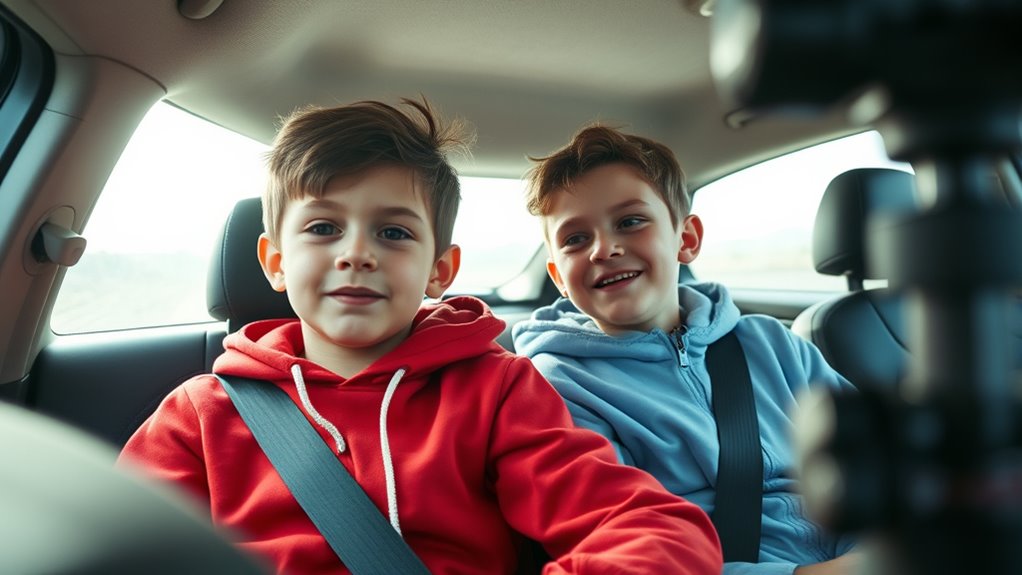
Have you ever wondered whether recording minors in different locations is legally or ethically different? When you record inside a vehicle, the privacy expectation depends on where it’s parked. If it’s in a public place with open windows, you’re more likely to be seen as having a reduced expectation of privacy. But if the vehicle’s on private property, like a driveway or garage, privacy protections increase. Inside the car, closed doors and windows or audio capture of conversations heighten privacy expectations. Recording in private spaces, especially with obscuring features like tinted windows, makes it more likely courts will see occupants as having a reasonable expectation of privacy. This means consent becomes more vital, especially when minors are involved, to respect their privacy rights and avoid legal complications. California law emphasizes that individuals have a right to privacy in settings where they reasonably expect it, which can impact how recordings are viewed legally. Additionally, understanding privacy expectations in different environments helps ensure compliance with applicable laws and ethical standards, which are essential for responsible recording practices. Recognizing technological capabilities, such as audio and video capture tools, further influences how privacy perceptions are shaped and how laws are applied. Being aware of recording laws helps protect against potential legal disputes and preserves trust.
Legal Considerations for Video Recordings in Vehicles

When recording videos in vehicles, you need to be aware of privacy laws that protect minors from unauthorized surveillance. Audio recording restrictions are especially important, as many states require all-party consent, making secret recordings illegal. Failing to follow these rules can lead to criminal charges, evidence suppression, or civil damages, so understanding your legal obligations is vital. Understanding consent laws is crucial to ensure you are compliant and avoid potential legal issues when capturing footage involving minors. Additionally, being aware of privacy policies helps you understand how your recordings may be used or shared. Recognizing the importance of creative storytelling can also guide you in ethically documenting situations without infringing on privacy rights. Being familiar with vetted practices and guidelines helps ensure your recordings are both effective and lawful. Being aware of cookie categories and how they pertain to online privacy can also inform your approach to sharing and storing footage responsibly.
Privacy Laws and Rights
Understanding privacy laws and rights surrounding video recordings of minors in vehicles hinges on location, consent, and state-specific regulations. Recording a minor in public generally doesn’t require parental consent because there’s no reasonable expectation of privacy. However, inside private property, recording without consent may violate privacy rights and be considered trespassing or stalking. For example, some jurisdictions have specific rules about recording in private spaces, which can include certain vehicle areas like backyards or garages. For minors as vehicle passengers, parental or guardian consent might be necessary, depending on state laws and agency rules. Many states have different rules for audio recordings, with some requiring all-party consent, which affects in-vehicle recordings that include minors’ voices. Privacy expectations are higher inside secluded spaces like homes or bathrooms, where recording could infringe on privacy rights. Always verify guardianship status and local laws before recording to avoid legal issues. Additionally, recent laws like California SB 296 limit access to recordings from in-vehicle cabin cameras, emphasizing the importance of understanding specific legal protections in your area regarding minors. It is also crucial to be aware of privacy laws that may vary significantly between jurisdictions. Moreover, understanding the distinctions between wave and wind in privacy contexts can help clarify what constitutes a reasonable expectation of privacy in different environments. Being aware of technology and legal boundaries can further help in navigating the complexities of recording minors safely and legally. Recognizing state-specific regulations is essential for compliance and respectful recording practices.
Audio Recording Restrictions
Legal restrictions on in-vehicle audio recordings vary considerably depending on state laws and the context of the recording. Many states follow one-party consent rules, meaning you can record if at least one participant agrees. However, in all-party consent states, everyone involved must consent, or the recording could be illegal. Recording conversations where you are not a participant may violate eavesdropping laws and could be a felony in some jurisdictions, like Michigan. Multi-jurisdictional situations complicate matters, often requiring adherence to the strictest law. When minors are involved, heightened protections apply—guardian consent is often recommended, especially in semi-private settings. Federal and state statutes may also restrict or regulate recordings that involve electronic communications or sensitive information about minors, increasing legal risks. Recording audio in workplaces or vehicles raises significant privacy considerations that must be carefully navigated to remain compliant with applicable laws.
Audio Recording Laws Inside Cars and Consent Requirements
Inside your vehicle, recording conversations raises important legal questions about consent, which vary depending on where you are. Federal law generally requires at least one party’s consent to record conversations, but state laws differ—most follow one-party consent, while a few require all-party consent. Some states treat in-person and electronic recordings differently, adding complexity for in-car audio. Courts can interpret consent requirements variably, sometimes requiring all-party consent despite statutory language. When minors are involved, parental guardians usually can consent, though minors typically lack legal capacity. Expectation of privacy is key—passengers often have a reasonable expectation of privacy, making recording more legally sensitive. Notices or recordings made with consent can influence legality, but safety and privacy considerations still matter inside a moving vehicle. Legal standards continue to evolve, especially with the rise of digital and mobile recording devices. Additionally, privacy rights can be affected by the presence of minors, emphasizing the importance of understanding both legal and ethical considerations. Recognizing how in-car recording devices and their capabilities impact your legal obligations and privacy expectations is crucial. Awareness of recording laws can help you navigate legal risks more effectively. Knowing how curiosity influences awareness of legal nuances can help you navigate recording laws more effectively. Being aware of the essential oils for in-car health can also help promote a safer environment during recording situations.
Dash-Cam Placement and Technical Regulations
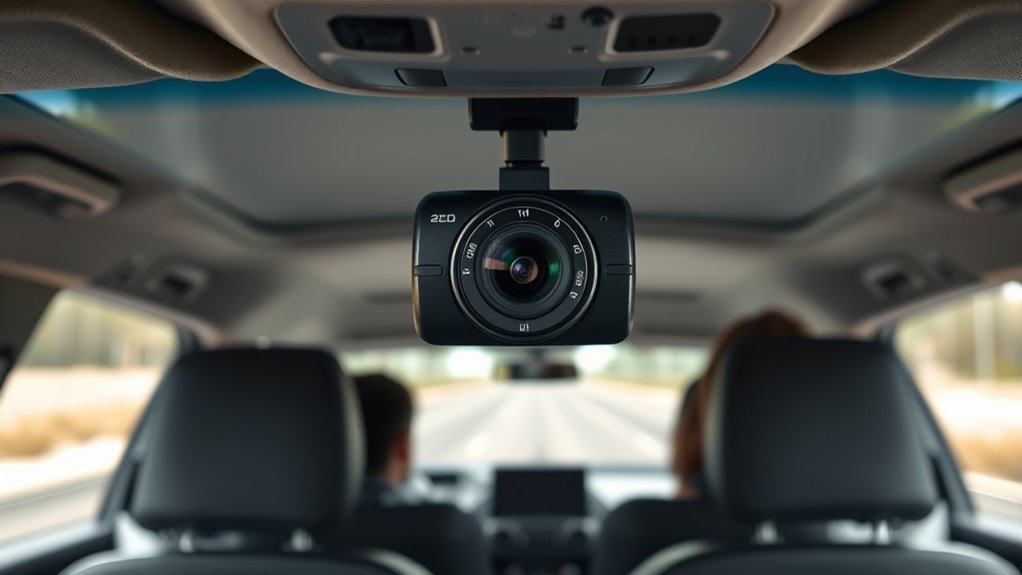
You need to make certain your dash cam is placed correctly so it doesn’t block your view or violate regulations. Proper mounting below or behind the rearview mirror is recommended, but rules vary by state, so check local limits. Also, be aware of recording duration limits to avoid legal issues and ensure your footage stays relevant. Legal guidelines specify that dash cams should be positioned to avoid obstructing safety features or view. Additionally, consider outdoor installation tips to ensure your dash cam remains secure and functional in various weather conditions. Ensuring your dash cam is installed with safe electrical wiring can prevent potential hazards and prolong device life. Proper placement and installation safety practices contribute to both legal compliance and device durability. Moreover, understanding future entertainment trends can help you select dash cams with smart features that integrate with upcoming in-car entertainment systems.
Windshield Obstruction Rules
Windshield obstruction rules for dash-cam placement aim to guarantee drivers maintain a clear view of the road while allowing the use of safety technology. Generally, dash cams are allowed as long as they don’t block your view or obscure highway signs and signals. Most states ban opaque objects on windshields and recommend dashboard mounting as a safer alternative. Specific size limits vary: California permits up to 7-inch squares on the passenger side and 5 inches on the driver side; Vermont allows small areas like 2×2.5 inches; and Utah restricts extension to 4 inches. Federal rules permit mounting up to 8.5 inches below the wiper edge, with a maximum of 7 inches above the lower wiper. Some states require dashboard-only placement, prohibiting windshield mounting entirely to avoid obstruction. Understanding the regulations on windshield obstruction limits] helps ensure compliance and safe driving practices.
Recording Duration Limits
Since there is no uniform federal limit on dash-cam recording durations, individual states and agencies set their own rules for how long footage can be retained or played back. Some states, like California, restrict pre- and post-event recording windows—often to 30 seconds before and after an event. Loop recording automatically overwrites older footage, but locking files during an incident prevents overwriting. Additionally, overly long recordings can raise tampering or admissibility concerns if edited. Metadata such as timestamps and GPS data are essential for maintaining evidentiary integrity. Proper device configuration and regular updates can help ensure compliance with regional regulations, and understanding recording duration limits is crucial to avoid potential legal issues. Legal restrictions vary by jurisdiction, and understanding local laws is crucial to ensure that recorded footage remains admissible in court. Furthermore, familiarity with smart device settings can assist in optimizing recording practices within legal boundaries. Maintaining awareness of recording quality standards can also impact the usefulness of footage as evidence, especially when combined with proper data management practices to prevent loss or corruption.
Risks of Posting and Sharing Recordings of Minors

Posting or sharing recordings of minors carries significant legal, civil, and social risks that can have lasting consequences. Legally, you could face felony charges if the footage involves sexual content or illegal activities like drug use or underage drinking. Civilly, identifiable images in harmful or sexualized contexts can lead to lawsuits for invasion of privacy, emotional distress, or defamation. Sharing personal data or exploitative images may trigger data protection violations or civil damages. Social media platforms often remove such content and suspend accounts, but this doesn’t eliminate legal exposure. Legal consequences can include criminal charges or civil penalties that impact your future.
- You risk criminal charges for illegal or exploitative content.
- Civil lawsuits can claim damages for privacy breaches and reputational harm.
- Platforms may remove your content but won’t prevent legal actions.
- Permanent digital footprints can cause long-term harm to minors’ lives.
Protecting Privacy: When Not to Record Minors in Cars

Recording minors in cars can raise serious legal issues if you don’t understand when it’s appropriate. Laws vary by state, especially regarding audio recordings. For instance, capturing sound may require everyone’s consent, and violating wiretap laws can lead to criminal charges. Privacy expectations differ based on location: recording on public streets is generally safer than filming inside enclosed vehicles or private property.
| Location | Privacy Level | Legal Consideration |
|---|---|---|
| Public street | Lower privacy risk | Usually lawful if no private intrusion |
| Inside private car | Higher privacy risk | Consent often required |
| Private property (yard) | Highest privacy concern | May be illegal or invasive |
Avoid recording minors in private or sensitive settings to prevent legal trouble and protect their privacy.
Handling Recordings for Legal or Investigative Purposes

Handling recordings for legal or investigative purposes requires understanding specific laws and regulations that govern their use. You must guarantee compliance with federal, state, and local laws to avoid legal pitfalls. For instance, recording juvenile interrogations is mandated nationwide by House Bill 1223, covering all custodial and non-custodial felony interrogations. Illinois law since 2003 also requires recording homicide interrogations, expanded in 2016 to other violent crimes. Additionally, the use of body-worn cameras and in-car video systems has increased to meet these requirements. Understanding jurisdiction-specific laws is essential to ensure proper compliance and avoid legal issues.
- Guarantee recordings are properly stored and protected to preserve evidence integrity
- Be aware of restrictions on audio recordings without all-party consent
- Follow rules about recording in private versus public spaces
- Respect privacy laws to prevent unauthorized use or disclosure of recordings
Best Practices for Obtaining Parental Consent

Obtaining parental consent is a critical step when collecting recordings involving minors, especially in situations governed by legal and privacy considerations. To do this properly, guarantee you have a good faith, objectively reasonable basis to believe the recording is necessary for the child’s best interests, as recognized under the vicarious consent doctrine in New York. Document the parent’s motive, the necessity of the recording, and the child’s age and maturity. For online services, follow COPPA‘s requirement for verifiable parental consent before collecting voice recordings of children under 13. Keep in mind that recordings made solely for speech-to-text or quick transcription purposes may qualify for exemptions, but privacy policies must still disclose the collection. Always consult legal experts to confirm compliance with applicable laws.
Securing and Managing Recorded Content Safely
You are trained on data up to October 2023. Securing and managing recorded content involves strict policies to protect minors’ privacy. Set clear retention periods aligned with local laws, and automate deletion after this time to minimize risks. Classify recordings by sensitivity, keeping only necessary footage for investigations or legal purposes, and document these decisions. Maintain an immutable audit trail showing who accessed or retained footage, along with reasons. Enforce role-based access control, strong multi-factor authentication, and detailed logs to monitor activity. Encrypt files at rest and during transmission with modern protocols, and manage keys securely. When preserving footage, create forensically sound copies, record metadata, and ensure traceability throughout the process.
Implement strict retention, access controls, encryption, and audit trails to securely manage recorded content.
- Clear retention and deletion policies
- Role-based, monitored access
- Strong encryption during storage and transfer
- Traceable, forensic preservation
Practical Tips to Minimize Legal and Privacy Risks

To reduce legal and privacy risks, make sure you get clear parental consent before recording minors. Limit your audio recording features to avoid capturing unnecessary conversations or sensitive information. Finally, secure your recordings and restrict access to prevent unauthorized viewing or sharing. Understanding Texas laws can help you stay compliant and avoid potential legal issues related to recording minors.
Obtain Parental Consent Clearly
Clearly obtaining parental consent is essential to minimize legal and privacy risks when working with minors. You must ensure that parents or guardians provide explicit approval, especially for audio recordings that capture personal information. In Pennsylvania, parental consent is sufficient for recording your own children, and courts often recognize this as valid. Be aware of COPPA rules, which require verifiable parental consent for children under 13, including voice recordings. Remember, exemptions exist if recordings are brief, non-persistent, or solely for voice commands. Always consider state-specific laws, like California’s all-party consent rule, and avoid recording private conversations without permission. The FTC’s guidance emphasizes the importance of transparency and obtaining clear parental consent for voice recordings of children. – Verify parental authority before recording minors – Use written or digital consent forms for clarity – Document consent to avoid disputes – Respect state laws and exemptions
Limit Audio Recording Features
How can limiting audio recording features help protect minors’ privacy and reduce legal risks? By restricting audio recordings, you prevent capturing confidential conversations, especially in sensitive settings like custody exchanges or juvenile courts. Limiting voice data retention ensures recordings are only kept temporarily for necessary purposes, then securely deleted, aligning with FTC and COPPA guidelines. Disabling audio in high-risk environments, such as private homes or government buildings, minimizes the chance of violating privacy laws like California’s Penal Code Section 632, which prohibits recording confidential communications without consent. These measures help you avoid civil lawsuits, criminal charges, and inadmissible evidence that can complicate legal cases involving minors. Implementing strict recording policies and clear policies on when and where audio recording is allowed safeguard minors’ privacy and protect you from potential legal consequences.
Secure and Restrict Access
Restricting access to recorded footage and audio files is essential for maintaining minors’ privacy and avoiding legal issues. You should control who can view or share recordings, especially in private settings. Use encryption or passwords to protect files, preventing unauthorized access. Keep detailed records of how footage is handled, stored, and shared, especially if law enforcement or insurers request access. Be mindful of jurisdictional rules—turn off audio or secure consent when necessary. Avoid recording minors in private spaces like homes without parental permission. Implementation of new legislation, such as the nationwide requirement for electronic recordings, underscores the importance of safeguarding recordings to ensure compliance and protect minors’ rights.
- Encrypt files and use strong passwords for storage.
- Limit access to authorized individuals only.
- Document every handling step for accountability.
- Obtain parental consent before recording minors in private settings.
Frequently Asked Questions
Can I Record Minors in a Vehicle Without Parental Permission?
You generally can’t record minors in a vehicle without parental permission, especially if you’re capturing audio or video in private spaces. Laws prioritize minors’ privacy, and recording without consent can lead to legal issues like invasion of privacy or exploitation charges. Always seek parental or guardian consent before recording, explain your intentions clearly, and make sure you’re following all local, state, and federal laws to avoid potential penalties.
Are There Specific Laws for Recording Minors’ Audio Inside a Car?
Did you know that over 38 states have strict all-party consent laws? When recording minors’ audio inside a car, these laws apply, meaning you generally need parental or guardian permission. Even if you’re a parent, you must confirm all adult participants consent, especially in all-party states. Failing to do so could lead to legal issues, so always verify local laws and get proper consent before recording any conversations involving minors.
Is It Legal to Film Minors Through Car Windows Into Private Property?
Filming minors through car windows into private property is generally illegal if it intrudes on their reasonable expectation of privacy. You can legally record from public areas, but if your camera is in a private space or through a window into private property, you’re likely crossing legal boundaries. Always consider property rights and privacy laws, and avoid filming into areas where individuals expect privacy to prevent civil or criminal consequences.
What Are the Consequences of Recording Minors Without Notices or Consent?
If you record minors without notice or consent, you risk serious legal consequences. You could face criminal charges like a Class 3 or 2 felony, especially if the recordings involve private areas or are distributed online. Civil lawsuits for invasion of privacy may also arise, leading to hefty fines and damages. Additionally, such actions can damage your reputation and result in long-term psychological harm to the minors involved.
How Should I Store Recordings to Protect Minors’ Privacy Legally?
You should encrypt recordings and store them securely, just like locking a diary behind a sturdy lock. Use access controls to limit who can view or handle the data, and keep detailed logs of access. Regularly review and delete recordings that are no longer necessary. By treating minors’ data with care and following legal requirements, you protect their privacy and stay compliant, avoiding potential legal issues.
Conclusion
Remember, when recording minors in your vehicle, privacy and legality go hand in hand—sometimes, the smallest details matter most. Just as a chance encounter can reveal unexpected truths, your careful approach can protect their innocence and your peace of mind. By respecting boundaries and staying informed, you’ll find that what seems like a simple recording can become a meaningful safeguard—proof that even in fleeting moments, responsibility and care make all the difference.