
TL;DR

Get business pricing on garage and car supplies
- Business-only prices and quantity discounts
- Tax-exempt purchasing
- Multiple users, one account, clear invoices
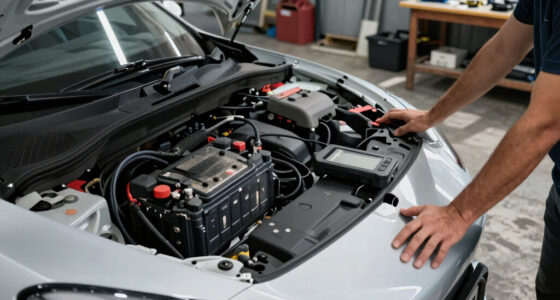
BYD performed 350 ultra-fast charging cycles on a single EV over nine days to evaluate battery durability. The test aims to understand whether repeated fast charging damages batteries and what this means for EV consumers.
Chinese automaker BYD has conducted an extensive test involving 350 ultra-fast charging cycles on a single electric vehicle over a span of nine days, aiming to evaluate the impact of repeated rapid charging on battery longevity. This test is among the most aggressive attempts to simulate real-world fast charging stresses and is significant for understanding long-term battery health in EVs, especially as ultra-fast charging infrastructure expands globally.
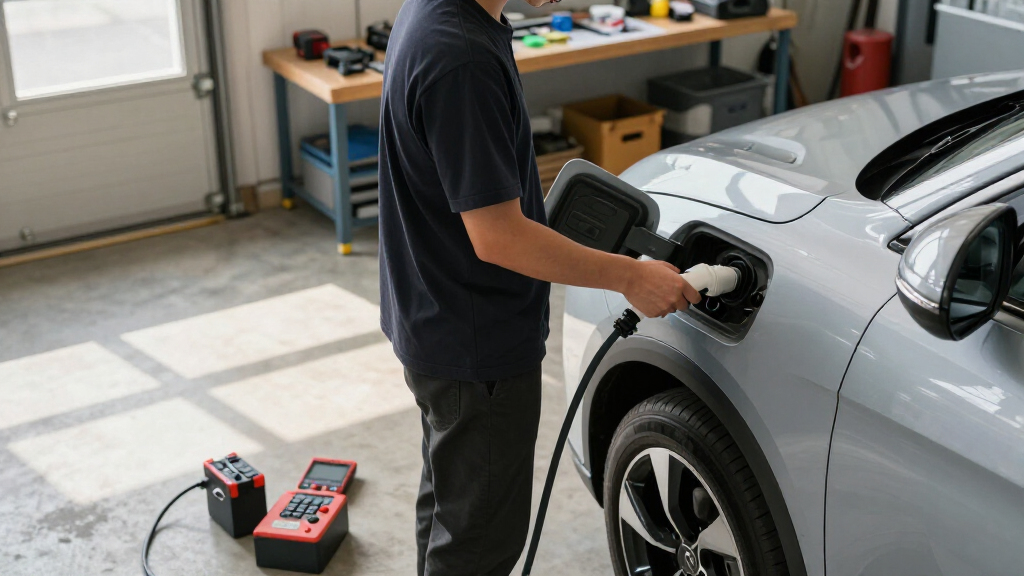
According to BYD, the test involved charging a BYD Han EV with 150 kW ultra-fast chargers repeatedly, totaling 350 cycles from near-empty to full capacity within nine days. The company claims that the vehicle’s battery maintained no significant degradation in capacity or performance after the test, which was designed to simulate the effects of frequent fast charging in real-world usage.
BYD’s engineers monitored various battery health indicators during the process, including capacity retention, internal resistance, and thermal behavior. The company reports that the battery’s capacity remained within 95% of its original state, and no abnormal heating or safety issues occurred during or after the testing period.
While the test results suggest that the battery can withstand intense fast-charging cycles without immediate damage, experts caution that this is a controlled, short-term test. Long-term effects and the impact of real-world factors such as driving patterns, ambient temperature, and charger quality remain to be fully understood.
Implications for EV Battery Longevity and Charging Standards
This testing by BYD provides evidence that repeated ultra-fast charging may not cause immediate or short-term damage to EV batteries, potentially easing consumer concerns about fast-charging impacts. As the EV market grows and infrastructure expands, understanding battery resilience is crucial for long-term reliability and consumer confidence. However, the test’s short duration means that the long-term effects remain uncertain, and further research is needed to confirm whether batteries can sustain high-frequency fast charging over years of use.
Manufacturers and industry analysts are watching these results closely, as they could influence charging standards, warranty policies, and infrastructure development. If proven durable, ultra-fast chargers could become a more common feature, reducing charging times and improving the convenience of EV ownership.
As an affiliate, we earn on qualifying purchases.
Previous Research and Industry Concerns on Fast Charging Impact
Concerns about fast charging damaging EV batteries have persisted since early adoption. Several studies have shown that high-temperature and high-current charging can accelerate battery degradation, especially if not managed properly. Some automakers have implemented thermal management systems and charging protocols to mitigate these risks.
In recent years, industry leaders like Tesla, Hyundai, and others have emphasized the importance of balanced charging strategies to prolong battery life. However, comprehensive long-term data on the effects of frequent ultra-fast charging remains limited, leading to ongoing debate about the safety and durability of such practices.
BYD’s recent test is among the most aggressive attempts to simulate long-term fast charging effects in a short period, aiming to provide clearer evidence on whether rapid charging inherently causes damage or if batteries can handle it with proper design and management.
“Our testing indicates that our batteries can withstand high-frequency ultra-fast charging without immediate degradation, which is promising for future EV use cases.”
— BYD spokesperson
As an affiliate, we earn on qualifying purchases.
Long-Term Effects of Repeated Ultra-Fast Charging Unknown
It is not yet clear whether the positive results observed in BYD’s nine-day test will hold over years of regular use. The test’s short duration limits understanding of potential cumulative effects, such as capacity fade or internal resistance increase over time, which are critical factors in battery longevity.
Industry experts emphasize that additional long-term studies are necessary to confirm whether repeated ultra-fast charging can be safely integrated into routine EV use without accelerating battery aging.
As an affiliate, we earn on qualifying purchases.
Further Testing and Industry Monitoring Expected
Automakers and researchers are likely to conduct extended testing over months or years to verify BYD’s initial findings. Consumer-facing implications include potential updates to warranty policies and charging recommendations. Industry groups may also develop new standards for ultra-fast charging to ensure safety and durability.
Meanwhile, EV owners and potential buyers should stay informed about ongoing research, as it will influence future charging infrastructure and vehicle reliability expectations.
As an affiliate, we earn on qualifying purchases.
Key Questions
Does frequent ultra-fast charging damage EV batteries?
Current short-term tests, including BYD’s recent experiment, suggest it may not cause immediate damage, but long-term effects are still uncertain and require further research.
How long can an EV battery last with regular fast charging?
Most EV batteries are designed to last 8-15 years under normal use, but the impact of frequent ultra-fast charging over that period is still being studied.
What measures do automakers take to prevent fast-charging damage?
Manufacturers use thermal management systems, charging protocols, and battery chemistry optimization to mitigate degradation risks associated with fast charging.
Will this test influence future EV charging standards?
Potentially, if further long-term research confirms that batteries can withstand repeated ultra-fast charging without damage, industry standards may evolve to support more aggressive fast-charging use.
Should I avoid fast charging to protect my EV battery?
Most modern EVs are built to handle fast charging safely, but users should follow manufacturer guidelines and avoid excessive charging cycles when possible.
Source: rss
Halloween Picks
halloween
As an affiliate, we earn on qualifying purchases.