
TL;DR
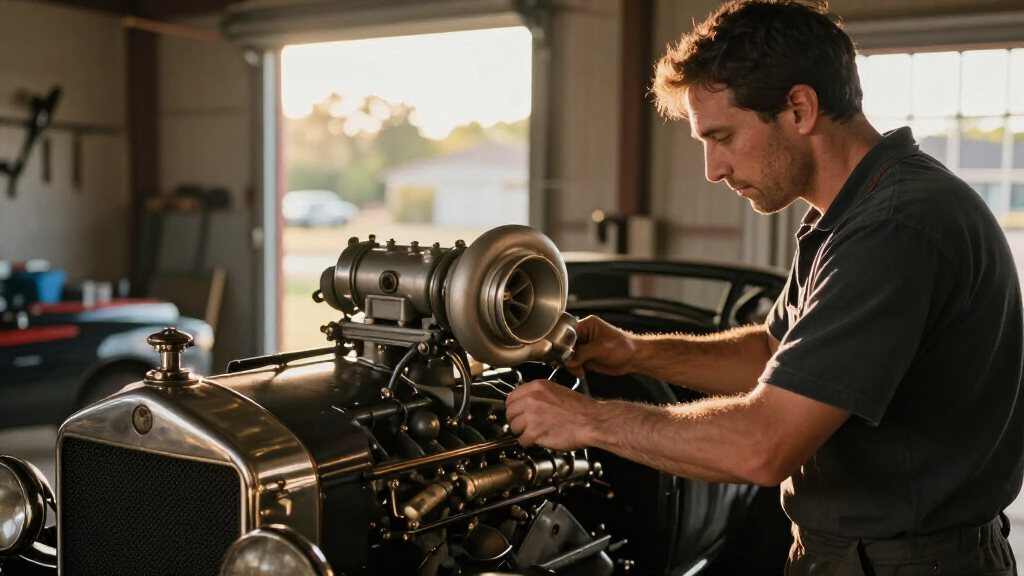
A car enthusiast has fitted a turbocharger onto a 100-year-old Ford Model T engine. The development has sparked widespread curiosity, but its practicality and safety remain unconfirmed.
A car enthusiast has fitted a turbocharger onto a 100-year-old Ford Model T engine, prompting widespread speculation about whether the vintage powertrain can handle the added boost. While the modification is confirmed to have been completed, experts remain uncertain about its operational viability and safety implications.

Get business pricing on garage and car supplies
- Business-only prices and quantity discounts
- Tax-exempt purchasing
- Multiple users, one account, clear invoices
The modification was publicly showcased on social media platforms, where the owner demonstrated the engine with the turbo attached. According to initial reports, the installation involved retrofitting a modern turbo onto the Model T’s original engine, which is over a century old and designed for simplicity, not forced induction. The owner claims the engine runs with the turbo, but detailed testing results and performance data are not yet available.
Automotive experts and historians have expressed skepticism about the project. They note that the Model T’s engine components—such as its cast-iron block, simple carburetor, and low compression ratio—were not designed to withstand the increased pressure and heat generated by a turbocharger. The installation appears to be a novelty or experiment rather than a practical upgrade, and there are concerns about potential engine damage or failure.
It is not yet confirmed whether the engine has been modified to handle the additional stresses, such as reinforced pistons or upgraded cooling systems, or if the turbo is merely a cosmetic or demonstration piece. The owner has not released detailed technical specifications or long-term testing data, leaving the true viability of the setup uncertain.
Potential Impact on Vintage Car Customization
This development attracts attention because it challenges assumptions about the limits of vintage engine modifications. If the turbo installation proves functional and safe, it could inspire a niche of experimental restorations and customizations. Conversely, experts warn that such modifications risk damaging irreplaceable historic engines, emphasizing the importance of preserving their original design and integrity.
The trend highlights a broader interest in blending classic automotive history with modern technology, but also underscores the risks involved in untested modifications on aged machinery. For collectors and restorers, the case raises questions about balancing innovation with preservation.
Products Worth Considering

Chemical Guys 10-Piece Car Wash Kit with Foam Gun

Chemical Guys 17-Piece Car Detailing Kit for Interior, Exterior, and Wheels

Chemical Guys 16-Piece Ceramic Car Wash and Protection Kit with Big Mouth Foam Cannon
As an affiliate, we earn on qualifying purchases.
Historical and Technical Background of the Model T Engine
The Ford Model T, produced from 1908 to 1927, is one of the most iconic and influential automobiles in history. Its engine, a 2.9-liter four-cylinder, was designed for simplicity, durability, and ease of repair. It produced about 20 horsepower, with a low compression ratio and a basic carburetor, reflecting the engineering standards of its era.
Over the decades, the Model T engine has become a symbol of early automotive innovation. Its design was not intended for high performance or forced induction, and its components are generally considered fragile by modern standards. Restorers often emphasize maintaining the engine’s original specifications to preserve historical authenticity.
The recent turbo installation is a departure from traditional restoration practices, driven by a trend of pushing vintage machinery beyond its original capabilities for novelty or entertainment purposes. The interest appears to be driven by curiosity about how far old technology can be pushed with modern modifications.
Unconfirmed Performance and Safety Outcomes
It is not yet clear whether the turbocharged Model T engine can operate reliably over time or handle sustained use. No detailed testing data, durability assessments, or safety evaluations have been publicly released. Experts caution that the modification could cause engine damage, but definitive results are still pending.
Expected Testing and Expert Evaluation Timeline
The owner plans to conduct further testing to evaluate the engine’s performance, durability, and safety. Automotive specialists and historians are expected to analyze the setup, possibly conducting stress tests or long-term operation trials. The results will determine whether this modification is a viable experiment or a risky stunt.
Key Questions
Is it safe to turbocharge a vintage Model T engine?
Currently, safety and reliability are unconfirmed. Experts warn that the engine’s original design is not suited for forced induction, and modifications could cause damage or failure.
Will this modification be practical for driving or is it just for show?
Most indications suggest it is primarily a demonstration or novelty, with no evidence yet of practical, long-term use or performance benefits.
Could this trend lead to more vintage engine modifications?
While it may inspire some experimental projects, many experts advise caution due to the risk of damaging historic engines and the importance of preservation.
What technical challenges does turbocharging a Model T engine pose?
The engine’s low compression ratio, fragile components, and lack of modern cooling systems make it ill-suited for the pressures and heat generated by a turbocharger.
Source: rss