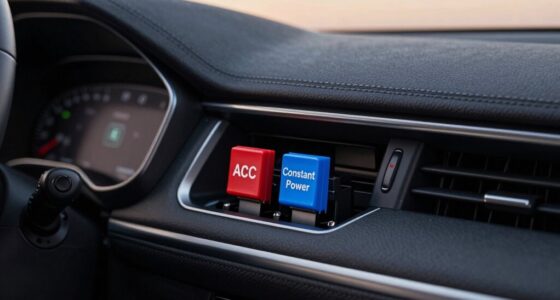
Ignition noise and power spikes are hidden electrical issues that can corrupt your videos and damage your gear. These disturbances come from vehicle engines, lightning, or switching events and often cause flickering, static, or color distortions in your footage. They can also harm your camera and electronics if not managed properly. Using proper grounding, shielded cables, surge protectors, and UPS devices helps prevent these problems. Keep exploring to learn how to protect your recordings from these unseen threats.
Key Takeaways
- Ignition noise and power spikes generate electrical disturbances that can cause flickering, glitches, and artifacts in video recordings.
- Power surges and electromagnetic interference from ignition systems often lead to data corruption and hardware damage.
- Proper grounding, shielding, and surge protection are essential to prevent electrical noise from affecting video quality.
- Detecting signs like flickering, static, or color distortions can help identify interference sources early.
- Regular maintenance and the use of surge protectors help safeguard equipment and ensure stable, high-quality footage.
What Are Ignition Noise and Power Spikes?

Ignition noise and power spikes are common electrical disturbances that can disrupt the performance of electronic equipment. These issues often stem from electrical noise—unwanted electrical signals that interfere with normal operation—and signal interference, which can distort or disrupt data signals. Ignition noise is generated by vehicle engines or machinery with ignition systems, producing high-frequency electrical noise that can travel through power lines. Power spikes are sudden increases in voltage caused by events like lightning strikes or switching operations, which can damage sensitive electronics. Both disturbances can lead to inconsistent performance, data corruption, or even hardware failure if not properly managed. Understanding these common electrical disturbances helps you recognize their impact and take steps to protect your equipment. Additionally, implementing proper electrical noise mitigation techniques can significantly reduce the risk of damage and improve overall system stability. Being aware of power quality issues is essential for maintaining the longevity and reliability of electronic devices in various environments, especially when considering free floating electrical systems that lack proper grounding. Properly managing these disturbances also involves understanding the source of interference, which can help in designing effective protective measures. Moreover, the presence of hydrotherapy elements in certain environments can sometimes contribute to electrical noise if not properly isolated, highlighting the importance of comprehensive system management.
How Electrical Interference Affects Video Quality
Electrical interference can seriously impact your video quality, causing flickering or distorted images. Power surges, radio frequency interference, and poor grounding all contribute to these issues. Understanding how these factors disrupt footage helps you take steps to protect your equipment. Additionally, proper grounding and shielding can significantly reduce electrical noise, ensuring clearer, more stable video recordings. Implementing energy-efficient and innovative European cloud solutions can further enhance the stability and security of your data, indirectly supporting better video management and storage. Recognizing the importance of luxury technology integration can also optimize your setup for professional results. Incorporating advanced tech & gadgets, such as Wi-Fi/Bluetooth thermometers and smart grilles, can help monitor and mitigate interference sources in real-time, leading to improved footage quality. Paying attention to quality assessment of your equipment can also prevent interference-related issues from occurring in the first place.
Power Surges Disrupt Footage
Power surges can cause sudden disruptions in your video footage, leading to noticeable artifacts and glitches. These surges inject excessive energy into your electrical system, creating electromagnetic interference that affects your camera and recording equipment. Specifically, electromagnetic interference at certain audio frequency ranges can distort signals, resulting in corrupted footage. When a power surge occurs, it can overload your device’s power supply, causing momentary voltage spikes that interfere with the camera’s internal electronics. This interference disrupts the stable transmission of data, producing visual anomalies such as flickering, pixelation, or unexpected color shifts. Since these disruptions happen quickly, you might not notice them until playback reveals degraded quality. Protecting your equipment from power surges is essential to maintain clear, high-quality video recordings free from these electrical disturbances. Additionally, understanding how electrical interference impacts sensitive electronic devices can help you implement more effective safeguards against data corruption. Being aware of common electrical noise sources in your environment can further improve your setup’s resilience to such disturbances, especially when considering wiring basics and proper grounding techniques. Recognizing the role of electromagnetic compatibility practices can also help minimize the impact of external electrical disturbances on your equipment. Being proactive about surge protection can save your footage from these unseen disruptions.
Radio Frequency Interference
Have you ever noticed strange lines or flickering in your video footage that don’t seem to come from your camera? This is often caused by radio frequency interference, which disrupts antenna signals and introduces broadcast interference into your video feed. Electrical devices nearby, such as radios, Wi-Fi routers, or power lines, can emit signals that interfere with your camera’s reception. These signals can cause pixelation, ghosting, or random noise, degrading your video quality. When broadcast interference is present, it overwhelms the camera’s ability to process clean footage, resulting in a distorted image. To minimize this, you need to reduce exposure to sources of radio frequency interference, ensuring your camera receives a clear, stable signal for high-quality video recordings. Optimizing your setup with power and performance considerations can help mitigate these issues and improve overall signal integrity. Paying attention to electrical shielding can further help prevent unwanted interference from affecting your video quality. Additionally, proper electrical grounding can significantly reduce the likelihood of electromagnetic interference impacting your footage. Employing ground loop isolators can also help break interference paths and enhance signal clarity. Incorporating shielded cables into your setup can provide an extra layer of protection against external interference sources.
Grounding and Shielding
Grounding and shielding play a crucial role in protecting your video equipment from electrical interference that can cause noise and signal disruption. Effective grounding techniques ensure that unwanted electrical currents are safely directed away from sensitive components, reducing the risk of power spikes and ignition noise. Proper grounding involves connecting your equipment to a common ground point, minimizing ground loops that can introduce interference. Shielding methods, such as using shielded cables or enclosures, block electromagnetic fields from affecting your signals. Additionally, good grounding practices help prevent electrical noise from infiltrating your setup, further safeguarding your video quality. Proper grounding and shielding techniques are essential for maintaining signal integrity and preventing external noise sources from corrupting your videos. By implementing these strategies, you prevent external noise sources from corrupting your videos. Good grounding and shielding practices create a stable environment for your equipment, resulting in clearer video quality and fewer disruptions caused by electrical interference. Employing proper techniques can also help mitigate ground loops, which are common sources of interference in complex setups. Ensuring proper cabling practices can further enhance your setup’s resistance to interference and improve overall video clarity.
Common Sources of Power Spikes in Recording Environments

Many common electrical devices and environmental factors can cause power spikes that disrupt your recordings. These sudden surges can originate from various sources, impacting your gear’s performance. Poor cable insulation can allow interference to seep in, causing unpredictable spikes. Fluctuations from heavy machinery or appliances turning on and off create abrupt power changes. Additionally, inadequate power conditioning leaves your equipment vulnerable to voltage spikes. To minimize these issues, use high-quality cables with proper insulation and invest in power conditioners designed to stabilize voltage levels. These steps help protect your gear from harmful spikes, ensuring cleaner recordings. Recognizing and addressing these common sources of power spikes keeps your setup stable and your footage free from corruption. Proper electrical grounding can further reduce the risk of interference and protect your equipment from damage, especially when combined with surge protectors that help absorb unexpected voltage increases. Ensuring your environment has proper electricity management can significantly reduce the likelihood of power-related disruptions during recording sessions.
How Ignition Noise Manifests in Your Footage
Ignition noise often shows up as a crackling or popping sound in your audio or video recordings when your equipment is near ignition sources like vehicle engines or lawnmowers. This interference causes audio distortion, making your recordings sound harsh or uneven. In video footage, ignition noise can lead to signal degradation, resulting in flickering images or corrupted frames. You might notice sudden spikes in brightness or unexpected visual artifacts that disrupt the viewing experience. These issues occur because the ignition source injects unwanted electrical signals into your recording setup, overriding clean signal transmission. Recognizing how ignition noise manifests helps you identify the source of audio distortion and visual disruptions, so you can take steps to minimize its impact and preserve footage quality.
The Impact of Power Fluctuations on Camera Equipment
Power fluctuations can have a serious impact on your camera equipment, often causing unexpected issues during recording or playback. These surges or dips can damage sensitive components or introduce noise into your footage. To protect your gear, consider implementing effective grounding techniques to stabilize electrical flow and prevent interference. Shielding methods, such as using grounded cables and properly insulated connectors, help block external electromagnetic interference. Additionally, using surge protectors can minimize damage from sudden power spikes. Be proactive by checking your power sources regularly and ensuring your setup adheres to best practices. Proper grounding and shielding not only safeguard your equipment but also guarantee cleaner, more stable footage, reducing the risk of corrupted videos caused by electrical disturbances.
Detecting Signs of Electrical Interference in Your Videos
Electrical interference often leaves subtle but recognizable marks on your footage, making it important to identify these signs early. Look for visual artifacts like flickering, static, or color distortions that appear inconsistent with your scene. Audio synchronization issues, such as sudden pops or crackles, can also signal interference. To better understand these signs, consider this table:
| Symptom | Possible Cause |
|---|---|
| Flickering or static | Power spikes affecting video stabilization |
| Out-of-sync audio | Electrical noise disrupting signals |
| Unusual color shifts | Interference disrupting image quality |
| Random video glitches | Ignition noise or power fluctuations |
Detecting these signs early helps you troubleshoot and protect your footage from further damage caused by electrical interference.
Preventative Measures to Protect Your Gear From Power Spikes
To safeguard your gear from power spikes, implementing protective measures is essential. Power spikes can cause damage through ground loop issues and electromagnetic interference, which may lead to corrupted videos. To minimize these risks, consider using surge protectors designed for sensitive electronics. Isolating equipment with ground loop isolators prevents unwanted current flow, reducing interference. Additionally, employing power conditioners can stabilize voltage and filter electromagnetic interference. These steps help assure your gear remains protected from sudden voltage surges and noise that can compromise video quality. Taking proactive measures keeps your equipment safe and your recordings clean, avoiding costly repairs or data loss caused by power spikes.
Using Shielded Cables and Grounding Techniques
Using shielded cables and proper grounding can ensure reduced ignition noise and power spikes. You should focus on implementing effective shielding practices, grounding methods, and cable management tips to protect your equipment. These techniques help ensure cleaner signals and safer operation.
Proper Shielding Practices
Proper shielding practices are essential for minimizing ignition noise and power spikes in sensitive systems. To achieve this, ensure cables are properly shielded with conductive material and connect shields at one end to prevent ground loops. Maintain proper grounding techniques to enhance electromagnetic compatibility, reducing interference. Use twisted pair cables to cancel out noise and prevent signals from radiating. Keep shielding intact, avoiding cuts or gaps that could allow interference to penetrate. Properly grounded shields prevent noise from coupling into your system, safeguarding video quality. Be cautious of ground loops, which can introduce additional noise, and eliminate them with correct grounding. Good shielding practices improve signal integrity and system reliability, ensuring your sensitive equipment operates without disruption.
- Use single-ended shields to prevent ground loops
- Connect shields at only one end
- Keep shielding continuous and intact
Effective Grounding Methods
Effective grounding methods are essential for reducing noise and preventing interference in your system. You should focus on proper grounding techniques, ensuring all components share a common ground point to minimize ground loops. Using shielded cables is a key shielding method; connect the shield to ground at one end to block electromagnetic interference without creating loops. Keep grounding connections short and secure, avoiding loose or exposed wires that can pick up noise. Consider installing a dedicated grounding rod or bus bar for your equipment to create a stable reference point. Consistent grounding helps prevent power spikes and ignition noise from infiltrating your audio or video signals. By applying these grounding techniques and shielding methods, you’ll appreciably improve signal integrity and reduce interference-related issues.
Cable Management Tips
Implementing proper cable management is essential for maintaining signal clarity and minimizing noise. Proper cable routing prevents interference from ignition noise and power spikes, ensuring cleaner video signals. Use shielded cables, especially for sensitive connections, to block electromagnetic interference. Select connector types that provide secure connections and minimize signal loss. Keep power cables separate from audio and video cables to reduce cross-talk. Grounding techniques, like connecting shielded cables to ground at one end, help drain interference. Avoid crossing cables at sharp angles and keep cables organized to prevent accidental disconnections. Proper cable management reduces noise pickup and preserves signal integrity, preventing video corruption caused by ignition noise and power spikes.
- Use shielded cables for critical connections
- Choose connectors that ensure secure, stable links
- Keep power and signal cables separated
The Role of Surge Protectors and UPS Devices

Surge protectors and uninterruptible power supplies (UPS) devices play an essential role in safeguarding your electronic equipment from sudden power fluctuations. They act as a barrier, preventing damaging power spikes from reaching your devices. Proper grounding techniques are crucial for surge protectors to work effectively, as they direct excess energy safely into the ground, reducing the risk of ignition noise and video corruption. A high-quality surge protector not only blocks surges but also stabilizes voltage levels, ensuring your equipment receives clean power. UPS devices provide backup power during outages and help maintain consistent voltage, avoiding power spikes that can cause data loss or hardware damage. Together, these tools create a reliable power environment, protecting your recordings and electronics from hidden power-related threats.
Tips for Ensuring Clean Power for High-Quality Recordings
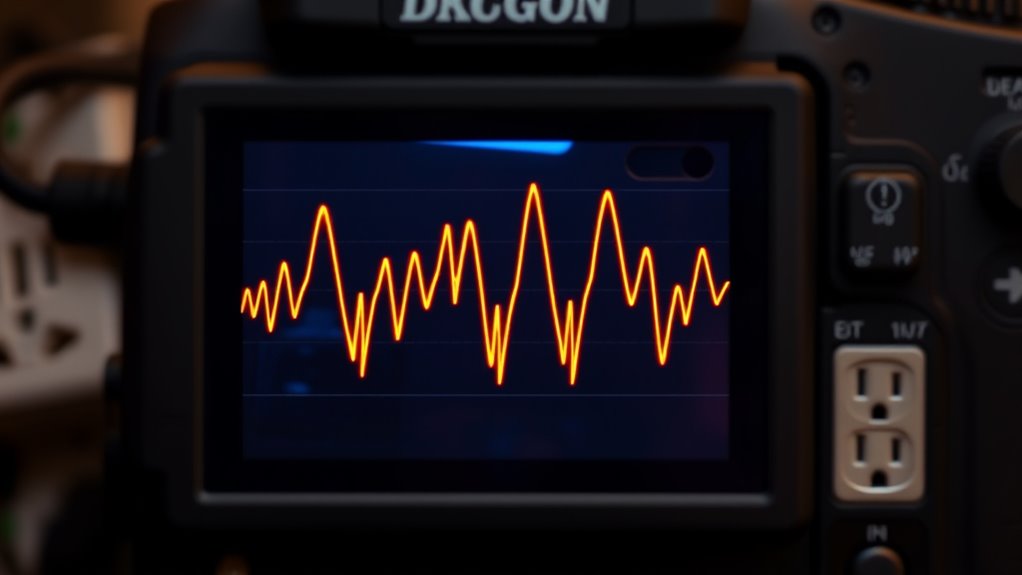
To guarantee your recordings are of the highest quality, start by using a dedicated power strip with built-in surge protection and proper grounding. This minimizes power spikes that can cause ignition noise and disrupt audio synchronization. To further ensure clean power, consider the following tips:
- Use shielded cables to prevent microphone interference, which can introduce unwanted noise.
- Keep your audio equipment on a separate circuit to avoid cross-interference from other devices.
- Regularly check grounding connections to prevent ground loops that can compromise audio clarity.
Implementing these practices helps maintain stable power, reduces noise, and preserves audio synchronization, resulting in clearer, more professional recordings.
Frequently Asked Questions
Can Ignition Noise Permanently Damage Camera Sensors?
Yes, ignition noise from electrical surges can damage your camera sensors permanently. These surges, often caused by power spikes, can overload your camera’s electrical components, weakening its durability over time. If you don’t use surge protectors or proper shielding, your camera is susceptible to such damage. Protecting your gear with quality surge protectors helps ensure your camera’s longevity and prevents costly repairs from electrical surges.
Are Certain Camera Models More Resistant to Power Spikes?
Some camera models do stand stronger against power spikes, thanks to superior durability and robust design. You might notice that higher-end models often feature better internal shielding and power regulation, making them more resistant to sudden voltage surges. As you choose your camera, consider model reliability; it could be the difference between seamless footage and corrupted videos caused by unexpected electrical chaos. Don’t leave your footage vulnerable—select wisely.
How Can I Identify Electrical Interference During Live Recordings?
You can identify electrical interference during live recordings by watching for visual artifacts like flickering or color distortions. Listen for audio hums, which often indicate ground loop issues. Use shielding techniques on cables and equipment to reduce interference, and check for ground loop problems by disconnecting grounds one at a time. If the interference disappears, you’ve identified the source. Regularly inspect your gear and cables to prevent ongoing issues.
What Are the Best Practices for Grounding Audio and Video Equipment?
To guarantee proper grounding, use effective grounding techniques like connecting all equipment to a single, grounding point to prevent ground loops. Always utilize equipment shielding, such as shielded cables, to reduce electrical interference. Make sure power strips are grounded, and avoid sharing outlets with high-power devices. Regularly inspect connections and grounding points to maintain peak performance, reducing the risk of ignition noise and power spikes that can corrupt your videos.
Do Power Spikes Affect Audio Recordings as Well as Video?
A stitch in time saves nine, especially when it comes to audio. Power spikes can definitely affect your recordings, causing unwanted noise or distortion. They create electrical interference and ground loops that disrupt audio quality just as much as video. Proper grounding of your equipment helps prevent these issues, ensuring your audio remains clean and clear. Don’t wait until problems arise—protect your gear now to maintain high-quality recordings.
Conclusion
Did you know that over 30% of video corruption cases are caused by electrical interference like ignition noise and power spikes? By understanding these hidden culprits, you can take simple steps to protect your equipment—using shielded cables, surge protectors, and UPS devices. Ensuring clean power isn’t just a precaution; it’s essential for high-quality recordings. Stay proactive, safeguard your gear, and keep your videos crystal clear every time.