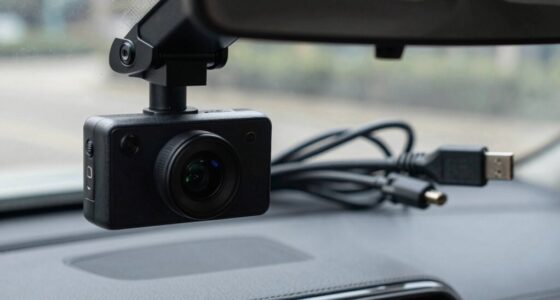
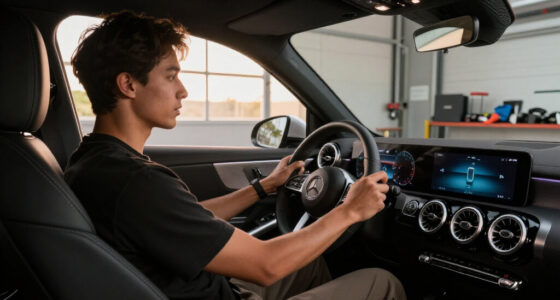
To practice the One-Hand Rule for safer in-car tech use, keep at least one hand on the steering wheel at all times. Use voice commands for navigation, calls, or music, so you stay focused on the road. This minimizes distractions and helps you respond quickly to any situation. Incorporating these responsible tech habits reduces risks and makes driving safer for everyone. If you continue, you’ll discover more ways to stay safe while staying connected.

Get business pricing on garage and car supplies
- Business-only prices and quantity discounts
- Tax-exempt purchasing
- Multiple users, one account, clear invoices
Key Takeaways
- The One-Hand Rule emphasizes keeping one hand on the wheel during in-car tech interactions for safety.
- It encourages using voice commands to minimize manual device handling while driving.
- Combining the rule with voice control reduces distraction and promotes responsible tech use.
- Quick, hands-free interactions help maintain focus and control on the road.
- Recognizing distraction’s impact underscores the importance of minimizing device fiddling while driving.

When you’re behind the wheel, your focus should be on driving, not on juggling your phone or other devices. That’s why adopting the one-hand rule for in-car tech use is so important. This simple principle encourages you to keep at least one hand on the wheel while interacting with your vehicle’s technology. By doing so, you reduce the risk of distraction and maintain better control, making your drive safer for everyone on the road. The idea isn’t to eliminate all tech use but to manage it responsibly, ensuring your attention stays where it needs to be. When you use voice commands, you further enhance distraction mitigation because your hands stay on the wheel, and your eyes remain on the road. Voice control systems are designed to let you access navigation, make calls, or control music without taking your eyes off your path or your hands off the wheel. These systems are an essential part of the one-hand rule, making it easier to stay connected without compromising safety. Properly integrating voice-controlled technology can significantly improve your driving experience and safety. Using voice commands effectively means you can speak naturally, issuing commands without fiddling with buttons or screens. You can say, “Navigate to the nearest gas station,” or “Play my driving playlist,” and your car responds instantly. This minimizes the temptation to reach for your phone or look down at your dashboard, which are common distractions. When you combine voice commands with the one-hand rule, you are actively mitigating the risks associated with in-car tech use. It’s about creating a safer environment by making sure your interactions are quick, hands-free, and focused. Additionally, understanding how driver distraction impacts road safety can help reinforce the importance of these practices. Recognizing the role of distraction in accidents underscores why responsible tech use is crucial. Incorporating distraction management techniques can further enhance your safety on the road.
As an affiliate, we earn on qualifying purchases.
Frequently Asked Questions
Does the One-Hand Rule Apply to All Types of In-Car Devices?
The one-hand rule mainly applies to handheld devices, helping you minimize driver distraction and maintain better vehicle ergonomics. It’s a good guideline for phones, GPS, or other portable tech, but not all in-car devices. For built-in systems or voice-controlled tech, this rule isn’t necessary. Focus on keeping your attention on driving, using hands-free options when possible, and ensuring your interaction with tech doesn’t compromise safety.
Can Using Voice Commands Complement the One-Hand Rule?
Sure, voice commands are a great way to pretend you’re multitasking while actually doing less. Voice automation and hands-free technology seem safe, but they can be distracting, making you less aware of your surroundings. While they complement the one-hand rule, don’t rely on them entirely. Stay alert, keep your focus on the road, and use voice features responsibly — because even hands-free tech can take your attention away.
How Does the One-Hand Rule Differ Across Vehicle Types?
The one-hand rule varies across vehicle types because of differences in design, controls, and driver distraction risks. In smaller cars or motorcycles, keeping one hand on the wheel or handlebars minimizes distraction and enhances road safety. In larger vehicles, like trucks, it might be more challenging, but maintaining at least one hand on essential controls reduces driver distraction and promotes safer driving. Always adapt the rule to your vehicle to improve road safety.
Are There Legal Penalties for Violating the One-Hand Rule?
Yes, there are legal penalties for violating the one-hand rule, including fines and points on your driving record. Enforcement challenges exist because officers often find it difficult to observe and prove violations without clear evidence. These penalties aim to discourage unsafe tech use while driving. To stay compliant and avoid penalties, always keep both hands on the wheel when using in-car tech, and be aware of local laws.
What Are the Best Practices if I Need to Use Both Hands Briefly?
If you need to use both hands briefly, make certain your hands are positioned on the steering wheel with proper hand placement, like the 9 and 3 o’clock positions. Keep your eyes on the road and minimize distraction reduction by using voice commands or hands-free options. Limit the time you spend on your device, and once done, return your hands to the wheel promptly to maintain safe driving habits.
As an affiliate, we earn on qualifying purchases.
Conclusion
Remember, keeping one hand on the wheel while using in-car tech can considerably reduce distractions. Studies show that drivers using just one hand are 50% less likely to be involved in accidents compared to those juggling devices with both hands. By following the one-hand rule, you stay more focused and safer on the road. So next time you reach for your phone or GPS, do it with purpose and keep your other hand ready for driving.
As an affiliate, we earn on qualifying purchases.
As an affiliate, we earn on qualifying purchases.
Columbus Day / Indigenous Peoples' Day Picks
long weekend sales
As an affiliate, we earn on qualifying purchases.