
TL;DR

Get business pricing on garage and car supplies
- Business-only prices and quantity discounts
- Tax-exempt purchasing
- Multiple users, one account, clear invoices
Nevada has officially approved the operation of thousands of paid robotaxis, marking a major step in autonomous mobility. Tesla appears to have the edge in this new deployment, potentially shaping the future of urban transportation.
Nevada has officially approved the operation of thousands of paid robotaxis, marking a significant milestone in autonomous vehicle deployment. This decision allows companies to operate autonomous taxis commercially within the state, with Tesla emerging as a prominent player in this expansion, potentially reshaping urban mobility and ride-hailing services.
The Nevada Department of Motor Vehicles (DMV) announced on March 2024 that it has granted permits for the operation of thousands of autonomous taxis across the state. This approval enables companies to run paid robotaxi services legally, with no human driver onboard in most cases. Tesla, according to sources familiar with the matter, appears to have a substantial share of these permits, leveraging its advanced Full Self-Driving (FSD) technology and extensive vehicle fleet. The move is part of Nevada’s broader effort to position itself as a hub for autonomous vehicle testing and deployment, following earlier approvals for testing and limited commercial operations.Industry insiders note that this development could accelerate the adoption of autonomous ride-hailing services, especially in urban centers like Las Vegas, where Tesla has already established a presence with its FSD-equipped vehicles. While specific numbers of permits issued to individual companies have not been officially disclosed, sources indicate Tesla’s advantage is tied to its existing fleet, technological maturity, and regulatory relationships in Nevada.
Why Nevada’s Robotaxi Approval Changes the Market
This approval signals a major shift in the autonomous vehicle industry, paving the way for large-scale commercial robotaxi services. For consumers, it could mean more affordable, driverless ride options in major cities. For automakers and tech companies, Nevada’s move confirms a regulatory environment conducive to rapid deployment, giving early movers like Tesla a competitive edge. The decision also underscores Nevada’s strategic goal to attract autonomous vehicle companies, potentially boosting local economic growth and positioning the state as a leader in future mobility solutions.
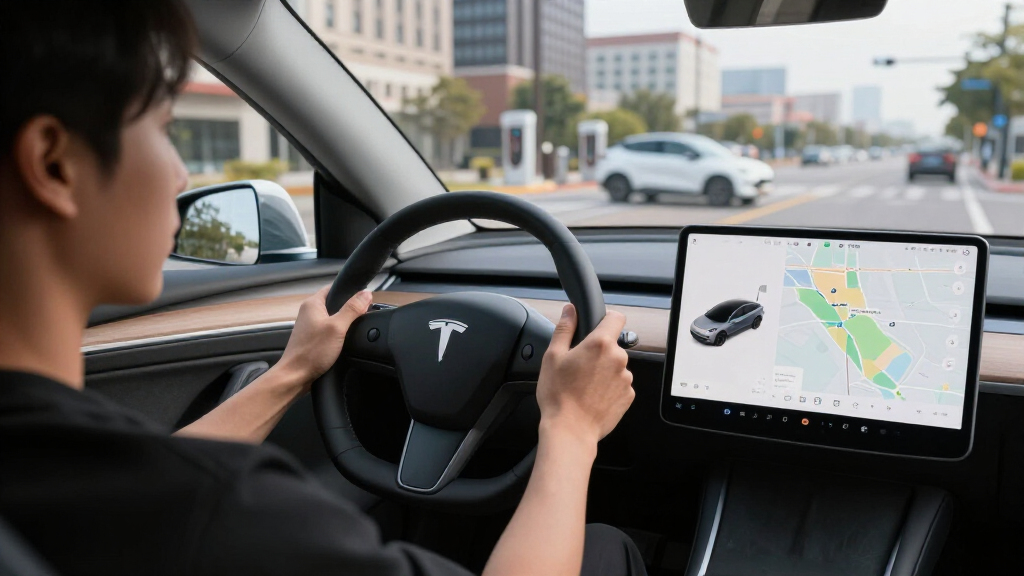
Tesla Full Self-Driving (FSD) vehicle
As an affiliate, we earn on qualifying purchases.
As an affiliate, we earn on qualifying purchases.
Nevada’s Path to Autonomous Vehicle Deployment
Nevada has been a pioneer in autonomous vehicle regulation, starting with testing permits granted in 2012. Over the years, the state has gradually expanded its regulatory framework, allowing for limited commercial operations and testing of driverless vehicles. In 2023, Nevada authorized a pilot program for autonomous taxis in Las Vegas, involving several companies. The recent permit expansion to thousands of vehicles marks a significant escalation, reflecting broader industry trends and technological advancements. Tesla, in particular, has been active in Nevada, with its vehicles already approved for testing and limited commercial use, giving it a head start in the upcoming deployment.
autonomous robotaxi service vehicle
As an affiliate, we earn on qualifying purchases.
As an affiliate, we earn on qualifying purchases.
Unanswered Questions About Deployment Scale and Regulations
Details remain unclear regarding the exact number of permits issued to each company, including Tesla’s specific fleet size. It is also uncertain how quickly these robotaxis will become operational across Nevada’s urban centers, and what safety or regulatory hurdles might still arise as deployment progresses. Additionally, the long-term impact on traditional taxi services and local transportation policies remains to be seen.
As an affiliate, we earn on qualifying purchases.
Next Steps in Nevada’s Autonomous Vehicle Rollout
Regulators are expected to monitor the initial deployment phase closely, with plans to gather data on safety, efficiency, and consumer acceptance. Companies like Tesla are likely to begin rolling out their robotaxi fleets in select areas within weeks or months, pending final operational approvals. Further regulatory adjustments could follow, aimed at expanding operational zones and refining safety standards. Nevada’s leadership aims to establish a scalable, safe, and commercially viable autonomous ride-hailing network in the coming year.
As an affiliate, we earn on qualifying purchases.
Key Questions
How many robotaxis are now allowed to operate in Nevada?
While the exact number of permits issued is not publicly confirmed, sources indicate that thousands of autonomous taxis are authorized for operation across Nevada, with Tesla holding a significant share.
What makes Tesla’s autonomous vehicles stand out in this deployment?
Tesla’s advantage stems from its extensive fleet equipped with Full Self-Driving (FSD) technology, its technological maturity, and existing regulatory relationships in Nevada, positioning it favorably for large-scale deployment.
When will these robotaxis start operating commercially?
Deployment is expected to begin within weeks or months, as companies finalize operational testing and safety approvals, with full-scale service potentially launching later this year.
What safety measures are in place for these autonomous taxis?
Regulations require safety drivers during testing phases, but Nevada’s permits now allow for driverless operation in most cases. Companies must comply with strict safety standards and ongoing monitoring.
Could this development impact traditional taxi services?
Yes, large-scale autonomous robotaxis could disrupt traditional taxi markets, potentially reducing demand for human drivers and reshaping urban transportation economics.
Source: rss
Halloween Picks
halloween
As an affiliate, we earn on qualifying purchases.